Houses For Sale In Europe With 2+ Bedrooms (page 9)

Houses for sale in europe - homestra offers the largest amount of european real estate with over 200,000+ properties, find any type of property within your budget from villas to country homes. buy or rent your perfect home in europe. (page 9)

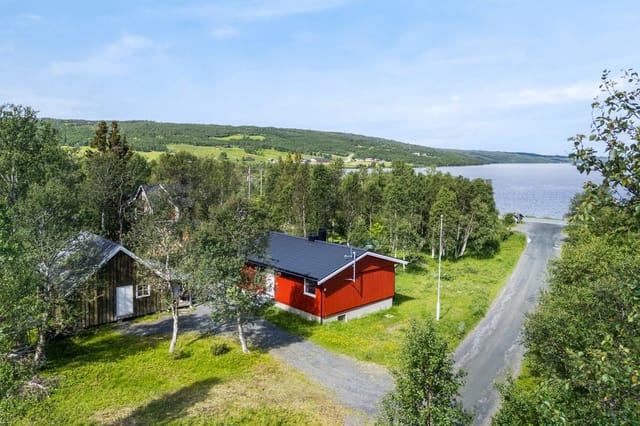
Step outside on a September morning and the air hits differently up here. Sharp, clean, carrying a faint trace of pine resin and lake water from Stuggusjøen, which is literally ninety meters from your front door. The water is mirror-flat at that hour. You can hear the occasional duck landing somewhere out of sight. That's the daily reality of owning this three-bedroom chalet at Stillhåtjønnvegen 9 in Stugudal—one of the Trøndelag region's most quietly coveted mountain escapes. Tydal sits in the Selbu municipality, tucked into a broad mountain valley that most international travelers never find, which is precisely the point. The village of Stugudal, where this property sits, has exactly the kind of low-key Nordic character that feels increasingly rare: no overdevelopment, no crowds in August, just a tight-knit community of people who chose the hills over the city and never looked back. Your nearest neighbors are Norwegians who know these trails by heart and will happily point you toward the best fishing spots on Stuggusjøen without wanting anything in return. The chalet itself spans 126 square meters across the main building, plus a separate annex of 10 square meters and an outbuilding—uthus, in Norwegian—adding another 51 square meters of storage. That storage matters more than you'd think. Skis, poles, snowmobile gear, fishing rods, kayaks, hiking boots in every size: the mountain life accumulates equipment fast, and having a proper outbuilding means your living space stays a living space. The main building was originally constructed as a detached year-round residence and is now registered as a holiday home, which gives you flexible use without locking you into seasonal limitations. On the ground floor, the entrance ... click here to read more

Aktiv Eiendomsmegling v/Håvard Geving presents Stillhåtjønnvegen 9

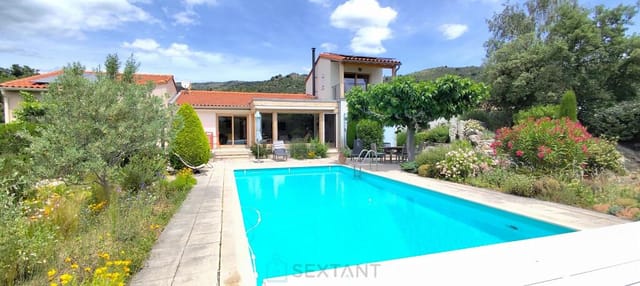
Wake up to the smell of wild thyme drifting through an open window, the Canigou massif turning pink in the early light, and absolute silence apart from birdsong. That's a Tuesday morning at this architect-renovated villa in Tarerach, a quiet hilltop village a few kilometers from Prades in the Pyrénées-Orientales. It's the kind of morning that makes you wonder why you waited so long. This isn't a polished-up weekend retreat that looks good in photos and disappoints on arrival. The 210 m² house has real substance — thick stone walls, a Finnish log burner in the living room, an air-to-water heat pump with full central heating, and an energy rating of A, which in a region where summer temperatures regularly top 35°C and winter nights in the mountains get properly cold, actually matters. Someone thought hard about this renovation. The result is a home that works just as well in February as it does in August. The layout is unusually clever for a property this size. Beyond the main residence — four bedrooms, two bathrooms, generous open living spaces — there's a self-contained one-bedroom guest cottage that sits separately on the 1,837 m² landscaped plot. And then there's an independent guest room set up as a bed and breakfast unit, complete with its own entrance. That configuration gives you real options. Host family over summer, generate rental income from the cottage and B&B room when you're back in London or Amsterdam, or eventually run the whole thing as a small hospitality business. The region's year-round tourist draw makes that last option more realistic than it sounds. About that tourist draw: Prades itself is a proper Catalan market town, not a tourist simulacrum. The Saturday market on the Place de la République h ... click here to read more

Picture 1

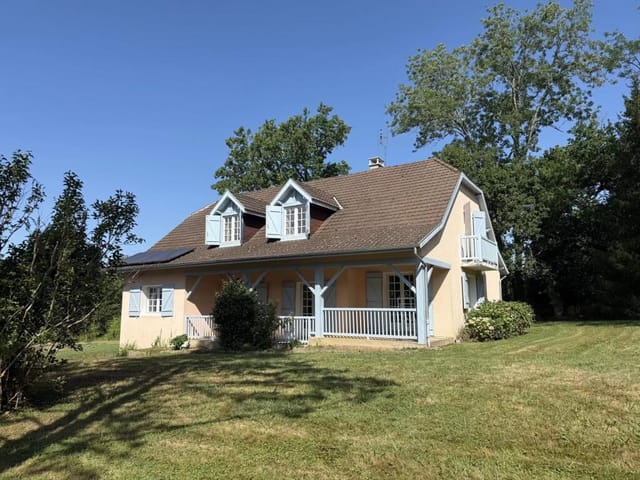
On a still weekday morning in Salies-de-Béarn, the smell of fresh bread drifts up from the boulangerie on Rue des Frères Labourdette before most people have even opened their shutters. That's the kind of town this is. Quiet, unhurried, genuinely French — not a postcard version of it. And sitting just five minutes from that town centre, on a generous 4,000 square metres of private land, this five-bedroom villa is the sort of property that makes you stop mid-visit and start quietly rearranging your life. At 185 square metres of interior living space, the house is substantial without being excessive. The 28-square-metre living room anchors the ground floor, and the wood-burning stove at its heart isn't decorative — on a January evening when the Pyrenean wind picks up, you'll understand exactly why the previous owners installed it. Large windows pull in the southern light throughout the day, and by late afternoon the living areas glow in a way that feels almost theatrical. The separate 17-square-metre dining room is properly sized for a family gathering or a long dinner with friends — no squeezing around a table designed for four. The kitchen runs to 16 square metres and opens naturally into the flow of the ground floor, practical and warm rather than show-home sterile. Upstairs, five bedrooms spread across a variety of sizes — 15, 15, 14, 13, and 12 square metres — giving every family member or guest their own proper retreat rather than a cupboard with a window. Two shower or bathroom spaces serve the upper level, and the 18-square-metre landing is wide enough to feel like a room in itself rather than a corridor. A laundry room, a ground-floor lavatory, and a 34-square-metre garage round out a floor plan that actually wor ... click here to read more

Picture 1

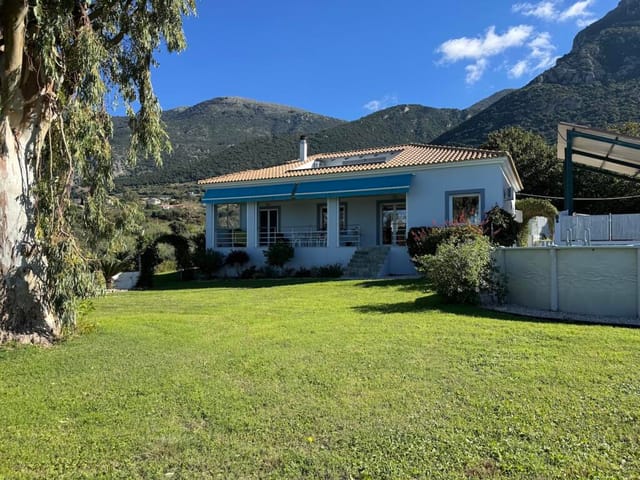
Step outside on a September morning and the air smells of sun-warmed oregano and the faint salt of the Corinthian Gulf rolling in off the water. The olive trees — forty of them, spread across 4,400 square metres of your own land — are heavy with fruit. The pool is still. The mountains behind Kyparissia glow amber in the early light. This is the kind of morning that makes you wonder why you ever went back. This five-bedroom property in Stassio, sitting on the western Peloponnese coast just 4.5 kilometres from Kyparissia, is not one building but two — a 118 sqm main villa and a separate 75 sqm guesthouse, both fully furnished and ready to use from day one. That distinction matters more than it might first seem. It's the difference between a holiday home and a working asset. Between a retreat and a revenue stream. The main villa runs across two floors and sleeps the family comfortably: three bedrooms, two bathrooms, generous living areas. In winter, the wood burner takes the edge off the cool evenings and the radiator system means you can be genuinely comfortable here in January, not just July. Three air-conditioning units handle the summer heat. Double-glazed windows with fly screens and shutters throughout keep the bugs out and the cool air in. Solar panels supply the hot water, and a 5kW photovoltaic system connected to the grid quietly generates a supplementary income year-round, even when no one is staying. Practical, low-effort, and increasingly valuable as Greek energy costs fluctuate. The oval 10 x 5 metre swimming pool sits at the heart of the outdoor space, flanked by a three-person hot tub. The guesthouse — two bedrooms, one bathroom, its own wood burner and two air-conditioning units — has a separate 5-metre ... click here to read more

Image 1

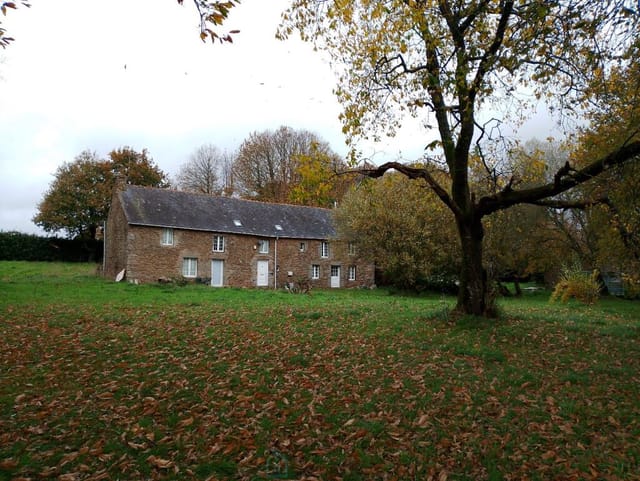
The church bells from the village of Ménéac carry just far enough on a still morning to reach the kitchen window — but you'd have to open it first, and by then the smell of coffee and woodsmoke from the stone fireplace has already pulled you firmly into the day. This is the kind of place that resets your clock. Six hectares of Breton countryside, two independent dwellings carved out of a grand old granite longhouse, and a second stone longère waiting in the wings. At €292,000 for the whole estate, it's not a fantasy — it's a real opportunity that doesn't come around often. Let's start with what's here right now. The main property is a large traditional Breton stone house, divided into two fully functional dwellings. Both are in good condition and ready to live in, which matters more than people realize when you're buying remotely from abroad. No months of waiting on contractors before your first stay. The first dwelling runs across two floors. Ground level gives you a living room anchored by a fireplace with a wood-burning stove — the kind you'll actually use from October through April — plus a proper kitchen, a laundry room, and a toilet. Upstairs, one bedroom has its own en-suite bathroom, there's a second bedroom, a family bathroom, and a room currently used as an office but flexible enough to become a third sleeping space when the cousins arrive in August. The second dwelling mirrors this layout almost exactly: a living room with its own fireplace and wood-burning stove, a kitchen-dining room (slightly more sociable in its configuration), a laundry room, a toilet downstairs, then an en-suite bedroom, another bedroom, a family bathroom, and an office upstairs. Two complete homes. Same stone walls, same slate roof, s ... click here to read more

Picture 1

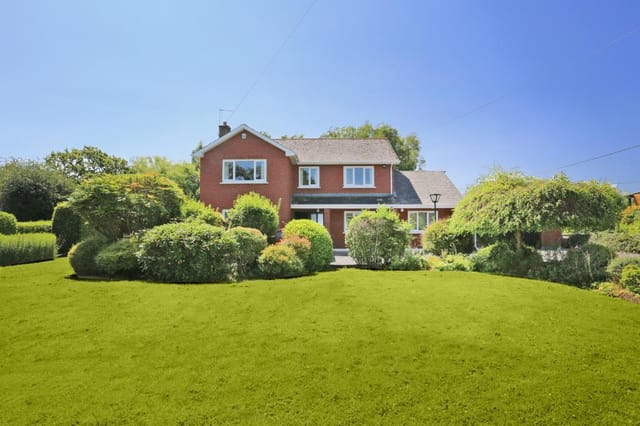
Picture a Sunday morning in late September. The kitchen window is open, and the smell of damp grass and woodsmoke drifts in from the garden. The trees at the back boundary — beech, oak, whatever the previous owners planted decades ago — have gone full amber. The kettle is on. Nobody on the road outside. This is what Cloncarhee feels like on an ordinary weekend, and it's far from ordinary. Set on a genuinely private half-acre site in Clonlara, a quiet village in east County Clare, this five-bedroom detached red brick house sits at that rare intersection of total calm and genuine convenience. You're less than ten minutes from Corbally and the northern edge of Limerick City, yet standing in the back garden with the patio doors wide open, you wouldn't believe it. The mature planting — built up over years of careful gardening — wraps the property in a kind of natural insulation from the outside world. Hedgerows, shrubs, flowering trees. The kind of garden that took time to grow and would cost a fortune to recreate from scratch. At 193 square metres across two floors, the house has the proportions of a proper family home — one that actually works for how people live now. The entrance hallway makes a solid first impression, with solid wood parquet underfoot that sets the tone before you've even looked left or right. The living room, to the left, is anchored by an open fireplace with a marble surround. On a January evening when the rain is hammering the windows, this is where everyone ends up. The dual-aspect windows pull in light from two directions, and French doors through to the dining room mean the ground floor has a flow to it that feels considered rather than accidental. The kitchen and dining area runs the full width ... click here to read more

Picture No. 03

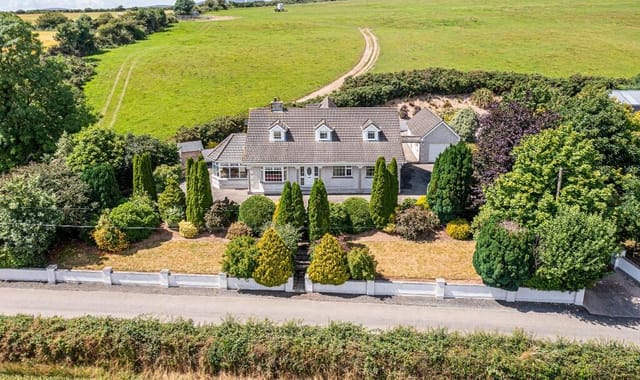
Stand at the kitchen window on a Tuesday morning and count the shades of green rolling across the Wexford hills. You'll lose count somewhere around twelve. That's life at Shroughmore, Ballindaggin — a 243-square-metre detached house with five bedrooms, three bathrooms, and the kind of quietude that reminds you what silence actually feels like. This is County Wexford's interior at its most unhurried. The townland of Shroughmore sits within easy reach of both Bunclody and Enniscorthy — each just 10 kilometres away — yet the surrounding landscape gives no hint of that proximity. In every direction, uninterrupted countryside stretches out. No rooftops crowding the horizon. No traffic noise bleeding through at dawn. Just fields, birdsong, and the slow rhythm of rural Ireland doing what it's always done. The house itself is substantial. Five bedrooms spread across two floors, with a layout flexible enough to suit a family of seven or a couple who simply want room to breathe. The ground floor opens with a wide entrance hall finished in solid timber, and that same warm flooring carries through the main living spaces — a detail that sounds minor until you feel the difference underfoot on a cold February morning. The living room anchors the front of the house with a limestone fireplace and built-in shelving, and a set of patio doors pulls you through into the sun lounge: a vaulted-ceiling room with tiled floors where afternoon light gathers and stays long after it's left the rest of the house. It's the kind of room that earns its name. To the rear, the kitchen, dining room, and sitting room form an open-plan spine that hums with activity when the house is full. The kitchen is fitted with solid maple cabinetry and a central isla ... click here to read more

Picture 1

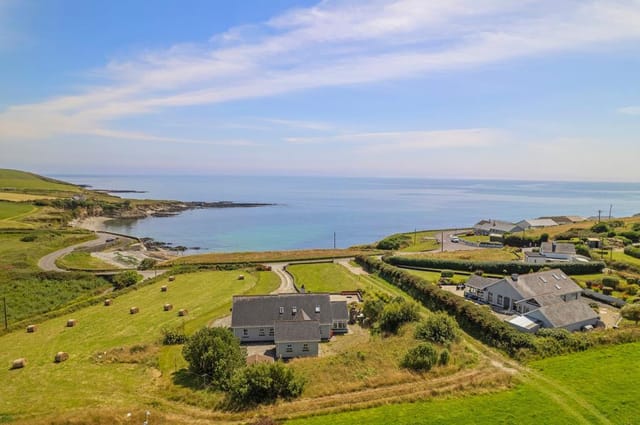
Stand in the sunroom on a clear morning and the whole of Clonakilty Bay opens up in front of you—light skipping off the water, the green headlands rolling away to the west, and not a sound except the occasional cry of a gannet passing low over the inlet. That view doesn't get old. It shifts with every tide, every season, every hour of the day. And it's what greets you every single morning you wake up in this five-bedroom home above Ballinglanna Beach. Built in 2007 and sitting on just under a third of a hectare of elevated ground, this is a substantial property—191 square metres of well-proportioned rooms, big windows, and the kind of sensible layout that actually works for how people live. It's not a fixer-upper and it's not a weekend project. The condition is good throughout, the BER rating is a solid B, which means it qualifies for green mortgage products, and it's ready to walk into. For buyers coming from overseas, that matters enormously. The house faces south toward the sea. In summer, the front patio catches the sun from mid-morning well into the evening—long enough to justify the pizza oven that's already installed out there. Clonakilty is serious about food, and West Cork in general has developed a food culture that punches well above its weight for a rural coastal area. The Saturday market in Clonakilty's town square draws producers from across the region: Ardsallagh goat's cheese, Gubbeen salumi, Clonakilty black pudding (the real thing, not the supermarket version), smoked mackerel from the bay you can see from your own window. It becomes a weekly ritual rather than a chore. The layout inside is genuinely versatile. The ground floor runs from a welcoming entrance hall—feature staircase, good proportions—t ... click here to read more

Picture No. 01

On a still Tuesday morning in Issac, the only sounds you'll hear are wood pigeons calling from the old stone pigeonnier and the faint creak of the bread oven door as it cools from last night's pizza. The meadow is already gold in the early light, and the pond catches a slice of sky between the fruit trees. This is not a fantasy — it's an ordinary morning at this centuries-old farmhouse in the Dordogne, and it could be yours. Set on nearly seven acres of southwest French countryside, this is a compound more than a single property: two substantial stone houses, a massive two-level barn, a pigeonnier, a functioning bread and pizza oven, a walled courtyard, a pond, an orchard, and a pool area enclosed behind stone walls. Parts of the main structure date to the sixteenth century, and the history shows in every beam — not as a burden, but as texture. The kind of texture that takes three hundred years to make and cannot be bought new. The main house sits on a single level, which makes it genuinely liveable for all ages and every season. Walk into the dining room and the scale of it stops you: an enormous original fireplace dominates one end, the kind you could stand inside, with stone flooring underfoot that's been worn smooth by generations. The original beams overhead are dark with age and solid as the day they were cut. Two double bedrooms anchor the ground floor, and up above, an attic with proper head height waits — the bones are already there for additional accommodation, subject to the usual permissions, should you want to grow into the space over time. The second house is a different personality entirely. Where the main house is anchored and weighty, the second is open and airy — three separate entries lead out to th ... click here to read more

Picture 1

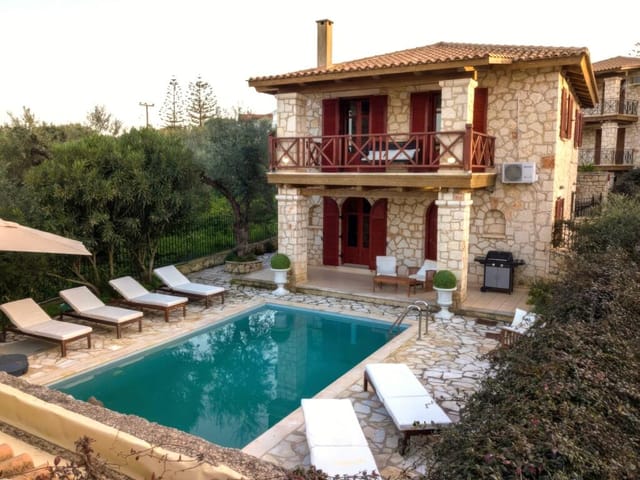
The day starts the same way every morning here: the Ionian Sea catches the sunrise before anything else does, and from the first-floor balcony of this east-facing villa, you watch the light climb out of the water and paint the Peloponnese mountains in shades of copper and rose. The olive groves between you and the shore are still. It's quiet enough to hear the birds. This is Bochali, on the green eastern side of Zakynthos, and this is what 7am looks like when you own a home here. Built in 2008 and thoughtfully renovated in 2019, this 156-square-metre stone villa sits on a fenced 381-square-metre plot within a small, well-kept development on the hillside just above Zakynthos Town. The construction is anti-seismic — the island takes earthquakes seriously, and so does this build. Two floors, three bedrooms, two bathrooms, a private pool, and a view that costs nothing extra. It came to market fully furnished and equipped, down to the fitted kitchen, so the ambition of turning up with a suitcase and opening a bottle of wine the same evening is not a fantasy here — it's just logistics. On the ground floor, the living and dining space opens into the kitchen in one continuous room, which is exactly how vacation houses should work — everyone together, no walls between the cook and the conversation. A guest WC sits off this main space. Upstairs, the master bedroom has its own ensuite bathroom, and two further bedrooms share the second bathroom. The balcony runs off the upper floor, and that east-facing sea view is yours from every morning you choose to be here. Throughout the villa, wooden shutters keep the afternoon heat manageable. Double glazing cuts noise and keeps warmth in during the shoulder seasons. Mosquito nets on eve ... click here to read more

Image 1

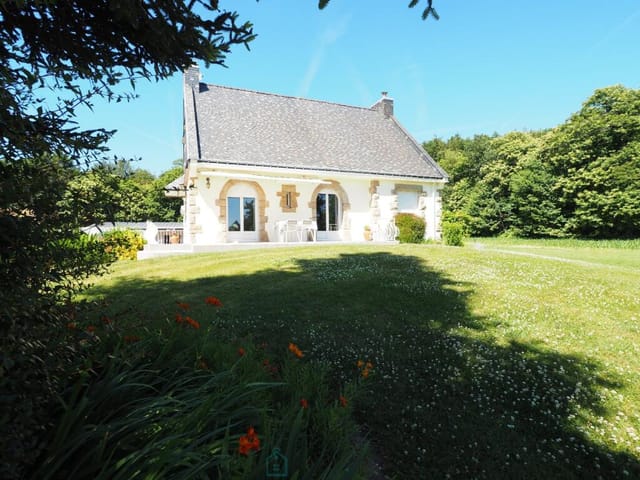
Step outside on a Saturday morning in late June and the air carries two things simultaneously: the cool, resinous breath of the Camors forest drifting across your garden, and somewhere down the lane, the faint clang of a neighbour closing a gate before heading to the weekly market in Auray. This is life in one of Morbihan's most quietly compelling corners — and this four-bedroom house on a generous 2,800m² plot sits right at the heart of it. The house has been fully renovated and kept in genuinely good condition. Not the kind of "good condition" that means you'll spend your first summer replacing boilers and re-grouting tiles. The previous owners invested properly — in a contemporary aesthetic that feels coherent from room to room, in recent drainage infrastructure, in the kind of upkeep that only comes from people who actually love a home rather than simply occupying it. At 146 square metres of living space across two floors plus a complete basement, there's real room to breathe here. Ground floor life revolves around a fitted kitchen that opens directly into a glazed veranda — the kind of space that makes March genuinely liveable in Brittany. On grey days you're still sitting in light. On sunny ones you slide the door and take your coffee to the covered terrace, where a retractable awning lets you stay outside even when the Atlantic decides to remind you who's boss. The main living room has a fireplace with a wood-burning insert, and on December evenings, with chestnuts from the forest and a bottle of Muscadet sur Lie from a producer near La Chapelle-Hermier, you'll understand why people come to Brittany and never quite leave. A master suite on this level comes with its own shower room — genuinely useful when guests ... click here to read more
Picture 1

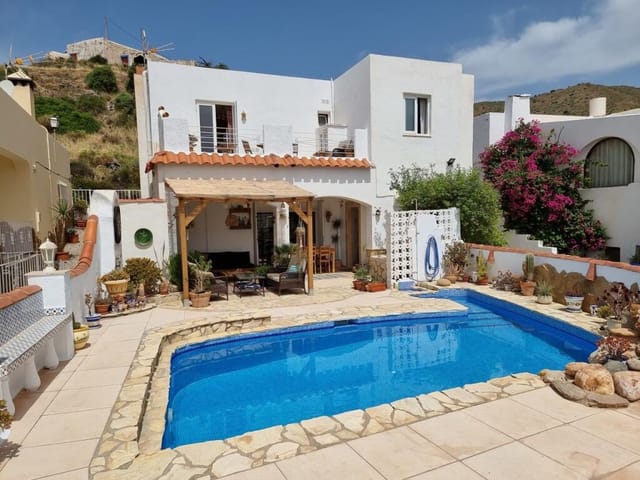
Early morning in Sopalmo, the air smells of wild rosemary and sun-warmed earth. The Almería hills sit golden in the distance, a rooster calls somewhere down the lane, and from the terrace of this four-bedroom villa, you can see all the way across the valley without a single rooftop breaking the view. This is the pace of life people spend years looking for. Sopalmo is one of those rare Andalusian hamlets that hasn't been discovered yet — not really. It sits quietly on the outskirts of Mojácar, tucked into the landscape like it's always been there, which it has. A small cluster of homes, a few neighbours who wave when they pass, and virtually no through traffic. Yet you're less than ten minutes by car from Mojácar Playa, where the beach bars along the seafront stay lively well into the evening and the chiringuitos serve fresh catch from the Mediterranean. The villa itself sits on 203 square metres of well-planned living space spread across two floors. Four bedrooms, three bathrooms — two of them en-suite — and a layout that actually makes sense for how people live on holiday and day-to-day. The bedrooms are genuinely generous in size. Not the cramped, corridor-of-a-room you find in so many Spanish villas at this price point. These are rooms where families spread out, where guests feel like guests rather than afterthoughts. What makes the interior feel different from the typical Almería villa is the light. Large windows pull the countryside in — the kind of soft, Mediterranean afternoon light that turns everything slightly golden and makes you forget what you were doing. The main living and dining area is where the house earns its keep: big enough to seat everyone for a proper meal, relaxed enough that nobody feels like ... click here to read more
Picture 1

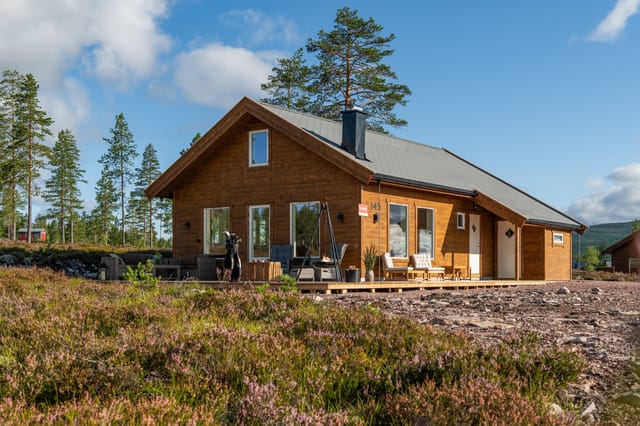
Step outside on a January morning and the cross-country ski trail is literally thirty meters from your front door. No boots in the car. No driving to a trailhead. Just cold clean air, pine trees dusted overnight, and a track that winds all the way through to Østby and beyond. That's the daily reality at Bjønnbekkmora Hytteområde 145 — a brand-new four-bedroom chalet completed in 2026 and sitting on a generous 1,818 square meter freehold plot in the Trysil-Sälen corridor, one of Scandinavia's most sought-after mountain belts. This isn't a renovation project or a compromise. The chalet is move-in ready, built to TEK 17 Norwegian building standards, and finished with the kind of materials that actually hold up to mountain winters — Kronotex Mammut Oak Beige laminate, pine panel walls, double-glazed energy-efficient windows, and a Aduro 9 wood-burning stove that throws out serious heat when temperatures drop well below zero. Light the stove, pour something warm, and watch the pine forest darken as the sun falls behind the Sälen ridgeline. It's a specific kind of quiet you don't find many places. The layout across 97 square meters of usable floor space is genuinely well-thought-out for a family or group. Ground floor has the social core of the place: an open-plan living room and kitchen anchored by a kitchen island, with large windows that pull in views toward Støten and the Swedish mountains across the border. Integrated appliances throughout — induction hob, pyrolysis oven, combined fridge-freezer, dishwasher — so there's no list of things to buy before you can cook a proper dinner. Two bedrooms sit off the main floor, and the bathroom comes with underfloor heating and quality fixtures. There's also a guest WC, which anyo ... click here to read more
Welcome to Bjønnbekkmora Hytteområde 145

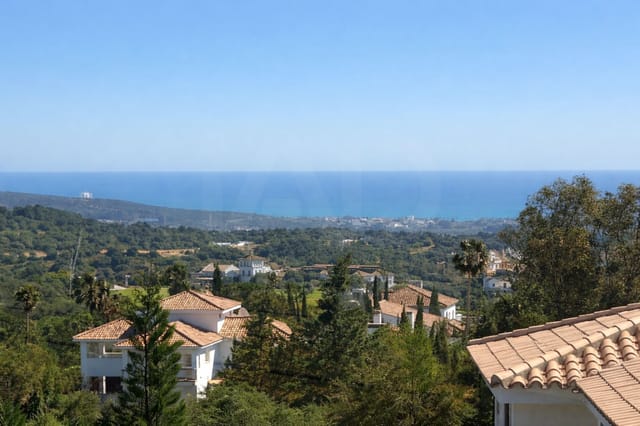
Stand on the upper terrace at dusk and you'll understand immediately why people come to Sotogrande and simply never leave. The light here is different — it turns the Strait of Gibraltar into something close to hammered copper, and on clear evenings you can trace the outline of the Moroccan Rif mountains across the water. That view, framed through floor-to-ceiling glass from Villa Garnacha's main living spaces, is not a backdrop. It becomes part of daily life. La Reserva de Sotogrande sits at the southeastern tip of Andalucía, in the municipality of San Roque in the province of Cádiz — a corner of Spain that has been quietly drawing Europe's most discerning property buyers for decades. Not the loudest destination on the Costa del Sol. Deliberately so. The community has resisted the overdevelopment that swallowed neighboring coastlines, keeping its private roads lined with stone pines and its residents notably private. What you get here is space, silence punctuated only by birdsong and the distant thwack of a golf club, and a quality of architecture that takes itself seriously. Villa Garnacha is in the final phase of construction, and this is where the opportunity becomes genuinely rare. The bones are done — the structure is built using cross-laminated timber, or CLT, which is not a marketing buzzword here but a genuine structural choice that changes how the house feels. CLT buildings breathe differently. They hold warmth in winter without becoming oppressive in July, and the acoustic insulation means the 689-square-metre interior is remarkably quiet even when the terraces outside are full of people. The thermal performance alone will make a measurable difference to running costs year-round. The plot runs to 2,560 squar ... click here to read more
Picture 1

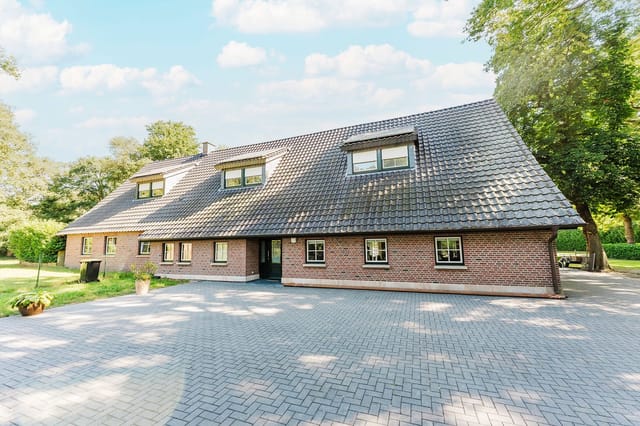
Sunday morning in Hoogstede moves at its own pace. The smell of fresh bread drifts in from the village bakery two streets over, the horses in the paddock next door are already restless, and through the tall windows of this 1815-built villa, the morning light falls across two hectares of mature parkland like it has every day for the past two centuries. There are six bedrooms, three bathrooms, a whirlpool, a swimming pool, a bar room, and more square meters of living space—417 of them—than most people will ever need. But the real draw isn't the square footage. It's the feeling that you've stepped out of the world's noise entirely. Hoogstede sits in the far northwest corner of the Grafschaft Bentheim district, right up against the Dutch border, and it has the unhurried, green quality of a place that hasn't tried too hard to attract anyone. The Vechte river meanders through the landscape just east of the village, its banks lined with willows and cycling tracks. On weekday mornings, the Hauptstraße is quiet enough to hear jackdaws. On weekends, the roads fill with Dutch day-trippers cycling across the border from Coevorden and Hardenberg, stopping for coffee, picking up local rye bread from the Bäckerei, doing exactly what you'll be doing once you've settled into this place. The villa itself dates to around 1815—brick construction, solid as ever—and has been renovated to a standard that respects its age without treating it like a museum. The country-style kitchen is genuinely impressive: wide, well-equipped, the kind of room where people naturally gather and stay too long. High ceilings, generous room proportions, natural materials throughout. The wellness bathroom with its whirlpool is the kind of feature you use on Tuesda ... click here to read more
Front view of Hauptstraße 115

The Atlantic is right there. Two minutes on foot and you're standing on the wide, pale sand of La Antilla beach, watching the surf roll in off the Gulf of Cadiz while most of Europe is still reaching for a second coffee. That's the daily reality of life in this three-storey renovated townhouse — a southwest-facing, light-drenched home that puts one of Huelva's most underrated coastlines practically at your doorstep. La Antilla sits in the far southwest corner of Spain, tucked between the more famous resorts of the Costa de la Luz and the wild, protected marshes of Doñana National Park. It doesn't make the headlines. That's precisely why people who know this stretch of coast guard it so carefully. The beach here — Playa de La Antilla — is long, clean, and rarely overwhelmed, even in August. The Atlantic keeps things honest: the water is cooler than the Mediterranean, the breezes are real, and the light in the late afternoon turns the whole seafront the colour of warm copper. Huelva capital is only about 40 minutes by car, Seville a little over an hour. Portugal's Algarve coast is reachable in under two hours. You are not isolated here; you are just far enough from everything to breathe. The house itself is part of a private gated community — code access at the entrance, alarm system with video surveillance, video intercom — which matters enormously when you're buying a second home you won't always be in. The community pool is shared but well-maintained, and the grounds give the whole development a quietly residential feel rather than a holiday park aesthetic. This is a neighbourhood where Spanish families have been coming for generations, where the bakery on Calle Duque knows its regulars and the chiringuitos along the ... click here to read more
Picture 1

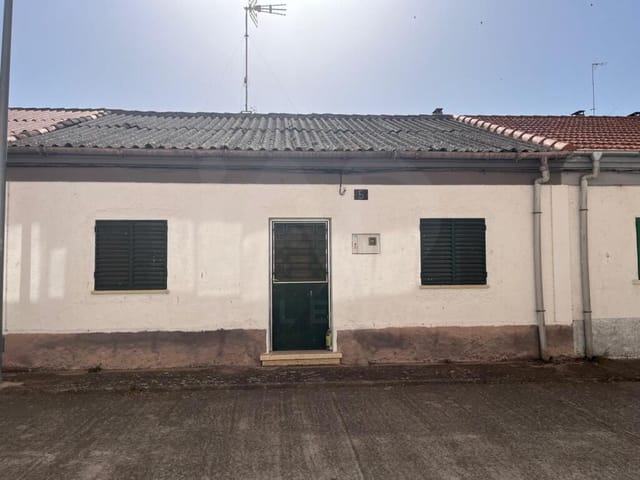
Step out the front door on a Saturday morning and within ten minutes you're walking the Roman walls of a medieval city that most of Europe has somehow never heard of. That's the quiet magic of Ciudad Rodrigo. The cathedral bells carry across the rooftops, the Plaza Mayor fills up with families eating churros, and the Río Águeda catches the early light just two minutes from your door. This is a town that hasn't been polished for tourists — and that's exactly what makes it worth paying attention to. This four-bedroom townhouse sits in that sweet spot between the river and the historic center, close enough to everything but far enough back for the street to stay genuinely quiet. Built in the 1960s and now ready for a full renovation, it's the kind of project that draws buyers who want to put their stamp on something real — not a flipped apartment in a generic coastal resort, but a proper Spanish home in a place with 800 years of story behind it. The numbers are honest. Eighty-eight square meters of usable space across ten rooms. Two living rooms. Four bedrooms. Two bathrooms. Two kitchens — which opens up interesting possibilities for guests, multi-generational use, or eventually rental income. Out back, a 26-square-meter patio catches the afternoon sun and has room for a table, a few chairs, and the kind of slow summer evenings that are genuinely hard to find anywhere in Western Europe anymore. Fiber optic is already connected, the sewage system is in order, and the structure is solid — so the canvas is ready. The renovation itself is part of the appeal. Spain's interior Castile-León region offers skilled local craftsmen at rates that would make a property developer in the Algarve weep with envy. Stone, exposed brick, o ... click here to read more
Picture 1

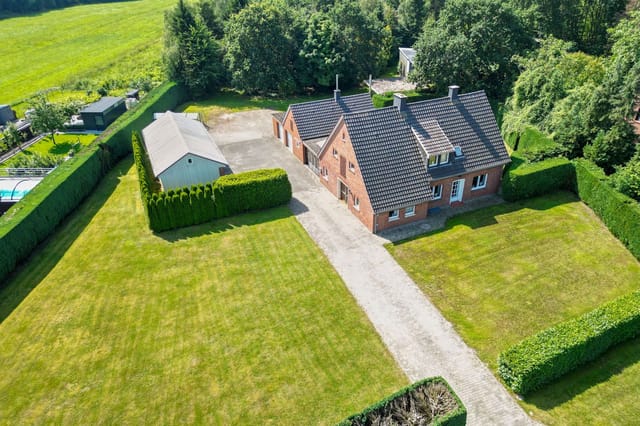
Stand at the kitchen window on a Saturday morning and watch the mist lift off nearly one and a half hectares of your own land. No neighbors crowding the fence line. No traffic noise. Just the low hum of the pellet stove, the smell of coffee, and a view that stretches across open pasture all the way to the tree line. This is what a second home in Twist, Lower Saxony feels like — and it's a feeling very few properties in this corner of northwest Germany can actually deliver. Schwarzer Weg 109 is a six-bedroom detached house sitting on a 14,913 square metre plot that includes both buildable land and working pastureland. The house itself was built in 1957 and has been in the same family ever since — extended, renovated, and genuinely cared for in the way that only long-term owners tend to care for a place. At 158 square metres of interior living space, it's substantial without being unmanageable. Good condition throughout. Move-in ready. What makes this property genuinely rare — not just in Twist but across the entire Emsland district — is the combination of scale and infrastructure. Six garages. An actual stable block. A detached hall building. A plot large enough to graze horses or keep a kitchen garden the size of most people's entire back garden. Finding all of that in one package, at this price point, is not something that comes along regularly. The layout of the house works well for the kind of flexible living that second-home owners tend to need. Downstairs, the entrance hall opens into rooms that can flex between bedrooms, home offices, or hobby spaces depending on the season and who's visiting. The main living and dining area is generous — proper Sunday-lunch-with-the-extended-family generous. Large windows pull ... click here to read more
Front view of Schwarzer Weg 109

Stand on the upper terrace just after sunrise and you'll understand immediately why people never leave Albufeira. The Atlantic catches the light in long copper strips, the marina below is already stirring with early fishing boats, and the air carries that particular mix of salt, eucalyptus, and warm stone that belongs entirely to the western Algarve. This is the view from your living room. Every single morning. Positioned on the south-facing slopes of Ourada hill, this four-bedroom detached villa occupies a 1,000m² plot and stretches across 472m² of thoughtfully finished interior space. At €2,200,000, it sits at the sharper end of the Albufeira market — and it earns that position. The construction quality is serious: wide-format tiling, solid joinery, and generous ceiling heights that keep every room feeling cooler than the summer temperatures outside would suggest. Three of the four bedrooms are en-suite, which matters enormously if you're hosting a mix of couples or running the property as a holiday rental. The fourth has its own dedicated family bathroom just steps down the corridor. No one's sharing. No early-morning queues. The kitchen is properly equipped — not a show kitchen with nothing in the drawers, but a working space with actual appliances, enough counter run to prep a meal for eight, and a layout that opens toward the social areas of the house. Portuguese households take food seriously, and so does this one. On a Saturday afternoon you could be grilling fresh dourada from the fish market on Rua Coronel Agostinho Freire while a jug of sangria sweats on the outdoor table. About those terraces. There are multiple of them, each oriented slightly differently so you can follow the shade or chase the sun depend ... click here to read more
Picture 1

Stand on the top solarium terrace on a clear October morning and the Rock of Gibraltar fills the horizon, solid and ancient, while the Strait below catches the early light in long silver ribbons. That view—framed by bougainvillea climbing the stone walls and the faint salt breeze coming off the Atlantic—is the first thing you notice. It won't be the last. This is a serious family estate in Getares, one of the quieter residential pockets along the Algeciras coastline, and it works on every level that matters. Five bedrooms. Four bathrooms. A fully independent guest cottage with its own street entrance. A private pool. An outdoor kitchen under a pergola that has hosted more summer dinners than anyone's keeping count of. And 323 square metres of built space sitting on a 974 m² plot that feels, improbably, like it keeps revealing new corners the longer you spend time here. The main house runs across two floors and the architecture does something you don't often see at this price point in Cádiz province—the ceilings are genuinely high, which means natural light pours through rather than skims the surface. Downstairs, the entrance hall opens around a working fireplace, the kind you actually want to light in January when the Costa de la Luz turns quietly cool and the tourists have long gone home. The living and dining room has a second fireplace. The kitchen is built in traditional rustic style with masonry shelving, handmade and solid, with a laundry room tucked alongside it. Two bedrooms and a bathroom complete the ground floor—well-proportioned rooms that work equally well for children or weekend guests. Upstairs is where the property earns its place in a different category entirely. The master suite is double-aspect: sea ... click here to read more
Picture 1

Stand on the upper terrace on a Tuesday morning in late June, coffee in hand, and the Estérel massif turns the color of raw copper in the early light. Below, through a corridor of umbrella pines, you catch a silver flash of the Mediterranean. The infinity pool seems to spill right into it. This is not a postcard — this is what the week looks like when you own a home in Les Issambres. Roquebrune-sur-Argens sits in that rare pocket of the Var where the coast hasn't been completely swallowed by development. Les Issambres is its seaside quarter — a low-key, genuinely residential stretch between Saint-Aygulf and Sainte-Maxime that regular Côte d'Azur visitors tend to guard like a secret. The coves here, particularly Calanque des Anglais and the rocky inlets flanking the Corniche d'Or, are reachable on foot. Not "a short drive" on foot. Actually on foot, through fragrant maquis scrub that smells of wild thyme and warm rock. The villa itself is built in the Provençal Mas tradition — thick walls, tiled rooflines, terracotta details — but the interior has been fully brought into the contemporary era. At 289 square metres of living space, it breathes. The main salon runs to 70 square metres, which means a large family or a group of friends genuinely spreads out rather than stacking on top of each other. Five bedrooms, each with its own private bathroom and private terrace. That last detail matters more than you'd think: summer mornings where every guest can take their espresso outside without negotiating space are worth paying for. A dedicated office — large enough to function equally well as a games room or a teenager's retreat — gives the property a flexibility that pure holiday rentals rarely have. This works as a serious se ... click here to read more
Picture 1

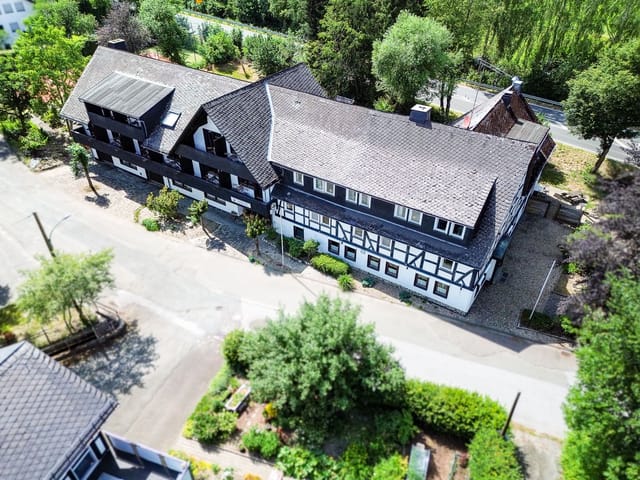
Picture a Tuesday morning in late October. The Rothaarsteig hiking trail is wet with overnight rain, the air smells of pine and cold earth, and the first walkers are already stamping mud from their boots at the front door of Zur Schmitte. By ten o'clock, the professional kitchen is warm, the coffee is on, and the dining hall is filling up. This isn't a fantasy. It's what this property has been doing, quietly and reliably, for years. Zur Schmitte sits in Westernbödefeld, a small settlement tucked into the folds of the Hochsauerland — one of the most consistently visited natural landscapes in Germany. This isn't a seasonal resort town that empties in spring. The Sauerland draws skiers to Winterberg from December through March, cyclists onto the Sauerland-Radring in summer, hikers onto the Rothaarsteig and Sauerländer Gebirgssteig almost year-round, and motorcyclists through the serpentine roads of the Schmallenberg valley every dry weekend from April to November. The demand doesn't stop. It shifts. And a well-positioned country inn in this region has a guest pool that rotates through the seasons rather than drying up after August. The property itself is substantial — 750 square metres spread across a layout that was clearly designed by someone who had actually run a hospitality operation. The Gaststube, the traditional guest lounge at the heart of the ground floor, is the kind of room that earns its keep. Low beams, warm light, and the social weight of a space that has hosted hundreds of post-hike evenings — it's not something you can replicate with a renovation budget. Adjacent to it, a large dining room handles groups: cycling clubs booking ahead, corporate retreats from the Ruhr region an hour west, extended family ga ... click here to read more
Front view of Am Roh 2

Picture this: it's ten in the morning, the Cádiz sun is already warm on your face, you've just made coffee in a kitchen that actually has room to cook in, and you're standing at the edge of a 66-square-metre private pool surrounded by mature pines that cut the Levante wind to a whisper. This is not a holiday apartment with a shared courtyard. This is 391 square metres of solidly built, single-storey living on a 3,170-square-metre fully fenced plot in the Pinar de los Franceses neighbourhood of Chiclana de la Frontera — one of the most quietly desirable pockets on the entire Costa de la Luz. Chiclana doesn't get the same international headlines as Marbella or Nerja. That's precisely why people who know this coast well end up buying here. The town has real roots — the carnival in February fills the streets with music that spills past midnight, the Thursday market on Calle Real has been running for generations, and the tapas bars around Plaza Mayor serve papas aliñás and chipirones en su tinta at prices that feel like a small act of generosity. There's a functioning community here, not just a tourist infrastructure. And then there's La Barrosa. Drive five minutes south and you hit one of the finest Atlantic beaches in southern Spain — six kilometres of fine white sand backed by low dunes and pine forest, with chiringuitos serving grilled dorada and cold Cruzcampo from early April well into October. Sancti Petri, a few minutes further along the coast, adds a salt marsh nature reserve, a ruined castle on its own tidal island, and a handful of proper seafood restaurants where the catch arrived that morning from the Atlantic. Kitesurfers work the wind off Playa de los Alemanes while families spread out on the wider stretches ... click here to read more
Picture 1

Step off the train in Hasselt on a Friday evening, drive the twelve minutes south through vineyard-dotted countryside, and pull into the driveway on Hameestraat just as the last light catches the villa's clean stone facade. That's the rhythm of owning here. Quiet enough to actually decompress, connected enough that you never feel cut off from the rest of Belgium — or Europe, for that matter. Built in 2019 and spread across 299 square metres on a 1,514 m² plot, this three-bedroom villa in Alken is the kind of property that doesn't shout. It doesn't need to. The travertine floors, the parquet throughout the upper level, the master suite with its proper walk-in dressing room — these are choices made by someone who knew exactly what they wanted and didn't cut corners getting there. The result is a home that sits comfortably in the upper tier of the Belgian Limburg market, priced at €849,000, and genuinely earns that position. Alken itself sits in the heart of the Haspengouw, one of the most underrated rural landscapes in the country. Every April and May, the fruit orchards that line the roads between Alken, Sint-Truiden, and Borgloon explode into white and pink blossom — the Bloesemroute cycling circuit draws thousands of visitors annually, yet the village itself stays calm. Locals know the Tuesday market in Sint-Truiden for its Limburg vlaai, the flat fruit tart that you'll find in every bakery window. On Sundays, the Domein Alden Biesen — a former Teutonic Knights commandery just twenty minutes east near Bilzen — opens its formal gardens and stages classical music events that feel wildly out of scale for a region most outsiders haven't discovered yet. The daily texture of life here is genuinely good. The centre of Alken ... click here to read more
Photo 1 of Hameestraat 95

Sunday morning in Matola. The kitchen smells of café con leche and the garden is already warm by nine. Through the wide terrace doors, you can hear nothing but cicadas and the soft splash of water in the pool. This is not a postcard moment—it's just a regular morning when you own this four-bedroom chalet in one of the most quietly compelling corners of Spain's Alicante province. Elche tends to fly under the radar compared to its louder coastal neighbors, and that's precisely the point. The city holds a UNESCO World Heritage Site—the Palmeral, a palm forest of over 200,000 trees planted during the Moorish period—and yet the streets don't grind to a halt in August the way they do in Benidorm or Torrevieja. Local life here runs on its own rhythm. The Mystery Play of Elche, performed every August inside the Basilica of Santa Maria, has been staged continuously since the Middle Ages; it's the kind of thing you stumble into as a resident, not a tourist. The covered Mercado Municipal on Calle Curtidores fills with fresh figs, local almonds, and the briny smell of bacallà on Friday mornings. You find yourself going back every week. The Matola area sits in the quieter, greener outskirts of the city—wide plots, low-density building, and the kind of space that's become genuinely rare this close to the Costa Blanca. From here, the beaches of Santa Pola are a 15-minute drive. Guardamar del Segura, with its wide sand dunes and calm shallow water, takes 20 minutes. Alicante Airport is roughly half an hour away, which makes this a real-world option for anyone flying in from northern Europe for long weekends or extended summer stays. International buyers from the UK, Germany, the Netherlands, and Scandinavia have been quietly building ... click here to read more
Picture 1

Pour yourself a glass of wine you pressed yourself. That's not a fantasy—it's a Tuesday afternoon at this six-bedroom working farmhouse in Cehegín, a quietly extraordinary corner of Murcia where the Sierra de la Puerta rolls into terraced hillsides still farmed the old way. The 300 grapevines climbing the property's southern slope produce around 500 liters of wine per year. The 130 olive trees—some of them older than anyone can reliably remember—yield roughly 300 liters of oil. This is not a lifestyle prop. It's a functioning agricultural operation wrapped inside a substantial family home, priced at €249,900. Cehegín doesn't get the tourist traffic of Cartagena or Murcia city, and that's precisely the point. The old town, a ten-minute drive away, is packed with Baroque churches and a medieval castle that most of Spain doesn't even know exists. Saturday mornings at the weekly market on Calle Mayor mean conversations with the same vendors who've been selling tomatoes, cheese, and cured meats there for decades. The Fiesta de la Vendimia in autumn—the grape harvest celebration—turns the whole region into something between a folk festival and a communal kitchen. You'll want to be here for it. The farmhouse itself sits on a 10,000-square-meter plot that balances urban and rural land classifications, a practical distinction that opens up possibilities for tourism licensing, agricultural subsidies, or simply keeping your options open. Step through the main entrance and the interior patio immediately signals the building's age and logic: everything organized around a central breathing space, the kind of layout that keeps the interior cool through July and August without air conditioning doing the heavy lifting. The ground floor ... click here to read more
Picture 1

Picture this: it's a Tuesday morning in late October, the summer crowds are gone, and you're standing on your first-floor terrace with a coffee, looking out over the rolling Algarvian countryside while the Atlantic air drifts in off the coast. The beach is a ten-minute walk away. The nearest restaurant does a bacalhau à brás that would ruin you for any other cod dish you've ever tried. This is Sesmarias, Galé — and this three-bedroom villa is the kind of find that doesn't sit on the market for long. Sesmarias sits in a quiet pocket between Galé and Albufeira, close enough to the action but far enough to feel like it belongs to those who actually know the Algarve rather than just visit it. The road the villa sits on is a dead-end cul-de-sac — no through traffic, no noise beyond the occasional birdsong and the distant sound of waves on a still day. Families tend to love it here for exactly that reason. So do buyers who want a proper base on the coast rather than a glorified hotel room. The villa covers 112 square metres across three floors, and the layout is one of its strongest cards. Each level has its own logic. The ground floor, which has a separate entrance directly from the street, functions independently — there's an open-plan living and dining room with a kitchen, a bedroom with built-in wardrobes, a shower room, and a covered outdoor entertainment area at the back where the afternoon sun lands perfectly. You could put guests there without anyone losing privacy. You could rent it out during the summer while occupying the upper floors yourself. Or you could use the whole thing as one cohesive family home. The flexibility is genuine, not cosmetic. Step up to the first floor — the main entrance level — and the tone ... click here to read more
Picture 1

Pull up to the rue on a warm September morning and you'll already understand why people keep coming back to Perpignan. The air carries a mix of grilled sardines from a nearby brasserie, a faint salt edge rolling in from the Mediterranean forty kilometres east, and the dry warmth that the Roussillon plain holds long after the rest of France has surrendered to autumn. This is a city that doesn't perform for tourists — it simply lives, loudly and confidently, and this four-bedroom detached house on a quiet street close to all amenities puts you right inside that daily rhythm. The house sits on three free-standing sides with no overlooking neighbours, which in a Catalan city packed with character and density is genuinely hard to come by. At 110 square metres across two levels, the layout currently runs as two separate dwellings — a feature the original owners used pragmatically, and one that hands the next owner serious options. Keep both units intact and you have a ready-made rental setup in a city with strong year-round occupancy, driven by students at the Université de Perpignan Via Domitia, medical tourism at the Centre Hospitalier, and the steady stream of visitors drawn to the Côte Vermeille from April through October. Knock through and reconfigure, and you get a generous four-bedroom family home with space to breathe in ways that most city-centre properties at this price point simply don't allow. Yes, this is a renovation project. Let's be straight about that. Floors, kitchen, bathrooms, heating, insulation — all of it needs attention. But that's also exactly the reason the price sits at €142,000 for a freestanding house in a southern French city where the food is extraordinary, the sun shows up reliably about 300 d ... click here to read more
Picture 1

Saturday morning. You're standing at the kitchen window with a coffee, watching the light move across the Castilian meseta. The garden is already warm, the pool still flat and glassy, and the only sound is a distant church bell rolling down from the old quarter of Burgos, thirty minutes up the road. This is a morning that could belong to you, repeated across every season, in a house that actually has room to breathe. This six-bedroom property in Castrillo del Val sits inside the Los Tomillares residential development, positioned toward the quieter rear section of the estate, well away from the main road. The plot runs to around 1,100 square metres, and the house itself covers approximately 440 square metres across the main residence plus a fully independent pavilion — a combination that's genuinely hard to track down in this corner of Burgos province, at any price. The layout has been thought through the way family houses should be. Six bedrooms give you real flexibility: host a full multigenerational gathering, keep two rooms permanently ready for children or regular guests, and still have a dedicated space for working remotely or reading in quiet. Three complete bathrooms mean mornings run smoothly even when the whole house is full. The large main living room opens through to two enclosed gallery spaces — those classic Spanish galerías that trap afternoon light and give you somewhere to sit year-round regardless of the weather. There's also a formal terrace, a dressing room, and a kitchen that genuinely functions as the anchor of the home. It has direct access to the terrace, which flows naturally down into the garden and pool area. When you're cooking in summer, the line between inside and outside more or less disap ... click here to read more
Picture 1

On a still Sunday morning, the only sound you'll hear from the south-facing terrace of Baversstraat 261 is birdsong and the occasional distant church bell drifting in from Tongeren's medieval center, about ten minutes down the road. The garden stretches out ahead of you — nearly 3,700 square meters of it — with no rooftops visible on the horizon, no developer's crane in the distance, just open Flemish countryside rolling away under a wide Belgian sky. That view isn't going anywhere. The land beyond the plot is protected, meaning what you're looking at now is what you'll be looking at twenty years from now. This is a proper detached villa. Not a semi, not a townhouse with a postage-stamp yard, but a 303-square-meter freestanding home on a genuinely large private plot in one of Belgium's most historically compelling corners. Built in 1969 and kept in good condition throughout the decades, the house has the kind of solid bones you don't find in modern builds — wide rooms, real proportions, a layout designed when space wasn't rationed. Walk inside and the living room immediately makes its case. At nearly 49 square meters, it's the sort of room where a large family doesn't feel crowded, where a crowd of weekend guests can spread out naturally. Light floods in through generous windows that face the garden, so even on a grey Limburg afternoon — and yes, Belgium has those — the interior stays bright and connected to the outside. The kitchen, in warm light oak, runs to over 25 square meters. That's a working kitchen, not a display kitchen. You can actually cook a Sunday stoofvlees in there, with room to spare while someone else uncorks the local Haspengouw wine at the island. The adjacent dining room at 23 square meters keeps e ... click here to read more
Front view of Baversstraat 261, 3700 Tongeren

Step outside at seven in the morning and the air already smells of warm pine resin and Atlantic salt. The breeze comes in low and steady off the Strait of Gibraltar—Tarifa's famous levante—rustling through the trees on your 2,200-square-metre plot while the rest of La Zarzuela is still quiet. Four kilometres away, the wide white sand of Zahara de los Atunes is just waking up. You could be there before the first beach bars open their shutters. This is a property that doesn't fit neatly into one category, and that's exactly what makes it interesting. A seven-bedroom, eight-bathroom rural estate on Spain's Costa de la Luz, sitting on a generous private plot between rolling Andalusian countryside and one of the most celebrated stretches of coastline in southern Europe. Whether you use it as a large family base, a high-yield holiday rental operation, or some combination of the two, the infrastructure here is already set up to support all of it—including an active tourist licence that means you can take your first booking the week you complete the purchase. Built in 1980 with the kind of solid construction that was standard in rural Cádiz at the time, the property covers 269 square metres of built space across a main house and two independent apartments. Seven bedrooms, each with fitted wardrobes. Eight full bathrooms. South and east orientations that flood the interiors with light from morning through the early afternoon. The fireplace in the main living area earns its keep on January nights when the levante drops and the temperature dips—because yes, even in Tarifa, winter evenings have a chill that makes a wood fire feel like a very good idea. Outside, the terraces and covered porches are the real social architecture of ... click here to read more
Picture 1

Stand in the 68-square-metre living room on a Saturday morning and the view stops you cold. Down through the old valley, Argenteau Castle sits in the mist like something out of a Romantic painting, and the silence is so complete you can hear the wood stove tick. That's not hyperbole — this is genuinely what mornings feel like at this 1860 mansion on the edge of Domaine de la Julienne, one of the most quietly extraordinary corners of the Belgian province of Liège. The house started life as a girls' boarding school, commissioned by Louise Mercy d'Argenteau, widow of the last Count of the Argenteau line. She was passionate about classical music, and the estate became a gathering place for serious composers. Around 1887, César Cui — one of the Russian Five — wrote his piano piece "À Argenteau" here, at this address. That's the kind of history you can't manufacture. You feel it in the ceiling heights, the vaulted cellars, the marble fireplace surrounds, the way the afternoon light falls across original plank floors that have been walked on for 165 years. Argenteau itself sits within the commune of Visé, right at the point where Belgium, the Netherlands, and Germany draw close. Liège is fifteen minutes by car — close enough for a Wednesday evening at the Opéra Royal de Wallonie, far enough that none of the city noise reaches you up here. Maastricht is the same distance in the opposite direction, and that city punches well above its size: the Vrijthof square on a summer evening, the Boekhandel Selexyz bookshop inside a 13th-century Dominican church, the Saturday market along the Maas with Limburg flan and aged Gouda. You get to choose your day — total forest quiet or European city energy — and neither one requires a motorway ... click here to read more
Photo 1 of Address on request, Wezet

Picture a Saturday morning in late September. You pull open the roller shutters and the light that floods the living room is that particular gold you only get this far south — thick, warm, almost edible. Outside, the vines on the Agly plain are turning amber. There's a market in Rivesaltes, twenty minutes on foot, where someone is grilling merguez next to a stall piled with Muscat grapes and local honey. This is not a fantasy. This is a regular weekend when you own this 233 m² villa on a quiet residential street in one of the most quietly compelling corners of the French Midi. Rivesaltes sits in the Pyrénées-Orientales department, tucked between Perpignan and the coast, flanked by vineyards that have been producing wine since the Romans passed through. The town's name is practically synonymous with the famous Muscat de Rivesaltes and the rich Rivesaltes Ambré, and the Cave de Rivesaltes cooperative — one of the largest in the region — welcomes visitors year-round for tastings that won't cost you a fortune. This is everyday life here, not a tourist attraction you visit once. The villa itself is a proper single-storey family home with a footprint that feels rare at this price point in southern France. At 233 m² of living space spread across one generous floor — plus a 16 m² upstairs office — the layout is genuinely practical rather than just spacious on paper. The main living room stretches to 38 m², and with the open-plan kitchen flowing into it, the whole social heart of the house breathes. Five bedrooms, two full bathrooms plus en-suites, a separate laundry room — this is a home that can absorb a large family or a revolving cast of guests without anyone feeling crowded. The 22 m² garage keeps a car out of the Roussill ... click here to read more
Picture 1

Sunday morning in Burgos: the bells of the Cathedral of Santa María drift through the kitchen window while you're grinding coffee, the smell of woodsmoke still faint from last night's fireplace in the basement. Outside, frost clings to the vegetable patch, but the garden trees are catching the first winter sun. This is the kind of morning that turns a house into something you actually want to come back to. Spread across three floors and 330 square metres, this six-bedroom townhouse sits in Castile and León, one of Spain's most historically rich yet chronically underrated regions. It's a proper family-scale home — not a pied-à-terre, not a weekend bolt-hole, but a place where multiple generations can spread out, breathe, and actually avoid each other when needed. Six bedrooms. Three full bathrooms. A basement that has its own fireplace and a wood-burning oven. A wine cellar. A covered barbecue terrace. A garage. A vegetable garden. For €540,000, you'd be hard-pressed to find this footprint anywhere in western Europe. The main floor centres on a generously proportioned living and dining room that gets real daylight — not that thin, northern light that fades by 3pm, but the long, golden Castilian afternoon sun that slants in well into the evening. The kitchen is independent, which matters more than people admit when you're cooking a proper cocido burgalés and don't want the smell of chickpeas and chorizo competing with your living room. A flexible room off the main hall works as a second sitting room or an extra bedroom — useful if you're hosting, or if you need a home office that actually has a door. The basement is where this house earns its personality. It's not a damp utility corridor — it's a genuine recreational sp ... click here to read more
Picture 1

Sunday morning in Torres Vedras has a particular kind of quiet. The kind where you can hear the breeze moving through your own garden from the kitchen window while coffee brews, and the only decision you face is whether to drive fifteen minutes to Ericeira for a bowl of caldeirada at the harbor, or stay home and do absolutely nothing in three thousand six hundred square meters of your own land. That choice — between action and ease — defines life at this villa, and it's one you'll face every single day. Built in 2012 and spread across three floors with 342 square meters of internal living space and a gross built area of nearly 649 square meters, this is a substantial home. Not a weekend bolt-hole. A proper base for a life lived between Lisbon and the Atlantic coast, with room for extended family, visiting friends, or a future rental setup that could generate serious seasonal income. Six bedrooms, six bathrooms, a garage that fits eight to ten cars, a working well, solar panels, and a heat pump — this property was built for people who don't like compromises. The ground floor does a lot of heavy lifting. Two living rooms give the house real flexibility — one for the adults who want to watch the match, one for the kids who don't. The fully equipped kitchen and adjoining laundry room mean the house functions as a full-time residence without any retrofitting needed. Two ground-floor bedrooms, the master suite, and an office all open directly onto the garden, so the boundary between inside and outside dissolves in the way it only can in the Portuguese climate. The guest bathroom sits conveniently off the entrance hall for anyone coming in sandy or muddy from the garden. Upstairs, the first floor holds a further ensuite bedr ... click here to read more
Picture 1

On a Sunday morning in the Périgord Vert, the church bell from Saint-Pierre de Brantôme carries across the valley before the rest of the world has stirred. You're standing at the veranda doors, coffee in hand, watching the light move across the pool. The figs on the old tree in the garden are almost ripe. This is what you bought it for. Just five minutes from the historic heart of Brantôme — the town they call the Venice of Périgord, carved around a loop in the River Dronne — this 120 m² stone house sits on a generous 1,863 m² garden plot and has been well maintained throughout. It's move-in ready, properly liveable from day one, and the kind of property that rewards you the longer you sit with it. The house itself tells you where it comes from. Original exposed stonework lines the living room walls, rough-cut beams cross the ceiling, and a working fireplace anchors the room when the evenings cool in October. That 30 m² living space is genuinely large enough for a family to spread out without getting on each other's nerves after a long drive from Bordeaux-Mérignac. The fitted kitchen runs practically — well-positioned, light, and leading directly into the veranda, which is where you'll end up spending most of your time anyway. The veranda looks out over the 10x4 swimming pool and the wider garden, and once you've had lunch out there under the afternoon sun with a cold glass of Bergerac Sec, going back to a city apartment feels like a genuine hardship. Three bedrooms across the house, one of them conveniently on the ground floor — a real advantage if you're hosting older family members or anyone who'd rather not deal with stairs. Two shower rooms keep the morning routine running smoothly when the house is full. The who ... click here to read more
Picture 1

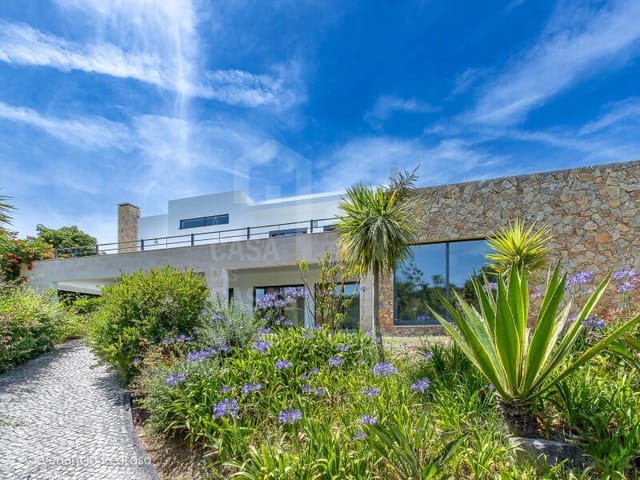
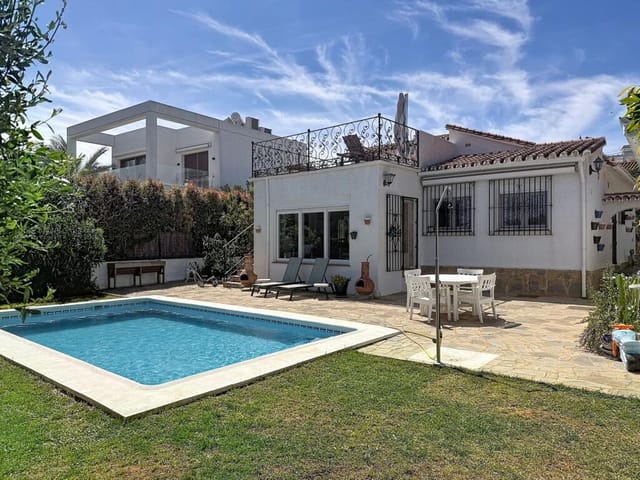
Stand on the rooftop solarium at dusk, a cold glass of Manzanilla in hand, and watch the sun drop behind Gibraltar while the lights of Morocco flicker awake on the horizon. That's not a postcard. That's a Tuesday evening. This single-storey villa in the hills above Manilva delivers one of those rare combinations—a fully renovated main home, a completely self-contained guest apartment, a private pool, and genuine sea views—all within walking distance of the Mediterranean. The house sits on a 530-square-metre plot in a year-round residential pocket of Casares Costa, the kind of neighbourhood where families actually live rather than just show up in August. Neighbours keep their gardens tidy. The streets are quiet without being remote. And the beach? Reachable on foot in under twenty minutes through a dedicated pedestrian underpass that cuts safely under the AP-7 motorway. Mornings, you'll see walkers and cyclists doing that exact route at sunrise. Inside, the main villa stretches across 109 square metres and was comprehensively renovated in 2018—so the bones are solid and the finishes are current. The layout flows logically: a proper entrance hall that gives the house a sense of arrival, a kitchen with enough room to actually cook in, a separate dining room for longer evenings, and a living room that catches good natural light through most of the day. The master bedroom is genuinely spacious, the bathroom has been done properly, and there's a guest WC so the practicalities of hosting are already sorted. This isn't a holiday flat dressed up as a house. It feels like a home. What makes this property genuinely different is the guest apartment. At 40 square metres with its own private entrance, it functions entirely independ ... click here to read more
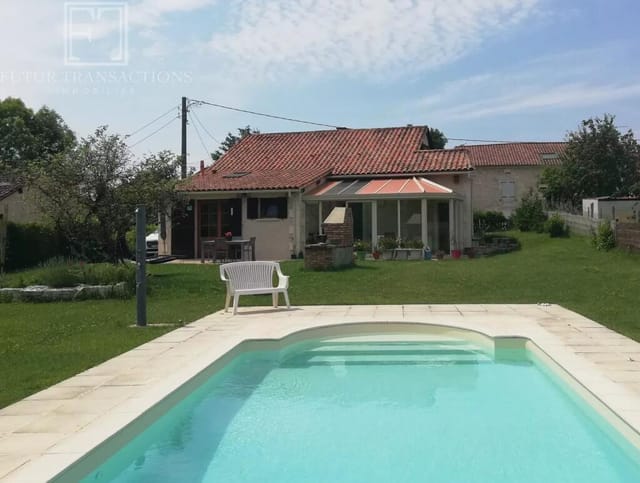
Picture 1
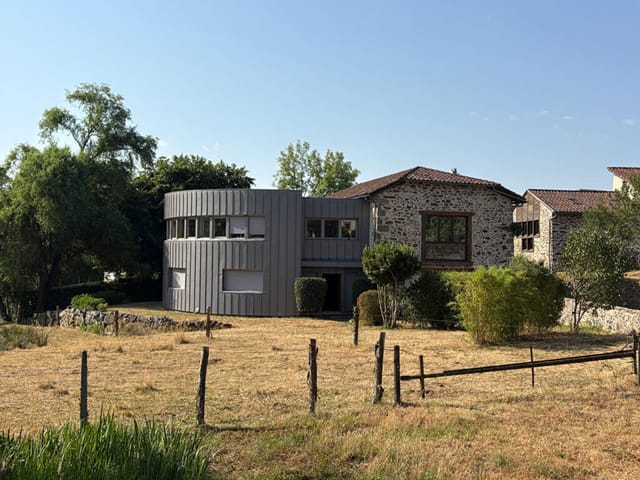
On a quiet Sunday morning in Saint-Étienne-de-Maurs, the smell of bread drifting from the boulangerie on Rue du Commerce reaches you before you even open the kitchen window. That's the kind of place this is. A village where people still nod to strangers, where the weekly market on the square sells raw-milk Salers cheese and jarred walnut confiture made two valleys over, and where a 265-square-metre house with an architect-designed extension can still be yours for a price that would barely buy a two-bedroom flat in Lyon. The property itself is a genuinely rare find in the Cantal. The original stone building — solid, unpretentious, the kind that's been weathered into character rather than manufactured with it — has been extended by an architect with a confident eye. The result is a 65-square-metre living area that floods with southern light through oversized glazing, the kind of room where the boundary between inside and the garden terrace quietly dissolves on warm evenings. A suspended mezzanine floats above the dining room below, visible from the kitchen, adding a vertical drama you simply don't expect in a village house at this price point. It's the detail that stops you mid-tour. The layout is thoughtful in ways that matter day-to-day. The fitted kitchen opens directly into the dining room — not through a corridor, not around a corner — so cooking for eight people on a Friday night feels social rather than isolating. The original building retains a master suite with its own shower room and WC on the ground floor, meaning guests or older family members never need to navigate stairs. Three further bedrooms and a well-equipped bathroom with both bathtub and shower occupy the main sleeping wing, while the upper level — c ... click here to read more
Picture 1

Stand at the kitchen window on a July morning and you'll understand immediately why people keep coming back to São Martinho do Porto. The smell of grilling sardines drifts up from the waterfront restaurants before noon. The bay—that famous shell-shaped curve of sheltered water the locals call the Concha Azul, the Blue Shell—catches the Atlantic light in a way that makes the water look almost turquoise, impossibly calm for a coastline this wild. And from a house like this one, you're inside all of it, not just passing through. This is a properly built, three-bedroom detached villa on a 480-square-metre plot in one of São Martinho do Porto's quieter residential streets—the kind of street where neighbours actually say good morning, where kids cycle without helmets, and where the biggest daily drama is deciding whether to walk to the beach before or after the pastelaria opens. At €415,000 for 165 square metres of solid construction in good condition, it's a foothold in one of Portugal's Silver Coast gems before prices close that door permanently. The house runs across two floors with a clear logic to it. Ground level is social: a broad living room anchored by a wood-burning fireplace that earns its keep from November through February, a dining room that fits a proper table for eight, a fully fitted independent kitchen with pantry, and a guest bathroom. What lifts the kitchen above the ordinary is the enclosed sunroom attached to it—glass-wrapped, bright, and opening directly onto the garden. On a winter afternoon when the Atlantic is doing its thing outside, you can sit in there with coffee and a novel and feel smug about every life choice you've made. Upstairs, the private floor holds a master bedroom with its own en-sui ... click here to read more

Picture 1

On a still morning in the Périgord Noir, the only sounds you'll hear from this hamlet courtyard are birdsong, the faint echo of a church bell drifting over from Castels, and the soft splash of water in a 12-by-6-metre saltwater pool that looks straight out over a valley that hasn't changed much in centuries. That's not a selling point — that's Tuesday. This is a rare opportunity to acquire not one but two authentic Dordogne stone houses sitting side by side on roughly 8,000 square metres of grounds in the commune of Castels et Bézenac. A shared cobbled driveway and a gated private courtyard connect them, and together they form a property that functions equally well as a large family holiday compound, a multi-generational retreat, or a live-in renovation project with serious long-term upside. The asking price of €294,000 for the entire ensemble — pool, dovecote, garage, outbuildings, courtyard and all — is the kind of number that makes people do a double-take when they check it against what comparable Dordogne properties have been selling for. The larger of the two houses is the one that stops you at the door. Ground floor: a proper country kitchen with an adjoining shower room and WC, and a living-dining room anchored by a character stone fireplace and a pellet stove — the kind of room you want to be in when November rain is hitting the terrace outside and a cassoulet is on the hob. French doors open both toward the front courtyard and the rear garden, so the space breathes in summer and feels sealed and warm come autumn. Upstairs, two bedrooms and a small bathroom with WC. It's not complicated. It's exactly what a Dordogne farmhouse should be. The second house, slightly more compact, has its own kitchen, a living roo ... click here to read more

Picture 1