Houses For Sale In Europe With 2+ Bedrooms (page 5)

Houses for sale in europe - homestra offers the largest amount of european real estate with over 200,000+ properties, find any type of property within your budget from villas to country homes. buy or rent your perfect home in europe. (page 5)

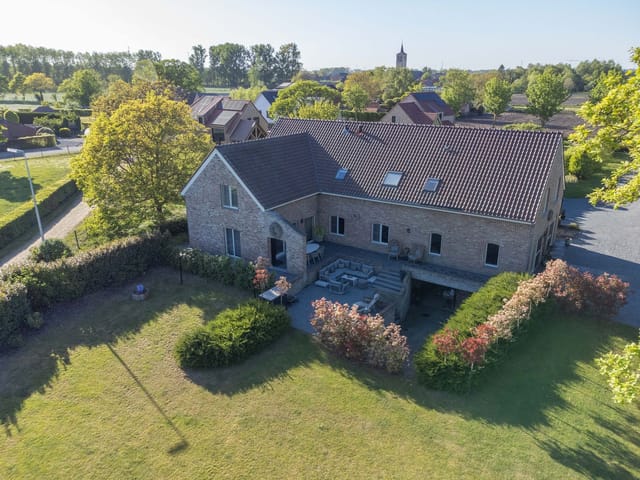
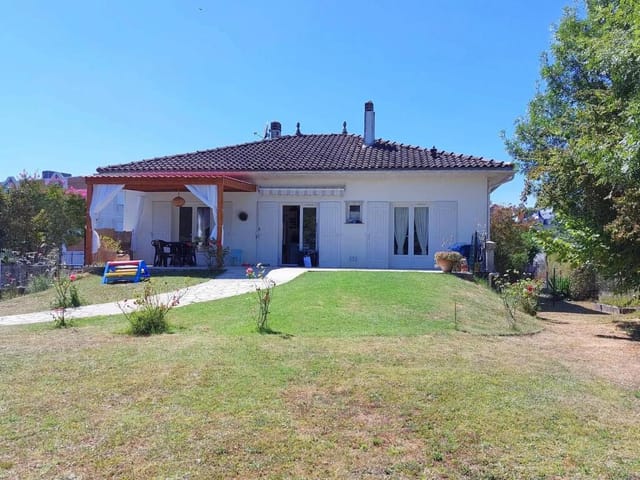
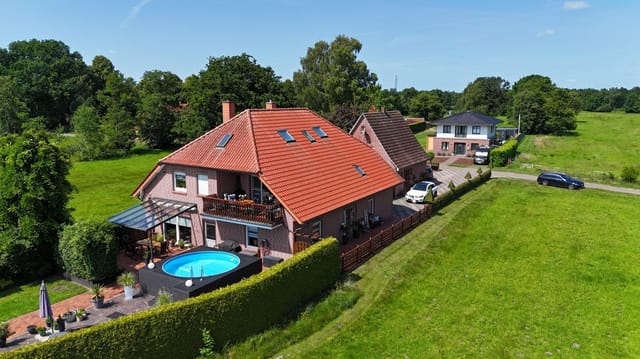
Early morning in Getelo, the air carries the smell of pine and damp grass from the woods that edge Am Hundebrook. You open the kitchen window and there's nothing out there but birdsong, a narrow lane, and fields rolling quietly toward the Dutch border — barely a kilometre away. That's the texture of daily life here. Unhurried, green, genuinely quiet in a way that most of Europe has largely forgotten. This is a proper five-bedroom detached house on a 956 m² plot in the village of Getelo, in the Grafschaft Bentheim district of Lower Saxony. It sits on the edge of one of Germany's most underrated cross-border regions, where German and Dutch rural life blur together in an easy, practical way. At 195 m² of living space, it's a substantial home — generous by any measure — and it's in good condition, move-in ready without a renovation project looming over your first weeks of ownership. The ground floor makes a strong case for itself from the moment you walk through the door. A bright living room flows naturally into the dining area, and from there the garden draws your eye through the glass. One bedroom and a full bathroom sit on this level too, which gives the house a flexibility that most properties its size simply don't have. Single-floor living is entirely possible here — useful for older family members visiting for extended stays, or for owners who want the option as life changes. Upstairs, four more bedrooms spread out across the upper floor, each one well-proportioned and lit generously by natural light. These aren't the token box rooms you find in houses where the floor plan was clearly an afterthought. They feel like actual rooms — suitable for a rotating cast of guests, a home office that stays a home office, a spa ... click here to read more

Front view of Am Hundebrook 2

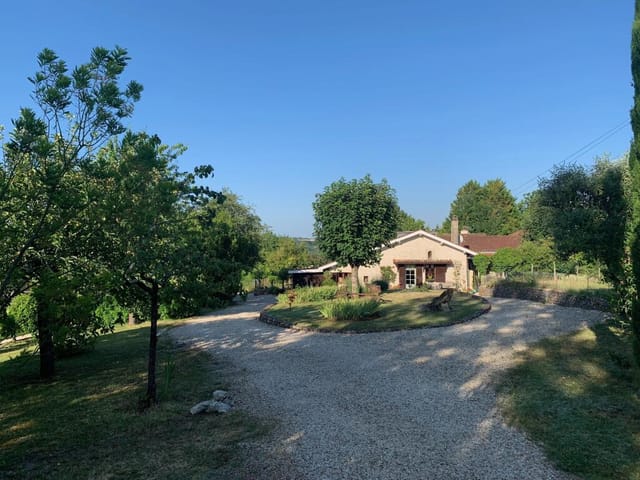
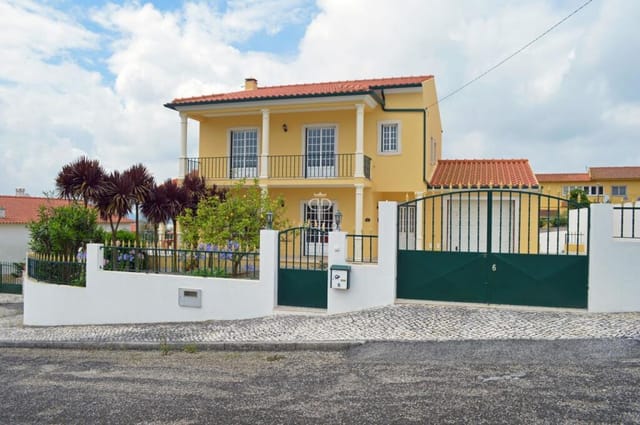
The first thing you notice on a summer morning here is the silence — or rather, the particular quality of it. Not the absence of sound, but the specific Algarvian soundtrack: cicadas in the carob trees, the distant bark of a neighbor's dog somewhere over the next hill, and the soft hiss of the irrigation system moving through the orange grove before the heat of the day settles in. Stand at the edge of the infinity pool with a coffee at seven in the morning, looking out over the rolling hills toward Silves, and you'll understand immediately what makes this property different from the resort hotels and whitewashed condos crowding the coast. This is 21,100 square meters of private land in the Sito do Figueiral, a quiet rural pocket just four minutes by car from one of the most historically rich towns in the entire Algarve. The 210-square-meter villa sits on the elevated part of the plot, giving the pool terrace and south-facing terrace those unobstructed views over the Arade valley countryside that no building regulation will ever take away from you. It's a four-bedroom, four-bathroom home with enough room for two families to coexist comfortably without ever getting in each other's way — the kind of space that turns holiday homes into genuine gathering places for extended families and close friends year after year. The villa itself dates to 1951, but what you're buying today is the result of a thorough renovation that has dragged the bones of that original structure firmly into contemporary living. Every room has air conditioning. The bathrooms — four of them — are finished with proper care: two full bathtubs for the long evenings when you don't want to rush, three showers, and vanity units that don't feel like afterthoug ... click here to read more

Main view of Sito do Figueiral villa

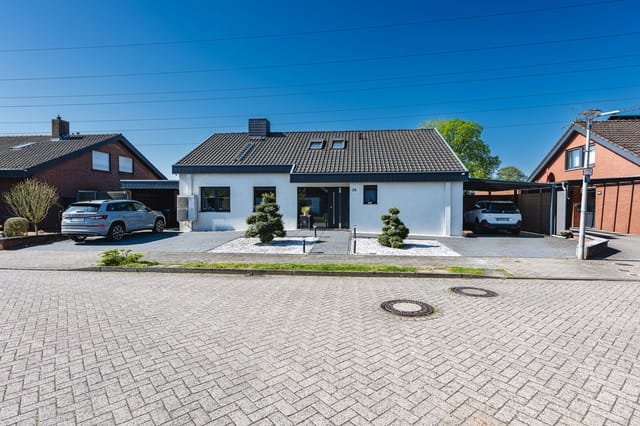
Stand in the conservatory on a Tuesday morning in October, coffee in hand, and watch the low North Sea light roll across the dike. The sheep are already out. A cyclist passes on the path below. It's quiet in that particular way that feels earned — the kind of quiet that reminds you why you left the city in the first place. This is Ditzumerverlaat, and this is exactly what 225 square metres of well-considered living space in one of Lower Saxony's most coveted coastal corners actually feels like. Set on a fully fenced 861m² plot along Achter't Verlaat, this three-bedroom, two-bathroom detached house occupies a genuinely rare position: directly adjacent to the Lower Saxony Wadden Sea National Park and the Dollard estuary, yet just over ten minutes from Bunde's supermarkets and eleven minutes from the motorway. It's the kind of location that sounds too convenient to be real, but the map doesn't lie. The Dutch border is a five-minute drive. The fishing village of Ditzum — where trawlers still come in with the tide and the locals eat Fischbrötchen by the harbour — is seven minutes away. The house itself was built between 2001 and 2010, and it shows the confident proportions of that era without any of the dated finishes. A wide central hallway anchors the ground floor, pulling natural light from multiple directions and giving the whole plan a sense of ease you don't often find in properties this size. The living room runs generous and bright, vinyl flooring underfoot that's practical without looking it, and the flow straight through to the conservatory is the detail that will make you linger. Triple-glazed, underfloor-heated, fitted with pleated sun blinds — this is not a lean-to glass box you use for three weeks a year. Loca ... click here to read more

Front view of Achter't Verlaat 23

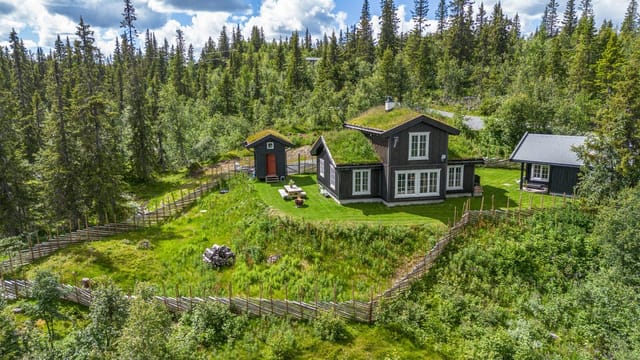
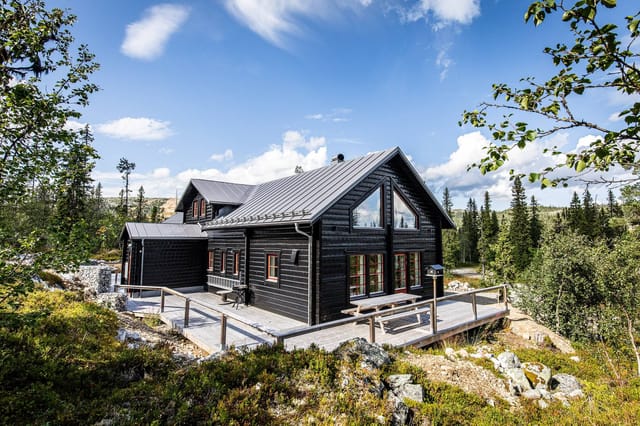
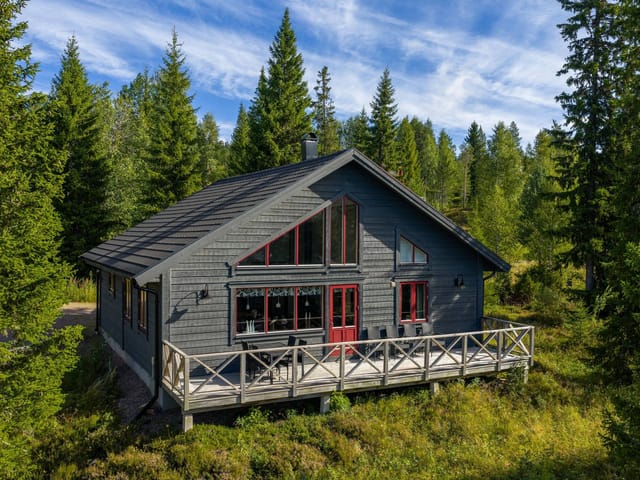
Step outside on a September morning and the whole valley is yours. Cloudberries glowing orange in the low sun, the outline of Gaustatoppen sharp against a pale sky, the smell of birch and cold air coming off the plateau. That's the daily reality at this timber chalet on Kultanvegen, sitting at 681 meters above sea level in Tuddal — one of Telemark's most quietly rewarding mountain communities, and still a genuine secret compared to the more trafficked Norwegian ski resorts further north. Built in 2009 by Norsk Fjellhus, a builder with a long reputation for getting the Norwegian mountain cabin right, this 98-square-meter property wears its credentials lightly. Turf roof. Solid timber walls that take on a deeper warmth as the years go by. The kind of construction that isn't trying to look like a traditional Norwegian hytte — it simply is one, without the affectation. Pull open the front door and the main living space opens up immediately. The kitchen and living area share one connected room, framed by exposed ceiling beams and warmed by a two-way fireplace you can watch from the sofa or the dining table. After the kitchen was extended in 2021, there's now real counter space — induction cooktop, oven, dishwasher, fridge-freezer all integrated — without the cramped, make-do feel of so many mountain kitchens. The large windows above the dining area frame Gaustatoppen, Gaustaknea, and Bonsnos like a painting that changes with every season. In January, those peaks are white and severe. In July, they turn green-grey under long evening light that barely fades. Everything in the chalet sits on a single level, which makes it genuinely practical for families. No stairs to navigate after a 20-kilometer ski loop or a long day picki ... click here to read more

EiendomsMegler1 v/Halvor Østerli presents Kultanvegen 286

Stand at the kitchen window on a Tuesday morning and you can count the fields all the way to Randers Fjord. No rooftops blocking the line. No traffic noise. Just the low whistle of a North Jutland wind moving through the old trees at the edge of the plot, and the particular stillness that only comes from 4,403 square metres of your own land. Trehøje 14 sits on a gentle ridge just outside Øster Tørslev, a small community roughly 15 kilometres from the market town of Mariager and about 30 from Randers. The address puts you deep inside a part of Denmark that most visitors never reach — not because there's nothing here, but because what's here doesn't advertise itself. Rolling farmland, stone churches, cycle routes that cut through beech forests to the fjord's edge. The locals know. You'll figure it out fast. The house itself has a history that shows in the bones. Originally raised in 1880, it was rebuilt substantially in 1980, leaving it with the solidity of old construction and the practical layout of a home designed to actually be lived in. At 172 square metres across two floors, nothing feels cramped and nothing feels wasteful. The first floor holds a central living room — the kind of room where a wood fire makes the whole space feel smaller in the best possible way on a February evening. Downstairs, the kitchen-diner and a separate dining room both open directly to the terrace and garden. That matters more than it sounds. In summer, dinner migrates outside without ceremony; in autumn, you leave the terrace door cracked while you cook and the smell of wet grass drifts in. Five bedrooms give this property a flexibility that smaller Danish country homes simply can't match. A couple with children has obvious options: thr ... click here to read more

Front view of Trehøje 14

Early morning in Santa Bárbara de Nexe, the light does something particular. It comes in slow and golden over the hills east of Faro, catching the white walls of the house at Caminho do Telheiro before the rest of the village is even stirring. You pour a coffee, step onto the wraparound terrace, and the entire Algarve countryside lays itself out in front of you — no neighbors in the sightline, no road noise, just the faint sound of birds in the old carob trees and the smell of warm stone baking in the morning sun. That is the daily reality of living in this three-bedroom villa, and it's the kind of thing that's genuinely difficult to leave behind. Santa Bárbara de Nexe sits on a ridge in the hills above Faro, roughly ten minutes inland from the coast. It's not a tourist village — it's a working Portuguese community with a proper café on the square, a small church whose bells you can hear from the garden on Sunday mornings, and a weekly market where the same families have been selling their almonds and citrus for generations. The contrast with the packed beaches of Vilamoura or Albufeira, just 25–30 minutes west on the A22, is striking. Up here, you get the real Algarve — the one that exists when the package holidaymakers have gone home. The property itself sits on 4,890 square metres of land. That's the first thing that registers when you arrive: the sheer scale of the plot relative to the house. The villa's living area runs to 110 square metres across a single level — three bedrooms, two bathrooms, an open kitchen and living space — but the total built footprint, including the garage beneath the pool, reaches 200 square metres. The garden wraps around all sides, dense with possibility. Old fig trees, a stretch of scru ... click here to read more

Main view of Caminho do Telheiro, 3

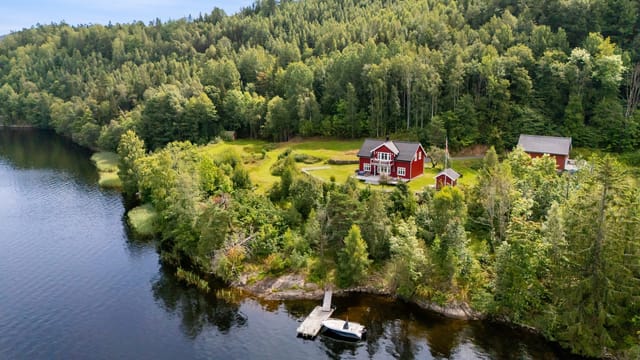
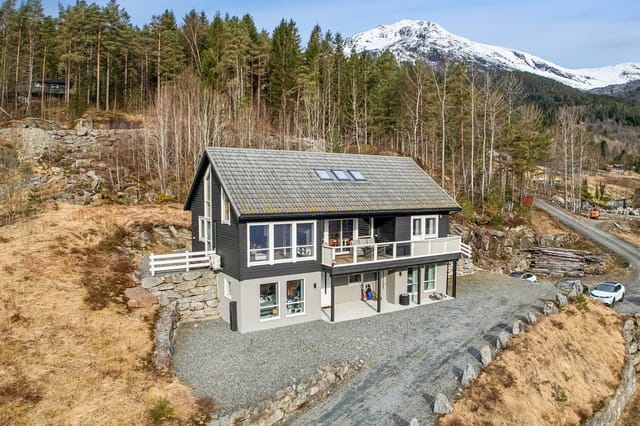
Step out onto the terrace at Holmavegen 30 on a clear July morning. The fjord is flat and silver, the archipelago spreads out in front of you like a handful of green islands dropped into the water, and the only sound is the rope on the dock tapping against the boathouse wall. Coffee in hand, you realize the boat is right there, ten steps down the rock, and Bergen is forty minutes away by car. This is what Norwegian coastal life actually feels like. Hauglandshella sits on Askøy island, connected to Bergen by the Askøy Bridge — one of the longest suspension bridges in Norway — which makes the commute into the city effortless while the setting feels completely remote. This stretch of the island's eastern shoreline is quiet, unpretentious, and genuinely beautiful in a way that photographs never quite capture. The light in late spring, when the sun barely sets and the rocks stay warm until midnight, is something else entirely. The chalet itself was built in 1981 and sits on a generous 4,792 square meter plot that rolls down to its own private shoreline. Ninety square meters of interior living space sounds modest until you're standing under the 3.5-meter ceiling in the living room, looking through the large windows at an unobstructed stretch of open water. That ceiling height changes everything. The stone fireplace anchors the room — and come October, when the Norwegian autumn arrives in earnest, you'll be glad it's there. The open kitchen sits alongside the dining and living areas, and whoever's cooking has a direct sightline to the sea. That's a design decision you only appreciate once you've done the dishes while watching a boat drift past in the dusk. Two bedrooms on the main floor handle the basics comfortably, each wi ... click here to read more

Welcome to Holmavegen 30 - a rare leisure property with its own shoreline and boathouse.

Step outside on a Tuesday morning in late September and the air smells like pine resin and cold lake water. The trees along Skovvænget are already turning — amber and rust bleeding through the canopy overhead — and the only sound is a woodpecker working somewhere deep in the forest behind the garden. This is Ry. And if you've never considered Denmark's Lake District as a place to plant roots, you're about to change your mind. Skovvænget 18 sits on a 1,275 square meter plot in one of Ry's most sought-after residential pockets — a low-traffic street with a genuine woodland character that isn't just a marketing description. The name literally translates to "Forest Lane," and the street earns it. Mature trees frame the property on all sides, and the garden has been cultivated over decades into something genuinely private: dense perimeter plantings, a broad lawn with room to breathe, and a south-facing terrace where afternoon sun lingers well into the evening. In summer, the garden becomes the entire living room. The villa itself was built in 1997 — classic Danish parcelhus construction, red brick, black-tiled roof — and at 196 square meters of interior living space, it's a properly sized home, not a weekend squeeze. Four bedrooms, two bathrooms, six rooms in total spread across a single well-organised floor. The layout is generous without being wasteful. Large windows pull the garden into the main living area visually, so even on rainy November days when you're indoors watching the birches drip, the connection to the outside world never really goes away. The kitchen is fully equipped, practical, well-maintained. Both bathrooms are contemporary and in good order. A utility room handles the practicalities. An entrance hall t ... click here to read more

The house with red bricks and black tiled roof surrounded by a lush garden with green lawn and dense planting. Sunlight shines through the treetops onto the terrace.

Stand on the terrace at eight in the morning, coffee in hand, and watch the mist lift off the Sierra de Grazalema. The fairways below are already catching the first proper light of the day, that sharp Andalusian gold that makes everything look slightly unreal. Behind you, the kitchen hums quietly — the Siematic cabinetry, the marble floors still cool underfoot, the smell of yesterday's olive wood still faintly in the air from the fireplace. This is what a morning looks like on Calle Olivo 10, inside a five-bedroom villa at Arcos Gardens Golf Club, and it's the kind of morning that makes you cancel the flight home. Arcos de la Frontera sits about five kilometres up the road, perched on a dramatic limestone ridge above the Guadalete River. It's one of the true pueblos blancos — the white villages of Cadiz province — and unlike some of the more tourist-worn towns in the region, Arcos still belongs to the people who live there. On Sunday mornings, the Plaza del Cabildo fills with locals drinking manzanilla and arguing about football. During Semana Santa, the brotherhoods carry their floats through streets barely wide enough to pass, incense drifting over the crowd. The September feria fills the lower town with flamenco, horses, and the particular chaos of a party that has been happening in the same way for centuries. This is the cultural heartbeat just down the road from your front gate. The villa itself was built in 2008 and sits on a 2,360 square metre plot that gives it a sense of breathing room rare in gated communities. Four hundred square metres of living space across two floors, designed with a clarity of purpose that holds up fifteen years on. The layout is generous without being wasteful — the open-plan kitchen an ... click here to read more

Main view of Calle Olivo 10 villa

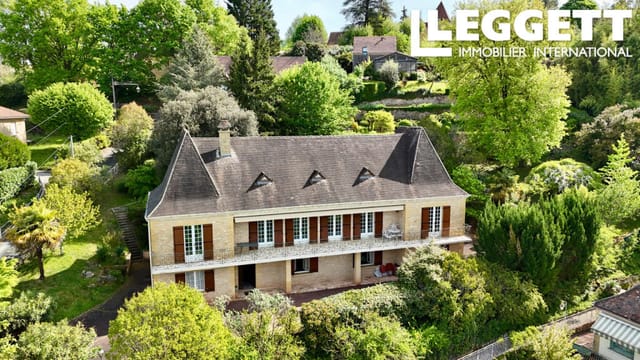
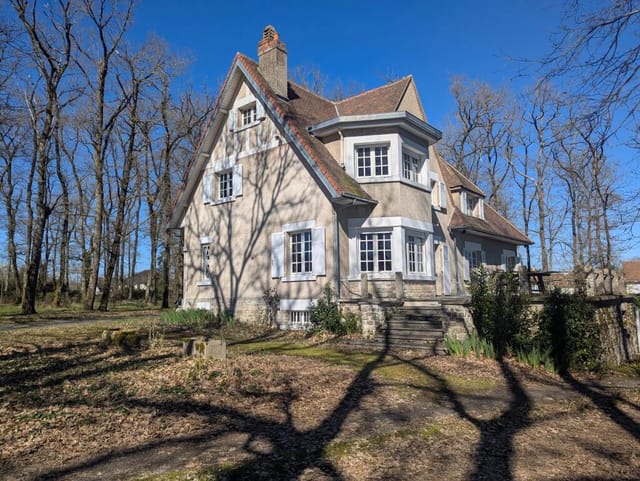
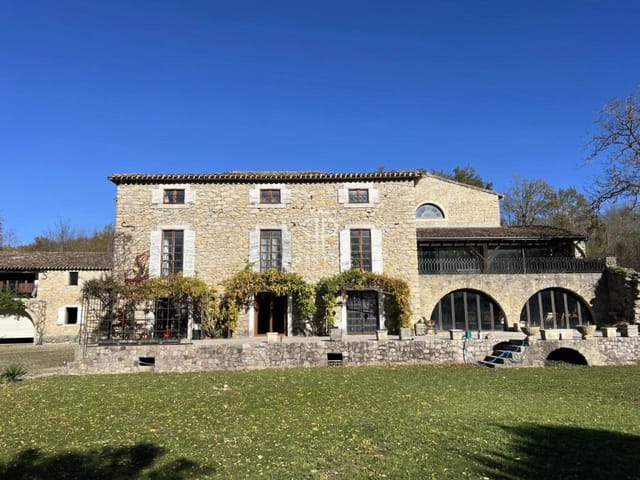
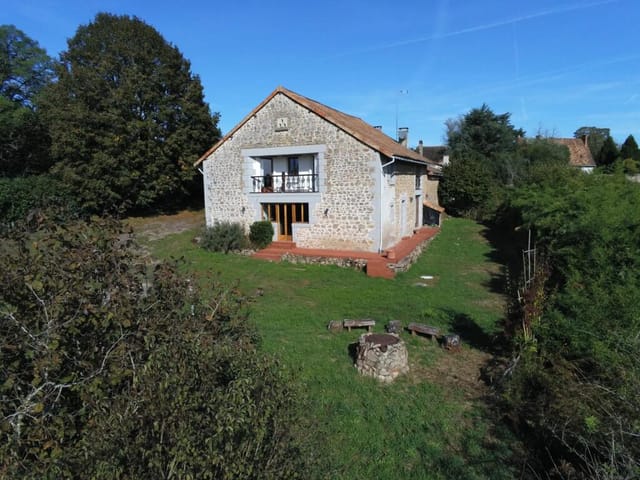
The church bell in Puyjourdes rings at eight on Sunday mornings, and if you're standing in the kitchen of this old stone house with the wood-burning stove crackling and a bowl of café au lait warming your hands, it hits differently than anything you've experienced in the city. That sound—unhurried, ancient, completely indifferent to your schedule—is the whole point of owning a place like this. This four-bedroom property in the Lot department of Midi-Pyrénées sits right on one of the recognised variants of the Chemin de Saint-Jacques, the medieval pilgrimage route that draws tens of thousands of walkers, cyclists and seekers every single year. That's not a footnote. It's a defining feature of daily life here, and—as we'll get to—a serious practical asset for anyone thinking about rental income. The main house has been looked after. Ground floor gives you a kitchen and dining room anchored by a wood-burning stove, a sitting area, a bathroom and a master bedroom with a sliding door that opens onto the garden in the warmer months. Move through to the second living room, which is heated by a mass stove—the kind of dense, slow-release heat source that keeps the room comfortable from a single evening fire well into the following afternoon. A pull-down staircase leads up to the mezzanine bedroom tucked above it, which has the kind of intimate, tucked-away quality that guests tend to request repeatedly. Above that living room on the first floor, a large loft sits waiting. It could become a third bedroom suite, a studio, a reading room with valley views—the permissions process in this corner of Lot is navigable, and local artisans who know the building codes are not in short supply. The two-storey stone barn is its own separate ... click here to read more
Picture 1

Stand on the wooden deck beside the pool at seven in the morning, coffee in hand, and the Pyrenees are right there — close enough that you can pick out the ridgeline detail, far enough away to feel like a painting. The air smells of pine resin and warm stone. No road noise. No neighbors. Just swallows cutting arcs above the meadow and the low hum of your own private world. That is the daily reality at La Forge del Mitg, a six-bedroom country estate spread across nearly 10 hectares of Catalan foothills just outside Saint-Laurent-de-Cerdans, a small working village in the Pyrénées-Orientales department — the very southern tip of France, where the culture tips Spanish and the light tips golden almost year-round. This is not a property that requires imagination to inhabit. Renovated progressively through to 2020, with four distinct buildings on site and a swimming pool that faces south toward the mountains, it is ready to be lived in from the moment you arrive. The main house runs to roughly 112 square metres across two floors. Downstairs, an open-plan kitchen and dining area opens into a living room with cathedral ceilings and a working fireplace insert — the kind of space where a wet November afternoon actually feels like an occasion rather than something to endure. A French balcony bedroom, bathroom, and laundry room round out the ground floor. Upstairs, two more bedrooms and a generous master with a built-in wardrobe. The proportions are honest and liveable, not inflated for a brochure. Attached to the main building is a 48-square-metre ground-floor apartment with its own entrance. Three rooms, open kitchen, two bedrooms, a walk-in Italian shower that is also wheelchair accessible. This space functions brilliantly for ... click here to read more
Main view of La Forge del Mitg 66260

Picture a Saturday morning in early June. You open the kitchen window and the air carries salt from the Øresund, maybe a trace of coffee from the bakery two streets over on Gl. Strandvej. It's quiet enough to hear a bicycle tick past on Ejlersvej. This is what daily life feels like in Humlebæk — unhurried, sharp with coastal air, and just forty minutes from Copenhagen by train. Built in 2018, this three-bedroom brick villa at Ejlersvej 8 is the kind of property that does its job so well you stop noticing the design and just start living in it. That's actually a compliment. The floor plan moves with you rather than against you — open living and dining areas that shift naturally into the garden, bedrooms with generous windows that pull in the northern light, a kitchen arranged around a central island so a Sunday morgen brød session doesn't feel cramped. The black steep-pitch roof against pale exterior brick gives the house a clean, grounded silhouette that reads unmistakably Danish without feeling like a showroom. The kitchen deserves its own moment. Light wood cabinetry, a tiled backsplash, a large window angled toward the garden — it's set up for actual cooking, not just photography. The island has a sink, which matters more than people realize until they're prepping a pile of fresh langoustines from the Helsingør fish stalls and need a second water source. Modern appliances throughout, nothing gimmicky, everything functional. Both bathrooms are finished with contemporary fixtures, walk-in showers, and quality tiling. Two separate toilets mean weekend guests and school-morning chaos don't collide. The master bedroom opens directly onto the garden — on warm evenings, that sliding connection between inside and outside i ... click here to read more
A brick villa with a black roof stands in a garden with a lawn and bushes. A fence surrounds the property, and some potted plants are on the terrace.

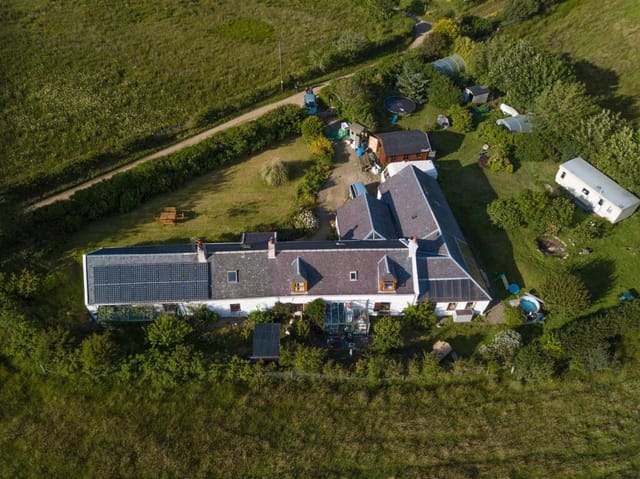
Stand at the kitchen window on a still October morning and watch the old water wheel turn against a backdrop of copper-tinged birch trees. The mill lade runs quietly below, the same stone channel that carried water here since 1733. That's the kind of detail that stops you mid-pour and makes you set your coffee down slowly. Longhill Mill isn't a conversion you walk through with a checklist — it's a place you walk through and start mentally rearranging your life. Sitting on the northern edge of Lhanbryde, just off the A96 between Elgin and the Moray Firth, this Grade A Listed former mill house occupies 0.96 acres of mature grounds on the boundary of the historic Innes Estate. The drive in alone tells you something is different: you arrive via the original mill lade, past the restored water wheel, and into a property that has been lived in thoughtfully for over twenty years since its 2003 conversion. The bones of the building go back to 1733. Rebuilt after a fire in 1891, the mill has spent the last two decades being gradually shaped into a genuinely comfortable family home — not a showroom, but a real working residence with five bedrooms, two bathrooms, and a self-contained annex that has been running as a successful holiday let for the past five years. Original grain hoppers, exposed timber beams, and millstones remain where they've always been. Nobody ripped them out and installed recessed downlights everywhere. Smart choices. The ground floor opens into a welcoming lobby with a double bedroom and a shower room that doubles as a utility — useful if you've just come back from a walk along the Burghead coastal path and don't need to traipse through the house. Head upstairs and the space opens up considerably. The kitche ... click here to read more
Front view of Longhill Mill

Stand at the kitchen window on a still October morning and the loch is glass. Mist sits low in the pines across the water. A red squirrel — there's a small colony in the Farigaig woods just up the track — moves along the garden wall and vanishes. The church bell from Foyers carries faintly on the wind. This is not a postcard. This is Tuesday. Hillhead Croft is a proper 1800s stone cottage on the east shore of Loch Ness, about two miles south of Foyers along the B852 — one of the quietest, most genuinely scenic roads in the Highlands. Three bedrooms, four bathrooms, 146 square metres of solid-walled living space, and a third of an acre of enclosed garden backing onto open Highland countryside. It's been well looked after. Move in, light the wood-burner, and start living the life you've been imagining. The building itself has real substance. Original beamed ceilings and deep stone windowsills that were here when Napoleon was still a going concern. Wood floors that creak in exactly the right places. But it's not a museum piece — the kitchen runs a proper freestanding electric range alongside an integrated dishwasher, and every bedroom has its own ensuite shower room with mains-fed pressure. That detail matters more than you might think when you've got three generations under one roof during a week in August. No one is queuing for the bathroom. No one is annoyed. The ground floor bedroom deserves a mention on its own. High ceilings, direct garden access, and a full ensuite — it works brilliantly as a guest suite, a work-from-home base, or accommodation for elderly relatives who'd rather not tackle the stairs. The dual-aspect lounge with its wood-burning stove in the original stone surround is where the evenings happen: a ... click here to read more
Main Image

Step outside on a quiet Tuesday morning in October and the only sounds you'll catch are the wind moving through the old oak trees and, faintly, the call of migrating birds crossing the flat South Jutland sky on their way to the Wadden Sea. That's your view from Horskjærvej 1. Not a neighbour's fence, not a busy road — just open countryside rolling toward one of Europe's great UNESCO landscapes, and a house behind you that's been standing since 1920 and has every reason to keep standing for another hundred years. This is rural Denmark the way it actually feels from the inside. Øster Gasse sits just east of the market town of Skærbæk, which means you get the silence of the countryside without the disconnectedness that sometimes comes with it. A ten-minute drive gets you to the shops, the school, the bakery on Storegade where locals pick up freshly baked rundstykker on Saturday mornings. The Wadden Sea National Park, Denmark's only UNESCO World Heritage site, is close enough to visit on a whim — an evening cycle down the flat bike paths, binoculars around your neck, timing your arrival with the late-afternoon tide. This is the kind of life people move to South Jutland to find. The house itself tells a story of practical care rather than quick flips. Originally built in 1920, it's been extended and renovated thoughtfully over the decades, and today it sits at 284 square meters of living space spread across two sections and two floors. That division is one of its most interesting features. The main section — 167 square meters — holds the core of daily life: a well-fitted kitchen with a dishwasher, an open dining area, a comfortable living room, and a master bedroom with built-in wardrobes. The bathroom here has underfloor h ... click here to read more
A farm consisting of several buildings arranged in a U-shape, surrounded by fields and trees in a rural area.

On a quiet morning in the Dordogne, you open the shutters of a stone farmhouse and the garden hits you all at once — the scent of cut grass still damp from overnight rain, the faint sound of a church bell drifting in from Eymet's medieval bastide, a swallow darting low over the saltwater pool. This is what owning this three-gite complex outside Eymet actually feels like. Not a hotel. Not a rental investment spreadsheet. A real place, with thick stone walls and oak beams worn smooth over centuries, that happens to pay for itself when you're back home. The property comprises three fully renovated and individually furnished dwellings — a one-bedroom, a two-bedroom, and a three-to-four-bedroom cottage — set across half an acre of mature walled gardens. Each one has its own kitchen, living and dining space, and bathroom, so you can host a multigenerational family gathering without anyone tripping over each other, or rent out two units while you stay in the third. That flexibility is genuinely rare, and in this corner of southwest France, it's worth a lot. The renovation work is thorough and thoughtful. Stone walls have been kept where they belong — on full display, not plastered over. Exposed beams run the length of the ceilings. But there's nothing rustic-to-a-fault about the practicality: electric radiators and wood-burning stoves mean the season stretches well beyond July and August, double glazing keeps heating bills honest, and a newly installed fosse septique (October 2023) means one major infrastructure cost is already behind you. The pool liner was replaced in June 2025. This is a property someone has been maintaining properly, not parking and hoping for the best. That 10m x 5m saltwater pool is the centre of summe ... click here to read more
Picture 1

Step onto the panoramic terrace at dawn, coffee in hand, and watch the light pull itself up over the Esterel mountains while the Côte d'Azur glitters somewhere far below. This is Mons — one of Provence's most quietly extraordinary hilltop villages — and mornings here have a particular quality that people who've experienced them tend not to forget. Sitting on nearly 3,000 square metres of land just a five-minute walk from the village square, this 260m² villa is a serious proposition. Six bedrooms, three bathrooms, a Diffazur swimming pool surrounded by olive trees and holm oaks, a vegetable garden, and views that stretch from the Var hills all the way to the Mediterranean on a clear day. Built in 1965 and maintained in good condition, the property has genuine bones — the kind of generous proportions and solid construction that newer builds rarely replicate — and plenty of room to update and personalise it into something truly exceptional. The ground floor opens with an entrance hall that leads into a large, light-filled living room with an open fireplace. On a January evening, with logs crackling and cold air pressing against the double-glazed windows outside, this room earns its keep. The dining room has a view — the sort you instinctively turn toward mid-conversation. The semi-open kitchen connects directly to the terrace, which means summer dinners happen outside almost automatically, plates passing through the kitchen window, the smell of Provençal herbs drifting up from the garden below. There's also a ground-floor office, useful for anyone who needs to work remotely without sacrificing the lifestyle that drew them here in the first place. Upstairs, six bedrooms spread out across the floor, two of them served by f ... click here to read more
Picture 1

On a Tuesday morning, you wake up to the sound of nothing in particular — a wood pigeon somewhere in the garden, the faint creak of old beams settling in the warmth. You pad downstairs in the main house, light the wood-burning stove in the kitchen, and by the time your coffee is ready, you've already decided: today you'll drive the twenty minutes to Brantôme's Friday market for cheese and walnuts, and the rest of the week can take care of itself. That's the rhythm Saint-Pardoux-la-Rivière puts you in. And once it gets hold of you, you won't want to leave. This five-bedroom stone property sits at the corner of a quiet lane just outside the village, where the only traffic is the occasional tractor and the neighbour's dog. The house is actually two adjoining cottages — currently connected and working beautifully as one generous family home — with three bedrooms and a shower room in the main section, and two further bedrooms plus two en-suite shower rooms in the guest wing. It's the kind of layout that solves problems. Extended family coming to stay? They have their own entrance, their own living room with a wood stove, their own space. You have yours. Everyone's happy. Or close the connecting door and rent the guest cottage independently during the summer months — the demand for self-catering accommodation in the Dordogne is very real, and very consistent. Throughout both sections of the house, the period character is intact and unhurried: exposed stone walls that keep things cool even in August, heavy oak beams overhead, fireplaces that have been warming people in this valley for well over a century. The main sitting room has a handsome stone fireplace and a wood-burning stove that makes winter weekends genuinely cosy. T ... click here to read more
Picture 1

On a still Tuesday morning in late September, you pour coffee in a kitchen that's seen two hundred and fifty years of Périgord life. The windows are open. Somewhere beyond the landscaped park at the front, the D708 is already carrying a few tractors toward the vineyards, but here it's quiet — just the particular hush of thick stone walls doing what they've always done. This is Montpon-Ménestérol, and this 495-square-metre manor house is the kind of place that doesn't come up twice. Let's talk about what you're actually getting. Thirteen bedrooms across the main house alone. Nine bathrooms. Two fully independent gîtes — one with two bedrooms, one with a single bedroom — each with its own entrance, its own rhythm. A reception hall with a catering kitchen that seats a crowd without anyone feeling squeezed. A converted outbuilding that now functions as a spa. A swimming pool screened by mature planting at the rear. Nearly four acres of ground, including a meadow large enough for horses if you want them. The main house itself dates from the eighteenth century, and the bones show it — thick limestone façades, a sweeping entrance staircase, original wooden floors that creak in exactly the right places. The ground floor is structured for living at scale. There's a proper kitchen with a pantry off it, a dining room that can take a long table, a sitting room, a living room, and two en suite bedrooms that make the whole floor workable as a self-contained wing. Up the staircase to the first floor: six bedrooms and two bathrooms — the layout that makes multi-family stays, or a small retreat operation, actually function rather than just feel crowded. The second floor surprises people. A sitting room up there, unexpectedly cosy given ... click here to read more
Picture 1

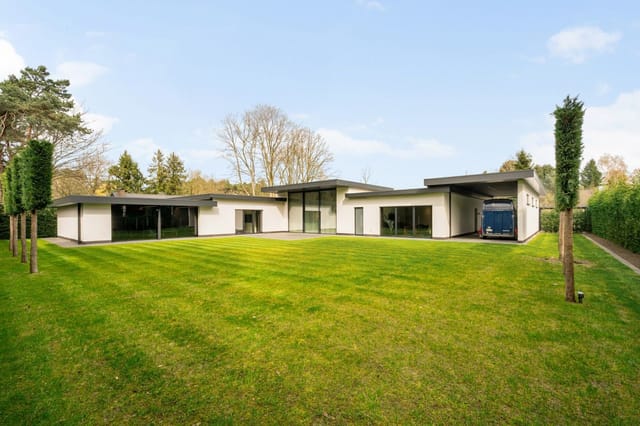
Step through the gate on Chaamseweg on a Saturday morning in late spring, and the first thing you notice is the silence. Not the silence of isolation — the silence of land. Twenty thousand square metres of it, rolling out in every direction in shades of green that shift with the light. Somewhere near the animal meadow, a donkey ambles along the fence. The smell of cut grass drifts through the open kitchen window. This is Meerle, and it gets under your skin fast. Set in the Flemish Kempen countryside just a stone's throw from the Dutch border, this four-bedroom detached villa on Chaamseweg 79 is the kind of property that makes you reconsider what a second home can actually be. At 536 square metres of living space — and with a substantial 380m² multifunctional outbuilding that locals know affectionately as 't Schuurke — this isn't a weekend bolt-hole. It's a proper estate, the sort of place you buy and never quite want to leave. The approach alone sets the tone. A long, sweeping driveway frames the house before you even reach the front door, flanked by mature hedgerows that deliver genuine privacy from the road. Inside the main villa, the entrance hall has that grounded, unhurried quality you find in houses built with care: original brick floor tiles underfoot, sleek plastered walls, and a cloakroom niche tucked neatly to one side. It tells you immediately that the people who kept this house took pride in it. The living room — roughly 38 square metres — has a bay window looking out over the rear garden and an open fireplace that makes winter weekends here feel genuinely restorative. This flows naturally into a study with windows on three sides, the kind of room where you could actually get work done or lose an afternoon ... click here to read more
Front view of Chaamseweg 79

Step outside on a February morning and the cross-country ski trail is literally at the edge of the garden. No bus, no car park, no queue. Just fresh tracks across the marsh and the kind of cold air that makes your lungs feel alive. That's the daily reality at Kremlavägen 5 in Lindvallen — one of the most practical, genuinely versatile mountain properties to come onto the market in Sälen's prime ski zone in years. Sälen doesn't get the international attention it deserves. Swedes know it well — this is where the Vasaloppet ski race ends its 90-kilometer journey from Sälen to Mora every March, drawing 15,000 skiers and creating an atmosphere unlike anything else in Scandinavia. But beyond that iconic event, the wider Lindvallen area operates at full pace from November through April, with downhill slopes, lit cross-country tracks, and the ski-and-swim bus running circuits that connect the valley's resorts. In summer, the same roads and trails flip their purpose entirely: mountain bikers take over, hikers tackle the marked routes up towards Städjan and Nipfjället, and the long Nordic evenings stretch past 10pm. The property itself sits in the Gubbmyren part of Lindvallen, which matters because this pocket of the valley has managed to hold onto its natural character. The marsh that runs alongside the garden isn't just scenery — it's where the cross-country groomed track passes directly, making ski-out access a literal fact rather than a marketing stretch. On still mornings you hear reindeer moving through the birch trees on the far side. In peak autumn, the marsh turns rust and amber, and the smell of cold peat drifts in through the kitchen window. The house is split across two connected residential units totalling 111 squa ... click here to read more
Exterior view of the house in winter

Picture this: it's a Saturday morning in February, the kind where the snow is still falling in fat, lazy flakes outside the window. You're wrapped in a blanket on the sofa, the wood-burning stove crackling in the corner, a mug of coffee warming your hands, and through the glass you can see the white outline of Trysilfjellet's slopes in the distance. Nobody has to be anywhere until they want to be. That is the daily reality of owning this two-bedroom chalet with a fully independent annex at Bjønnåsen Hyttegrend 102 in Trysil — and it doesn't get old. Set at 606 metres above sea level in the well-established Bjønnåsen cabin community, this 153-square-metre property sits on a generous 1,062-square-metre plot. It's a proper mountain chalet — warm timber panelling, underfloor heating underfoot, a layout that actually makes sense for family life. Not a weekend box. A place you'll find yourself driving to on a Thursday evening just to get an extra day in. Trysil is Norway's largest alpine ski resort, and that matters more than people realise when they're shopping for a Norwegian mountain holiday home. The ski season here runs reliably from late November through to April, with 68 slopes and 31 lifts spread across Trysilfjellet. The groomed cross-country trail network starts just 250 metres from your front door — a five-minute walk in ski boots — and links into hundreds of kilometres of prepared tracks threading through the birch forests above the valley. Ski hire, ski school for the kids, slope-side restaurants serving reindeer stew and warm cloudberry desserts: it's all within a short drive or a ski run away. In winter, the resort buzzes. Weekends bring Norwegian families from Oslo, Stockholm and beyond, yet Bjønnåsen itself ... click here to read more
Welcome to Bjønnåsen Hyttegrend 102!

Step outside on a Saturday morning and the air smells like cut grass and river water. The Ems valley is quiet at this hour — just birdsong, the distant hum of a tractor somewhere toward Lathen, and the soft creak of the garden gate as you carry your coffee to the first of three terraces. This is Johannesstrasse 3, Niederlangen Siedlung, and mornings like this are what the house was built for. Constructed in 2009 to a high standard, this five-bedroom detached home sits on a generous 1,630 square metre plot in one of the most quietly underrated pockets of northwestern Germany. It's close enough to the Dutch border — about ten minutes by car — that you can drive to Ter Apel for Dutch cheese and stroopwafels before lunch, then be back in time to fire up the gas fireplace and settle into the 56-square-metre living room before the afternoon fades. That kind of easy, dual-country rhythm is a genuine lifestyle perk here, and it's one you simply don't get in more obvious destinations. The house itself is 286 square metres of well-considered interior space spread across two full living levels and an attic. On the ground floor, a broad entrance hall opens into the main living room — south-facing garden doors pull in daylight from morning to dusk, and when those doors are open in July, the line between inside and outside essentially disappears. The fitted kitchen spans 15 square metres with a central cooking island that earns its keep; this isn't a galley you squeeze past, it's a space where four people can prep a meal simultaneously without bumping elbows. A 11-square-metre utility room sits just off the kitchen with its own exterior door, which means muddy boots and wet coats from a day cycling the Ems-Radweg never make it past ... click here to read more
Front view of Johannesstrasse 3

Step outside on a Tuesday morning in late June, and the light on the Helgeland coast does something you won't forget. It's low and golden even at 9am, bouncing off the water just a hundred meters from your front door, and the only sounds are a few gulls riding the wind above the shoreline and the distant chug of a fishing boat heading out past Herøy. This is Seløya. Small, quiet, and absolutely real. Ormsøyveien 7 sits at the end of a cul-de-sac on this island in Nordland, about as far from the noise of city life as you can get without losing the conveniences that actually matter. The grocery store is a nine-minute walk. The ferry terminal is thirteen. And the sea — your own included seaside plot right down to the water's edge — is about a hundred steps from your door. The house was built in 1963 and still carries that particular solidity you find in older Norwegian coastal homes: thick walls, a practical footprint, rooms designed for people who actually use them. In recent years it's had significant work done. New roof, new cladding, new windows, upgraded drainage, added insulation, and an electrical system updated post-2010. It carries a D energy rating, which for a traditionally built island home with a wood-burning stove and a heat pump doing the heavy lifting, is genuinely comfortable year-round. Inside, the ground floor opens through a covered entrance into a vestibule with a sliding wardrobe — practical for the kind of life you live here, where outdoor gear rotates constantly with the seasons. The kitchen is spacious, with older cabinetry that's been freshly painted and fitted with new hardware. It flows naturally into the hallway and the living room, where a wood-burning stove sits ready for February evenings ... click here to read more
Welcome to Ormsøyveien 7 - the property is located at the end of a cul-de-sac, ensuring little passing traffic and a private setting. Seaside plot just a stone's throw away.

The first thing you notice, standing on the terrace at Stølane 11, is the silence. Not a dead silence — a live one. Wind moving through the birch trees, the faint knock of a hull against a wooden pier below, and somewhere across the water, a curlew. Then the smell hits: salt air, wild grass, and if the season's right, whatever's ripening in the old fruit orchard behind the house. This is Bergegrend, a rural stretch of the Fusa coastline in Vestland county that most international visitors never find. That's exactly the point. The house itself was built in 1933 and 1934, and you can feel that in the best possible way. The basement is laid with thick stone walls — the kind that keep the interior cool in July and hold warmth from the wood stove long after the fire dies down in October. An extension was added in the early 1960s, giving the layout a slightly rambling, lived-in quality that no new build can replicate. Three floors in total, spreading across 113 square meters, with two living rooms on the main floor that catch afternoon light through large windows facing the fjord. The kitchen is traditional in character, which is a feature worth preserving — this is a house that lends itself to long, unhurried meals, not quick ones. Upstairs, the loft was renovated when a former kitchen space was converted into a proper bathroom. Three bedrooms sit on this level: the largest in the center, two smaller ones flanking it. It's a layout that works naturally for families — kids or grandchildren in the outer rooms, adults in the middle, everyone with enough distance to sleep in properly. In summer, the late Norwegian light means you'll want good curtains. Worth knowing. The garden is 1,710 square meters of freehold land, and it ea ... click here to read more
Originally built as a horizontally divided semi-detached house, used as a detached house for decades

Step outside on a still October morning and the Reichswald forest is right there — a wall of oak and beech beginning literally at the edge of the paddock. The horses are already awake. You can hear them shifting in the stables before you've put the kettle on. This is Grafwegen, a quiet village in Germany's Lower Rhine region where the pace of life is governed by seasons and saddle schedules, not commuter trains. This three-bedroom equestrian estate on Grafwegenerstrasse sits on roughly 22,250 square meters of fenced, fully operational horse property — and it's genuinely one of those places that takes a few minutes to properly absorb when you first arrive. The main farmhouse, built around 1950 and comprehensively renovated in 2004, has been divided into three independent living units totaling around 360 m² of interior space. Practical, yes. But more than that, it's versatile in a way that opens up a real range of life plans. The main house itself runs on underfloor heating beneath ceramic tiles — quietly comfortable in a way you notice most on a January evening when the temperature outside drops. Ground floor: a proper entrance hall with a cloakroom, a country kitchen fitted with built-in appliances, and a living room that catches the afternoon light well. A dedicated workspace sits off the main corridor, which matters if you're planning to work remotely or manage the property as a business. Upstairs, the master suite has a walk-in closet, a bathroom with a jacuzzi, walk-in shower, and double sinks, plus a sauna. That last detail isn't decorative — after a long morning in the saddle or an afternoon splitting firewood, it earns its keep. The first apartment occupies the ground floor of the secondary wing. Living room, o ... click here to read more
Front view of Grafwegenerstrasse 16

Picture this: a Saturday morning in late June, the Ariège valley still cool from the night before, swallows cutting low over the garden as you carry your first coffee out to the rear terrace. The Pyrenees are right there — not as a distant postcard, but close enough that you can read the ridgelines. That's morning life at this detached three-bedroom villa inside the gated Château Cazalères park, and it takes about forty-eight hours before the pace of Daumazan-sur-Arize starts to feel like the only reasonable way to live. This part of the Ariège department sits in one of France's most quietly compelling corners. Not the overtouristed lavender-and-rosé Provence of Instagram, and not the ski-resort bustle of the higher Alps. This is the authentic south — working villages, medieval bastides, rivers cold enough to make you gasp in August, and a cultural calendar that rewards those who show up curious. Foix, just 25 kilometres east along the N20, has a proper three-towered château rising straight from a rocky outcrop above the town centre — the kind of thing that makes you do a double take the first time you round the bend and see it. The Saturday market under those towers sells everything from raw-milk Tomme de Brebis to Ariège honey and fat garlic braids. Toulouse is about an hour by car, which means Michelin-starred restaurants, the Capitole opera house, and flights back to Amsterdam, London, or Brussels are all genuinely convenient rather than merely technically possible. The village of Daumazan-sur-Arize itself is small, honest, and friendly to outsiders in the unsentimental way that rural French villages tend to be. Boulangerie in the morning, a bar-tabac for a pastis in the evening, a cycle route that follows the Ariz ... click here to read more
Front view of Residence Chateau Cazaleres 109

Step outside on a still October morning, coffee in hand, and the view from the covered terrace at Vechtetalstraße 41 stops you in your tracks. Open fields roll out toward the horizon, the garden is doing its slow golden turn, and the only sound is the wind moving through the mature oaks at the edge of the property. This is what 8,101 square metres of Lower Saxony countryside actually feels like from the inside. Built in the 1940s and given a substantial overhaul and extension in 1991, this four-bedroom detached house in Neuenhaus carries the bones of something solid without feeling like a museum piece. The 184 m² of living space is spread across two floors in a way that actually works — ground floor for living and entertaining, upper floor for sleeping and quiet. It's not trying to be a showpiece. It's a proper house built for real life, with room to spare. The moment you turn off the road onto the long private driveway, something shifts. The garden wraps around you — lawns, shrubs, mature trees that took decades to grow into what they are now — and the street noise disappears. Multiple terraces, including a covered one off the kitchen, mean you're outside in all but the worst weather. That covered terrace deserves special mention: on a grey Bentheim evening in November, it's where you'd sit with a glass of Pinot Noir and still feel completely at home outdoors. Inside, the ground floor moves logically between spaces without feeling chopped up. Two living rooms — one with a soapstone wood stove that radiates heat long after the fire has died down — give you options depending on the mood of the day. The kitchen, renovated in 2011, is kitted out properly: ceramic hob, built-in oven, extractor, fridge-freezer, dishwasher. ... click here to read more
Front view of Vechtetalstraße 41

On a quiet Tuesday morning at Neerveldstraat 1B, the light does something remarkable. It pours through roughly 150 square metres of rear glass façade and turns the entire living floor into something that feels less like a house and more like a greenhouse for humans — warm, alive, connected to the fig trees and Japanese maple just outside. You make coffee in the industrial kitchen, and through the glass you watch a blackbird pick at the cherry tree. That's the daily reality here. Not a view from a balcony over rooftops. An actual garden, arms-length away, folding into your living room. This is a genuinely rare house. Architect-designed with a structural steel frame that gives the whole place its bones — visible, honest, deliberately industrial — and then softened by the wood terrace off the first-floor living room, the lush enclosed garden, the carefully chosen plantings. The steel sliding front door sets the tone the moment you arrive. It's not trying to look like something it isn't. 339 square metres of living space across three floors, plus a basement and attic adding another 134 square metres. That's a serious amount of room for two people, or a family that keeps growing into its spaces. The ground floor has a 56m² room currently used as a bedroom and studio — with its own direct garden views — plus a full bathroom with double sinks and shower, and a guest WC. The first floor is where the architecture really pays off: the living area opens via a large sliding glass door onto a raised wooden terrace, and the industrial kitchen runs the length of the space with a five-burner gas stove, double fridge-freezer, dishwasher, and extractor. Air conditioning keeps it comfortable through July and August when Limburg summers p ... click here to read more
Front view of Neerveldstraat 1B

Step outside on a Tuesday morning, coffee in hand, and the only sounds reaching you are wood pigeons in the old oaks and the faint rustle of wind crossing open fields toward the Dutch border. That's Schuivenoord 2. It's the kind of quiet that city dwellers spend years chasing, and here it's simply the default setting. Meerle sits in the northern tip of the Belgian province of Antwerp, tucked into the Noorderkempen — a region of heathland, river valleys, and working farms that feels genuinely unhurried. The village itself is small enough to know the baker's name but connected enough to reach Breda's Grote Markt or Antwerp's Meir shopping street in under an hour. For buyers seeking a substantial second home in Belgium that genuinely delivers on both space and serenity, this is about as good as it gets. The villa was built in 1971 but underwent a full renovation in 2016, and it shows. The bones are solid — think generous ceiling heights, exposed timber beams in the main living area, and a floor plan that spreads across 546 square metres without feeling labyrinthine. The renovation brought everything up to contemporary spec: energy label B, central heating with partial underfloor heating, and fittings chosen for longevity rather than trend. Walk through the front gate — electric, with plenty of room for several cars along the private driveway — and the house announces itself through its garden rather than its facade. Five thousand, seven hundred and twenty-five square metres of it. Mature trees frame long views across the lawn, espalier fruit trees line one wall, and multiple terraces give you options depending on where the afternoon sun lands. There's a covered seating area for the kind of Belgian summer evenings that st ... click here to read more
Front view of Schuivenoord 2

Early on a Saturday morning, the only sound you'll hear from the master suite is water. The Ems moves slowly past the 19th-century lock below, and if the kitchen window is open, the smell of damp grass and lime trees drifts in before you've even put the kettle on. This is Listruper Wehr 5 — a former river shipping house turned private estate, sitting on 15,451 square meters of park-like grounds just a few minutes from the Dutch border. It's the kind of place that takes most people about thirty seconds to fall completely silent in. The property's origins are written into its bones. Built as a working shipping house to serve the lock on the Ems, the villa carries a quiet authority — classic green-and-white shuttered facades, proportions that feel deliberate and unhurried, and a setting that hasn't changed much since the 19th century. The dam immediately downstream still creates that low, constant percussion of moving water. On a still evening, you can hear it from the garden terrace. Some owners find it meditative. Nobody finds it unwelcome. In 2010, a complete interior renovation was carried out under the direction of a noted interior architect, and it shows — but not in a way that shouts. The focus was on proportion, natural light, and materials that earn their place: stone, solid timber, hand-finished surfaces. The bespoke kitchen, made by Landlord-Living, is centered around a Lacanche range — the kind of French stove that professional cooks scheme about owning. There's a walk-in refrigerator, custom cabinetry, and enough counter space to actually cook rather than just perform cooking. The dining area in the heart of the ground floor connects the main lounge and a fireplace sitting room, both of which open directly on ... click here to read more
Front view of Listruper Wehr 5

Picture this: it's February, the thermometer reads minus eight, and the only sound you can hear from the upstairs loft is the occasional creak of snow settling on the roof. You light the fireplace before breakfast. By nine o'clock, the kids have their boots on and they're already arguing about who gets first tracks down Kvitfjell's Olympiabakken run — the same slope that hosted the 1994 Lillehammer Winter Olympics downhill events. That walk to the chairlift? Three hundred meters from your front door. That's the daily reality of owning a vacation home at Myrsetervegen 102 in Fåvang, a four-bedroom mountain chalet sitting at 745 meters above sea level in the Kvitfjell Vest area. Built in 2022, it hasn't had time to accumulate the quirks and hidden costs of older cabins in the region. Everything works, everything is current, and the energy rating reflects it. The numbers matter here, so let's be honest about them. The primary indoor living area (BRA-i) is 149 sqm spread across the main floor, with an additional 72-sqm loft — what Norwegians call a hems — that sits above and changes the feel of the whole place. That loft isn't a cramped crawl space. It's proper usable floor area: tall enough to stand in, wide enough for four kids on sleeping mats or a serious sectional sofa in front of a projector screen. The flexibility it gives you means the cabin can genuinely sleep a multigenerational group without anyone drawing the short straw on the fold-out. Come through the entrance hall — tiled floors, sliding door wardrobe, the whole ski-boot chaos zone you actually need — and the main floor opens up into something that earns the description "spacious" without any exaggeration. The living room runs large windows along the mount ... click here to read more
The cabin was built in 2022 and features consistently high standards and beautiful solutions.

Step outside on a February morning at Torbråtan 22 and the cold hits clean and sharp — the kind that makes your coffee taste better and the snow underfoot sound like crushed glass. The groomed ski trail starts literally 100 meters from the front door. You clip in, push off, and within minutes you're gliding through birch forest with nothing but white hills and pale Nordic sky ahead. This is the rhythm of owning a place in Eggedal's Tempelseter area, and once you've lived it, a regular weekend at home never quite measures up. Built in 2020 to a high modern standard, this five-bedroom chalet sits at 718 meters above sea level on a 1,000-square-meter plot along Torbråtan, one of the better-positioned roads in the Tempelseter development. The sun exposure here is genuinely exceptional — the south-facing terrace catches light from mid-morning well into the evening, even in the depths of January. At 117 square meters of interior space across the main floor and a loft level, the cabin is designed to sleep up to twelve people without anyone feeling cramped, which makes it equally suited to a large family, a group of friends splitting costs, or a combination of both. The living room earns its keep. A floor-to-ceiling stone fireplace anchors the space, and the architectural windows on either side aren't just for show — they frame the ridgeline in a way that changes character by the hour. Morning light comes in low and golden; by afternoon the room is bright enough that you won't touch a light switch. The ceilings are high, the proportions generous, and there's a natural flow from the sofa area to the dining table to the kitchen that makes the whole ground floor feel like one connected, social space rather than a series of rooms. ... click here to read more
Welcome to Torbråtan 22! Photo: Viken Fototjenester Eirik Andersen.

Step outside on a February morning and the groomed cross-country track is literally 50 meters from your front door. No car. No shuttle. Just coffee in hand, skis on feet, and the whole Kvitfjell-Gålå-Skeikampen network opening up ahead of you. That's the daily reality at Jerpehaugen 2 — a four-bedroom mountain chalet sitting at 820 meters above sea level on the World Cup side of one of Norway's most celebrated ski resorts. Built in 2005 and kept in genuinely good condition, this is a cabin that functions as well as it looks. Timber walls, tiled floors, a wood-burning stove crackling against the cold — you feel the warmth before you've even taken your boots off. The waterborne underfloor heating running throughout the main floor is the kind of detail you only fully appreciate at 7am when you pad to the kitchen in socks and the floor meets you like a warm handshake. The living room is big. Properly big. Large enough that you can set up a proper dining table for eight and still have a sofa arrangement that doesn't feel cramped. The windows do most of the work in here — they face out across the alpine resort and the ski slopes, and on clear days the view rolls all the way to the surrounding mountain ridges. In winter, you can watch the World Cup piste from the terrace while the après-ski crowd is still shuffling in from the lifts. In summer, the same terrace gets the afternoon sun until late, and the mountains turn from white to a deep Scandinavian green almost overnight. Speaking of the terrace — it's a serious outdoor room, not an afterthought. There's real space for a table, chairs, a gas grill, and still room to move. On warm July evenings, dinner out here with the valley spread below you is one of those experiences t ... click here to read more
Welcome to Jerpehaugen 2. The plot is beautifully situated in an established cabin area with fantastic views.

Step outside on a February morning and the world is completely still. The snow-covered ridge above Svartli catches the first pale light, a small mountain lake below the cabin holds a perfect reflection of the sky, and the groomed ski track two hundred meters down the slope is freshly set. You clip into your skis before breakfast. This is Tuesday. This is just a regular day at Soltoppen 7. Sitting at roughly 825 meters above sea level on the northern flank of Vegglifjell, this four-bedroom log chalet is one of those properties that makes you recalibrate what a mountain holiday actually means. Built in 2010 to a standard you rarely find in the Norwegian cabin market, it was put together with solid log construction, not the prefab shortcuts that date quickly. The walls are thick. The materials are honest. Thirteen-plus years on, it still feels new. From the moment you walk through the slate-tiled entrance hall — underfloor heating warming your feet as you shake off your ski boots — the quality of every decision made here becomes obvious. The main living area opens up generously, anchored by a stone-set fireplace that throws real heat on January evenings when temperatures outside drop hard. High ceilings and large windows mean the space never feels heavy despite the substantial log construction. Natural light pours in from multiple angles, which matters enormously at this latitude when you're chasing the winter sun across the sky. The living room furniture is from Kistefos, a Norwegian brand known for producing pieces built to outlast trends — solid, tactile, made to be used hard by families who actually live in their cabins rather than treat them as showpieces. The kitchen is built around the same philosophy. Dark solid ... click here to read more
Welcome to the beautiful log cabin at Soltoppen 7! Photo: Arild Brun Kjeldaas

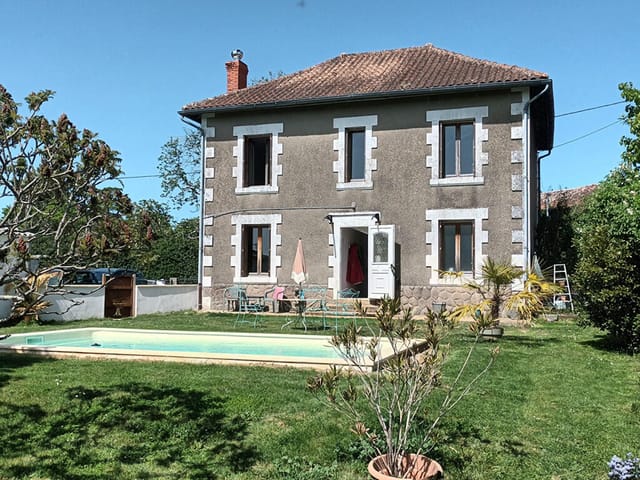
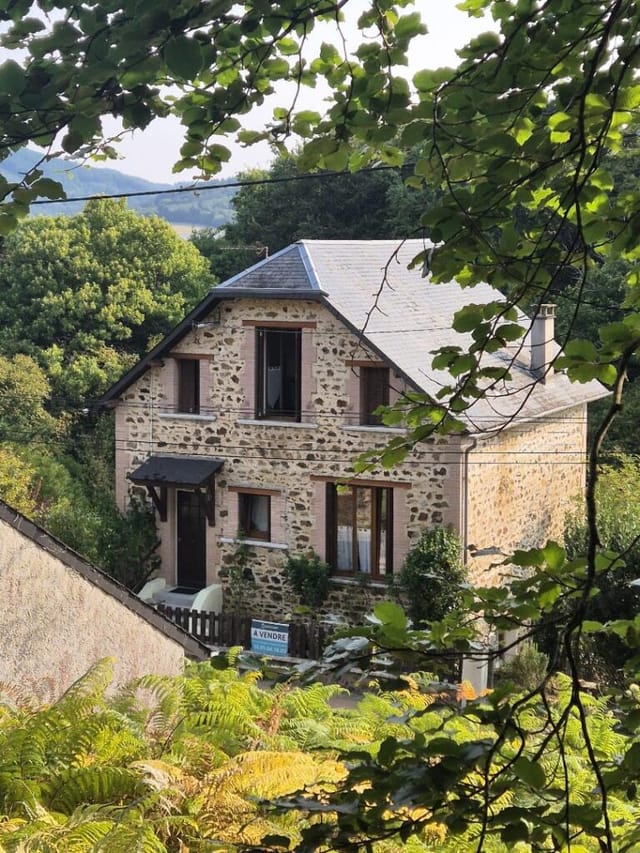
On a clear morning, you can stand at the upper-floor window of this stone house and watch the Dordogne River catch the early light while a pair of buzzards ride the thermals above the tobacco fields below. No traffic noise. No neighbors pressed close. Just the occasional tractor on the lane and the wind moving through the walnut trees. This is the Périgord Noir that people spend years searching for—and this two-bedroom, two-bathroom house in the La Rivière quarter near Domme puts you right inside it. The house sits in the lower, river-close part of the area, technically addressed to Domme but functionally tucked into working farmland, with fields running out to the Dordogne on one side and wooded hillsides rising behind. It's built in the local golden limestone—the same material that makes every village around here look like it was carved from honey—and its three floors give it a verticality that feels deliberate, almost tower-like. The raised rooms on the upper levels aren't just architecturally interesting. They earn their height. From up there, the views roll out across a countryside that hasn't changed fundamentally in centuries. At 110 square meters of living space, the layout is generous for two people and perfectly workable for a family. The séjour runs to nearly 26 square meters—big enough for a proper sofa, a reading corner, and a fire that you'll actually use from October through April. The separate salle à manger at almost 20 square meters means dinner parties don't require rearranging the furniture. The kitchen is compact at 8 square meters, which is honestly fine in a house where the rhythm of life encourages you to eat out half the time and cook slowly the other half. Two full bathrooms, including a suite ... click here to read more
Picture 1
Picture this: it's a Tuesday morning in July, the market stalls on the square in Caromb are just setting up, and the smell of lavender and warm bread is drifting down the alley outside your front door. You're two minutes on foot from everything — the boulangerie, the café where locals argue about pétanque, the centuries-old church whose bells you'll learn to tell time by. This is not a fantasy weekend in Provence. This is what owning a six-bedroom village house in Caromb actually looks like. At 265,000 euros for 145 square metres of interior space, a 740-square-metre plot with mature trees, and a swimming pool already in place, this is the kind of property that serious buyers recognise immediately. It needs renovation work — that's not a secret, and it's exactly why the price makes sense. The bones are good. The setting is exceptional. The potential, if you have the vision and the will to bring it to life, is considerable. Let's talk about Caromb itself, because this village often surprises people who only know Provence through its more famous neighbours. Perched at the foot of the Dentelles de Montmirail — that extraordinary jagged limestone ridge that catches the afternoon light in a way that photographs never quite capture — Caromb sits between Carpentras and Malaucène, about 20 kilometres northeast of Orange. It's not a tourist village in the sense that Gordes or Les Baux are. People live here. The tabac opens early, the school fills up at half eight, and the Friday morning market at Carpentras, one of the oldest in the Vaucluse, draws the entire region for its truffle trade in winter and its extraordinary summer produce through July and August. Life here has a rhythm to it, and that rhythm is deeply, specifically ... click here to read more
Picture 1

Step off the boat and onto your own dock. The Bothnian Bay stretches out ahead of you, flat and silver in the morning light, and the only sounds are the cry of a common tern and the soft knock of your hull against the jetty. This is Finskören — a small island in the Nyborg archipelago just outside Kalix in northern Sweden — and once you've spent a weekend here, it's genuinely hard to leave. What makes this offering so rare is the scale of it. You're not buying a cabin. You're acquiring two separate houses on a 2,778-square-metre plot with a private marina, multiple outbuildings, and your own freshwater well — all on an island that feels a world away from everything, yet sits within comfortable reach of the E4 motorway and Luleå Airport, roughly 90 kilometres south. The main house, built in 1998, covers 65 square metres and was designed with the view firmly in mind. The open kitchen and living area faces the sea, and the windows are large enough that you track weather systems moving across the bay without stepping outside. Three bedrooms make it workable for a family; the layout is sensible rather than fussy, which is exactly what you want in a place where you'll spend more time outdoors than in. On a clear July evening — and northern Sweden gets a lot of those, with daylight that barely quits between May and August — the light through those windows turns the pine floors the colour of honey. The first guest cottage is 60 square metres and positioned close to the marina. It has a living room, a bedroom, a shower, and a traditional Swedish bastu. That sauna matters more than it might sound. Spending a September afternoon out on the water, then sweating it out in the bastu before a cold plunge off the dock — that's the rh ... click here to read more

Main house and guest cottages with sea view

There's a particular kind of silence at the top of Grosetlie on a January morning — the kind you feel in your chest before the day starts. Snow is still falling softly on the terrace, the wood-burning fireplace from the night before has left an amber warmth in the air, and through the floor-to-ceiling windows, the whole of Grøndalen opens up below you like it belongs to no one else. This is what you bought. Not just a cabin. This moment. Built in 2024, this five-bedroom mountain chalet sits at the highest point of Grosetlie 167, in one of Hemsedal's most established and genuinely sought-after cabin areas. At 176 square metres, it holds its own — spacious enough for a full extended-family gathering, designed well enough that nobody's tripping over each other by day three. Wide oak floors run through the main living spaces, picking up light from the oversized windows and giving the interior that particular warmth that no amount of design software can quite replicate until you're standing in it. The heart of the cabin is the open-plan kitchen and living room, where ceilings climb high and a built-in fireplace anchors the social space. The kitchen is an Expo Nova fit-out — properly equipped, with integrated appliances and enough counter and storage space to actually cook a real dinner for eight people, not just survive on pasta. Saturday night fondue, a slow-cooked lamb stew on a stormy Sunday afternoon — this kitchen was made for both. Underfloor heating runs throughout, which matters more than most buyers realise until their first February stay, when getting up at 6am to watch the light change on the mountains is no longer something you dread. Five bedrooms means real flexibility. The master suite has an en-suite bathro ... click here to read more

Welcome to Grosetlie 167 – Cabin with fantastic location high above Grøndalen with amazing views and excellent sun exposure

Picture this: it's seven in the morning, the Aude valley is still wrapped in low mist, and you're pulling the first espresso of the day behind a solid timber bar while the smell of warm bread drifts in from the kitchen. Outside the café terrace, the ridgeline of the Pyrenees sits sharp against a pale sky. The GR10 long-distance trail runs right past the door. By eight o'clock, your first guests — hiking boots already laced — will be asking what's for breakfast. This is daily life at Auberge les Myrtilles, and it's as real as it gets. Salau d'en Haut sits in the Vallée du Salat, deep in the Ariège département of the French Pyrenees, roughly 25 kilometres from the Spanish border at Port de Salau. It's not a town that made it onto every tourist map, which is precisely why people who find it keep coming back. The kind of guests who end up here are serious walkers, wildlife photographers chasing the last brown bears of Western Europe in the Parc Naturel Régional des Pyrénées Ariégeoises, or cyclists tackling the high cols that the Tour de France made famous. They want honest mountain food, a clean room, and a landlord who knows the terrain. That's the reputation this auberge has spent years building, and it transfers with the keys. The property is actually three buildings working as one operation. The main hotel holds eight en-suite guest rooms, each with its own bathroom — a practical detail that matters enormously in mountain hospitality where guests arrive muddy and need hot water immediately. The rooms are maintained properly: insulated roof, double glazing in wood-effect PVC frames, paintwork that still looks fresh. Nothing is held together with goodwill and optimism. The professional kitchen is fitted with modern appl ... click here to read more

Main view of Salau d'en Haut property