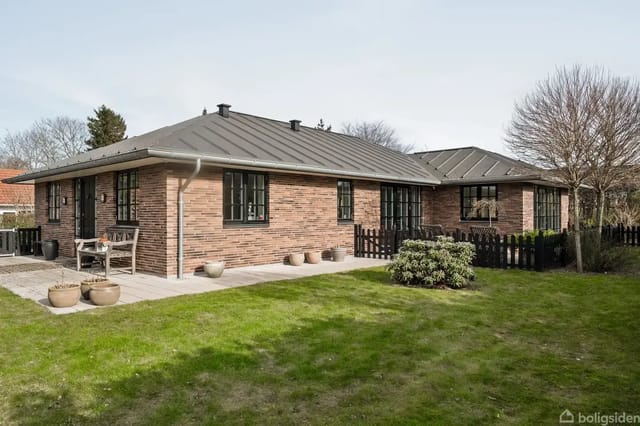
Houses For Sale In Europe (page 9)

Houses for sale in europe - homestra offers the largest amount of european real estate with over 200,000+ properties, find any type of property within your budget from villas to country homes. buy or rent your perfect home in europe. (page 9)

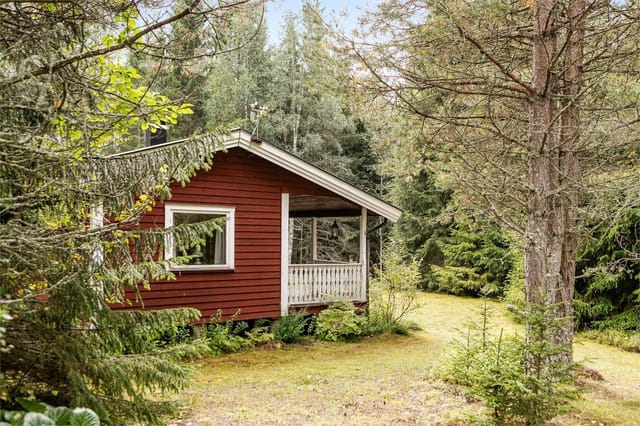
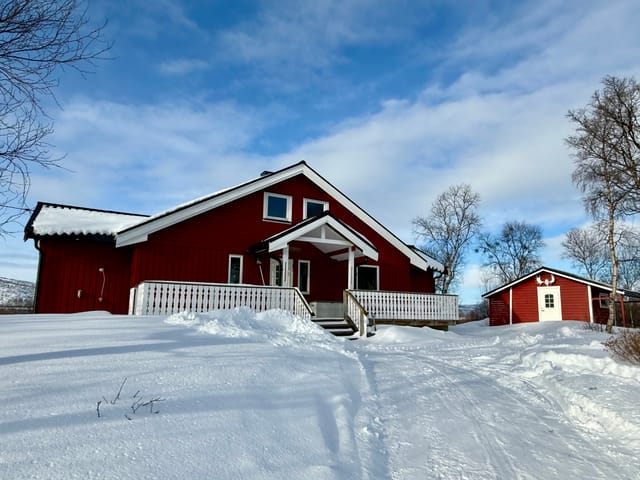
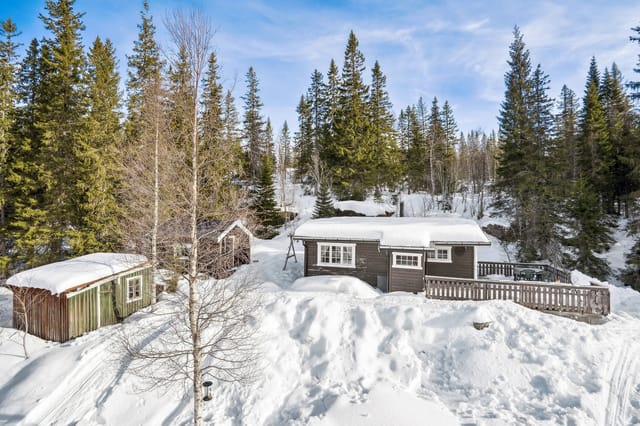
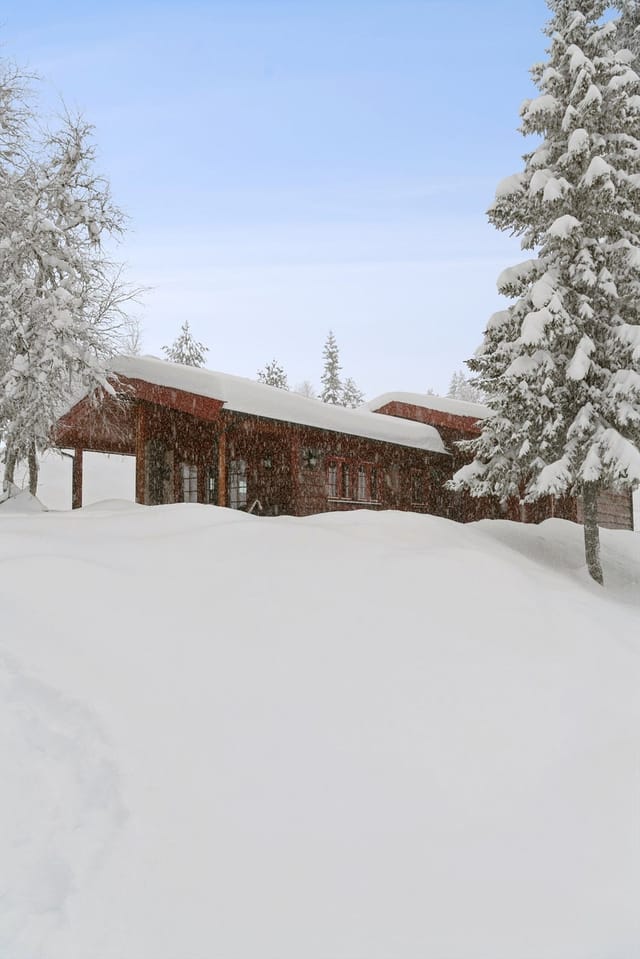
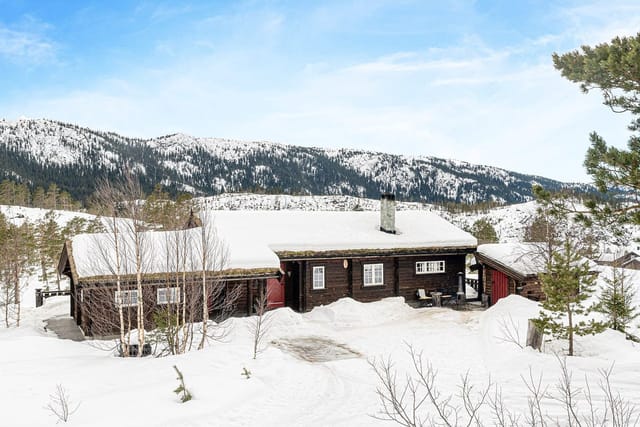
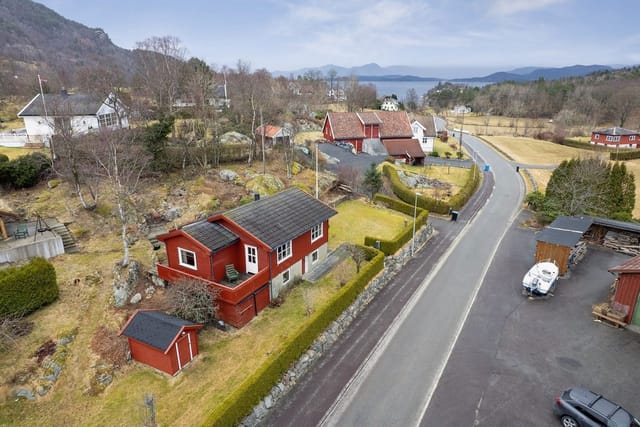
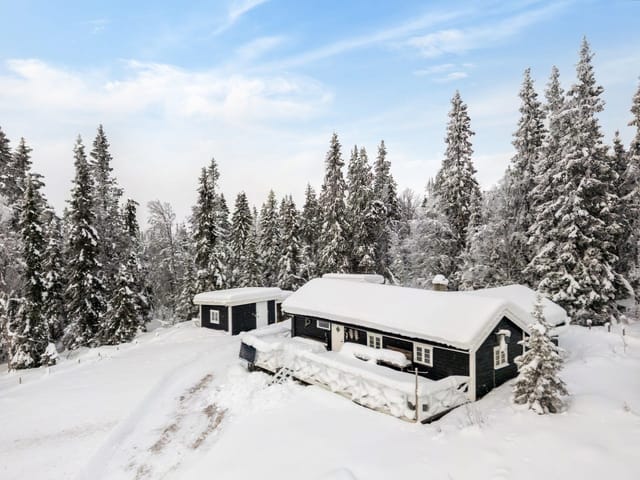
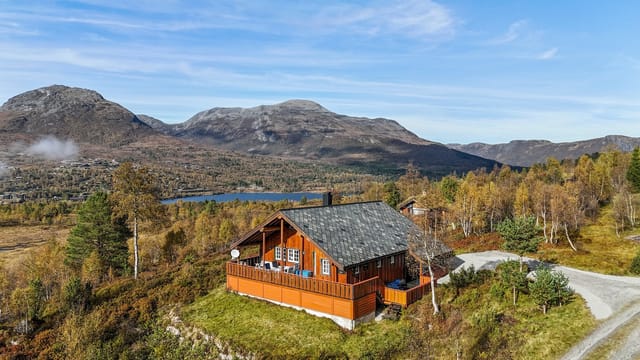
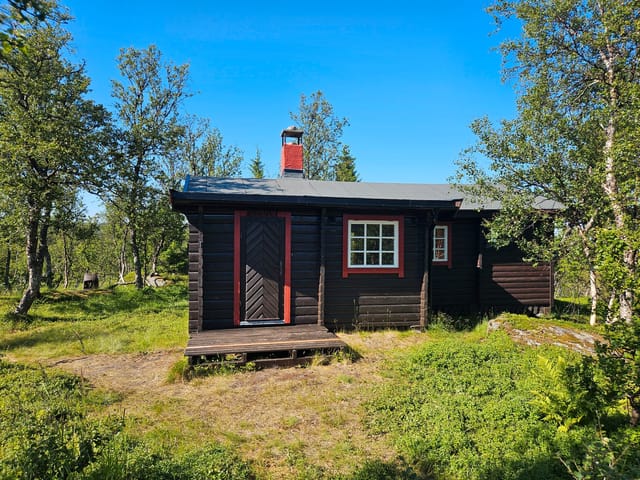
Step outside on a September morning and the whole valley is yours. Cloudberries glowing orange in the low sun, the outline of Gaustatoppen sharp against a pale sky, the smell of birch and cold air coming off the plateau. That's the daily reality at this timber chalet on Kultanvegen, sitting at 681 meters above sea level in Tuddal — one of Telemark's most quietly rewarding mountain communities, and still a genuine secret compared to the more trafficked Norwegian ski resorts further north. Built in 2009 by Norsk Fjellhus, a builder with a long reputation for getting the Norwegian mountain cabin right, this 98-square-meter property wears its credentials lightly. Turf roof. Solid timber walls that take on a deeper warmth as the years go by. The kind of construction that isn't trying to look like a traditional Norwegian hytte — it simply is one, without the affectation. Pull open the front door and the main living space opens up immediately. The kitchen and living area share one connected room, framed by exposed ceiling beams and warmed by a two-way fireplace you can watch from the sofa or the dining table. After the kitchen was extended in 2021, there's now real counter space — induction cooktop, oven, dishwasher, fridge-freezer all integrated — without the cramped, make-do feel of so many mountain kitchens. The large windows above the dining area frame Gaustatoppen, Gaustaknea, and Bonsnos like a painting that changes with every season. In January, those peaks are white and severe. In July, they turn green-grey under long evening light that barely fades. Everything in the chalet sits on a single level, which makes it genuinely practical for families. No stairs to navigate after a 20-kilometer ski loop or a long day picki ... click here to read more

EiendomsMegler1 v/Halvor Østerli presents Kultanvegen 286

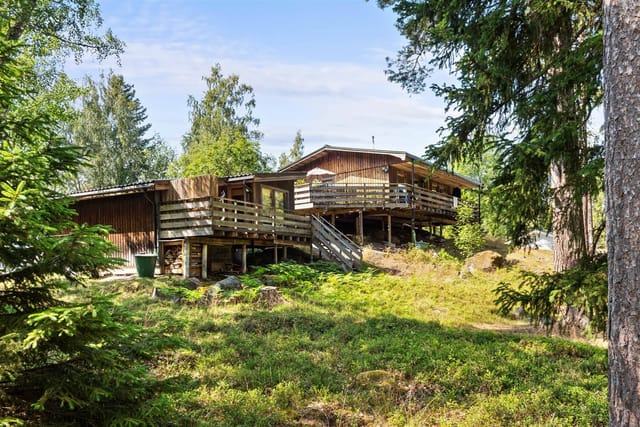
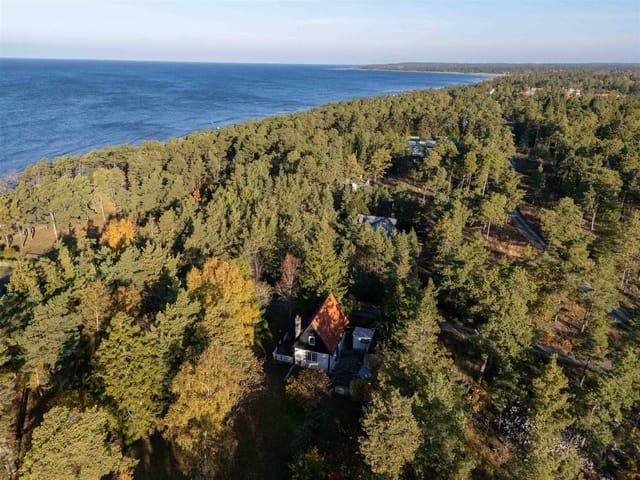
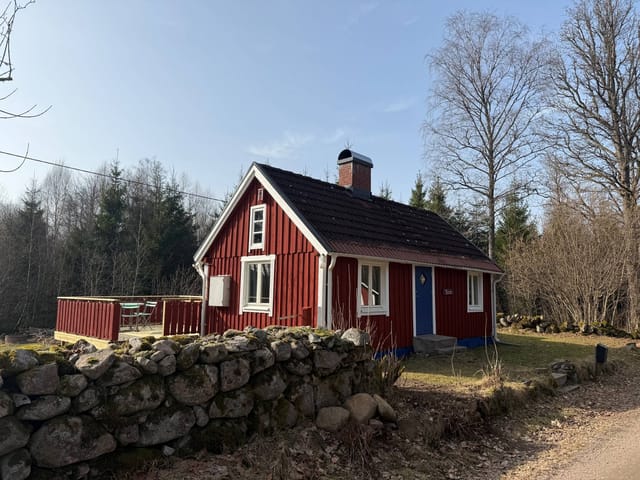
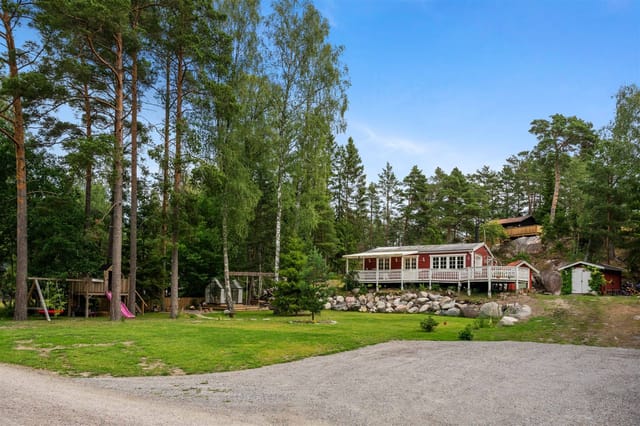
Step outside on a July morning and the air smells of pine resin and cold water. The trees are close — proper Dalarna forest, not a manicured park — and through a gap in the birches you can already see the silver glint of Rällsjön Lake sitting no more than a two-minute walk down the path. That's your commute for a morning swim before breakfast. Norra Rällsjön 11 is a compact, single-bedroom timber chalet sitting on a genuinely substantial piece of Swedish countryside: 1.1 hectares of forest land in Bjursås, tucked into Leksands municipality in Dalarna. Thirty-seven square metres inside. Eleven thousand outside. The arithmetic of that ratio is exactly the point. The cabin was built in 1980 and it's in good condition — solid, well-kept, and honest about what it is. There's no pretense here. The kitchen and small dining area face the woods, and in autumn the view through the window shifts daily as the birches go gold and then bare. The living room gets real light through generous windows that open onto the veranda, where a cup of coffee at dusk in late August has a particular quality that people who've experienced it tend to describe very badly to people who haven't. A wood-burning stove handles the heating, and given that Dalarna winters are proper affairs — cold, white, quiet — that stove becomes the social centre of the cabin from November through March. Sanitation is via an outdoor privy, keeping the footprint simple and the running costs minimal. For a property at this price point in this region, it's exactly what the market expects, and it keeps the door wide open for a buyer to invest incrementally in upgrades on their own terms. The lot deserves special attention. Over a hectare of your own Swedish forest is not a ... click here to read more

Exterior view of the cabin

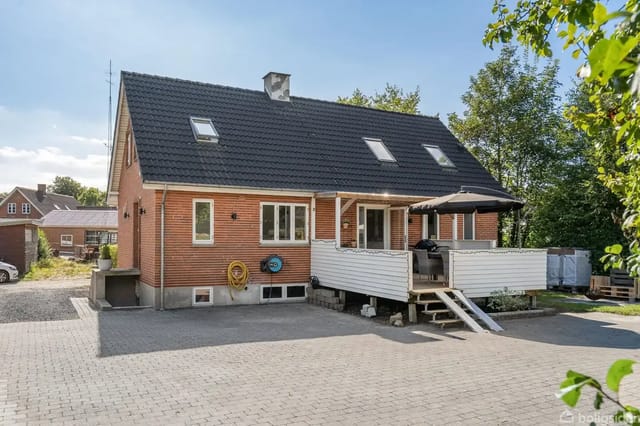
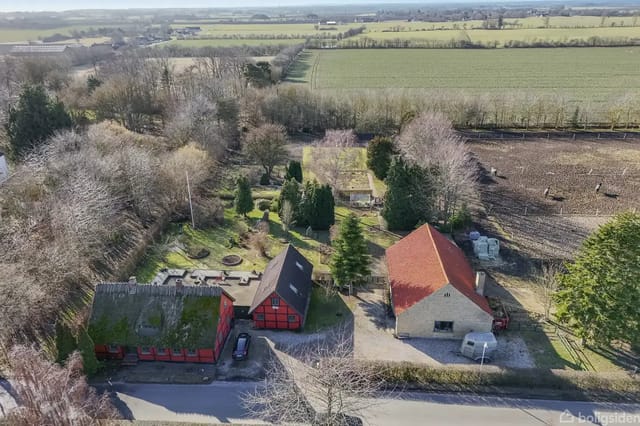
On a quiet Tuesday morning in Vesterbølle, the only sounds are the wind moving through the mature birch trees at the back of the garden and a distant tractor crossing a field somewhere beyond the hedge. No traffic. No sirens. Just that specific, hard-to-explain stillness that you only get in the Jutland countryside — the kind that, once you've had it, makes city weekends feel like a bad habit. Katbakken 3 sits on a 773-square-metre private plot in this small village just outside Gedsted, a corner of Nordjylland that most international buyers haven't discovered yet. That's precisely the point. The price — €93,356 for 145 square metres of solid, well-maintained Danish house — tells its own story about where this market sits right now. Red brick walls, a fiber cement roof that was never meant to look flashy but has outlasted trends by decades, and a carport added in 2002 that keeps the car frost-free through February. This is a house built to be lived in properly, not photographed. Inside, the layout is generous in a way that older Danish homes often are. The ground floor living room gets real afternoon light through windows that face the garden — no squinting at screens, no hunting for a patch of sun. The wood-burning stove in the corner is the kind of feature you appreciate in November when the temperature drops toward zero and the garden goes quiet under frost. Scandinavian design culture has always understood that warmth is an experience, not just a thermostat setting, and whoever specified that stove understood it too. There's a dedicated dining area off the living room, a functional kitchen with its own drainage system, a separate office — useful if you work remotely and want a proper door to close — and a ground-fl ... click here to read more

House with red brick and black roof, featuring a raised terrace with parasol and stairs, set in a driveway surrounded by trees and other houses in the background.

Step outside on a July morning and the pine trees are already warm. The air smells like resin and salt — that particular mix you only get this close to the Swedish coast — and the path down to the water is a four-minute walk through the kind of quiet that cities cannot manufacture. This is Hammarskogsvägen 25 in Hammarskogen, a well-kept Swedish country home sitting on a generous 1,943 square metre plot in Norrtälje municipality, about 115 kilometres north of Stockholm. At 249,500 SEK, it is one of the more accessible entry points into the Swedish second home market. But the price is almost beside the point once you've spent a weekend here. The house itself was built in 1982, covers 70 square metres across two bedrooms and one bathroom, and carries its age well. The layout is honest and unpretentious — a living room with windows that pull in the afternoon light from the west, an open connection through to the kitchen that makes cooking feel like part of the social fabric of the home rather than a chore done in isolation. The kitchen has been updated with functional modern appliances and storage that actually works. Nothing about this space is overworked or fussy. It does what a Swedish summer house should do: it gets out of the way and lets the outdoors in. The master bedroom fits a double bed with room to spare. The second bedroom is versatile — it has served as a children's room, a reading room, a space for visiting friends — and there is something satisfying about a room that doesn't insist on being one thing. The bathroom is clean and practical, with a shower, toilet, and sink. Not glamorous. Perfectly sufficient. What really sets this property apart is the land. Nearly 2,000 square metres in Hammarskogen, dotted ... click here to read more

Exterior view of the house and garden

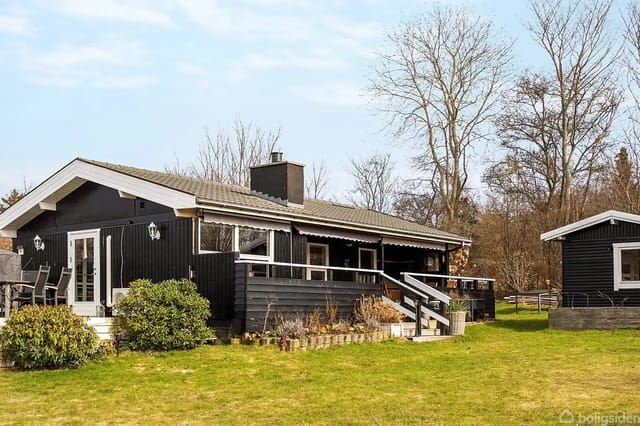
The smell hits you first — salt air and sun-warmed pine — the moment you step out onto the terrace on a July morning. The garden is already flooded with light, the trees along the boundary doing just enough to muffle the world outside. Coffee in hand, nowhere to be. This is what a Danish summer house is supposed to feel like, and this one on Odinsvej 18 gets it exactly right. Vig sits at the heart of the Odsherred peninsula, a stretch of northwest Zealand that Danes have quietly kept to themselves for decades. It's not hard to understand why. The landscape shifts constantly here — chalky white cliffs giving way to amber sandbars, then beech forest, then open farmland — all within a few kilometres of each other. The peninsula carries UNESCO Global Geopark status, earned through its Ice Age-sculpted terrain, and on foot or by bike you feel that geology underfoot in a way no guidebook quite captures. The house itself was built in 1975, solid timber construction on a single level, and it's been worked over considerably in recent years. The renovations weren't cosmetic either — this is a practical upgrade that leaves the place genuinely move-in ready for the coming season. The floor plan spans 76 square metres, compact enough to be easy to maintain, generous enough to sleep three bedrooms worth of family or friends without anyone feeling squeezed. Walk through the front door and the open-plan main space opens up ahead of you. The kitchen — those mint green cabinets are a nice touch, a nod to classic Danish summer house colour sensibility — runs along one wall, with integrated appliances including a washing machine, which matters more than people think when you're planning week-long stays. The dining table sits right alongs ... click here to read more

A black-painted wooden house with a large terrace surrounded by a green garden. A smaller outbuilding stands to the right. The background contains leafless trees.

Step outside on a July morning and the first thing you notice is the light. Out here on Yxlan, it hits differently — bouncing off Yxlömaren lake just 350 metres down the track, filtering through the old apple trees at the garden edge, warming the west-facing terrace before most of Stockholm has had its first coffee. That terrace, with its outdoor spa already in place, is where you'll spend a disproportionate amount of your time here. Trust that. Yxlan sits in the northern Stockholm archipelago, part of Norrtälje kommun, and it carries that particular quality of Swedish island life that people from the city spend years trying to find. Not the polished resort version. The real kind — where a country store in Köpmanholm sells pickled herring and the ferry to the mainland runs on a timetable that politely refuses to rush you. The island is connected by road and by Waxholmsbolaget ferry from Yxlövik, a few kilometres from Österviksvägen, plus Bus 632 runs several times daily between the island and the mainland. Practical, quiet, close enough to everything, far enough from the noise. The house at Österviksvägen 44 was built in 1955 and has been brought up to year-round standard — proper insulation, heating systems that handle a Swedish February without complaint. That matters more than people expect when they first start thinking about archipelago property. A summer cabin is one thing. A place you can escape to in November, light a fire, and watch the frost settle on the meadow outside — that's a different category entirely, and this property sits firmly in it. Inside, the layout is compact but genuinely usable. Three rooms plus kitchen spread across 66 square metres: a kitchen with a dedicated dining nook that handles four ... click here to read more

Exterior view of the house and garden

Stand at the kitchen window on a Tuesday morning and you can count the fields all the way to Randers Fjord. No rooftops blocking the line. No traffic noise. Just the low whistle of a North Jutland wind moving through the old trees at the edge of the plot, and the particular stillness that only comes from 4,403 square metres of your own land. Trehøje 14 sits on a gentle ridge just outside Øster Tørslev, a small community roughly 15 kilometres from the market town of Mariager and about 30 from Randers. The address puts you deep inside a part of Denmark that most visitors never reach — not because there's nothing here, but because what's here doesn't advertise itself. Rolling farmland, stone churches, cycle routes that cut through beech forests to the fjord's edge. The locals know. You'll figure it out fast. The house itself has a history that shows in the bones. Originally raised in 1880, it was rebuilt substantially in 1980, leaving it with the solidity of old construction and the practical layout of a home designed to actually be lived in. At 172 square metres across two floors, nothing feels cramped and nothing feels wasteful. The first floor holds a central living room — the kind of room where a wood fire makes the whole space feel smaller in the best possible way on a February evening. Downstairs, the kitchen-diner and a separate dining room both open directly to the terrace and garden. That matters more than it sounds. In summer, dinner migrates outside without ceremony; in autumn, you leave the terrace door cracked while you cook and the smell of wet grass drifts in. Five bedrooms give this property a flexibility that smaller Danish country homes simply can't match. A couple with children has obvious options: thr ... click here to read more

Front view of Trehøje 14

Late afternoon on a July Saturday, the southwest sun pours through the glass-enclosed patio and turns the pine floorboards a deep amber. You've just come back from Björknäs's little beach — kids still sandy, everyone hungry — and the kitchen smells of whatever went into the cast-iron pan twenty minutes ago. That's the rhythm this house runs on. Easy, unhurried, genuinely Swedish. Björknäs sits inside Roslagen, the long, ragged stretch of coastline northeast of Stockholm that locals have been quietly escaping to for generations. It's not the flashy archipelago of postcards — it's better. Unpretentious timber cottages tucked between birch stands, narrow lanes that end at sheltered coves, the smell of pine resin on a warm afternoon. The community here is tight enough to feel like a village but relaxed enough that nobody bothers you. The kind of place where your neighbours wave from their garden and then leave you alone. The house itself was built in 1972 and sits on a 1,765 square metre plot — a genuinely generous footprint for this part of Roslagen. There's a real sense of privacy here. The garden mixes mown lawn with wilder natural patches that attract butterflies and the occasional hedgehog, and sunlight tracks across it for most of the day given the open southwest aspect. In June, when the Swedish light goes on until 10pm, evenings out here take on a quality that's hard to describe to anyone who hasn't sat in Scandinavian summer dusk with a cold drink and nowhere to be. Inside, 48 square metres sounds compact on paper. In practice, the layout uses every centimetre thoughtfully. The kitchen was completely gutted and rebuilt in 2019 — new cabinets, new surfaces, proper appliances — and it connects directly to that glas ... click here to read more

Exterior view of the timber house

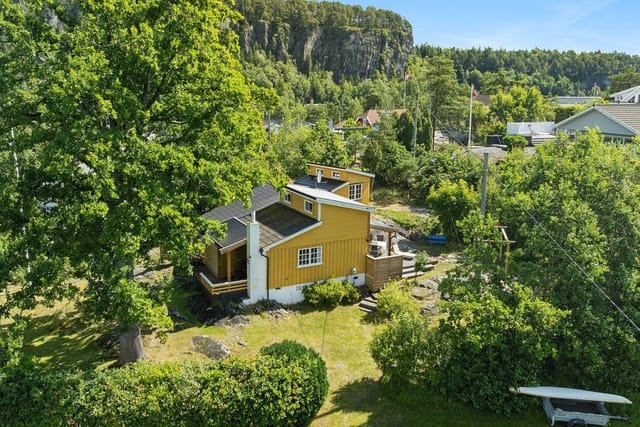
Stand on the stone-paved terrace on a late June evening, the sky still pale gold at ten o'clock, a low fire crackling in the outdoor fireplace, and the smell of salt air drifting up from Dreggavik marina just down the path. That's the rhythm of life at this cabin on Dreggjavikveien 12. Not a fantasy — a Tuesday. Sandnes sits on the edge of the Gandsfjord in Rogaland, a county that Norwegians have quietly kept to themselves for decades while the rest of Europe chased Lofoten headlines. The Bersagel shoreline here is the kind of place where families have been launching rowboats and lighting grill fires for generations. The cabin itself carries that same unhurried quality — pine-planked floors worn just enough to feel honest, wood-paneled walls that hold warmth the way only timber does, a wood-burning stove that becomes the gravitational center of the room the moment October arrives. The living space is more generous than you'd expect for 69 square meters. Large windows pull in southern light for most of the day, and the open arrangement means the kitchen, dining nook, and sitting area all flow together rather than feeling chopped up. There's a proper spot by the window to eat breakfast while watching the birch trees move in the morning breeze — one of those small domestic pleasures that ends up mattering more than any feature list ever could. The kitchen has profiled cabinet fronts and enough counter space to actually cook, not just reheat. The main bedroom fits a double bed comfortably and shares that same close-grained timber cladding that runs through the rest of the interior. Off it, a practical alcove provides sleeping space for two more — grandkids, friends, whoever shows up for the July crab season. The bathroom ... click here to read more

Welcome to Dreggjavikveien 12!

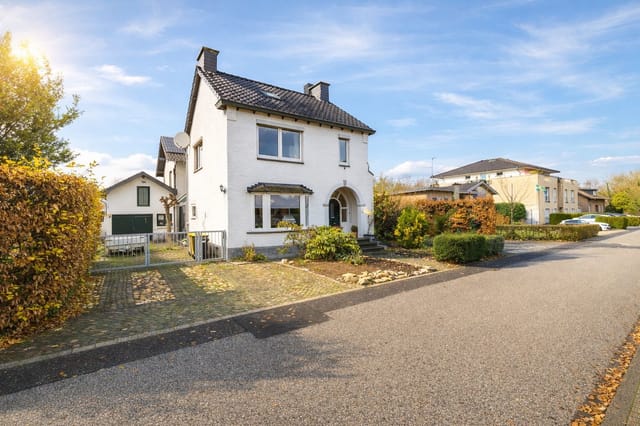
On a quiet Sunday morning in Selfkant-Wehr, the only sounds competing for your attention are birdsong from the mature hedgerows and the distant church bells drifting over from across the Dutch border. You're standing in a sun-filled glass dining room, Quooker tap hissing as it fills your kettle, the southeast garden already catching the early light. This is what life actually feels like here — unhurried, green, and surprisingly well-connected to two countries at once. Gausweg 9 sits in Selfkant, the westernmost municipality in all of Germany, a geographical quirk that gives daily life here a genuinely cross-border character. The Netherlands isn't a weekend trip — it's a seven-minute drive. Sittard, a proper Dutch city with a covered market hall, a medieval town square, and serious Indonesian rijsttafel restaurants left over from its colonial history, is just 1.5 kilometres away. Meanwhile, Aachen, with its UNESCO-listed cathedral and a thriving university city energy, is roughly 35 kilometres to the east on the A46. You're at the edges of Germany but absolutely not at the edge of anything interesting. The house itself was built in 1954, and the bones show it — solid brick construction, a bay window at the front that collects morning light like a cup, parquet floors in the living room that have aged into something genuinely characterful. The wood-burning stove in the L-shaped sitting room is the kind of thing you can't retrofit convincingly; it belongs here, and on grey November evenings it earns its place completely. What transforms this from a handsome post-war semi into something considerably more unusual is the glass extension added in 2000. It wraps around the rear and side of the original structure, bringing the ... click here to read more

Front view of Gausweg 9

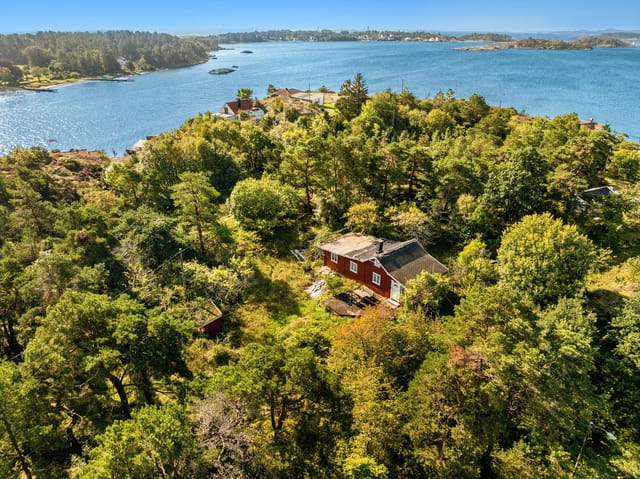
There's a particular kind of quiet that settles over Rævesand early on a July morning. The sea sits almost glassy in Gjessøysund, a cormorant perches on a nearby rock, and the smell of salt and pine drifts through a window that's been cracked open since sunrise. This is the daily opening scene from Sildevikveien 18 — a 1923 Norwegian cabin on the southern shore of Tromøy island, sitting on 2,213 square metres of coastal land, complete with its own jetty and boathouse. It's a renovation project, yes. But it's also one of those rare chances to build something exactly right, in a place where people have been returning summer after summer for a hundred years. The cabin itself is 106 square metres of original Norwegian hytte construction — thick timber walls, a layout that was designed for gathering rather than impressing. The bones are solid. What's needed now is vision. Strip it back, and you have a framework that most coastal property hunters would spend decades searching for: a private plot this size with direct-access water infrastructure is genuinely uncommon along the Aust-Agder coastline. The boathouse and jetty in Gjessøysund are included in the sale, just a short walk from the front door, and the shoreline itself is roughly 100 metres away. On a warm evening, that's about the distance it takes to finish your coffee before your feet hit the sand. The 35-square-metre balcony faces the sun for most of the day. South-facing plots on Tromøy are sought after precisely because the island's topography creates pockets of shelter that retain warmth well into September — the kind of evenings where you're still eating outside without a jacket when friends back on the mainland have already retreated indoors. Tromøy is connect ... click here to read more

Welcome to Sommerro, a leisure property at Rævesand on beautiful Tromøy.

Close your eyes for a moment and picture this: it's a Saturday morning in July, the Swedish summer sun already warming the old wooden floorboards by 7am, and the only sound reaching you through the open kitchen window is birdsong and the faint rustle of birch leaves. That's not a fantasy. That's a typical morning at Högaholma 2279. This 1909 torp — the classic Swedish word for a small country cottage — sits on a quiet country lane just outside Markaryd in Kronoberg County, about 1.7 kilometres from the shores of Bröna Lake. It's the kind of place where the pace of life adjusts itself naturally, almost without you noticing. You arrive on a Friday afternoon still carrying the tension of city schedules, and by Sunday you genuinely can't remember what you were so stressed about. The main house covers 80 square metres, and it's used every centimetre wisely. Original wooden floors run throughout — the kind that creak slightly underfoot, warm with more than a century of family life. A wood-burning stove anchors the living room, and in October when Småland's forests turn every shade of copper and amber, you'll understand exactly why that stove is the heart of the house. The kitchen is a practical pleasure: custom-built painted cabinetry that feels rooted in the cottage's heritage without being fussy or impractical. Large windows pull the outside in, so the garden's changing moods become part of the interior atmosphere in every season. Then there's the guest house. A more recently built addition, it has two rooms, a WC, and a compact kitchenette — enough that visiting family or friends get genuine privacy rather than being squeezed onto a pull-out sofa. This is the detail that changes everything about how you can use the prope ... click here to read more

Front view of the summer cottage

The coffee tastes better on this terrace. Something about the birch trees filtering the early morning light, the faint smell of salt air drifting up from Herräng's rocky shore just around the corner, the silence that isn't really silence at all — it's wood pigeons, rustling leaves, the occasional distant outboard motor. You're 350 meters from the sea. It feels like another world entirely. Råvikskroken 1 sits on a generous 2,156-square-meter plot in one of the most quietly coveted pockets of the Stockholm Archipelago. Herräng is not one of those over-photographed Swedish villages that ends up on every travel blog. It's known among those who know — jazz musicians, archipelago regulars, Stockholm families who discovered it decades ago and have been coming back every June since. The Herräng Dance Camp, one of the world's most famous swing jazz festivals, has called this village home for over 40 years. In summer, the sound of live brass carries on the wind and the village takes on a warm, international energy before settling back into its natural quiet. If you want the untouched archipelago without the weekend crowds of Vaxholm or Grisslehamn, Herräng is exactly where you end up. The house itself was built in 1978 and has been kept in good condition — this isn't a renovation project, it's a property you can start enjoying immediately. At 78 square meters across two bedrooms and one bathroom, the layout is compact but genuinely livable, the kind of floor plan that feels right rather than just adequate. The living and dining area opens up around a fireplace that earns its keep every single autumn weekend, when the evenings drop fast and the archipelago turns copper and rust. Large windows pull in the garden and the surroundin ... click here to read more

Front view of the holiday home

The first thing you notice on a summer morning at Kvernhusmyra 1 is the light. It hits the water just west of Juvågen before seven o'clock, throwing long reflections across the terrace boards while the fjord sits glassy and still. You pour coffee in the open kitchen, slide back the glass door, and step outside before anyone else in the neighborhood is awake. That quiet — just the lap of water and the occasional gull — is what this place is really about. Built in 2013 and designed by an architect who clearly had opinions about how a holiday home should feel, this chalet on the western edge of Skodje municipality occupies a 1,172-square-metre plot roughly 100 metres from the shoreline. It's not a rustic cabin. It's not a cookie-cutter box either. The split-wing layout — east and west loft sections each with their own staircase — gives the interior an almost village-like quality, where different corners of the house take on their own personalities over the course of a day. Kids claim the loft bedrooms. Adults settle into the ground-floor living room. Everyone ends up on the terrace. The main living area is genuinely airy, thanks to extra-high ceilings and a bank of large windows that track the sun from mid-morning into the long Norwegian evenings. In July, the sky doesn't fully darken until well past ten. In the three-level layout, 107 square metres of floor space feels considerably more generous than that figure suggests, because the vertical scale keeps the rooms from ever feeling closed in. The kitchen runs a clean, practical line of veneered fronts and laminate worktops — enough counter space to actually cook a proper meal rather than just reheat things — and it opens partway into the living room so whoever is cooking ... click here to read more

Welcome to Kvernhusmyra 1! Photo: JC Foto (John Colbensen)

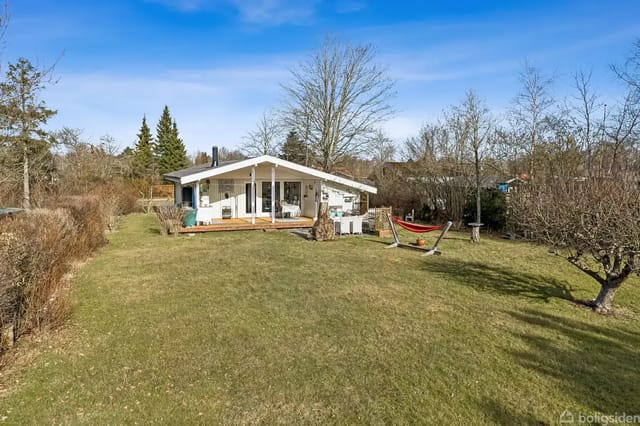
On a slow summer morning in Kaldred, you wake up to birdsong filtering through the wooden walls, the smell of damp grass coming in through a cracked window, and absolutely nothing demanding your attention. The kettle goes on. The hammock is waiting. That's the pace of life at this classic Danish sommerhus on Vejlebrogaardsvej — and once you've had a taste of it, city weekends feel like a poor substitute. Set on a generous 1,061-square-meter plot in one of West Zealand's most quietly sought-after summer house communities, this two-bedroom wooden home has the kind of settled, unhurried quality that takes decades to develop. Built in 1975 and kept in genuinely good condition, it carries its age well — think sun-bleached timber cladding, fiber cement roof, and a garden that feels like it grew naturally rather than being designed. Mature trees form a loose perimeter around the property, giving the lawn and its flower beds a private, enclosed feel without making the place feel hemmed in. There's real breathing room here. The 60-square-meter interior is compact in the way that good summer houses always are — enough space to be comfortable, not so much that it stops feeling like an escape. The open-plan kitchen and living room form the heart of the house, and they work together in a practical, easy way. White kitchen cabinets sit against a black countertop, the integrated stove and sink are exactly where you want them, and the tall cabinet keeps the fridge and freezer tucked out of the way. It's a kitchen built for actually cooking in — for gutted fish from the morning's catch, for berry pies when the brambles in the garden go mad in late August. The dining area sits just off the kitchen, round table, blue chairs, the kind of ... click here to read more

A small holiday home stands in a green garden with a hammock to the right. Trees and bushes surround the area under a blue sky.

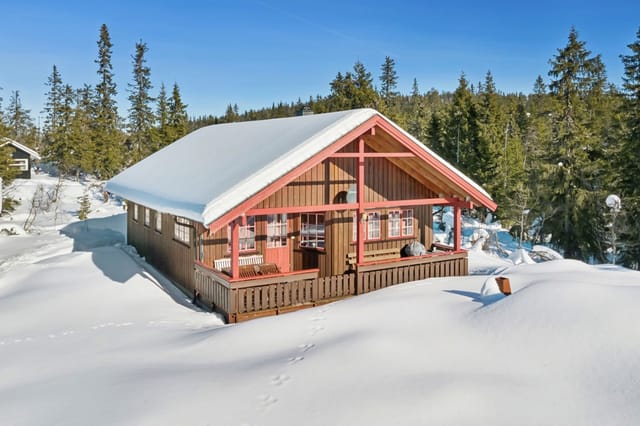
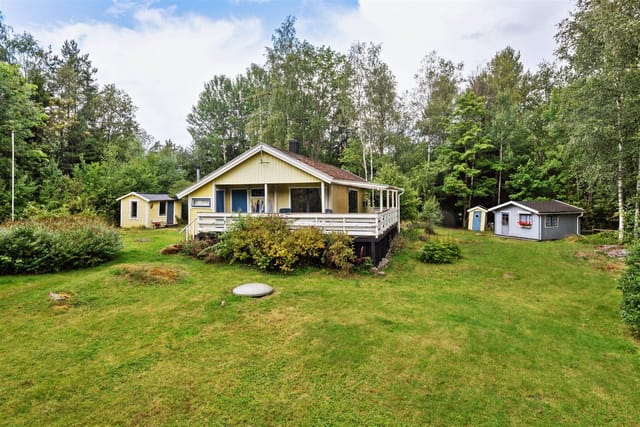
Step outside on a February morning and the world is white and absolutely still. The birches are frosted solid, the air bites clean at the back of your throat, and a kilometer down the trail the first set of groomed ski tracks is already laid. Back inside, the wood stove is still throwing heat from the night before, and the smell of pine smoke drifts through every room. This is what a cabin in Etnedal actually feels like — not a brochure version of Norway, but the real thing. Stuvelivegen 270 sits at around 909 meters above sea level in Etnedal municipality, a quiet corner of Innlandet county that most international buyers haven't discovered yet. That's part of what makes it interesting. The valley runs roughly northwest from Dokka, the nearest town of any size, and the landscape here is high, open, and honest — rolling fells, dense spruce forest, frozen lakes in winter, wildflower meadows in July. The cabin sits at the very end of the road. No neighbors to glance at through the window. No through traffic. Just the creak of timber and, if you time it right, the distant percussion of a woodpecker working a dead trunk somewhere across the clearing. The cabin itself dates from 1948, which tells you something about its bones. Norwegian mountain cabins from that era were built to last, not to impress, and this one wears its age well. The roof is new, the windows are newer double-glazed units, and the exterior cladding has been replaced — so the envelope is tight and well-maintained. Inside, 60 square meters is efficiently used across three bedrooms, a proper living area, kitchen, and a cabin bath with shower and toilet. It's not a sprawling estate. It's a place designed for people who actually want to be outside most of the ... click here to read more

Welcome to Stuvelivegen 270!

Step outside on a February morning and the world is completely white and completely quiet. The cross-country trail runs just 120 meters from the front door — you can hear the sound of your own skis cutting through fresh snow before the rest of the valley is even awake. This is Fetlia, a small cluster of cabins sitting at 395 meters above sea level in the Sunnmøre Alps, and this particular chalet has been holding its own here for years with a kind of unpretentious confidence that's hard to fake. The setting hits you first. Large windows across the main living space look straight out at Nysætervatnet, the lake below shifting color through the day — silver in the morning light, deep blue-green by afternoon, then a flat pewter grey as the peaks catch the last of the sun. The vaulted ceiling climbs nearly five meters overhead, which sounds like a detail on a spec sheet until you're actually standing in it and realize how rarely Norwegian mountain cabins feel this open. There's no sense of compression, no low beams making you duck. Just space, light, and a fireplace in the corner that does exactly what a fireplace should: takes the edge off a cold evening and gives everyone a reason to sit still. The kitchen is the work of Mørekjøkken — a local craftsman workshop out of the region — built in a classic L-shape from solid wood that has aged into itself rather than against itself. Integrated oven, cooktop, provisions for a washing machine. It's not a showpiece kitchen designed to be photographed; it's one designed to be used, and there's a meaningful difference. The dining area sits right alongside it, open to the living room so conversation carries easily from the stove to the sofa. Up to twelve people can sleep comfortably he ... click here to read more
Welcome to Fetlia – a beautiful cabin in scenic, peaceful surroundings near the Fjellsætra ski resort!

Picture this: it's a Saturday morning in February, the thermometer outside reads minus eight, and you're standing at the kitchen window in thick wool socks watching fresh snow pile up on the spruce branches while the coffee brews. The Balmielva river is frozen solid just down the slope, and the ski trail to Fjellandsbyen cuts right below the cabin, maybe forty metres away. You can hear nothing. That particular, almost physical silence that only exists at altitude, in winter, in Norway. That is what Naustbuktveien 3 actually feels like. Sulitjelma sits at roughly 498 metres above sea level in the mountains of Nordland, about 75 kilometres east of Fauske and the E6 highway. It's not a place most international buyers stumble across — and that's precisely its value. The village grew out of one of Norway's most significant copper mining operations, and the legacy of that industrial past gives the place a grittier, more authentic character than the polished ski resorts further south. The Sulitjelma Mining Museum up the road documents the whole story, from 19th-century tunnels to the early-20th-century boom years, and it's genuinely worth an afternoon. But most people come here for the landscape, and the landscape does not disappoint. The chalet itself is compact at 46 square metres — two bedrooms, a living room, and a functional kitchen — but the layout makes clever use of every square metre. The entrance hall keeps the cold at the door. The living room catches the afternoon sun, and the views across the open terrain are the kind that make you put your book down. The property is sold fully furnished: sofa, dining table, refrigerator with freezer, TV. You could drive up on a Friday evening and be entirely comfortable by the t ... click here to read more

Welcome to Naustbuktveien 3

Step outside on a July morning and within ninety seconds your feet are on warm sand. That's the reality at Rognstranda 4. The Norwegian sun, which in midsummer barely dips below the horizon, has already been baking the south-facing terrace for hours by the time you pour your first coffee. This is not a compromise cabin hidden behind trees with a distant water view — it sits on a generous corner lot where sunlight tracks across the property from sunrise to well past nine at night. The chalet itself was built in 1958, and there's an honesty to that era of construction — solid wood floors, panelled walls, a wood-burning stove that means you can crack the place open in late March or keep it running into October without shivering through dinner. At 66 square metres split between a main cabin and a detached annex, the layout is compact but genuinely functional. Two proper bedrooms sit on the ground floor, plus two sleeping alcoves for when the kids bring friends or the cousins arrive unannounced in August. The living room catches afternoon light through wide windows that frame the surrounding coastal landscape — birch, granite, salt air — and the wood stove anchors the room without overwhelming it. The kitchen is straightforward and practical, with custom-built cabinetry and a back door that opens directly onto the yard. That detail matters more than it sounds: you're carrying groceries in from the car, setting up the outdoor kitchen on the patio, moving between inside and outside constantly the way you do when you're actually on holiday. The bathroom is a decent size — toilet, mirror vanity, shower cabin, and plumbing already in place for a washing machine. Solid and well-maintained. Nothing to fix before your first stay. ... click here to read more

Rognstranda 4

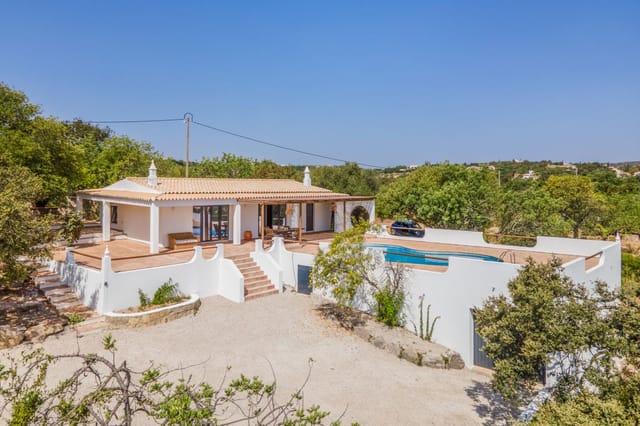
Early morning in Santa Bárbara de Nexe, the light does something particular. It comes in slow and golden over the hills east of Faro, catching the white walls of the house at Caminho do Telheiro before the rest of the village is even stirring. You pour a coffee, step onto the wraparound terrace, and the entire Algarve countryside lays itself out in front of you — no neighbors in the sightline, no road noise, just the faint sound of birds in the old carob trees and the smell of warm stone baking in the morning sun. That is the daily reality of living in this three-bedroom villa, and it's the kind of thing that's genuinely difficult to leave behind. Santa Bárbara de Nexe sits on a ridge in the hills above Faro, roughly ten minutes inland from the coast. It's not a tourist village — it's a working Portuguese community with a proper café on the square, a small church whose bells you can hear from the garden on Sunday mornings, and a weekly market where the same families have been selling their almonds and citrus for generations. The contrast with the packed beaches of Vilamoura or Albufeira, just 25–30 minutes west on the A22, is striking. Up here, you get the real Algarve — the one that exists when the package holidaymakers have gone home. The property itself sits on 4,890 square metres of land. That's the first thing that registers when you arrive: the sheer scale of the plot relative to the house. The villa's living area runs to 110 square metres across a single level — three bedrooms, two bathrooms, an open kitchen and living space — but the total built footprint, including the garage beneath the pool, reaches 200 square metres. The garden wraps around all sides, dense with possibility. Old fig trees, a stretch of scru ... click here to read more

Main view of Caminho do Telheiro, 3

The first thing you notice on a summer evening at Hysängsvägen 36 is the light. It comes low and golden off the Furusundsleden strait, cuts through the pine trees, and lands across the west-facing deck in a way that makes you want to pour something cold and simply sit. That's the rhythm of life on Yxlan — unhurried, quiet in the best possible sense, and astonishingly close to Stockholm. Yxlan is one of the outermost accessible islands in the Norrtälje archipelago, connected to the mainland by a free car ferry that runs year-round. It's not the kind of place that ends up on tourist lists. Swedes who know the archipelago well tend to keep it to themselves. The island sits where the inner skerries give way to open Baltic water, and on clear mornings you can smell the sea before you even step outside. The property on Hysängsvägen sits in the Hysängen area, a pocket of the island where the plots are generous and the neighbors are close enough to wave to but far enough that you can't hear their conversations. The main house is 72 square meters — not large, but used well. The open-plan living room and kitchen share a single bright space with big windows on the western side, which means afternoon light fills the room naturally without any effort on your part. Direct from the living room, a large wooden deck stretches out to meet the garden. The deck is where you'll spend most of your time in June, July, and August — eating, reading, watching the light change. It faces west, which in the Swedish archipelago summer means you're outside until ten at night without a jacket. Two bedrooms in the main house keep things practical. They're quiet rooms, good for sleeping deeply after a day on the water or a long hike through the island ... click here to read more

Front view of the main house and garden

Picture this: it's a Saturday morning in late June, the sun hasn't really set since Thursday, and the light coming off Pevatnet Lake turns the pine walls of your living room a deep amber. You can hear absolutely nothing except water. That's what owning this cabin actually feels like. Sitting on a private knoll about 200 meters back from the lake's edge, this traditional Norwegian log chalet near Harstad has been a mountain retreat since 1971 — and it wears its age well. The roof was replaced in 2023. The bones are solid. It's not a project; it's a place you can start using the weekend you collect the keys. The chalet sits at roughly 310 meters above sea level on a plot of 2,700 square meters, giving you a generous sweep of private land — enough for a firepit, a vegetable patch, space for kids to disappear into the trees for hours. Northern Norway doesn't do manicured gardens; the land around Pevatnet has its own rhythm, and this plot is part of it. Birch and pine right up to the edge of your lot. Berry bushes everywhere in August. The kind of quiet that city people drive hours to find. Inside, the 44-square-meter footprint is compact but honest. Three bedrooms sleep five comfortably — two original rooms from the 1971 build and a third added in 1991. The pine floorboards creak in exactly the right way. Timber-paneled walls, a wood-burning fireplace in the living room, a kitchen laid out for real cooking after a day on the trails rather than for showing off. Everything comes furnished, as seen in the photos, which means no sourcing Scandinavian cabin furniture from scratch — it's already here, already right. The fireplace isn't decorative. In October, when the birches go yellow and the first snow dusts the ridge above ... click here to read more
Entrance area

Step outside on a February morning and the only sound is the creak of fresh snow under your boots. The trail from Åsveien 499 pushes straight into the Meråker hills, and by the time the sun clears the ridge to the southeast, it's pouring onto a south-west facing terrace that stays warm well into the afternoon. This is what 581 meters above sea level actually feels like — not a postcard, but a cold nose and hot coffee and nowhere you'd rather be. The chalet sits on Åsveien in one of Trøndelag's most accessible yet genuinely quiet mountain areas. Meråker is the kind of place that Norwegians know well but international buyers are only just discovering — an hour by road from Trondheim Airport (Værnes), with a train station just 17 minutes from the door. You're not trading convenience for wilderness here. You're getting both. The main cabin was built in 1968 and thoroughly rebuilt and extended in 2013. That renovation did something important: it preserved the cabin's honest, timber-framed character while adding the things that make a property actually liveable — proper insulation, modern electrics, running water, and a bathroom with underfloor heating. Too many mountain properties of this era still have one foot in the past. This one made the full crossing. Inside, the open-plan living room and kitchen runs to 39 square meters, which sounds like a number until you're standing under the high ceiling watching late-afternoon light slide across the mountains through windows that take up most of the south-facing wall. The fireplace anchors the living area — a wood-burner, not decorative — and on a November evening it earns its place. The kitchen is fitted with white cabinetry, a solid wood worktop, and integrated appliances. No ... click here to read more
Front view of the property

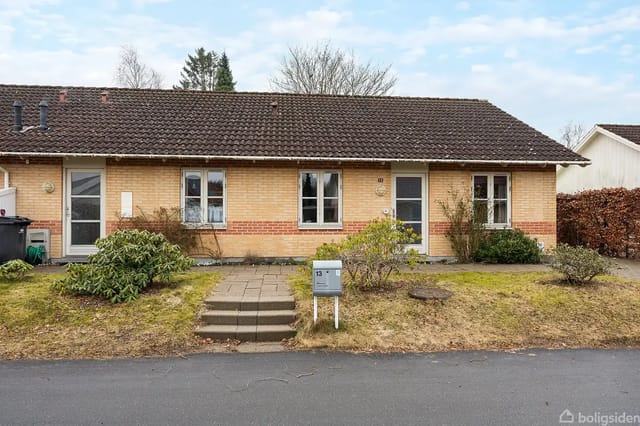
Step outside on a Saturday morning in Blovstrød and you'll hear it before you see it — the distant clatter of the Allerød farmers' market setting up along Lyngevej, a smell of fresh rye bread drifting in from the bakery on the corner. By the time you've had your first coffee on the south-facing terrace at Mosevænget 13, the sun is already warming the flagstones. That's the rhythm here. Unhurried. Grounded. Quietly good. This single-storey, end-terrace house sits in one of northern Zealand's most approachable and genuinely liveable neighbourhoods. Built in 1993 and kept in good condition throughout, the property spans 118 square metres of practical, well-proportioned living space — enough room for a family of four to spread out comfortably, or for a couple to host guests without anyone feeling cramped. Three bedrooms. One bathroom. A carport that doubles as a proper storage space for bikes, kayak paddles, and ski gear. It's the kind of home that works hard without drawing attention to itself. The layout makes sense the moment you walk through the door. The hallway opens cleanly into the living area, where curved windows pull in light from the garden and create one of those rare spaces where you actually want to spend time — not just pass through. The living room is large enough to hold a full dining setup alongside your sofa, so winter dinners don't require anyone to eat at a folding table in a corridor. There's a directness to the floor plan that feels considered rather than accidental. The kitchen is adjacent, separated just enough to contain cooking smells but open enough — through French doors — to stay connected to the rest of the house. White cabinetry, modern appliances, a tiled splashback, and a round table tha ... click here to read more
A yellow brick terraced house in a residential neighborhood with a front garden, bushes, and a mailbox. The house has a brown roof and several windows.

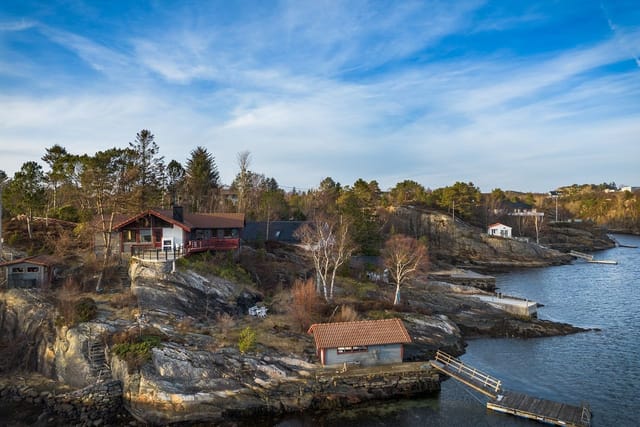
Step out onto the terrace at Holmavegen 30 on a clear July morning. The fjord is flat and silver, the archipelago spreads out in front of you like a handful of green islands dropped into the water, and the only sound is the rope on the dock tapping against the boathouse wall. Coffee in hand, you realize the boat is right there, ten steps down the rock, and Bergen is forty minutes away by car. This is what Norwegian coastal life actually feels like. Hauglandshella sits on Askøy island, connected to Bergen by the Askøy Bridge — one of the longest suspension bridges in Norway — which makes the commute into the city effortless while the setting feels completely remote. This stretch of the island's eastern shoreline is quiet, unpretentious, and genuinely beautiful in a way that photographs never quite capture. The light in late spring, when the sun barely sets and the rocks stay warm until midnight, is something else entirely. The chalet itself was built in 1981 and sits on a generous 4,792 square meter plot that rolls down to its own private shoreline. Ninety square meters of interior living space sounds modest until you're standing under the 3.5-meter ceiling in the living room, looking through the large windows at an unobstructed stretch of open water. That ceiling height changes everything. The stone fireplace anchors the room — and come October, when the Norwegian autumn arrives in earnest, you'll be glad it's there. The open kitchen sits alongside the dining and living areas, and whoever's cooking has a direct sightline to the sea. That's a design decision you only appreciate once you've done the dishes while watching a boat drift past in the dusk. Two bedrooms on the main floor handle the basics comfortably, each wi ... click here to read more
Welcome to Holmavegen 30 - a rare leisure property with its own shoreline and boathouse.

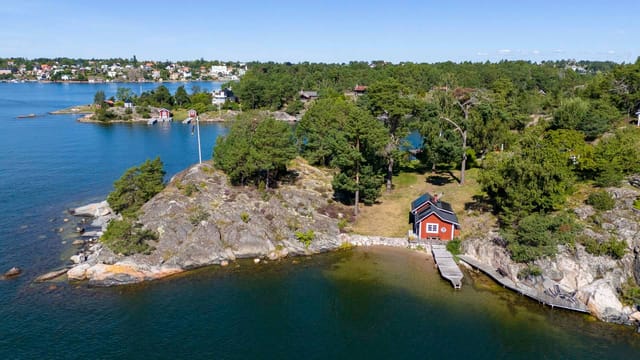
The first thing you notice at Stenholmen 12 is the silence — or rather, the specific kind of sound that passes for silence out here: water moving against granite, a cormorant somewhere off the rocks, the creak of a wooden pier in the morning swell. You're standing on the southwestern tip of Stenholmen, coffee in hand, watching the light come up over Dalarö Ström, and already the thought of going back to the city feels faintly absurd. This is a house that has been doing this to people since the 1890s. Built during the era when Stockholm's upper classes first discovered the southern archipelago and began erecting their beloved sommarvillor along these shores, the main house has been carefully maintained through more than a century without losing the bones that make it special. The 65-square-metre layout across three rooms is modest by modern standards — two bedrooms, a living room, one bathroom — but out here, you don't live inside. The large windows frame the sea on multiple sides, and the sun-drenched timber terrace jutting off the house faces the water directly. Evening sun hits that terrace well past nine in July. You'll eat most of your meals there. The plot itself is genuinely unusual. At 5,154 square metres total, of which 2,186 square metres is classified water area, the property reaches directly into the sea. Rocky outcrops drop into a protected bay that's deep enough to moor several sailboats at the private piers. The terrain rises and folds across the lot, giving you different private corners — a flat spot for a deck chair in the afternoon, a high point that opens up a long view toward Dalarö Skans fortress to the south. No two spots on this property feel the same. The sauna building by the water is where th ... click here to read more
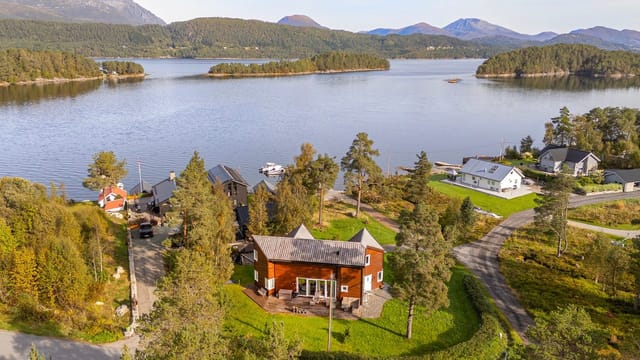
Seaside house with terrace and sea view

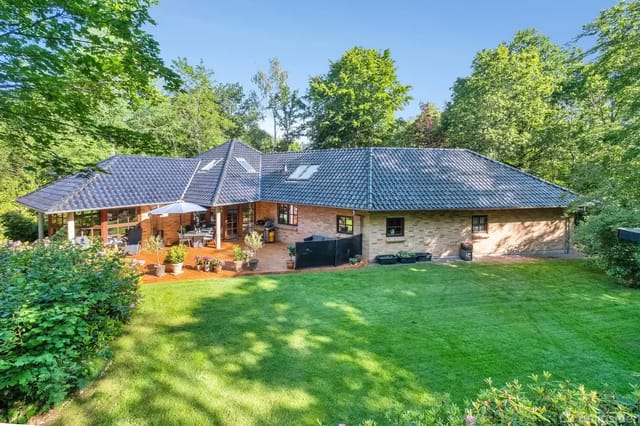
Step outside on a Tuesday morning in late September and the air smells like pine resin and cold lake water. The trees along Skovvænget are already turning — amber and rust bleeding through the canopy overhead — and the only sound is a woodpecker working somewhere deep in the forest behind the garden. This is Ry. And if you've never considered Denmark's Lake District as a place to plant roots, you're about to change your mind. Skovvænget 18 sits on a 1,275 square meter plot in one of Ry's most sought-after residential pockets — a low-traffic street with a genuine woodland character that isn't just a marketing description. The name literally translates to "Forest Lane," and the street earns it. Mature trees frame the property on all sides, and the garden has been cultivated over decades into something genuinely private: dense perimeter plantings, a broad lawn with room to breathe, and a south-facing terrace where afternoon sun lingers well into the evening. In summer, the garden becomes the entire living room. The villa itself was built in 1997 — classic Danish parcelhus construction, red brick, black-tiled roof — and at 196 square meters of interior living space, it's a properly sized home, not a weekend squeeze. Four bedrooms, two bathrooms, six rooms in total spread across a single well-organised floor. The layout is generous without being wasteful. Large windows pull the garden into the main living area visually, so even on rainy November days when you're indoors watching the birches drip, the connection to the outside world never really goes away. The kitchen is fully equipped, practical, well-maintained. Both bathrooms are contemporary and in good order. A utility room handles the practicalities. An entrance hall t ... click here to read more
The house with red bricks and black tiled roof surrounded by a lush garden with green lawn and dense planting. Sunlight shines through the treetops onto the terrace.

Picture this: you wake up on a Saturday morning in late June, slide open the terrace door, and the Oslofjord is right there — silver-grey turning gold as the sun climbs over the Østfold islands. The air smells of pine resin and salt. Somewhere down on Torødveien a neighbor is heading to the beach with a kayak on a trailer. This is what mornings look like at Torødveien 78. Torød sits on the western side of the Oslofjord, tucked into the coastal municipality of Færder and Tønsberg — a stretch of shoreline that Norwegians have quietly treasured for generations. It's not a tourist hotspot in the showy sense. It's the kind of place where the same families have been coming every summer since the 1960s, where kids still fish off the rocks, and where the pace of life drops about three gears the moment you turn off the main road. If you've been searching for a genuine Norwegian hytte experience — not a glossy ski resort package, but the real thing — this is where you find it. The cabin itself dates from the late 1960s and wears its age honestly and well. Solid wood floors, panelled walls, exposed ceiling beams — these aren't decorative choices made by a designer, they're original details that have simply lasted because they were built to last. A new kitchen went in during 2012 and it's practical and bright without trying too hard, with enough counter space to actually cook a proper meal rather than just reheat something. The living room is genuinely spacious for a cabin of this scale — room for a sofa, a dining table, and a woodburning fireplace that earns its keep during those crisp October weekends when the light goes low and amber and you don't want to leave. Three bedrooms in total, spread thoughtfully across the main cabi ... click here to read more
Welcome to Torødveien 78

Stand on the terrace at eight in the morning, coffee in hand, and watch the mist lift off the Sierra de Grazalema. The fairways below are already catching the first proper light of the day, that sharp Andalusian gold that makes everything look slightly unreal. Behind you, the kitchen hums quietly — the Siematic cabinetry, the marble floors still cool underfoot, the smell of yesterday's olive wood still faintly in the air from the fireplace. This is what a morning looks like on Calle Olivo 10, inside a five-bedroom villa at Arcos Gardens Golf Club, and it's the kind of morning that makes you cancel the flight home. Arcos de la Frontera sits about five kilometres up the road, perched on a dramatic limestone ridge above the Guadalete River. It's one of the true pueblos blancos — the white villages of Cadiz province — and unlike some of the more tourist-worn towns in the region, Arcos still belongs to the people who live there. On Sunday mornings, the Plaza del Cabildo fills with locals drinking manzanilla and arguing about football. During Semana Santa, the brotherhoods carry their floats through streets barely wide enough to pass, incense drifting over the crowd. The September feria fills the lower town with flamenco, horses, and the particular chaos of a party that has been happening in the same way for centuries. This is the cultural heartbeat just down the road from your front gate. The villa itself was built in 2008 and sits on a 2,360 square metre plot that gives it a sense of breathing room rare in gated communities. Four hundred square metres of living space across two floors, designed with a clarity of purpose that holds up fifteen years on. The layout is generous without being wasteful — the open-plan kitchen an ... click here to read more
Main view of Calle Olivo 10 villa

Step outside on a July morning in Luftjok and the air hits differently — cool, clean, faintly carrying the smell of river water and pine resin. The Tana River glints through the treeline a short walk away, and the sun, which barely sets this time of year, has already been up for hours. That's the daily reality of owning a chalet at Austertanaveien 626. Not a fantasy. The actual morning. This three-bedroom chalet sits on a generous 2,329 square metre plot just 7 kilometres from Tana bru in the heart of Finnmark, Norway's vast northernmost county. Built in 2000 and kept in genuinely good condition, the 98-square-metre main cabin is compact enough to heat and manage easily, but spacious enough that a family of five doesn't get on each other's nerves after three rainy days in a row. That's a real consideration up here, and the layout handles it well. The ground floor opens through a practical entrance hall — somewhere to shed muddy boots and waders after a morning on the river — into an open-plan living room and kitchen that forms the social core of the house. Large windows pull in the light, and in Finnmark's endless summer, there's a lot of it. A fireplace anchors the sitting area; come October when the birch forests go gold and the temperatures start to bite, you'll be glad it's there. Two bedrooms and a combined bathroom and laundry room round out the ground level. Upstairs, a loft lounge gives you a quieter retreat — a reading nook, a place to put the kids, a spot to sit with a coffee and watch the light change over the wilderness outside. The third bedroom sits up here too, giving the property a natural separation between sleeping areas. What sets this property apart from a typical cabin offering is the infrastructu ... click here to read more

Picture 1

The snowmobile cuts the engine and suddenly it's just silence. Real silence — the kind you forget exists until you're standing at 454 metres above sea level in Tømmerdalen, with spruce trees holding their snow and the valley spread out below you like something from a Theodor Kittelsen painting. That's the arrival experience in winter at this 1950s cabin on Tømmerdalsvegen. In summer, the last 100 metres is a short walk from the road through birch and heather. Either way, you earn the quiet. This is not a polished mountain resort apartment. It's a proper Norwegian hytte — two bedrooms, 45 square metres of wood-panelled interior, a cast-iron wood burner that heats the whole place within the hour, and a south-facing terrace where you can sit with coffee at eight in the morning and watch the light come across the hillside. The parquet floors creak slightly in the cold. The ceiling is clad in pine. It smells the way Norwegian cabins are supposed to smell. The kitchen is set apart from the living area, which in a small cabin makes a surprising difference — you can actually cook without everyone watching. Gas stove, gas refrigerator, fully off-grid. The solar panel system handles the basic electrical needs, making this place genuinely self-sufficient. No power bills, no grid connection fees, no landlord. The freehold plot of 1,008 square metres is yours outright, with annual municipal fees of just 150 NOK — essentially nothing. Two outbuildings from 2003 sit on the plot and handle what small cabins always need more of: storage. Firewood, fishing gear, snowshoes, a spare canoe paddle — there's room for all of it without cluttering the main space. One outbuilding includes an outdoor toilet, standard for this type of off-grid p ... click here to read more
Front view of the cabin

The first thing you notice on a July morning at Mistralvägen 4 is the light. It comes sideways through the pines, catches the wooden floors, and lands on the kitchen table in a way that makes you want to sit down and stay forever. Then the smell hits — salt air and warm timber and something faintly floral from the plot outside. You haven't even made coffee yet. This 1958 holiday home in Gotlands Tofta is one of those rare finds: a proper old Swedish sommarhus on a genuine plot of 2,449 square meters, priced honestly, and sitting within easy reach of Tofta Beach — one of the longest and most loved stretches of sand on the entire island of Gotland. It's 61 square meters of authentic character distributed over one and a half floors, and every square meter earns its keep. Step inside and the living room does what good rooms do — it draws you in. Exposed ceiling beams, wide wooden floorboards, a fireplace insert that crackles to life in late September when the tourists have gone and the island belongs to you. The large windows look out toward the sea — not a full panorama, but a real, honest glimpse that reminds you exactly where you are. On clear evenings, the light off the water turns everything amber. The kitchen sits next to the living room, functional and unhurried, with enough bench space to put together a proper meal. Gotland is serious about its food: local lamb from the heathland, saffron pancakes from the Saturday market in Visby, chanterelles picked from the woods just down the road in August. A kitchen like this — practical, with room for a dining table — is where those ingredients come to life. A walkthrough room with built-in wardrobes handles the coats and kayak gear and everything else that accumulates duri ... click here to read more
Front view of the house and garden

Early on a September morning in South Stevns, the mist sits low across the fields of Boestofte and the only sound is the soft thud of hooves on damp grass. That's what this place does to you. It slows everything down. Møllehøjvej 5 — known locally as Fedtehuset — is a red half-timbered farmstead built in 1880 that still carries the unhurried rhythm of the Danish countryside in every beam and brick, but with enough space, comfort, and practical infrastructure to make it genuinely liveable today. The main house spans 190 square metres across five rooms, and the first thing that hits you stepping inside is the warmth — not just from the central heating system, but from the materials themselves. Exposed timber framing, thick walls that keep the summer cool and the winter out, and a thatched roof that muffles the world in a way no modern building quite manages. Three bedrooms sit comfortably within the layout, along with a bright living room and a kitchen equipped with its own drainage system — a detail that matters far more once you've actually tried running a working rural property without one. The bathroom is fully fitted with shower and WC. Practical, honest, functional. Nothing here is for show. Then there's the annex. Renovated in 2018, it adds another 85 square metres in the same half-timbered style, now under a tile roof. Use it for visiting family from Copenhagen or abroad, as a home studio, a remote work setup, or just as a guest wing with genuine separation. That kind of flexibility is rare at this price point. The grounds are where this property really opens up. Nearly two hectares — 19,366 square metres to be exact — of land that wraps the buildings in lawn, mature trees, flower beds, and wide open grazing spa ... click here to read more
Two red half-timbered houses with thatched and tiled roofs stand in a garden with paved paths and lawn. Furniture and plants are seen in front of the buildings under a clear blue sky.

The church bell in Puyjourdes rings at eight on Sunday mornings, and if you're standing in the kitchen of this old stone house with the wood-burning stove crackling and a bowl of café au lait warming your hands, it hits differently than anything you've experienced in the city. That sound—unhurried, ancient, completely indifferent to your schedule—is the whole point of owning a place like this. This four-bedroom property in the Lot department of Midi-Pyrénées sits right on one of the recognised variants of the Chemin de Saint-Jacques, the medieval pilgrimage route that draws tens of thousands of walkers, cyclists and seekers every single year. That's not a footnote. It's a defining feature of daily life here, and—as we'll get to—a serious practical asset for anyone thinking about rental income. The main house has been looked after. Ground floor gives you a kitchen and dining room anchored by a wood-burning stove, a sitting area, a bathroom and a master bedroom with a sliding door that opens onto the garden in the warmer months. Move through to the second living room, which is heated by a mass stove—the kind of dense, slow-release heat source that keeps the room comfortable from a single evening fire well into the following afternoon. A pull-down staircase leads up to the mezzanine bedroom tucked above it, which has the kind of intimate, tucked-away quality that guests tend to request repeatedly. Above that living room on the first floor, a large loft sits waiting. It could become a third bedroom suite, a studio, a reading room with valley views—the permissions process in this corner of Lot is navigable, and local artisans who know the building codes are not in short supply. The two-storey stone barn is its own separate ... click here to read more
Picture 1

Picture this: it's 7am on a February morning, the kind where the cold outside is almost theatrical. You pull on your ski boots at the front door, step onto the snow-packed path, and within four minutes you're on a groomed cross-country trail that cuts through pine forest so quiet the only sound is the hiss of your skis and your own breathing. That's not a fantasy. That's a Tuesday at Trysilfjell Hytteområde 537. Trysil is Norway's largest ski resort, and this chalet sits inside the Trysilfjellet cabin area at roughly 643 meters above sea level — high enough that the snow arrives early in November and sticks around well into April. The alpine slopes of Trysil Alpinsenter are just 300 meters from the front door. The ski bus stops directly outside, which means you can send the kids off to ski school independently, or pile onto it yourself after a long morning on the mountain without ever worrying about parking. Cross-country trails? Less than 100 meters away, freshly groomed most mornings throughout the winter season. After a full day outdoors — whether that's carving runs on Heistoppen, taking the long Nordic loop through Søndre Trysil, or simply building a snow fort with children — you come home to a fireplace insert that throws serious heat into the open-plan living and kitchen space. The layout here is genuinely social. No awkward wall separating whoever's cooking from the rest of the group. The kitchen has wooden-front cabinetry, laminated worktops, and a proper extraction hood over the stove — functional without being clinical. Someone fries reindeer sausages while others peel off their base layers and argue about who had the better fall on the black run. This is exactly the kind of room that holds those memories. ... click here to read more

Welcome to Trysilfjell Hytteområde 537! Photo by Efkt/Johan Anderson.

Stand on the south-facing terrace at Risvikstien 6 on a July evening and you'll understand immediately why people come to this stretch of the Trøndelag coast and never quite manage to leave. The light at that hour is extraordinary — low, golden, pulling long shadows across the water — and from up here, with the Fosen peninsula spread out below you, the noise of the world feels very far away. That terrace, built in 2020 and generously proportioned at 66 square meters, is honestly the heart of this property. You'll eat breakfast out there. You'll lose track of time out there. That's the point. This is a two-bedroom holiday chalet at Risvikstien 6 in Oksvoll, a quiet coastal settlement in the municipality of Ørland, Trøndelag. The main cabin covers 44 square meters — compact, yes, but thoughtfully laid out with a living room, kitchen, bathroom, and two bedrooms that sleep up to six comfortably. An 11-square-meter annex sits separately on the 715-square-meter plot, which gives the whole place a flexibility that a single structure never could. Guests get their own space. Kids get their hideaway. You get the cabin to yourselves. The sea is 200 meters away. Not a figure of speech. Two hundred meters down the lane and you're at the water's edge. Oksvoll sits on the southern tip of Fosen, a broad peninsula that juts into the Trondheim Fjord between the open sea and sheltered inner waters. This geography matters enormously for how you'll actually use the place. The coastline here is a mix of smooth rock shelves worn flat by millennia of tide and small sandy inlets that warm up quickly in June. Local families have been swimming off these rocks since before anyone can remember. You'll find yourself doing the same within about for ... click here to read more
Picture 1

Stand on the wooden deck beside the pool at seven in the morning, coffee in hand, and the Pyrenees are right there — close enough that you can pick out the ridgeline detail, far enough away to feel like a painting. The air smells of pine resin and warm stone. No road noise. No neighbors. Just swallows cutting arcs above the meadow and the low hum of your own private world. That is the daily reality at La Forge del Mitg, a six-bedroom country estate spread across nearly 10 hectares of Catalan foothills just outside Saint-Laurent-de-Cerdans, a small working village in the Pyrénées-Orientales department — the very southern tip of France, where the culture tips Spanish and the light tips golden almost year-round. This is not a property that requires imagination to inhabit. Renovated progressively through to 2020, with four distinct buildings on site and a swimming pool that faces south toward the mountains, it is ready to be lived in from the moment you arrive. The main house runs to roughly 112 square metres across two floors. Downstairs, an open-plan kitchen and dining area opens into a living room with cathedral ceilings and a working fireplace insert — the kind of space where a wet November afternoon actually feels like an occasion rather than something to endure. A French balcony bedroom, bathroom, and laundry room round out the ground floor. Upstairs, two more bedrooms and a generous master with a built-in wardrobe. The proportions are honest and liveable, not inflated for a brochure. Attached to the main building is a 48-square-metre ground-floor apartment with its own entrance. Three rooms, open kitchen, two bedrooms, a walk-in Italian shower that is also wheelchair accessible. This space functions brilliantly for ... click here to read more
Main view of La Forge del Mitg 66260

Picture a Saturday morning in early June. You open the kitchen window and the air carries salt from the Øresund, maybe a trace of coffee from the bakery two streets over on Gl. Strandvej. It's quiet enough to hear a bicycle tick past on Ejlersvej. This is what daily life feels like in Humlebæk — unhurried, sharp with coastal air, and just forty minutes from Copenhagen by train. Built in 2018, this three-bedroom brick villa at Ejlersvej 8 is the kind of property that does its job so well you stop noticing the design and just start living in it. That's actually a compliment. The floor plan moves with you rather than against you — open living and dining areas that shift naturally into the garden, bedrooms with generous windows that pull in the northern light, a kitchen arranged around a central island so a Sunday morgen brød session doesn't feel cramped. The black steep-pitch roof against pale exterior brick gives the house a clean, grounded silhouette that reads unmistakably Danish without feeling like a showroom. The kitchen deserves its own moment. Light wood cabinetry, a tiled backsplash, a large window angled toward the garden — it's set up for actual cooking, not just photography. The island has a sink, which matters more than people realize until they're prepping a pile of fresh langoustines from the Helsingør fish stalls and need a second water source. Modern appliances throughout, nothing gimmicky, everything functional. Both bathrooms are finished with contemporary fixtures, walk-in showers, and quality tiling. Two separate toilets mean weekend guests and school-morning chaos don't collide. The master bedroom opens directly onto the garden — on warm evenings, that sliding connection between inside and outside i ... click here to read more
A brick villa with a black roof stands in a garden with a lawn and bushes. A fence surrounds the property, and some potted plants are on the terrace.

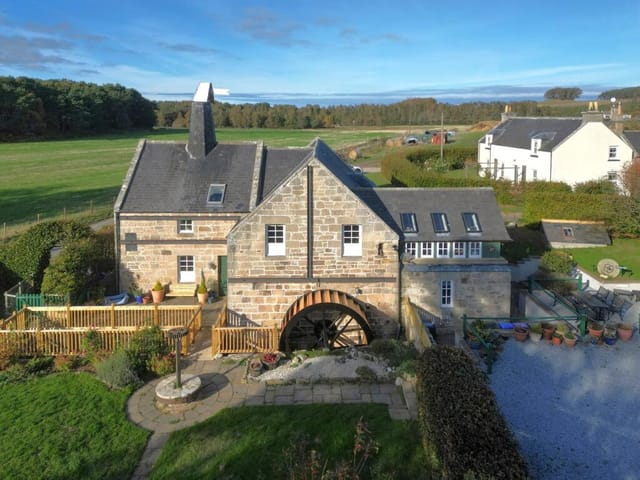
Stand at the kitchen window on a still October morning and watch the old water wheel turn against a backdrop of copper-tinged birch trees. The mill lade runs quietly below, the same stone channel that carried water here since 1733. That's the kind of detail that stops you mid-pour and makes you set your coffee down slowly. Longhill Mill isn't a conversion you walk through with a checklist — it's a place you walk through and start mentally rearranging your life. Sitting on the northern edge of Lhanbryde, just off the A96 between Elgin and the Moray Firth, this Grade A Listed former mill house occupies 0.96 acres of mature grounds on the boundary of the historic Innes Estate. The drive in alone tells you something is different: you arrive via the original mill lade, past the restored water wheel, and into a property that has been lived in thoughtfully for over twenty years since its 2003 conversion. The bones of the building go back to 1733. Rebuilt after a fire in 1891, the mill has spent the last two decades being gradually shaped into a genuinely comfortable family home — not a showroom, but a real working residence with five bedrooms, two bathrooms, and a self-contained annex that has been running as a successful holiday let for the past five years. Original grain hoppers, exposed timber beams, and millstones remain where they've always been. Nobody ripped them out and installed recessed downlights everywhere. Smart choices. The ground floor opens into a welcoming lobby with a double bedroom and a shower room that doubles as a utility — useful if you've just come back from a walk along the Burghead coastal path and don't need to traipse through the house. Head upstairs and the space opens up considerably. The kitche ... click here to read more
Front view of Longhill Mill

Pull on your boots at the door and ski straight into 100 kilometers of groomed trails. That's the reality of mornings at this three-bedroom Norwegian mountain chalet in Veggli — a proper, no-fuss cabin sitting 850 meters above sea level at the end of a quiet cul-de-sac on Søre Vorsetkroken, where the only sound after snowfall is the creak of pine trees and, if you're lucky, the distant knock of a woodpecker working through the bark. This is Søre Vegglifjell. Not a resort, not a development — an established, authentic Norwegian cabin community where families have been coming for generations. The nearest trailhead is 350 meters from your front door. The nearest neighbor is far enough away that you won't hear them. And the road stays clear all year, which matters more than people realize until the first time they try to reach a Norwegian mountain cabin in November with a car full of kids and gear. Inside, the 76-square-meter layout does what good cabin architecture is supposed to do: it makes every meter count. Walk in and the wood-burning stove in the living room immediately does the emotional heavy lifting. It's that kind of room — windows framing the mountains to the west and northwest, the light changing through the afternoon from sharp and white in winter to long and golden in July, when the Norwegian summer stays bright until almost midnight. The open plan means the kitchen, dining area, and living space all flow together, which is exactly what you want when eight people are coming in from a ski day simultaneously, wet jackets piling up, something warm on the stove. The kitchen is sensible and complete — stove, fridge, microwave, all included. A bar counter separates it from the dining space, which opens directly o ... click here to read more

Welcome to Søre Vorsetkroken 42! Cabin with a beautiful location in an established cabin area at Vegglifjell.