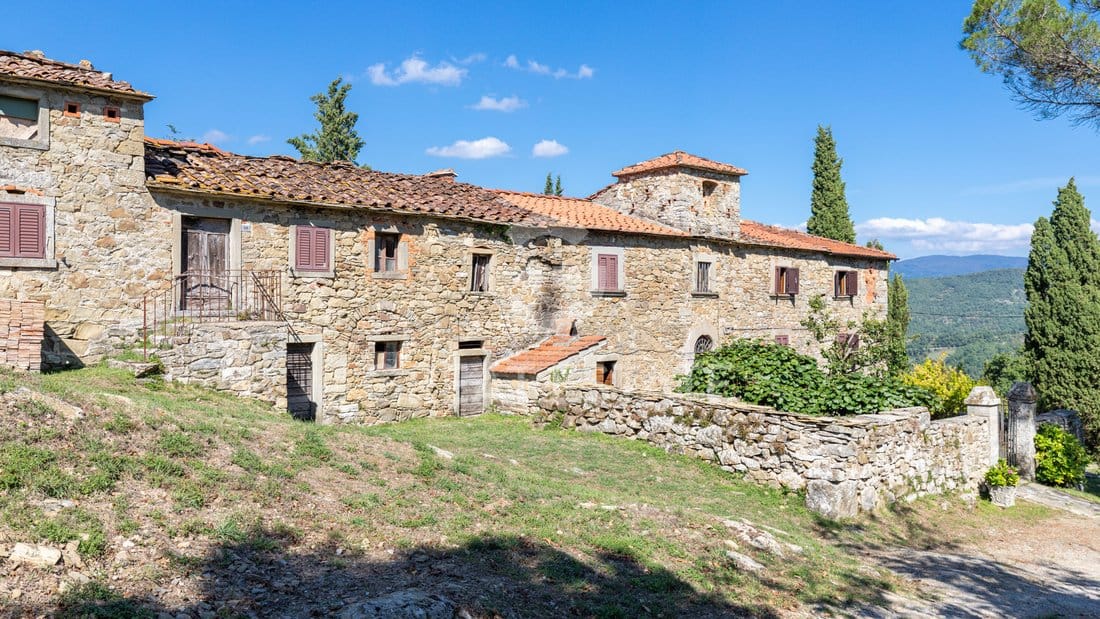
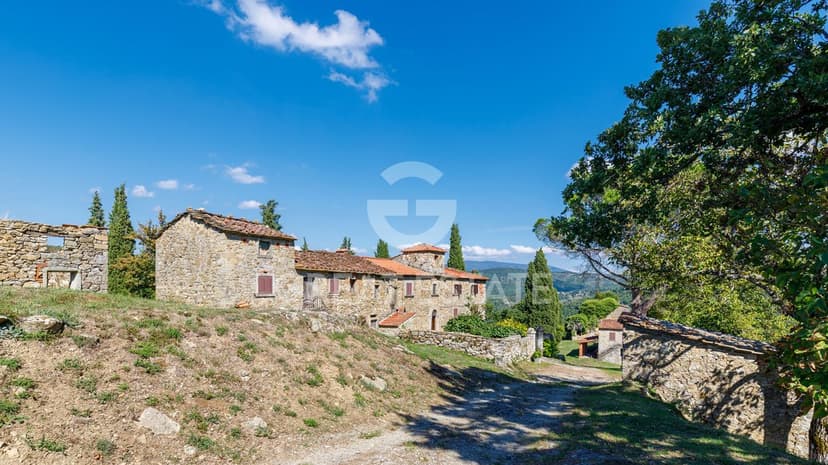
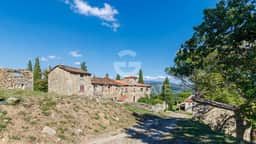
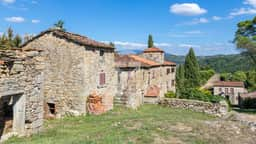
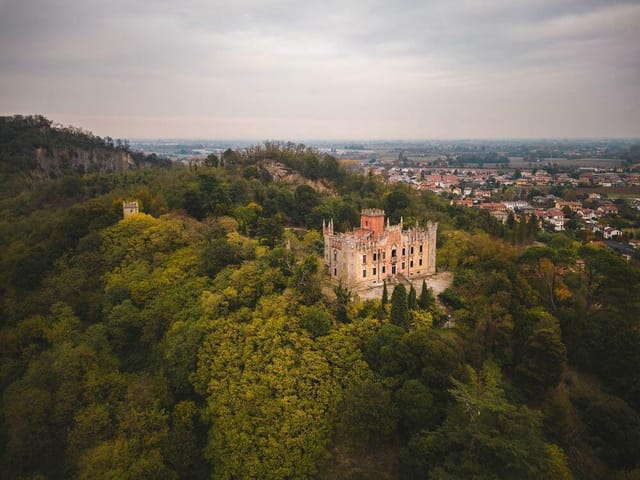
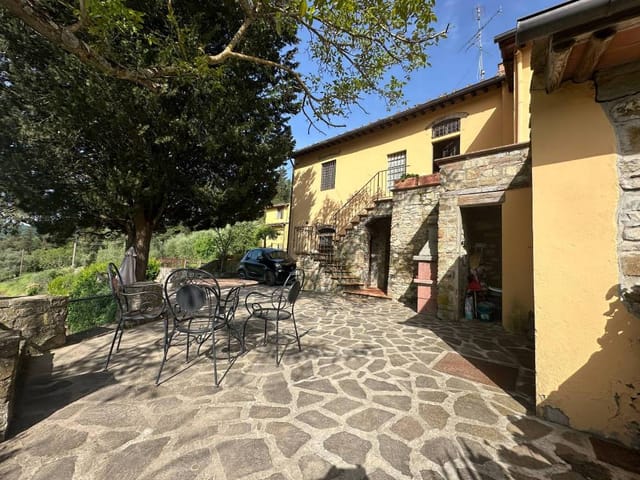
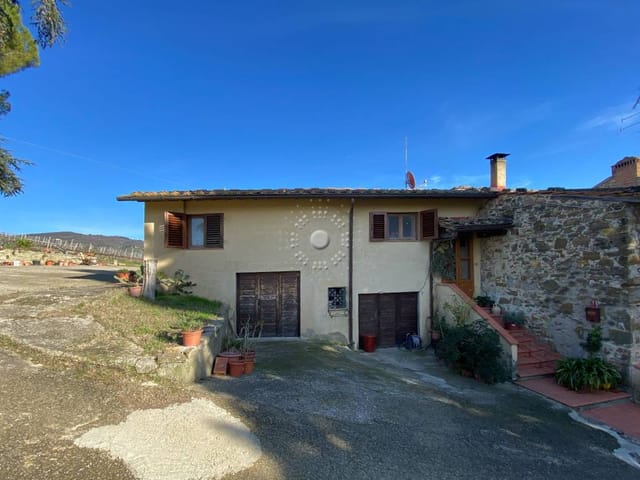
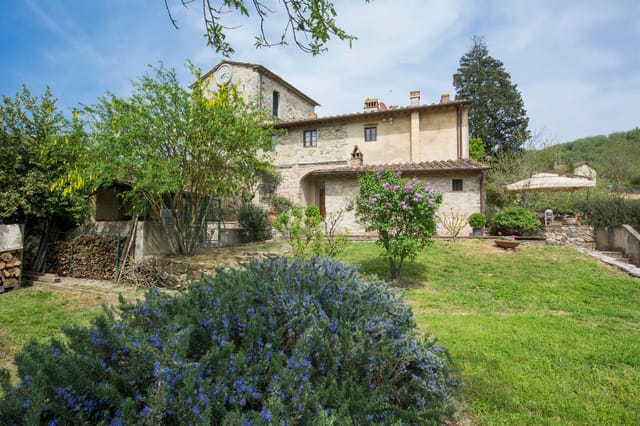
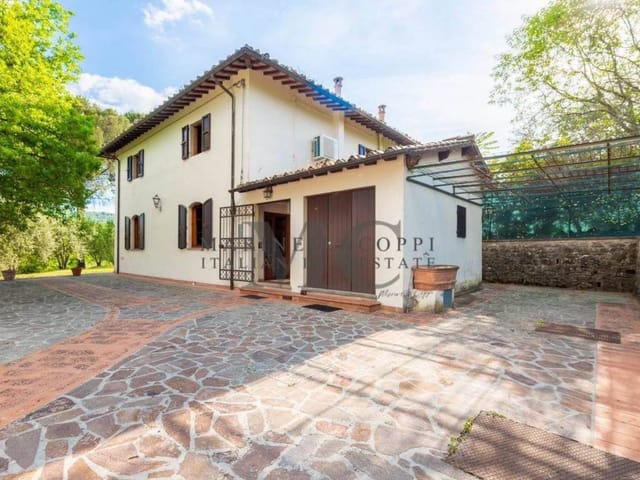
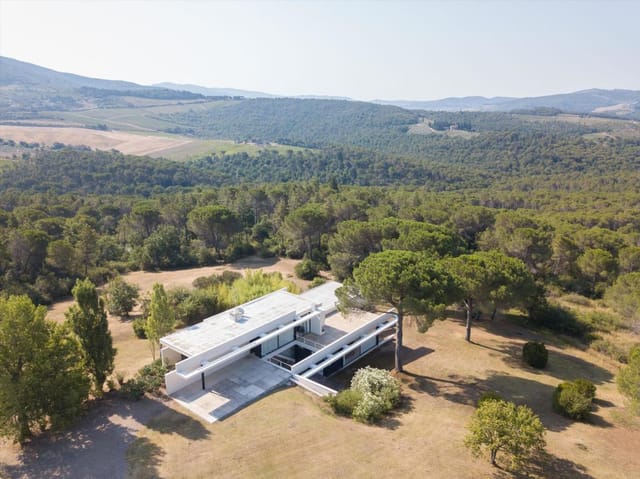
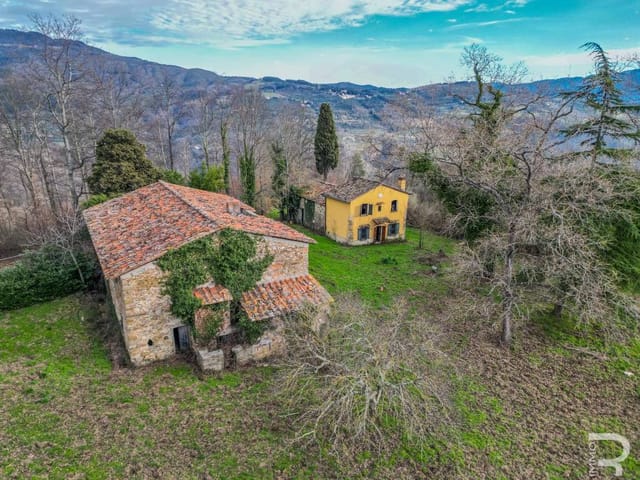
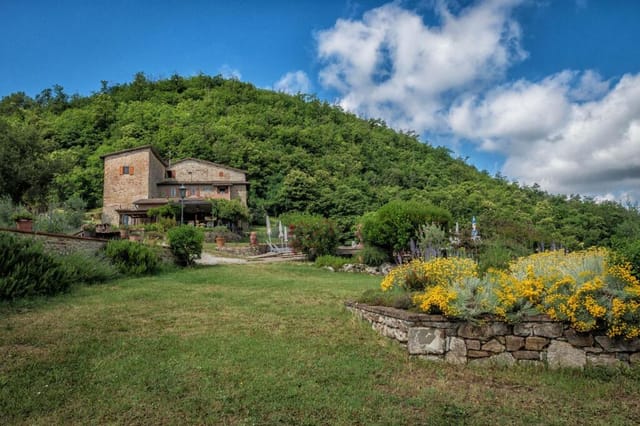
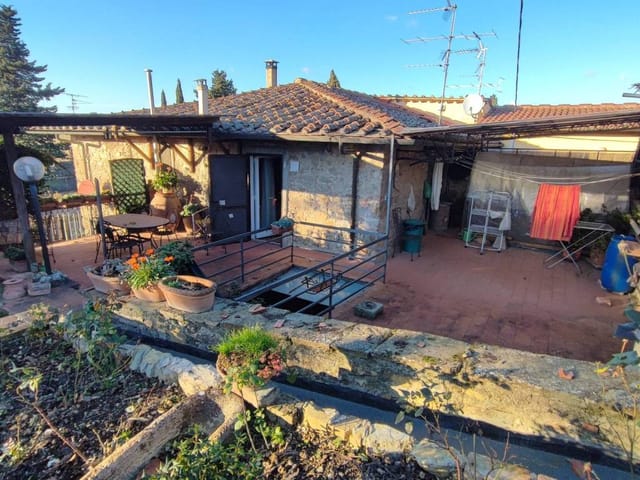
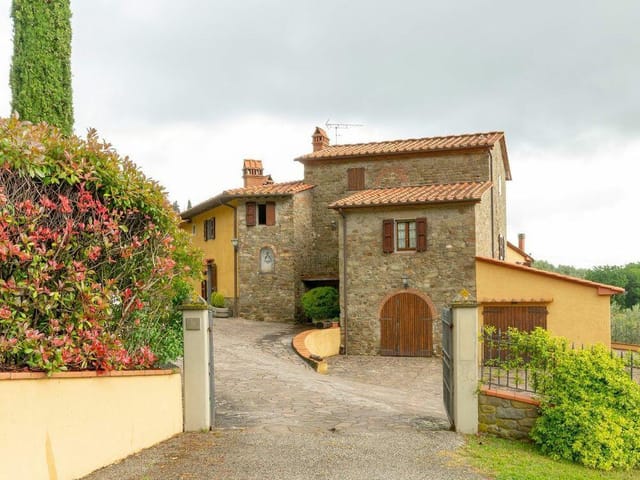
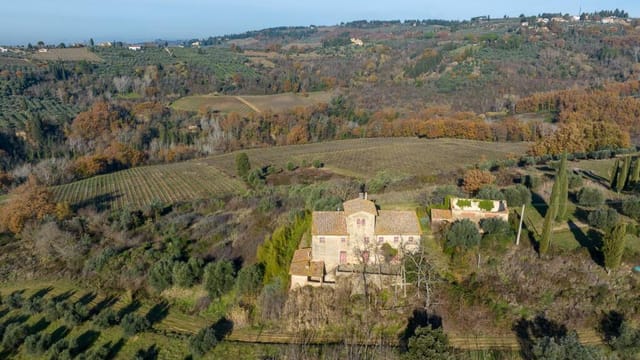
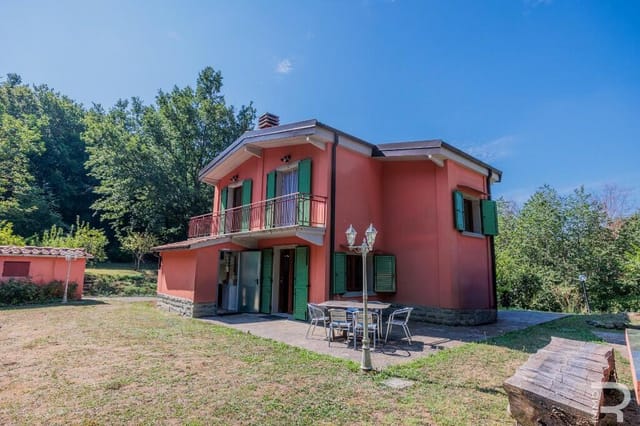
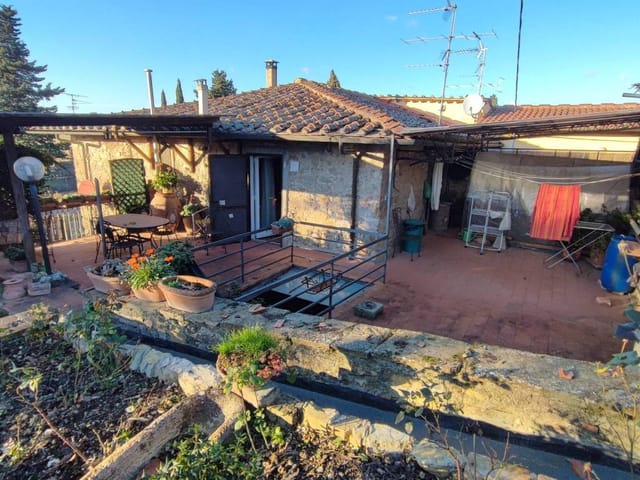
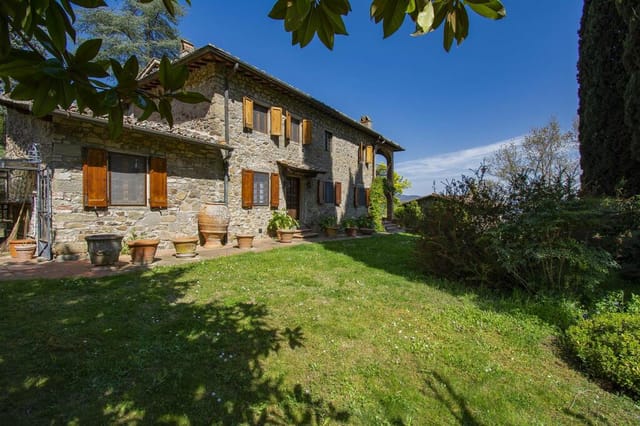
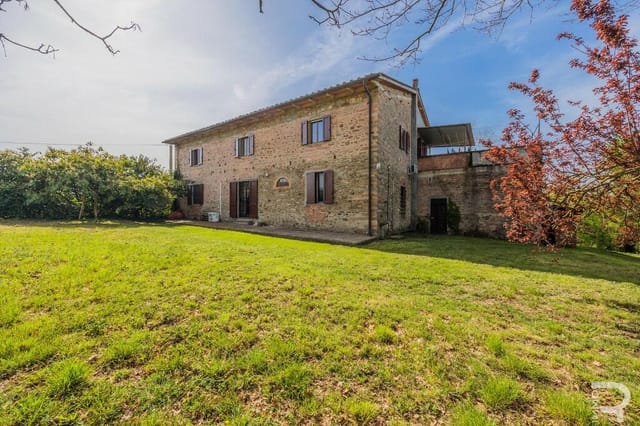
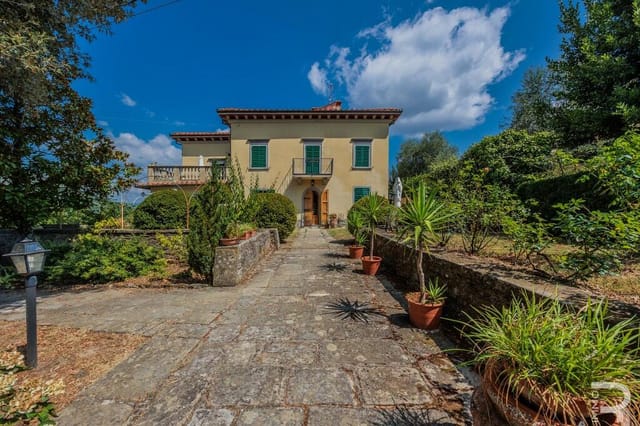
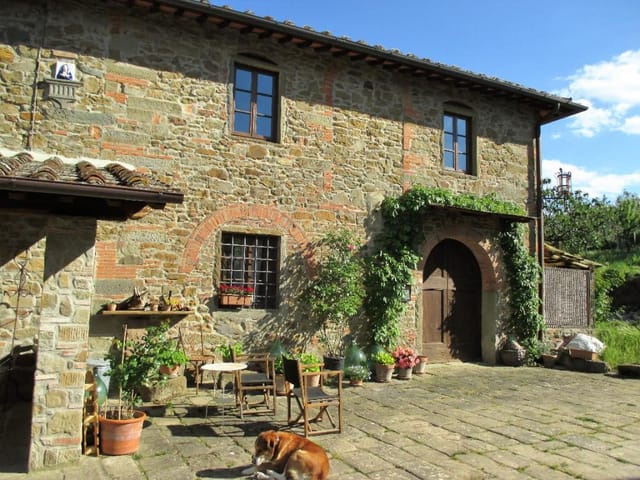
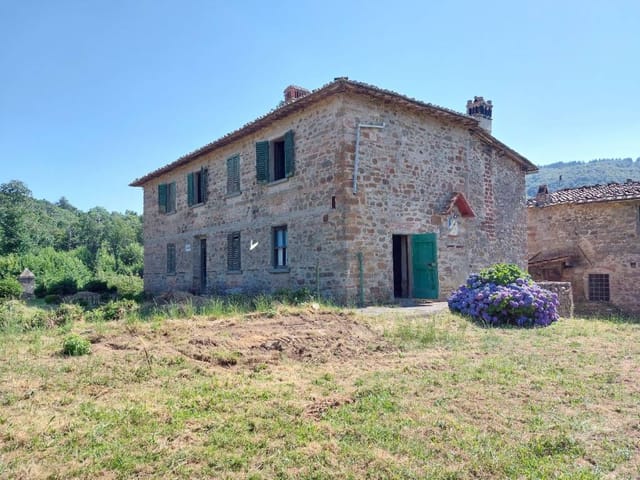
Stand at the edge of the stone terrace just after sunrise and watch the Casentino valley fill with light below you. Two streams converge at the base of the rocky spur where this ancient hamlet sits, their sound rising faintly through the morning air. Monte Penna is visible to the north, the Sanctuary of La Verna catching the first gold of the day on its slopes. This is Borgo Dei Bizantini — a seventh-century Byzantine settlement, barely touched by the last five decades, waiting for someone with vision to bring it back.
This is not a polished villa with a freshly painted pergola and a pool. It's something far rarer: an entire hamlet, 2,200 square meters of historic buildings spread across 112 hectares of Tuscan land that has been in continuous human use since the early medieval period. The property sits between Arezzo and Florence in a corner of Tuscany that most tourists never find — the Casentino, a valley of dense forest, Romanesque abbeys, and villages where the Sunday market still runs on the same schedule it did fifty years ago.
The origins of Borgo Dei Bizantini track back to the Byzantine corridor that once connected Ravenna to Rome, and the evidence is still written in stone. The hamlet's church carries Greek architectural traces that set it apart from anything else in the surrounding countryside. There was once a castle here too, guarding the ancient routes between the Cassia Vetus and the Via Romea. All of it is still standing, if rough around the edges. The buildings run along an east-west axis — a deliberate medieval design choice that blocks the northern tramontana wind and captures maximum winter sun, a passive solar principle that the original builders understood long before the term existed. A photovoltaic system is already in place, and a remarkable perennial spring in the upper section of the estate means the property is effectively water self-sufficient. There's also a well, a river, and several streams. Water, in Tuscany, is rarely taken for granted.
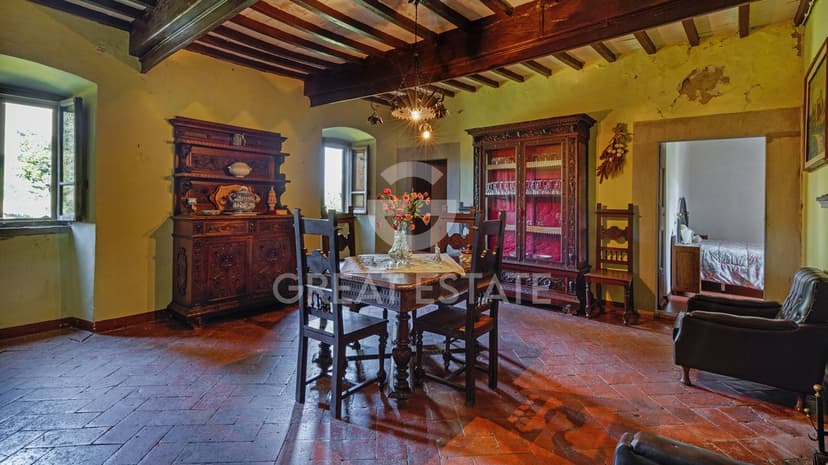
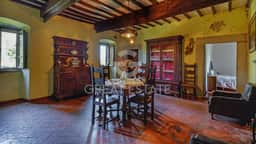
The estate requires comprehensive restoration. That's not a footnote — it's the central fact of what you're acquiring, and it's also the source of the opportunity. The hamlet was lived in until the 1970s and has sat largely dormant since. Electricity is present but will need full inspection and updating. Heating currently comes from wood-burning stoves, and solar thermal panels are in place. Anyone seriously considering this property should budget for a substantial, multi-phase restoration program and work with architects experienced in Tuscan heritage buildings. The reward, done well, would be extraordinary.
What could Borgo Dei Bizantini become? Several answers make sense. The most obvious is an albergo diffuso — the distinctly Italian hospitality model where a historic village is converted into a scattered hotel, with guests moving between stone buildings that feel like a real place rather than a resort. With 25 rooms spread across multiple structures, the layout suits this model almost perfectly. The Casentino is drawing increasing interest from high-end travelers who have already done Chianti and want somewhere that feels genuinely undiscovered. A well-executed hospitality project here would tap into that exact appetite.
The agricultural angle is just as compelling. The 112-hectare estate includes a productive chestnut grove, arable fields, and pastures across a range of soil types. The abundance of water from the spring and watercourses makes irrigation reliable even in dry summers. An organic or regenerative farming operation — chestnuts, heritage grains, perhaps a small herd — would find genuinely good conditions here. The farm-to-table hospitality concept, already well established in Tuscany, practically writes itself against this backdrop.
Then there's the private residence possibility. Families looking for a compound-style European base, foundations for multigenerational gatherings, a place where twenty-five people can stay without anyone stepping on each other — this scale of property rarely exists, and almost never at this price point. At €950,000 for over 279 acres and 2,200 square meters of historic structure, the land value alone tells a story about how unusual this offering is.
The Casentino Forest National Park is fifteen minutes by car, and it's the kind of park that rewards the people who actually use it. The trails through beech and fir forest up to the Eremo di Camaldoli — a Benedictine hermitage that has been occupied continuously since 1012 — are among the finest walking routes in central Italy. The monks still sell their own liqueurs and honey at the small shop near the monastery gate. In autumn, when the chestnuts fall and the forest goes amber, the whole valley smells like something between woodsmoke and rain.
The Golf Club Casentino is twenty minutes away. La Locanda di Pietracupa, one of the area's most respected restaurants, is ten minutes down the valley road — the kind of place where the pasta is made that morning and the wine list leans heavily on local Sangiovese. Talla itself, a five-minute drive, has everything for daily life: bars, grocery stores, a primary school. Arezzo — with its Piero della Francesca frescoes in the Basilica of San Francesco, its monthly antique market that takes over the whole city center, and its excellent train connections — is under thirty minutes away.
Florence is an hour and twenty minutes by car, which sounds like a lot until you realize that most people who own property in rural Tuscany treat Florence as a day trip rather than a daily commute. When you do go, the A1 motorway junction is twenty-eight kilometers away. Florence Airport (Amerigo Vespucci) handles the flight home easily. Pisa Airport is two hours west. For families relocating or spending extended periods, the International School of Florence is seventy-five minutes from the estate.
Summers in the Casentino run warm but not as brutal as the coast — the altitude and tree cover keep temperatures manageable through July and August, which is part of why the valley has drawn Florentine families as a summer escape for centuries. Winters bring cold and occasional snow, which transforms the landscape into something genuinely quiet. Spring and autumn are exceptional: wildflowers on the hillsides in April, truffle season beginning in October, and the kind of light that has been pulling painters to Tuscany since the Renaissance.
For international buyers, Italy's property purchase process for non-EU citizens is well established, and legal support for due diligence on historic rural estates is readily available. The urban planning and cadastral status of the property has been thoroughly verified. Buyers will want independent legal counsel experienced in vincoli storico-artistici — the heritage protections that govern buildings of this age — as these shape what is possible in any restoration program but are entirely manageable with the right team.
Key features at a glance:
- Historic hamlet with 7th-century Byzantine origins, church with Greek architectural details
- 25 rooms across multiple stone structures, 2,200 sqm total indoor space
- 112.2 hectares (approximately 279 acres) of private land
- Perennial natural spring, river, well, and multiple watercourses — full water self-sufficiency
- Productive chestnut grove plus arable fields and pastures
- East-west building orientation for wind protection and solar gain; photovoltaic system in place
- Solar thermal panels; electricity present (to be updated)
- Panoramic views to Monte Penna and the Sanctuary of La Verna
- 5km from Talla (shops, bars, primary school); 28km from A1 motorway
- 1hr 20min from Florence Airport; under 30 minutes from Arezzo
- Casentino Forest National Park 15 minutes; Golf Club Casentino 20 minutes
- Suited for albergo diffuso hospitality project, private estate, or agricultural enterprise
- Price: €950,000 — exceptional value for scale and historic significance
- Full technical due diligence available on request
A property at this scale and with this depth of history comes to market perhaps once in a generation in this part of Tuscany. If you have the ambition to restore something genuinely rare — a Byzantine hamlet on a rocky Casentino spur with its own water, its own land, and views that have barely changed in a thousand years — reach out through Homestra to arrange a site visit and receive the full due diligence documentation. The valley is patient. It has been waiting this long.