Houses For Sale In Europe For Less Than €100,000

Houses for sale in europe - homestra offers the largest amount of european real estate with over 200,000+ properties, find any type of property within your budget from villas to country homes. buy or rent your perfect home in europe.

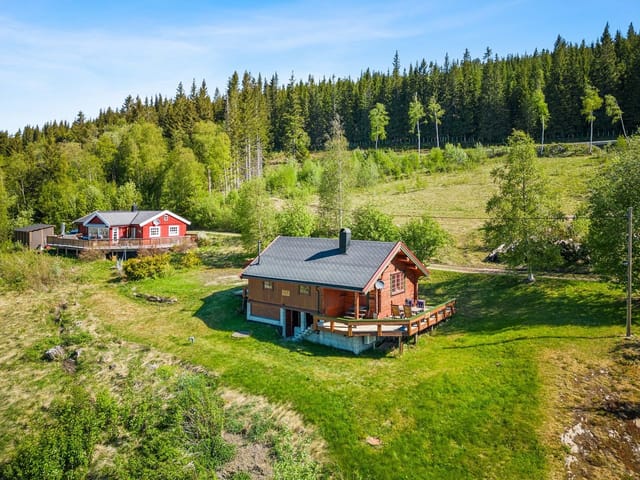
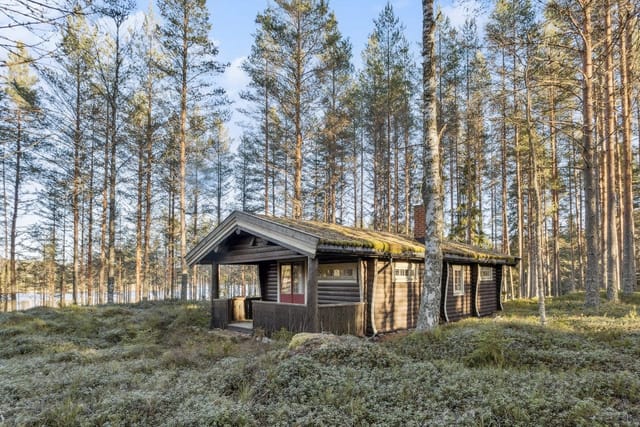
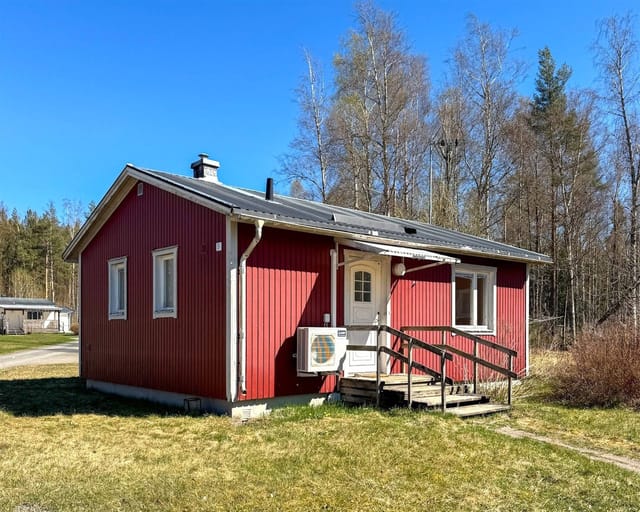
Saturday morning, the coffee is already made. You carry your mug out onto the wide wooden deck and the forest is right there — birch and pine, close enough to hear the wind move through it. A woodpecker hammers somewhere out of sight. The cul-de-sac at Torsborg is completely still. No passing traffic, no sirens. Just the slow, unhurried feel of a Swedish summer morning doing exactly what it's supposed to do. This 1958 country home on the elevated end plot of Torsborg sits on a generous 1,638 square meters of garden and woodland-edge land in the Torsborg area of Eskilstuna — a location that doesn't get talked about enough outside Sweden, which is partly why properties here still represent genuine value. At 89,500 EUR for a move-in-ready holiday home with a guest cottage, fiber internet, and 35 square meters of well-kept interior space, this is the kind of find that serious second-home buyers move on quickly. The house itself is compact and considered. One bedroom, one bathroom, a kitchen that works hard for its size, and a living room centered around a modern air-source heat pump that handles both the warmth of late-autumn visits and the cooling relief of a July heatwave. Large windows face the garden, and the light on a long Swedish summer evening is something you genuinely can't replicate — the sun barely sets, casting that particular Nordic gold across the wooden floors for hours. It doesn't feel small. It feels edited. Everything here has a purpose. What the footprint lacks in size, the land more than compensates for. The plot wraps around the house with room for a kitchen garden, a hammock between the pines, a fire pit on the far edge — whatever you want to make of it. The deck is wide and south-facing, and if you ... click here to read more

Front view of the holiday home
New

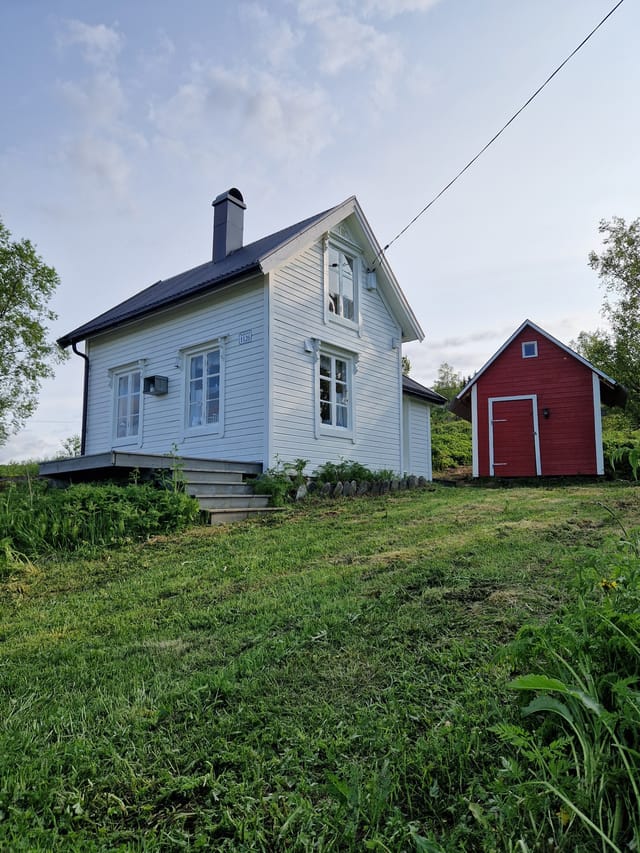
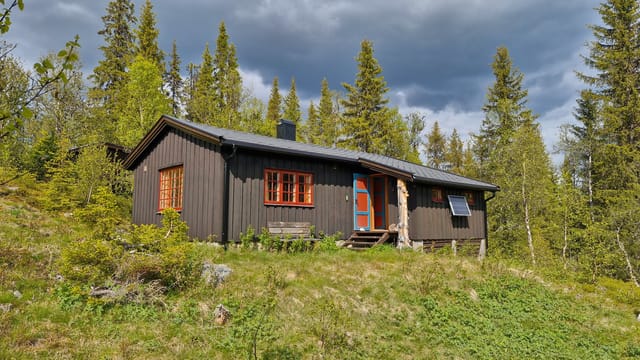
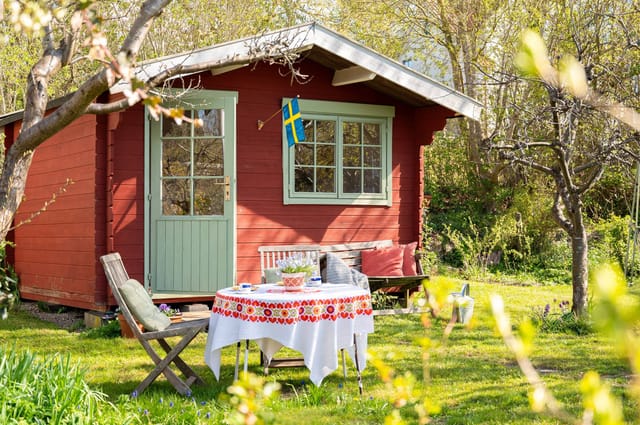
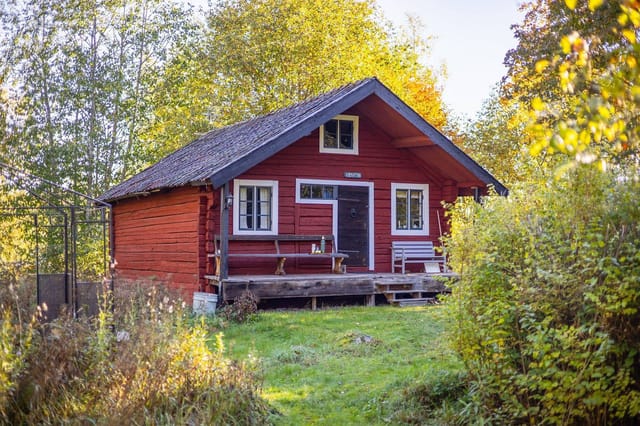
The smell hits you first. Cut grass, sun-warmed pine, and somewhere behind the old apple tree, the faint salt of the Baltic coast drifting in over the garden wall. You're standing on the glass veranda at Söderängsvägen 2, coffee in hand, watching a pair of starlings argue in the birch tree. It's not even eight in the morning and you already know — this is exactly what you were looking for. Set on a generous 3,019-square-meter plot outside Östhammar in Sweden's Uppsala County, this classic red-painted country cottage is the kind of property that doesn't need to try hard. Forty square meters of honest, well-kept living space in the main house. A separate guest cottage. A proper woodshed. A garden that took years of patient hands to get this good. And the sea — close enough that cycling to the communal bathing area takes less time than finishing your morning newspaper. The main cottage has the proportions of a traditional Swedish sommarstuga but with enough in the right places. The living room holds both a dining table and a sofa corner without feeling cramped, anchored by a wood-burning stove that turns October evenings into something genuinely atmospheric. The kitchen is compact and functional — the kind of space where you make smörgås for everyone after a swim, not where you host a dinner party. The single bedroom is quiet and set back from the garden, and the natural light through the afternoon is the kind that makes naps feel earned. The glass-enclosed veranda is the real heart of this property. It faces south over the garden and acts as a room in its own right from April through October — warmer than outside but fully connected to it. You can watch the light change over the flower beds from a lounger, track thunder ... click here to read more

Front view of the red cottage
New

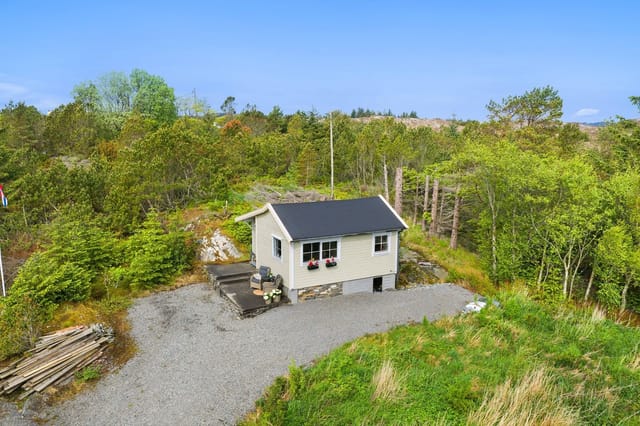
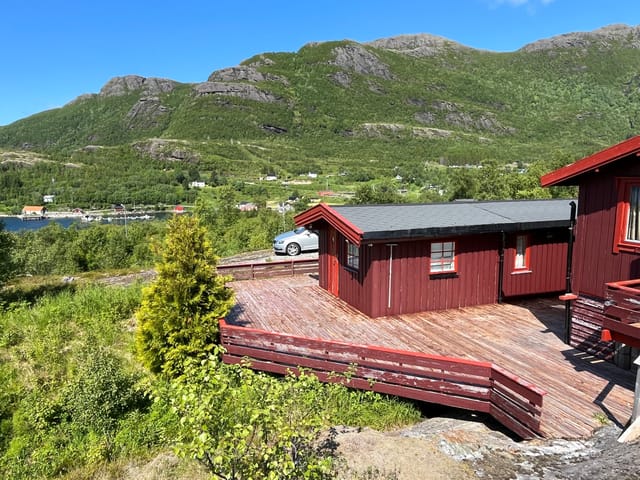
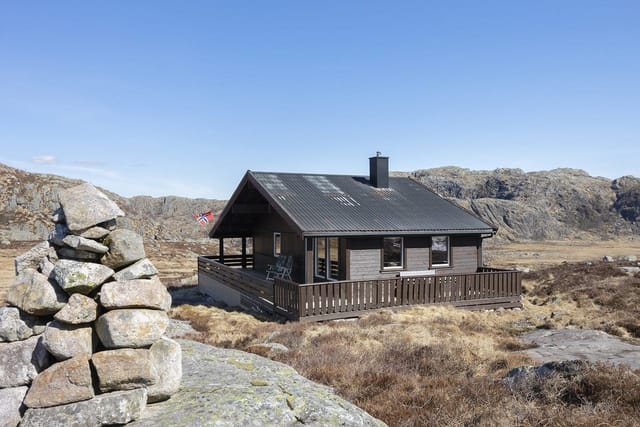
Stand at the edge of the plot on a still July morning and you'll hear almost nothing — a distant outboard motor somewhere on the fjord, the soft creak of birch trees, maybe a curlew calling from the hillside. That kind of quiet is genuinely rare in 2024, and this 5,822 square metre freehold plot at Førlandsvegen 460 sits inside it completely. Aksdal is a small but well-connected community in Rogaland, in the heart of Sunnhordland on Norway's southwestern coast. It's the kind of place that locals know well and visitors almost never stumble across by accident — which is precisely what makes finding a plot here with sea rights feel like something worth paying attention to. The E134 runs nearby, linking you to Haugesund in around 35 minutes and to Bergen in roughly two hours. Haugesund Airport handles direct flights from several European cities including London Gatwick and Copenhagen, which matters a great deal if you're planning to use this as a seasonal escape from somewhere further south. The existing cabin dates from 1943 and sits at 12 square metres of usable interior. Let's be honest about it: the structure needs either thorough renovation or a fresh rebuild. The condition is what it is. But what you're really buying here is the land, the legal sea rights, and the freedom that comes with freehold ownership of a substantial plot in a setting like this. Norwegian countryside doesn't give up these kinds of parcels easily, and a 5,822m² plot with direct sea access in Rogaland is a genuinely uncommon find. The sea rights attached to this property are worth dwelling on for a moment. They grant the owner access to the adjacent coastal area for activities including fishing, swimming, and mooring a small boat. Western Norway ... click here to read more

Welcome to Førlandsvegen 460 - presented by Sivert Velde Rasmussen at PrivatMegleren / Photo: Panomax Studio
New

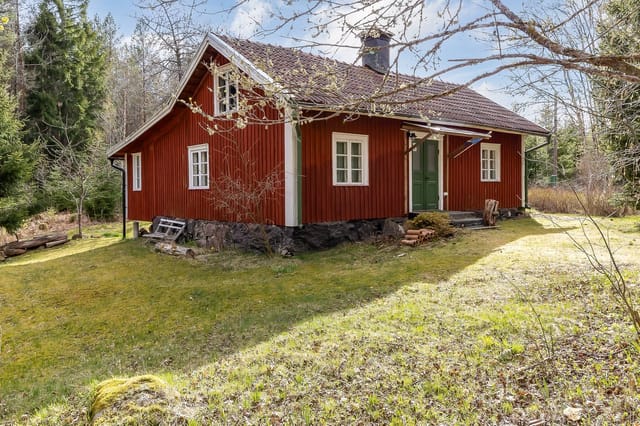
Step outside on a September morning and the air carries something you can't quite name at first — pine resin, damp earth, the faint sweetness of ripening apples from the three old trees at the edge of the lawn. The forest starts just beyond the fence line, and somewhere in there a woodpecker is hammering away at a birch. This is Norra Källbomark 40, a 130-year-old Swedish country house sitting on over a hectare of land outside Byske, and mornings here feel nothing like anywhere else. Built in 1891 and standing in genuinely good condition, this 1.5-story house has the solid bones of late 19th-century Swedish rural construction — thick walls, wooden floors that creak in the right places, windows that frame the surrounding meadows like paintings you never get tired of looking at. The 80 square metres of living space is arranged across two to three bedrooms depending on how you use the upper half-storey, a living room, and a functional kitchen that gets good afternoon light. It's the kind of layout that doesn't waste space on formality. You cook, you eat nearby, you move outside. And outside is really the point. Over 10,000 square metres of plot means you have genuine room to breathe — to grow things, to let children run without watching the edge of a terrace, to set up a proper vegetable garden or just leave most of it as the open meadow it already is. The three apple trees produce reliably each autumn; last year's crop was enough for sauce, cider, and still giving away bags to neighbours. The traditional barn at the back is built for purpose — storage, a workshop, a place to keep firewood bone dry through a Swedish winter. The separate sauna building is not a luxury add-on here. It's a Thursday evening, a Sunday afternoo ... click here to read more
Front view of the house and garden

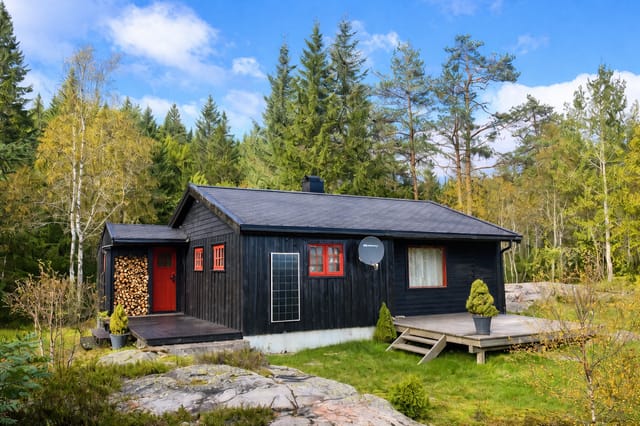
Step outside on a February morning at Bekjordsvegen 36 and you'll hear almost nothing — just the soft compression of snow under your boots and, somewhere in the tree line, a woodpecker working at a birch. Strap on your skis, and within three minutes you're on a groomed cross-country trail threading through the Numedal valley. That's not a selling point dressed up in fancy language. That's just Tuesday here. Lyngdal i Numedal sits in the long, quiet valley of the Numedalslågen river, roughly two hours from Oslo by car along the E134. It's the kind of place Norwegians have been keeping to themselves for generations — serious hiking territory in summer, a cross-country skier's paradise from November through March, and in between, a landscape that shifts from amber birch forests to frozen lakes with an unhurried confidence. The village has a petrol station, a local shop, and the kind of community noticeboard that still gets used. That's part of the appeal. The chalet at Bekjordsvegen 36 is a solid three-bedroom cabin in good condition, sitting on a leasehold plot of approximately 1,000 square metres. At 80 square metres of internal living space, it's not enormous — but the layout is well thought out. A living room with large windows pulls in the treeline views and the generous daylight that arrives in midsummer from before 5am. The wood-burning stove anchors the room. On a cold January evening with the stove going and snow banking up against the glass, it earns its place in a way no underfloor heating system ever quite does. The kitchen is functional with pine-fronted cabinets and a laminate worktop — honest, unpretentious, and perfectly usable. It won't win any design awards, and buyers who want a showroom kitchen will w ... click here to read more
Welcome to Bekjordsvegen 36!

The first thing you notice on a summer morning at Kilegrendsvegen 1182 is the silence—not the empty kind, but the full kind. Birdsong across the water. A light wind moving through the pines. The faint creak of a rowboat you're allowed to keep moored right on Dåstjønn, just waiting. This is what you came to Norway for. Treungen sits in the Nissedal municipality of Telemark, and it's the kind of place that doesn't shout about itself. No crowds, no tourist queues. Just clear glacial lakes, forest trails ribboning out in every direction, and a sky that turns genuinely extraordinary in late August when the bilberries ripen and the light goes golden low across the hills. The cabin at Kilegrendsvegen 1182 sits within a small, quiet cabin community right between lakes Drang and Dåstjønn—two of the most swimmer-friendly lakes in the area, with sandy-edged shores and water so clear you can see the bottom a meter down. At 47 square meters, this two-bedroom chalet is compact but not cramped. The layout makes sense for the way people actually use a cabin: you come in, you drop your gear, and you're comfortable. The living room has dark wood paneling that gives off that specific warmth you only get in properly old-school Norwegian hytte interiors—the kind that takes the edge off a cold evening after a long day on the trails. The wood-burning stove does the rest. You sit in front of it with a bowl of something hot and you genuinely don't want to be anywhere else. The kitchen has been recently renovated and fitted with new cabinetry, a refrigerator, and a gas stove. Practical, clean, and more than adequate for cooking proper meals—think slow-cooked reindeer stew on a winter weekend, or a pan of pan-fried perch pulled from Dåstjønn th ... click here to read more
Welcome to Kilegrendsvegen 1182!

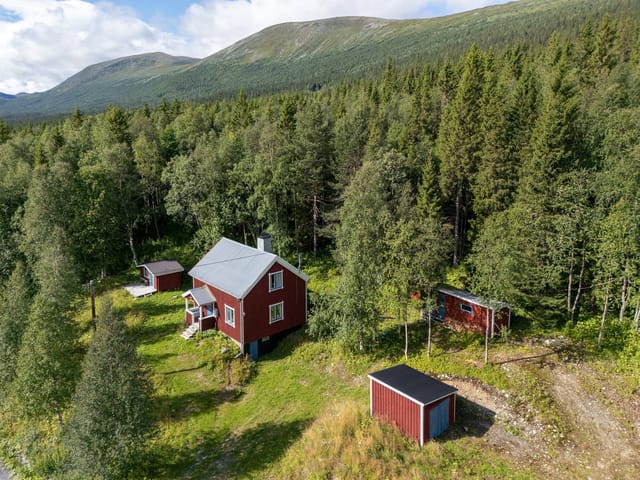
Step outside on a February morning at 874 meters above sea level, and the silence hits you first. Not the absence of sound exactly, but the kind of deep, textured quiet you only find in the Norwegian mountains — a crow somewhere distant, the creak of snow settling on the roof, and the faint hiss of wind threading through the birch trees beyond the fence line. The kettle is on inside. The fireplace still holds last night's embers. This is Slåsætra, and once you've spent a weekend here, the idea of not owning a place in these hills becomes genuinely hard to sit with. The chalet at Linviksetervegen 131 sits on a generous, fenced 1,706 square meter plot in one of Innlandet county's most quietly sought-after mountain communities. Fåvang itself — the nearest village, about 10 kilometers down the valley — is small and functional in the best way: a grocery store, a train station on the Oslo-Trondheim line, and the kind of low-key infrastructure that lets you arrive on a Friday evening and not have to think about logistics again until Sunday. Up here at Slåsætra, though, the village may as well be a different world. The chalet measures 75 square meters and is in good condition throughout. It's not a renovation project — you can use it from day one. The ground floor opens into a combined living and kitchen area with high ceilings and large windows that pull the mountain view right into the room. On a clear April afternoon, the light in here is almost unreasonably good, that particular Nordic gold that comes in low and warm and seems to make everything glow slightly. A fireplace anchors the living area. You will use it constantly. On the coldest nights in January, with the solar panels quietly doing their job and the woodstove ti ... click here to read more
Welcome to Linviksetervegen 131!

The first thing you notice on a still July morning at Haltlandveien 30 is the light. It comes off the water at a low, almost sideways angle, cuts right through the big living room windows, and lands on the wooden floor in long pale strips. Grab a coffee, open the terrace door, and you're standing 100 meters from the Norwegian Sea before the rest of the world has had breakfast. That's not a bad way to start a day. Sandstad sits on Hitra, the large coastal island in Trøndelag that serious anglers, kayakers, and anyone who genuinely loves wild Norwegian nature have known about for decades. Getting here is easier than people assume. Drive across the Hitra Tunnel from the E39 corridor — about an hour southwest of Trondheim Airport Værnes — and you arrive on an island where the roads are quiet, the coastline is dramatic, and the pace of life adjusts itself downward almost immediately. It's the kind of place where the agenda for a Tuesday might be: fish in the morning, grill on the terrace in the afternoon, wood stove in the evening. Haltlandveien 30 is a timber chalet built in 1979, sitting on roughly 1,000 square meters of privately owned land. The plot is generous for its 42-square-meter footprint, which means outdoor living is as much a part of this property as anything inside. Mature trees wrap the site, doing a proper job of creating seclusion without making the place feel closed in. The garden has enough flat, usable ground for a fire pit setup, kids running around, or simply a hammock between two birches. Privacy here isn't a marketing claim — the surrounding natural vegetation earns it. Inside, the floor plan is compact and honest. The living room does what a cabin living room should: wide windows angled toward the ... click here to read more
Welcome to Haltlandveien 30!

Early morning in Tived, the mist sits low over the pines and the only sound is birdsong and the faint lap of water from Lake Unden, just a four-minute walk down the road. You pull on a jacket, step off the wooden porch, and that's your commute. That's the life this place offers. Kungsbacken 4 is a 1965 Swedish fritidshus — a proper country cottage — set on a generous 1,831-square-metre plot in one of central Sweden's most quietly compelling corners. Two bedrooms, one bathroom, 51 square metres of warm, practical living space, and enough garden to lose yourself in for a whole afternoon. The price is 99,500 EUR. For what you get — a turn-key holiday home on the edge of a national park, fully furnished, beside a lake — that's a serious value proposition. The house itself is in good condition, well-maintained by the current owners and honest about what it is: a proper Swedish country retreat, not a showroom. The interior is bright, with windows that pull the treeline right into the living room. Large mature trees ring the garden, giving the kind of natural privacy that newer developments spend years trying to fake with fences and hedges. The kitchen is functional and ready to use from day one, and because the sale includes all furniture, there's no logistics headache — you arrive, you unpack a bag, you start living. Lake Unden is 450 metres from the front door. One of the cleanest lakes in Västra Götaland, Unden is fed by cold, clear springs and surrounded almost entirely by forest. In summer, the swimming is exceptional — families from the nearest towns drive an hour to reach what you'll have on your doorstep. Pike and perch fishing are taken seriously here; the local tradition is to head out just after sunrise, before t ... click here to read more
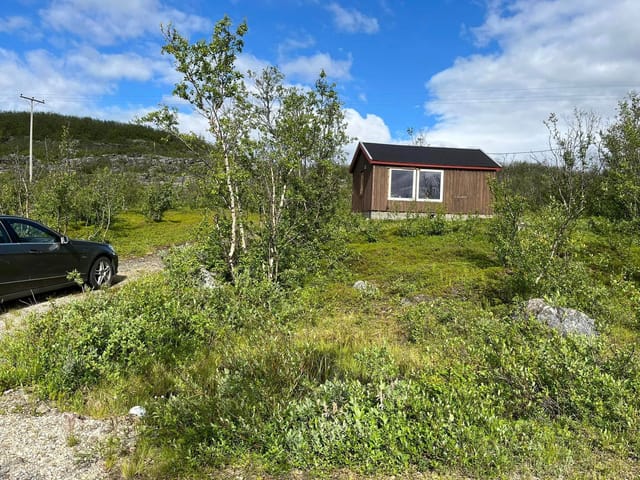
Front view of the cottage and garden

Early on a July morning, the forest around Ljungsjömålavägen is so quiet you can hear a pike break the surface of Lake Mien a kilometre down the road. The coffee's on, the kitchen window is cracked open, and the air coming through smells of pine resin and cool water. That's the kind of morning this place was built for. Completed in 2023, this three-bedroom holiday house sits on a 1,175 square metre plot in Bökemåla, a small community north of Karlshamn in Blekinge — Sweden's southernmost mainland county and one of the country's most underrated corners for a second home. The house is genuinely new, so you're not walking into someone else's renovation backlog. The bones are solid, the materials are fresh, and the energy performance reflects modern Swedish building standards. For an international buyer looking for a move-in-ready Swedish vacation home without the project headaches, that matters. The ground floor opens into a kitchen and living room that share the same open space. Large windows pull light in from the garden side, and the room has the kind of easy proportions that make it work both as a family gathering point and a quiet reading spot when everyone else is out by the lake. The kitchen itself is functional without being fussy — proper counter space, good storage, a layout that doesn't make cooking for six people feel like a military exercise. Two bedrooms sit off the entrance floor, both looking out onto the surrounding green. Upstairs, the attic level holds a third bedroom: a bit more private, a little more tucked away, good for teenagers or guests who appreciate their own corner of the house. A dedicated room on the main floor is pipe-ready for a future bathroom — the groundwork is done, the connections ar ... click here to read more
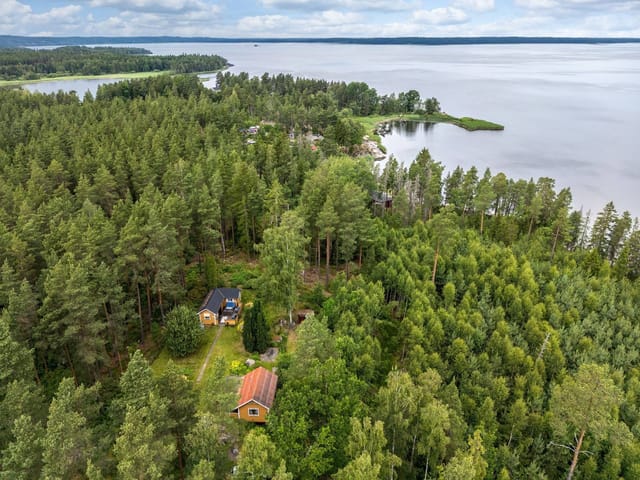
Exterior view of the holiday home

Sometime around six in the morning in late September, you step onto the deck at Nekkåbjørga 276 and the valley below is wrapped in low mist. The birch trees have gone gold overnight. Somewhere across the ridge, a dog barks once, then silence. That's it. That's the whole morning. This is what you came for. Flaknan sits in the Selbu municipality of Trøndelag, a part of central Norway that doesn't make it onto the tourist posters but absolutely should. The landscape here is the kind that makes you put your phone down — rolling forested ridges, open cultural heathland worn smooth by centuries of summer grazing, and a sky that in winter turns shades of violet and orange you genuinely cannot photograph accurately. At roughly 459 meters above sea level, the air has a sharpness to it that city lungs take a day or two to adjust to. After that, you won't want to breathe anything else. The chalet itself dates to 1975, built the way Norwegian mountain cabins were built back then — pine floors, tongue-and-groove paneling on the walls and ceilings, everything in wood, everything warm. There's a wood-burning stove in the living room that's not decorative. Come November, it does real work. The room is large enough for two seating groups, which matters when you've got family spread across the sofas on a rainy afternoon and someone's working a jigsaw puzzle at the table by the window. Speaking of that window — the view out of it does most of the decorating. You don't need much on the walls when you've got the Trøndelag ridgeline outside. The kitchen is original and entirely functional, running on gas rather than grid electricity. Preparing a simple meal of slow-cooked reinsdyrgryte — Norwegian reindeer stew — while the window frames a ... click here to read more
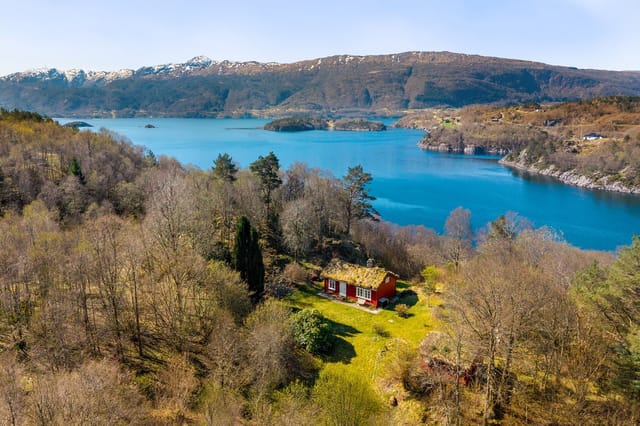
Front view of the property

Step outside on a July morning and the air smells of pine resin and cold water. The trees are close — proper Dalarna forest, not a manicured park — and through a gap in the birches you can already see the silver glint of Rällsjön Lake sitting no more than a two-minute walk down the path. That's your commute for a morning swim before breakfast. Norra Rällsjön 11 is a compact, single-bedroom timber chalet sitting on a genuinely substantial piece of Swedish countryside: 1.1 hectares of forest land in Bjursås, tucked into Leksands municipality in Dalarna. Thirty-seven square metres inside. Eleven thousand outside. The arithmetic of that ratio is exactly the point. The cabin was built in 1980 and it's in good condition — solid, well-kept, and honest about what it is. There's no pretense here. The kitchen and small dining area face the woods, and in autumn the view through the window shifts daily as the birches go gold and then bare. The living room gets real light through generous windows that open onto the veranda, where a cup of coffee at dusk in late August has a particular quality that people who've experienced it tend to describe very badly to people who haven't. A wood-burning stove handles the heating, and given that Dalarna winters are proper affairs — cold, white, quiet — that stove becomes the social centre of the cabin from November through March. Sanitation is via an outdoor privy, keeping the footprint simple and the running costs minimal. For a property at this price point in this region, it's exactly what the market expects, and it keeps the door wide open for a buyer to invest incrementally in upgrades on their own terms. The lot deserves special attention. Over a hectare of your own Swedish forest is not a ... click here to read more
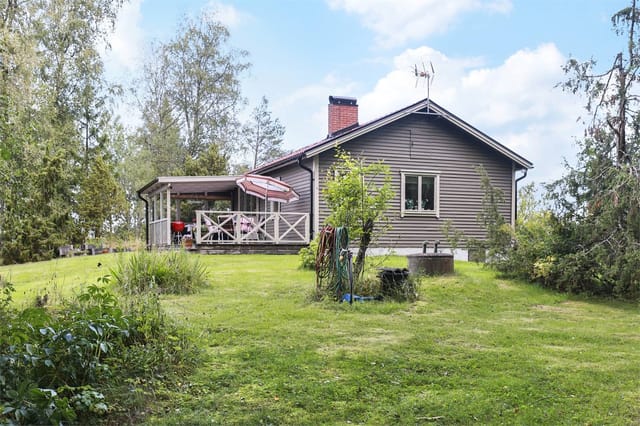
Exterior view of the cabin

On a quiet Tuesday morning in Vesterbølle, the only sounds are the wind moving through the mature birch trees at the back of the garden and a distant tractor crossing a field somewhere beyond the hedge. No traffic. No sirens. Just that specific, hard-to-explain stillness that you only get in the Jutland countryside — the kind that, once you've had it, makes city weekends feel like a bad habit. Katbakken 3 sits on a 773-square-metre private plot in this small village just outside Gedsted, a corner of Nordjylland that most international buyers haven't discovered yet. That's precisely the point. The price — €93,356 for 145 square metres of solid, well-maintained Danish house — tells its own story about where this market sits right now. Red brick walls, a fiber cement roof that was never meant to look flashy but has outlasted trends by decades, and a carport added in 2002 that keeps the car frost-free through February. This is a house built to be lived in properly, not photographed. Inside, the layout is generous in a way that older Danish homes often are. The ground floor living room gets real afternoon light through windows that face the garden — no squinting at screens, no hunting for a patch of sun. The wood-burning stove in the corner is the kind of feature you appreciate in November when the temperature drops toward zero and the garden goes quiet under frost. Scandinavian design culture has always understood that warmth is an experience, not just a thermostat setting, and whoever specified that stove understood it too. There's a dedicated dining area off the living room, a functional kitchen with its own drainage system, a separate office — useful if you work remotely and want a proper door to close — and a ground-fl ... click here to read more
House with red brick and black roof, featuring a raised terrace with parasol and stairs, set in a driveway surrounded by trees and other houses in the background.

Close your eyes for a moment and picture this: it's a Saturday morning in July, the Swedish summer sun already warming the old wooden floorboards by 7am, and the only sound reaching you through the open kitchen window is birdsong and the faint rustle of birch leaves. That's not a fantasy. That's a typical morning at Högaholma 2279. This 1909 torp — the classic Swedish word for a small country cottage — sits on a quiet country lane just outside Markaryd in Kronoberg County, about 1.7 kilometres from the shores of Bröna Lake. It's the kind of place where the pace of life adjusts itself naturally, almost without you noticing. You arrive on a Friday afternoon still carrying the tension of city schedules, and by Sunday you genuinely can't remember what you were so stressed about. The main house covers 80 square metres, and it's used every centimetre wisely. Original wooden floors run throughout — the kind that creak slightly underfoot, warm with more than a century of family life. A wood-burning stove anchors the living room, and in October when Småland's forests turn every shade of copper and amber, you'll understand exactly why that stove is the heart of the house. The kitchen is a practical pleasure: custom-built painted cabinetry that feels rooted in the cottage's heritage without being fussy or impractical. Large windows pull the outside in, so the garden's changing moods become part of the interior atmosphere in every season. Then there's the guest house. A more recently built addition, it has two rooms, a WC, and a compact kitchenette — enough that visiting family or friends get genuine privacy rather than being squeezed onto a pull-out sofa. This is the detail that changes everything about how you can use the prope ... click here to read more
Front view of the summer cottage

On a slow summer morning in Kaldred, you wake up to birdsong filtering through the wooden walls, the smell of damp grass coming in through a cracked window, and absolutely nothing demanding your attention. The kettle goes on. The hammock is waiting. That's the pace of life at this classic Danish sommerhus on Vejlebrogaardsvej — and once you've had a taste of it, city weekends feel like a poor substitute. Set on a generous 1,061-square-meter plot in one of West Zealand's most quietly sought-after summer house communities, this two-bedroom wooden home has the kind of settled, unhurried quality that takes decades to develop. Built in 1975 and kept in genuinely good condition, it carries its age well — think sun-bleached timber cladding, fiber cement roof, and a garden that feels like it grew naturally rather than being designed. Mature trees form a loose perimeter around the property, giving the lawn and its flower beds a private, enclosed feel without making the place feel hemmed in. There's real breathing room here. The 60-square-meter interior is compact in the way that good summer houses always are — enough space to be comfortable, not so much that it stops feeling like an escape. The open-plan kitchen and living room form the heart of the house, and they work together in a practical, easy way. White kitchen cabinets sit against a black countertop, the integrated stove and sink are exactly where you want them, and the tall cabinet keeps the fridge and freezer tucked out of the way. It's a kitchen built for actually cooking in — for gutted fish from the morning's catch, for berry pies when the brambles in the garden go mad in late August. The dining area sits just off the kitchen, round table, blue chairs, the kind of ... click here to read more
A small holiday home stands in a green garden with a hammock to the right. Trees and bushes surround the area under a blue sky.

Step outside on a February morning and the world is white and absolutely still. The birches are frosted solid, the air bites clean at the back of your throat, and a kilometer down the trail the first set of groomed ski tracks is already laid. Back inside, the wood stove is still throwing heat from the night before, and the smell of pine smoke drifts through every room. This is what a cabin in Etnedal actually feels like — not a brochure version of Norway, but the real thing. Stuvelivegen 270 sits at around 909 meters above sea level in Etnedal municipality, a quiet corner of Innlandet county that most international buyers haven't discovered yet. That's part of what makes it interesting. The valley runs roughly northwest from Dokka, the nearest town of any size, and the landscape here is high, open, and honest — rolling fells, dense spruce forest, frozen lakes in winter, wildflower meadows in July. The cabin sits at the very end of the road. No neighbors to glance at through the window. No through traffic. Just the creak of timber and, if you time it right, the distant percussion of a woodpecker working a dead trunk somewhere across the clearing. The cabin itself dates from 1948, which tells you something about its bones. Norwegian mountain cabins from that era were built to last, not to impress, and this one wears its age well. The roof is new, the windows are newer double-glazed units, and the exterior cladding has been replaced — so the envelope is tight and well-maintained. Inside, 60 square meters is efficiently used across three bedrooms, a proper living area, kitchen, and a cabin bath with shower and toilet. It's not a sprawling estate. It's a place designed for people who actually want to be outside most of the ... click here to read more
Welcome to Stuvelivegen 270!

Picture this: it's a Saturday morning in late June, the sun hasn't really set since Thursday, and the light coming off Pevatnet Lake turns the pine walls of your living room a deep amber. You can hear absolutely nothing except water. That's what owning this cabin actually feels like. Sitting on a private knoll about 200 meters back from the lake's edge, this traditional Norwegian log chalet near Harstad has been a mountain retreat since 1971 — and it wears its age well. The roof was replaced in 2023. The bones are solid. It's not a project; it's a place you can start using the weekend you collect the keys. The chalet sits at roughly 310 meters above sea level on a plot of 2,700 square meters, giving you a generous sweep of private land — enough for a firepit, a vegetable patch, space for kids to disappear into the trees for hours. Northern Norway doesn't do manicured gardens; the land around Pevatnet has its own rhythm, and this plot is part of it. Birch and pine right up to the edge of your lot. Berry bushes everywhere in August. The kind of quiet that city people drive hours to find. Inside, the 44-square-meter footprint is compact but honest. Three bedrooms sleep five comfortably — two original rooms from the 1971 build and a third added in 1991. The pine floorboards creak in exactly the right way. Timber-paneled walls, a wood-burning fireplace in the living room, a kitchen laid out for real cooking after a day on the trails rather than for showing off. Everything comes furnished, as seen in the photos, which means no sourcing Scandinavian cabin furniture from scratch — it's already here, already right. The fireplace isn't decorative. In October, when the birches go yellow and the first snow dusts the ridge above ... click here to read more
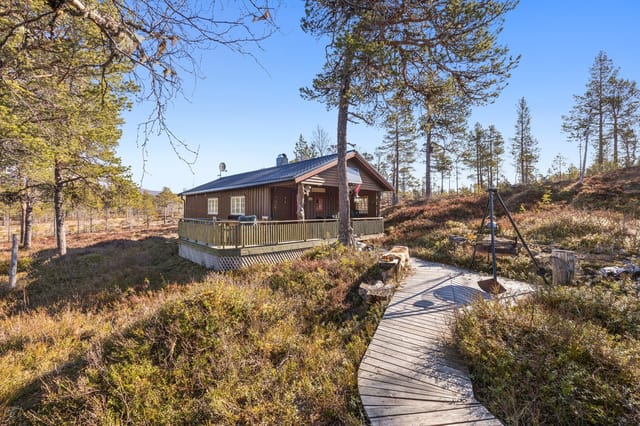
Entrance area

The snowmobile cuts the engine and suddenly it's just silence. Real silence — the kind you forget exists until you're standing at 454 metres above sea level in Tømmerdalen, with spruce trees holding their snow and the valley spread out below you like something from a Theodor Kittelsen painting. That's the arrival experience in winter at this 1950s cabin on Tømmerdalsvegen. In summer, the last 100 metres is a short walk from the road through birch and heather. Either way, you earn the quiet. This is not a polished mountain resort apartment. It's a proper Norwegian hytte — two bedrooms, 45 square metres of wood-panelled interior, a cast-iron wood burner that heats the whole place within the hour, and a south-facing terrace where you can sit with coffee at eight in the morning and watch the light come across the hillside. The parquet floors creak slightly in the cold. The ceiling is clad in pine. It smells the way Norwegian cabins are supposed to smell. The kitchen is set apart from the living area, which in a small cabin makes a surprising difference — you can actually cook without everyone watching. Gas stove, gas refrigerator, fully off-grid. The solar panel system handles the basic electrical needs, making this place genuinely self-sufficient. No power bills, no grid connection fees, no landlord. The freehold plot of 1,008 square metres is yours outright, with annual municipal fees of just 150 NOK — essentially nothing. Two outbuildings from 2003 sit on the plot and handle what small cabins always need more of: storage. Firewood, fishing gear, snowshoes, a spare canoe paddle — there's room for all of it without cluttering the main space. One outbuilding includes an outdoor toilet, standard for this type of off-grid p ... click here to read more
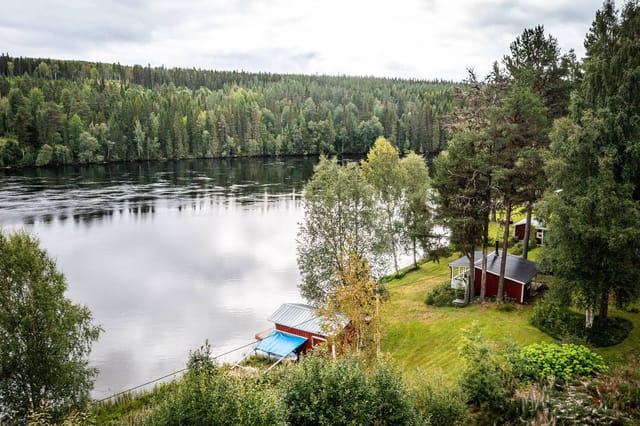
Front view of the cabin

Stand on the south-facing terrace at Risvikstien 6 on a July evening and you'll understand immediately why people come to this stretch of the Trøndelag coast and never quite manage to leave. The light at that hour is extraordinary — low, golden, pulling long shadows across the water — and from up here, with the Fosen peninsula spread out below you, the noise of the world feels very far away. That terrace, built in 2020 and generously proportioned at 66 square meters, is honestly the heart of this property. You'll eat breakfast out there. You'll lose track of time out there. That's the point. This is a two-bedroom holiday chalet at Risvikstien 6 in Oksvoll, a quiet coastal settlement in the municipality of Ørland, Trøndelag. The main cabin covers 44 square meters — compact, yes, but thoughtfully laid out with a living room, kitchen, bathroom, and two bedrooms that sleep up to six comfortably. An 11-square-meter annex sits separately on the 715-square-meter plot, which gives the whole place a flexibility that a single structure never could. Guests get their own space. Kids get their hideaway. You get the cabin to yourselves. The sea is 200 meters away. Not a figure of speech. Two hundred meters down the lane and you're at the water's edge. Oksvoll sits on the southern tip of Fosen, a broad peninsula that juts into the Trondheim Fjord between the open sea and sheltered inner waters. This geography matters enormously for how you'll actually use the place. The coastline here is a mix of smooth rock shelves worn flat by millennia of tide and small sandy inlets that warm up quickly in June. Local families have been swimming off these rocks since before anyone can remember. You'll find yourself doing the same within about for ... click here to read more
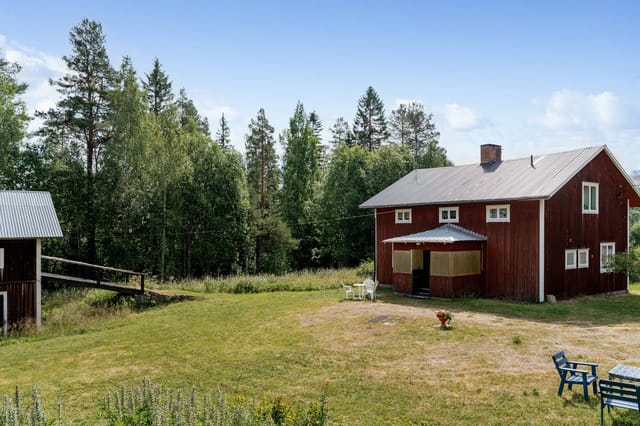
Picture 1

On a still morning in late June, the lilac hedge at the front of Citadellvägen 37 fills the air with something that stops you mid-step. You stand there a moment, coffee in hand, listening to the sound of a neighbor's trowel working the soil two plots over, a distant church bell somewhere toward the center of Landskrona, and underneath it all — almost nothing. Just wind in the birch leaves. This is what daily life looks like at one of Sweden's most storied colony communities, and it's considerably more addictive than it sounds on paper. Citadellet's allotment colony is genuinely old. Built in 1929 and rooted in Sweden's deep tradition of trädgårdskoloni living, the area around Citadellvägen feels lifted out of another era — in the best possible way. The winding footpaths between plots are narrow and unhurried. The cottages are small and individual. The gardens are lavish, seriously tended, and strikingly varied: one plot is a riot of dahlias, the next a productive kitchen garden with tidy rows of runner beans and dill. Nobody is rushing anywhere. The cottage at number 37 sits on approximately 500 square meters of garden and comes in at 37 square meters of interior space — compact, honest, and designed around what actually matters. Step inside and you're met with a living area that does double duty as a sleeping space, a double bed tucked into the room in a way that feels intentional rather than improvised. Light comes in well. The mood is calm. A few steps down — the floor level drops, which gives the kitchen its own distinct character — you find a room lined with warm wooden paneling and wooden floors that have clearly been looked after. It smells faintly of pine. The kitchen is small but genuinely functional, the kind ... click here to read more
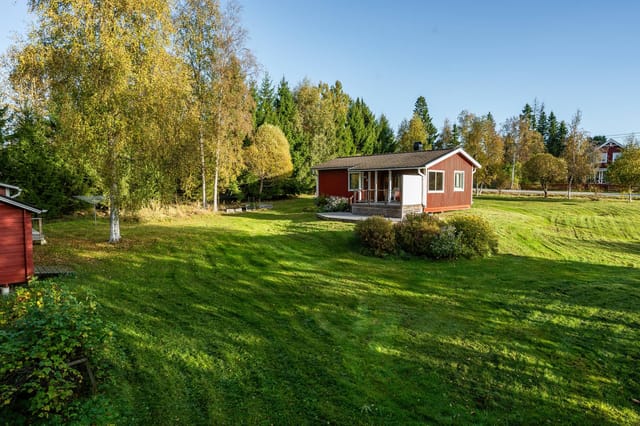
Exterior view of the garden cottage

You wake up to silence. Not the city kind of silence that's really just a lower hum of traffic and neighbor noise — actual silence, broken only by wind moving through spruce trees and the distant creak of a ski lift warming up for the day. That's a Saturday morning in Haugsdalen, and once you've had a few of them, it becomes very hard to go back. This single-level chalet sits on a 998-square-meter freehold plot in Rissa, a corner of Trøndelag county that most international buyers haven't discovered yet — which is precisely the point. The Indre Fosen peninsula has been drawing Norwegian families to its forests and fjord edges for generations, and this five-bedroom cabin, built in 1985 and kept in genuinely good condition, is the kind of property that doesn't come to market often. Five bedrooms. Thirteen sleeping places. One level. No stairs to navigate after a long day on the slopes. The ski lift is literally one minute from the front door. Walk out, boots already on, and you're there. That detail alone changes the calculus on a winter holiday home — no shuttles, no parking queues, no rushing. In January and February, when the snow settles deep across the Fosen hills, you'll understand why this matters. The elevation sits at around 276 meters above sea level, high enough to hold good snow through the heart of winter, low enough that the approach roads stay manageable. Come March, the light starts returning in long golden stretches across the hillside, the kind that turns the snow surface into something almost liquid at dusk. But this property earns its keep across every season. Summer in Rissa is genuinely underrated. The Trondheim Fjord — Trondheimsfjorden — is within reach, and the inland lakes and streams around Hau ... click here to read more
Picture 1

The first thing you notice on a July morning at Sirkelvatnet is the silence. Not the absence of sound, but a particular quality of quiet that you only find above the treeline in Arctic Norway — the soft slap of water against a wooden rowboat, a single bird call bouncing off the far shore, the creak of the terrace boards under your feet as you step out with coffee in hand. The lake sits below you, absolutely still, reflecting the birch-covered hillsides in a mirror that doesn't break until you toss a line in. That's what Sirkelvatnet 57 actually delivers. Not a brochure fantasy — a real cabin life, the kind Norwegians have been quietly enjoying for generations while the rest of Europe didn't quite catch on. Sitting at roughly 300 metres above sea level outside Narvik, this single-bedroom mountain chalet was built in 1997 and covers 41 square metres of total usable space — 29 square metres in the main cabin, plus a 12-square-metre annex that contains a separate WC. Compact, yes. But smartly laid out, with every metre doing real work. The wood stove anchors the living area and becomes the social centre of the cabin from September through May, throwing heat and light while the snow builds up outside. Big windows face the water. You arranged your mornings around that view before you even unpacked. The leasehold plot stretches across 994 square metres, giving you genuine breathing room — a proper garden area, space to park, room to move. And then there's the boathouse. The sale includes a 50% share in a naust sitting close to the parking area, which comes with a rowboat. That boat changes the character of the property entirely. Cross to the far bank in twenty minutes. Drop a fishing line for Arctic char and trout in a lake ... click here to read more
Welcome to Sirkelvatnet 57! - Photo: Hanna Linnea Kristensen

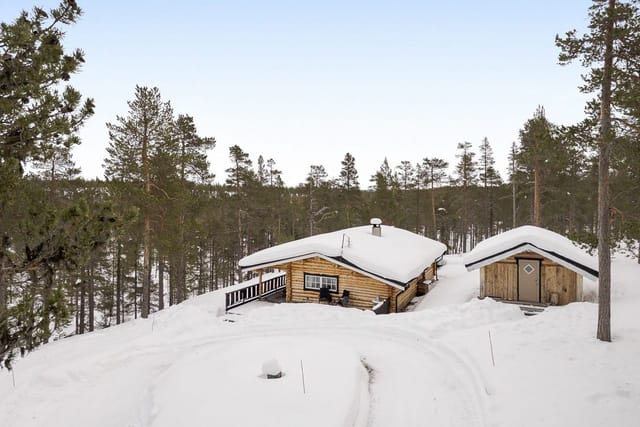
Step outside on a January morning, clip into your cross-country skis, and you're already on the trail. That's not an exaggeration — the groomed tracks of Budor's beloved network are literally 200 meters from the front door. The snow sits heavy on the spruce trees, the air tastes clean in a way city air never quite does, and the only sound is the hiss of your skis and the occasional wood pigeon. That's the daily reality of owning this 1940s log chalet at Budorvegen 1165 in Løten, one of Innlandet's most quietly sought-after recreational areas. Løten sits in the inland heart of Norway, about 100 kilometers north of Oslo — close enough for a Friday afternoon escape from the capital, far enough that the weekday world feels genuinely distant. The Gryllingseter area, where this chalet sits at 496 meters above sea level, has a different rhythm from the coast. Winters here are reliably snowy, reliably cold, and thoroughly Nordic in the best sense. Summers bring a softness — wildflowers along the hiking paths, long light evenings, the smell of pine warming up in June sun. The cabin itself started life around 1940 as a hunting lodge. You can still read that history in the bones of the building — the low-ceilinged basement was once used to hang and dry game, and the traditional Norwegian log construction (laftet tømmer) gives the walls a solidity and thermal mass that modern frame builds simply can't replicate. In 2009, a thoughtful extension broadened the floor plan to 41 square meters of interior living space, and suddenly what was purely a hunting shelter became a genuinely comfortable two-bedroom holiday home. The roof was replaced in both 2003 and 2009, and the exterior received a fresh stain coat in 2020 — so the structural ... click here to read more
Picture 1

Step out onto the 27-square-metre terrace at Skjettendalsveien 19 on a clear July morning and the world goes quiet — just the rustle of birch trees, a distant woodpecker somewhere in the forest below, and a view that rolls across the Trøndelag landscape all the way to the shimmer of the Trondheimsfjord. At 253 metres above sea level, the air up here has a quality you don't find in cities. Sharp. Clean. A little piney. It wakes you up better than coffee. This is Leksvik — a corner of Norway that most international buyers haven't discovered yet, which is exactly what makes it interesting right now. The chalet itself is a classic Norwegian hytte, built in 1947 and sitting on a generous private plot of 1,009 square metres on a quiet hillside with scattered neighbouring cabins. At 44 square metres of indoor living space across the main floor and a loft, it's compact in the way that Scandinavian cabins are supposed to be: everything you actually need, nothing you don't. The layout runs from a small entrance hall through two living areas and a kitchen, into a bedroom and bathroom, with the loft above offering a natural sleeping nook or reading space depending on your mood. The 18-square-metre external storage area handles the practical side of cabin life — skis, fishing rods, firewood. Speaking of firewood: there's a wood stove, and on an October evening when the temperature drops and the trees turn copper-red across the hillside, that stove becomes the centre of the whole property. Electricity and water are already connected, so this isn't a project starting from scratch. The bones are solid. What it needs is someone with a vision — updated insulation, a refreshed kitchen, a bathroom renovation — and the result is a fully p ... click here to read more
Picture 1

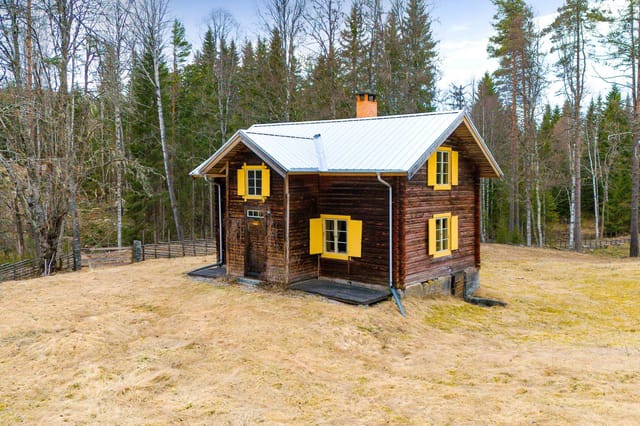
On a still July morning, you step out onto the west-facing terrace with a mug of coffee and hear almost nothing. A wood pigeon somewhere in the birches. The faint lap of water from Hällebosjön, ten minutes down the track. That's it. This is what brought you here, and it's exactly what you'll find every single time you return. Hällebo 907 sits in a quietly coveted pocket of Örebro County, outside the village of Pålsboda in Hallsbergs kommun. It's a genuine Swedish countryside retreat — 49 square metres of well-kept living space on a 1,100 square metre plot, updated steadily over recent years without losing any of its honest, unpretentious character. This is not a property tarted up for a quick sale. The roof was replaced in 2020. The facade and windows were repainted in 2024. The bathroom was fully renovated in 2024. The kitchen got quality IKEA fittings in 2022. Whoever owned this looked after it, and it shows. Walk inside and the layout makes immediate sense. The living room anchors itself around an open fireplace — not a decorative one, but the kind that genuinely heats the room on a grey October afternoon when the leaves outside have gone amber and the temperature drops before you expect it. The kitchen has enough workspace to properly cook, not just reheat things, and looks out toward the garden where, come August, the raspberry canes will be heavy enough to slow you down on the way to the woodpile. Two bedrooms handle family visits or a spare room for the one friend who always stays longer than planned. One bedroom was freshly painted in early 2025 and feels clean and light. The bathroom renovation in 2024 is worth mentioning twice. It's properly done — shower cabin, modern composting toilet (a Separett unit, com ... click here to read more
Front view of Hällebo 907 country home

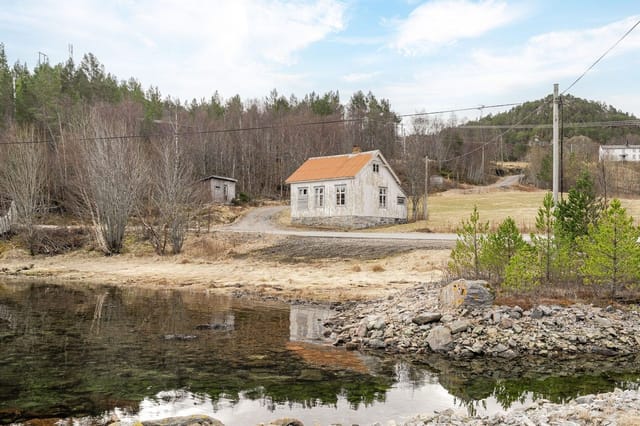
Stand at the kitchen window on an October morning and watch the mist roll off the hills above Finsland. The air outside is sharp and clean in a way that reminds you what air is actually supposed to smell like. The old wood stove in the corner ticks as it warms up, and there's not a single sound beyond birdsong and the occasional creak of the house settling. This is 8.5 acres of southern Norwegian countryside, and it's been quietly waiting for someone with the right kind of ambition. Built in 1890, this classic Norwegian farmhouse at Songdalsvegen 670 carries the bones of something genuinely substantial. Four bedrooms spread across two floors, a total internal area of 179 square meters, two living rooms, two kitchens, and a layout that once served a working rural household through every season. The ground floor alone runs to 167 square meters — two living rooms, two kitchens, a bathroom, a separate WC, a hobby room, storage, a garage, and the kind of entrance hallway that feels like it has stories to tell. Upstairs, two further bedrooms and a hallway occupy a more intimate 12 square meters, with an additional 34 square meters of external second-floor storage that could become something far more interesting in the right hands. The property is classified as a Gårdsbruk/Småbruk — a smallholding — which opens up a different category of ownership and lifestyle entirely. The 34,217 square meter lot is mostly open and south-facing, catching the sun across what is currently a mix of garden, open land, and space that invites whatever you're bold enough to put there. A kitchen garden along the south wall. A small orchard of apple and pear trees. A paddock. The land doesn't push back — it gives you room to think. The house needs ... click here to read more
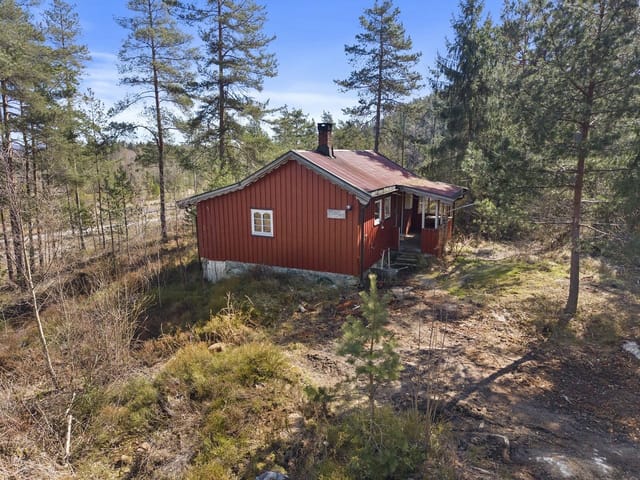
Front view of the property

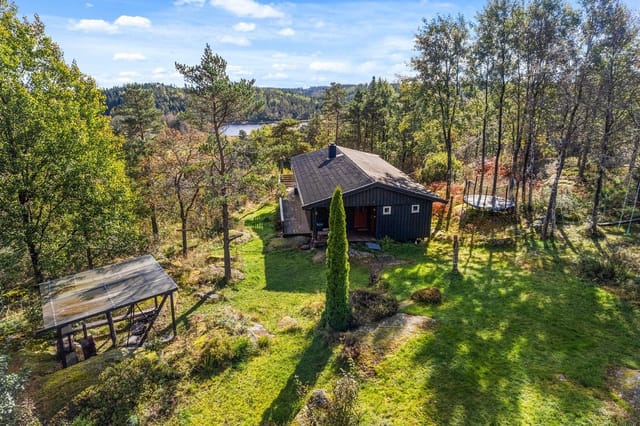
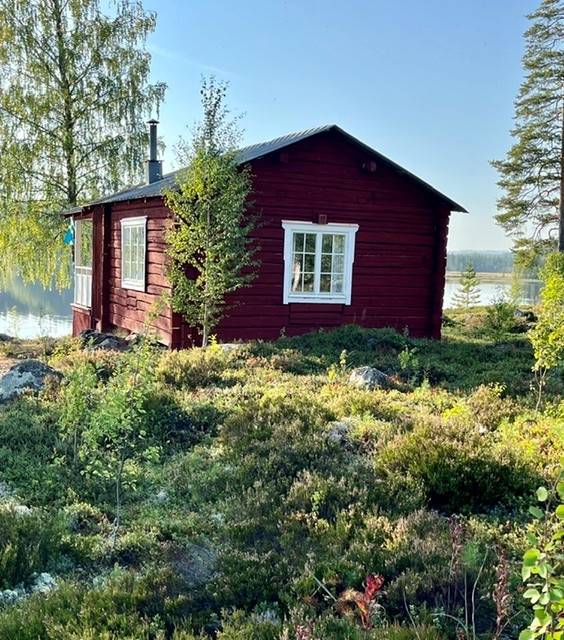
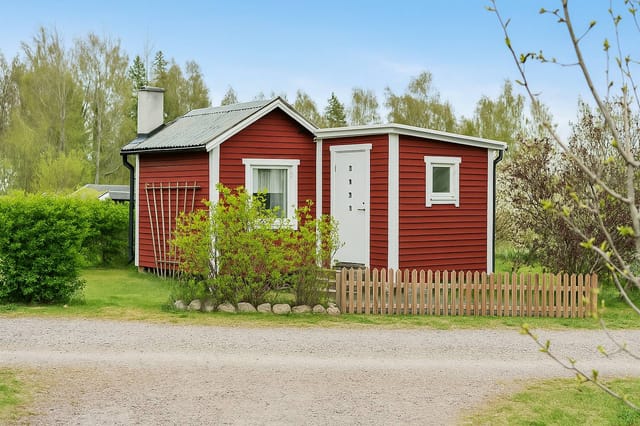
The alarm doesn't go off here. You wake up because the light does — that pale, golden Swedish summer light that slips through the curtains sometime around five in the morning and makes it impossible to stay in bed. So you pull on a sweater, step outside into the dewy garden, and walk the two-minute path down to Lake Toften before anyone else is up. The water is still. The pines are reflected perfectly on the surface. You dive in anyway. That's the daily reality of owning Östra Toften 216, a classic red-painted cottage sitting on a 1,000 square meter leased plot in a close-knit community of about forty similar summer homes just outside Östervåla in Uppsala County. It's compact — 34 square meters of living space — but Swedish summer cottage culture has never been about square footage. It's about being outside. The cottage is where you sleep, eat breakfast, and come in from the rain. The rest of your life here unfolds on the lake, in the forest, and around a fire in the garden. Built in 1968, the cottage has that honest simplicity that makes older Scandinavian summer homes so appealing. The living room is bright, with windows that pull in the tree light and make the small space feel larger than it is. It connects directly to the bedroom — a straightforward layout that works exactly as it should for a one or two-person getaway. The kitchen is practical and compact, built for the kind of cooking that actually happens at a summer cottage: coffee before the swim, pasta after the hike, maybe a proper crayfish spread in August with candles on the garden table. There's a storage shed on the plot for bikes, fishing gear, kayak paddles, and all the other paraphernalia that accumulates when you spend your summers outdoors properly. ... click here to read more
Exterior view of the red summer cottage

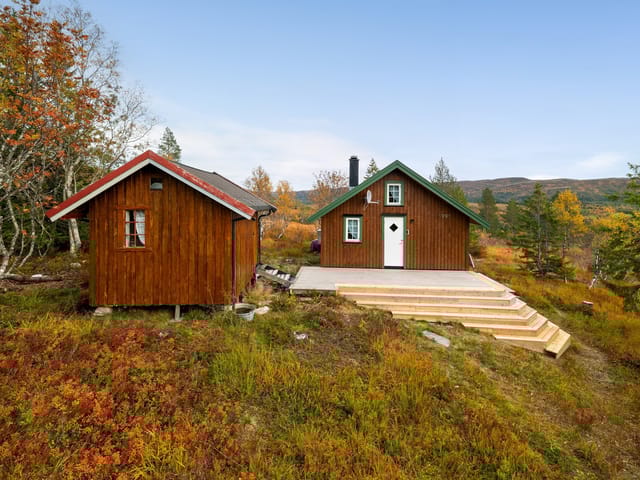
You arrive by boat. There's no other way. You cut the engine, drift into the mooring at Osvågen, and for a moment all you hear is water lapping against the hull and a single bird somewhere deep in the spruce trees. Then you shoulder your bag and follow the footpath — about 800 meters of soft forest floor, birch and pine on either side — until the treeline opens and the cabin appears on the rise above you, its balcony framing a wide blue sweep of the fjord. That's the moment you stop thinking about your inbox. This is what genuine off-grid living looks like in Helgeland, one of Norway's most quietly extraordinary coastal regions. The chalet at Hestnesosen sits on a 2,081-square-meter elevated plot above Osvågen, fully detached from the road network and reachable only by water. For buyers who've spent years talking about "disconnecting," this isn't a metaphor. It's the actual situation — and it's exactly what makes this property so rare. At 131 square meters of indoor living space, the three-bedroom cabin is far more generous than the average Norwegian hytte. Two separate living rooms give you real breathing room: one for rainy afternoons with a board game and a wood-burning stove sending heat into the walls, another where guests can settle in without stepping on each other. The retro interior furnishings — included in the sale — give the place a particular character that would take years to curate elsewhere. Nothing feels staged. It feels lived in, in the best possible sense. The kitchen is practical and well-considered. Laminated cabinetry, a tiled splashback, a brand-new refrigerator, and a proper oven. The built-in dining nook beside it — a custom-made sofa bench and chairs around a fixed table — is the kind of arra ... click here to read more
Charming, spacious cabin in Hestnesosen with views over Osvågen.

Wake up on a Saturday morning in February, pull back the curtain, and there it is — Ljoslandvannet frozen solid below you, the ski slopes at Ljosland already buzzing with the distant hiss of lifts, and a turf roof overhead holding a thick white blanket of snow. The fire crackled through the night. Coffee's on. This is what you came for. This compact two-bedroom mountain cabin at Nye Gruvevegen 8 sits at the upper edge of the Ljosland cabin area in Åseral municipality, one of Southern Norway's most established and accessible ski communities. At just €66,460, it's a rare entry point into a genuine Norwegian fjell lifestyle — not a polished resort product, but the real thing. Simple. Honest. And completely yours. The cabin covers 33 square metres of usable interior space, but the way it's designed, nothing feels tight. Two bedrooms sleep seven in total, which means a family of four has room to spare, or you can host friends for a ski weekend without anyone drawing straws for the sofa. The combined kitchen and living area keeps everyone together — meals, card games, planning the next day's route on a trail map spread across the table. A fireplace anchors the room, and once it's going on a cold evening, the whole space transforms. There's a 16-square-metre veranda out front where you can sit with a mug of something warm and watch the light drain out of the mountains. What makes this place genuinely different is the off-grid setup. No mains electricity, no running water. For some buyers, that's a dealbreaker. For others — the ones who'll actually love it here — it's the whole point. Åseral municipality has confirmed there's no obligation to connect to water or sewage systems, which keeps annual costs remarkably low. The tur ... click here to read more
Picture 1
The first thing you notice on a still morning at Paradistorg 23 is the silence. Not the absence-of-something silence of a city apartment at 3am, but a full, living quiet — birdsong threading through birch trees, the distant creak of a wooden gate, the smell of damp grass after a night of Swedish rain. This is what people mean when they talk about getting away from it all, except here, you actually mean it. Built in 1909 and standing on a generous 4,480 square metres of garden in the small village of Finnerödja, this two-bedroom house has the kind of unhurried solidity that only comes with age. The walls have held warmth through more than a century of Värmland winters. The kitchen's wood-burning stove — still in daily use — has fed generations. You get the sense that the house has already been through everything and come out just fine. Inside, 100 square metres of living space is thoughtfully arranged across four rooms. The bedrooms are proper-sized, not architectural afterthoughts. The recently renovated bathroom brings in clean, modern fittings without erasing the house's original personality. And the living room, anchored by a pellet stove that clicks on with a low hum and fills the room with radiant heat within minutes, is exactly the kind of place where you abandon plans to go out and end up reading until midnight instead. Large windows face the garden on multiple sides, and in the long golden stretch of a Swedish summer evening, the light through those windows does something extraordinary — the whole interior turns amber, and time slows down noticeably. The garden is the real story here. Nearly half a hectare of lawn, mature trees, and open sky. Space enough for a kitchen garden, a fire pit, a trampoline, a green ... click here to read more
Front view of the house and garden

Picture this: a Saturday morning in mid-July, coffee in hand, sitting on a 59-square-meter wrap-around terrace while the Trondheim Fjord glitters just a hundred meters downhill. The air smells of pine and salt. A boat putters somewhere out of sight. That's not a fantasy — that's a typical morning at Brassetveien 94. This two-bedroom chalet sits in Åfjord, a coastal municipality in Trøndelag that most international buyers haven't discovered yet — which is precisely why it's worth paying attention to. Åfjord isn't trying to be a resort town. It's the real Norway: unhurried, deeply connected to the sea and the forest, and refreshingly free of the tourist infrastructure that irons out the rough, interesting edges of a place. The chalet itself was built in 1982 and has been kept in genuinely good condition. At 61 square meters of interior space, it's compact but well thought out. Nothing feels squeezed. The main living area is anchored by a fireplace — the kind you'll be extremely grateful for when October arrives and the birch trees outside start dropping their leaves in the wind. Large windows pull in natural light and frame the surrounding landscape like a painting you never get tired of. There's room for a proper dining table, which matters when you have family visiting and want meals to feel like events rather than afterthoughts. The kitchen is practical and open to the living space, so whoever's cooking doesn't end up exiled from the conversation. Two bedrooms handle family stays or a combination of sleeping quarters and a small home office for those remote-work weeks. The bathroom covers everything you need. Out back, a 10-square-meter storage room takes care of kayak paddles, fishing gear, skis, and all the other e ... click here to read more

Welcome to Brassetveien 94!

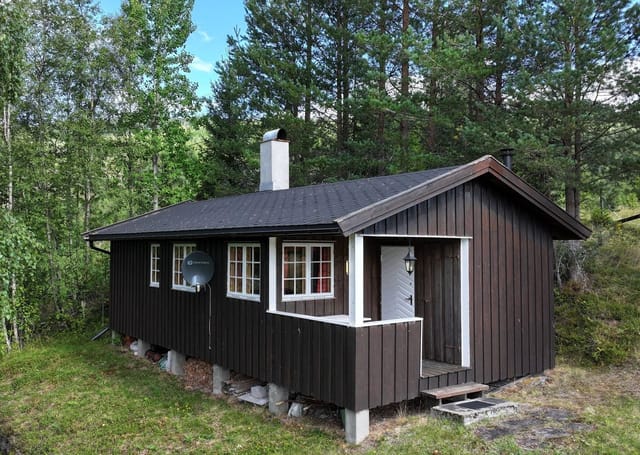
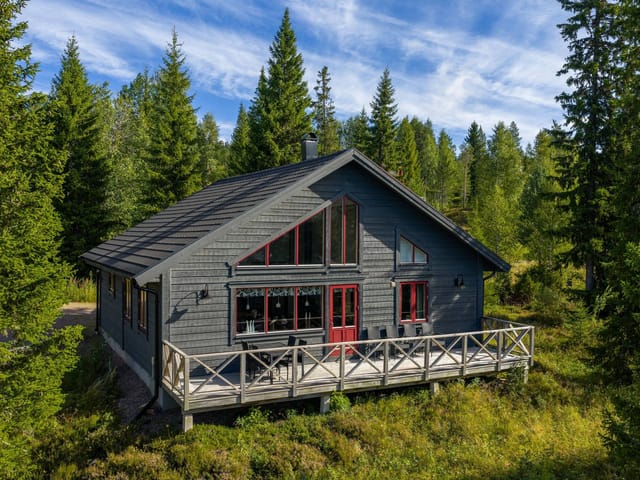
Step outside at dawn and the only sound you'll hear is wind moving through the heather. No traffic, no notifications, no noise — just open Norwegian mountain land stretching out in every direction, and the faint smell of birch smoke still clinging to the air from last night's fire. That's morning at Borsævegen 882, a traditional timber cabin sitting at 713 meters above sea level in the Skafsåheii highlands of Tokke municipality. It's the kind of place that slows your pulse within an hour of arriving. This is a proper Norwegian hytte — built in 1970, honest in its simplicity, and set up precisely the way a mountain cabin should be. Fifty-three square metres of indoor space, three bedrooms, an open living room and kitchen with a wood-burning fireplace, and a covered entrance terrace where you can pull your boots off and watch clouds roll over the valley below. Nothing superfluous. Everything you actually need. The cabin comes fully furnished, so there's no waiting period, no shipping of furniture from a city apartment — you drive up, unlock the door, and the place is already yours in every practical sense. The off-grid setup is one of the most compelling things about this property, and increasingly rare to find done this well. A solar panel system installed in 2023 handles the basics — lighting, a television, mobile charging — without requiring any connection to the national grid. Water comes from a nearby stream. There's a composting toilet and a simple washroom. For buyers who've been thinking seriously about reducing their ecological footprint, or who simply want a retreat that operates on its own terms rather than tied to utility infrastructure, this cabin makes that lifestyle genuinely accessible. It's not roughing ... click here to read more

Welcome to Borsævegen 882! Photo: Boligfotograf1

The first thing you notice, stepping onto that 35-square-metre terrace, is the quiet. Not the muffled quiet of triple-glazed windows or noise-cancelling headphones — proper Norwegian coastal quiet, broken only by the lap of seawater against the rocks below and the occasional cry of a guillemot riding the thermals. That's the daily reality of owning this waterfront cabin at Nedre Valdersneset 93 in Sletta, a compact stretch of coastline on Radøy island in Vestland county, where the fjord meets the open sea and the rest of the world feels very, very far away. Sletta sits at the outer edge of Nordhordland, a region that most international visitors drive through on the way to somewhere else. Their loss. The coastline here is raw and honest — exposed skerries, deep-green water, and the kind of light in July that doesn't fully disappear until past midnight. This particular cabin, renovated and upgraded in 2020, occupies a plot of 489 square metres right at the water's edge, roughly 100 metres from the shoreline. It comes with its own boathouse. In Norway, that combination — cabin plus naust — is the classic dream, and it's increasingly hard to find at this price point. Getting here is part of the ritual. You park the car and walk five or six minutes along a path through the heathland, arriving at the cabin already half-decompressed. That short walk is what keeps the spot genuinely private. No road noise. No neighbours materialising unexpectedly. Just you, the cabin, and the view. Inside, the layout is tight but well-considered. The open living room and kitchen takes up 29.5 square metres — the full heart of the cabin — with space for a sofa group facing the sea side and a dining table that seats the whole crew after a day o ... click here to read more

Aktiv Eiendomsmegling v/ Jørn Tage Hereide presents Nedre Valdersneset 93.

Picture yourself waking to the scent of pine forest drifting through open windows, the morning sun filtering through towering Norwegian spruce trees that surround your private 3,075-square-meter retreat. This is life at Kollerøysveien 64 in Nordre Follo, where a rare opportunity awaits to build your custom vacation home exactly as you've imagined it, on freehold land in one of Norway's most sought-after recreational areas just minutes from Oslo. Imagine sipping coffee on a deck you've designed yourself, watching red squirrels dart between ancient trees while your children explore three-quarters of an acre of possibilities at their doorstep. This is where your Norwegian escape story begins, on a blank canvas surrounded by established cabin culture and untouched nature. The property currently holds a 31-square-meter structure ready for demolition, plus a detached garage and outbuilding, giving you complete freedom to design and construct a modern holiday home that reflects your vision for Nordic living. Whether you envision a contemporary minimalist cabin with floor-to-ceiling windows capturing forest views, a traditional Norwegian hytte with red-painted timber and grass roof, or a multi-level family retreat with separate guest quarters, this expansive plot accommodates your architectural dreams without compromise. The freehold ownership provides security and flexibility for your investment, allowing you to take your time planning the perfect design, phasing construction to match your budget, or even subdividing should regulations permit. What makes this location genuinely special for vacation home ownership is the established recreational community surrounding you. You're not pioneering wilderness here; you're joining a t ... click here to read more

Welcome to Kollerøysveien 64, presented by Kjersti Sollied at Eie Follo. Photo: Mats Holst

Picture yourself on a weathered wooden terrace, morning coffee steaming in your hands as the first rays of sunlight catch the still waters of Årvågsfjorden just 100 meters below. The scent of pine and salt air mingles with woodsmoke curling from your cabin's chimney, while seabirds call across the fjord's glassy surface. This is your Norwegian escape, a 1902 farmhouse where century-old timber walls hold stories of coastal life and every window frames a masterpiece of Nordic nature. This authentic Norwegian cabin at Brekkvegen 1969 in Aure represents everything international buyers seek in a Scandinavian vacation home: genuine heritage architecture, dramatic fjordside positioning, and immediate access to Norway's legendary outdoor lifestyle. Set on 717 square meters of natural terrain at the innermost reaches of Årvågsfjorden, this three-bedroom retreat offers a rare combination of historical character and practical functionality for families seeking their Norwegian adventure basecamp. The main farmhouse, built over 120 years ago, embodies traditional Norwegian construction with its robust timber frame and simple, purposeful design that has weathered generations of coastal seasons. Unlike modern replicas, this is the genuine article, a piece of Norwegian maritime heritage where fishing families once gathered after days on the fjord. The 69 square meters of living space has been thoughtfully updated while preserving original character, creating a warm, inviting atmosphere that feels authentically Norwegian rather than artificially rustic. Your mornings here follow the rhythm of coastal Norway. Wake in one of three bedrooms as light filters through curtains, the fjord visible through wavy antique glass. Descend to the groun ... click here to read more

EiendomsMegler 1 v/ Anbjørn Ulseth presents Brekkvegen 1969. Photo: EFKT (Vilde Dahl)

Picture yourself stepping out of a steaming hot tub, wrapped in the crisp Swedish mountain air as snowflakes drift down around you, the pine-forested slopes of Hundfjället glowing under winter moonlight. This is the vacation home experience waiting at Salbäcksvägen 18 in Sälen, where Scandinavia's premier ski destination meets year-round alpine adventure. Here, your Swedish mountain retreat combines 130 square meters of thoughtfully designed living space with immediate access to world-class skiing, Nordic trails, and the pristine wilderness of Dalarna County. Sälen stands as Sweden's most celebrated mountain resort village, attracting families and outdoor enthusiasts from across Europe seeking authentic Scandinavian alpine experiences. Located in Malung-Sälen municipality, this area transforms dramatically with the seasons: from December through April, it becomes a winter sports paradise with over 100 ski runs across multiple resort areas, while summer unveils endless hiking trails, mountain biking routes, and crystal-clear fishing lakes. The Hundfjället area specifically offers a peaceful mountain setting slightly removed from the main village buzz, providing that coveted balance between tranquil retreat and convenient access to all amenities. This single-story country home with loft was built in 2008, embodying that perfect Swedish approach to mountain architecture where modern comfort meets natural surroundings. Large windows throughout capture the changing mountain light, creating bright interiors even during shorter winter days. The open-plan kitchen and living area forms the social heart of the home, where families naturally gather after days spent on the slopes or exploring forest trails. The kitchen features wh ... click here to read more

Exterior view of Salbäcksvägen 18, Share I

Picture yourself stepping onto a sun-warmed terrace on a crisp Norwegian morning, coffee steaming in your hand, as golden light filters through towering pines and the silence is broken only by birdsong and the distant swoosh of skis on groomed trails. This is the daily reality at Sørmessenvegen 281, a traditional Norwegian mountain cabin where the rhythms of nature dictate your days and the seasons paint an ever-changing backdrop to family memories waiting to be made. Located in Mesnali's established cabin community near the celebrated Sjusjøen region, this property offers international buyers an authentic entry point into Norway's treasured friluftsliv philosophy—the art of open-air living that defines Scandinavian culture. With cross-country ski trails beginning just 450 meters from your door and alpine slopes eight minutes away at Natrudstilen, this vacation home transforms winter dreams into accessible reality while delivering year-round mountain experiences that justify every moment of ownership. The cabin sits at 568 meters elevation in Innlandet county, surrounded by dense spruce and pine forest that provides natural privacy while maintaining the social warmth of a close-knit seasonal community. Recent clearing of spruce trees along the front has opened sightlines and flooded the generous 30-square-meter south-west terrace with afternoon and evening sunshine—a transformation that extends usable outdoor living hours throughout Norway's long summer days and creates the perfect setting for those magical midnight sun evenings when darkness never quite arrives. Built in 1973 with a thoughtful 2011 extension, this 62-square-meter single-level retreat demonstrates the practical Norwegian approach to mountain architecture ... click here to read more

Welcome to Sørmessenvegen 281!

Picture yourself stepping out onto your private jetty as morning mist lifts from Ørtesvatnet, coffee in hand, watching the sun paint the surrounding Norwegian mountains in shades of gold and pink. Your 55-square-meter retreat sits just 150 meters from parking, connected by a charming footbridge that signals your arrival into complete tranquility. This is cabin life as it was meant to be: authentic, restorative, and remarkably close to Oslo—just one hour away when city life calls you back. This traditional Norwegian cabin near Sokna represents more than a vacation home; it's your gateway to year-round mountain adventures in one of Norway's most accessible wilderness areas. Recently renovated with thoughtful upgrades between 2020 and 2022, the property balances authentic cabin living with practical modern solutions. The new wood-burning fireplace installed in 2022 features an integrated baking oven, transforming winter evenings into cozy gatherings where fresh bread or pizza emerges while snow falls outside. The kitchen, bathroom, and utility entrance renovations ensure comfort without sacrificing the off-grid charm that makes Norwegian cabin culture so special. Living here means waking to absolute silence, broken only by birdsong and water lapping against your shoreline. Your 2,500-square-meter plot provides generous space for children to explore, adults to relax, and everyone to reconnect with nature's rhythms. The cabin's position along the historic road to Norefjell places you within a small community of holiday homes that share appreciation for this secluded paradise while maintaining peaceful privacy. During summer months, Ørtesvatnet becomes your playground. The private jetty serves as diving platform, fishing spot, ... click here to read more

The cabin

Picture yourself on a sun-drenched terrace overlooking the Lunigiana valley, a glass of local Vermentino in hand, as the late afternoon light turns the surrounding hills to gold. Below, your private olive grove rustles in the breeze—nearly 2,000 square meters of productive land that will yield your own extra virgin olive oil each harvest season. This is the reality awaiting you in this 200-square-meter semi-detached stone house, positioned just six kilometers from Pontremoli's medieval center, where Tuscany meets Liguria in one of Italy's most authentic and undiscovered corners. This property represents something increasingly rare in modern Tuscany: a fully restored stone house that maintains its rustic character while offering contemporary comfort, all at a price point that makes European vacation home ownership genuinely accessible. The Lunigiana region remains wonderfully free from mass tourism, yet provides everything discerning second-home owners seek—rich history, exceptional cuisine, outdoor adventures, and proximity to both mountains and Mediterranean beaches. The house unfolds across two generous levels, each designed around the rhythms of Italian country living. Enter on the first floor into a layout that immediately feels like home. The large kitchen, anchored by a working fireplace, becomes the natural gathering point—imagine preparing meals with ingredients from Pontremoli's weekly market while wood crackles in the hearth on cooler evenings. This is where you'll knead dough for testaroli, Lunigiana's ancient pasta, or simmer local porcini mushrooms gathered from nearby chestnut forests. The kitchen flows naturally into a separate living room, providing distinct spaces for cooking, dining, and relaxing—a lu ... click here to read more

Picture 1

Picture yourself standing on a 53-square-meter terrace, morning coffee in hand, watching the sun illuminate Sangefjell's peaks as they rise above the valley floor. This is the daily reality awaiting you at this 4-bedroom mountain cabin in Geilo, where 5,000 square meters of private, elevated land create a sanctuary so secluded you might forget civilization exists just 9.5 kilometers away. The only sounds breaking the silence are birdsong in summer and the whisper of skis gliding past your doorstep in winter. This is Norwegian mountain living at its most authentic, where cross-country ski trails connect directly to your property and hiking paths to Oddnakk summit begin mere steps from your front door. Built in 1957 and maintained with care through the decades, this 114-square-meter cabin balances traditional Norwegian charm with the practical amenities international families need for year-round enjoyment. The winter-plowed access road means spontaneous weekend escapes remain possible even during February's heaviest snowfalls, while the property's 781-meter elevation ensures crisp mountain air and views that extend uninterrupted across forested valleys toward distant peaks. Whether you're seeking a base for exploring Norway's legendary outdoor culture or a peaceful retreat where extended family can gather without urban distractions, this cabin delivers an increasingly rare combination: genuine seclusion with convenient proximity to Geilo's infrastructure and recreational offerings. For those unfamiliar with Geilo, this compact mountain town punches far above its weight as a year-round destination. Positioned strategically between Oslo and Bergen along the scenic Bergen Railway line, Geilo transforms with the seasons in way ... click here to read more

Welcome to a beautifully secluded property