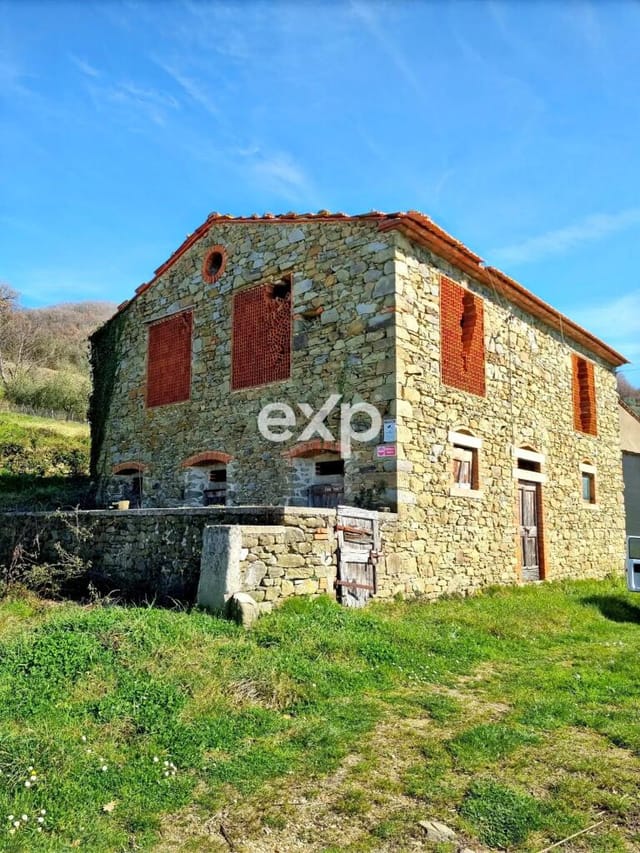
Early October in Vogognano. The fog sits low over the Arno Valley, and from the upper floor of the main house you can just make out the ridgeline of the Alpe di Catenaia catching the first light. Somewhere below, a tractor starts up. The olive harvest is three weeks away, and the hundred-plus trees on this estate will need every pair of hands they can get. That is the rhythm of life here — earthy, unhurried, and very, very real.
This three-bedroom stone estate in Subbiano, roughly 20 minutes southeast of Arezzo in the upper reaches of the Casentino valley, is not a cosmetic renovation project dressed up with a fresh coat of paint. It is a genuine opportunity: a main farmhouse plus two ancient stone barns sitting on just over six hectares of land, currently in good structural condition and waiting for a buyer with vision. The bones are honest. The location is quietly exceptional.
The property sits on an elevated position above the village of Vogognano, part of the Subbiano municipality. That elevation matters. You get unobstructed views across the valley toward the forested flanks of the Casentino National Park — one of Italy's least-trampled protected areas, covering more than 36,000 hectares of beech, silver fir, and chestnut forest that have been growing undisturbed since the Benedictine monks of Camaldoli first set them aside in the eleventh century. On clear days after rainfall, the air smells of pine resin and damp earth in a way that genuinely stops you mid-thought.
The complex spreads across two levels. The main house anchors the estate, with the two former barns — sturdy, thick-walled structures that kept grain dry through centuries of Tuscan winters — sitting close by. Together they total 495 square meters of ... click here to read more