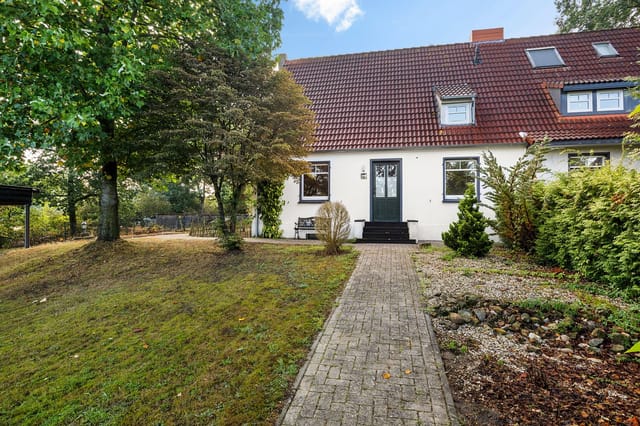
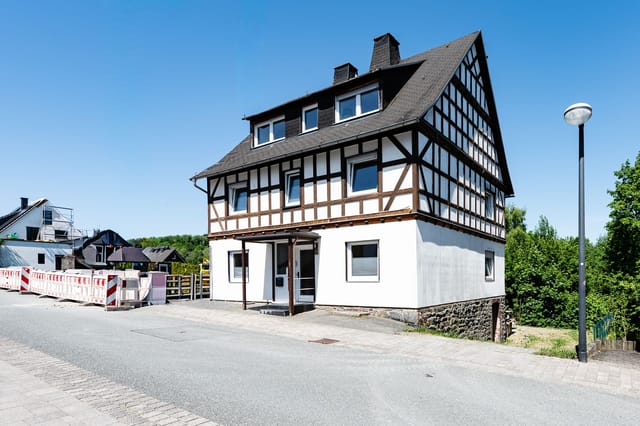
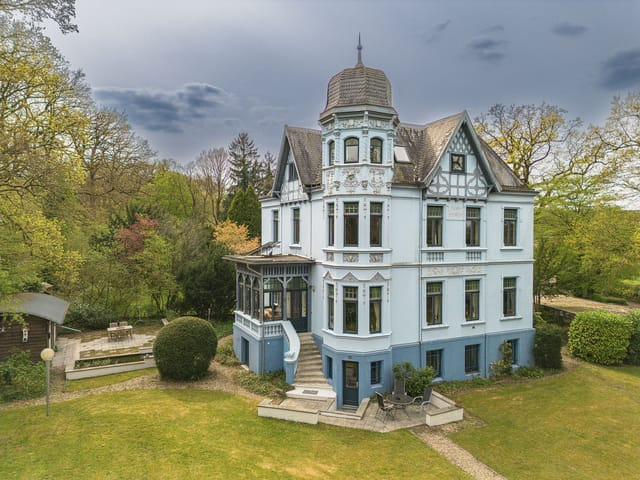
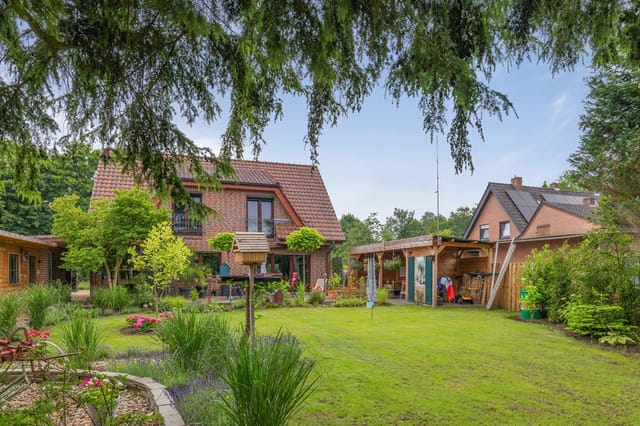
Houses For Sale In Germany

Houses for sale in germany - homestra offers the largest amount of european real estate with over 200,000+ properties, find any type of property within your budget from villas to country homes. buy or rent your perfect home in europe.

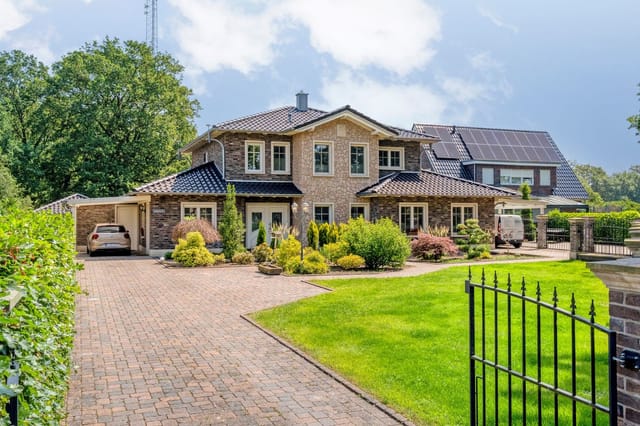
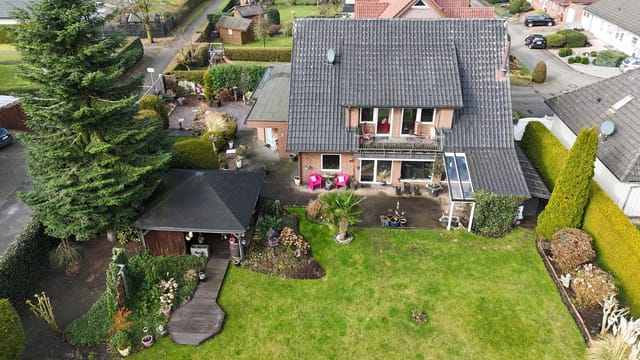
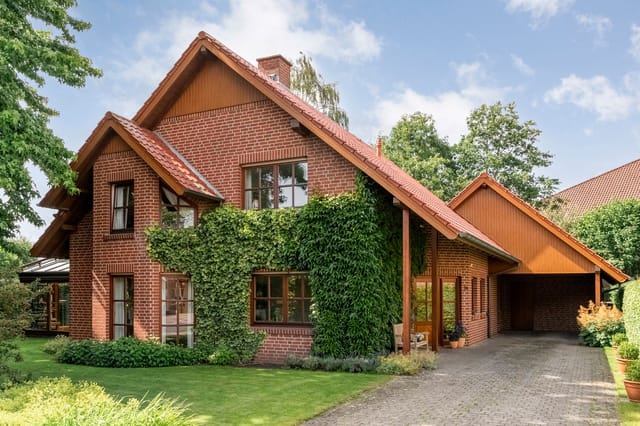
Saturday morning in Kranenburg, and the only sound you hear from the back garden is birdsong and the faint rustle of the Reichswald trees just beyond the fence line. The robotic mower is already doing its rounds. You're sitting in the jacuzzi with a coffee, the garden pond catching the early light, and Nijmegen—a proper Dutch university city with a great market and even better restaurants—is ten minutes away whenever you feel like it. This is what this house actually feels like to own. Not a fantasy, just a very well-considered life. Built in 2004 on a quiet residential street in Kranenburg, this four-bedroom detached home sits on the German side of the Dutch-German border in a way that gives it the best of both countries. The address is Anne-Frank-Straße 19, a tree-lined neighborhood where the houses have room to breathe and the Reichswald forest—one of the largest contiguous forests in northwest Europe—is literally five minutes on a bike. The house itself is 89 square metres of interior space used intelligently, with underfloor heating underfoot, double-glazed plastic frames keeping the northern winters out, and a Vaillant central heating system installed in 2018 that ticks over without complaint. Solar panels on the roof and solar collectors for hot water mean the energy bills are genuinely low. Not marketing-low. Measurably, practically low. Walk through the front door and the hallway splits the house with quiet logic. To the left: a utility room and a dedicated office—relevant if you're using this as a second home base or working remotely on extended stays. To the right: a guest WC. Straight ahead, the hallway opens into a living room anchored by a gas fireplace, the kind of feature that makes a German November no ... click here to read more

Front view of Anne-Frank-Straße 19

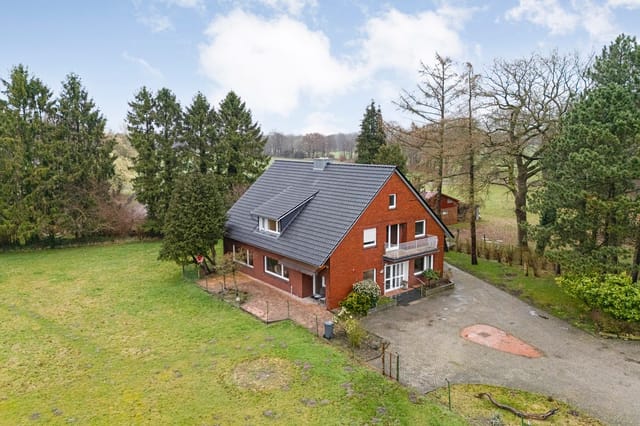
Step outside on a Saturday morning, coffee in hand, and you're looking straight at the canal. A heron stands motionless on the far bank. The garden is yours — all 658 square metres of it — and the only sound is wind moving through the old willows. This is Schöninghsdorf-Twist, a quietly extraordinary corner of Lower Saxony where life moves at a pace most people only find on holiday. This three-bedroom detached house on Egon-Schöningh-Strasse is the kind of property that earns your trust the moment you walk through the door. Built originally in 1900 and thoroughly modernised around 2002, it carries the solidity of its era while delivering the practicalities you actually need: HR++ double glazing throughout, heavy-duty wall and roof insulation, a Buderus gas combi boiler, and plastic-framed windows that ask very little of you in terms of upkeep. At 201 square metres of living space, it doesn't just feel generous — it genuinely is. Finding a detached home of this size at this price point anywhere in Western Europe right now is harder than it sounds. The ground floor alone would satisfy most buyers. The living room stretches to 57 square metres, which is not a typo. Garden doors open from an extended section of the room directly onto the west-facing covered terrace — the kind of setup that makes late June evenings feel like they belong to you personally. A wood-burning stove anchors the room in winter, and on grey November afternoons when the mist sits low over the canal, it earns its keep. Off the living room sits a suite room at 11 square metres, useful as a study or a guest overflow, and a proper separate dining room at 15 square metres — enough for a table that seats eight without anyone bumping elbows. The kitchen is ... click here to read more

Front view of Egon-Schöningh-Strasse 15

Picture a Sunday morning in early October. The garden is still holding onto summer's last warmth, mist sitting low over the fields just beyond the fence, and you're drinking coffee in the winter garden while the glass walls frame a view of copper-toned trees. The house is quiet. The kids are still asleep upstairs. This is what 192 square metres of well-considered German residential life feels like — and it's available right now at Karinstraße 24 in Veldhausen. Veldhausen sits within the municipality of Neuenhaus in the Grafschaft Bentheim district, a part of Lower Saxony that doesn't get nearly as much attention as it deserves. Tucked in the far west of Germany, pressed right against the Dutch border, this is a region of flat, open countryside, old mill towns, and an unhurried pace of life that's genuinely hard to find this close to two countries' worth of amenities. The Dutch city of Enschede is under 45 minutes by car. Nordhorn, the district's commercial hub, is a short drive east and offers everything from shopping along the Hauptstraße to kayaking the Vechte river on a warm afternoon. Yet back in Veldhausen itself, the streets carry mostly local traffic. It's the kind of neighbourhood where children still ride bikes to school. The house itself was built in 1975 and comprehensively renovated in 2019 — not a cosmetic refresh, but a full, high-quality overhaul that brought everything up to modern standards. Triple-glazed windows throughout. Full insulation. A heat pump paired with a boiler for hot water. Solar panels on the roof. Electric heating with modern controls. The result is a house that looks after itself, running efficiently year-round without demanding constant attention from owners who may not always be on- ... click here to read more

Photo 1 of Karinstraße 24

Stand at the kitchen sliding door on a Saturday morning, coffee in hand, watching mist lift off the garden while a woodpecker works at the old oak just beyond the back hedge. Nobody overlooks you. No traffic noise, no shared walls. Just birds, light, and the kind of quiet that takes a week to fully settle into. That's the daily reality at An Dilia 30 in Selfkant — a single-level bungalow on a generous 785-square-metre plot that feels far more like a private retreat than a residential address. Selfkant sits at the westernmost tip of Germany, pressed right up against the Dutch border. It's the kind of place that doesn't make noise about itself, which is exactly its appeal. The nearest city buzz is in Roermond, about 25 kilometres west — home to one of Europe's busiest designer outlet centres and a lively Wednesday market along the Maas. Düsseldorf is roughly 70 kilometres east and reachable by car in under an hour. For international buyers flying in, Eindhoven Airport is under 60 kilometres, and Düsseldorf International is similarly accessible. This corner of the Rhineland-Maas region is quietly popular with Dutch buyers crossing the border for more space and lower prices, and with German families looking for a slower-paced second home base within easy range of the Ruhr and Cologne. The property itself was built in 2007 to a notably high spec and has been kept in genuinely good condition — not the estate-agent kind of "good condition" that really means cosmetic refresh required, but the kind where you can move in, unpack, and start enjoying it immediately. The bungalow sits on one level, with a substantial attic above that adds a surprise bonus: a raw, open space measuring roughly 11 by 5 metres that could become additio ... click here to read more

Front view of An Dilia 30

On a clear morning in Bad Bentheim, the mist sits low over the Münsterland plain while you stand on the upper terrace of Am Berghang 70 with a coffee in hand. The view stretches for miles — church steeples, farmland, forest — and not a single rooftop breaks the horizon below you. This is what you bought the hillside for. Built in 2009 on a generous 1,055 m² plot along the slopes of the Bentheimer Berge, this four-bedroom Bauhaus-inspired villa is one of those rare properties that makes you understand why architects fell in love with glass and steel and honest materials. The ebony timber framing against floor-to-ceiling glazing isn't a design flourish — it's the whole philosophy. Light comes in from every angle. The Münsterland countryside becomes part of the interior. In late afternoon, when the sun drops behind the Bentheimer Wald and throws long amber light across the oak floors, the living room feels almost cinematic. At 224 m² across three levels, the house is large without feeling excessive. The ground floor revolves around an open-plan living space anchored by a fireplace and a soaring gallery that connects visually to the floor above. Two terraces push the living space outward — one for morning coffee in the east-facing sun, one for long summer evenings facing west. A concealed pantry keeps the kitchen uncluttered. A ground-floor office with its own natural light makes remote working genuinely possible, not just technically feasible. The guest toilet is tucked discreetly away. Everything has been thought through. The staircase — solid wood with a frameless glass balustrade — is the kind of thing you notice every single day. It leads to a first floor where the gallery is bathed in shifting light throughout the s ... click here to read more

Photo 1 of Am Berghang 70

Step out of the rear house on a July morning and the first thing you notice is the silence. Not the silence of isolation — the silence of a garden that has been properly tended, where bees are working the flower beds and the pool water catches the early light. Papenburg's city center is a ten-minute bike ride away, but right here on Heideweg, you could easily convince yourself you're somewhere far more remote. This is a genuinely rare setup: two fully detached houses sharing one expansive plot of 3,186 square meters in northern Germany's canal city, Papenburg. You don't see this very often. Two separate rooflines, two separate front doors, one shared garden with a private swimming pool, a wooden garden house, and a party room with its own bar. The possibilities are wide open — multi-generational family base, a main residence plus a fully independent guest or rental unit, a work-from-home compound with real separation between living and office life. People spend years looking for something like this. The front house dates to 1966 and runs about 121 square meters across two floors. It's been updated thoughtfully over the years — the bathroom was redone in 2003, wall insulation added in 2009, living room windows replaced in 2011. Downstairs, you'll find a living room with a fireplace, two additional reception and dining spaces, two bathrooms, and a storage room. That fireplace matters during a Lower Saxony winter, when January temperatures hover around two degrees and the light turns a particular flat grey that photographers love. The upper floor holds three bedrooms, and there's a partial basement for the practical overflow that any real household accumulates. The rear house, built in 1997, is where the personality of t ... click here to read more

Front view of Heideweg 6

On a still Tuesday morning on Mühlenstrasse, the only sounds are a bicycle ticking past on the cobbles and the faint rustle of wind through the beech trees lining the back garden. That's Bunde. Not silence exactly — more like the particular quiet that people pay good money to find, and rarely do. This detached two-bedroom house at number 47 sits on a plot of 813 square meters in one of the most genuinely liveable corners of northwestern Germany. The town straddles the German-Dutch border so neatly that you can drive to Groningen in under an hour, pop into Winschoten for Saturday market, and still be back in your garden with a cold Pilsner before lunch. For international buyers hunting a second home in Europe with real dual-country access, this is the kind of address that doesn't come up often at €259,000. The house itself was built in 1980 — solid brick construction in the no-nonsense North German tradition — and it reads as a proper family home rather than a weekend bolt-hole. At 176 square meters of living space, there's genuine room to breathe. The ground floor has a generous entrance hall that flows into a bright living room anchored by a wood-burning stove. In December, with the stove going and the roller shutters half-drawn against the early dark, it gets cozy in a very specific, very satisfying way. The sunroom — what locals call a serre — extends the living space toward the garden and works brilliantly in all four seasons: morning coffee in spring, reading out of the summer sun, watching the autumn light drain across the lawn. The kitchen was updated with a fitted installation in a clean, light palette. Practical, not fussy. There's a separate utility room for laundry and all the gear that accumulates in a pro ... click here to read more

Front view of Mühlenstrasse 47

Step outside on a Sunday morning at Jaegerweg 19, coffee in hand, and the meadow at the back of the garden is still catching the last of the mist. A heron drifts low over the fields. No traffic. Just wind, birdsong, and somewhere across the Dutch border, church bells. This is the specific, unhurried pleasure of living on the Lower Rhine — and this two-bedroom detached house, sitting on a 637-square-metre plot at the edge of Emmerich am Rhein, delivers that feeling every single day. Emmerich am Rhein is a town that most people drive past on the A3 without stopping. That's their loss, and frankly your gain. It sits right on the Rhine, about four kilometres from the Netherlands, and it has the easy rhythm of a place that doesn't feel the need to show off. The Saturday market on the Geistmarkt sells local asparagus in spring, hearty Gouda wheels year-round, and fresh stroopwafels because the Dutch influence bleeds happily across the border. Emmerich's Rhine promenade is one of those genuinely underrated walks in western Germany — long, flat, lined with old linden trees, and ending at the Rhine bridge, which is actually the longest suspension bridge in Germany and a piece of proper industrial history. The town's St. Aldegundis church, with its medieval tower, keeps the skyline honest. It's not a resort. It's a real place, and that's exactly what makes it work as a second home or vacation property. The house itself was built in 1981 and sits comfortably in good condition — not a project, not a renovation gamble, but a solid single-level home with honest bones and room to personalise over time. At 116 square metres of living space, the layout is practical and generous for two people, or a couple with children in for the holid ... click here to read more

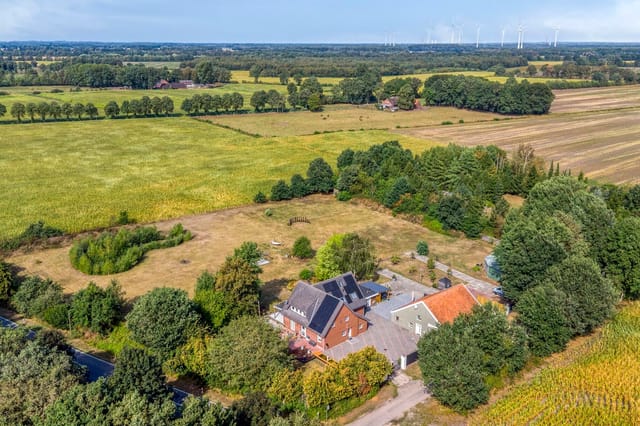
Photo 1 of Jaegerweg 19

Step outside on a Saturday morning in late May and the garden stretches out in front of you — eighty-three meters of it, dew still clinging to the lawns, the hedgerows full and dark green, a wood pigeon doing its thing somewhere near the back gate. You've got coffee. The conservatory door is open. This is what a slow European morning is supposed to feel like. Gangelt sits quietly in the far southwestern tip of North Rhine-Westphalia, just a few kilometers from the Dutch border, in a part of Germany that most international buyers haven't discovered yet. That's precisely the point. While better-known regions attract crowds and premium price tags, this corner of the Heinsberg district rewards the people who actually bother to look. Rolling countryside, clean air, cycling routes that thread through farmland into the Netherlands, and a pace of life that genuinely slows you down. The A46 and A44 motorways connect you to Düsseldorf in under an hour. Maastricht is thirty-five kilometers away — close enough for a proper Dutch rijsttafel dinner and back home before dark. Eindhoven Airport is roughly forty minutes by car, making this property realistic as a European second home rather than a logistical headache. The house on Luisenring 89 is a generous, solidly built detached home from 1956 that has been updated consistently over the decades — not flipped or cosmetically staged, but genuinely improved by owners who lived here. The 167 square meters of living space spreads across three floors, and the ground floor layout has an easy, unhurried quality to it. The L-shaped living room opens directly into the conservatory, which measures roughly seven by five meters. That room gets the afternoon light. In summer it's warm and golden ... click here to read more

Front view of Luisenring 89

Saturday morning in Sustrum. The garden is quiet except for birdsong and the soft hiss of the gas boiler kicking off, the house already warm. You slide open the kitchen doors and step onto the covered terrace with a coffee, looking out across 1,816 square meters of your own fully fenced green space. No neighbours pressing in. Just the smell of damp grass and the distant sound of a tractor somewhere beyond the tree line. This is the pace of life that draws people to Emsland — and once you've felt it, it's hard to let go. Bogenstrasse 6 sits on one of Sustrum's quieter residential streets, directly opposite a park-like green area that keeps the view open and unhurried regardless of the season. The house itself went up in 1969, solid brick construction in the way German builders did it then — built to last, not built to sell. A rear extension added more space a few years later, and a 2017 gas boiler upgrade means the heating is reliable and efficient. Fibre optic internet is already connected, which matters more than people think when you're working remotely from a second home or managing a rental period from abroad. Six bedrooms across two floors — that's the number that tends to stop people mid-scroll. On the ground floor, there's a bedroom and a flexible study or children's room alongside the main living spaces, making genuine single-level living a practical option. Upstairs, four more well-proportioned rooms, each between 14 and 15.5 square meters, line the landing. They work equally well for guests, grown children, or a dedicated home office. The insulated attic, reached by a retractable staircase, adds yet another layer of storage or, with the right permissions, a future development project. The living room's natur ... click here to read more

Front view of Bogenstrasse 6

On a quiet Sunday morning at Westerende 3, the smell of fresh coffee drifts through the open kitchen while pale northern light floods through the French doors and spills across the terrace. The garden is already warm by nine. That southwest orientation means the sun follows you all day—from the terrace breakfast to the late evening glass of wine under the wooden bar house. This is what daily life actually looks like in this corner of Lower Saxony, and it's harder to leave than you'd expect. Bunde sits right at the edge of Germany, just a short drive from the Dutch border, in the Rheiderland region of East Frisia. It's not a place that ends up in travel magazines, but that's rather the point. The Dollart Bay is nearby, a tidal inlet shared between Germany and the Netherlands that draws cyclists, birdwatchers, and anyone who just wants to stand somewhere genuinely quiet and watch the sky. The Leda and Ems rivers are within easy reach for kayaking or fishing. In summer, the flat green landscape around Bunde fills with cycling routes that stretch for dozens of kilometres without a hill in sight—proper touring country. The house itself was built in 2005 and sits on a 707 m² plot. Two decades on, it's in good condition and designed to stay that way. The A+ energy label isn't a marketing detail—it reflects roof, wall, and floor insulation, double glazing, solar panels installed back in 2012, and a heat pump being added in 2025. Underfloor heating covers most of the ground floor. Energy bills here run noticeably lower than in comparable homes, which matters whether you're using this as a primary residence, a second home base near the Netherlands, or a long-term rental investment. Walk through the front door and the first thin ... click here to read more

Front view of Westerende 3

Step outside on a Saturday morning and the air carries the faint scent of freshly cut grass from the farmlands that roll away behind the garden fence. No traffic noise. No neighbor's terrace cramping yours. Just open sky, birdsong, and the slow-moving stillness that most people spend their whole lives trying to find on vacation. This is the everyday reality at Schulstrasse 58 in Bunde — a 2021-built detached house on a 1,121-square-meter plot that gives you room to actually exhale. Built just a few years ago, the house sits at the edge of a quietly expanding residential area, which means you get the benefit of modern construction standards without the chaos of an unfinished development around you. The neighbors have settled in, the street is calm, and the plot still feels generously proportioned by any measure. Four bedrooms, two bathrooms, 152 square meters of living space, and a garden that wraps around the entire property — this is a serious amount of house for the price. Let's talk about the ground floor, because this is where daily life happens and where this home earns its keep. The living room catches afternoon light through French doors that open directly onto a covered sun terrace — covered being the operative word. German summers are glorious but unpredictable, and having a terrace you can actually use when a cloud rolls in changes everything about how you use outdoor space. The terrace looks out over the rear garden and beyond that, straight across open agricultural land. There are no other houses back there. It's a view that feels privately owned but costs nothing extra to maintain. The kitchen sits adjacent to the living room and is fitted with high-quality built-in appliances, generous counter space, and ... click here to read more
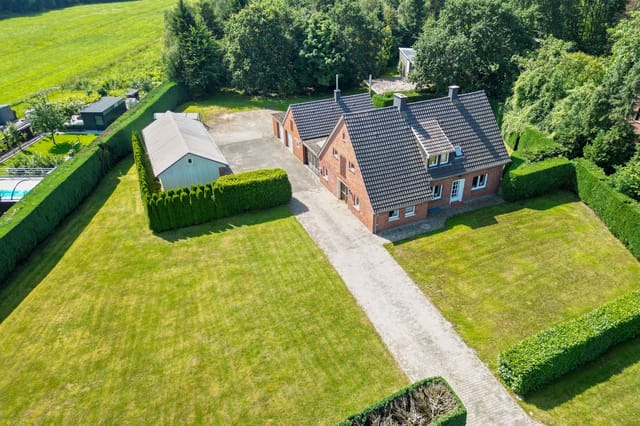
Front view of Schulstrasse 58

Saturday morning, just after nine. You slide open the French doors off the living room and the garden fills with birdsong and the faint smell of freshly cut grass drifting over from the neighbour's plot. The water feature catches the light. Coffee cup in hand, you pick a sun chair, and absolutely nothing demands your attention. This is Goch-Kessel on a weekend, and it gets under your skin fast. Built in 2002 and kept in genuinely good condition throughout, this detached house on Elisabeth-Becker-Strasse sits in one of the Lower Rhine region's quieter residential pockets — a village edge setting where the streets are wide, the trees are tall, and the pace drops the moment you turn off the main road. At 138 square metres of living space across two floors plus a fully insulated attic, the property has real substance. Three proper bedrooms, a well-equipped family bathroom with underfloor heating, a bright living room with generous dimensions, a practical kitchen, a utility room, a stone-built garage, a carport, two driveways. It's not trying to be something it's not. It's a house that works — and works well. The ground floor layout was thought through carefully. Walk in through the entrance hall and you immediately notice the cloakroom, the under-stair storage, and the guest toilet with urinal — the kind of detail that only matters until the moment you need it, at which point you're very glad it's there. The living room is the heart of it all: large windows on multiple sides, French doors leading directly into the garden, and enough floor space to seat a real gathering around a proper dining table without anyone feeling squeezed. In winter, with the underfloor heating running quietly beneath your feet, this room glows. In ... click here to read more
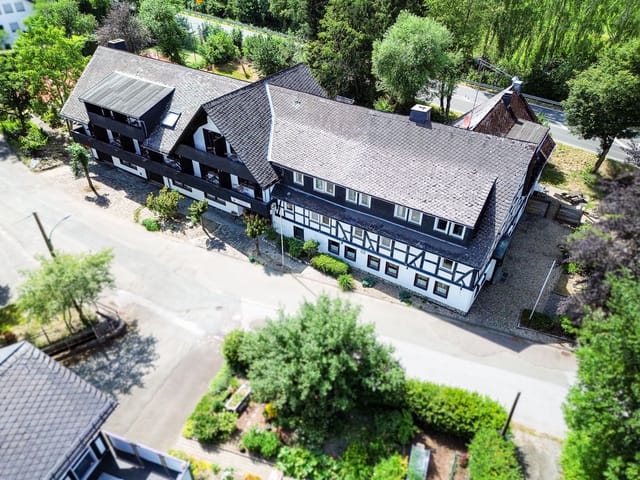
Front view of Elisabeth-Becker-Strasse 1

Stand at the south-facing balcony on a clear June morning and the Unstrut valley spreads out below you — fields catching early light, the faint sound of the river somewhere beyond the treeline, and the kind of quiet that urban Germans drive three hours to find on weekends. This is Kaliwerk 18A, a four-apartment complex sitting on a generous hilltop plot in Rossleben-Wiehe, a small town straddling the Thuringia-Saxony-Anhalt border that most people outside central Germany haven't discovered yet. Which, for a buyer thinking about second home potential or vacation rental income, is exactly the point. The numbers make you look twice. Eight bedrooms across four self-contained apartments, each around 69 square meters, on a 1,715-square-meter plot — all for €98,500. That's not a typo. Central Germany's property market moves at a different pace than Bavaria or the Rhine valley, and pockets like Rossleben-Wiehe still offer the kind of entry points that have almost completely vanished from western Europe's holiday home market. Each apartment follows a practical layout: entrance hall with cloakroom, a proper closed kitchen (not an open-plan afterthought), two or three bedrooms depending on the unit, and a bathroom with both tub and shower. The living rooms open onto south-facing balconies — that southern exposure matters here, because the region around the Unstrut valley is one of the sunniest in Germany, with a microclimate that supports local viticulture and keeps summer evenings warm well into September. The building itself dates to 1961, with a significant renovation in 1992 that brought in the oil-fired central heating system and updated the window frames, many of which have insulating glazing with HR++ glass. The structure ... click here to read more
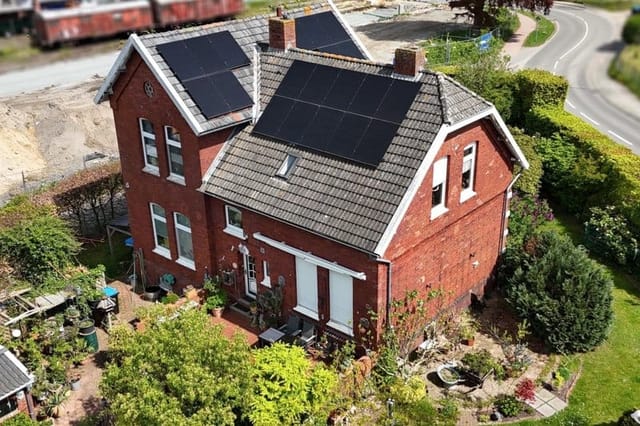
Photo 1 of Kaliwerk 18A

Stand at the kitchen window on a Saturday morning and watch the light roll in across the south-facing garden while the coffee brews. The village of Elten is still quiet — a dog walker passes on De Dweel, the air carries a faint green smell from the Eltenberg forest just up the hill. This is the kind of calm that people spend years searching for, and it exists here just a few minutes' drive from the Dutch border. Built in 2006 and set on a peaceful residential street in this small German-Dutch border village, this 140-square-metre semi-bungalow is the kind of property that reveals itself slowly. From the outside, it reads as a tidy, well-kept family home. Step inside, and you start doing the mental arithmetic — ground-floor bedrooms, a fully finished basement with its own bar setup, a double garage, a deep south-facing garden — and you realise there's considerably more going on here than the facade suggests. The ground floor does what the best house plans do: it gets out of your way. The living room faces the garden through generous windows, pulling daylight deep into the space throughout the afternoon and evening. An open fireplace anchors the room — not decorative, genuinely useful on grey Rhine-valley winters when the temperature drops and you want a reason to stay in. The semi-open kitchen connects directly to the living area, fitted with a cooking island and built-in appliances that have been used and maintained, not just photographed. Two bedrooms sit off the ground floor alongside a full bathroom with bathtub, separate shower, and vanity — which means this house functions as a genuine single-storey home if that's how you want to live it. Upstairs, the arrangement shifts gear. A third bedroom sits here along with ... click here to read more
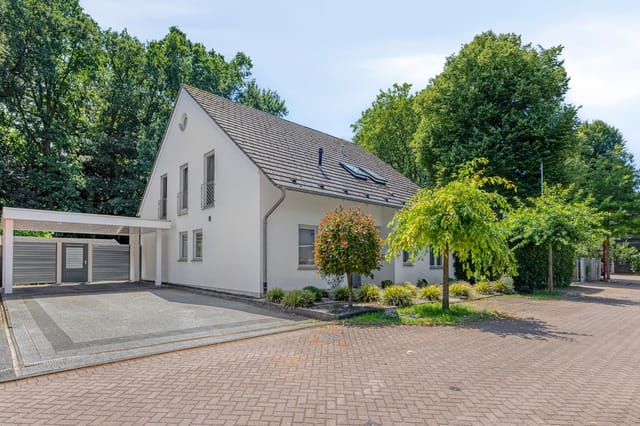
Photo 1 of De Dweel 23

Step outside on a Saturday morning in late spring and the garden at Wacholderweg 15 smells of cut grass and juniper — Wacholderweg means "juniper path", and the street lives up to its name. The air in this corner of Lower Saxony's Emsland region is genuinely quiet. Not "relatively quiet for Germany" quiet. Quiet in the way that makes you notice birdsong. That's the first thing you'll register about this house, and it stays with you. Set on a generous 1,181-square-metre plot in the small village of Niederlangen, this four-bedroom detached home was built in 2000 and has been looked after with the kind of care that shows up in the details — the crisp edges of the epoxy gravel ground floor, the stainless steel staircase railing that still has its sheen, the custom wardrobes upstairs that fit so precisely you'd think they grew out of the walls. At 195 square metres of living space, the house is large enough to feel genuinely spacious without tipping into the territory where you spend Sunday afternoons just cleaning rooms you never used. It's calibrated for real life. The ground floor is where this house really earns its keep. The open-plan living and dining area runs wide and deep, and on grey November afternoons the pellet stove in the corner earns its place immediately — the soft crackle and amber glow are a long way from the cold abstraction of an underfloor thermostat. Large windows face the garden, and in summer the light tracks across the room from mid-morning well into the evening. The kitchen is fitted with high-end built-in appliances and laid out with actual cooking in mind: there's a utility room just off it for the washing machine, the dog leads, the muddy boots. These things matter more than any brochure will a ... click here to read more
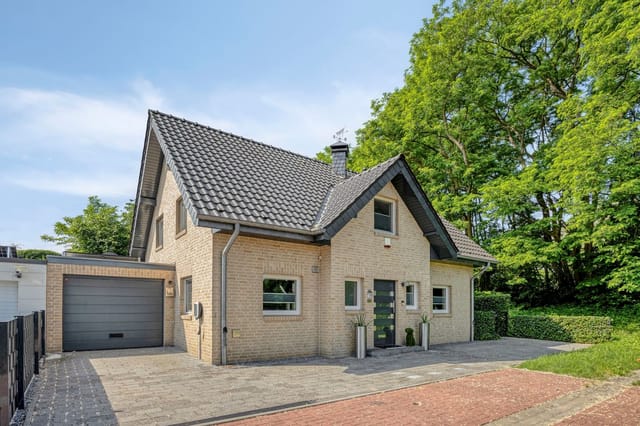
Front view of Wacholderweg 15

Step outside on a Saturday morning in Wilsum and the first thing you notice is the silence. Not the uncomfortable kind — the kind that comes with open farmland stretching to the horizon, a light easterly wind carrying the smell of cut grass, and absolutely no traffic. That's your view from every rear-facing window at Molkereistraße 3. It's the kind of quiet that city people actively plan holidays around, and here, it's just Tuesday. This is a substantial 1968 detached country house sitting on just over 8,100 square metres of land along the Germany-Netherlands border in Lower Saxony — a region that quietly delivers some of northwest Europe's most underrated rural living. Seven bedrooms, two bathrooms, 254 square metres of interior space split across two fully independent living levels, an 80-square-metre workshop with three-phase power, a carport, meadows, mature trees, and a plot large enough to lose yourself in. At €395,000, the maths of what you're getting per square metre — of land alone — will make you do a double-take. Wilsum itself sits in the Grafschaft Bentheim district, roughly 10 minutes by car from the Dutch town of Coevorden and about 40 minutes southwest of Lingen. It's the kind of village where the local Schützenfest still draws the whole community out in June, where kids cycle to school on lanes with no pavements because no one's going fast enough to need them, and where the butcher in nearby Uelsen still knows your order by your third visit. The Dutch border proximity isn't just a curiosity on a map — it genuinely doubles your options for shopping, dining, and day trips. Albert Heijn in Coevorden, the Saturday market in Hardenberg, or a longer drive to Groningen for a city fix: all on the table without ... click here to read more
Front view of Molkereistraße 3

Step out the back door on a September morning and the tree line is close enough to throw shade across the terrace by nine o'clock. The air carries pine resin and damp earth. Somewhere at the far end of Im Tannensand — a cul-de-sac that literally dissolves into the forest — a woodpecker is working through a dead trunk. This is Walchum, a small village in the Emsland district of Lower Saxony, and this four-bedroom detached house sits at the quietest end of an already quiet street. That's worth something you cannot manufacture. The property was built in 1977 on a plot of 1,242 square meters — a size you'd struggle to find at this price point even in rural Germany today. The house itself covers 126 square meters of living space across two floors, with a partial basement underneath. Four bedrooms upstairs, a ground floor laid out around a generous 35-square-meter living and dining room, a closed kitchen with fitted appliances, a proper bathroom with shower, and a separate guest WC. Practical, workable, and solid. The bones are good. Several of the upstairs bedrooms have been updated already. Others still carry their original 1970s character — wooden door frames, older flooring — which some buyers will see as a canvas and others will see as the soul of the place. Either reading is fair. The flexible layout upstairs means the four rooms could run as three bedrooms and a home office, or swap configurations depending on the season and who's visiting. For a second home that doubles as a gathering point for extended family, that kind of adaptability matters more than a rigid floor plan. The kitchen was refitted more recently and comes with built-in appliances — nothing show-stopping, but fully functional for the kind of long wee ... click here to read more
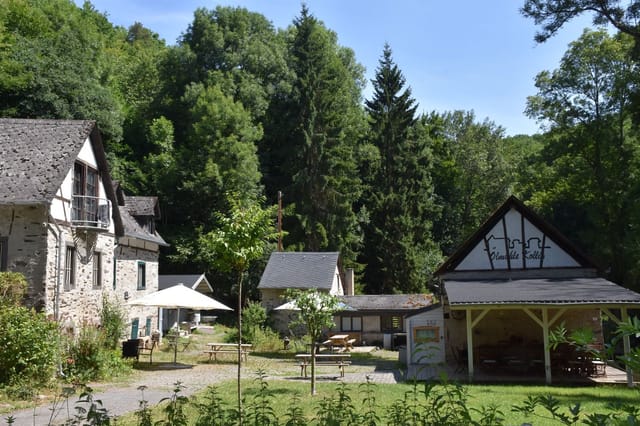
Front view of Im Tannensand 20

On a quiet Sunday morning in Gildehaus, the church bells from the old Sankt-Nikolai carry across the rooftops just far enough to drift through an open window. The underfloor heating has already taken the edge off the morning chill. The coffee is brewing. Outside, the garden is doing what German gardens do in late spring — going slightly wild in the best possible way, tulips competing with whatever the previous owner planted years ago along the stone shed wall. This is the pace of life at Pieper-Werning-Straße 9, and it is genuinely hard to leave. Bad Bentheim sits right at the Dutch-German border in Lower Saxony, and that cross-cultural identity shapes everything here — the architecture, the food, the weekend rhythms of the people who live in this corner of the Euregio. Gildehaus is technically a district of Bad Bentheim, but it has its own village character: wide residential streets lined with mature trees, neighbors who wave from across the road, and a total absence of the noise that most people spend years trying to escape. The property at number 9 on Pieper-Werning-Straße sits in this neighborhood with exactly the kind of quiet confidence that well-built houses tend to have. Built in 2004 and kept in genuinely good condition, this is a 287-square-meter detached home on a 877-square-meter plot. Four bedrooms. Three full bathrooms. A basement that actually functions as living space rather than a dumping ground. The layout is generous in a way that isn't immediately obvious from the street — you step through a solid timber front door into a hallway with ceilings high enough to stop you mid-step, and the whole house opens up from there. The ground floor centers on a kitchen-living space that German buyers sometimes ca ... click here to read more
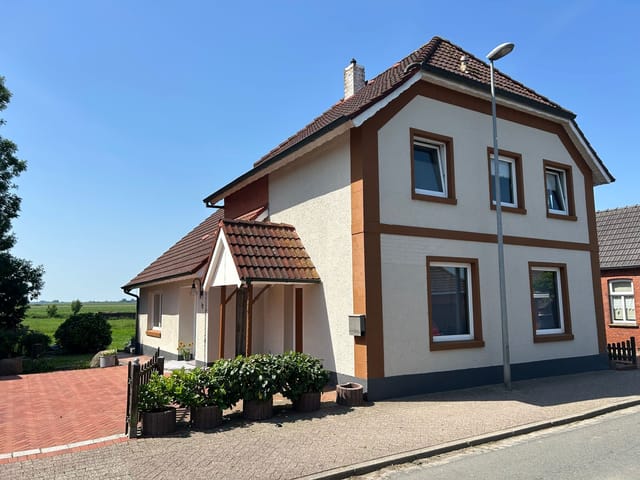
Front view of Pieper-Werning-Straße 9

Step outside on a Saturday morning and the only sounds are birdsong, a distant tractor working the fields, and the faint chime of a church bell drifting over from Wielen's old village center. The air smells like cut grass and woodsmoke. The terrace catches the early sun and the coffee is already on. This is what you drove two hours from Amsterdam for. This is what you crossed the border for. Kreisstraße 12 sits in the rural fringes of Wielen, a quiet village in Germany's Grafschaft Bentheim district, right on the German-Dutch border. It's the kind of spot that people from Utrecht or Groningen or Düsseldorf spend years searching for — enough distance from the city to genuinely exhale, but close enough that you don't feel marooned. The Dutch border town of Hardenberg is about 15 minutes by car. Nordhorn, the regional hub, is under 20. Schiphol Airport is roughly two and a half hours; Eindhoven is closer to two. The geography here is almost uniquely positioned for international buyers looking for a second home in northwest Europe that actually makes logistical sense. The property itself is a detached house built in 1987, sitting on roughly 4,000 square metres of land, with 245 square metres of living space in the main house — and that figure doesn't even include the outbuilding, which adds around another 147 square metres of usable space. Five bedrooms. Two bathrooms. A garage, double carport, multiple sheds, and a large multifunctional barn that comes equipped with a bar and its own party room. Yes, really. That barn deserves its own paragraph. Built in 1998, it's the kind of structure that most buyers would spend years planning and never quite get around to building. The party room has a proper bar setup and a separate ... click here to read more
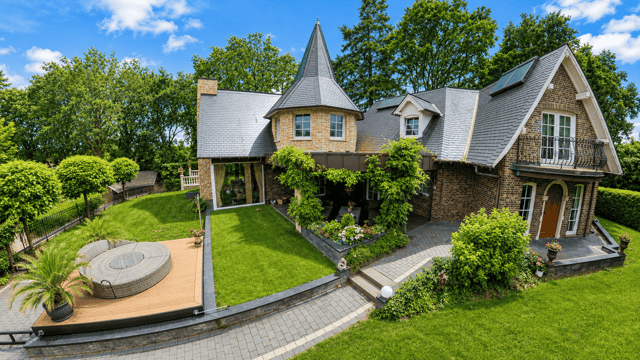
Front view of Kreisstraße 12

Stand at the kitchen window on a crisp October morning, coffee in hand, and watch the Reichswald turn gold. The forest starts almost where the garden ends, and the silence out here — broken only by woodpeckers and the occasional horse on the bridle path — is the kind you have to earn by driving forty minutes east of Nijmegen. That's the daily reality of Kuhstraße 102 in Kranenburg-Schottheide, and it never gets old. Built in 1991 and maintained with genuine care, this four-bedroom detached house sits on a 1,387-square-metre plot in one of the Lower Rhine's most quietly coveted rural pockets. The panoramic views over the Reichswald — one of Germany's largest lowland forests and the backdrop to the Battle of the Hürtgen Forest — are unobstructed from almost every room. No rooftops crowding the sightline. No road noise. Just open countryside rolling into a wall of beech and oak. At 185 square metres of living space, the house has room to breathe. The ground floor flows from a practical entrance hall — with a guest toilet and utility room tucked to one side — into a generously proportioned L-shaped living room. The large windows aren't just decorative: they work as a kind of living painting, framing whatever season the Reichswald is currently performing. In January, frost-whitened branches. In May, that particular lime-green of new beech leaves. The wood-burning stove anchors the room in winter, filling the space with warmth long after the sun drops behind the treeline. The open-plan kitchen is set up for real cooking — built-in appliances, solid workspace, enough storage that a full weekend shop doesn't create chaos. Upstairs, four bedrooms sit off a central landing. One is currently used as a walk-in wardrobe, which spe ... click here to read more
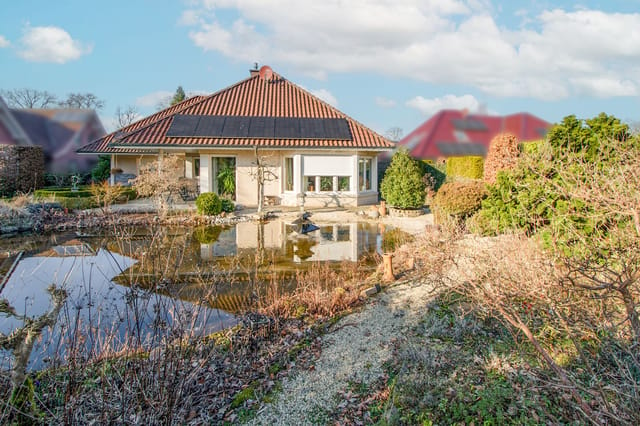
Front view of Kuhstraße 102

Stand in the south-facing garden on a Saturday morning and you'll hear it — the faint lap of water against the bank, a heron lifting off the communal pond, maybe a bicycle bell from the Rheinpromenade a few minutes away. Emmerich am Rhein is one of those German Rhine towns that quietly gets on with being a very good place to live, without making a fuss about it. And this three-bedroom semi-bungalow on Adolf Tibus Strasse sits right at the calm heart of it. Built in 2004 and kept in genuinely good condition, the house covers 123 square metres of living space on a 429-square-metre plot. That plot matters. The south-facing rear garden — nine metres deep, sixteen metres wide — gets sun from midmorning until the light drops behind the rooftops in the evening. Large sliding doors from the 33-square-metre living room fold the inside and outside together, so in summer the boundary between the two pretty much disappears. Pull out the garden chairs, switch on the electric sunshade, and the terrace becomes the real living room from May through September. The ground floor is laid out intelligently for single-level living. Two bedrooms — 16 and 13 square metres respectively — sit alongside the main bathroom, which has a walk-in shower, double washbasin, designer radiator, and a second toilet. The whole ground floor runs on underfloor heating, which is the kind of thing you only notice when you're visiting a house that doesn't have it. In winter, when the Rhine mist rolls through the Lower Rhine plain and the temperatures drop into single digits, that warmth underfoot makes the house feel genuinely cosy rather than just adequately heated. The kitchen is semi-open, around 13 square metres, with a granite countertop, quality built-in ... click here to read more
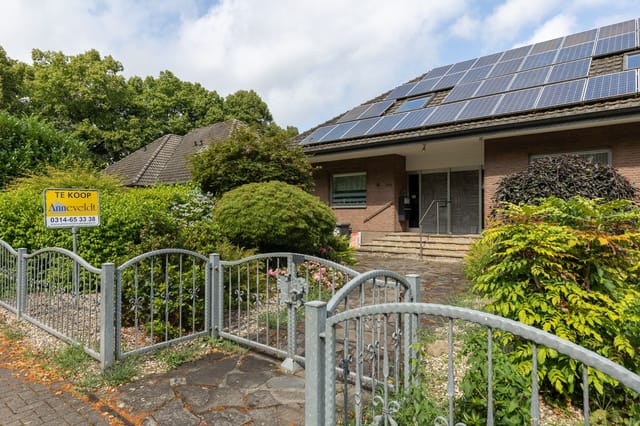
Photo 1 of Adolf Tibus Strasse 8

Step out of the upstairs bedroom onto the rooftop terrace at seven in the morning, coffee in hand, and the Vechte River is right there — glinting through the willows, a heron standing perfectly still on the opposite bank. That's not a weekend escape. That's Tuesday. Built in 2009 and sitting directly on the water's edge at Moltkestrasse 44, this four-bedroom detached house in Nordhorn gives you something genuinely rare in northwestern Germany: a modern, well-built home with a private riverside plot, just a five-minute bike ride from the town center. No renovation surprises. No compromises on space. Just 172 square meters of thoughtfully designed living, on 712 square meters of enclosed garden, with the Vechte flowing quietly past the back fence. Nordhorn doesn't get the international attention of Hamburg or Cologne, and that's partly why it works so well as a second home base. The town of around 55,000 sits right at the Dutch border — Enschede is about 30 kilometers west, and the crossing into the Netherlands takes under 20 minutes by car. Münster is an hour south. Amsterdam is reachable in under two hours on a good run. For buyers who want a proper European base without the inflated prices of major cities, this corner of Lower Saxony quietly delivers. The house itself has been kept in genuinely good condition by its current owners — this isn't a "good condition" disclaimer hiding a list of deferred maintenance. The architecture is clean and contemporary, with floor-to-ceiling windows on the ground floor that drag the garden and river view straight into the open-plan living and dining area. High-quality floor tiles, a built-in kitchen with modern appliances, and a utility room with central heating and laundry setup ro ... click here to read more
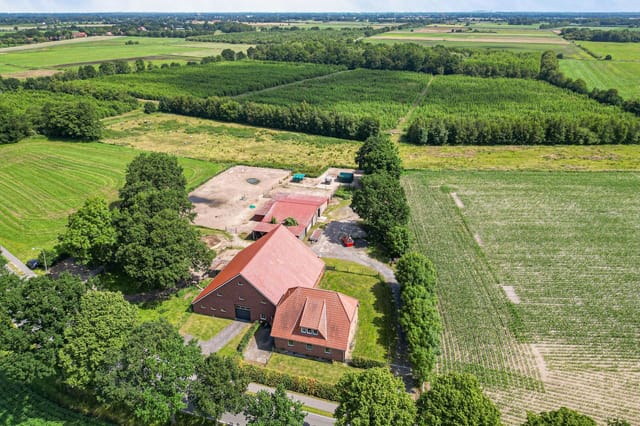
Front view of Moltkestrasse 44

Saturday morning. You swing open the kitchen window and the smell of fresh bread drifts in — the Bäckerei on Hauptstraße starts early, and you've figured out that if you're on your bike by eight, you get the last of the warm Brötchen before the church crowd arrives. That's the kind of small, repeatable pleasure that makes a place feel like yours. Sudende 35 delivers that feeling from day one. Set on a generous 930-square-metre plot along a quiet residential street in Rhede, a compact border village in the Emsland district of Lower Saxony, this six-bedroom detached house is the kind of property that doesn't come up often at this price point. At 181 square metres of living space across two full floors plus a partial basement, it has real scale — the kind that means two families can share it without bumping into each other, or one family can spread out properly for the first time in years. The ground floor sets the tone. A wide entrance hallway — genuinely wide, not the narrow kind that makes you turn sideways with luggage — opens into a living and dining room lit by large windows on two sides. Light moves across the room differently in the morning than in the evening, and there's enough floor space to have a proper dining table without sacrificing the sitting area. When the temperature drops in November, the wood-burning stove in the corner earns its keep. Cast iron, proper radiant heat, the crackle of birch logs — it turns an otherwise ordinary evening into something worth remembering. The closed kitchen runs off the back, fitted with built-in cabinetry and a direct connection to a utility room that handles the overflow of boots, bags, and wet-weather gear that accumulates when you actually use a house. Also on the gro ... click here to read more
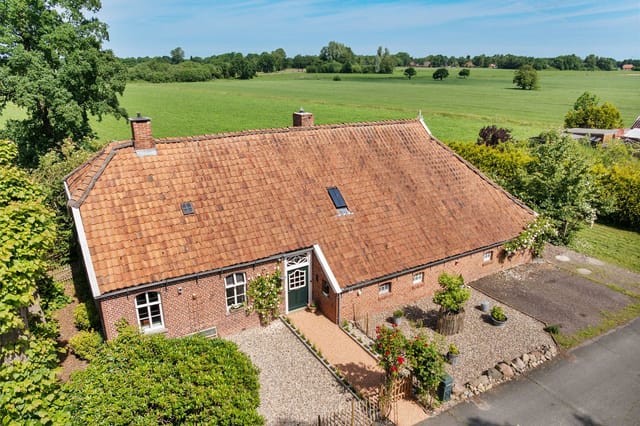
Front view of Sudende 35

Early morning in Getelo, the air carries the smell of pine and damp grass from the woods that edge Am Hundebrook. You open the kitchen window and there's nothing out there but birdsong, a narrow lane, and fields rolling quietly toward the Dutch border — barely a kilometre away. That's the texture of daily life here. Unhurried, green, genuinely quiet in a way that most of Europe has largely forgotten. This is a proper five-bedroom detached house on a 956 m² plot in the village of Getelo, in the Grafschaft Bentheim district of Lower Saxony. It sits on the edge of one of Germany's most underrated cross-border regions, where German and Dutch rural life blur together in an easy, practical way. At 195 m² of living space, it's a substantial home — generous by any measure — and it's in good condition, move-in ready without a renovation project looming over your first weeks of ownership. The ground floor makes a strong case for itself from the moment you walk through the door. A bright living room flows naturally into the dining area, and from there the garden draws your eye through the glass. One bedroom and a full bathroom sit on this level too, which gives the house a flexibility that most properties its size simply don't have. Single-floor living is entirely possible here — useful for older family members visiting for extended stays, or for owners who want the option as life changes. Upstairs, four more bedrooms spread out across the upper floor, each one well-proportioned and lit generously by natural light. These aren't the token box rooms you find in houses where the floor plan was clearly an afterthought. They feel like actual rooms — suitable for a rotating cast of guests, a home office that stays a home office, a spa ... click here to read more
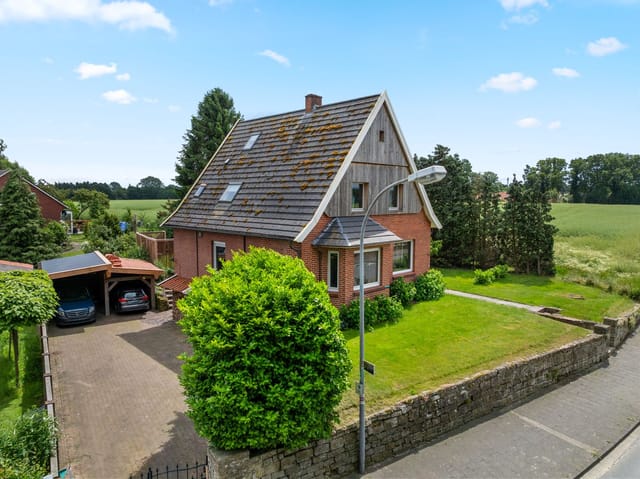
Front view of Am Hundebrook 2

Stand in the conservatory on a Tuesday morning in October, coffee in hand, and watch the low North Sea light roll across the dike. The sheep are already out. A cyclist passes on the path below. It's quiet in that particular way that feels earned — the kind of quiet that reminds you why you left the city in the first place. This is Ditzumerverlaat, and this is exactly what 225 square metres of well-considered living space in one of Lower Saxony's most coveted coastal corners actually feels like. Set on a fully fenced 861m² plot along Achter't Verlaat, this three-bedroom, two-bathroom detached house occupies a genuinely rare position: directly adjacent to the Lower Saxony Wadden Sea National Park and the Dollard estuary, yet just over ten minutes from Bunde's supermarkets and eleven minutes from the motorway. It's the kind of location that sounds too convenient to be real, but the map doesn't lie. The Dutch border is a five-minute drive. The fishing village of Ditzum — where trawlers still come in with the tide and the locals eat Fischbrötchen by the harbour — is seven minutes away. The house itself was built between 2001 and 2010, and it shows the confident proportions of that era without any of the dated finishes. A wide central hallway anchors the ground floor, pulling natural light from multiple directions and giving the whole plan a sense of ease you don't often find in properties this size. The living room runs generous and bright, vinyl flooring underfoot that's practical without looking it, and the flow straight through to the conservatory is the detail that will make you linger. Triple-glazed, underfloor-heated, fitted with pleated sun blinds — this is not a lean-to glass box you use for three weeks a year. Loca ... click here to read more
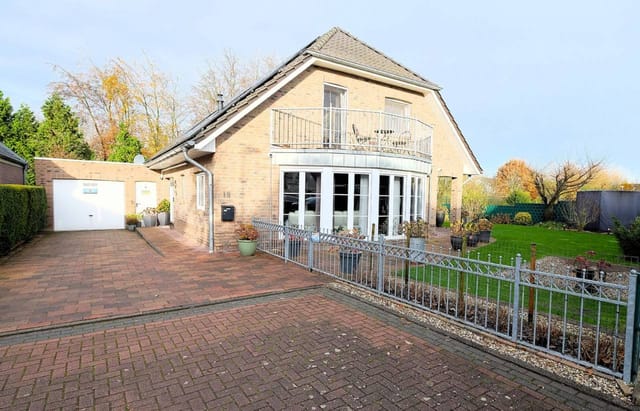
Front view of Achter't Verlaat 23

Step outside on a Saturday morning in Uelsen and within ten minutes you're cycling along flat, well-marked trails through the Grafschaft Bentheim countryside, the smell of damp meadow grass in the air and absolutely nobody in your way. That's the quiet pleasure of this part of Lower Saxony — life moves at a pace you actually choose. And this particular house on Martin-Niemöller-Straße, all 240 square meters of it, is built for exactly that kind of living. Completed in 2008 and maintained to a genuinely high standard, the property sits on a 694-square-meter plot in a calm, well-established residential street. It doesn't announce itself with drama — it earns your appreciation slowly, room by room. The build quality is the first thing contractors notice: hardwood window frames, copper gutters and downspouts, full roof, wall and floor insulation, double glazing throughout. These aren't upgrades bolted on later. They were built in from the start. The ground floor sets the tone immediately. A wide central hallway — the kind that actually functions as an entry, not a tight corridor — branches off toward a guest WC, a large bedroom that doubles convincingly as a home office, and an adjacent room that could be converted into a full bathroom with minimal effort. For anyone thinking about long-term use, or visiting family members who prefer single-level convenience, this layout is genuinely practical, not just theoretically flexible. The kitchen, replaced entirely in 2022, runs along the rear of the house. Induction hob, designer extractor hood, integrated oven, combination microwave, fridge, dishwasher — the full set, installed as one cohesive unit rather than a collection of mismatched appliances. A separate utility room sits ... click here to read more
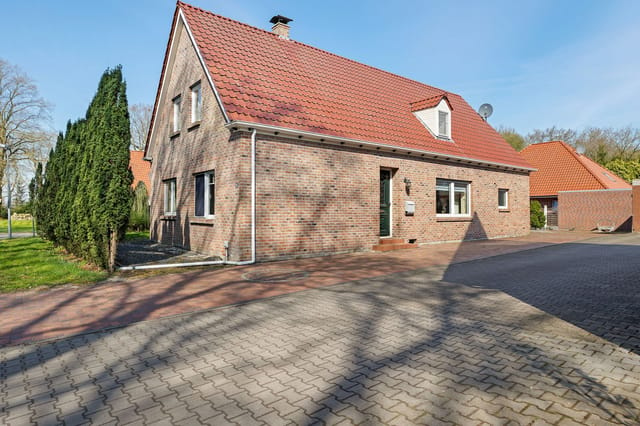
Front view of Martin-Niemöller-Straße 8

On a quiet Sunday morning in Selfkant-Wehr, the only sounds competing for your attention are birdsong from the mature hedgerows and the distant church bells drifting over from across the Dutch border. You're standing in a sun-filled glass dining room, Quooker tap hissing as it fills your kettle, the southeast garden already catching the early light. This is what life actually feels like here — unhurried, green, and surprisingly well-connected to two countries at once. Gausweg 9 sits in Selfkant, the westernmost municipality in all of Germany, a geographical quirk that gives daily life here a genuinely cross-border character. The Netherlands isn't a weekend trip — it's a seven-minute drive. Sittard, a proper Dutch city with a covered market hall, a medieval town square, and serious Indonesian rijsttafel restaurants left over from its colonial history, is just 1.5 kilometres away. Meanwhile, Aachen, with its UNESCO-listed cathedral and a thriving university city energy, is roughly 35 kilometres to the east on the A46. You're at the edges of Germany but absolutely not at the edge of anything interesting. The house itself was built in 1954, and the bones show it — solid brick construction, a bay window at the front that collects morning light like a cup, parquet floors in the living room that have aged into something genuinely characterful. The wood-burning stove in the L-shaped sitting room is the kind of thing you can't retrofit convincingly; it belongs here, and on grey November evenings it earns its place completely. What transforms this from a handsome post-war semi into something considerably more unusual is the glass extension added in 2000. It wraps around the rear and side of the original structure, bringing the ... click here to read more
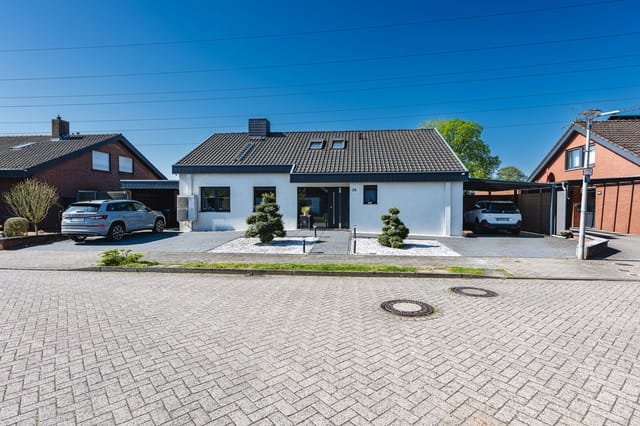
Front view of Gausweg 9

Step outside on a Saturday morning and the air smells like cut grass and river water. The Ems valley is quiet at this hour — just birdsong, the distant hum of a tractor somewhere toward Lathen, and the soft creak of the garden gate as you carry your coffee to the first of three terraces. This is Johannesstrasse 3, Niederlangen Siedlung, and mornings like this are what the house was built for. Constructed in 2009 to a high standard, this five-bedroom detached home sits on a generous 1,630 square metre plot in one of the most quietly underrated pockets of northwestern Germany. It's close enough to the Dutch border — about ten minutes by car — that you can drive to Ter Apel for Dutch cheese and stroopwafels before lunch, then be back in time to fire up the gas fireplace and settle into the 56-square-metre living room before the afternoon fades. That kind of easy, dual-country rhythm is a genuine lifestyle perk here, and it's one you simply don't get in more obvious destinations. The house itself is 286 square metres of well-considered interior space spread across two full living levels and an attic. On the ground floor, a broad entrance hall opens into the main living room — south-facing garden doors pull in daylight from morning to dusk, and when those doors are open in July, the line between inside and outside essentially disappears. The fitted kitchen spans 15 square metres with a central cooking island that earns its keep; this isn't a galley you squeeze past, it's a space where four people can prep a meal simultaneously without bumping elbows. A 11-square-metre utility room sits just off the kitchen with its own exterior door, which means muddy boots and wet coats from a day cycling the Ems-Radweg never make it past ... click here to read more
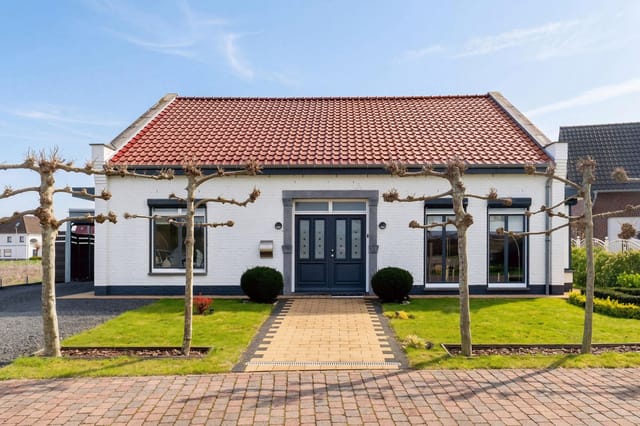
Front view of Johannesstrasse 3

Step outside on a still October morning and the Reichswald forest is right there — a wall of oak and beech beginning literally at the edge of the paddock. The horses are already awake. You can hear them shifting in the stables before you've put the kettle on. This is Grafwegen, a quiet village in Germany's Lower Rhine region where the pace of life is governed by seasons and saddle schedules, not commuter trains. This three-bedroom equestrian estate on Grafwegenerstrasse sits on roughly 22,250 square meters of fenced, fully operational horse property — and it's genuinely one of those places that takes a few minutes to properly absorb when you first arrive. The main farmhouse, built around 1950 and comprehensively renovated in 2004, has been divided into three independent living units totaling around 360 m² of interior space. Practical, yes. But more than that, it's versatile in a way that opens up a real range of life plans. The main house itself runs on underfloor heating beneath ceramic tiles — quietly comfortable in a way you notice most on a January evening when the temperature outside drops. Ground floor: a proper entrance hall with a cloakroom, a country kitchen fitted with built-in appliances, and a living room that catches the afternoon light well. A dedicated workspace sits off the main corridor, which matters if you're planning to work remotely or manage the property as a business. Upstairs, the master suite has a walk-in closet, a bathroom with a jacuzzi, walk-in shower, and double sinks, plus a sauna. That last detail isn't decorative — after a long morning in the saddle or an afternoon splitting firewood, it earns its keep. The first apartment occupies the ground floor of the secondary wing. Living room, o ... click here to read more
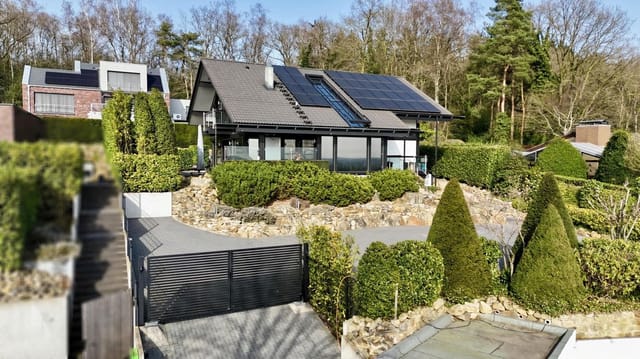
Front view of Grafwegenerstrasse 16

Step outside on a still October morning, coffee in hand, and the view from the covered terrace at Vechtetalstraße 41 stops you in your tracks. Open fields roll out toward the horizon, the garden is doing its slow golden turn, and the only sound is the wind moving through the mature oaks at the edge of the property. This is what 8,101 square metres of Lower Saxony countryside actually feels like from the inside. Built in the 1940s and given a substantial overhaul and extension in 1991, this four-bedroom detached house in Neuenhaus carries the bones of something solid without feeling like a museum piece. The 184 m² of living space is spread across two floors in a way that actually works — ground floor for living and entertaining, upper floor for sleeping and quiet. It's not trying to be a showpiece. It's a proper house built for real life, with room to spare. The moment you turn off the road onto the long private driveway, something shifts. The garden wraps around you — lawns, shrubs, mature trees that took decades to grow into what they are now — and the street noise disappears. Multiple terraces, including a covered one off the kitchen, mean you're outside in all but the worst weather. That covered terrace deserves special mention: on a grey Bentheim evening in November, it's where you'd sit with a glass of Pinot Noir and still feel completely at home outdoors. Inside, the ground floor moves logically between spaces without feeling chopped up. Two living rooms — one with a soapstone wood stove that radiates heat long after the fire has died down — give you options depending on the mood of the day. The kitchen, renovated in 2011, is kitted out properly: ceramic hob, built-in oven, extractor, fridge-freezer, dishwasher. ... click here to read more
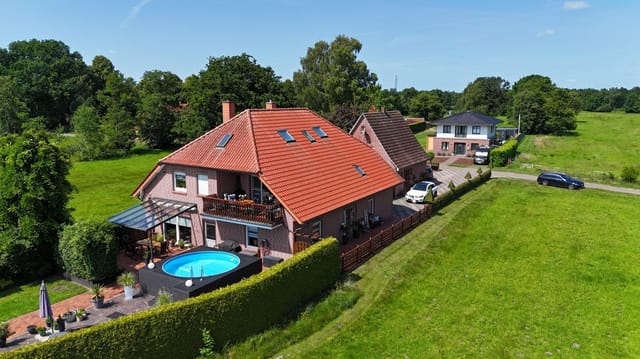
Front view of Vechtetalstraße 41

Early on a Saturday morning, the only sound you'll hear from the master suite is water. The Ems moves slowly past the 19th-century lock below, and if the kitchen window is open, the smell of damp grass and lime trees drifts in before you've even put the kettle on. This is Listruper Wehr 5 — a former river shipping house turned private estate, sitting on 15,451 square meters of park-like grounds just a few minutes from the Dutch border. It's the kind of place that takes most people about thirty seconds to fall completely silent in. The property's origins are written into its bones. Built as a working shipping house to serve the lock on the Ems, the villa carries a quiet authority — classic green-and-white shuttered facades, proportions that feel deliberate and unhurried, and a setting that hasn't changed much since the 19th century. The dam immediately downstream still creates that low, constant percussion of moving water. On a still evening, you can hear it from the garden terrace. Some owners find it meditative. Nobody finds it unwelcome. In 2010, a complete interior renovation was carried out under the direction of a noted interior architect, and it shows — but not in a way that shouts. The focus was on proportion, natural light, and materials that earn their place: stone, solid timber, hand-finished surfaces. The bespoke kitchen, made by Landlord-Living, is centered around a Lacanche range — the kind of French stove that professional cooks scheme about owning. There's a walk-in refrigerator, custom cabinetry, and enough counter space to actually cook rather than just perform cooking. The dining area in the heart of the ground floor connects the main lounge and a fireplace sitting room, both of which open directly on ... click here to read more
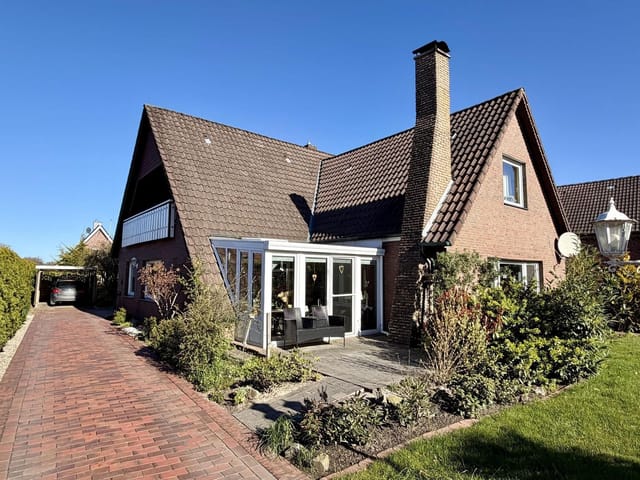
Front view of Listruper Wehr 5

Picture yourself waking to morning light streaming through floor-to-ceiling windows, your coffee in hand as you step onto your private terrace overlooking nearly three-quarters of an acre of verdant German countryside. This is the daily reality awaiting you at this spacious family retreat in Emlichheim, a tranquil border village where German efficiency meets Dutch accessibility, creating an exceptional opportunity for international families seeking a European second home with genuine lifestyle flexibility. Built in 2006 with meticulous attention to quality, this 244-square-meter residence offers something increasingly rare in modern Europe: genuine space to breathe. The 3,000-square-meter plot wraps entirely around the house, creating multiple outdoor zones for everything from morning yoga sessions to summer evening gatherings with extended family. The double carport and stone storage building handle the practical realities of country living, while the thoughtful architecture ensures every room captures natural light and garden views. Step inside, and the home reveals its greatest asset: adaptability. The ground floor flows seamlessly from the welcoming entrance hall into an expansive living area anchored by a wood-burning stove—perfect for those crisp autumn weekends when you escape city life for countryside tranquility. The open-plan kitchen, centered around a contemporary island, becomes the natural gathering point for family meals, while the year-round conservatory extends your living space into the garden regardless of season. This isn't just a vacation home; it's a property designed for the rhythms of real family life across generations. The master suite on the ground floor provides a private sanctuary complete ... click here to read more
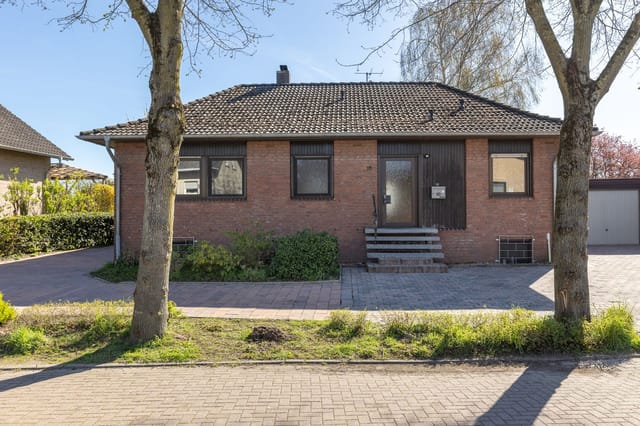
Front view of Heideweg 40

Picture yourself standing at the edge of a 3,905-square-meter private garden, where morning mist rises from ancient peat fields and the only sounds are birdsong and wind rustling through mature trees. This is life at the German-Dutch border, where your family home becomes a gateway to two countries, endless nature, and a slower, more intentional way of living. This 138-square-meter detached house in Schöninghsdorf offers international families a rare opportunity to own a spacious vacation retreat where children can roam freely, weekends stretch into adventures across borders, and every season brings new reasons to return. Schöninghsdorf sits in one of Europe's most unique locations, straddling the Germany-Netherlands border in Lower Saxony's Emsland region. This positioning gives property owners unparalleled flexibility: drive five minutes west to cross into the Netherlands at Zwartemeer, accessing Dutch cycling culture, distinctive architecture, and a completely different culinary scene, or explore eastward into Germany's preserved moorlands and traditional villages. For vacation home owners, this dual-country access means twice the cultural experiences, shopping opportunities, and exploration possibilities without the complexity of owning property in two separate nations. The house itself tells a story of thoughtful evolution. Built in 1967 and continuously updated, the 3-bedroom residence balances the solid construction of mid-century German building standards with modern family needs. The intelligent layout places all primary living spaces at the rear, facing south toward the expansive garden. This orientation floods the home with natural light throughout the day while creating a buffer between the quiet street fro ... click here to read more
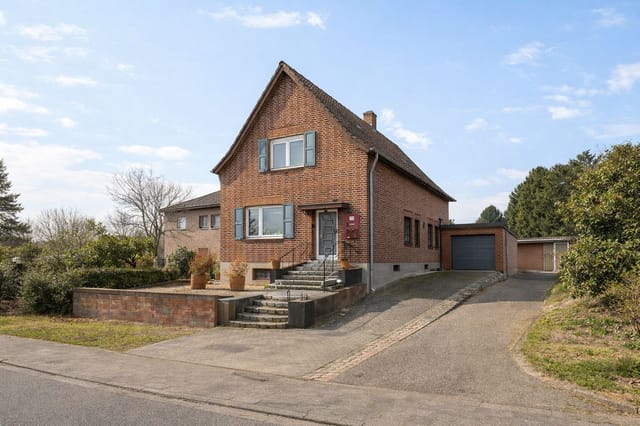
Front view of Zollstrasse 24

Picture yourself sipping morning coffee on your terrace as songbirds gather at the pond in your private garden, the morning sun filtering through ancient trees that shield you from the outside world. This is the rhythm of life at this 183-square-meter villa in Borghees, where the German countryside meets the historic Rhine River valley, creating an environment that transforms every weekend into a retreat and every holiday into an immersion in Central European tranquility. The scent of pine from surrounding forests drifts across your 757-square-meter plot, while the nearby golf course beckons for afternoon rounds under expansive skies. This four-bedroom villa represents a rare opportunity to own a vacation home in one of Germany's most accessible yet peaceful border regions, where the Netherlands, Belgium, and Germany converge. The location positions you at the crossroads of European culture, with medieval Hanseatic towns, Rhine River cruises, and Dutch cycling routes all within easy reach. For international buyers seeking a second home that balances seclusion with connectivity, this property delivers both the escape and the convenience that makes European vacation ownership truly rewarding. The architectural layout of this villa reveals thoughtful design for multi-generational holidays and extended stays. The ground floor functions as a self-contained living space with its own bedroom and modern bathroom, allowing elderly parents or adult children to maintain independence during family gatherings while remaining connected to the main living areas. Slate floors with underfloor heating throughout create a spa-like warmth that welcomes you after days exploring the Rhine valley or cycling through Dutch villages just across ... click here to read more
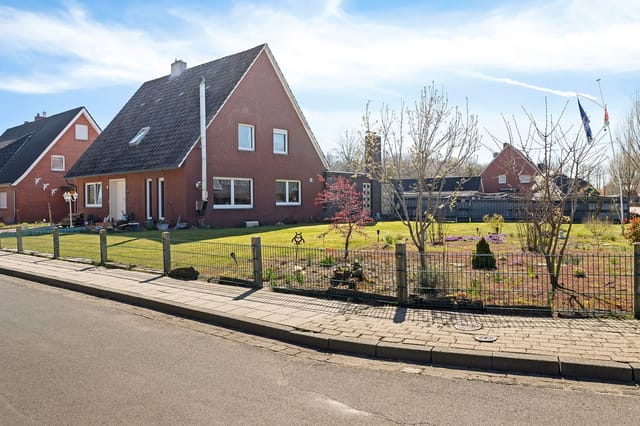
Photo 1 of Drosselweg 6

Picture yourself sipping morning coffee in your conservatory, watching chickens peck contentedly in your private garden while the early sun filters through fruit trees on your 1,324-square-meter plot. This is the reality awaiting at this 2012-built bungalow in Waldfeucht, where German efficiency meets Dutch-border tranquility, just minutes from two countries' worth of cultural experiences and countryside adventures. Waldfeucht occupies a unique position in Germany's vacation property landscape. Nestled in North Rhine-Westphalia mere kilometers from the Netherlands, this quiet town offers international buyers something increasingly rare: space, privacy, and authentic European border-region living at accessible prices. The rhythm here follows the seasons rather than tourist crowds. Spring brings cycling enthusiasts to the extensive network of cross-border bike routes connecting German forests to Dutch waterways. Summer means alfresco dinners in your private garden, with twilight lasting until nearly 10 PM. Autumn transforms the surrounding countryside into a tapestry of amber and gold, perfect for mushroom foraging and harvest festivals. Winter invites cozy evenings by your wood-burning stove, perhaps after a day exploring nearby Christmas markets in Aachen or Roermond. This bungalow delivers something many vacation homes promise but few provide: genuine single-level accessibility combined with surprising spatial flexibility. The 168-square-meter main floor flows logically from the side entrance through a reception hall into distinct living zones. The kitchen anchors the rear of the home, fully equipped with dishwasher, ceramic hob, and modern appliances, opening directly into an attached conservatory that becomes your y ... click here to read more
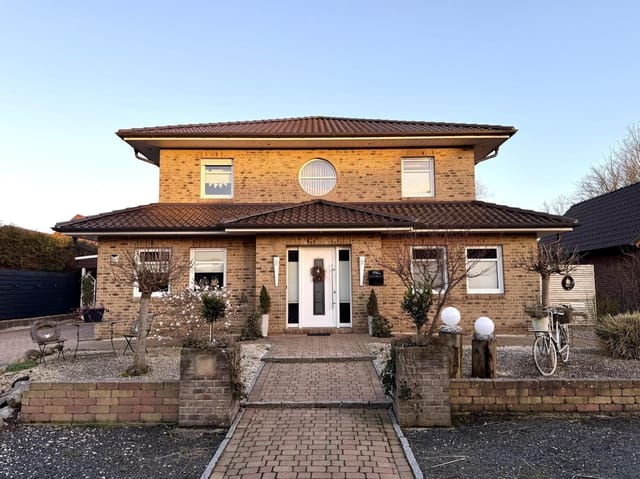
Photo 1 of Muhlenweid 48

Picture yourself opening the heavy wooden gates each morning to your own private courtyard, where centuries-old stone walls frame a sprawling estate that seamlessly bridges three generations of living. This is Kirchstrasse 5 in Gangelt—a rare 1800s country home where history whispers through vaulted cellars and modern life flourishes across 147 square meters of thoughtfully restored living space, complemented by a heated swimming pool and a barn equipped with 10kW solar panels that transforms as effortlessly as the seasons. Gangelt, nestled in the verdant Heinsberg district of North Rhine-Westphalia, sits precisely where Germany meets the Netherlands—a location that gifts residents two countries worth of experiences within a fifteen-minute drive. This borderland position creates a lifestyle rich in contrasts: cycle through Dutch tulip fields in the morning, browse German Christmas markets in the afternoon. The village itself unfolds along the gentle valleys of the Roode Beek and Rigolbach streams, where open farmland meets deciduous forests that blaze crimson and gold each autumn. Wildlife roams freely in the nearby Naturpark Maas-Schwalm-Nette, offering hiking trails that wind through landscapes unchanged for centuries. The rhythm of life here follows nature's calendar. Spring brings asparagus season—locals line up at farm stands for the white gold of the Rhineland, paired with new potatoes and hollandaise. Summer means long evenings in your southeast-facing garden, the heated pool maintaining perfect temperatures while swallows dart overhead. Autumn transforms the forests into hiking paradise, and winter sees the region's villages compete for the most atmospheric Christmas markets, mulled wine steaming in the crisp a ... click here to read more
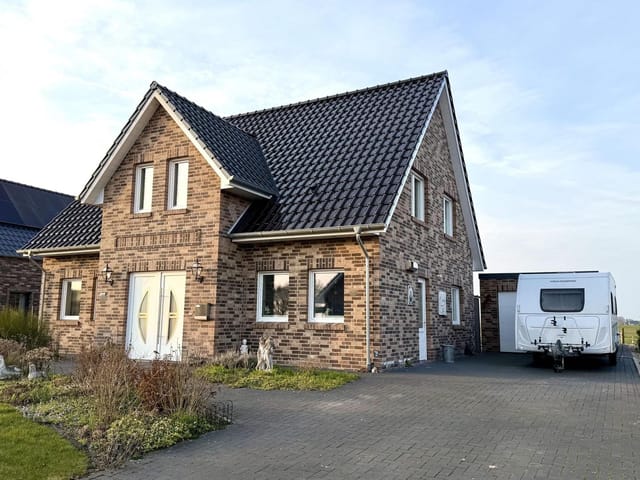
Photo 1 of Kirchstrasse 5

Picture yourself opening the wrought iron gates at dawn, sunlight filtering through a hundred fruit trees as you walk the private driveway to your country sanctuary. The morning air carries the scent of apple blossoms in spring, ripening plums in summer, and wood smoke from your own forest in winter. This is daily life at this 260-square-meter farmhouse in Westoverledingen, where 40,000 square meters of private land create a world entirely your own, just minutes from the amenities of Papenburg in Lower Saxony. This property represents a rare opportunity to acquire a fully operational country estate that combines modern self-sufficiency with traditional German rural architecture. The 4-hectare plot unfolds like a private park, with established orchards, dedicated equestrian facilities, and nearly one hectare of native woodland. For international buyers seeking a vacation home in Germany that offers complete autonomy, this estate delivers an off-grid lifestyle without sacrificing comfort or connectivity. The main residence spans 260 square meters across two floors, designed around a central living philosophy that connects indoor comfort with outdoor abundance. Enter through the spacious hallway into a light-filled living room where floor-to-ceiling windows frame views across your private landscape. A wood-burning stove anchors the space, creating gathering points for family evenings after days spent exploring the property. The country-style kitchen functions as the heart of daily life, equipped for preserving your orchard harvest and preparing meals with vegetables from your own garden beds. Ground floor accommodations include a versatile room that serves equally well as a home office for remote work or a library for qu ... click here to read more
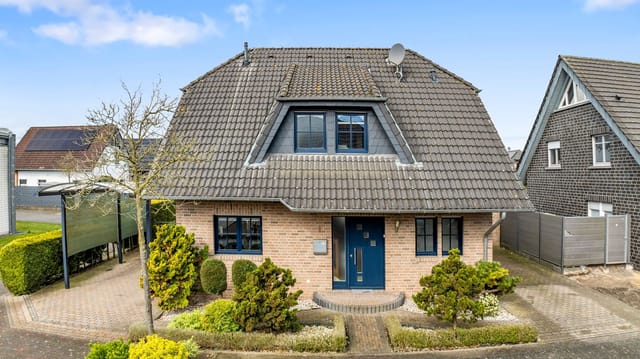
Front view of Papenburgerstraße 331

Picture yourself stepping onto your private terrace in the Eifel countryside, morning mist rising from the valleys as coffee steams in your hand and the scent of pine forests drifts through the air. This is life in Monschau, where your 14-bedroom vacation estate with separate guesthouse becomes the gathering place for generations of family memories and the foundation of a thriving hospitality venture just one kilometer from one of Germany's most photographed medieval towns. This remarkable property in Höfen district represents something increasingly rare in today's vacation home market: a fully operational compound that seamlessly blends private family retreat with proven income-generating potential. The main residence spans 220 square meters across multiple thoughtfully designed levels, while the separate 10-room guesthouse adds another 287 square meters of accommodation space. Together, they create an estate where you can host extended family gatherings, welcome paying guests, or simply enjoy the freedom of abundant space in one of Germany's most sought-after nature destinations. The main house welcomes you with a ground floor designed for effortless entertaining and daily comfort. The spacious living room centers around a gas fireplace that becomes the heart of autumn evenings, while the open dining area flows naturally into a well-equipped kitchen. French doors open to a loggia where summer lunches extend into long afternoons of conversation. Two additional bedrooms and bathrooms on the upper floor provide private family quarters, while the converted attic offers flexible space for a home office, library, or teenage retreat. Every level connects to the surrounding landscape through generous windows that frame views ... click here to read more
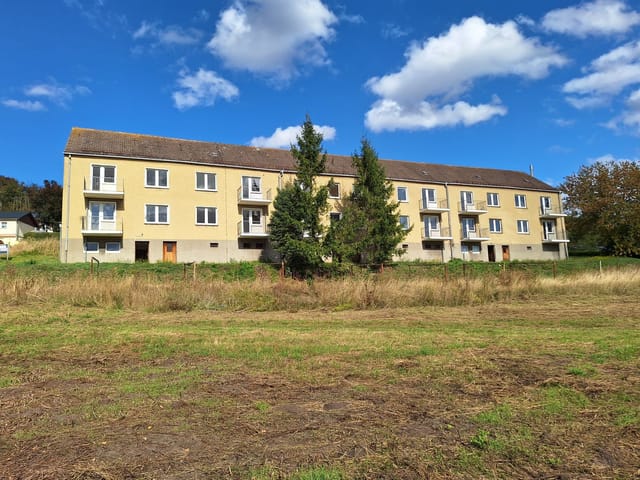
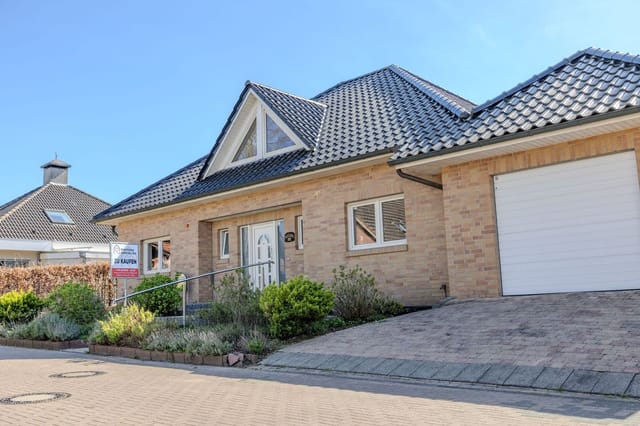
Photo 1 of Heidgen 34

A Journey to Tranquility and Potential Imagine waking up to the gentle rustle of leaves and the soft chirping of birds, as the morning sun filters through the lush canopy surrounding your historic farmhouse in Rhede. Nestled on Eichenstraße 10, this property is more than just a home; it's a canvas for your dreams, a sanctuary where history and potential converge. A Story of Character and Possibility As you step through the threshold, the farmhouse greets you with an air of authenticity. The ground floor, with its flexible layout, invites you to envision a life where each room serves a purpose tailored to your desires. Whether it's a cozy reading nook, a vibrant home office, or a welcoming guest room, the possibilities are as endless as your imagination. The heart of the home, the central kitchen, retains its retro charm, a nod to the past that beckons you to infuse it with modern touches. Adjacent, the original bathroom and toilet, with their bold tiles, offer a nostalgic glimpse into the property's storied past, waiting for your creative touch to transform them into contemporary spaces. A Barn of Dreams Venture further, and you'll discover the barn—a space that ignites the imagination. With its original wooden beams and robust brick floor, it stands as a testament to the craftsmanship of yesteryears. Here, you can create a spacious living area, an artist's studio, or a loft-style residence that echoes your unique style. The Allure of the Attic Upstairs, the open attic reveals an imposing roof structure with exposed beams, offering a blank slate for additional living or working spaces. The generous ceiling height and architectural details provide a foundation for a master suite, a creative workspace, or a combina ... click here to read more

Photo 1 of Eichenstraße 10