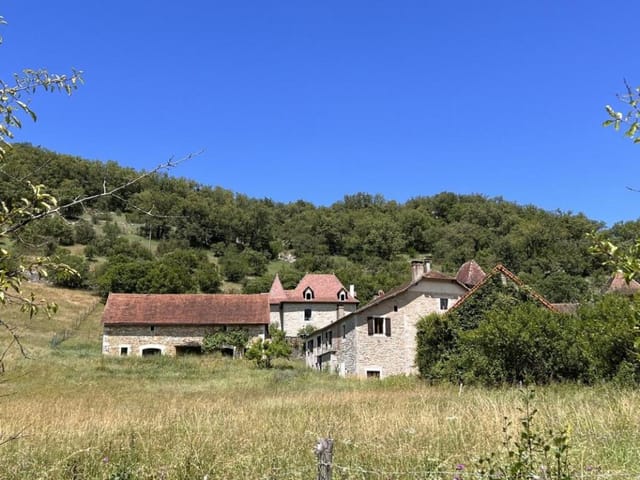
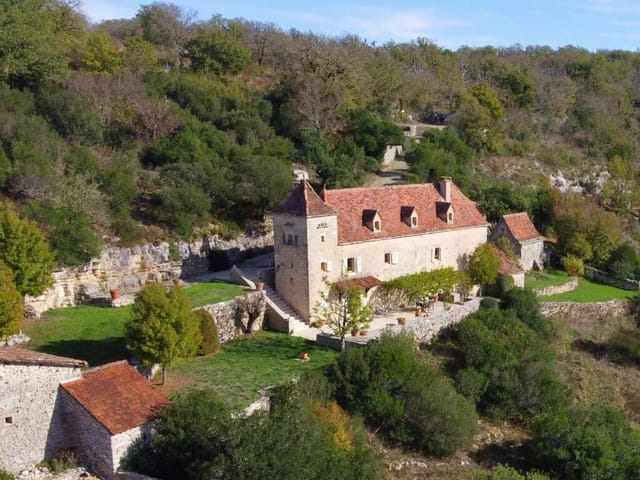
Stand at the edge of the limestone plateau on a clear October morning and you can hear absolutely nothing. No traffic, no machinery, no neighbors. Just a kestrel working the thermals above the Causses and the faint whisper of wind through the oak scrub. That kind of silence is not incidental here — it's the whole point. This is Marcilhac-sur-Célé, a village in the Lot department of southwestern France where the river carves through pale cliffs and the pace of life hasn't changed much in a century. And this property — a complete rural estate comprising the majority of an ancient hamlet, two substantial stone houses, two large farm buildings, and 92 unbroken hectares of land — is about as rare as the silence itself.
Let's start with the land, because it's what makes everything else possible. The 92 hectares come in one piece, which matters enormously. No fragmented parcels, no tenant farmers, no complicated lease agreements to unpick. Seventeen hectares are meadows and mixed woodland down in the valley; the remaining 75-plus are fully fenced limestone plateau — the wild, scrubby Causses terrain that defines the character of this entire region. Walk it for an afternoon and you'll find old stone cazelles, those dry-stone shepherd's huts that dot the plateau like punctuation marks from another era, plus a small barn still waiting for someone with a vision. The fencing is already in place, which is a significant practical detail: under France's 2023 loi clôture, that enclosure can be maintained for agricultural activities, horse breeding, or hunting dog training grounds, among other permitted uses. The land supports animals, market gardening, rural tourism, or simply the luxury of having a private wilderness on your doorstep. ... click here to read more