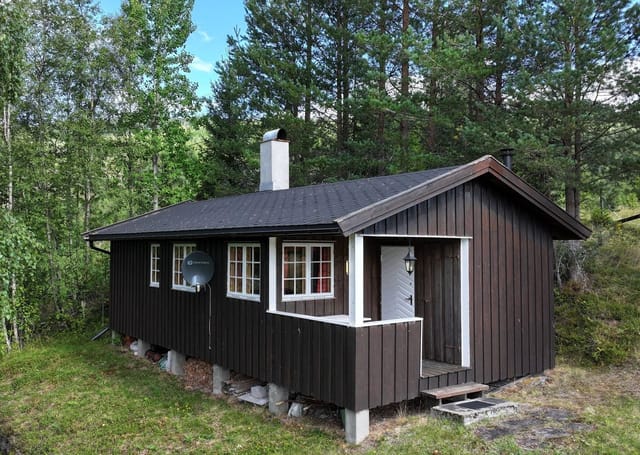
Houses For Sale In Europe For Less Than €100,000 (page 4)

Houses for sale in europe - homestra offers the largest amount of european real estate with over 200,000+ properties, find any type of property within your budget from villas to country homes. buy or rent your perfect home in europe. (page 4)

Picture a Saturday morning in Vars. The boulangerie on the main street has been open since seven, and the smell of fresh croissants drifts through the open shutters of your stone house before you've even put the coffee on. This is village life in the Charente — unhurried, rooted, and deeply French in a way that the more tourist-trodden corners of the country have long since lost. Vars is a small commune in the Charente department of southwestern France, sitting in the gentle, sunlit countryside of what was once Poitou-Charentes. It's the kind of place where the weekly market actually matters, where people know each other by name, and where the pace of life feels like a deliberate choice rather than a geographical accident. Angoulême, a proper city with a TGV station connecting directly to Paris in under two hours, is roughly 25 kilometres to the northwest. Cognac, the town that gave the world its most famous brandy and hosts the Blues Passions festival every July, is about the same distance to the south. You're connected when you want to be, and wonderfully off the grid when you don't. The house itself sits in the heart of the village — not on its outskirts, not down a lane, but right in it. Built across two floors and covering 142 square metres of living space, it's a classic Charentais village house: solid stone construction, well-proportioned rooms, the kind of bones that modern builds simply can't replicate. Three bedrooms, including a master bedroom with its own defined space, give the layout real versatility whether you're planning a family holiday home, a personal retreat, or a mix of both. Outside, a courtyard of approximately 325 square metres adds something genuinely rare at this price point — private outdoor ... click here to read more

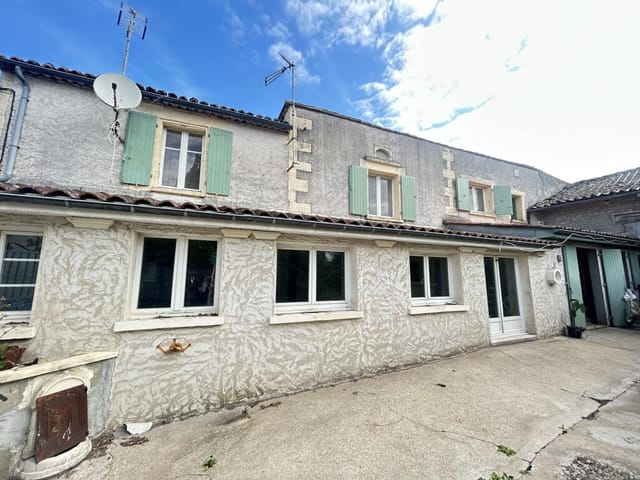
Picture 1

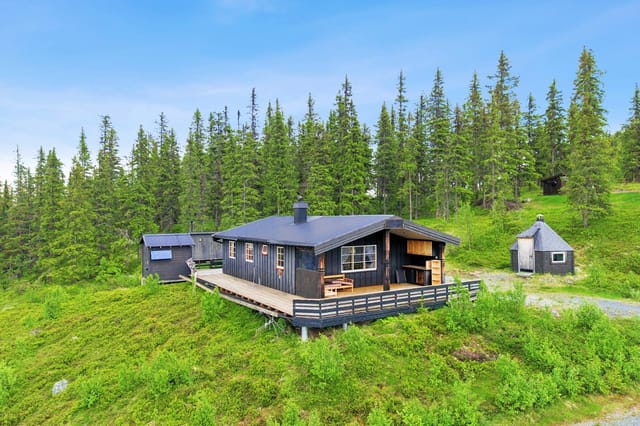
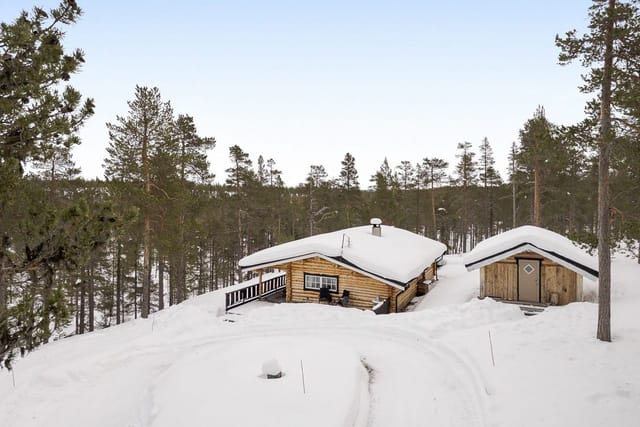
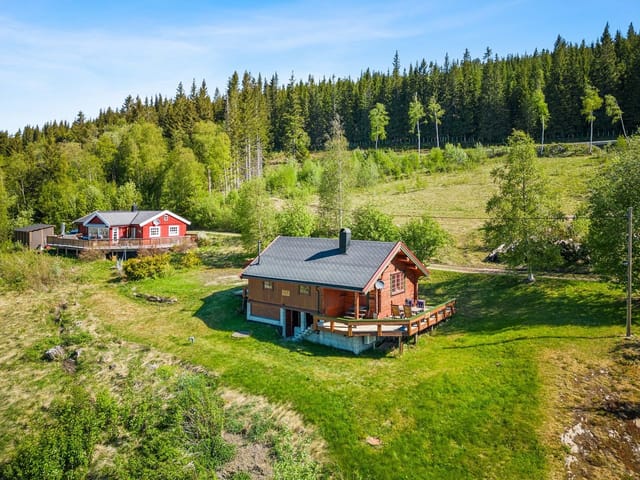
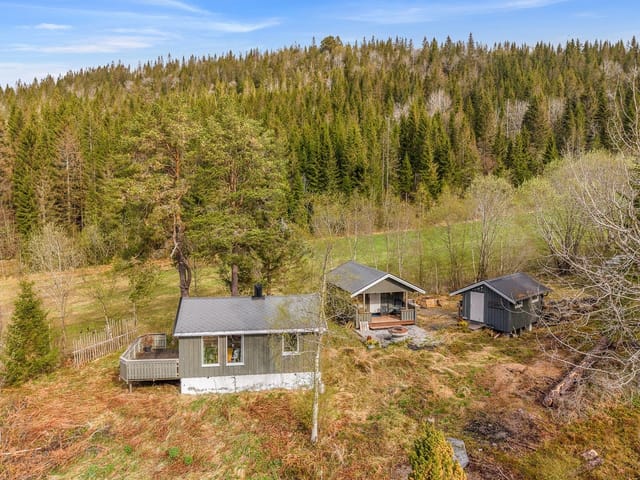
Picture this: it's a Saturday in February, and you wake up in a wood-paneled bedroom to absolute silence except for the soft hiss of snow falling outside. You pull on your ski boots, step out onto 64 square meters of terrace, and the groomed cross-country trail is right there — no car, no shuttle, no waiting. That's the daily reality at Liaåsvegen 487 in Reinli, and it's the kind of morning that makes you wonder why you didn't buy this place years ago. This 1965-built chalet sits on Liaåsen mountain in Valdres, one of Norway's most beloved inland holiday regions. It's honest and unfussy — 57 square meters of warm, wood-heavy interior that feels exactly like a Norwegian mountain cabin should. The walls are clad in timber. The ceilings too. Solid wood floors run throughout. A slate-clad fireplace, rebuilt in 2009 and positioned at the center of the living room, does the hard work of heating the space while also becoming the natural focal point for evenings in — someone's always got a glass of something warming and a card game going at the dining table nearby. The kitchen is practical rather than precious, fitted with profiled cabinetry and counter space for preparing proper meals after long days outdoors. There's a hatch in the floor leading to a crawl space — a clever and very Norwegian solution for keeping food cool and provisions stocked through long winter stays. Both bedrooms are compact and well-organized, with custom-built beds and built-in storage that use every centimeter wisely. The bathroom is simple: a shower cabin with a fill-as-needed water system and greywater directed into the terrain. An outdoor privy is housed in one of the outbuildings. This is off-grid living, which is part of the appeal — the propert ... click here to read more

DNB Eiendom v/Torleif Løvfald Gaard presents Liaåsvegen 487!

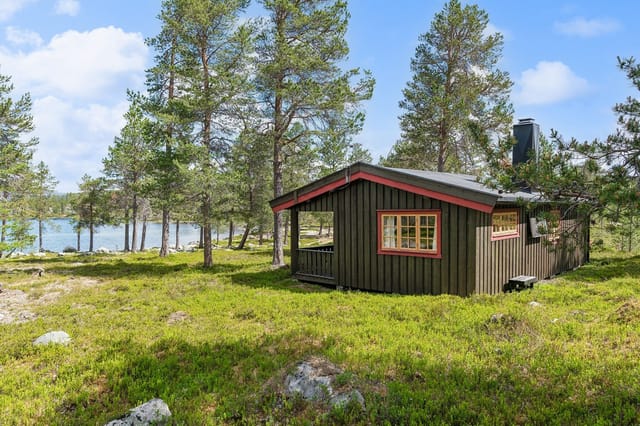
Step off the covered terrace at Gjermundsvika 102 and you're standing at the edge of Lake Femund — one of Norway's largest and most untouched bodies of water — with nothing between you and the far shore but cold, clear air and the occasional call of a loon. The water is right there. Not "a short walk away." Not "close to." There. That immediacy is rare, and once you've had your morning coffee watching mist lift off the lake in early September, it's impossible to forget. This is a proper Norwegian cabin. Built in 1979, it hasn't been smoothed into something generic. The walls are paneled wood, the floors are lacquered timber, and a brick chimney anchors the living room where an open fireplace with an insert throws serious heat when the temperature drops. The ceiling beams are visible. The whole 49 square meters feels deliberate — compact enough to actually feel like a cabin, not a weekend apartment dressed in pine. The layout is open plan between the kitchen and living room, which is exactly right for a place like this. You want to be able to keep an eye on the water while someone else makes lunch on the propane-powered cooktop. The wood stove in the kitchen isn't a decorative nod to the past — it's functional, and it makes the space smell incredible on a cold morning. Power comes from a 12V solar panel system, which handles lighting without any drama. There's no running water or sewage infrastructure currently installed, though grid connection is a realistic option given the proximity of power lines nearby. This is cabin life as it was meant to be lived: stripped back, self-sufficient, and completely absorbing. Two bedrooms sleep the family or a group of friends comfortably. The covered entrance and terrace, totaling ... click here to read more

Welcome to Gjermundsvika 102! Photo: EFKT. Photographer: Johan Anderson

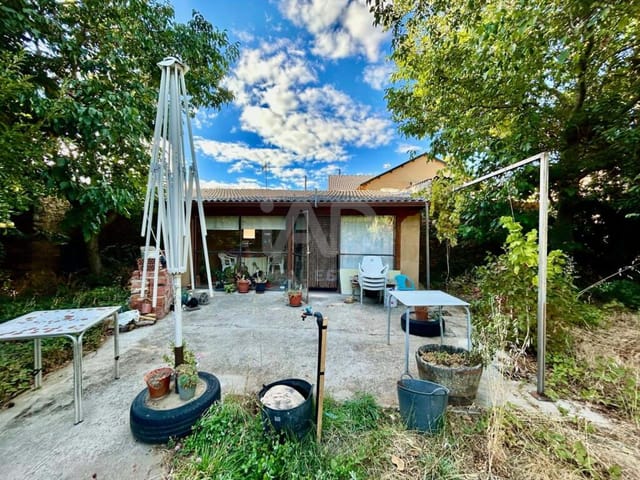
Sunday morning in Morla de la Valdería moves slowly. The smell of wood smoke drifts down the lane, a neighbour's dog trots past the gate, and from the rear garden you can hear nothing — genuinely nothing — except the wind threading through the oak and chestnut hills of the Eria river valley. That specific kind of quiet is increasingly rare in Europe, and this 180-square-metre village house sits right at the heart of it. Morla de la Valdería is a hamlet tucked within the municipality of Castrocontrigo, a small but proud corner of the León province in Castile and León. This is old Spain — not the curated, tourist-facing version, but the real thing. Dry-stone walls, vegetable plots behind every house, the annual Fiesta de San Roque in August when the whole village eats, drinks, and dances in the street until well past midnight. The landscape itself carries weight: the Teleno mountain rises to 2,188 metres on the horizon, the Eria river cuts through valleys thick with pine and birch, and the Lago de Truchas — a reservoir popular with local trout fishermen — sits less than 20 minutes by car. The house itself is a single-storey structure, which matters more than people initially realise. No stairs means every room is accessible from the moment you walk through the front door, and the north-south orientation means the light shifts around the interior throughout the day in a way that feels almost intentional. Morning sun floods the kitchen. By afternoon it has moved around to warm the rear garden. The 281-square-metre plot gives the property a generous footprint for a village home at this price point — €80,000 for 180 square metres in good, renovated condition is the kind of number that makes buyers do a double-take. The reno ... click here to read more

Picture 1

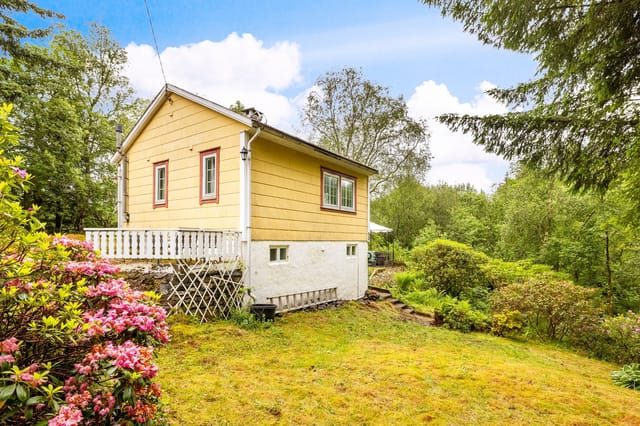
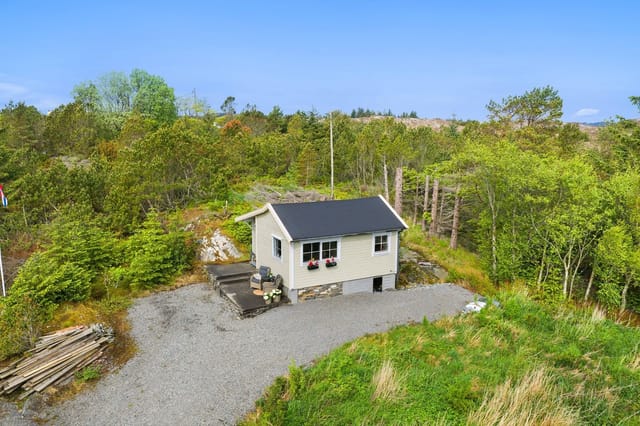
The first thing you notice when you step outside on a calm morning is the silence — not a dead silence, but a living one. Wind moving through the grass, a guillemot calling somewhere across the water, the soft knock of an aluminum hull against a wooden dock. That's the sound of Litlelindås 50 before the rest of the world wakes up. And it's yours. Sitting on a freehold plot of 581 square meters in Austrheim, on the Lindås peninsula of Hordaland, this cabin has been here since 1963 and it carries its years well. Sixty-one summers of sea swimming. Sixty-one autumns of fishing from a private dock. The bones of the place are solid, the feel is genuine, and you're only 58 meters from the water's edge. That's not a figure from a brochure — walk out the front, count fifty steps, and your feet are at the shoreline. Western Norway is not a destination people stumble into. You come here deliberately, because you know what you're looking for: open fjord water, trails that reward the effort, seafood so fresh it still smells of the ocean. Austrheim sits at the mouth of the Fensfjord, and the waters around Litlelindås are some of the best recreational fishing grounds in the region. Coalfish, mackerel, and sea trout run here from late spring through autumn. The dock is sturdily built — this isn't a seasonal pontoon that gets packed away in October — and an aluminum rowing boat is included in the sale, so you're on the water from day one. The cabin itself is compact at 30 square meters of interior living space, but it's the kind of compact that forces a certain honest simplicity. The living room, at 12.3 square meters, is the heart of it — wide windows face the greenery outside, and a wood-burning stove occupies the corner that matter ... click here to read more
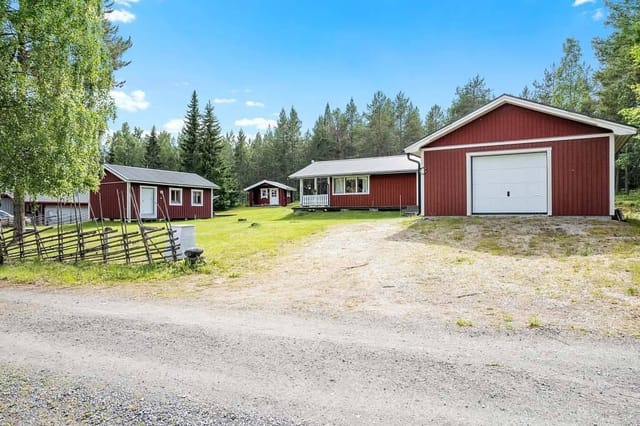
Welcome to Litlelindås 50 - presented by EIE Eiendomsmegling (Photo: Nathalie Reinholdtsen).

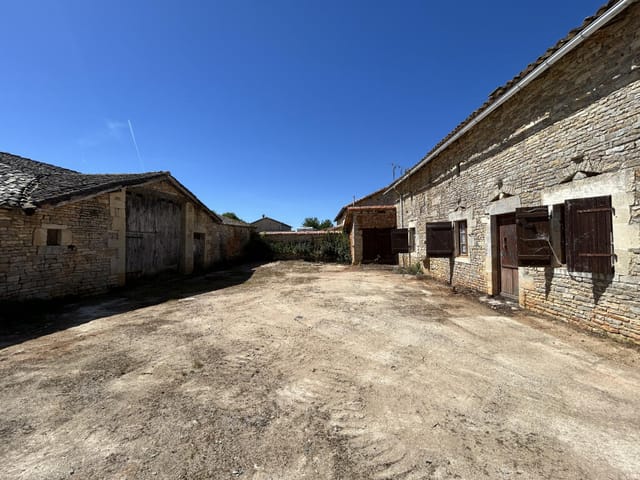
Picture this: a Saturday morning in early June, the air carrying the faint sweetness of flowering linden trees, a rooster somewhere in the distance, and nothing but the sound of your own footsteps on old stone as you walk across the courtyard to figure out what this barn could one day become. That's the kind of quiet that Clussais-la-Pommeraie deals in. It's not dramatic. It's not performant. It's just deeply, genuinely peaceful — the kind that people from Paris or London or Amsterdam spend years trying to find and then overpay for somewhere more famous. This is Poitou-Charentes, one of France's most underrated rural regions, sitting right in the soft belly of the country between the Loire Valley to the north and the Cognac country to the south. The Deux-Sèvres department doesn't have the international name recognition of Provence or the Dordogne, and that's precisely why a stone property complex on roughly 2,400 square metres of land with a courtyard, a garden, a 240-square-metre barn, and multiple outbuildings is available for €70,000. Let's talk about what that number actually means. For the price of a decent second-hand car in London or a semester of private school fees in Switzerland, you're acquiring a genuine piece of rural France — original stone construction, exposed beams, a fireplace still intact, an attic that adds another 46 square metres of potential living space above the 90-square-metre ground floor. The property needs full renovation, and that's the point. It's a blank canvas, not a compromised one. Someone hasn't already ripped out the character and replaced it with laminate flooring and recessed lighting. The bones are there, waiting. The barn alone changes the arithmetic of what's possible here. At ... click here to read more
Picture 1

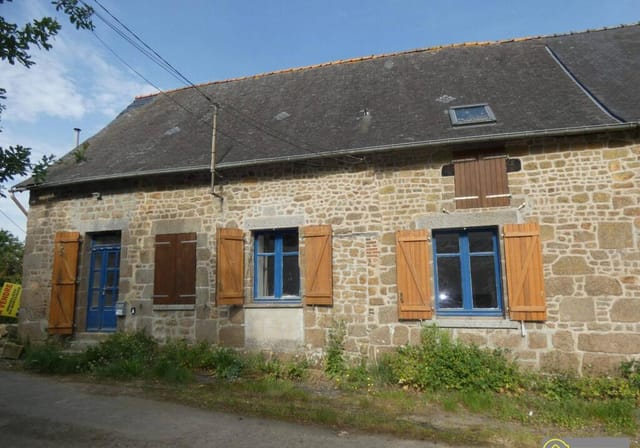
Saturday morning in La Bazouge-du-Désert sounds like this: a wood fire ticking quietly in the kitchen insert, the smell of coffee cutting through cool Breton air, and birdsong coming in through a window that looks out over 462 square metres of your own garden. No neighbours at your elbow. Just countryside, quiet, and the kind of unhurried morning that most people only manage once a year on holiday — except here, it would be yours whenever you wanted it. This compact stone country house sits in the northern Ille-et-Vilaine, the oldest corner of Brittany, in a rural commune that most visitors driving toward Saint-Malo never bother to slow down for. That's exactly the point. At €54,800, it's one of those rare entry points into genuine French rural property ownership — the kind of deal that doesn't appear often in a department where coastal prices have been climbing steadily and even inland villages are attracting more attention from buyers priced out of Normandy. The ground floor is functional and liveable right now. A kitchen with a wood-burning insert fireplace anchors the space — this is the room you'll be in most, and in October when the temperature drops and the trees turn, it earns its place. The living room flows from there, with one bedroom and a shower room/WC completing the footprint at around 60 square metres of living space. It's honest, not fussy. Good condition means you can move straight in, run it as a bolt-hole, rent it out short-term, or use it as a base while you plan what comes next. What comes next, potentially, is the attic. The first floor is an unconverted space of approximately 65 square metres — structurally there but requiring modifications to bring it into full use. That's a significant canvas ... click here to read more
Picture 1

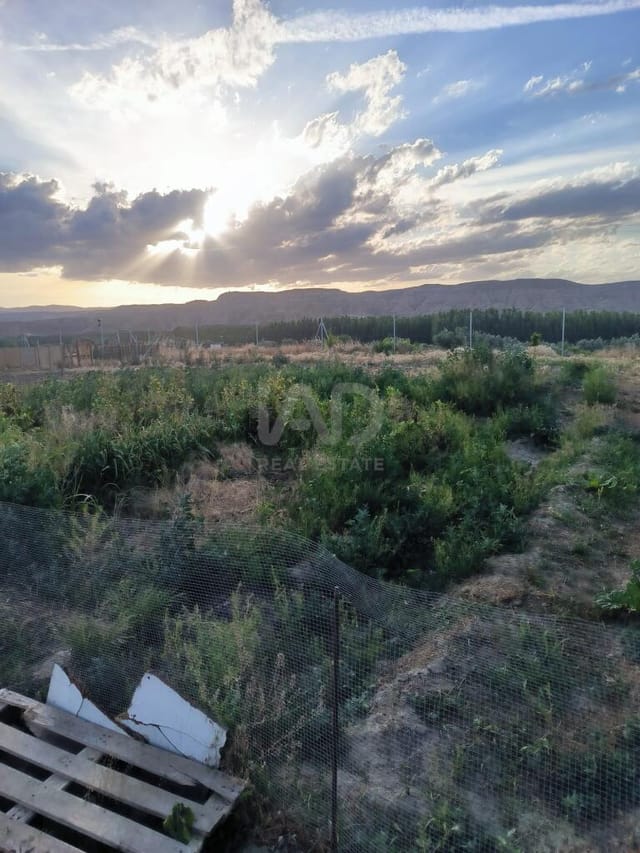
Stand here on a clear January morning and you can see the Sierra Nevada's snow-capped ridgeline from across the valley. The air smells of rosemary and damp earth. Sixty young olive trees — barely two years old, their silver-green leaves catching the low winter sun — stretch out in neat rows across 4,769 square metres of Andalusian countryside. This is Cortes de Baza territory, a part of Granada province that most international buyers haven't discovered yet. That, honestly, is the point. This agricultural plot sits between two working rural villages in the Granada interior, visible from the A-92N motorway but tucked far enough away that you hear nothing but wind and birdsong. The access road is fully asphalted all the way to the water house — no rutted tracks, no seasonal mud problems. You drive straight in, park, get to work. It sounds like a small thing. Anyone who has dealt with rural land in Spain knows it isn't. The water situation here is sorted, which matters enormously. The property has a fully legal potable water supply — documented, registered, above board. In rural Andalusia, where water rights can be murky and disputes long-running, having clean legal title to your supply is genuinely rare at this price point. There's also a legalised 15 m² utility building already on the land, so you have covered storage from day one. The olive trees are young, yes. Two years in. But that's actually an advantage if you're thinking long-term — you're not inheriting someone else's neglected orchard. These trees have been planted recently, they're healthy, and in a few years they'll be producing. Alongside the olives, there are various established fruit trees on the plot. Figs, almonds, the odd pomegranate — the kind of mixed ... click here to read more
Picture 1

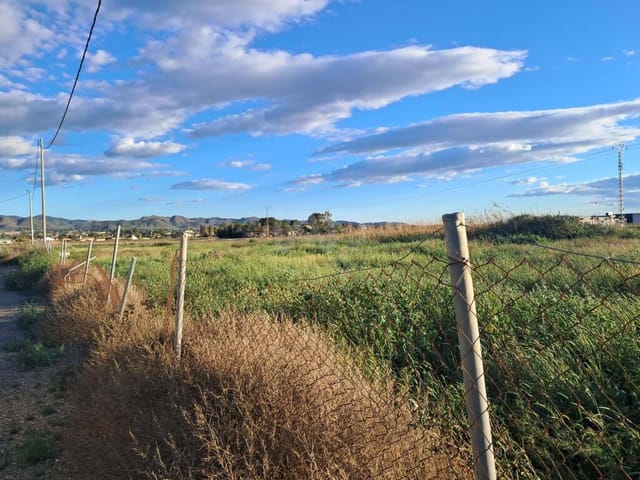
Picture a Saturday morning in early spring: the air already warm by nine, the scent of almond blossom drifting across open ground, and 3,282 square metres of sun-drenched Murcian earth entirely yours to shape. That's the quiet thrill of owning land just ten minutes from Lorca's medieval centre — a rare blank canvas in a region where the sun logs more than 300 days a year and land with this kind of accessibility rarely appears at this price point. Lorca doesn't get the same glossy magazine coverage as Marbella or Alicante, and locals are quietly grateful for that. This is a working Andalusian city with genuine soul — the kind of place where the Tuesday market on Calle Corredera sells tomatoes the size of your fist, where the Semana Santa processions in March are considered among the most elaborate in all of Spain, and where a plate of migas con chorizo at a roadside bar costs you three euros and tastes like it took hours. The city's 16th-century castle watches over the whole Guadalentín valley from its hilltop perch, and the weekly rhythm here has a pace that's almost impossible to find closer to the coast. This 3,282m² plot sits in good condition, with clear all-around orientation — north, south, east, and west — meaning you're working with natural light at every hour of the day. That matters enormously when you're planning outdoor living. The morning sun hits from the east for breakfast on a terrace; by afternoon the western aspect catches the long golden hours that make the Murcia landscape look almost cinematic. The land is already feasible for connection to the sewage network and comes with provision for a septic system, which gives you flexibility depending on the direction your project takes. What can you actual ... click here to read more
Picture 1

At five in the morning in July, the sun hasn't gone down since yesterday. It hangs low and amber over the Gulf of Bothnia, throwing copper light through the birch trees at the edge of the garden, and you're already awake — not because you have to be, but because Seskarö does something to your sleep cycle. You stop fighting time up here. You start living by light instead. That's the pull of Bladviken 5. A two-bedroom country home on one of northern Sweden's quieter islands, sitting on a 1,975 square metre plot just a hundred metres from the shoreline. The water is right there — you can smell it through the kitchen window in the morning, that cold, clean salt-and-pine combination that doesn't exist anywhere further south. The house itself is 63 square metres of honest, practical Scandinavian living. Wooden walls, natural light coming in at all angles, and a floor plan that doesn't waste a centimetre. It's not enormous, but it's thoughtfully arranged — the kind of layout where you always know where everyone is, where conversations drift naturally from the kitchen to the living room without anyone having to raise their voice. Two bedrooms handle a couple or a small family comfortably. The single bathroom is functional. The kitchen is set up for actual cooking, not just reheating things — and when you're coming back from a morning on the water with fresh-caught perch or Baltic herring, that matters. What extends the property's real usefulness is everything outside the main house. Multiple outbuildings sit across the generous plot, and they're the kind of practical structures that Swedish island life actually calls for. There's room for a proper sauna setup — this is Norrbotten, after all, and a summer evening without a sau ... click here to read more
Front view of the main house and garden

Stand on the quay at six in the morning, coffee in hand, watching the mist lift off Fanafjorden while a small fishing boat putters past the mouth of the cove. That's the kind of morning Mildevegen 171 deals in. This is a proper Norwegian cabin — three bedrooms, a boathouse with its own concrete quay, a garden that runs to over 2,100 square metres, and the Arboretum at Milde practically at the back fence. Twenty minutes from Bergen's Bryggen wharf by car. A world away in every other sense. The property sits in Hjellestad, a quiet coastal pocket on the southern edge of Bergen municipality where the Fanafjord cuts deep into the land and the shoreline is a patchwork of smooth rocks, small beaches, and private quays. Locals here have always known something that the rest of Bergen is slowly catching on to: this stretch of water, with its sheltered inlets and easy access to the outer archipelago, is one of the best spots in Hordaland for a life lived partly on the sea. The cabin itself covers 102 square metres and is in good, solid condition — the kind of place where previous owners clearly took care of things. Walk through the entrance hall (there's an old wood stove in the corner that gives the space a certain honesty, even if it hasn't been lit in years) and the layout opens up naturally into the living areas. The main living room is generous, with large windows pulling in the garden light and a direct connection to the terrace. On a July afternoon with the doors thrown open and the smell of cut grass drifting in, you'll understand immediately why Norwegians have always built their hytter this way — inside and outside refusing to be separated. The kitchen is functional and well-fitted, with integrated appliances and prope ... click here to read more
Welcome to Mildevegen 171!

Step off the gravel path and onto the covered porch of Rumma Ekenberg on a late July evening, and the first thing you notice is the silence. Not an uncomfortable silence — the kind that has texture. Wind moving through birch trees. A wood pigeon somewhere to the east. The faint smell of pine resin warming in the last of the day's sun. If you've been chasing that particular kind of quiet for years, you've just found it. This 19th-century Swedish torp sits in the village of Rumma, tucked into the rural heart of Östergötland — a county that Swedes themselves talk about with a certain reverence. Three bedrooms, one bathroom, 96 square metres of winterized living space, and just over 1,000 square metres of land that backs toward open fields and forest. At €87,000, it's the kind of property that makes you do the math twice. The house is old in the best possible way. Original wide-plank wooden floors run through the living room, their grain darkened and worn smooth by well over a century of use. Three windows on three different walls mean the room catches the light at almost every hour — gold in the morning from the east, bright and even through the afternoon, and that long, horizontal Scandinavian evening light that doesn't quit until past ten in summer. The open fireplace anchors the space. Come October, when the first frosts push in across the fields, you'll be very glad it's there. The kitchen was renovated in 2006, and whoever did the work had good taste. Masur birch cabinetry — a figured, almost burl-like birch that's genuinely striking up close — gives the room a quiet distinctiveness that off-the-shelf Ikea kitchens simply can't replicate. Black-and-white stone-effect flooring, decent appliances including a dishwashe ... click here to read more
Exterior view of the country cottage

Step outside on a January morning and the cross-country ski tracks are literally 50 meters from your front door. No packing the car, no driving to a trailhead, no fuss — just click into your bindings and go. That is what makes this cabin at Murtetjønn in Hornnes, Norway, different from most leisure properties on the market, and why the people who find it tend not to let it go. Murtetjønnvegen 18 sits at around 384 meters above sea level in the established Tveit cabin area, about 13 kilometers from the busy little town of Evje in Aust-Agder. The site itself faces well toward the sun, and in high summer the terrace catches light from early morning until gone 21:30 in the evening — that particular kind of long Nordic light that makes you lose track of time over a meal or a glass of wine outside. The cabin was built in 1976 and has been kept in good condition throughout. It has the bones of a proper Norwegian hytte: a vindfang entrance hall where you dump wet boots and damp ski gear, an open-plan living room and kitchen that genuinely functions as the social heart of the place, and two bedrooms that sleep family or friends without anyone feeling cramped. One bathroom. Sixty-nine square meters in total. This is not a sprawling villa — it is a place built around the idea that you don't actually need much space to feel at home, and that is entirely the point. The large windows in the living area pull in the surrounding pine forest and the shimmer off Murtetjønn Lake below, so the outdoors never feels far away even when the wood stove is going and the rain is hammering on the roof. That terrace is worth dwelling on. At roughly 51 square meters, it is generous enough to have separate zones — a spot for the morning coffee, a ta ... click here to read more
Welcome to Mutretjønnvegen 18! Presented by Marius Engelskjønn at Meglerhuset & Partners.

Step outside on a September morning and the air hits you first — cold, clean, carrying the faint smell of pine resin and wet rock. The mountains across the valley are still in shadow. You pull on boots, pour coffee into a thermos, and within ten minutes you're on a trail that winds up toward Burufjellet, with nobody else in sight. This is Singsås. This is what owning a cabin here actually feels like. Sitting on Storburusjøveien in the Rødslykkja/Burusjøen area near Kotsøy, this three-bedroom Norwegian hytte is the real thing — no designer furniture, no lifestyle staging, just a well-kept traditional cabin on 1,492 square meters of privately owned land, fully furnished and ready to use from day one. At €57,500, it's one of the most accessibly priced genuine vacation home opportunities in Trøndelag, and for international buyers exploring Norway as a second home destination, that combination of price point, location, and move-in condition rarely comes together this cleanly. The cabin faces south. That matters enormously in Norway. From late spring through early autumn, sunlight tracks across the terrace for most of the day, and the 28-square-meter partially covered outdoor space — generous for a cabin this size — becomes the true living room. Mornings out there with a book. Afternoons watching the light shift across the forested ridgeline. Late evenings in summer when it barely gets dark and the air smells of warm timber. The terrace wraps the experience of being in the Norwegian highlands into something you can step outside and inhabit, not just look at from a window. Inside, the bones are classic: exposed wooden walls, proper ceiling height that keeps the rooms from feeling cramped, and large windows that pull the land ... click here to read more
Welcome to Storburusjøveien 449 – a charming leisure property with a secluded location in beautiful natural surroundings.

You wake up, the morning is quiet except for the sound of birdsong filtering through the pine trees, and you walk barefoot across dewy grass to rinse off under the open-air shower while the sky above turns from pale grey to gold. That's the rhythm here at Bengtsgård 80. Not a performance of countryside living — the real thing. This 45-square-metre holiday home sits on a generous 1,500 m² leasehold plot in Bengtsgård, just outside Kristinehamn in Sweden's beloved Värmland region. At around €70,000, it's one of those properties that makes you do a double take. Lake Vänern — Europe's third-largest lake — is a short walk down the road. The Bengtsgård bathing area, with its clean sandy shore and calm swimming waters, is practically your front yard. And yet the place feels genuinely tucked away, surrounded by mature trees that screen you from the world without making you feel cut off from it. The house itself was built in 1970 and renovated in 2019, and the kitchen-living area is the real heart of it. Open-plan, bright, with large windows pulling in natural light that shifts dramatically through the seasons — it's the kind of space where Sunday mornings stretch out over long breakfasts and nowhere-to-be afternoons. The kitchen has been modernised properly: real storage, working appliances, finishes that don't feel temporary. A wood-burning fireplace anchors the living room, and on those September evenings when the air turns cool and the lake mist rolls in, it earns its place completely. One bedroom, thoughtfully arranged for genuine rest. There's also a separate utility room with an incineration toilet — a practical, low-footprint solution that's standard in Swedish off-grid holiday properties and entirely in keeping with t ... click here to read more
Front view of Bengtsgård 80

Picture this: it's February, the lake is frozen solid, and you're standing on a 48-square-metre sun terrace with a coffee in hand, watching your kids drag a sledge down toward Frilsjøen while the birch trees around you carry a full load of fresh snow. The cabin behind you is warm — the fireplace has been going since 7am, and the whole place smells of woodsmoke and pine. This is not a marketing fantasy. This is a Tuesday morning at Gunnarhåggån 9. Set right on the edge of Frilsjøen in Løkken Verk, Trøndelag, this 58-square-metre Norwegian chalet is the kind of property that people in this region quietly pass between families for generations. Three bedrooms, a fully connected electricity supply, year-round running water from a private well literally a step outside the door, and car access straight to the entrance — practical details that sound small until you're hauling ski gear and groceries in January and they suddenly matter enormously. At 61,900, it sits at a price point that makes genuine financial sense as a holiday home or second residence, particularly for international buyers looking to establish a foothold in the Scandinavian outdoor lifestyle market. The chalet is built in a form that Norwegians call the classic hytte style — timber-framed, warm-toned wooden interiors, low ceilings that hold heat, and windows positioned to catch every angle of available light across the day. The living room is centred around a traditional fireplace, and it genuinely earns that central position. It divides the room into a lounge side and a dining side without any partition wall, which keeps the space feeling open and social. Large windows face out toward the surrounding landscape, and in late June, when the sun barely sets this ... click here to read more
Well-maintained cabin in scenic surroundings by Frilsjøen

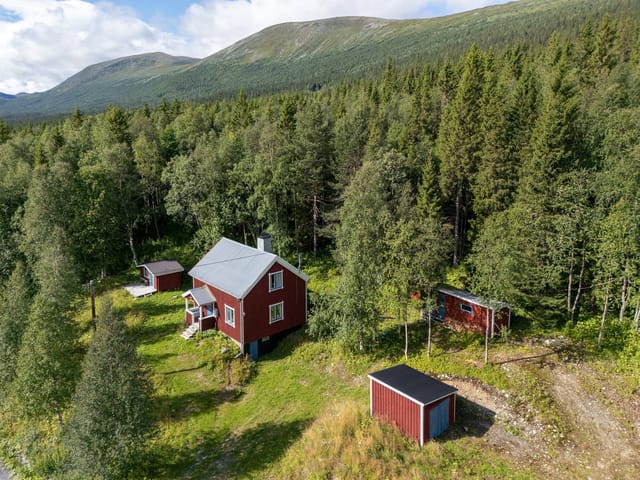
Step off the trail, push open the red-painted door, and let the smell of pine wood and woodsmoke do its work. That first moment inside this cabin at Skardstølen 18 — elevation 690 metres, views stretching out over Fresvikåsen toward Jotunheimen on a clear day — has a way of making every problem you carried up the mountain feel very, very small. This is a proper Norwegian mountain cabin. Not a renovated lifestyle project with underfloor heating and a mood board aesthetic. A real one. Wood-burning stove, gas cooker, water fetched from a well 50 metres up the slope, and a sky full of stars because there's no light pollution for miles. If that sounds like your kind of escape, keep reading. Fresvik itself sits along the Sognefjord, the longest and deepest fjord in Norway, in Vik municipality in the heart of Sogn. The surrounding Nærøyfjorden area carries UNESCO World Heritage status — the same recognition as the Grand Canyon and the Great Barrier Reef — and it's not hard to see why. The landscape here is almost violently dramatic: narrow fjord arms, waterfalls dropping hundreds of metres, and mountain ridges that seem to belong to another age entirely. The cabin at Skardstølen 18 sits within easy reach of all of it, yet tucked far enough up that the summer tourist crowds along the fjord floor feel like something happening in a different world. Getting here is part of the experience. A 300-metre trail from the nearest road — roughly a five-minute walk — separates the cabin from the outside. No car noise. No neighbours revving engines at 7am. Just the wind through the birch trees and, in spring, the sound of snowmelt rushing somewhere below you. The cabin covers 52 square metres of indoor living space, extended and improved ... click here to read more
Picture 1

The first thing you notice on a January morning is the silence. Not the absence of sound exactly, but a particular Norwegian quiet — the kind that sits between snowfall and frozen pines, broken only by the low crack of a log splitting in the fireplace. Step inside Bergsetvegen 54, pour coffee from whatever you brought up from the city, and feel the timber walls do what timber walls have done in these forests for centuries: hold the cold out and the warmth in. This is Søre Osen, a small lakeside community in Trysil municipality, Innlandet county, sitting in one of inland Norway's most quietly compelling valleys. It doesn't get the same Instagram crowds as the fjord towns further west, and that's precisely the point. The people who have cabins here — and they've often had them for generations — aren't looking for a scene. They're looking for Osensjøen. The lake is the beating heart of this corner of Norway. At roughly 53 square kilometers, Osensjøen is large enough to feel genuinely wild, with wooded shorelines that stretch for miles and water cold enough in June to make you gasp and grin simultaneously. In summer, locals launch their boats from the Osen marina and disappear for hours — fishing for pike and perch, paddling into quiet bays by kayak, or simply anchoring somewhere remote for a swim. The lake is only a few kilometers from the chalet. On a clear morning, when the mist sits just above the water surface, you can see it from the upper terrace. The chalet itself covers 63 square meters of thoughtfully arranged living space across a practical, unfussy floor plan. Walk through the entrance hallway and the living room opens in front of you — timber on the walls, timber on the ceiling, and a fireplace that earns its ... click here to read more
Picture 1

Step outside on a February morning and the silence hits you first. No traffic, no neighbors' lawnmowers, nothing — just the soft creak of snow-laden spruce trees and the faint hiss of wind coming off the Gauldalen valley. The thermometer reads minus eight, but inside, the wood stove at Drøyvollvegen 125 has been going since seven, and the whole cabin smells like birch smoke and coffee. That's the daily reality of owning this two-bedroom mountain chalet in Haltdalen, a small community in Trøndelag that most Norwegians quietly regard as one of the most liveable and underrated highland retreats in central Norway. At 325 meters above sea level, the property sits high enough to catch serious sun — the original listing wasn't exaggerating about that — and the south-facing 37-square-meter terrace soaks up every hour of it from late spring through early autumn. Built in 2002 and kept in genuinely good condition, the chalet covers 53 square metres of indoor space across an open-plan living room and kitchen, two bedrooms, a bathroom, a hallway, and a loft accessed by ladder. Fifty-three square metres sounds compact, and it is — but the layout is honest and efficient in the way that good Scandinavian cabin design tends to be. Nothing is wasted. The living area opens directly onto the terrace through wide glass doors, which effectively doubles your usable space every time the weather cooperates. And in Haltdalen's long, sun-drenched summers, the weather cooperates often. The large windows in the main living space pull in light from mid-morning until well into the evening during peak season. Sit at the kitchen table and you're looking out at open highland terrain, the kind of rolling, tree-fringed landscape that makes you understa ... click here to read more
Welcome to Drøyvollvegen 125!

Step outside at seven in the morning and the air hits you — cool, salt-edged, carrying the faint smell of seaweed and pine from the hillside above Øyaveien. A herring gull cuts a lazy arc over the water. The fjord is mirror-flat. This is what a Tuesday feels like in Melandsjø. Hitra is not one of those Norwegian islands that gets overrun in July. It stays quiet in a way that's increasingly rare. The island sits roughly an hour and a half southwest of Trondheim, connected to the mainland via a pair of subsea tunnels — no ferry schedule to chase, no weather window to pray for. You drive in whenever you feel like it. That accessibility, combined with a landscape that feels genuinely untouched, is what makes a holiday property here such a find. The fishing alone draws people from across Scandinavia and Northern Europe. Sea trout, cod, and coalfish are there year-round if you know where to cast, and from this address you're a short walk to the shoreline and a ten-minute drive to Hopsjøbrygga, the brygge that becomes the social heart of the island every July when Hopsjødagene takes over — live music, local food stalls, boats moored three deep, the whole community spilling outdoors. Øyaveien 16 is a white-painted timber chalet that has been on this plot since 1937. The exterior cladding was replaced in 1996 and it wears its age lightly — there's genuine character here without the cold drafts and crumbling sills that word usually implies. The building is in good condition and properly connected: public water, public sewage, mains electricity. No off-grid compromises. Just bring your bags. The layout is compact and logical at 56 square meters across two floors, arranged for the kind of real use a holiday home actually gets. Do ... click here to read more
Charming holiday property presented by Aktiv Eiendomsmegling

The first thing you notice on a July morning at Lillehuset Tufta is the light. At this latitude on Ibestad island, the midnight sun barely dips below the horizon, and by the time you step out the front door with your coffee, the fjord is already shimmering silver and the pines are throwing long gold shadows across the grass. This isn't the Norway of postcards — it's quieter, rawer, and far more yours. Sitting on Bygdaveien 1126 in the hamlet of Selvågen on Nord-Rollnes, this compact 1940s cabin sits just 100 metres from the water's edge on the Andfjorden coast. A short walk through low coastal scrub and you're standing on a shore that most of the world has never heard of, let alone visited. That's exactly the point. Hamnvik and its surrounding communities in Ibestad municipality draw visitors who have moved past the usual tourist circuit — people who'd rather watch an eagle circle above a headland than queue for a gondola. The cabin itself is what Norwegians call a hytte in spirit even if it functions as a fritidsbolig — a weekend home with real bones. Built in 1940 and substantially renovated in 2010 with a new roof, chimney, and fresh exterior cladding, it has the kind of worn-in character that can't be manufactured. Thick timber walls. A small living room that smells faintly of woodsmoke even in summer. A fireplace that earns its keep the moment October rolls around and the archipelago starts pulling on its autumn colours — ochre birch leaves against dark spruce, the sea going the colour of gunmetal, the air suddenly carrying the salt-sweet edge of the coming winter. The cabin is sold fully furnished, so you arrive and you're already home. The layout is compact and honest. Ground floor: an entrance hall with a sepa ... click here to read more
Picture 1

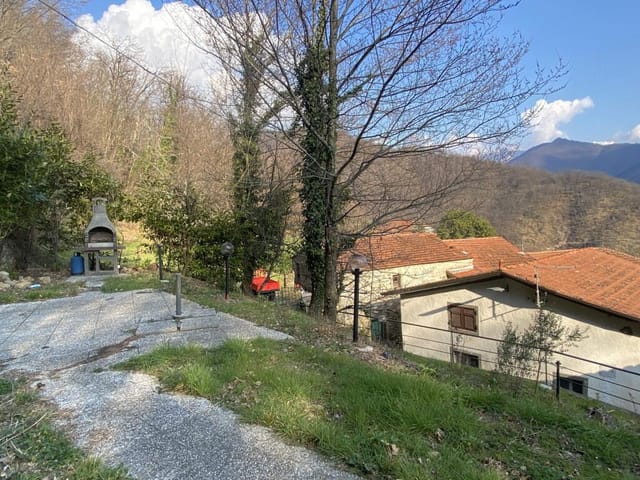
On a Sunday morning in Comano, you wake to the sound of church bells drifting up from the piazza 150 metres away. The air through the bedroom window carries woodsmoke and cut grass, and somewhere below, the family-run bar is already grinding its first espresso. This is not a fantasy. This is an ordinary morning at this restored hillside house in the Taverone valley — a corner of Lunigiana, Tuscany, that most tourists haven't found yet and locals are quietly glad about. The house sits on the edge of a small, tight-knit village community, the kind where people actually know each other, where the restaurant at the heart of the village has been run by the same family for decades, and where showing up as a forestiero doesn't mean you stay one for long. At 80 square metres across two floors, the layout is practical and well thought out. You enter through a hallway that opens into a kitchen and a light-filled living room on the ground floor, alongside a full bathroom. Head upstairs and two attic double bedrooms share a second bathroom — a setup that works equally well for a couple wanting a proper bolthole or a small family with kids who'll spend most of their time outside anyway. The outdoor space is where this property earns its keep. A courtyard with a barbecue setup becomes the natural centre of evening life in summer. Beyond it, roughly 1,000 square metres of land — about a quarter of an acre — includes a chestnut wood that comes into its own in October, when the nuts drop and the forests around the Taverone valley take on that particular amber glow that photographers come from across Europe to chase. Views from the land stretch across the valley toward the Apennines, the kind of views that make you stand still for a mom ... click here to read more
Picture 1

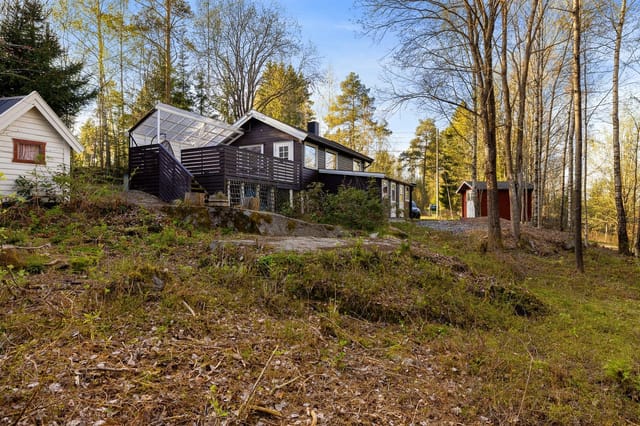
Imagine stepping outside on a Saturday morning in late June, coffee in hand, the sun already warming the south-facing veranda planks beneath your feet. The birch trees are in full leaf. Somewhere a woodpecker is hammering away at a pine trunk fifty meters into the forest. The only traffic is a neighbor walking a dog down the gravel path. That is what Fossumskogen 31 actually feels like — and once you've experienced it, the idea of spending every summer weekend anywhere else starts to seem a little absurd. This is a one-bedroom cabin in Spydeberg, Østfold, and it sits at the kind of price point — 664,000 NOK — that makes it one of the most accessible entry points into Norwegian cabin ownership you'll find within striking distance of Oslo. Spydeberg is roughly 55 kilometers southeast of the capital, an easy drive down the E18 or a short hop on the Østfold Line train from Oslo Central Station. The train station is literally four minutes from the property by car. That accessibility is a genuine selling point, not a throwaway detail: cabin ownership in Norway that requires a two-hour drive tends to get used a lot less than cabin ownership that requires forty-five minutes. This place removes every excuse not to come. The cabin itself was built in 1970 and measures 53 square meters of interior space, sitting on a leased natural plot of 741.5 square meters. The word "leased" sometimes gives international buyers pause, but in the Norwegian hytte market this is entirely standard. The annual ground rent here is just 3,790 NOK — roughly €330 — so the financial exposure is minimal. The property is sold as freehold (selveier), meaning you own the cabin structure outright with full legal security. Upgrades to the electrical system a ... click here to read more
Picture 1

Picture yourself sitting on a small timber terrace at seven in the evening, a cup of coffee going cold in your hand because you keep getting distracted by the light. That particular Norwegian summer light — low and golden and doing something extraordinary to the water stretching out below Breivikvegen. This is Rong. And once you've had an evening like that here, the question stops being whether to buy, and starts being how soon you can make it happen. Rong sits on Radøy island in the Vestland region, roughly 45 minutes northwest of Bergen along the E39 and then across the Osterøy bridge network. It's close enough to Norway's second city to feel connected, far enough removed to feel genuinely apart from it. You arrive and the pace shifts. The road narrows. The spruce trees get taller. The fjord appears between houses without warning. That's the rhythm up here. This 1957-built cabin at Breivikvegen 228 sits on a gentle rise above its plot, looking out toward the sea. Thirty-two square metres inside — compact, but the Norwegians have always understood that a hytte is not about square footage. It's about the view from the window in the morning, the smell of a wood-burning stove on a cold October weekend, the way silence sounds different here than it does anywhere else. The living room, at just over ten square metres, holds a sofa corner and dining space around that wood stove. Pine floors, panel walls painted in pale muted tones. It feels genuinely old in the best sense — not tired, just honest about what it is. The kitchen has good work surfaces and is not yet connected to water or drainage, which is one of the main renovation items a new owner will tackle. The cabin runs off the public water supply via an outdoor tap, a ... click here to read more
EiendomsMegler 1 v/Merete Seim presents Breivikvegen 228. (Photo: Mats Lie)

Step out onto the terrace at Gafsetveien 123 on a July morning and you'll understand immediately why Norwegians have been coming to this corner of Trøndelag for generations. The air smells of pine resin and cut grass. Somewhere below the hill, the Trondheimsfjord catches the early light. A woodpecker is doing its thing in the birch stand at the edge of the plot. It's 6am and you have nowhere to be. This 1-bedroom cabin sits on a 1,463-square-meter plot just outside the small community of Stadsbygd, with the sea 1.4 kilometers away and the bustle of Rissa center a short drive down the road. At 29 square meters for the main cabin plus a 16-square-meter annex with its own covered terrace, this isn't a grand estate — it's something better: a proper Norwegian fritidsbolig, the kind of place where a long weekend feels like a full reset. The cabin was built in 1976 and has the bones you'd expect from that era — solid, practical, honest. The living room, roughly 17 square meters, pulls in natural light from three directions, which matters a lot this far north. In midsummer, that means golden evening light streaming in until nearly 11pm. In late September, it means amber afternoon warmth that makes the wood stove across the room look even more inviting. That stove is going to become one of your favorite things about this place, almost certainly by your second visit. The kitchen is functional and real — no pretense here. A pump system currently supplies water to the kitchen tap, and the owner has noted that a permanent water line runs directly behind the cabin, meaning a full connection is a practical future upgrade rather than a distant fantasy. A septic tank is already in place, with drainage laid toward the annex. This isn't ... click here to read more
Welcome to Gafsetveien 123! (Photo: Harald Wanvik, Interior Photo)

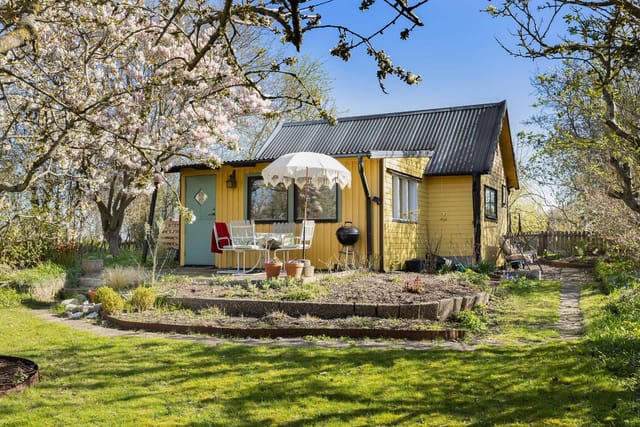
Saturday morning, and the cherry tree outside is dropping its last white blossoms onto the patio table. You've got coffee on, the kitchen window is cracked open, and the only thing on the agenda is deciding whether to cycle down toward the Öresund coast or spend the afternoon in the hammock. This is Björkgången 22 — a compact, well-kept cottage in Kölnans Fritidsby, one of Malmö's most quietly coveted leisure village districts, and a property that earns its price tag through sheer livability rather than size. Forty square meters sounds modest until you're inside. The main room is flooded with light from several windows, and a door opens straight onto the garden so that the line between inside and outside essentially disappears on warm days. Summers in southern Sweden last longer than most visitors expect — July evenings here don't go dark until past ten, and that extra space between the living room and the patio effectively doubles what you're working with. The kitchen sits just off the main room, a garden-framed window turning even mundane meal prep into something more pleasant. A washing machine is tucked in discreetly, which matters more than it sounds when you're planning weeks here rather than weekends. The bedroom is at the quieter end of the cottage. No street noise, no early traffic — just birds in the morning and the occasional rustling from the mature trees that ring the back of the 375-square-meter lot. That lot is the real story here. A pear tree, an apple tree, a cherry tree, and a magnolia that puts on an extraordinary show every April. The rear of the garden is genuinely secluded: dense summer growth means you could host a lunch back there and your neighbors wouldn't know. A hammock is already strung bet ... click here to read more
Front view of the cottage and garden

Early morning on Vesterøy, the smell of salt air comes through the window before you've even opened your eyes. By the time coffee's ready, you're sitting on the south-facing terrace watching the light shift across Hvaler Archipelago — the kind of slow, wordless morning that city life has been stealing from you for years. Vikerveien 191 sits right at the boundary of Ytre Hvaler National Park, one of Norway's most fiercely protected stretches of coastline, on the island of Asmaløy. This is not a cabin you stumble upon. You turn off just before the Hvaler Tunnel, follow the road through open, wind-carved terrain where juniper scrub hugs the rock faces, and then it appears — a well-kept 1965 chalet on 6,180 square metres of sunny, south-tilting land, with views that stretch out over the sea in a way that makes you reset your sense of scale. At 60 square metres, this is a cabin that's been lived in properly. Not over-renovated into something soulless, not left to quietly deteriorate — genuinely cared for over the past fifteen years in ways that matter. A drilled well with pump means fresh water independence. New windows keep out the coastal chill. The electrical system has been fully upgraded. The fireplace in the living room does real work from September through April, when the archipelago empties of summer crowds and you get the place almost entirely to yourself. Two bedrooms, one bathroom with shower and toilet, a functional kitchen, and a hallway that doesn't feel cramped — the layout is compact but sensibly arranged. Natural light fills the interior throughout the day, partly because of the orientation, partly because the windows are well-positioned for both the morning sun on the eastern side and the long Norwegian s ... click here to read more
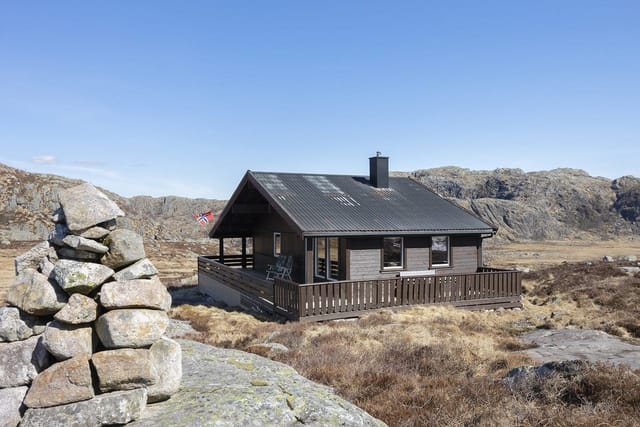
Photo: Eivind Lauritzen

Picture this: it's six in the morning, the mist is still sitting low over Lake Immen, and you're walking barefoot across cool wooden floors to put the kettle on the range cooker. The kitchen smells faintly of yesterday's wood smoke. Outside the west-facing veranda, a blackbird is going absolutely wild in the currant bushes. This is what a Tuesday looks like here — and that's before the weekend even starts. Immen Sörgården 563 is a 1939-built Swedish country home on the edge of Karlskoga municipality, sitting on just under 2,000 square meters of established garden with direct trail access to Lake Immen's swimming spots. It's the kind of place that takes roughly four minutes to make you forget you ever owned a laptop. The house itself runs to about 70 square meters across three main rooms, a kitchen, and a small additional bedroom that was originally used as a storage nook — which tells you something useful about the bones of the place. Swedish farmhouses from the 1930s were built to last, and this one has been kept in good condition without losing what makes it worth keeping. The wooden floors throughout are the real thing, not a renovation gesture, and the kitchen's white-waxed boards give the whole room a clean, light quality even on grey autumn days. The wood-burning stove in the kitchen is fully functional and very much in use — not a decorative relic. When the temperature drops in October, it earns its place. There's also a range cooker for proper cooking, and the kitchen layout is generous enough for a table, which matters enormously if you've ever tried to host six people in a cramped holiday kitchen. The living spaces carry that particular Swedish quality of being simultaneously unfussy and deeply comfortable. ... click here to read more
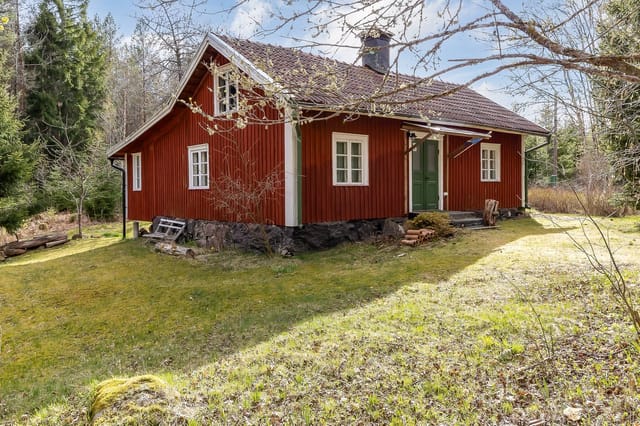
Front view of the cottage and garden

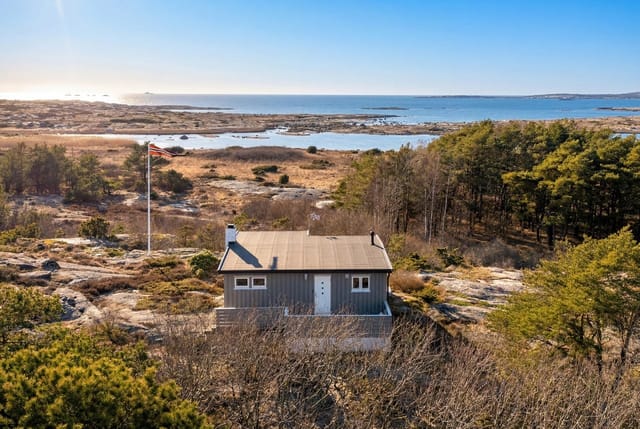
Step off the hiking trail from the E6, push open the old wooden door, and suddenly the whole valley below Virakfjellet opens up in front of you. It hits you before you even get inside: the silence, the cold clean air off the surrounding peaks, the faint sweetness of cloudberries in the marsh that surrounds the cabin on three sides. This is the kind of place people spend years looking for. Built around 1925, this small mountain cabin sits at 330 meters above sea level on Virakfjellet, roughly 20 kilometers south of Narvik in Nordland county. Twelve square meters of interior space — one main room and a bislag entrance — that's it. No pretension, no extras. Just solid old-growth timber walls, a wood stove that'll have the room warm inside twenty minutes, and a view through the single window that most hotel rooms in Norway would charge a fortune for. The roof and exterior cladding were replaced in the late 1970s, so the structure is sound. What it needs now is someone who appreciates what it is: a century-old refuge in one of the least-visited mountain plateaus in Nordland, sold complete with every piece of furniture and equipment inside it. The cabin sleeps three and has done so comfortably for generations. There are no designated bedrooms — this isn't that kind of property. You pull out the sleeping arrangements, light the stove, and the place does what it's always done. It works. Water comes from a spring fed by a geological fault line on the slope above; locals will tell you it hasn't run dry in living memory, and there's no reason to doubt them. The woodshed out back is stocked heavily enough that you won't need to think about firewood for several winters. All of this comes with the purchase price. The 900-square-met ... click here to read more
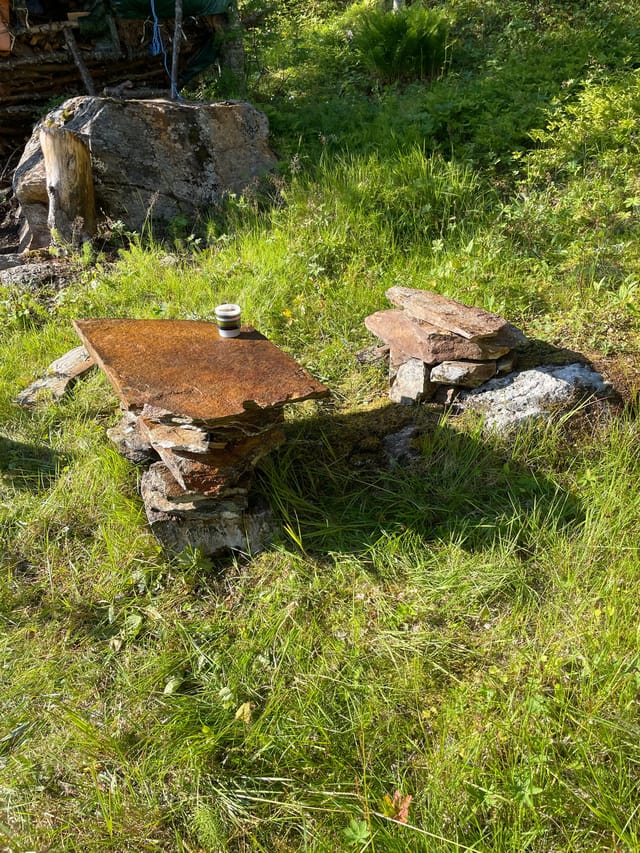
Outdoor area with stone slab sourced from the local area

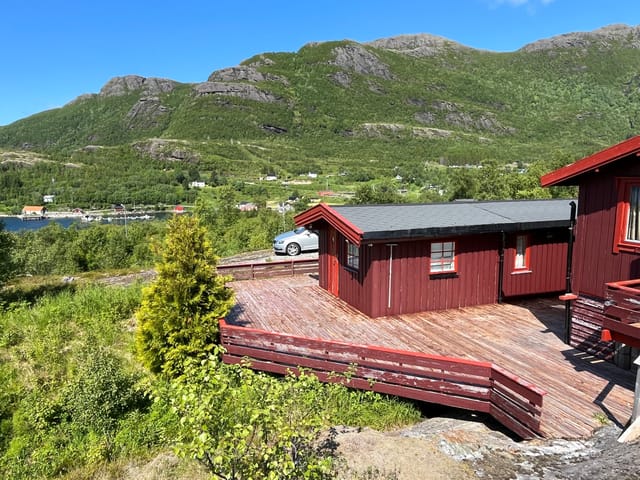
Stand on the southwest-facing balcony at seven in the morning, coffee in hand, and watch the Helgeland ferry cut a white line across the glassy water below. The air smells of salt and spruce. Nothing moves except the birds and the tide. This is Sørfjorden on a Tuesday, and it feels exactly like what you imagined Norway would feel like before you ever visited. The cabin at Sørfjordveien 58 sits roughly a hundred meters from the shoreline, elevated just enough — twenty-five meters above sea level — to give you that panoramic southwest sweep across the water without ever feeling exposed or wind-battered. It's a compact, practical property: 43 square meters of indoor living space, two bedrooms sleeping up to six, one bathroom, and a wraparound terrace of approximately 40 square meters that genuinely doubles your usable space from late May through September. Built in 2010 and given a solid renovation in 2017, it's in good condition and ready to use from day one. No project, no surprises. Just show up. The plot itself runs to 954 square meters, which out here in Rødøy municipality — one of the least densely populated stretches of the Norwegian coast — feels genuinely generous. There's room to breathe, room for the kids to roam, room to eventually build the boathouse the area is already regulated for. That detail matters more than it might first seem. A permitted boathouse and floating dock means direct sea access for a small boat or kayak, which transforms how you experience the fjord. Instead of watching the water, you're on it. Sørfjorden sits in the Helgeland region of Nordland, roughly 100 kilometers south of the Arctic Circle. That sounds remote, and in some ways it is — that's precisely the point. But remote here does ... click here to read more
Balcony

Step outside on a September morning and the air smells like pine resin and cold water. The birches have just turned gold, and from the southwest-facing windows of this solid little house in Matsdal, the light hits the tree line at an angle that makes everything look almost unreally vivid. This is Västerbotten, deep in Swedish Lapland, and once you've had a few days here, the idea of leaving feels genuinely inconvenient. The property sits at Matsdal 115, a quiet village address just outside Dikanäs in the Vilhelmina municipality. It's a 60-square-meter country home in genuinely good condition — two bedrooms, one bathroom, a wood-burning stove, and a fireplace that you'll use from October through April. The rooms are generous for the footprint. Scandinavian country homes from this era were built to be practical, not theatrical, and that's exactly what you get: well-proportioned spaces, natural light from multiple aspects, and an interior that's warm without trying too hard. The kitchen works. The living area is big enough for a proper family gathering. Nothing here needs to be torn out and started over. What really sets this place apart, though, is everything surrounding the house itself. The lot runs to 2.2 hectares — 22,000 square meters of mixed forest and open ground that's entirely yours. No shared access, no overlooking neighbors. The treeline wraps around the property in a way that creates natural enclosure without making it feel closed off. You're in the village, but the village gives you space. The wood-fired sauna is 15 square meters and positioned right beside a mountain brook. That detail matters more than it might sound. After a day on the snowmobile trails — which connect directly to the extensive Dikanäs ... click here to read more
Exterior view of Matsdal 115

Picture this: it's a Saturday morning in late September, and the only sound reaching you through the cabin window is wind moving through birch trees and the faint drip of last night's rain still falling from the eaves. You've got coffee on the gas stove, the wood-burning stove clicked to life twenty minutes ago, and outside on the 43-square-metre wraparound terrace, the light is doing something extraordinary to the rocky hillside. That's life at Lauperaksvegen. It's not complicated, and that's exactly the point. Bjerkreim sits in Rogaland county in southwest Norway, inland from the Stavanger coastline, tucked between lakes and low mountains that most visitors never bother to find. That's its greatest asset. This isn't a postcard-famous Norwegian destination drowning in tour buses — it's the real thing. The kind of place where locals still nod when they pass you on the trail, where the fishing is genuinely good, and where a summer evening can stretch past ten o'clock with the sky still burning orange above the ridgeline. This cabin — a true Norwegian hytte in every sense — was built in 1988 and sits on bedrock foundations that aren't going anywhere. Concrete pillar construction, steel plate roof, and cladding that's been progressively updated with sections replaced in 2013 and 2022. It's not flashy, but it's solid in the way that matters. At 49 square metres of indoor living space plus a generous 28-square-metre loft above, the footprint is compact but surprisingly liveable. Two proper bedrooms on the main floor, an open-plan kitchen and living area at the heart of it all, and that loft reached by ladder — which sounds rustic until you're up there watching snow fall through the skylight at Christmas and you realise ther ... click here to read more

Welcome to Hytte Lauperaksvegen! Photo: Diakrit v/Arne Ove Østebrøt

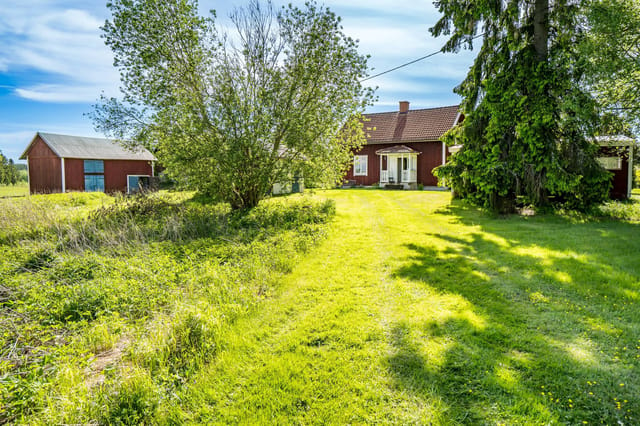
Step outside on a July morning and the air smells of warm pine resin and cut grass. The apple trees are heavy. A woodpecker is working somewhere deeper in the trees, and the only traffic you'll hear all day is the distant hum of a tractor on the municipal road half a kilometer away. This is Eriksbacken 5 — a genuine Swedish stuga on a 2,752-square-meter plot in Finnerödja, Laxå, and it feels exactly like what the word "escape" is supposed to mean. The cottage itself sits comfortably at 75 square meters — not sprawling, but well-proportioned. Two bedrooms, a tiled bathroom with underfloor heating, a kitchen that handles everything from a quick fika to a full midsommar spread, and a living room generous enough that a family of four won't be climbing over each other on rainy afternoons. The bathroom was renovated in 2012 and includes both a washing machine and tumble dryer, which matters more than you'd think when you're planning to stay for three weeks in August rather than a weekend. The whole place has been adapted for accessibility too, with ramps and wider clearances — a thoughtful detail that opens the property up to grandparents, guests with mobility needs, or just anyone who's tired of holiday homes that weren't designed with real people in mind. The large south-facing wooden deck is the property's social center from May through September. On a clear summer's day, sunlight sits on this side of the house for roughly ten hours. That's not marketing language — that's the reward for the orientation of this plot. You'll develop opinions about which chair gets the best afternoon light. Beyond the main cottage, there's a separate guest cottage and a 20-square-meter storage building. The guest cottage changes how you thi ... click here to read more

Front view of Eriksbacken 5

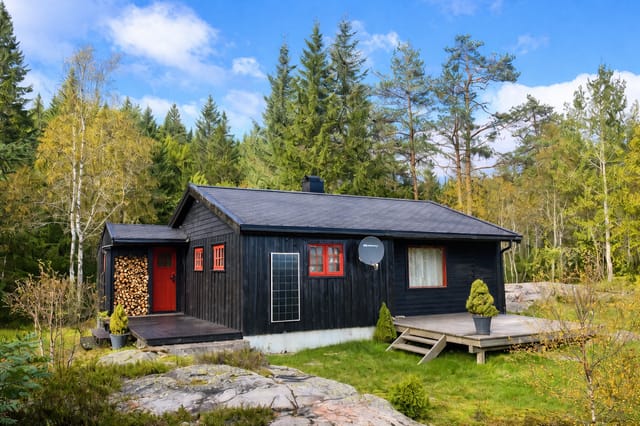
Stand on the terrace at Vikstølvegen 58 on a February morning and the only sound you'll hear is the soft creak of snow-laden pine branches and the distant swish of skis on groomed trails. The air is so cold it bites your nose. Coffee in hand, you watch the light shift from pale grey to a low, golden Scandinavian winter sun spilling across 1,222 square metres of snow-covered hillside that is entirely yours. This is Evje — and this little chalet quietly delivers the kind of Norwegian cabin experience that people spend decades searching for. Built in 1965, the chalet sits on Vikstølvegen in the forested hills above Evje, a town of roughly 3,500 people in Aust-Agder county that locals affectionately call the adventure capital of southern Norway. It's not a throwaway nickname. The Otra River, which carves through the valley below, runs some of the most popular white-water rafting stretches in Scandinavia each summer. Evje og Hornnes municipality has mapped out hundreds of kilometres of marked trails for mountain biking, and the rock faces around Fennefoss draw climbers from across Europe between June and September. The chalet at number 58 puts you at the mouth of all of it — the cross-country ski trails start almost at the garden gate in winter, and those same tracks become hiking and biking paths the moment the snow retreats in April. Fifty-eight square metres sounds modest until you step inside and realise how cleverly the space works. The living room anchors the interior, and the wood-burning stove there is not a decorative touch — it is the social core of the whole property. On cold evenings, it radiates enough warmth to fill the room quickly, and there's something about gathering around a real fire after a day on skis ... click here to read more

Front view of the cabin

Stand at the window on a July evening at midnight and the sky above Laksefjorden is still burning orange. Not a streetlight in sight. Just the fjord stretching out below, the kind of silence that actually has a sound to it—wind off the water, a distant eagle, your own pulse slowing down. This is what you're buying into with this cabin project in Oldervika, Lebesby municipality, a raw and honest piece of Norway's far north waiting for someone with vision and a hammer. Let's be upfront about what this is. The cabin needs work—floors, walls, ceilings, the electrical system, the plumbing—all of it is a project. The structure stands at roughly 5 by 7 meters internally, around 30 square meters officially registered, and it's in good enough shape structurally that you're not starting from zero. What you're getting is a blank interior in a place that already has a well, a grid connection, and a car-accessible track from the main road just 100 meters out. The fundamentals are there. The canvas is yours. And what a place to build that canvas. Oldervika sits within Lebesby municipality in Finnmark—Norway's northernmost county, and one of the last genuinely wild stretches of Europe. The cabin's elevated position looks directly over Laksefjorden, a fjord that shifts color hour by hour, from steel grey in the morning mist to deep cobalt under the afternoon sun to amber and rose in the long Arctic evenings. In winter, when the Barents Sea weather rolls in and the northern lights ignite above the fjord, you'll understand why photographers and wanderers have been making the long drive up the E6 for decades. The village of Lebesby is five to ten minutes away by car. There's a grocery store, a school, local services—enough that you're n ... click here to read more

Picture 1

The first thing you notice on a July morning at Odensåker 20 is the light. Swedish summer light, low and golden even at seven a.m., sliding through the birch canopy and landing on the wooden deck where yesterday's coffee cup still sits. Then the smell — warm pine resin, damp moss, water nearby. You don't have to see Lake Glan from here to know it's close. Fifty meters through the trees, its presence is something you feel before you arrive at the shoreline. This is a small property in the best possible sense. Thirty-five square meters of main living space on a generous 1,000 square meter plot in Norrköping Municipality, about an hour and a half south of Stockholm by road. Two separate buildings. One kitchen, one full shower bathroom, one bedroom with built-in storage — and more space to breathe than most city apartments three times this size. For anyone hunting a genuine Swedish countryside retreat, a vacation home in Östergötland, or a low-maintenance second home in Scandinavia, this is the kind of place that ends the search. The main cottage is built for the way Swedes actually spend summer: half inside, half out. The kitchen-dining area is compact but functional, and the living room gets afternoon sun that makes reading there feel like a small ceremony. The enclosed veranda is the real workhorse of this building — a glass-fronted space that stretches the usable season from a cold April into October, long past when the open deck would have you reaching for a fleece. On rainy days it fills with the sound of drops on the roof glass, and on clear evenings it holds warmth well into the night. It's where guests drift after dinner and where you'll find yourself lingering longer than you planned. The second building adds a ... click here to read more

Main cottage and garden view

Step off the gravel path, push open the heavy timber door, and you're standing inside a cabin that was built before Norway was even a unified country. The year was 1835. Outside, the sea glitters toward the mountains of Stord and Fitjar — the same view whoever lived here first would have woken up to every morning. That sense of continuity, of being anchored to something genuinely old and real, is rare. And at Flatråkervegen 280 on the island of Tysnes, it costs less than most city parking spaces in Oslo. Tysnes sits in Vestland county, tucked between the Hardangerfjord and the Bjørnafjorden, and locals here will tell you it's one of those places that doesn't need to announce itself. There's no ski resort branding or tourist infrastructure. What there is instead: quiet coves, black trumpet mushrooms pushing up through the forest floor in autumn, golden chanterelles in summer, and a community that shows up for Tysnesfest each year with the kind of energy you can't manufacture. The festival draws thousands to this small island — live music, outdoor stages, a genuine celebration rather than a curated event. Outside of festival season, life here moves at a pace that most people have to travel a long way to find. The cabin itself is compact — 36 square metres of usable space — but it doesn't feel small. Exposed timber walls and visible ceiling beams give it a solidity that modern builds rarely achieve. Natural light comes in through windows that frame the hillside and the water beyond. The living room fits a sofa, a dining table, and still leaves room to breathe. There's a working fireplace, and on a wet October evening with the wind coming off the water, you'll be glad it's there. The kitchen is more functional than it mig ... click here to read more

Welcome to Flatråkervegen 280, presented by Elise Linningsvoll at Aktiv Eiendomsmegling. Photo | Inderhaug Boligfoto

Step out onto the rear deck just after seven on a July morning. The meadows stretch out in every direction, still wet with dew, and the only sound is birdsong cutting through air that smells faintly of pine and grass. This is Barkö — a quiet hamlet tucked into the Swedish countryside outside Östhammar, where summer feels unhurried and deliberately slow in the best possible way. Set on a generous 2,411 square metre plot along Barkö 121, this red-and-white Swedish country home from 1975 has spent its entire life in one family's hands. That kind of continuity shows. The garden is mature and deeply considered — not manicured to within an inch of its life, but layered: open lawn rolling into shade from established trees, with space carved out naturally for a kitchen garden if you want one, a greenhouse if you've been meaning to start one, or simply a hammock strung between two birches. The lot is large enough to feel private, small enough to manage on a weekend without it becoming a chore. Inside, 50 square metres is used sensibly. The living room anchors the house around a wood-burning stove that does serious work on cool September evenings when the nights start turning. Large windows pull the outside in — you get a long view over meadows and pastures that changes character entirely depending on the light and the season. The kitchen connects without fuss, practical and well-positioned for someone cooking for a table of six after a day out on the water. Two bedrooms, one bathroom with shower and WC, and a covered entrance veranda where your morning coffee goes cold because you keep stopping to watch whatever is happening in the garden. The sea is 3.2 kilometres away. That's a ten-minute bike ride on flat terrain, the kind ... click here to read more

Front view of the summer cottage

Wake up on a Saturday morning in October and the valley below Eggedal is filling with low cloud, the kind that sits in the hollows between ridges and turns everything golden at the edges. You pull on a sweater, start the wood stove, and stand at the living room window with your coffee while the mountains do their thing. No traffic. No notifications. Just the occasional thud of snow sliding off a pine branch somewhere up the slope. This is what owning a cabin at Tempelseterveien 211 actually feels like. Perched on the hillside above Eggedal village, this two-bedroom Norwegian mountain chalet sits on a fully owned 570-square-metre plot with views straight across the valley to the ridgelines beyond. Built in 1970 in the sturdy, no-nonsense tradition of classic Norwegian hytter, it has been kept in good condition and carries all the honest character you want from a mountain retreat — wood-panelled walls, a fireplace with an insert, a separate wood-burning stove, and windows sized generously enough to make the landscape feel like part of the room. At 42 square metres total, the footprint is tight but considered. Everything has a purpose. Nothing is wasted. The two bedrooms sleep a family or a group of friends comfortably. The main living area is where you'll spend most of your time regardless — playing cards at the table after a long hike, or simply doing nothing productive in the best possible way. A five-square-metre balcony extends off the main space, south-facing enough to catch afternoon sun in summer, and positioned so you get the full sweep of the valley without anything man-made interrupting the sightline. Electricity runs throughout the cabin, and summer water comes from a shared well just outside — a perfectly pra ... click here to read more

Welcome to Tempelseterveien 211! Photo: EFKT v/Mads Brekke.

The morning quiet up here is something else entirely. No traffic, no notifications — just the low creak of hand-hewn timber warming in the sun and, if you step out onto the terrace before breakfast, the silver surface of Lake Femunden stretching south toward the Swedish border. At 684 meters above sea level, the air has a sharpness to it that wakes you up faster than any coffee. This is Femundgropa 11, a two-bedroom log cabin on the edge of Drevsjø, and it sits at the kind of address that most people only ever see on hiking maps. Built in 2001 using traditional round-timber construction, the cabin is the real thing — not a modern kit house dressed up with rustic touches, but an actual hand-crafted log structure with a sod roof that's been quietly growing into the hillside for over two decades. The walls are thick, the logs are hand-hewn, and the whole place has the satisfying solidity of something built to last generations rather than to photograph well for a brochure. Several of the windows were replaced around 2009, and they frame views in three directions: birch forest, open fell, and on clear days, the long blue line of the lake below. Inside, the living space is compact and honest. A wood-burning stove anchors the main room — and in late September when the birch leaves go gold and the temperature drops overnight, you will be very glad it's there. The kitchen runs off a gas-powered stove, the fridge is included in the sale, and wastewater drains naturally through a terrain ditch. There's no mains connection, which is exactly the point. Power comes from a south-facing 12V solar panel system backed by a 136Ah battery, enough for lighting and the small appliances you actually need. Mornings here run on their own sched ... click here to read more

Welcome to Femundgropa 11! A leisure property with a cozy handcrafted log cabin from 2001 and an annex from 2013.