Houses For Sale In Europe With 2+ Bedrooms (page 14)

Houses for sale in europe - homestra offers the largest amount of european real estate with over 200,000+ properties, find any type of property within your budget from villas to country homes. buy or rent your perfect home in europe. (page 14)

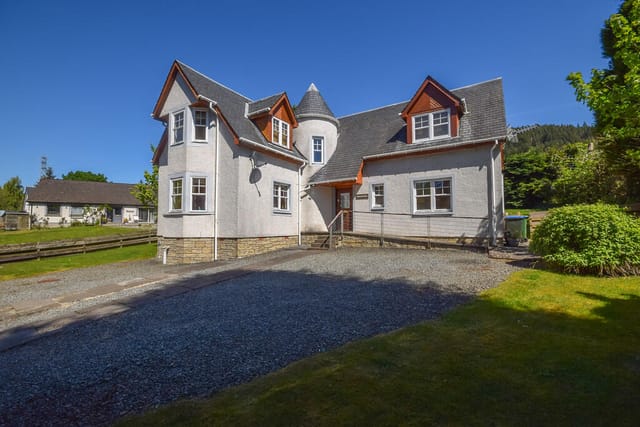
Step outside on a October morning at Arrlochaira and you'll hear the River Garry rushing through the gorge below before you even open the front door. The light at this hour — filtered through ancient birch and oak — turns the garden silver. It's the kind of quiet that people from Edinburgh and London spend years searching for, and here it's simply Tuesday. Killiecrankie sits in one of the most dramatic river valleys in highland Perthshire, sandwiched between steep wooded crags that the National Trust for Scotland has protected for decades. Pitlochry, just a few minutes' drive south along the B8019, has a proper railway station on the Highland Main Line — direct trains to Edinburgh in under two hours, Glasgow in roughly the same. That combination of genuine wilderness and actual connectivity is rarer than you'd think in Scotland, and it's a big part of why this corner of Perthshire has quietly become one of the most sought-after second home markets north of the border. Arrlochaira itself is a four-bedroom detached villa with three bathrooms, set in private garden grounds that roll out to a backdrop of mature trees. The architecture does something that a lot of modern Scottish houses don't bother attempting: it goes vertical. Vaulted ceilings in the main living areas create an almost Scandinavian sense of volume, and the floor-to-ceiling windows pull the outside in regardless of the season. On a grey February afternoon, when the hills are dusted white and the birch branches are bare, those windows frame something that honestly looks like a painting. In summer, the French doors off the living room open onto the lawn and you barely notice where the house ends and the garden begins. The living room anchors the ground floor ... click here to read more

Front view of the villa

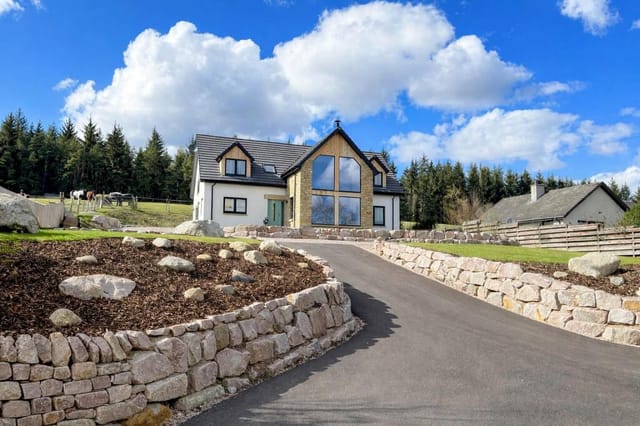
Step outside on a frost-edged October morning, coffee in hand, and there they are—the Cromdale Hills stretching wide across the horizon, catching the first pale light of a Highland dawn. This is what greets you from the south-facing terrace at Cath Ann, a newly completed architect-designed house on Skye of Curr Road in Dulnain Bridge, just minutes from Grantown-on-Spey. Built in 2025 and finished to a standard that genuinely impresses rather than merely ticks boxes, this is not a holiday property cobbled together for the rental market. It was built to live in—properly. The house sits within roughly 0.3 acres of thoughtfully landscaped grounds, framed by pink granite retaining walls cut from the nearby Alvie quarry. That detail matters. The stone doesn't feel imported or decorative—it belongs here, rooted in the same geology that defines the whole upper Spey valley. The sweeping tarmac driveway opens to a generous gravelled turning area, and the elevated plot means that even from the car, you get that first hit of open sky and rolling moorland that makes the Cairngorms feel different from anywhere else in Britain. Inside, the 182 square metres are organised around a dramatic double-height sitting room—the kind of space that makes you pause the first time you walk in. A HWAM Danish wood-burning stove anchors the room, and floor-to-ceiling glazing pulls the landscape indoors so convincingly that on grey November afternoons, when the hills disappear into low cloud, the room still feels alive. Kahrs premium oak flooring runs underfoot, and the glazed balustrade of the first-floor landing hovers above, catching light from the Velux windows that punctuate the upper level. It's an architectural move that gives the whole interi ... click here to read more

Cathann Skye Of Curr

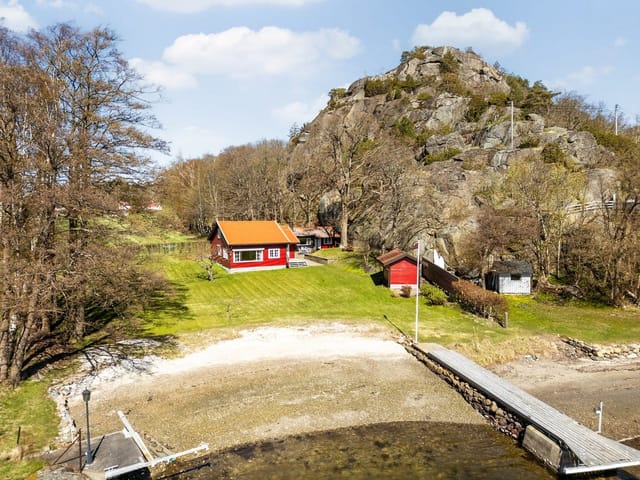
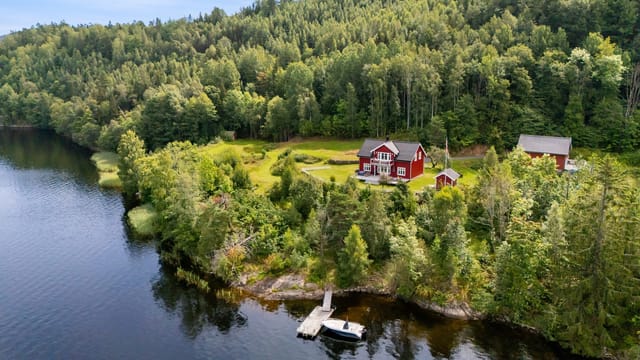
Step out of the boathouse on a July morning, coffee in hand, and the Mefjorden is already glittering. Two piers jut into calm water, a small wooden rowboat knocking gently against the dock. The sandflies haven't woken up yet. This is what you came for. Øyaveien 30 sits at the quiet end of a lane on Østerøya, one of Sandefjord's most established coastal retreats, and it delivers something increasingly rare along the Norwegian Vestfold coast: a full estate — main cabin, annex, boathouse — on a flat 2,009-square-meter plot that runs all the way down to its own sandy beach. South-facing, sun-drenched from mid-morning until the sky turns pink, the property looks out over a scattered panorama of islets and skerries that changes mood with every weather system rolling in from the fjord. The main cabin has the bones of a place that's been genuinely loved. Pine floors, painted wooden doors, traditional wooden interiors — nothing here is trying to be a Scandinavian showroom. The living room is divided into natural zones: a long dining table on one side, a deep sofa arrangement around a fireplace insert on the other. On a cool September evening with the fire lit and the windows fogged from dinner, it feels exactly right. The kitchen is properly functional — solid wood countertops, serious storage, freshly painted walls and ceiling in 2022 that give the space a lighter, more current feel without erasing its character. Access to a crawl-space hatch in the floor adds practical storage for the kind of gear that accumulates when you live a life on the water. Four bedrooms across the main cabin and annex handle a full family or a rotating cast of guests without anyone feeling squeezed. A ground-floor bedroom in the main cabin sits next ... click here to read more

Welcome to Øyaveien 30! Photo: Mille Gran

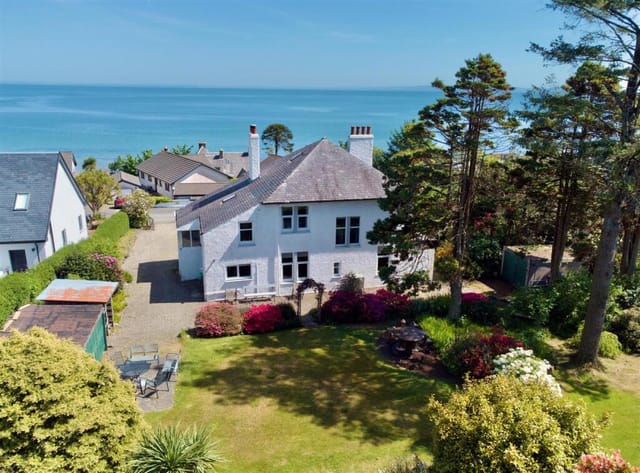
Stand at the corner window of the master bedroom on a clear October morning and you can see all the way across the Firth of Clyde to the Ayrshire coast, the water shifting between slate and silver depending on where the clouds break. That view doesn't get old. Not after a week, not after a decade. It's the kind of thing that makes you set down your coffee and just stand there for a moment longer than you planned. Helenslea is a substantial six-bedroom detached villa in Whiting Bay, built around 1926 and sitting in approximately half an acre of mature, mostly level garden on the Isle of Arran. It has the bones of a genuinely grand island house — original timber staircase, an open brick fireplace in the entrance hall, period features throughout — combined with the kind of practical updates that make it liveable year-round rather than just a summer indulgence. Three bathrooms, a second staircase serving bedrooms five and six, and a layout that can flex into a self-contained wing if you want it to. This is not a fixer-upper. The property is in good condition and, with some furnishings available by separate negotiation, could be up and running as a vacation home or holiday let almost immediately. The ground floor sets the tone. You come in through the entrance porch — red quarry tiled floor, plenty of hooks and storage for waterproofs and walking boots, which you will absolutely need — and into a wide hallway anchored by that open fireplace. To the front, the main lounge stretches across the width of the house, windows facing the gardens and the sea beyond. On grey afternoons you light the open fire and the room becomes exactly what a Scottish island living room should be. The dining room sits off the hallway, overlooking t ... click here to read more

Aerial location

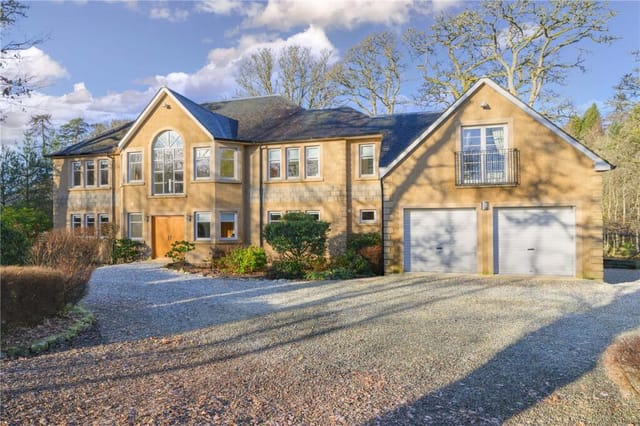
Step outside on a September morning and the River Tay is right there — maybe 75 meters from the front door — running fast and silver after overnight rain, with a heron standing absolutely still in the shallows. That's the kind of thing you wake up to at Riverbank House. Not occasionally. Every day. Built in 2009 and sitting on 1.4 acres in the Highland Perthshire village of Grandtully, this five-bedroom, four-bathroom detached home spans 385 square metres of thoughtfully designed space. It's in genuinely good condition — not the kind of "good condition" that means you'll be living around builders for six months. Move-in ready, with underfloor heating on the ground floor, oil-fired central heating throughout, and interiors that have been maintained with real care. The architecture makes a statement without shouting. Timber front doors lead into a double-height entrance hall where a split staircase rises on both sides to a galleried landing, and a large arched window throws light across the whole space on even the greyest Perthshire afternoon. Which, honestly, there will be some of. That's part of it. The drama of the light changing over the Tay — from pearl-white midwinter mornings to those long amber summer evenings when it barely gets dark until 10pm — is something that gets under your skin. The drawing room is where people tend to stop and just stand for a moment. An open fireplace on one wall, and on the other, a run of windows culminating in a semi-circular bay that frames the river and the garden like a painting you've chosen to live inside. Sliding internal doors connect it to the dining room, making the whole ground floor expandable for a big family Christmas or contractable for a quiet Tuesday evening. The kit ... click here to read more

Front

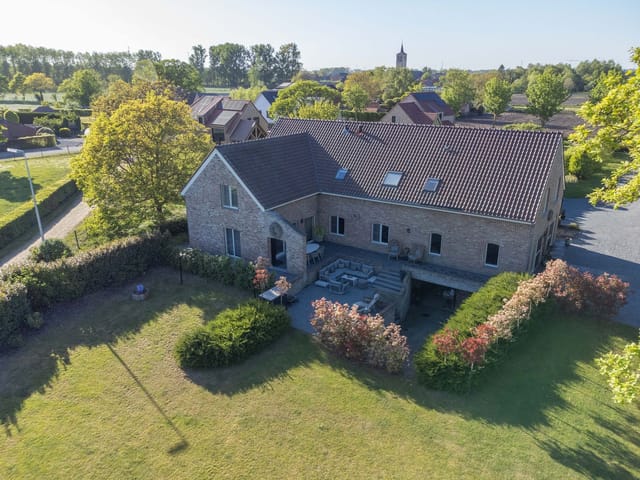
On a quiet Sunday morning in Rekem, you open the veranda doors and the garden comes alive — the shimmer of your private pond through the trees, the faint splash of the heated pool, a wood pigeon calling from somewhere in the old-growth hedge line. This is 6,802 square metres of Belgian countryside doing exactly what it's supposed to do: nothing hurried, nothing crowded, just space and light and the particular kind of quiet that money genuinely can buy. Vijversdreef 3 sits in Rekem, a protected village that Belgium's heritage authorities have actually recognised as one of the country's most architecturally intact historic settlements. The cobbled heart of the village is ten minutes on foot. The Dutch city of Maastricht — with its Vrijthof square, its Burgundian food culture, and its weekend markets spilling out along the Maas — is a fifteen-minute drive across the border. And the Hoge Kempen National Park, Belgium's only national park, starts almost at the garden's edge, with its heathland trails, cycling routes, and pine forests stretching out toward the German border. The villa itself is a 623 m² traditional build, solid and well-proportioned, with a character that holds up across seasons. Come January, when frost settles on the tennis court and the pond catches the low winter light, the house earns its keep differently than it does in July — and it earns it in July too, when the covered, heated pool means guests are in the water regardless of what the Belgian sky decides to do. The interiors reward attention. The entrance hall sets a confident tone immediately; the living spaces are generously scaled without tipping into cavernous, and the country-style kitchen — induction cooktop, steam oven, oven, microwave, dishwa ... click here to read more

Front view of Vijversdreef 3, Lanaken

Stand in the kitchen at Bluebell Cottage on a Saturday morning and you'll hear it before you see it — the faint murmur of a stream running along the rear boundary, the occasional call of a curlew over the fields, and nothing else. No traffic. No neighbours. Just the particular quiet that only Scotland's west coast can produce. It's the kind of silence that you actively seek out on a Tuesday afternoon in a city office and can't quite believe exists in real life. Here, it's just the default setting. Bluebell Cottage sits in Whitehouse, a small settlement on the west side of the Kintyre Peninsula, tucked just south of Tarbert on the A83. Six bedrooms. Six en suite shower rooms. Two floors of well-organised, practical living space spread across 256 square metres. That combination alone is rare enough on this stretch of coastline — but pair it with a stream-bordered garden, outbuildings, mature planting for privacy, and a price that makes comparable properties in the Scottish Highlands look expensive, and you start to understand why this kind of opportunity doesn't sit on the market long. The house itself is harled in the traditional Scottish style, with a dark grey tiled roof and double glazing throughout. Inside, the layout rewards the whole idea of gathering people together — which is, really, what a six-bedroom holiday home or second home on the west coast of Scotland is for. The ground floor carries three bedrooms, each with fitted double wardrobes and a private en suite, which means three separate guest parties can be entirely self-contained without overlapping. The formal sitting room has an electric fire for those September evenings when the temperature drops faster than you expect. The dining room opens directly to ... click here to read more

Picture No. 24

Stand at the upstairs sunroom window on a clear October morning and you'll see why people who find Kilmuir rarely leave. The Moray Firth stretches out in front of you — wide, silver, alive — and if you're lucky, which you often are here, a bottlenose dolphin rolls through the surface maybe 200 metres offshore. This isn't a wildlife excursion. This is Tuesday breakfast. Roseburn is a well-built detached house sitting on a generous corner plot in the small coastal hamlet of Kilmuir, North Kessock, roughly five miles north of Inverness city centre across the Kessock Bridge. At 148 square metres across two floors, it's a proper house — not a conversion, not a flat with views — with three double bedrooms, three bathrooms, a conservatory, a sunroom, a separate dining room, and a sizeable summer house in the garden. For international buyers looking at a vacation home in the Scottish Highlands, or a second home base for regular UK visits, properties at this address on this stretch of the Firth come up very rarely. When they do, they go. The ground floor is laid out in a way that makes sense for how people actually live. The lounge faces the water, so the first thing you see when you come downstairs in the morning is the Firth — the light on it changes completely depending on weather and season, which means it never gets boring. A conservatory opens off the back of the main living space onto the garden, fitted with air source heating so it's genuinely usable year-round, not just a glass box that freezes in November. The kitchen and dining room between them give you flexible space for cooking properly and sitting down to eat without everyone crowding the same table. Two shower rooms on the ground floor are a quiet detail that ma ... click here to read more
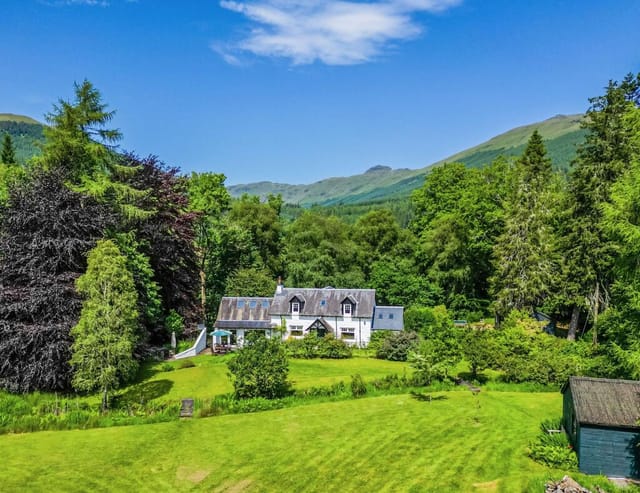
Aerial view of the property and Moray Firth

On a quiet Sunday morning in Newtonmore, the only sounds are the River Spey running somewhere behind the treeline and the distant call of a red kite circling above Creag Dubh. You're standing at the kitchen sink of Station House, a mug of tea warming your hands, watching frost melt off the lawn while the Rayburn Royal ticks quietly behind you. This is what £357,850 buys you in the Scottish Highlands — not just a property, but a complete change of pace. Station House sits on Station Road, one of Newtonmore's most established residential streets, in a village that sits squarely inside the Cairngorms National Park — the largest national park in the British Isles by some distance. The house itself is a proper detached Victorian-era family home, 133 square metres of solid stone bones and high-ceilinged rooms, with gardens that wrap around the building on multiple sides and a detached timber garage at the front. It's in good condition throughout, move-in ready, and carries the kind of architectural confidence you rarely find at this price point in the central Highlands. Walk through the entrance vestibule and the central hallway opens things up immediately. There's a generosity to the proportions here that you notice straight away — the ceiling height, the width of the rooms, the way natural light travels through from front to back. The sitting room has an original decorative fireplace with ornate surround, ceiling coving, and a large double window framing a view of the garden. It's the kind of room that earns its keep in all four seasons: open-windowed and sunny in July, fire-lit and amber in November. The dining room sits adjacent, equally bright, with direct access through to the conservatory — arguably the home's most q ... click here to read more
Front Main

Stand in the kitchen on a November morning and watch a red squirrel work its way along the drystone wall while the kettle comes to the boil. The Everhot range cooker has been on since six, the skylight above is streaked with the kind of pale Highland light that photographers chase for hours, and through the back door you can hear the faint run of the burn that traces the far edge of your three acres. This is Balquhidder — a place where mornings feel like they were made specifically for you, and where the word "retreat" actually means something. Set on the southern edge of Loch Lomond and The Trossachs National Park, this three-bedroom stone-built cottage on the Balquhidder road near Lochearnhead is one of those rare Scottish properties that manages to be genuinely off the beaten track without asking you to sacrifice anything meaningful. Good broadband. Solar panels with roughly a decade left on the Feed-in Tariff. A fully operational holiday-let bothy in the grounds already generating income. The bones are solid, the upgrades are smart, and the surrounding landscape is the kind that makes people move countries. The main house stretches across 122 square metres — just over 1,300 square feet — and the space is used well. Walk in through the front door and the lounge draws you immediately: a woodburning stove sits at the far end, the sort you light at dusk on an October Friday and don't let go out until Sunday afternoon. The windows face the garden and beyond it the open ground rises toward the hills. In summer, the light hangs in those windows until almost ten o'clock. In winter, the stove does the work and it does it properly. The kitchen-diner is the room people come back to. The Belfast sink, the Everhot, the skyligh ... click here to read more
Front view of the stone-built cottage and gardens

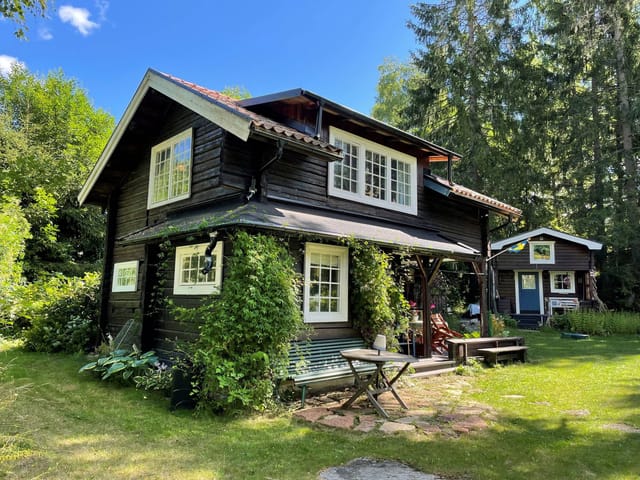
Wake up to the sound of nothing. Not silence exactly — there's the soft lap of water against the shore fifty metres away, a woodpecker somewhere in the birches, and if it's early enough on a summer morning, the mist still sitting low over Mungasjön. That's the first thing you notice at this 1800s log cabin in Munga, a small community just outside Västerås where people still leave their doors unlocked and wave at strangers on the gravel road. This is a genuine country home vacation property in Sweden, not a weekend renovation project or a lifestyle concept. The main cabin, roughly 75 square metres, started life in Dalarna — the heartland of Swedish rural architecture — and was relocated to this woodland plot in 1965. The logs have had sixty years to settle into the land. They look like they grew here. Step inside and the floors are solid pine, wide-planked and warm underfoot even in autumn. The ceiling beams are exposed and chunky. The open fireplace isn't decorative; it's where everyone ends up after a long day of swimming or foraging in the forest behind the property. The kitchen has its own wood-burning stove, which means two independent heat sources before you've even thought about the covered terrace — which has its own fireplace too, facing the lake. Three fires for a 75-square-metre house. That tells you something about the priorities of whoever built this place. The modernisation has been done without apology or excess. Fibre-optic internet was installed because working remotely from a lakeside cabin in Sweden is, frankly, a legitimate life choice. The bathroom and shower were renovated tastefully, the laundry room updated between 2018 and 2019. These aren't things you'll need to budget for. The house is move-i ... click here to read more
Main house and garden view

Saturday morning, 8am. The automatic gate swings open, gravel crunches underfoot, and the smell of damp grass drifts in from six thousand square metres of park garden still catching the early light. Inside, the pellet stove is ticking down from the night before, the kitchen island is set for breakfast, and somewhere upstairs a guest is running a bath in the Chanel suite. This is the daily reality of Hubesheide 1 — a 412 m² villa in Opitter, just outside Bree in Belgian Limburg, that operates as a fully functioning Bed & Breakfast and could just as easily become the most extraordinary private residence you've ever called your own. Built in 2005 and thoroughly renovated in 2024, the property is in genuinely excellent condition — not "estate agent good" where you mentally deduct 30% for what you'll actually find on viewing. The bones are solid, the finishes are current, and the energy performance label sits at B (EPC: 157 kWh/m²), which in Belgium's increasingly regulated property market is a meaningful advantage, not a footnote. Five bedrooms. Five bathrooms. Two indoor garages. Four outdoor parking spaces. An illuminated driveway with an automated entrance gate that gives arrivals — whether yours or your guests' — a genuine sense of occasion. The numbers are compelling, but the experience is what stays with you. The ground floor tells you immediately that someone thought carefully about how people actually move through a space. The entrance hall leads to a kitchen that takes its job seriously: island unit, induction hob, combi oven, ample cabinetry, the kind of setup where you can cook a proper Sunday lunch without the kitchen fighting back. The dining and lounge area opens off it with that pellet-and-wood stove anchor ... click here to read more
Front view of Hubesheide 1, Bree

Step outside on an August morning and the water is already doing that thing it does in southern Norway — going completely still, like glass, with the pine-covered hillside mirrored so perfectly you could almost forget which way is up. The dock is twenty steps from the back door. The coffee is still hot. This is the daily rhythm at Strømmenveien 206, a five-bedroom country home on the shores of Songevannet, just outside Tvedestrand on Norway's Skagerrak coast. The property is, in a word, rare. Eighteen thousand six hundred square metres — roughly 18 acres — of land that runs directly to the water's edge, giving you a long private shoreline and a dock that belongs entirely to you. No shared access. No neighbours visible through the trees. Just open water, a boathouse, and the kind of quiet that city dwellers spend years chasing. The main house was built in 2021, which matters more than you'd expect. Norwegian waterfront properties of this scale and setting are almost always older, which means inheriting decades of maintenance work, leaky timber frames, and outdated insulation. This one was designed from the ground up for modern comfort in a Nordic coastal climate. The 142 square metres of interior living space — part of a total usable area of 325 square metres across all structures — is laid out sensibly for a large family or a group of friends. Five bedrooms. Two proper bathrooms. An open-plan kitchen and living area where the fireplace anchors the room on one side and the floor-to-ceiling windows on the other drag your eyes straight out to the lake. Those windows are worth dwelling on. The light in this part of Norway shifts dramatically with the seasons, and in summer it barely gets dark at all — there's this long go ... click here to read more
Picture 1

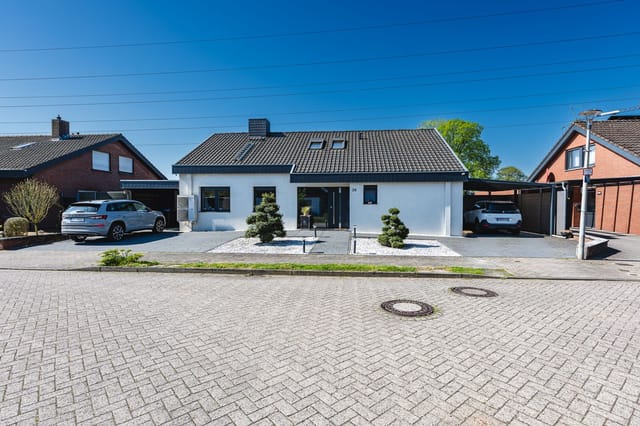
Picture a Sunday morning in early October. The garden is still holding onto summer's last warmth, mist sitting low over the fields just beyond the fence, and you're drinking coffee in the winter garden while the glass walls frame a view of copper-toned trees. The house is quiet. The kids are still asleep upstairs. This is what 192 square metres of well-considered German residential life feels like — and it's available right now at Karinstraße 24 in Veldhausen. Veldhausen sits within the municipality of Neuenhaus in the Grafschaft Bentheim district, a part of Lower Saxony that doesn't get nearly as much attention as it deserves. Tucked in the far west of Germany, pressed right against the Dutch border, this is a region of flat, open countryside, old mill towns, and an unhurried pace of life that's genuinely hard to find this close to two countries' worth of amenities. The Dutch city of Enschede is under 45 minutes by car. Nordhorn, the district's commercial hub, is a short drive east and offers everything from shopping along the Hauptstraße to kayaking the Vechte river on a warm afternoon. Yet back in Veldhausen itself, the streets carry mostly local traffic. It's the kind of neighbourhood where children still ride bikes to school. The house itself was built in 1975 and comprehensively renovated in 2019 — not a cosmetic refresh, but a full, high-quality overhaul that brought everything up to modern standards. Triple-glazed windows throughout. Full insulation. A heat pump paired with a boiler for hot water. Solar panels on the roof. Electric heating with modern controls. The result is a house that looks after itself, running efficiently year-round without demanding constant attention from owners who may not always be on- ... click here to read more
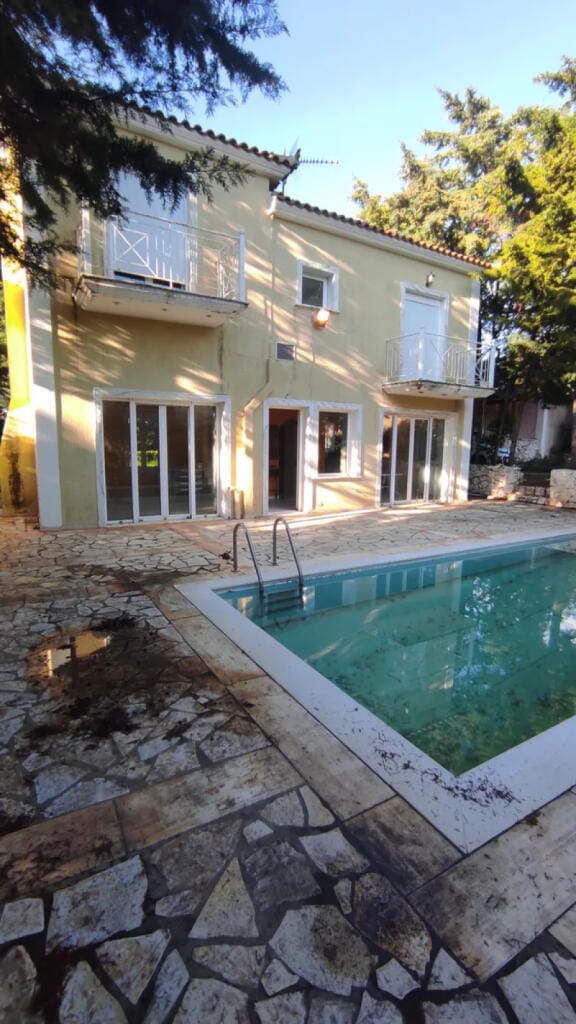
Photo 1 of Karinstraße 24

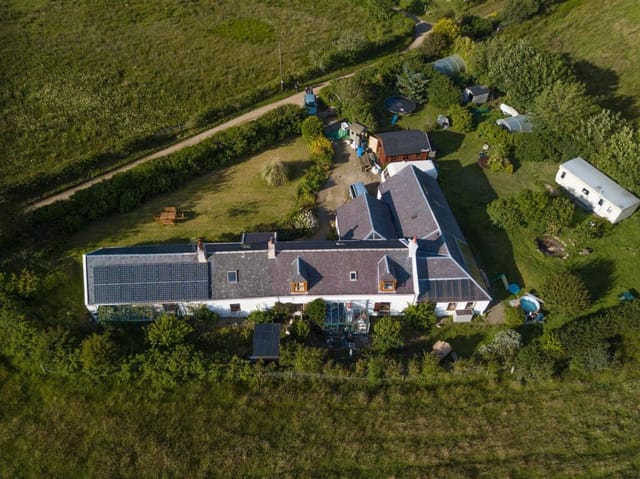
On a clear morning at Kilmory Farm, you can stand at the French windows of the lounge with a mug of tea and watch the light shift over the Mull of Kintyre across the water. Ailsa Craig sits on the horizon like a stone sentinel. The only sounds are wind through the garden fruit trees and, if you're lucky, the bark of an otter down by the shore. This is the Isle of Arran's quieter south end — not the postcard-busy Brodick, not the ferry crowds — and it feels like a genuinely different kind of Scotland. Kilmory Farm is a four-bedroom, three-bathroom stone farmhouse that dates to the early 19th century. It sits within roughly half an acre of mature, south-facing gardens on the outskirts of the tiny hamlet of Kilmory, about as far from the noise of modern life as you can get while still having a roof over your head with solar panels on it. Yes — solar panels, a government Feed-In Tariff contracted until 2036, and an annual electricity generation of around 3,300 kWh. The practical meets the pastoral here in ways that make long-term ownership genuinely workable. Step inside through the quarry-tiled porch and the farmhouse announces itself immediately. The kitchen has bespoke solid wood cabinetry and a Rayburn range — the kind that does double duty, cooking your soup and heating your home simultaneously. Exposed beams, herringbone-patterned glazed tiles, windows front and back. It's a working kitchen that actually wants to be used. To the right, the dining room has pine-panelled walls, an exposed beam ceiling, and a stone chimney breast with a log burner. A curved staircase sweeps up from one corner. These aren't cosmetic period details slapped on during a renovation — they're original, and they've got the quiet confidence tha ... click here to read more
Historical drone

Step out onto the first-floor balcony just after sunrise and the Ionian Sea catches the light in a way that makes you forget what day it is. That's what mornings look like at this two-bedroom villa in Minies, a quietly residential pocket of Leivathos on the southwest side of Cephalonia — one of Greece's most underrated islands, and one that locals would rather keep that way. The house sits on 720 square metres of private land with a western orientation, which means evenings here are something else entirely. Sunsets over the open horizon turn the pool water into hammered copper. The garden smells of jasmine and warm stone. If you've been searching for a vacation home in Greece that genuinely feels like it belongs somewhere rather than built for a catalogue, this is worth your full attention. At 102 square metres across two floors, the layout is clever without being fussy. Downstairs — 52 square metres — the living room is generous, centred around a fireplace that earns its keep in the mild Cephalonian winters and makes the space feel lived-in rather than staged. The kitchen is fully equipped and opens directly to the dining area; the whole ground floor flows straight out to the garden and the pool deck, which is exactly how it should work in this climate. There's a guest WC on this level too, so the upstairs bedrooms stay private when you have friends over for an afternoon swim and a late lunch at the outdoor dining table under the pergola. Up the internal staircase, both bedrooms have their own en-suite bathrooms — a detail that matters enormously when you're renting the property out or hosting family across different age groups. Both rooms open onto balconies with those views: wide, unobstructed, facing open sky and ... click here to read more
Picture 1

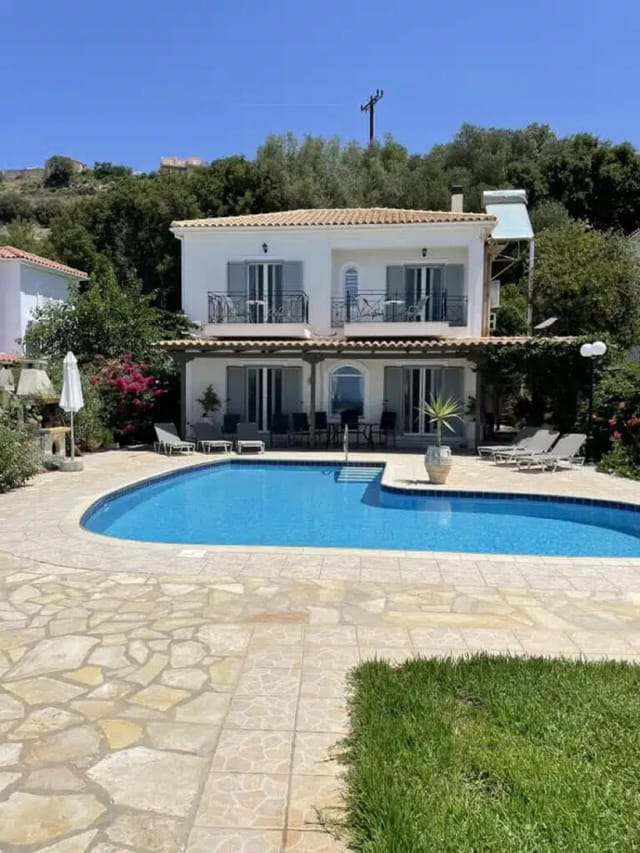
Early morning on the Livathos hillside, before the August heat sets in, the air smells of wild thyme and jasmine baking together in a way that simply doesn't exist anywhere else in Greece. You step out through the patio doors of the ground-floor bedroom, coffee in hand, and the Ionian Sea is right there — shimmering and impossibly blue between the cypress trees, stretching all the way to the shadow of Zakynthos on the horizon. This is the kind of moment that makes people buy property in Cephalonia and never quite get over it. This three-bedroom villa in Svoronata sits on a peaceful hillside on the edge of the village of Sarlata in the Livathos region, one of the most sought-after pockets of the island's southern coast. At 120 square metres across two floors, the house is genuinely practical — big enough for a family or group of friends, compact enough to lock up and leave without anxiety. It was built in 1998 and is in good, move-in ready condition, fully furnished and equipped so you could conceivably fly in on a Friday evening and be having a poolside dinner by Saturday night. The private swimming pool is the heart of outdoor life here. Surrounded by bougainvillea in shades of magenta and purple, and bordered by a broad sun deck with proper lounging space, it's where most of your Cephalonian days will actually happen. The traditional brick barbecue beside it has clearly earned its keep over the years. A shaded front terrace catches the sea breeze through the hottest part of the afternoon — genuinely useful between about two and five in July, when the sun is serious. Inside, the ground floor opens into a living and kitchen space that's designed for real use rather than photography. The wood-burning fireplace becomes ... click here to read more
Picture 1

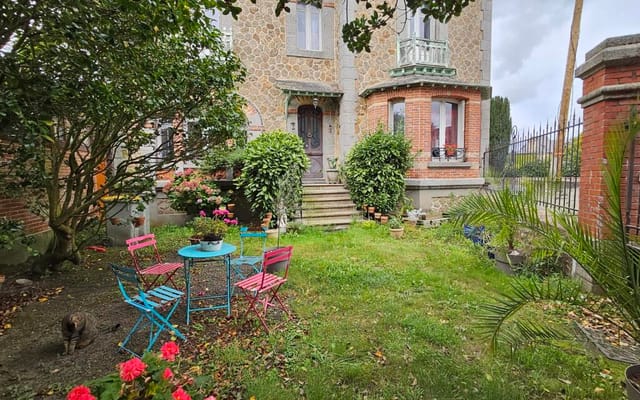
Sunday morning in Guingamp, and the bells of the Basilique Notre-Dame-de-Bon-Secours roll across the rooftops just as the light finds its way through the tall original windows, casting long rectangles of gold across a century-old parquet floor. That's the moment you understand what this house is. Not just five bedrooms and a walled garden — a living piece of Breton history, waiting for someone with vision and appetite to bring it fully back to life. This architect-designed Belle Époque mansion sits in the heart of Guingamp, a town that punches well above its weight in character. The house was built when architects designed for eternity — high ceilings that make you stand a little straighter, plaster moldings of the kind you simply cannot replicate today, and original parquet floors that creak pleasingly underfoot, the sound of a house that has held generations of stories. The proportions throughout the ground floor are generous without feeling cold. A majestic entrance hall sets the tone immediately. From there, the kitchen, a welcoming dining room, a refined sitting room, and a summer room that opens directly onto the garden follow in sequence, each space distinct but connected by that same through-light that runs the length of the house. A guest WC completes the ground floor with quiet practicality. Upstairs, five proper bedrooms — including a suite — share two bathrooms, and a converted attic has been given over to a library. Spend a rainy Breton afternoon up there with a novel and a glass of Muscadet and you'll understand the appeal immediately. Outside, the walled and wooded garden is an almost absurd bonus for a town-centre address. Enclosed, private, green — it's the kind of outdoor space that city buyers specif ... click here to read more
Picture 1

Stand on the roof terrace of this Quillan villa on a clear October morning and the Pyrenean ridgeline fills the horizon — the kind of view that stops you mid-coffee. Below, the garden is still dewy, the pool catching the first light off the mountains, and somewhere down in the valley the old town is already stirring. This is the rhythm that waits for you here, and it's the kind of thing that makes people stop looking the moment they see it. Quillan sits in the Aude valley at the point where the Languedoc plains start crumpling into serious mountain country. It's not a tourist trap. The Saturday market on the Place de la République is genuinely local — farmers selling their own cheese, wild mushrooms in autumn, cherries in June. The boulangerie on Rue du Barry gets their sourdough out around seven, and the Café du Commerce across from the church has been pulling the same espresso for longer than anyone can remember. This is a town that just gets on with things, which makes it an unexpectedly grounded place to own a holiday home in southern France. The villa itself spans 227 square metres across twelve rooms, built in the solid, sensible style that this part of Aude has always favoured — thick walls that keep things cool when July temperatures climb toward the mid-thirties, double-glazed windows that seal out both the wind and the world when you want quiet. That thermal insulation isn't a minor detail. In a house you'll use across seasons — ski weekends in January, long lunches in August — it matters more than almost anything else. The living room fireplace handles the other end of that equation beautifully: light it on a November evening and the room changes entirely, becomes the kind of space where people stay talking ... click here to read more
Picture 1

On a quiet morning in the Gironde, before the tourist coaches arrive in the village and the church bells of Saint-Émilion's monolithic abbey start marking the hour, you can stand at the kitchen door of this 1860s chateau and look out across a landscape that has been producing some of the world's most celebrated wine for over a thousand years. The vineyards run almost to your garden wall. The air smells faintly of warm earth and cut grass. This is not a postcard. This is Tuesday. Built in 1860 and extended in the decades that followed, this nine-bedroom chateau and manor house sits in more than an acre of grounds just a short drive from the celebrated village of Saint-Émilion, in the heart of one of France's most revered wine-growing appellations. At 280 square metres of interior space across the main residence and a separate guest house, there is real breathing room here — room for a large family, room for friends who stay too long and don't apologise for it, room to think about what you actually want this place to become. The building's history shows itself in the right ways. Walk through the entrance hall and the proportions feel considered, unhurried — the way older houses do when they were built for people who planned to stay. A classic reception salon sits off the hall, the kind of room that works for a winter dinner party with candles on the table just as well as it does for lazy Sunday lunches spilling out into the garden. A separate dining room, a study, and a family kitchen that opens directly onto the grounds complete the ground floor picture. Wooden double-glazed windows throughout manage the neat trick of preserving the original character while keeping things genuinely comfortable across all four seasons. ... click here to read more
Picture 1

Stand on the south-facing terrace on a July morning and you'll understand immediately why people come to Sarlat-la-Canéda and never quite manage to leave. The medieval rooftops fan out below you, the limestone towers catching the early light while the smell of bread from the boulangerie on the Rue de la République drifts up through the garden's mature oak and walnut trees. Five minutes on foot and you're in the middle of one of France's most intact medieval town centres. But here, behind the solid stone walls and wooden shutters of this 260-square-metre residence, you have your own sanctuary above it all. This is a proper Périgord Noir stone house — the kind with walls thick enough to keep the interior cool through August's heat without much help, built with the kind of care that simply isn't replicated today. The wrought-iron staircase rising from the marble-floored entrance hall is the first clue that this house was built to last and to impress. The ground floor's solid oak front door opens onto an entrance hall of 16 square metres, and the sense of scale only grows from there. One of the most practical — and genuinely rare — features here is the self-contained ground-floor apartment with its own garden entrance. It has a combined living, dining and kitchen space, a bedroom, and a bathroom, all accessed independently from the main house. The implications for international buyers are significant: rent the apartment year-round through a local agency while you use the main house during summer, or house a family member, a caretaker, or seasonal guests without any awkward sharing of space. Properties in Sarlat with this kind of built-in flexibility at this price point are not easy to find. Upstairs, the first floor is wh ... click here to read more
Picture 1

On a warm Tuesday morning in Jonzac, you open the terrace doors off the sitting room and the air smells faintly of mineral water and cut grass. Below you, the garden runs downhill in long, generous sweeps — through a canopy of trees, past a woodland patch that filters the light into something almost theatrical — until it reaches the quiet banks of the River Seugne. A heron stands perfectly still at the water's edge. You can hear the church bells from the old town center, just five minutes away on foot. That's the daily reality of owning this five-bedroom geothermically heated house in the heart of one of Charente-Maritime's most quietly compelling spa towns. The property sits less than 500 meters from Jonzac's center, which puts you close to everything without sacrificing the sense of space that defines life here. The upper floor holds three well-proportioned bedrooms, a bathroom with a separate WC, and a triple-aspect living and dining room that catches light from three directions. That room connects directly to the south-facing terrace — the kind of terrace you end up living on from April through October, drinking Pineau des Charentes in the early evenings while the swallows dart over the garden. The kitchen is bright and practical, also opening onto the terrace, so cooking here in summer means constant movement between inside and out. What makes this house genuinely unusual is the lower floor. Two independent guest accommodations sit completely self-contained on that level, each with private access. For a family wanting multi-generational space — grandparents, adult children, close friends who visit for weeks at a time — this layout is hard to find at this price point in France. For a buyer thinking about income gen ... click here to read more
Picture 1

On a Sunday morning in Saint-Séverin, the only thing that stirs you is the smell of bread drifting up from the boulangerie two streets over and the faint clinking of bottles as the weekly market sets up on the square. You pad out through the conservatory doors in bare feet, coffee in hand, and stand at the edge of 7,000 square metres of your own French countryside. That's not a fantasy — that's Tuesday here, too. This is a proper Charente stone house. Not a ruin dressed up for photos. Not a weekend project. Solidly renovated, genuinely liveable, and built the way they built things in this part of southwest France — thick walls that stay cool through August, exposed beams that have held up for generations, and a fireplace in the sitting room that earns its keep from October through March. The stone has colour in certain light, going from pale grey to warm amber depending on the hour. You'll notice that. You'll stop noticing other things you used to care about. The main house runs to three bedrooms and flows the way a French farmhouse should — not rigidly, not in a straight line, but through rooms that connect to each other and back out to the garden at multiple points. The ground floor living and dining space anchors everything, anchored itself by that stone fireplace with its inset wood burner. From there you move into the kitchen, which is properly fitted rather than decorative, or into the conservatory, which catches afternoon light and works equally well as a reading room or an extra dining space when the table inside fills up. The main sitting room has its own wood burner too — this house takes winter seriously — and connects through to a study or music room depending on what you need it to be. The master suite oc ... click here to read more
Picture 1

Pull up the private drive on a June morning and the first thing you notice is the silence. Not the absence of sound exactly, but the particular kind of quiet that only comes with 2.2 hectares of your own woodland and gardens wrapped around a grand stone house in the Vienne countryside. Then the birds start up. Then, faintly, the church bell in La Trimouille village counts out nine o'clock. And you realize this is going to be a completely different kind of morning. This is a rare piece of rural France — a three-floor principal residence of 293 square metres plus a fully independent gatekeeper's cottage, tucked down its own private lane just a short walk from the centre of La Trimouille in the Poitou-Charentes region. At €315,650, you're looking at a property that would comfortably command double this price in Dordogne or Provence. The Vienne département still operates on its own timetable, which is one of the many reasons people who discover it tend to stay. The main house has a generous, unhurried quality. Wide wooden floors run throughout all three levels — the kind that creak pleasantly and catch afternoon light differently depending on the season. On the ground floor, the living room opens through double doors onto a south-facing terrace overlooking rolling countryside. You'll eat breakfast out there far later into autumn than you'd expect; this part of France averages close to 2,000 hours of sunshine per year. The ground floor also holds a dining room, a well-proportioned kitchen, two offices (useful for remote working or, frankly, finally writing that novel), a bedroom, a shower room, and a separate toilet. Head upstairs and four more bedrooms spread out across the first floor, served by a full bathroom. Above tha ... click here to read more
Picture 1

Step out onto the veranda at Nestun 17 on a July morning and you'll understand immediately why people don't leave Stryn easily. Oppstrynsvatnet stretches out below you, cold and impossibly clear, with the kind of mountain silence that makes city noise feel like a distant bad habit. The glaciers above Stryndalen catch the early light. Coffee in hand, you're already planning whether today belongs to the lake or the trails. Built in 2017 and spread across three well-organized floors, this six-bedroom country home in Veslebygda sits on 852 square meters of private land, 13 kilometers from Stryn town center. At 190 square meters of interior living space, it's generous enough to host a large family or a rotating cast of friends across an entire Norwegian summer—and built to a standard that holds up through the winters too. The main floor is where life happens. The open-plan kitchen and living area is the kind of space that pulls people together without forcing it—long enough for separate conversations, open enough that nobody feels cut off. The kitchen has ample counter and cabinet space, laminate worktops, and integrated appliances including an oven, washing machine, and refrigerator. From the dining area, you walk straight out onto a 17-square-meter veranda, and that's really where meals get eaten when the weather cooperates. The view from up here—across the lake and into the mountain ridges—isn't something you stop noticing after a few days. Two bedrooms and a bathroom round out the main level. Up in the attic loft, two more bedrooms and a lounge area give older kids or guests their own corner of the house. It's the kind of space teenagers claim instantly and adults appreciate for different reasons. Below on the basement ... click here to read more
EiendomsMegler1 by Martin Grodås Alnes presents Nestun 17! Photo by Svein Olav Humberset v/EFKT.

On a still morning in the Ariège, the Hers River catches the early light just beyond the stone terrace, and the only sounds are birdsong and the faint rush of water over the weir. That's your garden. Those 300 metres of private riverbank are yours. And that 250-year-old bastide rising behind you — warm limestone, deep-set windows, a history you can feel in every thick wall — that's yours too. This is a rare kind of property, the sort that stops you mid-scroll and doesn't let go. Situated near the medieval village of Camon, one of France's officially designated Plus Beaux Villages, this estate sits in nearly 11.5 acres of mature parkland and working grounds in the heart of Midi-Pyrénées. Mirepoix itself — with its extraordinary 13th-century arcaded market square, its Wednesday and Saturday markets piled with Ariège cheeses, Gascon duck confits, and seasonal vegetables — is just minutes away. This isn't a place that imitates the French countryside. It simply is the French countryside. At 868 square metres of living space spread across three distinct buildings, the property operates almost as a self-contained hamlet. The main bastide house holds five bedrooms and three bathrooms, fully restored without stripping out the soul of the thing. Original stone floors, thick timber beams, fireplaces wide enough to stand in — all intact, all brought up to modern standard. The reception rooms get afternoon light in long, generous slabs. The kitchen has been equipped to actually cook in, which matters when you're an hour from Toulouse and not rushing anywhere. Directly connected to the main house, the renovated annexe is where the scale of this estate really hits you. Stone flooring runs throughout the ground floor reception areas, ... click here to read more
Picture 1

Step outside on a February morning at Gamle Fjellstølvegen 15 and the silence hits you first. Not the absence of sound, but a different kind of sound entirely — the soft compression of fresh snow underfoot, the creak of timber in the cold, and somewhere down the valley, the faint whistle of wind threading through the birch trees. At 887 meters above sea level, the world feels unhurried up here. The view from the terrace stretches across the Søndre Fjellstølen plateau, all rolling white in winter and deep green in summer, and it's the kind of view that makes you want to stay for another week. Then another. Reinli sits in the heart of Sør-Aurdal municipality in Valdres — a region that serious outdoor people have been quietly keeping to themselves for decades. It hasn't been overrun. The trails aren't crowded. The groomed cross-country ski network that runs from roughly 900 to 1,160 meters elevation is genuinely world-class, and on a clear January morning you can ski for hours without passing more than a handful of people. In summer, those same tracks become trails for mountain biking and hiking, ranging from gentle woodland paths to proper ridge walks with summit rewards. The area around Reinli and Begnadalen is one of those rare places where the landscape changes enough between seasons that it almost feels like owning two different properties. The chalet itself was built in 2013 and has been kept in genuinely good condition — not estate-agent good, actually good. Walk through the front door and the ground floor opens into a living room with large windows that frame the fjell like paintings you never get tired of. There's a fireplace that does real work in October when the temperature drops fast, and the kitchen beside i ... click here to read more
Real estate agent Ida Follinglo presents this beautiful property at Søndre Fjellstølen. Photo: Christine Stokkebryn

Stand on the upstairs balcony in the early morning and you'll see it: Óbidos Castle rising above the treeline to the east, its white-washed ramparts catching the first light while the lagoon shimmers silver in the distance to the west. This is the view that stops people mid-coffee and makes them reach for their phone to call their partner. It's also the view you'd wake up to every single day owning this four-bedroom Portuguese villa in the village of Sobral da Lagoa. The house sits in a quiet residential pocket just minutes from the medieval walled town of Óbidos, fully furnished and move-in ready — no renovation project, no waiting around. At 132 square metres spread across two floors, it has real, usable space. Not the kind of square footage that sounds impressive on paper but leaves you tripping over furniture. Rooms breathe here. Come through the front door into a proper entrance hall — none of that walking straight into a living room business — and you immediately get a sense of the layout. The main living room is generous, arranged for both dining and unwinding, with an open fireplace that earns its keep from November through February when the Atlantic air turns sharp. Two sets of French doors push open onto the front porch, and on still evenings you can hear the church bells from the old town drifting across the valley. That sound, more than anything, is what makes this part of Portugal feel genuinely different from the Algarve's beach-resort hum. The kitchen is fitted and functional, with a covered rear terrace attached — a brick-built table, bench seating, and the kind of morning light that makes even instant coffee taste better. Step out from the kitchen and you're a few seconds from the pool. Heated, large ... click here to read more
Picture 1

Sunday morning in Pleuville moves at its own pace. The shutters creak open, the coffee's on, and through the kitchen window you catch that wide roll of Charente countryside—fields fading into tree lines, not another rooftop in sight. This is what 193 square metres of genuine Maison de Maître feels like when it's yours. Set right in the heart of the village, this four-bedroom house carries all the bones that make old French architecture so satisfying: generous proportions, solid stone, rooms that breathe. But it's been updated where it counts. The kitchen was fitted last year—clean, functional, properly equipped for the long lunches that Charente life demands. A new 7 x 5 metre inground swimming pool was also installed last year, sitting just outside where the garden opens up and the views stretch away over the surrounding countryside. On a hot July afternoon, that pool earns its place fast. Inside, the layout flows well. A wide hallway sets the tone as you enter—the kind of entrance that makes guests pause. To the right, the new kitchen leads into a utility room, and there's a shower room with WC on the same side, which makes practical sense for a house that sees wet dogs, muddy boots, or kids coming in from the pool. To the left, the dining room and living room run together in an open plan arrangement, giving you a generous shared space that works for family dinners, lazy evenings, and everything in between. Upstairs, four well-sized bedrooms line up comfortably—room for the whole family, or the friends who always seem to arrive for August—alongside a bathroom with WC. Outside is where this property really delivers. The garden wraps around the house on multiple sides, so you're never short of options: a spot in full ... click here to read more
Picture 1

Saturday morning. You wake up to the sound of absolute nothing — no traffic, no sirens, just birdsong drifting in through bedroom windows that face a south-oriented garden still glistening from overnight dew. By the time you've made coffee in the Miele-fitted kitchen, sunlight is already cutting across the parquet floors, freshly sanded and refinished in 2023, and the heated indoor pool is sitting at exactly the temperature you set it to last night from your phone. That's not a fantasy. That's just a regular morning at Jachtlaan 23. Balen doesn't get the press that Brussels or Bruges attract, and honestly, that's a feature rather than a flaw. This is the Kempen region — a quietly confident corner of northern Belgium where pine forests stretch for kilometres, the Beverlo Canal cuts a calm silver line through the landscape, and the De Most nature reserve sits close enough to reach on foot or bike before lunch. Locals cycle the Kempense Meren route, a 50-kilometre trail threading past heathland, sand dunes, and the glittering Mol lakes, and they do it on a Tuesday afternoon without elbowing through crowds. Life here moves at a pace that feels almost conspicuously sane. The villa itself sits on 2,536 square metres of fully landscaped grounds on Jachtlaan, one of Balen's most composed residential streets — wide, tree-lined, unhurried. Step through the front door and the entrance hall immediately communicates something: this is not a house that tries too hard. The proportions are generous without being theatrical. Natural light floods in through oversized windows that frame the garden like living paintings, and the Crestron home automation system hums quietly in the background, waiting for input via iPad or built-in screen. ... click here to read more
Photo 1 of Jachtlaan 23

Step outside on a Tuesday morning and the only sounds competing for your attention are the stream at the edge of the hamlet and a woodpecker working its way up an oak somewhere in the tree line beyond the balcony. No traffic. No neighbor's television bleeding through a shared wall. Just the Périgord Limousin Regional Natural Park doing what it does — quietly making the rest of the world feel very far away. Abjat-sur-Bandiat sits in the northern reaches of the Dordogne, right where the department bumps against Haute-Vienne. It's the kind of village that doesn't try to impress you. There's no tourist office handing out maps, no souvenir shop selling fridge magnets. What there is: a genuine rural France that moves at its own pace, stone lanes that wind past ancient farmsteads, and a landscape of rolling woodland and meadow that turns copper and amber every October like someone slowly turning up a dimmer switch. This former barn — fully converted and completed not so long ago — sits at the tail end of a hamlet, with countryside pressing in on three sides. The conversion was done with real care for proportion. Ground floor living spaces feel open without feeling cavernous: a proper entrance hall with enough room to actually use it, a sitting room where exposed timber beams overhead anchor the space without making it heavy, and a kitchen that opens onto a dining area rather than being squeezed into a corner. The underfloor heating throughout the ground floor is the kind of detail you only truly appreciate on a raw February morning when the mist is sitting on the fields and you're padding around in socks on warm stone. The original character of the barn hasn't been scrubbed away. An oeil de boeuf window — that small circula ... click here to read more
Picture 1

On a clear morning in the Périgord Noir, you open the shutters and the Vézère valley just sits there below you — mist still clinging to the tree line, the stone walls of the house still cool under your fingertips. There's a smell of woodsmoke somewhere down the hillside. This is Le Bugue on a Tuesday in October, and it's enough to make you wonder why you ever left. This five-bedroom stone house sits elevated above the valley floor, its 3,400 square metres of grounds giving it a quiet authority over the surrounding landscape. From the terrace beside the swimming pool, you look out over one of the most quietly celebrated river valleys in France — the Vézère, which threads its way through prehistoric caves, market towns, and walnut orchards before joining the Dordogne near Limeuil, a village so absurdly picturesque it barely seems real. And yet here you are, looking at it. The house itself is solidly Périgordine in character. The exposed stonework isn't decorative — it's structural, original, the same golden limestone that built the churches and manor houses of this region over several centuries. The stone spiral staircase connecting the two floors is the kind of thing you'd find photographed in a heritage architecture journal. The fireplace in the 39-square-metre living room anchors everything: in January, when the Dordogne countryside pulls on a coat of frost, you'll be grateful for it. Electric underfloor heating runs throughout, so comfort is never a negotiation between atmosphere and practicality. The layout works well for a family or a group of friends. Two bedrooms sit on the ground floor — useful for anyone who prefers not to deal with stairs, or for hosting guests who value a little separation. Upstairs, three m ... click here to read more
Picture 1

Sunday morning in Chancelade sounds like this: a distant church bell from the 12th-century abbey down the road, the creak of old oak floorboards under your feet, and the smell of coffee drifting through a kitchen that has fed generations of the same family. Step outside and the light hits the raised stone terraces in that particular golden way the Dordogne does so well — not filtered or softened, just honest and warm. This is what you're actually buying. Set just five minutes from the centre of Périgueux on a plot of just under an acre, this six-bedroom stone property represents something increasingly rare in the Dordogne: genuine substance. The main residence runs across three levels and holds onto its original bones with real conviction — wide-plank floors worn smooth over decades, a sequence of open fireplaces, and a covered terrace finished in pizé du Périgord, that traditional rammed-earth technique you almost never see intact anymore. It's a material that ties the house directly to the region's building history in a way no renovation could replicate. The layout divides naturally into two distinct living zones, which opens up serious flexibility for how you use the place. The main house offers four bedrooms spread across its three levels, with the kind of generous room proportions that older French country homes do so well — proper ceiling heights, deep window reveals, spaces that feel considered rather than carved up. Then, separate from the main residence, the guest accommodation provides two en suite double bedrooms with their own living area, all overlooking the grounds. It functions entirely independently, which matters enormously whether you're hosting friends for a fortnight in August or considering the pro ... click here to read more
Picture 1

Stand at the kitchen window on a Saturday morning and the view stops you. Beyond the granite countertop, past the glass, the rear garden opens up into a sweep of green that dissolves into the wooded edge of the Hoge Kempen National Park. No neighbor's rooftop. No road noise. Just fruit trees heavy with plums, magnolias doing their thing in spring, and a silence that feels earned. This is what 3,295 square meters of prime residential land in Maasmechelen actually feels like from the inside. The villa at Geloeslaan 22 sits well back from the street — deliberately so. The landscaped front garden acts as a buffer between you and the world, and the long driveway reads less like a parking solution and more like an arrival ritual. The natural slate roof, rare in Belgian residential builds of this scale, gives the facade a gravitas that's hard to manufacture and impossible to fake. It doesn't shout. It simply stands there, confident. Inside, 391 square meters of living space is organized around a logic that makes sense the moment you walk through the door. The entrance hallway branches naturally: left toward the double garage, right toward the staircase with its open gallery landing, straight ahead into the main living area. A guest WC sits just off the hall, alongside a proper cloakroom — the kind of detail that separates a house designed for real life from one designed for a brochure shoot. The garage itself deserves mention: heated, fitted with two floor drains and a utility sink, it works as hard as the rest of the house. The living room is where the property really shows its scale. Open fireplace on one wall. Large windows wrapping two elevations to pull in both front and rear garden views. On a grey January afternoon, ... click here to read more
Front view of Geloeslaan 22

Stand in the entrance hall of this 1909 vicarage on a still October morning and you'll hear absolutely nothing except the wind moving through the old oak trees outside and the occasional creak of timber that has settled over more than a century of Scanian winters. That quiet is not emptiness — it's the kind of deep, deliberate stillness that most people drive hours to find and rarely do. This is Grönbyvägen 87-0, set in the medieval village of Grönby in Trelleborg Municipality, southern Sweden. The property served as the official vicar's residence for this parish until 1925, and before that it was the social and spiritual anchor of a community whose church dates to the 12th century. Local historians note that King Charles XII passed through this very village in 1715 on his march through Skåne — a detail that feels less like trivia and more like texture when you're standing in rooms that were already old by then. As a vacation home, second home, or permanent residence in southern Sweden, few properties carry this kind of layered story. The main house was built in 1909 and spans a generous 360 square meters across 10 rooms, six of which function as bedrooms. The architecture is classic late-Swedish rural institutional — broad, confident proportions, high ceilings that make every room feel unhurried, and large windows that pull in the flat, luminous light that Skåne does better than anywhere else in the country. Original woodwork runs throughout: door frames with their painted profiles still intact, decorative moldings that speak to a time when craftsmen took their time, and fireplaces that anchor the main reception rooms with genuine warmth. This isn't a restoration project dressed up as a period home. The bones are real ... click here to read more

Front view of the historic vicarage estate

Step outside on a Tuesday morning and the only sound is the cuckoo somewhere deep in the oak woods behind the meadow. No traffic. No neighbours visible. Just the smell of damp grass, a light mist burning off the valley below, and the knowledge that you have six hectares of Périgord countryside entirely to yourself. That is the daily reality of this place — a 318-square-metre stone estate at the end of a quiet cul-de-sac on the edge of a tiny hamlet near Saint-Aubin-de-Lanquais, and it is the kind of property that makes people stop scrolling. The main house is authentically Périgord — golden limestone walls, exposed oak beams on the upper floor, and a sense of solidity that only three centuries of craftsmanship can produce. The ground floor flows generously: a 45-square-metre open living and dining room fills with southern light through most of the day, connecting directly to a 13-square-metre kitchen that opens onto the same space, making it genuinely social. There is also a private ground-floor bedroom with its own dressing room and ensuite shower — ideal for guests who prefer not to climb stairs, or for the owners themselves. A dedicated 30-square-metre office sits apart from the living areas, which matters if you work remotely or plan to manage the gîte business from the property. Upstairs, two further bedrooms — 23 and 15 square metres respectively — have the kind of exposed ceiling beams that interior designers try to recreate and never quite nail. Now, the part that sets this property apart from the typical Dordogne holiday home: it comes with two fully functional gîtes. The smaller one sleeps four across 62 square metres, with its own living room, two bedrooms, and a secluded garden that gives guests genuine pri ... click here to read more

Picture 1

On a still Tuesday morning in Thénac, the only sounds are birdsong, the occasional bell from the nearby Plum Village monastery drifting across the fields, and the soft creak of walnut branches in the breeze. You're standing on the terrace with a coffee, looking out over an unbroken panorama of Périgord countryside. No cars. No noise. Just space, light, and a 423-square-metre longère that's been quietly absorbing centuries of Dordogne life since the 1600s. This is not a typical French farmhouse renovation story. What you get here is rare: a genuinely large, genuinely versatile property that was substantially refurbished in 2021, sitting on around 5,400 square metres of landscaped grounds with a natural spring-fed pond, mature orchard trees — apple, walnut, cherry, plum, pear — and a private swimming pool tucked behind a thick hedgerow so that no one can see in. The pool terrace feels like your own private world, shielded from everything. Step inside through the main entrance hall, which is wide enough to function as a proper reception room, with doors opening to both the front and rear of the house. It sets the tone immediately. Stone walls. Thick, solid materials. A sense of permanence you don't find in new builds. The kitchen pulls you in further — organic and unhurried in its design, with wooden units, natural stone flooring, and walls that have absorbed three hundred years of cooking smells and family meals. This is the kind of kitchen where you actually want to spend time, not just pass through. The main lounge takes the drama up a level. A cathedral ceiling rising two full storeys gives the room a scale that feels theatrical without being cold, and a mezzanine level above adds an intimate counterpoint to all that ... click here to read more

Picture 1

Step outside on a January morning and the world is completely white and completely silent, except for the creak of fresh snow underfoot and the distant hum of the first chairlift starting up at Vemdalsskalet. The air bites at your cheeks. Inside, the fireplace is still throwing heat from last night, and the smell of coffee fills the open kitchen. This is what owning a vacation home in the Swedish mountains actually feels like — and Järvslingan 22 puts you right in the middle of it. Built in 2020, this substantial semi-detached house sits on Järvslingan in the Vemdalsskalet area of Vemdalen, Härjedalens kommun, one of the most consistently popular ski and outdoor destinations in Sweden. The property spans 192 square meters of indoor living space across two full apartments — each with four bedrooms — on a generous 1,192-square-meter lot. It's a rare find: large enough for extended families or investment purposes, modern enough to require almost no work, and positioned well enough that you're never far from anything that makes this corner of Jämtland and Härjedalen so compelling. The two apartments share the building but function entirely independently. Each has its own open-plan kitchen, dining, and living area anchored by a fireplace, plus four bedrooms and its own outdoor access. Large windows face the mountain birch landscape, and when the snow is heavy on the branches in February, the view is the kind you don't stop noticing. The terraces — generous, south-leaning — are where you'll sit in March when the sun finally starts to win the argument with the cold, a cold beer in hand while your skis dry against the railing. The cross-country trail network and snowmobile routes are accessible directly from the property, mea ... click here to read more

Exterior view of the house with mountain backdrop

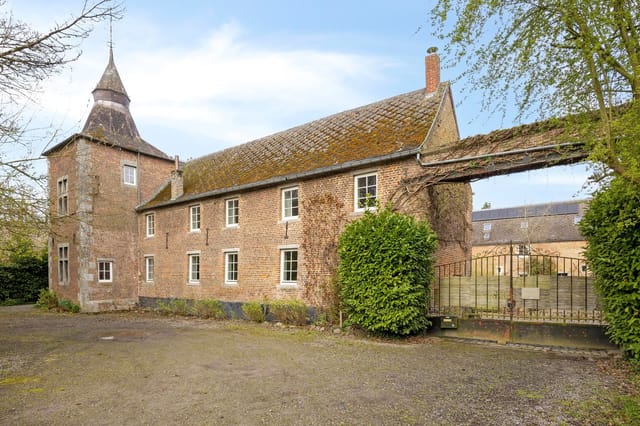
On a quiet morning in Fernelmont, the only sounds reaching you through the stone-framed windows are birdsong, the low creak of centuries-old oak branches, and the distant church bell drifting over the Hesbaye countryside from the village of Marchovelette. Pull back the wooden shutters and the courtyard below sits still in the early light, its blue stone paving worn smooth by three hundred years of footsteps. This is not a weekend cottage. This is a place that changes how you think about what a home can be. Built in 1714 and substantially extended in 1848, this extraordinary castle farmhouse at Rue des Ardennes 16 occupies a quietly commanding position on the edge of the Belgian countryside, roughly 15 kilometres from Namur and less than an hour from Maastricht. A private driveway draws you off the road and into a world that feels genuinely removed from everything ordinary — yet the motorway, the TGV station in Namur, and Brussels Airport are all within practical reach. That combination of seclusion and connectivity is genuinely rare in Belgium. The numbers are striking: 825 square metres of living space, 61 rooms in total, 16 bedrooms, 7 bathrooms, and an additional 436 square metres of barns and outbuildings, all sitting on approximately 9,900 square metres of park-like grounds. But numbers don't capture what it feels like to walk through the entrance hall into the formal dining room where light angles through deep-set windows onto original wide-plank flooring. They don't tell you what it's like to light the open fireplace in the living room on a November evening while rain taps against glass that is older than the Belgian nation itself. Since the current owners purchased the estate in 2019, the renovation has been c ... click here to read more

Front view of Rue des Ardennes 16

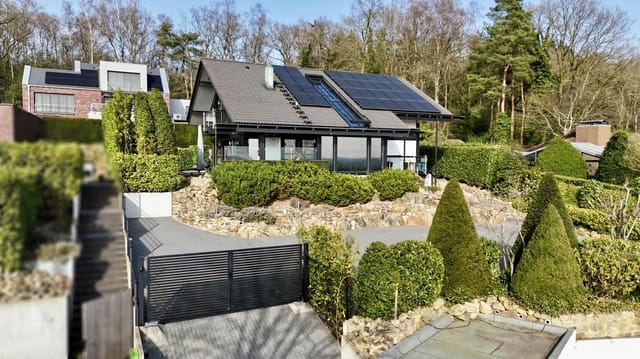
On a clear morning in Bad Bentheim, the mist sits low over the Münsterland plain while you stand on the upper terrace of Am Berghang 70 with a coffee in hand. The view stretches for miles — church steeples, farmland, forest — and not a single rooftop breaks the horizon below you. This is what you bought the hillside for. Built in 2009 on a generous 1,055 m² plot along the slopes of the Bentheimer Berge, this four-bedroom Bauhaus-inspired villa is one of those rare properties that makes you understand why architects fell in love with glass and steel and honest materials. The ebony timber framing against floor-to-ceiling glazing isn't a design flourish — it's the whole philosophy. Light comes in from every angle. The Münsterland countryside becomes part of the interior. In late afternoon, when the sun drops behind the Bentheimer Wald and throws long amber light across the oak floors, the living room feels almost cinematic. At 224 m² across three levels, the house is large without feeling excessive. The ground floor revolves around an open-plan living space anchored by a fireplace and a soaring gallery that connects visually to the floor above. Two terraces push the living space outward — one for morning coffee in the east-facing sun, one for long summer evenings facing west. A concealed pantry keeps the kitchen uncluttered. A ground-floor office with its own natural light makes remote working genuinely possible, not just technically feasible. The guest toilet is tucked discreetly away. Everything has been thought through. The staircase — solid wood with a frameless glass balustrade — is the kind of thing you notice every single day. It leads to a first floor where the gallery is bathed in shifting light throughout the s ... click here to read more

Photo 1 of Am Berghang 70