Villas For Sale In Europe (page 4)

Villas for sale in europe - homestra offers the largest amount of european real estate with over 200,000+ properties, find any type of property within your budget from villas to country homes. buy or rent your perfect home in europe. (page 4)

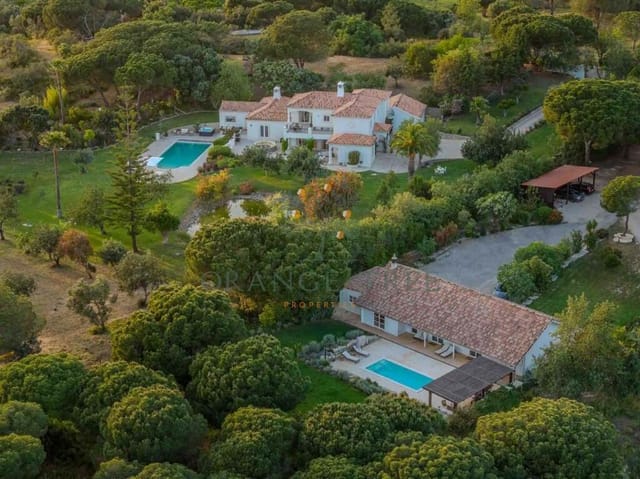
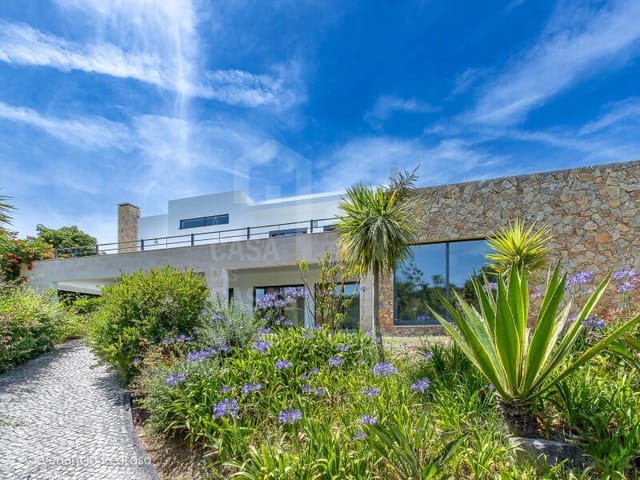
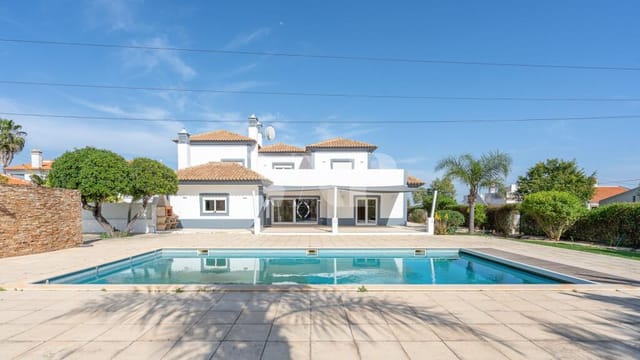
The alarm doesn't wake you here. What does is the sound of your own horses moving in the paddock just beyond the bedroom window, the low morning light cutting gold lines across five hectares of Portuguese countryside, and the faint smell of eucalyptus drifting through the shutters. By 9am you could be at Quinta do Lago's North Course teeing off in 22-degree sunshine. By noon you're on the sand at Praia do Garrão. That's not fantasy — that's a Tuesday in Almancil. This five-bedroom, five-bathroom villa estate in the Algarve's Golden Triangle sits on a rare plot of land that simply doesn't come to market anymore. Five hectares in this pocket of southern Portugal — bordered by Quinta do Lago to the east, Vale do Lobo to the south, and Faro International Airport just 18 kilometres away — is the kind of holding that families keep for generations. At 320 square metres of main living space, and with two fully independent guest residences on the grounds, this is a property built around the idea that your life here will include people you love coming to stay for long stretches, not long weekends. The main residence is unashamedly Portuguese in its bones. Thick rendered walls keep rooms naturally cool well into July, when the rest of Europe is wilting. Terracotta floors move you from room to room with the easy warmth underfoot that no engineered material has ever quite replicated. The living areas open to broad terraces through wide glass panels, and because the grounds extend so far in every direction, what you see from those terraces is your own land — olive trees, open sky, paddock — not a neighbour's roofline. A heated pool and jacuzzi sit within the garden's landscaped core, and a dedicated wellness space means that a prope ... click here to read more

Picture 1

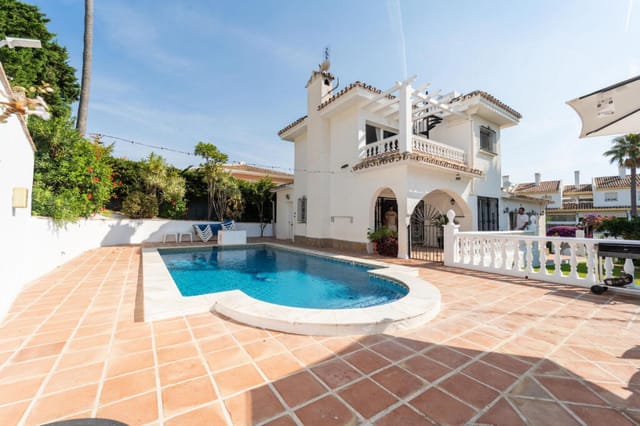
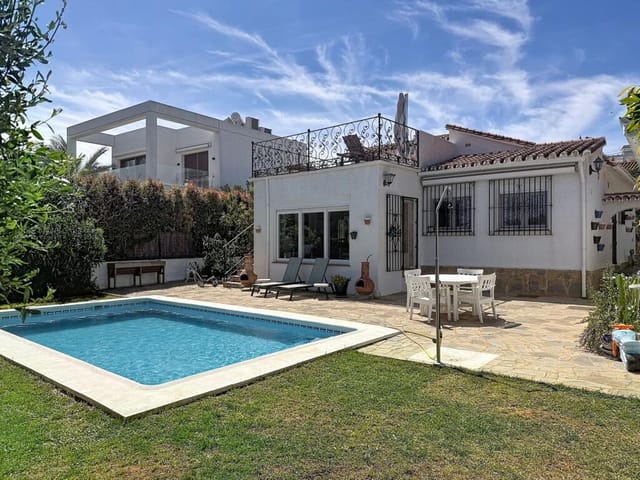
Sunday morning in Calahonda moves at its own pace. The smell of churros from the café on Avenida del Sol drifts up through an open terrace door, the Mediterranean glints silver below, and the only sound in the garden is the soft hum of the pool filter. That's what ownership here actually feels like—not a holiday, but a life you've deliberately chosen. This three-bedroom villa sits in one of the most consistently sought-after pockets of Mijas Costa, and if you've spent any time on the Costa del Sol, you'll understand why Calahonda keeps pulling people back. It's not the flashiest stretch of coastline. It's better than that. It's walkable, lived-in, and genuinely convenient without sacrificing the quiet that makes southern Spain so restorative. The property itself is in good condition and move-in ready, covering 155 square metres across two floors plus a rooftop solarium. The layout makes immediate sense for how people actually use a Spanish holiday home. Downstairs, an open-plan living and dining room opens directly onto the terrace and pool area through wide glass doors—so the line between inside and outside more or less disappears from April through October. The kitchen is fully equipped, the terrace gets sun for most of the afternoon, and the private pool is the right size: big enough to actually swim in, manageable enough to maintain without drama. Two bedrooms and a family bathroom sit on this floor alongside a separate laundry room, which sounds like a minor detail until you're a month into a holiday rental season and you're grateful for the practicality. Upstairs, the master suite takes up the entire floor. Fitted wardrobes, an en-suite bathroom, a private terrace where you can drink your morning coffee watching ... click here to read more

Picture 1

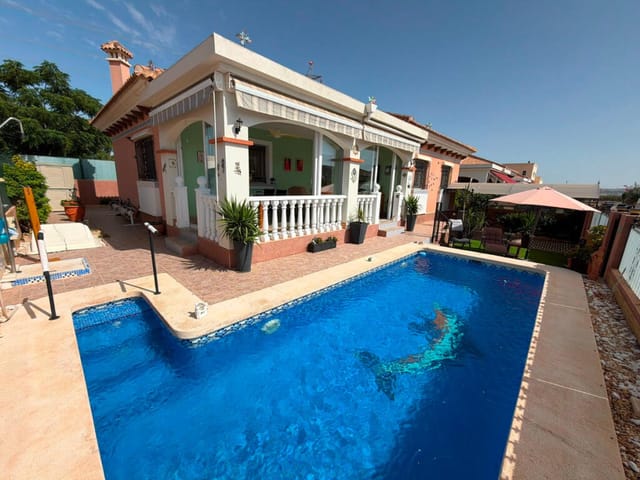
By eight in the morning, the sun is already cutting across the rooftop solarium, the air smells of warm stone and something blooming in the garden below, and the only sound is the low hum of the pool filter doing its quiet work. That's what a Tuesday looks like here. Imagine what a Saturday feels like. This three-bedroom detached villa in Ciudad Quesada — part of the Rojales municipality on the southern Costa Blanca — sits on a private 324m² plot and delivers exactly the kind of unhurried, sun-drenched life that people spend years planning for. At 110m² of interior living space, it's the right size: generous enough for a family or a group of friends, tight enough that it never feels like a hotel corridor. The east-facing orientation means the mornings inside are lit up naturally, which matters more than you'd think. Sunlight through the living room windows at breakfast changes the entire feel of the day. That living room is the heart of the house — wide enough to breathe in, with a real fireplace tucked into one corner for the short but genuinely cool winters that roll in off the Vega Baja plain in January and February. Costa Blanca winters are mild by northern European standards, but they're real. The fireplace earns its place. The kitchen has been fully reformed and sits independently from the main living space, which makes a practical difference when you're cooking for guests. There's room to actually be in there without choreographing around each other. Kitchen appliances are included, so the house works from day one. Three bedrooms, two renovated bathrooms — both modernised, both functional. The bathrooms don't make you wince, which is more than can be said for a lot of resale properties at this price point in t ... click here to read more

Picture 1

Early on a Tuesday morning in late October, when most of Europe has packed away its summer, you can stand on the terrace here and hear nothing but the wind moving through the olive trees and the distant thwack of a golf club somewhere beyond the pine ridge. The sky is still warm. The pool catches the light. That particular kind of quiet — the kind you can't buy anywhere near Quinta do Lago on a July weekend — is yours by default, because this estate sits on five hectares of private land in the heart of the Algarve's Golden Triangle, and the season runs eleven months deep. This is not a holiday villa. It's a working private world. Set just outside Almancil, one of the Algarve's most quietly affluent addresses, the property encompasses a five-bedroom main residence of 320 square metres, two fully independent guest houses, professional equestrian facilities, a heated swimming pool, a jacuzzi, a courtyard garden, and enough cultivated land to make you forget that Faro International Airport is less than 25 minutes away. The scale of it lands differently in person. Five hectares reads as a number until you're actually walking the paddock perimeter at dusk with a glass of something cold in your hand. The main villa carries the kind of structural character that took time to earn. Portuguese stone detailing, high ceilings that pull the heat upward in summer, and wide terraces on multiple aspects that mean you're always chasing the best light — morning coffee on the east side, evenings on the west as the sun drops behind the cork oaks. Each of the five bedrooms has its own bathroom, and the layout is considered in the way that only older estates tend to be: rooms that flow, not rooms that stack. The indoor-outdoor connection th ... click here to read more

Picture 1

Sunday morning in Jávea has its own particular rhythm. The air carries a faint trace of pine and sea salt from the Montgó massif, church bells drift down from the old town's Sant Bartomeu church just a few kilometres away, and somewhere on the terrace below the pool, a coffee is going cold while someone watches the light shift across the Bètic mountains. That's the kind of slow, unhurried life this four-bedroom villa on one of the Costa Blanca's most established residential urbanisations makes entirely possible. Set on a generous private plot just a short drive from Jávea's Arenal beach and the marina along Avenida del Mediterráneo, the villa occupies a quietly confident position between town and countryside. It's the sort of location that rewards the people who've done their research — close enough to the fish market at the port, the Wednesday market at the Paseo de la Explanada, and the terraces of Restaurante El Clot or the tapas bars along Carrer Major in the old town, yet far enough away that weekends here feel genuinely peaceful. The property itself was built in 1988 and covers 171 square metres of interior space across two levels, sitting on a plot that gives the gardens real room to breathe. Two wide driveways run along the front — there's space for several cars, a boat, even a motorhome, which tells you something about the people who've owned this place. Outdoor living was clearly the priority from the start. Head down to the lower garden level and you find a covered barbecue area that gets used in January as readily as in August. That's one of the genuine pleasures of the Costa Blanca — 300 days of sunshine annually means the outdoor kitchen isn't just a summer feature. A pedestrian bridge, slightly theatric ... click here to read more

Picture 1

Sunday morning in Moraira moves at its own pace. The market on Calle Marqués de Campo fills with locals pulling trolleys loaded with blood oranges and fresh anchovies from the fish stalls, the smell of churros drifting from the café on the corner where the fishermen have already been sitting for an hour. Walk five minutes back up the hill and you're home — through the gate, past the bougainvillea, onto the shaded naya with a coffee and nowhere particular to be. That's not a fantasy. That's a Tuesday in this villa. Set on a generous corner plot in one of Teulada-Moraira's quieter residential pockets, this single-storey detached villa sits in exactly the kind of spot that makes the Costa Blanca so fiercely coveted by buyers from across northern Europe. Not perched above the sea in some vertiginous clifftop position, and not buried in a sprawling urbanisation miles from anything — just right. Local shops, a handful of good restaurants, and everyday essentials are all within an easy ten-minute walk. You won't need the car every time you want a bottle of wine or a newspaper. The driveway is gated, with space for two cars behind it. Privacy arrives before you even step through the front door. The gardens have had years to establish themselves and it shows — there's a maturity to the planting, the kind you can't buy new, with different corners of the plot offering different moods throughout the day. Shade when you want it, full sun when you need it. The covered naya faces out over the garden and becomes, inevitably, the room you actually live in from April through to October. Lunch stretches into the afternoon here. Dinner starts late and ends later. The private swimming pool sits within the sun terrace and catches the light ... click here to read more

Picture 1

Sunday morning in Quinta do Lago has a particular quality. The air carries pine resin and the faint salt of the Atlantic, and by nine o'clock the light is already warm enough to take your coffee out to the upper terrace. Below you, the garden is still. The pool catches the sun in long, slow ripples. Somewhere past the tree line, a golfer is teeing off on the São Lourenço course. This is what 260 square metres of recently renovated villa feels like when it's yours. Quinta do Lago is one of those places that earns its reputation quietly. It doesn't announce itself with crowds or traffic or the relentless buzz of a resort strip. The community sits within the Ria Formosa Natural Park, a protected coastal lagoon that runs for sixty kilometres along the eastern Algarve, and the effect on daily life here is almost physical — there's a stillness that's hard to find anywhere else in southern Portugal. Almancil, the nearest town, is ten minutes by car and does everything a full-time neighbourhood should: proper supermarkets, local cafés where the bifanas are good and cheap, a Thursday market that runs along the main street with fruit sellers, ceramics, and linen. It's grounded in a way that keeps the whole area feeling real rather than manicured. The villa itself sits in a quiet residential pocket close to the resort's central hub, which means you can walk to the lake, the beach restaurant at Praia de Quinta do Lago, and the cluster of boutiques and dining venues around the main square without getting in a car. That walkability is rarer than you'd think at this price point in the Algarve. The property's street-level approach is discreet — mature hedging, a proper garage, tidy landscaping — but once you step through the front doo ... click here to read more

Picture 1

Saturday morning. The kitchen window is cracked open, and the only sounds are wood pigeons somewhere deep in the beech hedge and the faint creak of the veranda door catching the breeze. No traffic. No neighbors peering over the fence. Just 4,335 square meters of park garden stretching back toward open meadows, and the particular quiet that only comes when you're far enough from everything to actually exhale. That's Olmsebaan 204. And once you've stood in that garden, it's hard to imagine being anywhere else. This four-bedroom villa in Meerhout, in the green heart of the Campine region of Antwerp Province, sits on one of those rare plots where the garden doesn't end — it just becomes the countryside. A side gate opens directly onto the meadows behind, and there's no fence, no wall, no development blocking the view to the horizon. The mature tree embankment at the rear gives you total privacy from behind, while the south-facing orientation means the garden holds the sun from mid-morning until the last light of the evening. In June, that's a very long time. The villa itself was built in 1979, and you can feel the confidence of that era in the structure — solid, wide, set well back from the road behind a private driveway with an automatic gate. But the interiors have been carefully modernized over the years, and what you get now is something better than either original or contemporary alone. The oak woodwork that runs through the ground floor has been whitewashed to a pale, almost Scandinavian finish. Large windows — and there are a lot of them — pull the garden inside in a way that makes the 279 square meters of living space feel even more generous than it already is. Come in through the entrance hall, with its gallery ... click here to read more

Front view of Olmsebaan 204

Early on a September morning in Alcácer do Sal, the Sado River catches the first light like a sheet of hammered copper. The white storks — hundreds of them — circle the medieval castle ruins on the hill above town, and from the terrace of this 230-square-metre villa, you can watch the whole slow drama unfold over a coffee while the rest of Portugal is still asleep. This is not a weekend retreat you stumble across in a brochure. It's the kind of place you find when you've already ruled out everywhere else. Alcácer do Sal sits about an hour south of Lisbon, on the banks of the Sado, in a stretch of the Alentejo coast that most international buyers haven't caught up with yet. That's the honest truth, and it's also the opportunity. While Comporta — just 20 minutes away by car — has been pulling in design-conscious buyers at increasingly eye-watering prices, Alcácer do Sal still operates at its own unhurried pace. The morning market on Rua do Município sells bags of locally grown arroz carolino, the short-grain rice that's been cultivated in the flood plains here for centuries. You take a bag home, cook it slow with clams from the estuary, and realize this is exactly the kind of cooking you came to Portugal to do. The villa itself sits in good condition — solid, spacious, and ready for occupation — across three bedrooms and three bathrooms spread over 230 square metres. The scale is generous without being unwieldy. Three adults can be here simultaneously and still find their own corners: a bedroom that catches the morning sun, a bathroom that belongs to no one in particular during long summer stays, a living space wide enough to have a proper dinner table and not feel like you're eating in a corridor. Portuguese villas of t ... click here to read more

Picture 1

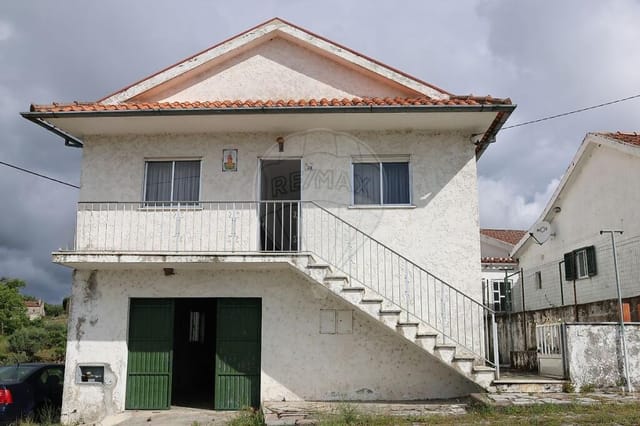
Saturday morning in Abela, and the only sounds competing with your coffee percolating are the swallows cutting arcs above the terracotta rooftops and a tractor working the field two properties over. The air carries something faintly resinous — cork oak and dry grass warming in the early sun. This is rural Alentejo at its most unhurried, and it's genuinely hard to believe you're less than an hour from two of Portugal's finest Atlantic beaches. This four-bedroom villa sits in the quiet village of Abela, a cluster of whitewashed houses and cork oak groves in the municipality of Santiago do Cacém, Setúbal district. At 218 square metres, the property has real space to breathe — room enough for a family to spread out across four bedrooms and two bathrooms without anyone feeling crowded, and a footprint that invites the kind of slow, restorative living that people spend years chasing in the Alentejo. Listed at €200,000, it's one of the more compelling opportunities in a region that has quietly started attracting a wave of buyers priced out of the Algarve but unwilling to compromise on climate, landscape or quality of life. The villa is in good condition and genuinely move-in ready, which matters more than it sounds in a rural Portuguese context. You won't be managing a renovation from abroad or navigating the complexities of Portuguese building permits before you can use the property. Arrive, open the shutters, and start living. Inside, the volume of the rooms feels generous in that old Alentejo way — ceilings that give you air, walls thick enough to keep the summer heat at bay without constant air conditioning. The layout across four bedrooms gives you flexibility: keep two as sleeping rooms, convert one to a proper home of ... click here to read more

Picture 1

Sunday morning in Boliqueime sounds like this: roosters somewhere in the distance, the faint clatter of the weekly market setting up on Rua do Município, and the pool catching the early light outside your bedroom window while the rest of the house is still asleep. That's the rhythm here. Unhurried, golden, and entirely yours. This fully renovated six-bedroom villa sits on a 3,360 sqm plot in one of the Algarve's most quietly coveted inland villages, and it delivers something the coast rarely can — genuine breathing room. At 288 sqm of usable living space across three levels, the house has been rebuilt to a standard where you won't find yourself mentally tallying renovation costs or squinting at dated tilework. It's done. It's good. You walk in and start living. The ground floor sets the tone immediately. The entrance hall is wide enough to feel like a room in its own right, not a bottleneck. From there, the main living room — anchored by a proper wood-burning fireplace — opens directly onto the outdoor terrace, so the line between inside and outside blurs satisfyingly in the warmer months. The kitchen is the kind that actually invites cooking: generous counter runs, full equipment, and a dining area with enough space for the whole extended family without anyone feeling elbowed. There's a second reception room with its own fireplace too, which becomes a quiet sitting room in winter and a formal dining space when you're hosting. Two bedrooms and a family bathroom complete the ground floor. Upstairs, the two en-suite bedrooms claim the best real estate in the house. The balcony off the first floor looks out over the pool and then beyond it, across the low hills and carob trees of the Algarve interior — that particular sh ... click here to read more

Picture 1

Step outside on a Tuesday morning in Pena Verde and the loudest thing you'll hear is a tractor moving through the valley below. The air smells faintly of pine and damp earth — Beira Alta mornings have a particular coolness to them even in July, when the granite hills hold the night's temperature long after the sun has climbed. This four-bedroom villa sits in that kind of quiet. Not the packaged, resort-brochure kind of quiet, but the real thing: a village where people still greet you by name at the mercearia and the church bell marks the hours whether you're paying attention or not. The house itself is solid, well-kept, and practical in the best sense of the word. At 144 square metres, it doesn't waste space — the rooms are proportioned for actual living rather than photography. Four bedrooms means you can host family comfortably, dedicate one room to remote work without anyone feeling squeezed out, or simply keep a guest room perpetually ready for the friends who said they'd visit Portugal someday and actually mean it. Two bathrooms keep the morning routine civilised. The layout is functional without being sterile, and the property is in good condition throughout, meaning you can move in, pour a glass of Dão wine, and start enjoying it immediately rather than managing a renovation project from abroad. The outdoor area is where daily life genuinely shifts. East-west orientation means the property catches light from the moment the sun rises over the Serra da Estrela foothills to when it drops behind the ridge to the west, and that natural light tracks through the interior all day in a way that makes rooms feel larger and warmer than their measurements suggest. The outdoor space — sheltered, generous — is the kind of pla ... click here to read more

Picture 1

Step out of the front door on a Saturday morning and within ten minutes you're walking the old fishing harbor of Sesimbra, watching the blue-and-white trawlers come in with the night's catch while the smell of grilled sardines drifts from the quayside tascas that have been firing up their charcoal since before the tourists arrived. This is not a resort town pretending to be a village. Sesimbra is the real thing — and this two-bedroom villa sitting in the Setúbal district puts you right at the heart of it, priced at €295,000. The property itself spans 110 square meters across a well-proportioned two-bedroom, two-bathroom layout that's in good condition and genuinely move-in ready. There's no renovation project waiting to swallow your weekends. The bones are solid, the spaces are practical, and the light — as it tends to be in homes along Portugal's Atlantic coast — comes in generously, especially in the mornings when the sun tracks across from the Serra da Arrábida side. Two bedrooms means this works brilliantly for a couple wanting their own permanent escape from city life, or for a small family who plans to rent it out during peak summer weeks. Both bathrooms are full, which matters more than people realize when you've got guests staying and everyone wants to shower after a day on the water. Talk about the water. Sesimbra's coastline is absurdly good. Praia de Sesimbra, right in the bay below the Moorish castle, is one of those rare beaches that stays calm even when the Atlantic is misbehaving elsewhere — the natural crescent formed by the headlands acts like a windbreak, keeping the water glassy and relatively warm from May through October. Divers know this stretch of the Arrábida Marine Park as some of the clearest ... click here to read more

Picture 1

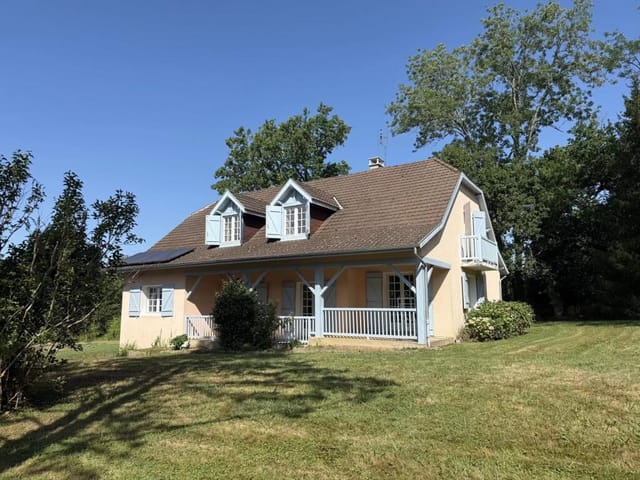
On a still weekday morning in Salies-de-Béarn, the smell of fresh bread drifts up from the boulangerie on Rue des Frères Labourdette before most people have even opened their shutters. That's the kind of town this is. Quiet, unhurried, genuinely French — not a postcard version of it. And sitting just five minutes from that town centre, on a generous 4,000 square metres of private land, this five-bedroom villa is the sort of property that makes you stop mid-visit and start quietly rearranging your life. At 185 square metres of interior living space, the house is substantial without being excessive. The 28-square-metre living room anchors the ground floor, and the wood-burning stove at its heart isn't decorative — on a January evening when the Pyrenean wind picks up, you'll understand exactly why the previous owners installed it. Large windows pull in the southern light throughout the day, and by late afternoon the living areas glow in a way that feels almost theatrical. The separate 17-square-metre dining room is properly sized for a family gathering or a long dinner with friends — no squeezing around a table designed for four. The kitchen runs to 16 square metres and opens naturally into the flow of the ground floor, practical and warm rather than show-home sterile. Upstairs, five bedrooms spread across a variety of sizes — 15, 15, 14, 13, and 12 square metres — giving every family member or guest their own proper retreat rather than a cupboard with a window. Two shower or bathroom spaces serve the upper level, and the 18-square-metre landing is wide enough to feel like a room in itself rather than a corridor. A laundry room, a ground-floor lavatory, and a 34-square-metre garage round out a floor plan that actually wor ... click here to read more

Picture 1

Step outside on a September morning and the air smells of sun-warmed oregano and the faint salt of the Corinthian Gulf rolling in off the water. The olive trees — forty of them, spread across 4,400 square metres of your own land — are heavy with fruit. The pool is still. The mountains behind Kyparissia glow amber in the early light. This is the kind of morning that makes you wonder why you ever went back. This five-bedroom property in Stassio, sitting on the western Peloponnese coast just 4.5 kilometres from Kyparissia, is not one building but two — a 118 sqm main villa and a separate 75 sqm guesthouse, both fully furnished and ready to use from day one. That distinction matters more than it might first seem. It's the difference between a holiday home and a working asset. Between a retreat and a revenue stream. The main villa runs across two floors and sleeps the family comfortably: three bedrooms, two bathrooms, generous living areas. In winter, the wood burner takes the edge off the cool evenings and the radiator system means you can be genuinely comfortable here in January, not just July. Three air-conditioning units handle the summer heat. Double-glazed windows with fly screens and shutters throughout keep the bugs out and the cool air in. Solar panels supply the hot water, and a 5kW photovoltaic system connected to the grid quietly generates a supplementary income year-round, even when no one is staying. Practical, low-effort, and increasingly valuable as Greek energy costs fluctuate. The oval 10 x 5 metre swimming pool sits at the heart of the outdoor space, flanked by a three-person hot tub. The guesthouse — two bedrooms, one bathroom, its own wood burner and two air-conditioning units — has a separate 5-metre ... click here to read more

Image 1

The day starts the same way every morning here: the Ionian Sea catches the sunrise before anything else does, and from the first-floor balcony of this east-facing villa, you watch the light climb out of the water and paint the Peloponnese mountains in shades of copper and rose. The olive groves between you and the shore are still. It's quiet enough to hear the birds. This is Bochali, on the green eastern side of Zakynthos, and this is what 7am looks like when you own a home here. Built in 2008 and thoughtfully renovated in 2019, this 156-square-metre stone villa sits on a fenced 381-square-metre plot within a small, well-kept development on the hillside just above Zakynthos Town. The construction is anti-seismic — the island takes earthquakes seriously, and so does this build. Two floors, three bedrooms, two bathrooms, a private pool, and a view that costs nothing extra. It came to market fully furnished and equipped, down to the fitted kitchen, so the ambition of turning up with a suitcase and opening a bottle of wine the same evening is not a fantasy here — it's just logistics. On the ground floor, the living and dining space opens into the kitchen in one continuous room, which is exactly how vacation houses should work — everyone together, no walls between the cook and the conversation. A guest WC sits off this main space. Upstairs, the master bedroom has its own ensuite bathroom, and two further bedrooms share the second bathroom. The balcony runs off the upper floor, and that east-facing sea view is yours from every morning you choose to be here. Throughout the villa, wooden shutters keep the afternoon heat manageable. Double glazing cuts noise and keeps warmth in during the shoulder seasons. Mosquito nets on eve ... click here to read more

Image 1

Early morning in Sopalmo, the air smells of wild rosemary and sun-warmed earth. The Almería hills sit golden in the distance, a rooster calls somewhere down the lane, and from the terrace of this four-bedroom villa, you can see all the way across the valley without a single rooftop breaking the view. This is the pace of life people spend years looking for. Sopalmo is one of those rare Andalusian hamlets that hasn't been discovered yet — not really. It sits quietly on the outskirts of Mojácar, tucked into the landscape like it's always been there, which it has. A small cluster of homes, a few neighbours who wave when they pass, and virtually no through traffic. Yet you're less than ten minutes by car from Mojácar Playa, where the beach bars along the seafront stay lively well into the evening and the chiringuitos serve fresh catch from the Mediterranean. The villa itself sits on 203 square metres of well-planned living space spread across two floors. Four bedrooms, three bathrooms — two of them en-suite — and a layout that actually makes sense for how people live on holiday and day-to-day. The bedrooms are genuinely generous in size. Not the cramped, corridor-of-a-room you find in so many Spanish villas at this price point. These are rooms where families spread out, where guests feel like guests rather than afterthoughts. What makes the interior feel different from the typical Almería villa is the light. Large windows pull the countryside in — the kind of soft, Mediterranean afternoon light that turns everything slightly golden and makes you forget what you were doing. The main living and dining area is where the house earns its keep: big enough to seat everyone for a proper meal, relaxed enough that nobody feels like ... click here to read more

Picture 1

Sunday morning in Hoogstede moves at its own pace. The smell of fresh bread drifts in from the village bakery two streets over, the horses in the paddock next door are already restless, and through the tall windows of this 1815-built villa, the morning light falls across two hectares of mature parkland like it has every day for the past two centuries. There are six bedrooms, three bathrooms, a whirlpool, a swimming pool, a bar room, and more square meters of living space—417 of them—than most people will ever need. But the real draw isn't the square footage. It's the feeling that you've stepped out of the world's noise entirely. Hoogstede sits in the far northwest corner of the Grafschaft Bentheim district, right up against the Dutch border, and it has the unhurried, green quality of a place that hasn't tried too hard to attract anyone. The Vechte river meanders through the landscape just east of the village, its banks lined with willows and cycling tracks. On weekday mornings, the Hauptstraße is quiet enough to hear jackdaws. On weekends, the roads fill with Dutch day-trippers cycling across the border from Coevorden and Hardenberg, stopping for coffee, picking up local rye bread from the Bäckerei, doing exactly what you'll be doing once you've settled into this place. The villa itself dates to around 1815—brick construction, solid as ever—and has been renovated to a standard that respects its age without treating it like a museum. The country-style kitchen is genuinely impressive: wide, well-equipped, the kind of room where people naturally gather and stay too long. High ceilings, generous room proportions, natural materials throughout. The wellness bathroom with its whirlpool is the kind of feature you use on Tuesda ... click here to read more

Front view of Hauptstraße 115

Picture this: it's a Tuesday morning in July, the mimosa outside the south-facing terrace has already caught the first light, and the only sound competing with the cicadas is the distant clink of rigging from the sailboats in the Sainte-Maxime marina. You've walked back from the boulangerie on Avenue Charles de Gaulle with a paper bag of still-warm croissants, and the house—your house—sits quietly behind its gates on a two-thousand-square-metre plot while the rest of the Var coast is only just waking up. That is the kind of morning this property was built for. Set within a private and secure estate close to the town centre of Sainte-Maxime, this five-bedroom villa occupies one of those rare plots that feel genuinely spacious by Côte d'Azur standards. Two thousand square metres of landscaped grounds give you room to breathe—something increasingly hard to find at this price point along the Gulf of Saint-Tropez. The south-facing orientation means the sun tracks across the garden from early morning until it drops behind the Maures hills in the evening, and in a region that logs over three hundred days of sunshine a year, that detail matters more than almost anything else. The villa currently runs as two separate apartments—a configuration that suits buyers who want rental flexibility from day one, or families who appreciate having genuinely independent spaces under one roof. Grandparents in one half, teenagers in the other. Guests who actually get privacy. It works. But the walls between the two units come down without drama, and the footprint of 180 square metres is more than workable as a single flowing home. A few targeted renovations would bring everything up to the standard you'd expect, nothing structural—think fini ... click here to read more

Picture 1

Stand on the top solarium terrace on a clear October morning and the Rock of Gibraltar fills the horizon, solid and ancient, while the Strait below catches the early light in long silver ribbons. That view—framed by bougainvillea climbing the stone walls and the faint salt breeze coming off the Atlantic—is the first thing you notice. It won't be the last. This is a serious family estate in Getares, one of the quieter residential pockets along the Algeciras coastline, and it works on every level that matters. Five bedrooms. Four bathrooms. A fully independent guest cottage with its own street entrance. A private pool. An outdoor kitchen under a pergola that has hosted more summer dinners than anyone's keeping count of. And 323 square metres of built space sitting on a 974 m² plot that feels, improbably, like it keeps revealing new corners the longer you spend time here. The main house runs across two floors and the architecture does something you don't often see at this price point in Cádiz province—the ceilings are genuinely high, which means natural light pours through rather than skims the surface. Downstairs, the entrance hall opens around a working fireplace, the kind you actually want to light in January when the Costa de la Luz turns quietly cool and the tourists have long gone home. The living and dining room has a second fireplace. The kitchen is built in traditional rustic style with masonry shelving, handmade and solid, with a laundry room tucked alongside it. Two bedrooms and a bathroom complete the ground floor—well-proportioned rooms that work equally well for children or weekend guests. Upstairs is where the property earns its place in a different category entirely. The master suite is double-aspect: sea ... click here to read more

Picture 1

Stand on the upper terrace on a Tuesday morning in late June, coffee in hand, and the Estérel massif turns the color of raw copper in the early light. Below, through a corridor of umbrella pines, you catch a silver flash of the Mediterranean. The infinity pool seems to spill right into it. This is not a postcard — this is what the week looks like when you own a home in Les Issambres. Roquebrune-sur-Argens sits in that rare pocket of the Var where the coast hasn't been completely swallowed by development. Les Issambres is its seaside quarter — a low-key, genuinely residential stretch between Saint-Aygulf and Sainte-Maxime that regular Côte d'Azur visitors tend to guard like a secret. The coves here, particularly Calanque des Anglais and the rocky inlets flanking the Corniche d'Or, are reachable on foot. Not "a short drive" on foot. Actually on foot, through fragrant maquis scrub that smells of wild thyme and warm rock. The villa itself is built in the Provençal Mas tradition — thick walls, tiled rooflines, terracotta details — but the interior has been fully brought into the contemporary era. At 289 square metres of living space, it breathes. The main salon runs to 70 square metres, which means a large family or a group of friends genuinely spreads out rather than stacking on top of each other. Five bedrooms, each with its own private bathroom and private terrace. That last detail matters more than you'd think: summer mornings where every guest can take their espresso outside without negotiating space are worth paying for. A dedicated office — large enough to function equally well as a games room or a teenager's retreat — gives the property a flexibility that pure holiday rentals rarely have. This works as a serious se ... click here to read more

Picture 1

Step off the train in Hasselt on a Friday evening, drive the twelve minutes south through vineyard-dotted countryside, and pull into the driveway on Hameestraat just as the last light catches the villa's clean stone facade. That's the rhythm of owning here. Quiet enough to actually decompress, connected enough that you never feel cut off from the rest of Belgium — or Europe, for that matter. Built in 2019 and spread across 299 square metres on a 1,514 m² plot, this three-bedroom villa in Alken is the kind of property that doesn't shout. It doesn't need to. The travertine floors, the parquet throughout the upper level, the master suite with its proper walk-in dressing room — these are choices made by someone who knew exactly what they wanted and didn't cut corners getting there. The result is a home that sits comfortably in the upper tier of the Belgian Limburg market, priced at €849,000, and genuinely earns that position. Alken itself sits in the heart of the Haspengouw, one of the most underrated rural landscapes in the country. Every April and May, the fruit orchards that line the roads between Alken, Sint-Truiden, and Borgloon explode into white and pink blossom — the Bloesemroute cycling circuit draws thousands of visitors annually, yet the village itself stays calm. Locals know the Tuesday market in Sint-Truiden for its Limburg vlaai, the flat fruit tart that you'll find in every bakery window. On Sundays, the Domein Alden Biesen — a former Teutonic Knights commandery just twenty minutes east near Bilzen — opens its formal gardens and stages classical music events that feel wildly out of scale for a region most outsiders haven't discovered yet. The daily texture of life here is genuinely good. The centre of Alken ... click here to read more

Photo 1 of Hameestraat 95

Picture this: it's a Tuesday morning in late October, the summer crowds are gone, and you're standing on your first-floor terrace with a coffee, looking out over the rolling Algarvian countryside while the Atlantic air drifts in off the coast. The beach is a ten-minute walk away. The nearest restaurant does a bacalhau à brás that would ruin you for any other cod dish you've ever tried. This is Sesmarias, Galé — and this three-bedroom villa is the kind of find that doesn't sit on the market for long. Sesmarias sits in a quiet pocket between Galé and Albufeira, close enough to the action but far enough to feel like it belongs to those who actually know the Algarve rather than just visit it. The road the villa sits on is a dead-end cul-de-sac — no through traffic, no noise beyond the occasional birdsong and the distant sound of waves on a still day. Families tend to love it here for exactly that reason. So do buyers who want a proper base on the coast rather than a glorified hotel room. The villa covers 112 square metres across three floors, and the layout is one of its strongest cards. Each level has its own logic. The ground floor, which has a separate entrance directly from the street, functions independently — there's an open-plan living and dining room with a kitchen, a bedroom with built-in wardrobes, a shower room, and a covered outdoor entertainment area at the back where the afternoon sun lands perfectly. You could put guests there without anyone losing privacy. You could rent it out during the summer while occupying the upper floors yourself. Or you could use the whole thing as one cohesive family home. The flexibility is genuine, not cosmetic. Step up to the first floor — the main entrance level — and the tone ... click here to read more

Picture 1

On a still Sunday morning, the only sound you'll hear from the south-facing terrace of Baversstraat 261 is birdsong and the occasional distant church bell drifting in from Tongeren's medieval center, about ten minutes down the road. The garden stretches out ahead of you — nearly 3,700 square meters of it — with no rooftops visible on the horizon, no developer's crane in the distance, just open Flemish countryside rolling away under a wide Belgian sky. That view isn't going anywhere. The land beyond the plot is protected, meaning what you're looking at now is what you'll be looking at twenty years from now. This is a proper detached villa. Not a semi, not a townhouse with a postage-stamp yard, but a 303-square-meter freestanding home on a genuinely large private plot in one of Belgium's most historically compelling corners. Built in 1969 and kept in good condition throughout the decades, the house has the kind of solid bones you don't find in modern builds — wide rooms, real proportions, a layout designed when space wasn't rationed. Walk inside and the living room immediately makes its case. At nearly 49 square meters, it's the sort of room where a large family doesn't feel crowded, where a crowd of weekend guests can spread out naturally. Light floods in through generous windows that face the garden, so even on a grey Limburg afternoon — and yes, Belgium has those — the interior stays bright and connected to the outside. The kitchen, in warm light oak, runs to over 25 square meters. That's a working kitchen, not a display kitchen. You can actually cook a Sunday stoofvlees in there, with room to spare while someone else uncorks the local Haspengouw wine at the island. The adjacent dining room at 23 square meters keeps e ... click here to read more

Front view of Baversstraat 261, 3700 Tongeren

Stand at the kitchen window on a Saturday morning and the garden just keeps going. Past the veranda, past the old trees, all the way to the stone outbuilding at the far end of the plot — 5,300 square meters of private green space in one of Belgium's most sought-after residential addresses. That's not something you find at this price point in Brasschaat. Not anymore. Max Hermanlei is one of those streets where the houses sit well back from the road, where you can hear birdsong more clearly than traffic, and where the neighbors tend to stay for decades. Number 45 is a detached villa built in 1958 — solid, characterful, with a stately entrance hall and a sweeping staircase that tells you immediately this was a house built with intention. The bones are genuinely good. The proportions are generous in a way that newer builds rarely manage. And with 247 square meters of living space spread across a sensible layout, there's real room to breathe. The ground floor opens into a wide entrance hall with that original staircase as its centerpiece. From there, the living and dining room catches the eye — large windows pulling in light from the garden, the kind of space that works equally well for a quiet evening with a glass of Westmalle on the couch as it does for hosting ten people around a long table. Next to the living area, the kitchen connects directly to a covered veranda. Step outside and you're already in the garden, coffee in hand, listening to absolutely nothing in particular. It's a very specific kind of quiet that comes with a plot this size, and it takes about thirty seconds to understand why people pay a premium for it. One of the more unusual aspects of the ground floor is the large room with its own separate entranc ... click here to read more

Front view of Max Hermanlei 45

Sunday morning in Torres Vedras has a particular kind of quiet. The kind where you can hear the breeze moving through your own garden from the kitchen window while coffee brews, and the only decision you face is whether to drive fifteen minutes to Ericeira for a bowl of caldeirada at the harbor, or stay home and do absolutely nothing in three thousand six hundred square meters of your own land. That choice — between action and ease — defines life at this villa, and it's one you'll face every single day. Built in 2012 and spread across three floors with 342 square meters of internal living space and a gross built area of nearly 649 square meters, this is a substantial home. Not a weekend bolt-hole. A proper base for a life lived between Lisbon and the Atlantic coast, with room for extended family, visiting friends, or a future rental setup that could generate serious seasonal income. Six bedrooms, six bathrooms, a garage that fits eight to ten cars, a working well, solar panels, and a heat pump — this property was built for people who don't like compromises. The ground floor does a lot of heavy lifting. Two living rooms give the house real flexibility — one for the adults who want to watch the match, one for the kids who don't. The fully equipped kitchen and adjoining laundry room mean the house functions as a full-time residence without any retrofitting needed. Two ground-floor bedrooms, the master suite, and an office all open directly onto the garden, so the boundary between inside and outside dissolves in the way it only can in the Portuguese climate. The guest bathroom sits conveniently off the entrance hall for anyone coming in sandy or muddy from the garden. Upstairs, the first floor holds a further ensuite bedr ... click here to read more

Picture 1

Stand on the rooftop solarium at dusk, a cold glass of Manzanilla in hand, and watch the sun drop behind Gibraltar while the lights of Morocco flicker awake on the horizon. That's not a postcard. That's a Tuesday evening. This single-storey villa in the hills above Manilva delivers one of those rare combinations—a fully renovated main home, a completely self-contained guest apartment, a private pool, and genuine sea views—all within walking distance of the Mediterranean. The house sits on a 530-square-metre plot in a year-round residential pocket of Casares Costa, the kind of neighbourhood where families actually live rather than just show up in August. Neighbours keep their gardens tidy. The streets are quiet without being remote. And the beach? Reachable on foot in under twenty minutes through a dedicated pedestrian underpass that cuts safely under the AP-7 motorway. Mornings, you'll see walkers and cyclists doing that exact route at sunrise. Inside, the main villa stretches across 109 square metres and was comprehensively renovated in 2018—so the bones are solid and the finishes are current. The layout flows logically: a proper entrance hall that gives the house a sense of arrival, a kitchen with enough room to actually cook in, a separate dining room for longer evenings, and a living room that catches good natural light through most of the day. The master bedroom is genuinely spacious, the bathroom has been done properly, and there's a guest WC so the practicalities of hosting are already sorted. This isn't a holiday flat dressed up as a house. It feels like a home. What makes this property genuinely different is the guest apartment. At 40 square metres with its own private entrance, it functions entirely independ ... click here to read more

Picture 1

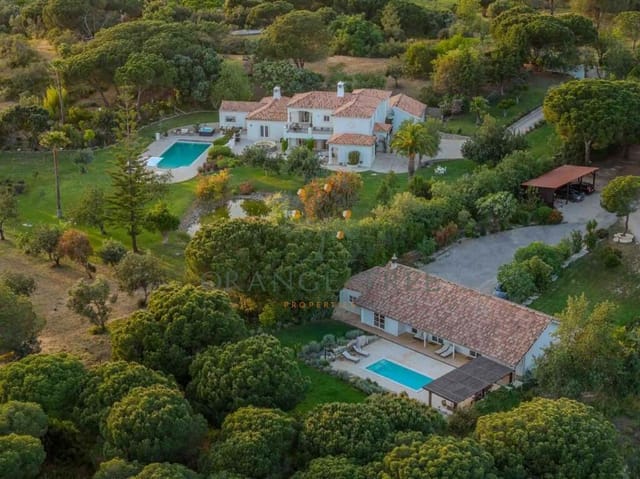
Step outside on a July morning, coffee in hand, and the Périgord countryside rolls away from your terrace in every direction — golden fields, oak woodland, not another rooftop in sight. The heated saltwater pool catches the early light. Somewhere in the studio behind you, the kids are still sleeping. This is what a summer in Brouchaud actually feels like. Brouchaud sits quietly in the northern Dordogne, the kind of village that doesn't show up on tourist maps but sits within easy reach of everything that makes this corner of France worth coming back to year after year. Périgueux, the ancient capital of the Périgord with its Roman amphitheatre ruins and the extraordinary Byzantine domes of the Cathédrale Saint-Front, is about twenty-five minutes by car. Brantôme — nicknamed the Venice of the Périgord for its abbey and riverside setting along the Dronne — is even closer. Markets happen several times a week in towns like Thiviers and Excideuil, and if you arrive early enough on a Saturday morning in Périgueux, you'll find the covered Clautre market overflowing with black truffles in winter, fat strawberries in spring, and Périgord walnuts come October. The rhythm here is slow and deliberate, which is exactly the point. The Dordogne has long attracted buyers from across northern Europe — British, Dutch, Belgian, Scandinavian — drawn by the food, the pace, and frankly the value compared to Provence or the Côte d'Azur. This part of Aquitaine gives you all the pastoral beauty without the summer gridlock. Bergerac Airport, which handles direct flights from London, Birmingham, Bristol, Edinburgh, and several other UK and European cities, is roughly forty minutes south. Bordeaux-Mérignac, with its much wider international connec ... click here to read more

Picture 1

Picture this: it's a Saturday morning in early October, and the pine forest surrounding Gebroeders Van Eyckdreef has turned the air sharp and clean. You crack open the kitchen window and the smell of resin drifts in while the coffee brews. No traffic noise. Just a wood pigeon somewhere out in the trees and the faint creak of the carport gate in the breeze. That's the daily reality this villa delivers — not as a promise, but as a given. Set on a 1,741-square-metre plot in one of Lommel's most coveted forested villa districts, this four-bedroom, three-bathroom detached home spans a generous 286 square metres of living space. It's move-in ready in the truest sense — not the estate-agent version of that phrase. Solar panels generating 5,940 Wp, a solar water heater, full underfloor heating, compliant electrical installation, double glazing throughout, and an energy label A rating. Someone has already done the hard work here, and done it properly. The house was renovated in 2009 and has been maintained with care. Walk through the front door into a wide entrance hall — there's a guest toilet off to the side, which sounds minor until you've lived without one — and you immediately get a sense of the proportions inside. The living room is the kind of space that handles both a quiet Tuesday evening with a book by the gas fireplace and a loud Sunday lunch with twelve people without feeling crowded in either scenario. Light pours in through large windows that frame the southwest-facing garden like a painting that changes with every season. That garden deserves its own paragraph. Three separate terraces give you options depending on the time of day or the mood: morning coffee facing east as the mist lifts off the treeline, afterno ... click here to read more
Front view of Gebroeders Van Eyckdreef 6

Early on a Saturday morning in Bergsjö, the kitchen fills with pale Nordic light before the rest of the house wakes up. The geothermal heat hums quietly underfoot. Outside, frost still clings to the garden edges, and the spruce trees beyond the fence stand perfectly still. This is what 172 square metres of Swedish countryside living actually feels like — unhurried, real, and quietly extraordinary. Vade 308 is a proper old Swedish villa, built in 1909 and sitting on a plot of 2,469 square metres in Nordanstigs kommun, roughly 260 kilometres north of Stockholm along the High Coast corridor. The price — 60,700 EUR — is almost startlingly low for what you get: a large three-to-four bedroom home in good condition, an A-rated energy label, geothermal heating already installed, and enough land to grow food, host summer gatherings, or simply watch the seasons change from a garden chair. For international buyers looking at second homes in Scandinavia, it's the kind of listing that stops the scroll. The house itself rewards close attention. It's not a renovation project in the exhausting sense — the structure is solid, the heating modern, and the main living area is move-in ready. What's genuinely exciting is the upper floor, where an unfinished section invites you to put your own mark on the space. A guest suite with dormer windows. A reading room lined with bookshelves. A home studio with north-facing light. The bones are there; the story of what it becomes is yours to write. Five rooms spread across the ground and upper floors give the layout real breathing space. Three confirmed bedrooms mean you can sleep a family comfortably and still have a room left over for whoever shows up with a sleeping bag in July. The kitchen sits ... click here to read more
Front view of Vade 308 villa

Stand on the terrace at seven in the morning, coffee in hand, and count the colors of the Cretan Sea as the sun clears the ridge above Kato Episkopi. The water starts navy, shifts to cobalt, then that particular electric blue that makes Eastern Crete feel like a different planet from the crowded resorts of the north coast. The olive groves below catch the light and go silver. Not a rooftop in sight. Just valley, mountains, sea, and sky — sweeping a full 300 degrees around you. This is what owning this hillside villa outside Sitia actually feels like. Built amphitheatrically into the slope above the village of Kato Episkopi, the property sits entirely alone on its 1,991 square metre plot. No neighbours visible in any direction. The closest town, Sitia, is a short drive down the valley — close enough that you can be sitting at a harbourfront table at Zorbas eating fresh octopus with a carafe of raki within fifteen minutes, far enough that the silence up here is absolute. The 95-square-metre interior moves around an open-plan living and dining space anchored by oversized windows that frame the panorama like a living painting. The kitchen is properly equipped — induction hob, full refrigeration, everything you need to cook the ingredients you've picked up at Sitia's Saturday farmers' market: Cretan cheeses, Toplou olive oil, tomatoes that actually taste of summer. Italian-imported furniture throughout, chosen for weight and quality rather than showroom flash. The light inside shifts dramatically through the day as the sun tracks south to west, so the same room that feels bright and energising at noon becomes warm and amber-toned by evening. Both bedrooms open directly onto the outdoor terraces. The bathrooms are finished ... click here to read more
Picture 1

Sunday morning in Douliana sounds like this: a rooster somewhere up the hill, the faint clatter of coffee cups from the kafeneio two lanes over, and the smell of wild thyme drifting through your kitchen window while the pool catches the first slant of light. This is not a resort. This is a real Cretan village, and this stone villa sits right in the middle of it. Douliana is the kind of place travel writers keep to themselves. Tucked into the western foothills of Chania prefecture, roughly 25 kilometres southeast of Chania town and about the same distance from the E75 coastal highway, the village sits at just enough elevation to catch a reliable breeze through August when the coast is baking. The surrounding landscape is old olive groves and limestone ridges, the kind that turn amber in October and deep green after the winter rains. Life here runs at a different speed — unhurried, anchored to seasons, genuinely local. Villa Amalthea was built in 2005 in the traditional Cretan country-house style — thick stone walls, exposed wooden ceiling beams, terracotta-toned plasterwork — and it has aged well. At 238 square metres across two main floors plus a 55-square-metre basement, the layout is generous without feeling sprawling. It sits within a small, well-kept complex of stone villas sharing communal landscaped gardens planted with bougainvillea, jasmine, and fruit trees that drop figs and pomegranates in late summer. The communal areas include barbecue spots tucked between the trees, the kind of outdoor setup that turns an evening into an occasion. Step inside and the ground floor does what good architecture should: it makes you exhale. The living room has those heavy wooden beams overhead, a proper fireplace for the coole ... click here to read more
Picture 1

Picture this: it's eight in the morning, the sun has just cleared the ridge behind the olive groves, and you're sitting on your stone-paved terrace with a coffee, watching the light shift across the Cretan Sea below. No traffic noise. Just the occasional bleat of a goat somewhere up the hill and the sound of a neighbor's radio drifting over the garden wall. This is Loutra, a village most tourists never find — and that's precisely the point. This two-bedroom ground-floor villa sits on a 500 m² plot in a genuinely quiet corner of northern Crete, about ten kilometers east of Rethymno along the old coast road. Built in 2006 and kept in good condition, the property covers 79 m² of interior space — not sprawling, but thoughtfully laid out so nothing feels wasted. The open-plan living area connects the kitchen, dining space, and lounge in one easy flow, with large windows pulling in daylight from the garden side. Tiled floors run throughout, keeping things cool underfoot during August, and aluminum window frames mean low upkeep for owners who aren't here year-round. The private pool is the real anchor of outdoor life here. Stone-paved terracing wraps around it with enough room for a proper arrangement of sun loungers and a shaded corner for afternoon reading. A covered veranda opens directly from the living area — this is where dinners actually happen in summer, stretched late into the evening with grilled fish from the harbor at Panormos or a slow-cooked stifado from the taverna in Perama, reheated and eaten at your own pace. The landscaped garden fills in the perimeter with Mediterranean planting: lavender, rosemary, bougainvillea spilling over stone walls. It looks after itself more than you'd expect. Practical notes wort ... click here to read more
Picture 1

On a still Sunday morning in Madiran, the only sounds are birdsong and the faint clinking of bottles from the cooperative down the lane. You push open the kitchen's stable door, coffee in hand, and step into the front garden where the dew is still burning off the lawn. The wrought-iron gates at the end of the gravel drive frame a view of organic vineyard rows stretching toward the foothills. This is your house. It has been for two hours, and already it feels like it's been yours for twenty years. That sense of instant belonging is hard to manufacture — it comes from a place that has been genuinely lived in, loved, and brought carefully into the present without losing what made it worth loving in the first place. This five-bedroom Maison de Maître dates to the 18th century, and the current owners acquired it as a second home before it quietly became something they couldn't leave. After years of thoughtful restoration, they've handed over a property that's fully move-in ready: no compromise projects, no skeleton-in-the-wall surprises, just a grand French country house that works as well as it looks. The proportions alone would stop you in your tracks. An entrance hall at 18 square metres sets the tone — black oak staircase rising ahead of you, original tiled floors underfoot, beamed ceiling overhead. To the right, what the owners use as a study is actually a generous 25.5-square-metre room with a wood burner and double-aspect windows; put a bed back in it and you have a ground-floor guest suite in seconds. The lounge at the same square footage flows naturally into a 23.5-square-metre kitchen with fitted units, an island, plumbing for a dishwasher and washing machine, and that stable door that you'll leave open from April ... click here to read more
Picture 1

Step out onto the first-floor balcony on a clear October morning and you can actually see into the Netherlands. The flat, green lowlands stretch out beyond Uelsen's rooftops, the kind of view that makes you understand immediately why someone chose this particular hillside, this particular plot, to build something exceptional. The air carries a faint trace of pine and damp grass. Somewhere below, a church bell counts out the hour. This is not a holiday postcard—this is a Tuesday. Built in 2003 and sitting on roughly 1,301 square metres of landscaped hillside in the recognized spa town of Uelsen, this four-bedroom villa spans approximately 285 square metres of living space across three intelligent levels, plus a fully functional basement with its own external entrance. The architecture is immediately arresting—an Austrian-style bay window punctuates the façade, and a glass front extending all the way to the roof ridge floods the ground-floor living room with light that shifts dramatically through the seasons, golden in summer, silver-white in January, always generous. It is the kind of house that photographs well but lives even better. The ground floor is where the home earns its reputation. The entrance hall is wide and genuinely impressive, with a guest toilet and shower that prevent the usual morning traffic jams when guests are staying. The open-plan kitchen, living, and dining area operates as one fluid space, anchored by a custom-built kitchen fitted with integrated high-end appliances and a wine cooler—the sort of detail that signals the original owners were serious about how they lived here. Adjacent to the kitchen, a practical utility room with bespoke cabinetry handles the less glamorous side of domestic life w ... click here to read more
Photo 1 of Bookesch 28

Step out onto the main terrace at eight in the morning, coffee in hand, and you'll understand why people buy property in Tourrettes and never look back. The valley rolls out below you in shades of olive and ochre, the medieval silhouette of Fayence perched on its hill to the east, and the only sounds are cicadas and whatever the wind carries up from the mimosa groves. This is Chemin des Collés — a quiet lane on the high ground above the village, where the views go on for miles and the pace of life feels deliberate in the best way. The villa itself sits on just over 7,200 square meters of private land, which, on the French Riviera hinterland, is the kind of plot that rarely comes available. Built in 1992 and put through a thorough renovation in 2013, the property sits comfortably in the territory between architectural confidence and contemporary comfort. The original Mediterranean bones are intact — the proportions, the relationship to the landscape, the way the living spaces open outward — but the renovation brought everything else into the present. Underfloor heating throughout, air conditioning, solar collectors, electric shutters, a serious security system. Move-in ready is an understatement. The current owners have kept it in genuinely good condition, the kind that doesn't require a mental renovation budget on your drive home from the viewing. Inside, the ground floor is organized around light. Floor-to-ceiling glass doors line the main living and dining areas, pulling the valley view into the room at every turn. The kitchen is fully equipped with high-end appliances — actually functional, not just photogenic. The dining room sits adjacent, large enough for a proper family dinner or a long lunch with guests that dr ... click here to read more
Front view of the villa and garden

Saturday morning. You push open the kitchen doors and the scent of jasmine hits you before you've made coffee. The garden is already warm, the pool catching the first real light of the day, and somewhere beyond the palm fronds there's just the low hum of summer. That's what Carrer Vall d'Aosta 14 actually feels like to wake up in. Not a resort. Your place. Set within Parc de Cubelles — a low-density residential enclave east of the town centre where the plots run large and the neighbours aren't on top of you — this six-bedroom villa occupies one of the area's more generous parcels: 2,641 square metres of mature landscaped garden with a private pool, a full-size tennis court, and an outdoor kitchen that was clearly designed for the kind of evenings that start at seven and end well after midnight. The villa itself covers 383 m² in total, with 245 m² of actual living space and an additional 108 m² of multifunctional storage that could easily become a wine cellar, a gym, or a workshop, depending on what you need it to be. The architecture is classic Costa Daurada residential: generous proportions, wide terraces, southeast orientation that keeps the interior bright from mid-morning onwards without baking it through the afternoon. Step inside and the entrance hall is immediately spacious — not the kind of space you apologise for when guests arrive. The main living room flows directly into a conservatory through large sliding doors, and from there straight out to the garden. When the doors are open, and from April to October they mostly are, the boundary between inside and outside quietly dissolves. The conservatory has its own fireplace and looks out over the vineyard-fringed hillside — an unexpected view for a property this ... click here to read more
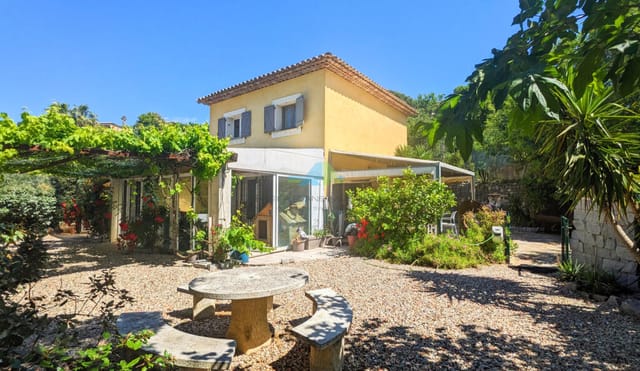
Main view of Carrer Vall d'Aosta 14

The first thing you notice on a Tuesday morning in Messines is the quiet. Not the absence of sound, but the right kind of sound — a rooster somewhere beyond the fig trees, the distant hum of a tractor on the next hillside, the faint smell of wood smoke drifting from a neighbor's chimney. You pour coffee, step out onto the terrace, and the Algarve countryside stretches out in front of you in shades of ochre and green. This is the version of Portugal that most tourists never find, tucked inland from the coastal circus, unhurried and completely, unapologetically itself. This four-bedroom villa sits on a generous plot just two kilometers from the center of São Bartolomeu de Messines, a proper working town where locals actually live year-round. No gift shops selling ceramic roosters. Instead, you get a covered municipal market hall where older women sell their homemade chouriço on Friday mornings, a cinema that still runs films in Portuguese, and at least three restaurants where a lunch of cataplana de marisco and a half-carafe of Alentejo red will leave you wondering why you ever lived anywhere else. The villa itself — 191 square meters of well-built, considered living space — is in genuinely good condition. Move in, settle down, start your Portuguese life. The layout works for a family: four bedrooms with the master suite occupying its own comfortable corner of the house, complete with en-suite bathroom and the quiet luxury of underfloor heating underfoot on cool winter mornings. The Algarve interior does get cold between December and February, and whoever designed this house knew it. The pellet burner in the living area handles the chill with a particular kind of warmth that electric heating simply can't replicate — that ... click here to read more
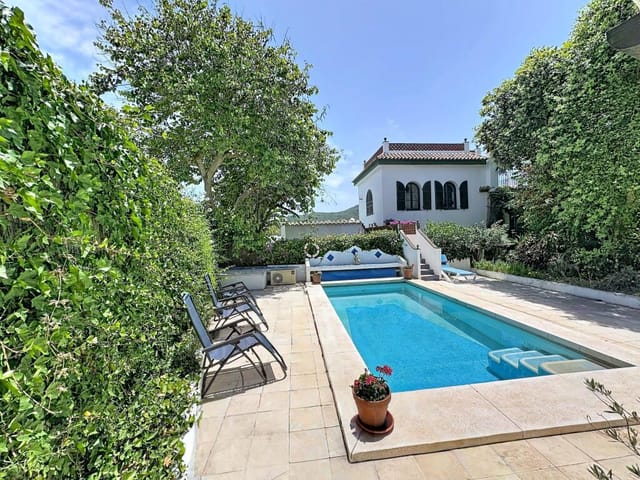
Picture 1

Picture this: it's nine in the morning, the kitchen doors are folded back completely, and the scent of orange blossom drifts in from the garden while Málaga's famous light turns the pool to hammered silver. You're in Mijas, one of the most quietly desirable addresses on the Costa del Sol, and your day is completely, gloriously unscheduled. That's the daily reality this place delivers. Sitting in the La Cala Golf area just outside the village of Mijas itself — that whitewashed hilltop town where the donkey taxis still outnumber the Uber pickups — this seven-bedroom villa is one of the more serious private residences you'll encounter in the region. Designed by one of Marbella's most sought-after interior studios, it spans 531 square metres across three distinct levels, each one with its own character and purpose. At €2,900,000, it's sold fully furnished, not with showroom catalogue pieces but with custom-made furniture, bespoke rugs, and hand-curated décor that took a considerable amount of someone's time and taste to assemble. You walk in and you're done. Move-in ready doesn't cover it — this is move-in-tomorrow ready. The ground floor sets the tone immediately. Floor-to-ceiling glass walls retract completely, dissolving the boundary between the open-plan living and dining space and the outdoor terraces beyond. This isn't a design trick that sounds good in a brochure and disappoints in practice — the rooms genuinely breathe, genuinely connect to the outdoors, and on a warm October evening when the Costa del Sol does that thing where it refuses to cool down even after sunset, you'll understand exactly why this matters. The bespoke kitchen sits at the heart of the entertaining flow, equipped with Bosch appliances and posi ... click here to read more
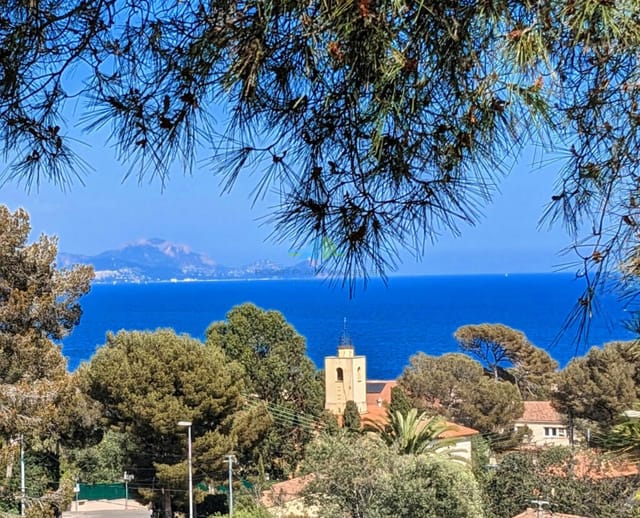
Picture 1

Step outside on a Tuesday morning in late October, coffee in hand, and the rooftop terrace already has the sun hitting it at that low golden angle that Mijas Costa does better than almost anywhere else on the Mediterranean. Below you, the 70-square-metre heated pool shimmers. The Alboran Sea sits on the horizon like a flat blue line. The garden is quiet — just the soft tick of the automatic irrigation system waking up the bougainvillea. This is what 1,495,000 euros buys you on one of the Costa del Sol's most consistently desirable stretches of coastline, and the property is already move-in ready. No renovation timeline. No builder delays. You arrive, you unpack, you open the shutters. Mijas Costa sits in a sweet spot that not every corner of the Spanish coast has managed to hold onto. It hasn't swapped its soul for a strip of neon beach bars, yet it's not remotely remote. The A-7 coastal road puts you at Málaga-Costa del Sol Airport in around 35 minutes — a practical reality that matters enormously if you're flying in from London, Amsterdam, Stockholm, or Dublin for a long weekend. Fuengirola, four kilometres east, has a proper Friday market along the Paseo Marítimo where locals shop for olives and dried peppers alongside tourists. La Cala de Mijas, minutes to the west, has the kind of beachfront restaurants — Casa Marbella, El Oceano — where you can eat grilled dorada and drink Manzanilla until the sun drops behind the Sierra de Mijas. The mountain village of Mijas Pueblo itself sits 430 metres above sea level, a 15-minute drive up winding roads through pine and eucalyptus. On Sunday mornings the Plaza de la Libertad fills with locals eating churros con chocolate outside Bar La Esquina, and the views from the clifftop ... click here to read more
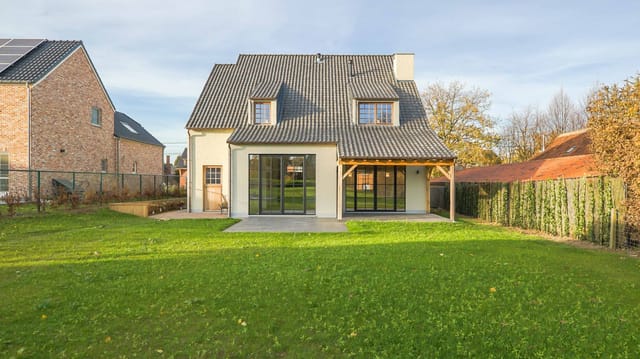
Picture 1