Villas For Sale In Europe (page 2)

Villas for sale in europe - homestra offers the largest amount of european real estate with over 200,000+ properties, find any type of property within your budget from villas to country homes. buy or rent your perfect home in europe. (page 2)

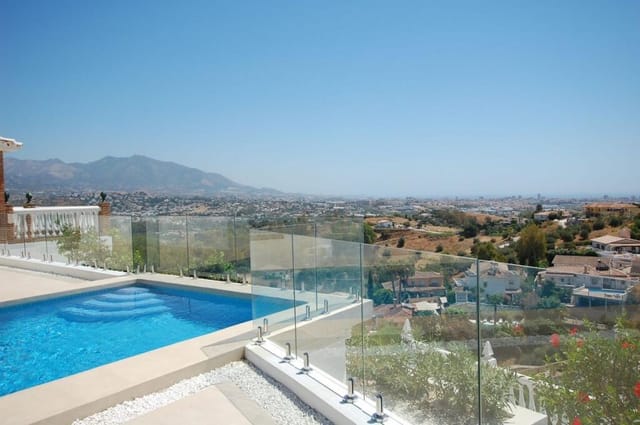
You wake up to the kind of light that only exists in southern Andalusia. It comes in low and golden through the terrace doors, catching the water in the pool before the rest of the house is even awake. By the time the coffee is on, you're already outside — the air is warm, faintly floral, carrying something that might be jasmine or the eucalyptus from the hills behind La Cala. This is a Tuesday in October, and it feels like August anywhere else. This four-bedroom villa in Mijas Costa is the kind of property that earns its price through daily quality of life rather than flashy finishes. Sitting on a private 533m² plot with a south-east orientation, the house catches the morning sun from first light and holds it across the terraces well into the afternoon. From the elevated position, you can see the Mediterranean stretching out toward the horizon, with the greens of the surrounding countryside rolling away on either side. It's a view you genuinely don't tire of. At 267 square metres of built space, the layout is generous without feeling cavernous. The living and dining area has real breathing room — space for a family to spread out, or for a dinner party that spills naturally onto the terrace as the evening cools. The fully fitted kitchen handles everything from quick breakfasts before a beach morning to proper Andalusian meals: a slow pot of rabo de toro, fresh pescaíto from the market at Fuengirola, whatever the day calls for. A separate utility room means the kitchen itself stays uncluttered, which any frequent host will appreciate. The villa comes fully furnished throughout, so arriving feels like arriving somewhere that already knows you. Four well-proportioned bedrooms serve everything from a family base to a prop ... click here to read more

Picture 1

Sunday morning in Nanteuil-en-Vallée arrives quietly. The bells from the Romanesque church drift across the valley, and from the upper bedrooms of this five-bedroom villa, you look out over a soft patchwork of Charente farmland — the kind of view that takes a minute to actually believe you own. The coffee's on. Nobody's in a hurry. This is what drew you to France in the first place. Nanteuil-en-Vallée holds the official "Petite Cité de Caractère" designation, a title the French government reserves for villages that have genuinely preserved their historical soul. Walk the village lanes and you'll pass medieval towers, a fortified abbey that dates to the 12th century, and stone walls that have been here longer than most countries. It's not a theme park version of rural France — it's the real thing, still lived in, still breathing. The house sits on a fully enclosed 589 m² plot, which matters more than you might think. Privacy in a village this size is a genuine luxury. The garden wraps around the property with enough space for long summer lunches under shade, a kitchen garden if you want one, or simply a place for children to disappear into for an afternoon. The country atmosphere is immediate the moment you step outside — no overlooking neighbors, no noise except birds and the occasional tractor on a distant lane. Inside, the scale impresses. At 215 square metres, this isn't a compact weekend bolt-hole — it's a proper family home, roomy enough to host several generations at once without anyone feeling squeezed. The living room is genuinely large and catches good light through the day. The kitchen is functional in the best sense: laid out for actual cooking, not just for looking good in photographs. And in this part of ... click here to read more

Picture 1

Sunday morning, and the only sounds are the cicadas outside and the smell of fresh coffee drifting through the open kitchen window. Out on the 1,725-square-metre plot, the light hits the garden at a low angle before the day fully wakes up. That's the daily rhythm Benedita rewards — unhurried, generous with space, and far enough from the city to actually exhale. This single-storey four-bedroom villa in the Roseiras development, just outside the village of Tabelida, sits in one of central Portugal's most quietly compelling pockets. The Silver Coast is half an hour south. Lisbon is an hour up the A8. But you don't really feel that proximity day to day — the neighbourhood is residential and calm, with no through-traffic noise, no tourist crowds, none of that. The villa stretches across 325 square metres of gross construction area, with 255 square metres of interior living space — substantial for a single-floor layout. Everything is on one level, which makes it genuinely easy for multigenerational families. Grandparents and grandchildren can all navigate the home without stairs, without inconvenience. The floor plan is well thought out: four bedrooms, three bathrooms, and a living configuration that opens naturally toward the garden. The interiors are in good condition, move-in ready without the cost or disruption of a renovation project. You show up, you settle in. The private sports court is something you don't see often in this price bracket. Afternoon football matches, impromptu tennis sessions, kids running off energy before dinner — it earns its square footage every weekend. The garden wraps around the property with enough green space to feel genuinely rural without requiring a full-time groundskeeper. There's room f ... click here to read more

Picture 1

Seven in the morning, and the Mediterranean is already doing that thing where it looks like hammered silver from up here. You're standing on the rooftop solarium with a coffee, the air still cool before the Andalusian sun takes hold, watching a fishing boat trace a slow line toward Fuengirola. The mountains behind you catch the first light. Nothing moves in the garden below except the palms swaying in a whisper of coastal breeze. This is what a Tuesday feels like at this villa in Cerros del Águila. Positioned on an elevated ridge in one of Mijas Costa's most established residential communities, this three-bedroom, single-level villa sits on a 1,000-square-metre plot that drops visually straight into the sea. The renovation here wasn't a cosmetic refresh — every surface, every system, every detail was taken back and rebuilt to a standard you'd expect at twice the price. Marble floors run throughout. Underfloor heating covers the entire property including the bathrooms, which matters more than people think when October rolls around and the evenings get crisp. Electric blinds, double glazing, full alarm system, fitted wardrobes in every bedroom — the kind of infrastructure that makes a house actually liveable rather than just photographable. The living and dining space opens through wide sliding doors onto the main terrace, and the connection between inside and outside is so immediate that you stop thinking of them as separate spaces. The kitchen is fully fitted and faces the same view. Cooking dinner here while the sun drops into the sea is either going to make you very calm or very distracted — probably both. Each of the three bedrooms has its own en-suite bathroom. Two guest suites open directly onto the rear garden a ... click here to read more

Picture 1

Sunday morning in Cellefrouin sounds like this: a wood pigeon somewhere above the courtyard, the faint clang of the church bell counting out nine, and the smell of fresh bread drifting from the boulangerie two streets over in Chasseneuil-sur-Bonnieure, just a ten-minute drive away. You're standing in the kitchen of a 140-square-metre stone house, coffee in hand, watching light pour through the window onto original stone walls that have absorbed a couple of centuries of exactly this kind of quiet. That's the life this house sells. Not a lifestyle concept — an actual, already-existing daily rhythm that you can step into. Cellefrouin sits in the Charente département of southwestern France, in the gentle, unhurried landscape that locals call the Charente Limousine. It's not a place that appears in travel magazine "hidden gem" lists, which is precisely the point. The village is real — a working French commune with a Romanesque church that dates to the 12th century, stone houses lining narrow lanes, and a community that still gathers for the local fête each summer. Tourists mostly drive past on their way to Cognac or Angoulême. Their loss, entirely your gain. The house itself is a proper Charentais stone property — thick walls that keep the rooms cool through July and August, and warm when autumn settles in. At just under €126,000, the asking price reflects the Charente's status as one of the most accessible rural property markets in France for international buyers. You're getting 140 square metres of living space, already tastefully renovated and genuinely move-in ready, at a price point that would buy you a parking space in Paris. Step inside and the ground floor opens with an entrance hall that leads straight into a brig ... click here to read more

Picture 1

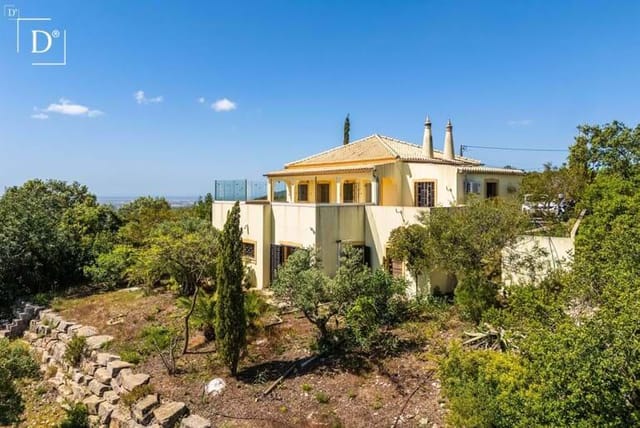
Stand on the upper terrace just after sunrise and you'll understand why people who come to this part of the Algarve rarely leave. The air carries a faint mix of pine resin and dry earth, the kind that only exists in the Algarve interior where the hills roll quietly away from the coast. Down in the valley, São Bartolomeu de Messines is just waking up — church bells at eight, the smell of fresh bread from the padaria on Rua do Comércio, a tractor moving slowly along the orange grove track. And here, on five private hectares, there is nothing but birdsong and the soft sound of water moving through the garden irrigation channels. This is a five-bedroom, five-bathroom private estate spanning 320 square metres of main residence, with two fully independent guest houses and a set of professional equestrian facilities that you genuinely don't find attached to residential properties at this scale anywhere else in the Algarve. The main villa sits in excellent condition — solid, well-maintained, ready to move into or rent out from day one. No renovation headache. No waiting. The architecture is rooted in traditional Portuguese rural design: thick rendered walls that keep the interior cool through July and August without leaning on air conditioning, terracotta-tiled floors that hold the morning cool underfoot, deep-set windows that frame long views across the property toward the ridgeline. But the spaces are generous and flow well for modern life — the main living areas open fully to the outdoor terraces, making the boundary between inside and outside more or less irrelevant for most of the year. In the Algarve, where you get over 300 days of sunshine annually, that matters enormously. The heated swimming pool is long enough to ac ... click here to read more

Picture 1

Step outside just after sunrise, coffee in hand, and the only sound you'll catch is the low, rhythmic chorus of frogs from the lake—punctuated every so often by a bird you can't quite name. No road noise. No neighbors. Just 10.65 hectares of Algarve countryside wrapping around you like a slow exhale. This is what mornings look like here, and once you've had one, it's hard to imagine going back. The villa itself—277 square metres across the total estate, with the main house sitting at 215m²—was completely gutted and rebuilt in 2015. Not a light refresh. A full renovation, done properly, with underfloor heating, electric shutters, solar panels, and a design language that respects the rural setting without pretending it's a farmhouse from 1973. Open-plan kitchen and living room anchor the ground floor, and the fireplace there earns its keep from November through February, when evenings in the Algarve inland get genuinely cool and the scent of woodsmoke drifts through cracked-open windows. There's a second sitting room with a wood-burning stove—handy when one group wants to watch a film and another wants to read in quiet. Three bedrooms, each with its own en-suite bathroom. A guest bathroom on top of that, so four bathrooms total across the house. A laundry room. A double garage with an electric door, and a workshop out back for anyone who actually uses one. The garden is looked after—fruit trees, flowering beds in colour from spring onwards, a proper BBQ zone, and shaded leisure corners that make Portuguese summer heat manageable. The swimming pool is large, positioned to catch full afternoon sun, and it overlooks the natural lake that sits on the property. That lake is the detail people always stop at when they see the l ... click here to read more

Picture 1

On a clear morning in Laàs, you can stand at the edge of the garden with a coffee and watch the snow-capped peaks of the Pyrenees catch the first light — no crowds, no noise, just the faint sound of a church bell drifting over the rooftops from the village center five minutes down the lane. That view alone stops people in their tracks. The fact that it comes with a four-bedroom village villa, a large barn, a swimming pool, and nearly a hectare of parkland makes it genuinely hard to walk away from. Laàs sits in the heart of Béarn, one of those corners of southwest France that visitors stumble into by accident and then spend years trying to get back to. It's not Dordogne-famous. It hasn't been overrun. The village has kept its soul — a proper weekly market culture in the wider area, real neighbors who've lived here for generations, and a restaurant that people drive twenty minutes to eat at. The Château de Laàs, with its formal French gardens and museum-quality decorative arts collection, is literally within walking distance. Not many village properties can say their local landmark is a 17th-century château. The villa itself sits in what can only be described as a genuinely peaceful setting. Not "quiet because there's nothing going on" quiet — more like the deep, settled calm of a place that knows what it is. The grounds run to around 10,000 square meters, giving you real space: room to let children disappear into the garden for hours, space to plant a kitchen garden, or simply to keep the world at a comfortable distance. The swimming pool looks out toward the mountains. On summer evenings, when the light goes amber and the Pyrenees turn pink, that pool terrace becomes the only place you want to be. Inside, the ground f ... click here to read more

Picture 1

On a warm Tuesday morning in Uzès, the weekly market on the Place aux Herbes fills up fast. Goat cheese from the Cévennes, lavender honey, tapenade pressed from olives grown twenty minutes away. You walk back along the Rue de la République with a basket of provisions, and fifteen minutes later you're floating in your own pool, the Provençal hills rolling out in every direction beyond the garden walls. That's the rhythm this property makes possible. The villa sits on the road between Uzès and the Pont du Gard, one of the most quietly coveted corridors in the entire Gard département. Not tucked into a village where parking is a daily negotiation, not perched on a hillside requiring a four-wheel drive. This is a single-storey home on roughly 780 square metres of flat, landscaped ground — practical, private, and genuinely easy to arrive at and leave. The automatic gate with video intercom closes behind you and the outside world recedes. What strikes you first inside is how much light the architects coaxed into 115 square metres of living space. The 42-square-metre sitting and dining room doesn't feel like a room so much as an extension of the garden — the wide glass doors fold back completely onto a 40-square-metre south-facing terrace, and on still evenings the boundary between inside and outside essentially disappears. The kitchen is full-width and properly equipped, with the kind of high-end finishes that signal someone thought hard about how cooking actually works: an integrated pantry tucked discreetly behind cabinetry, stone countertops, and enough prep space to feed eight people without chaos. The sleeping layout is quietly intelligent. Two guest bedrooms share a well-finished shower room with WC — good for childre ... click here to read more

Picture 1

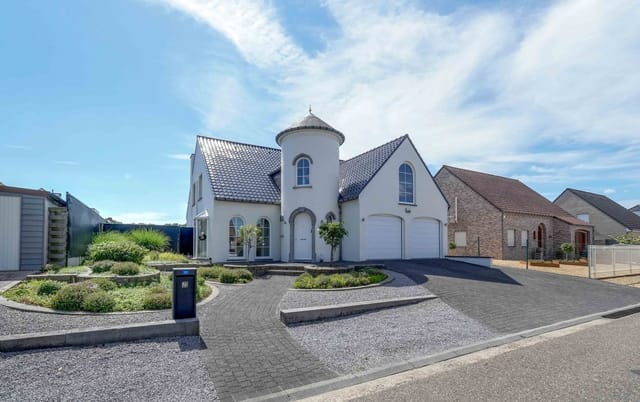
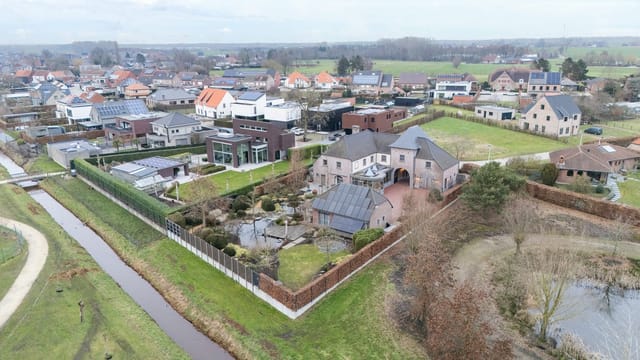
Picture a Sunday morning in late April. You're standing at the kitchen window, coffee in hand, watching light move across the southwest-facing garden while the heated pool shimmers in the background. The neighborhood is quiet — the kind of quiet that doesn't feel empty, just genuinely calm. That's Rankenlaan on a weekend morning, and it's one of the reasons people who find this part of Lanaken tend to stay. Lanaken sits in Belgian Limburg, right at the point where Belgium tips into the Netherlands, and the geography here is unlike anywhere else in the country. Within cycling distance of this villa, the Pietersheim estate opens up into meadows, moats, and a children's farm that makes weekend mornings with kids genuinely fun rather than logistically exhausting. The Nationaal Park Hoge Kempen — Belgium's only national park — is close enough that you can be on a heathland trail within twenty minutes, watching purple heather stretch toward the horizon in August or tracking frost patterns on pine bark in January. This is not a region that runs out of things to do outdoors. It just changes what those things look like with each season. The city of Maastricht is barely fifteen minutes by car across the Dutch border. That matters more than it might sound. Maastricht's Vrijthof square hosts some of the most lively Christmas markets in the Benelux region, the André Rieu concerts draw crowds from across Europe every July, and the restaurant scene along the Rechtstraat — think Burgundian Dutch cooking, heavy on slow-braised meats and local cheeses — is worth the short drive any evening. Genk and Maasmechelen are equally accessible via the E314, so everything from retail therapy at Maasmechelen Village to a concert at C-Mine in Genk ... click here to read more

Front view of Rankenlaan 21, Lanaken

Saturday morning. You slide open the living room doors and the garden takes over — the smell of wet grass, the shimmer off the pool surface catching the early light, birdsong from the tree line at the far edge of the plot. No neighbour in sight. This is Cederlaan 7, and it sets a very particular kind of tone before you've even had your coffee. Neerpelt — now officially part of the merged municipality of Pelt — sits deep in the Limburg province of northeast Belgium, and it's the kind of place that rewards people who look past the obvious. No crowds, no tourist theatre. Instead you get real Flemish countryside: the dense pine forests of the Lommelse Sahara a short drive west, the recreational lakes at Domein Hengelhoef nearby, and the kind of clean air that people from Antwerp and Brussels specifically chase on weekends. Those same buyers have been eyeing this area for years. It's not a secret exactly — but it hasn't been overrun either. The house sits at the end of Cederlaan, a cul-de-sac where the only cars that pass belong to residents. Children cycle unsupervised here. The postman turns around at the bottom. It's genuinely quiet, in the way that money can't always buy. Step through the front door and you land in a living space built around parquet floors, warm-toned and solid underfoot, with a gas fireplace anchoring one wall. When winter rolls across Limburg and the garden turns to frost, that fireplace shifts from decorative to essential — it earns its place. Natural light comes in generously across the main floor, and the layout flows without feeling forced: no corridor maze, no awkward transitions. The lower level was renovated two years ago and it shows. The finishes feel considered rather than rushed. Four be ... click here to read more

Front view of the villa and garden

Stand on the upper terrace on a still Tuesday morning and the Zuid-Willemsvaart canal is a mirror. Herons pick their way along the bank below. The only sound is the occasional low chug of a barge making its way south toward Maastricht, fifteen kilometers down the road. This is what Gerstenbosweg 14 feels like before the rest of the world wakes up — and that feeling doesn't wear off. Built in 2017 to a high specification, this detached three-bedroom villa in Lanklaar sits in one of the quieter corners of the Belgian-Dutch border region, a pocket of Europe that most international buyers haven't discovered yet. That's changing. The Maas Valley and the Kempen have been quietly drawing cyclists, nature lovers, and weekenders from Antwerp, Brussels, Cologne, and Amsterdam for years, and property prices here still reflect what the region was rather than what it's becoming. At 197 square meters of well-organized living space on a 460-square-meter plot, with an EPC-A energy rating and canal views from the first floor, this is the kind of find that doesn't sit on the market long. The villa is arranged across two levels in a way that actually makes sense for how people live on holiday. All three bedrooms — the master at 18 square meters with direct access to the bathroom, and two further rooms of 13 square meters each — sit on the ground floor, away from the heat of the afternoon sun and the noise of the terrace above. The bathroom has a double washbasin, walk-in shower, and large mirror with drawer storage. There's also a separate guest toilet, which matters more than you'd think once you have a house full of family or friends. The integrated double garage, 41 square meters with an automatic sectional door, utility sink, and til ... click here to read more

Front view of Gerstenbosweg 14

Stand at the end of a 100-meter palm-lined driveway on a Tuesday morning in October and you'll understand immediately why people who come to this corner of western Sicily rarely want to leave. The Egadi Islands shimmer on the horizon. The scent of citrus and rosemary lifts off the warm stone paths. Somewhere beyond the villa's fenced boundary, the medieval hilltop town of Erice sits cloaked in its habitual morning mist — and it all feels, somehow, entirely yours. This is Contrada Milo, a quiet agricultural ribbon just outside Trapani that has remained almost entirely off the international buyer radar, which is precisely what makes this property so worth paying attention to. Set on a fully enclosed estate of over 20,000 square meters, the villa is the kind of place that takes an hour to properly walk around. Forty palm trees line the private approach. Ornamental flowerbeds give way to Mediterranean scrub. A vast stand of exotic palms behind the main structure creates genuine depth — the sort of green backdrop that turns an outdoor lunch into something that feels cinematic without trying. The main villa itself spans roughly 450 square meters across two levels — the raised ground floor where daily life happens, and a semi-basement that offers flexible space for storage, technical rooms, or future reconfiguration. Inside, the scale is genuinely generous. The formal reception hall alone runs to approximately 160 square meters, the kind of room that handles twenty people without effort and still has space to breathe. A dedicated laundry room of around 40 square meters means the practical side of running a larger household doesn't intrude on the living spaces. Three bedrooms, four bathrooms, interiors in good condition — the ... click here to read more

Picture 1

Early on a Saturday morning in late April, you open the kitchen door and step out onto the terrace. The air smells of wild rosemary and the faint salt drift coming off the Ria Formosa, two kilometres away. A hoopoe calls from somewhere in the garden. The coffee is still brewing inside. This is the unhurried tempo of life near Tavira — and this three-bedroom villa puts you right at the centre of it. Tavira doesn't shout. That's precisely what makes it one of the Eastern Algarve's most quietly compelling towns. While the western Algarve has spent decades catering to the package-holiday crowd, Tavira held its ground. The Roman bridge still arches over the Gilão River. The twin-towered Igreja de Santa Maria do Castelo still chimes the hours. The tiled facades on Rua da Liberdade still gleam white and cobalt in the afternoon sun. It's a working Portuguese town first, a destination second — and that order of priority is exactly what draws international buyers who want something real. The villa sits in a calm residential pocket just outside the town centre, close enough that you can cycle to the riverside market on a Tuesday morning and be back before the pool heats up, yet far enough that the view from your balcony is pure nature reserve. The protected landscape of the Ria Formosa Natural Park rolls out to the south, an ever-shifting canvas of wetland channels, maritime pine, and on clear winter days, the low Atlantic light that photographers cross continents to chase. Inside, 185 square metres have been laid out with a clear sense of how people actually live. The living and dining room is the heart of the house — generous, south-facing, and anchored by a newly installed wood-burning stove that changes the character of the ... click here to read more

Picture 1

Stand on the upper terrace on a clear morning in late September, coffee in hand, and you can see all the way to the Mediterranean. Not a sliver of blue between buildings—the actual sea, wide and glittering, with the terracotta rooftops of the old village stacked in the foreground like a painting someone forgot to finish. That view alone will stop you mid-sentence the first time you see it. But this villa in Châteauneuf-de-Grasse delivers considerably more than a view. Châteauneuf sits on a limestone ridge in the Alpes-Maritimes, about 12 kilometres inland from Cannes and just a few minutes' drive from the outskirts of Grasse—the world capital of perfume, where Fragonard and Molinard have been distilling lavender, jasmine, and May rose for centuries. You can smell the fields on the right kind of morning in May, when the windows are open and the wind comes from the north. It's the kind of sensory detail that reminds you you're somewhere genuinely specific, not just another postcard version of the south of France. The villa itself sits within one of the village's most established residential pockets, on a carefully landscaped plot that gets sun from east to west throughout the day. At 131 square metres across two floors, the layout is well-proportioned rather than cavernous—the kind of space that actually gets lived in, not just shown off. Ground floor opens into a generous reception room with an integrated open kitchen, and the whole thing spills directly onto the terraces through wide glazed doors. The flow between inside and outside is natural, not forced. When friends come for dinner in July, the table moves outside without anyone having to think about it. The swimming pool sits harmoniously within the terrace arrang ... click here to read more

Picture 1

The first thing you notice on a summer morning at this Putzolu villa is the silence. Not the eerie, empty kind — the kind that costs something. Cicadas in the macchia, a faint breeze moving through the cork oaks, and the distant shimmer of the Gallura hills sitting still against a cloudless sky. Then you remember: you're five minutes from Olbia's city center and 20 minutes from some of the most coveted coastline in the Mediterranean. That combination is genuinely rare. Sardinia gets written about a lot, but usually through the lens of the Costa Smeralda's superyacht scene — Porto Cervo, the Billionaire Club, the July crowds. What doesn't get written about enough is the real Olbia. The Tuesday morning market on Via Nanni where locals argue over which vendor has the better seadas, the fried pastry pockets of ricotta and honey that are basically a religious experience. The evening passeggiata along Corso Umberto that starts slow and somehow ends at midnight over a bottle of Vermentino di Gallura at a terrace bar. This villa puts you inside that rhythm, not observing it from a resort. The property sits on approximately 1.5 hectares of private land in the Putzolu area, one of those semi-rural pockets just outside Olbia that manages to feel a world away from the city while actually being about a five-minute drive from it. A flat garden of roughly 3,000 square meters wraps immediately around the house — and this isn't the kind of garden you maintain out of obligation. It's the kind you actually use. Space for a proper dining terrace, a future pool if you want one, a bocce court, a vegetable patch. The surrounding land buffers you from neighbors in every direction. The villa itself spans 214 square meters across two levels. T ... click here to read more

Picture 1

Picture this: it's a Sunday morning in late October, and the smell of woodsmoke is already drifting up from the valley below. You're sitting on the terrace outside the kitchen, coffee in hand, watching the first light catch the silver undersides of your olive leaves. The hills roll away in every direction — golden, green, impossibly quiet. This is not a postcard. This is your garden. This 200-square-metre country villa outside Chianni sits on roughly five acres (20,000 sqm) of mixed land — working olive groves, open meadows, patches of woodland — and it's the kind of property that becomes a reference point for the rest of your life. Not because of grand architectural gestures, but because of what it actually feels like to be there. The house arrives in good, liveable condition, which matters more than people give it credit for. You won't be gutting a ruin or project-managing a rebuild from another country. You can arrive, unlock the door, and start living — then improve things at your own pace. The pellet boiler provides central heating and hot water throughout, and all windows are double-glazed, which means the place stays genuinely warm through the Tuscan winter, not just decoratively Tuscan. What makes the layout especially interesting is that the accommodation currently runs as two independent units. The main section is entered via an external staircase that leads up to a first-floor terrace — a landing wide enough to actually eat at, which becomes your default dinner table from April through October. Inside, a generous open-plan kitchen with pantry flows into a sitting room anchored by a freestanding fireplace positioned in the centre of the room. It draws the eye immediately. Two bedrooms occupy this level, one ... click here to read more

Picture 1

On a Wednesday morning in Pontremoli, the market on the cobbled piazza starts filling up around eight. Vendors lay out local testaroli pasta, sharp Pecorino from the hills, and bottles of Colli di Luni wine while church bells from the Cathedral drift over the rooftops. From this stone farmhouse less than a kilometre away, you can walk there in ten minutes through olive groves that have been producing fruit for generations. That kind of proximity to a living, breathing medieval town is rare. Most rural Tuscan properties demand a twenty-minute drive just to buy bread. Here, Pontremoli is practically in your front garden, yet the moment you step back through the iron gate into the flagstone courtyard, the town's activity fades entirely. What you hear instead is wind moving through the chestnut trees, and on still evenings, the faint sound of the Magra river somewhere below the ridge. The property itself is a compound in the truest sense — not a single building but an entire small hamlet that's been thoughtfully restored without stripping away what made it worth saving. Four independent apartments sit within the main farmhouse, each with two bedrooms, a kitchen, a bathroom, and a reception room. Stone vaulted ceilings dominate the ground floor common areas, the kind of architecture that took centuries to achieve and cannot be replicated at any price. Marble bathrooms and modern fitted kitchens bring the day-to-day comfort up to contemporary standards while the bones of the place remain emphatically sixteenth-century. The old chestnut drying room — with its original stone floor and heavy wood beams still intact — is the kind of detail that stops visitors mid-sentence. There is also a large stone barn across two levels and ... click here to read more

Picture 1

Sunday morning in the Valdera hills smells like woodsmoke and rosemary. You push open the kitchen door, coffee in hand, and the whole of Tuscany rolls out in front of you — a long slow exhale of olive groves, vineyards, and medieval tower tops catching the early light. No neighbour in sight. Just the faint toll of a bell from Rivalto drifting up the hillside, and the crunch of gravel under your feet as you walk to the pergola table for breakfast. This is the quiet that people spend years trying to find. This two-bedroom renovated farmhouse sits above the Valdera hills near the village of Chianni, on a private plot of just over 10,000 square metres — about two and a half acres of fruit trees, old stone walls, and open sky. At 150 square metres of interior living space, it's compact enough to feel intimate, generous enough to host family comfortably. The renovation has been done with a sure hand: modern infrastructure underneath, authentically Tuscan on the surface. Terracotta floors, exposed stone, wooden beams — nothing that jars with the landscape outside the window. On the ground floor, a glass-enclosed living and dining room opens the whole hill view into the house without losing warmth in winter. The kitchen runs alongside it, practical and well-equipped. There's a tavern — a sitting room that converts easily to a TV room or reading corner — plus a bedroom and bathroom. What was once a woodshed now houses a jacuzzi. The cellar holds an aluminium wine barrel and a pizza oven, which tells you something about how the previous owners spent their evenings and gives you a very good template to follow. Upstairs, two further bedrooms, quiet and cool in summer, take in the wide panorama from above. A 40-square-metre garage ... click here to read more

Picture 1

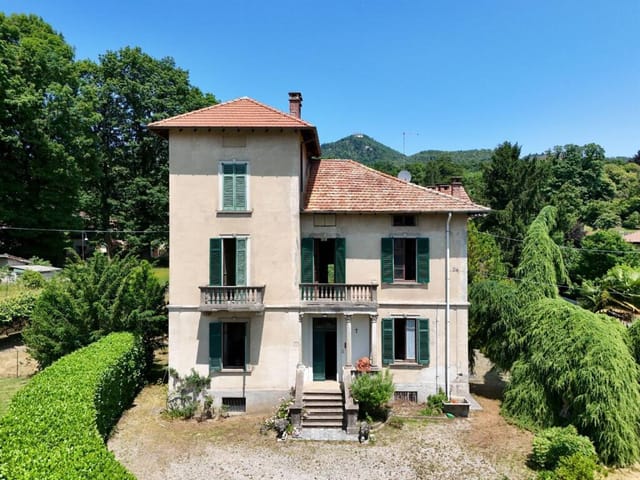
On a still Tuesday morning in Casciago, the only sound you hear from the upstairs bedroom window is birdsong cutting through the cool Lombardy air and, somewhere below, the faint rustle of chestnut trees at the edge of the park. No traffic. No noise. Just 3,000 square metres of private greenery and a century-old villa that has quietly watched the world go by since the Liberty movement was still in full swing. This is the kind of property that doesn't come around often. An authentic early 1900s Art Nouveau villa on Via Giuseppe Pozzi, set in one of Casciago's most sought-after residential pockets — a hillside comune in the province of Varese where the neighbours are elegant period villas and the pace of life genuinely slows down the moment you arrive. At 500 square metres across three floors, plus a full basement level, there's room here to do something extraordinary. The architecture alone tells a story. The Liberty style — Italy's answer to Art Nouveau — left its fingerprints all over Lombardy's villas in the early twentieth century, and this one carries those original period details with quiet confidence: decorative facades, the proportions of a formal entrance hall, the kind of thick plaster walls that keep rooms cool through July and August without you lifting a finger. Yes, it invites a thoughtful restoration — and that's precisely the opportunity. Buyers who understand historic Italian property know that bringing a 1900s villa back to its full potential is not a compromise, it's the whole point. The bones are exceptional. What you add to them is yours. Inside, the ground floor opens through a generous entrance hall into a living room, kitchen, and three double bedrooms — more than enough for a large family or a ... click here to read more

Picture 1

July in Lajatico. The sun drops behind the cypress-lined ridge, the air cools just enough to make sitting outside feel like a reward, and somewhere across the valley you can hear the distant swell of an orchestra drifting up from the Teatro del Silenzio. You're on your own terrace, a glass of Vernaccia di San Gimignano in hand, watching the last gold light drag itself across a landscape that hasn't fundamentally changed since the Etruscans farmed these same hills. That's not a fantasy — that's Tuesday evening when you own this three-bedroom stone villa outside Lajatico. Set on one of the finest elevated positions in the Valdera, the property commands an unobstructed 360-degree panorama of rolling Tuscan farmland. No neighbor blocking your east-facing view. No road noise creeping up from below. Just that particular silence — birdsong, wind through the olive trees, the creak of the wooden shutters in the afternoon breeze — that people drive hundreds of kilometers and pay serious money to find for a single weekend. The house itself has been built in the tradition of a Tuscan cascina, which means it doesn't try to look rustic. It actually is. Stone walls cut from the local hillside, handmade terracotta cotto tiles underfoot, thick wooden ceiling beams left exposed the way they've always been in farmhouses across this province. The difference here is that behind the traditional skin sits genuinely contemporary infrastructure. Underfloor heating runs throughout, powered partly by solar panels. Air conditioning handles both heating and cooling for the shoulder seasons. Double-glazed wooden windows keep the interior thermally efficient without sacrificing the old-world look. The insulation meets Italy's current Class A energy ... click here to read more

Picture 1

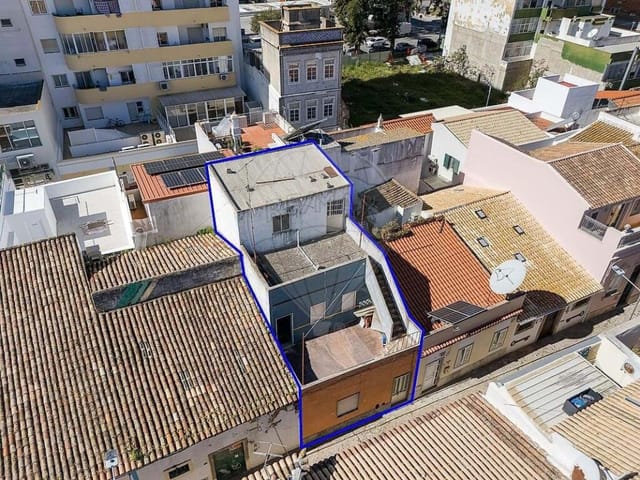
Stand at the front door on a Tuesday morning and you can already hear the city waking up. The clatter of espresso cups from the café on the corner. The low hum of fishing boats heading out from Faro Marina, just four minutes on foot. A church bell somewhere beyond Largo da Madalena — which is essentially your front garden. This is not a weekend retreat hiding behind a gate on the edge of town. This is Faro proper, the real beating heart of the Algarve's capital, and this four-bedroom villa puts you right inside it. The property sits on a plot of 87.18 m² and spreads across three floors with a gross construction area of 199 m², giving a future owner serious room to work with. Ground floor runs from an entrance hallway through a living room and separate dining room with pantry, a kitchen, a backyard, and a bathroom with storage — practical bones that give a renovation a clear head start. Up on the first floor there's a bedroom with built-in wardrobe, two interconnected rooms that could easily become a generous primary suite with a study or a pair of guest rooms with shared access, plus a terrace and storage room. The second floor is all terrace and a 25.75 m² storage room that, with the right architect, could become something far more interesting — a rooftop studio, a reading room with open sky above it, or simply the best sundowner spot in the old town. At €345,000 for this footprint and this location, the arithmetic is compelling. Faro's downtown property market has been tightening steadily. International buyers are arriving, drawn partly by Portugal's Non-Habitual Resident tax regime and partly by the fact that the Algarve is far more than the package-holiday coast most people picture. Faro itself tends to get skipped ... click here to read more

Picture 1

Picture this: it's a Tuesday morning in late September, the kind of morning that makes you want to cancel everything. You're standing on your upstairs terrace with a coffee, watching the mist slowly pull back from the Apennine ridgeline, and the only sound is a woodpecker somewhere in the fig tree below. That's the daily reality of owning this three-bedroom villa in the Lunigiana hills of northern Tuscany — a place most Italians know about and most foreigners haven't found yet. That's not an accident. Lunigiana sits in the crease between Tuscany, Liguria, and Emilia-Romagna, technically within Tuscany's administrative borders but with a character entirely its own. Fewer tour buses. More castles per square kilometre than almost anywhere in Italy. Hiking trails that cut through chestnut forests older than the republic. And properties like this one — solid, well-maintained villas on quiet lanes with proper gardens and proper views — that would cost twice as much if they sat twenty kilometres further south in the Chianti. The villa itself is 208 square metres across three levels, and it's been kept in genuinely good condition. This isn't a project. The finish is high-end throughout: marble bathrooms, solid wood and marble kitchen, beamed ceilings in the main living room. The first floor is where daily life happens — a wide entrance hall opens into a living room with a fireplace that earns its keep in November, french doors spilling out onto a covered patio where you can eat dinner outside well into October without needing a jumper. The kitchen is fully fitted and connects to the same covered patio, so cooking and outdoor living flow into each other the way they should in a Tuscan country house. Two bedrooms on this level ... click here to read more

Picture 1

On a clear morning, you push open the shutters of the upstairs bedroom and the Apuan Alps are just there — close enough that you can trace the ridgelines with your finger, white-tipped in winter, darkly forested through July and August. The smell drifting up from the kitchen is coffee, and somewhere below the terrace an olive grove is already warm in the early sun. This is your Tuesday. Imagine your Saturday. Sitting at the end of a quiet lane outside Aulla in the Lunigiana corner of Tuscany, this two-bedroom, four-bathroom stone villa sits on four hectares of land — olives, fruit trees, vines — and feels genuinely removed from the world while remaining surprisingly easy to reach. It's the kind of property that gets into your head the first time you visit and doesn't leave. The house itself has the bones that matter. Thick stone walls keep rooms cool well into the afternoon heat of August. A wisteria-covered portico frames the entrance, and inside, the living room pivots around an impressive stone fireplace that earns its keep from November through March. The kitchen-dining room has marble surfaces and a marble sink — not an affectation, just the way kitchens were built here, and still the best material for rolling pasta dough. There's a utility space tucked out of sight with a washing machine, a ground-floor WC, and a separate ground-floor room — flooded with light on three sides — that opens directly onto the garden and has its own ensuite shower. Upstairs, two double bedrooms each have their own ensuite facilities: one with a bath, one with a shower, both with air conditioning for the peak summer weeks. The first bedroom steps out onto a large terrace where those mountain views hit you full in the face. Every room i ... click here to read more

Picture 1

Stand at the top floor of this three-storey farmhouse on a clear October morning and you'll see why people have been building on these hills since the Etruscans figured out the view was worth it. The Valdera valley rolls out below in every direction — vineyards going amber, cypress rows casting long shadows, and the faint outline of Volterra's medieval towers on the western ridge. This is what 360-degree actually means, not the estate-agent shorthand version. The farmhouse sits about 5 kilometres from Casciana Terme Lari, a small spa town that most Tuscany visitors drive straight past on the way to Pisa or Florence, which is precisely what keeps it real. The weekly Thursday market on the central piazza draws local farmers selling pecorino, dried porcini, and Valdera olive oil pressed from trees that have been on the same hillsides for centuries. The Bar Centrale opens early. The locals are not performing for tourists. That's the thing about this corner of central Tuscany — it hasn't been discovered yet, not in the way that San Gimignano or Montepulciano have, and the property prices reflect exactly that. At 450 square metres across three floors, with roughly a hectare of land wrapping around it, this is a serious restoration project. No connected services, no EPC required — it comes to you as a shell with good bones, waiting for someone with a vision and a decent architect. The structure is solid stone, the kind that was built to outlast everyone involved in building it. What you're buying here is a blank canvas on some of the most quietly coveted land in Pisa province, at a price that reflects the work ahead rather than the finished article. For buyers who've watched completed Tuscan farmhouses sell at twice this figu ... click here to read more

Picture 1

The alarm doesn't go off here. You wake up because the light does — that particular low-angle Algarve gold that slips through the shutters around seven and lands on the whitewashed wall opposite your bed. By the time you've padded downstairs and figured out the espresso machine, the day has already decided it's going to be good. This 208-square-metre detached villa in Fuzeta sits in a quiet residential pocket of Moncarapacho, one of the eastern Algarve's genuinely under-the-radar corners. Priced at €599,000 and in good condition throughout, it's ready to walk into — no gut renovation, no months of waiting, no project headaches. Three bedrooms, two bathrooms, a proper office that could become a fourth sleeping space, and a private pool out back. That's the skeleton. The story is what surrounds it. Fuzeta itself is the kind of place that long-time Portugal hands mention in hushed, slightly possessive tones. It's a working fishing village — actual fishing boats still motor out at dawn, and the Wednesday market on the waterfront sells cured fish and hand-thrown ceramics alongside the usual produce. The town sits right on the edge of Ria Formosa Natural Park, a 60-kilometre lagoon system of tidal channels, barrier islands, and flamingo-dotted mudflats that's genuinely one of the most biodiverse coastal environments in southern Europe. From Fuzeta's little ferry dock, a ten-minute flat-bottomed boat ride drops you on Ilha de Fuzeta, a long Atlantic beach with no roads, no hotels, and about nine months of swimmable water. You bring your own lunch. The villa's outdoor setup was clearly designed by someone who understood this climate. Portugal's eastern Algarve logs around 3,100 hours of sunshine per year — more than the centr ... click here to read more

Picture 1

Stand on the sun terrace on a clear January morning and you can see all the way to the Atlantic. Not a glimpse—a full blue stripe of sea sitting low on the horizon, framed by rolling hills stitched with carob and olive trees. This is São Brás de Alportel, the Algarve's quiet, unhurried interior, and from this elevated plot four kilometres south of the town centre, that view is yours every single day. The villa sits on 1,401 square metres of gently sloping land, far enough from the coast road to feel genuinely private but close enough to the beach that you won't need to plan around it. Twenty minutes to Meia Praia or Garrão. Fifteen to the Thursday market in Loulé where farmers sell figs still warm from the tree. Five minutes to the padaria on Rua Dr. João Dias where they pull trays of fresh broa from the oven before 8am. This is not a holiday-brochure version of the Algarve. It's the real one. At 252 square metres across two floors, the house is generously sized—a fact that becomes obvious the moment you step into the ground-floor living and dining room. It's big enough to host a long family lunch without anyone feeling crowded, anchored by a wood burner that earns its keep on crisp February evenings when the serra cools sharply and the valley below fills with a thin morning mist. The kitchen runs off to one side, fully equipped with a pantry that solves the eternal problem of too many tins of Portuguese tinned fish and not enough cupboard space. A third bedroom on this floor does current service as a home office—practical if you plan to split time between here and elsewhere, or ideal as a guest suite for the friends who will, inevitably, want to visit once word gets out. The patio doors off the living area are the ce ... click here to read more

Picture 1

Saturday morning in Loenhout moves at its own pace. The bakery on the village square opens early, and by nine o'clock the smell of fresh bread drifts down Sint Annastraat. You walk back through the gate of number 52 with a paper bag still warm in your hands, into a southwest-facing garden already catching the first strong light of the day. The pond catches it too. This is what life feels like here — unhurried, grounded, genuinely good. Built in 2007 on a plot of nearly 2,000 square meters, this four-bedroom villa in the heart of Loenhout is one of those rare properties where scale and soul arrive together. At 562 square meters of interior space, it has room for a large family, long-staying guests, a home office, a wine cellar, a cinema room — and still doesn't feel like it's showing off. The architecture is confident without being cold. Stone staircases, high-quality finishes throughout, and a layout that flows from room to room with the kind of logic that only becomes obvious after you've lived somewhere for a while. Step through the entrance hall and the proportions immediately do their work. The living area is generous and genuinely light-filled — the adjoining veranda runs along the garden-facing side of the house, its oversized windows pulling in afternoon sun from the southwest all year round. In summer, the doors open wide and the boundary between inside and garden dissolves completely. In winter, you're watching frost on the pond from a warm room with underfloor heating underfoot. Both versions are equally good. The kitchen is built around a Boretti gas stove, and if you know, you know. These Italian-made ranges are the kind of thing serious home cooks seek out specifically. The kitchen functions as a proper g ... click here to read more

Front view of Sint Annastraat 52

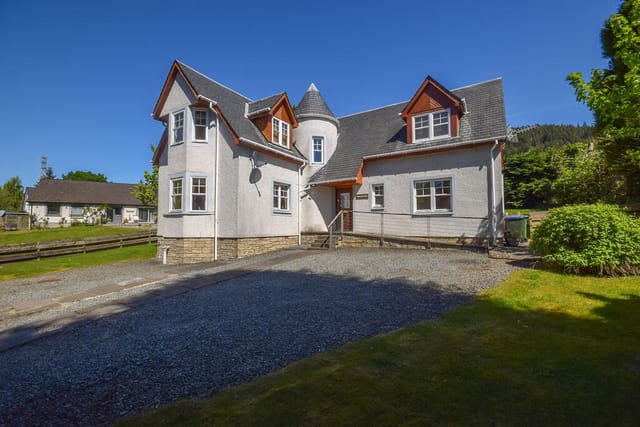
Step outside on a October morning at Arrlochaira and you'll hear the River Garry rushing through the gorge below before you even open the front door. The light at this hour — filtered through ancient birch and oak — turns the garden silver. It's the kind of quiet that people from Edinburgh and London spend years searching for, and here it's simply Tuesday. Killiecrankie sits in one of the most dramatic river valleys in highland Perthshire, sandwiched between steep wooded crags that the National Trust for Scotland has protected for decades. Pitlochry, just a few minutes' drive south along the B8019, has a proper railway station on the Highland Main Line — direct trains to Edinburgh in under two hours, Glasgow in roughly the same. That combination of genuine wilderness and actual connectivity is rarer than you'd think in Scotland, and it's a big part of why this corner of Perthshire has quietly become one of the most sought-after second home markets north of the border. Arrlochaira itself is a four-bedroom detached villa with three bathrooms, set in private garden grounds that roll out to a backdrop of mature trees. The architecture does something that a lot of modern Scottish houses don't bother attempting: it goes vertical. Vaulted ceilings in the main living areas create an almost Scandinavian sense of volume, and the floor-to-ceiling windows pull the outside in regardless of the season. On a grey February afternoon, when the hills are dusted white and the birch branches are bare, those windows frame something that honestly looks like a painting. In summer, the French doors off the living room open onto the lawn and you barely notice where the house ends and the garden begins. The living room anchors the ground floor ... click here to read more

Front view of the villa

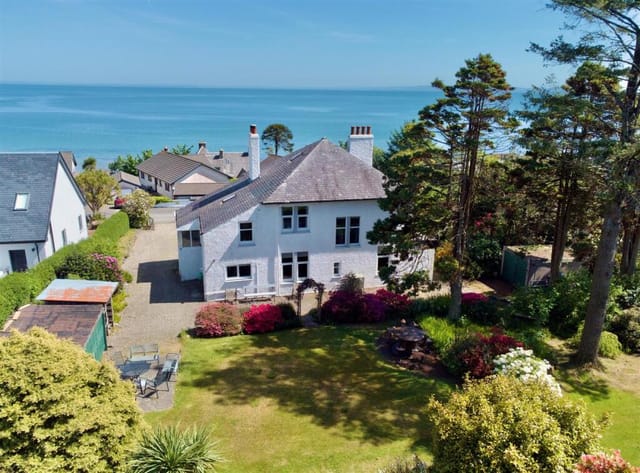
Stand at the corner window of the master bedroom on a clear October morning and you can see all the way across the Firth of Clyde to the Ayrshire coast, the water shifting between slate and silver depending on where the clouds break. That view doesn't get old. Not after a week, not after a decade. It's the kind of thing that makes you set down your coffee and just stand there for a moment longer than you planned. Helenslea is a substantial six-bedroom detached villa in Whiting Bay, built around 1926 and sitting in approximately half an acre of mature, mostly level garden on the Isle of Arran. It has the bones of a genuinely grand island house — original timber staircase, an open brick fireplace in the entrance hall, period features throughout — combined with the kind of practical updates that make it liveable year-round rather than just a summer indulgence. Three bathrooms, a second staircase serving bedrooms five and six, and a layout that can flex into a self-contained wing if you want it to. This is not a fixer-upper. The property is in good condition and, with some furnishings available by separate negotiation, could be up and running as a vacation home or holiday let almost immediately. The ground floor sets the tone. You come in through the entrance porch — red quarry tiled floor, plenty of hooks and storage for waterproofs and walking boots, which you will absolutely need — and into a wide hallway anchored by that open fireplace. To the front, the main lounge stretches across the width of the house, windows facing the gardens and the sea beyond. On grey afternoons you light the open fire and the room becomes exactly what a Scottish island living room should be. The dining room sits off the hallway, overlooking t ... click here to read more

Aerial location

On a quiet Sunday morning in Rekem, you open the veranda doors and the garden comes alive — the shimmer of your private pond through the trees, the faint splash of the heated pool, a wood pigeon calling from somewhere in the old-growth hedge line. This is 6,802 square metres of Belgian countryside doing exactly what it's supposed to do: nothing hurried, nothing crowded, just space and light and the particular kind of quiet that money genuinely can buy. Vijversdreef 3 sits in Rekem, a protected village that Belgium's heritage authorities have actually recognised as one of the country's most architecturally intact historic settlements. The cobbled heart of the village is ten minutes on foot. The Dutch city of Maastricht — with its Vrijthof square, its Burgundian food culture, and its weekend markets spilling out along the Maas — is a fifteen-minute drive across the border. And the Hoge Kempen National Park, Belgium's only national park, starts almost at the garden's edge, with its heathland trails, cycling routes, and pine forests stretching out toward the German border. The villa itself is a 623 m² traditional build, solid and well-proportioned, with a character that holds up across seasons. Come January, when frost settles on the tennis court and the pond catches the low winter light, the house earns its keep differently than it does in July — and it earns it in July too, when the covered, heated pool means guests are in the water regardless of what the Belgian sky decides to do. The interiors reward attention. The entrance hall sets a confident tone immediately; the living spaces are generously scaled without tipping into cavernous, and the country-style kitchen — induction cooktop, steam oven, oven, microwave, dishwa ... click here to read more

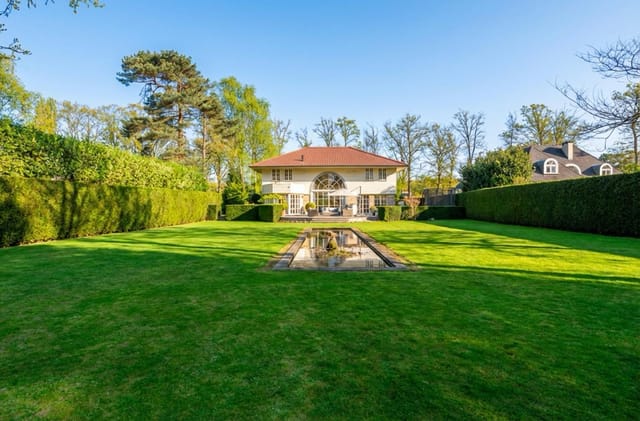
Front view of Vijversdreef 3, Lanaken

Saturday morning, 8am. The automatic gate swings open, gravel crunches underfoot, and the smell of damp grass drifts in from six thousand square metres of park garden still catching the early light. Inside, the pellet stove is ticking down from the night before, the kitchen island is set for breakfast, and somewhere upstairs a guest is running a bath in the Chanel suite. This is the daily reality of Hubesheide 1 — a 412 m² villa in Opitter, just outside Bree in Belgian Limburg, that operates as a fully functioning Bed & Breakfast and could just as easily become the most extraordinary private residence you've ever called your own. Built in 2005 and thoroughly renovated in 2024, the property is in genuinely excellent condition — not "estate agent good" where you mentally deduct 30% for what you'll actually find on viewing. The bones are solid, the finishes are current, and the energy performance label sits at B (EPC: 157 kWh/m²), which in Belgium's increasingly regulated property market is a meaningful advantage, not a footnote. Five bedrooms. Five bathrooms. Two indoor garages. Four outdoor parking spaces. An illuminated driveway with an automated entrance gate that gives arrivals — whether yours or your guests' — a genuine sense of occasion. The numbers are compelling, but the experience is what stays with you. The ground floor tells you immediately that someone thought carefully about how people actually move through a space. The entrance hall leads to a kitchen that takes its job seriously: island unit, induction hob, combi oven, ample cabinetry, the kind of setup where you can cook a proper Sunday lunch without the kitchen fighting back. The dining and lounge area opens off it with that pellet-and-wood stove anchor ... click here to read more
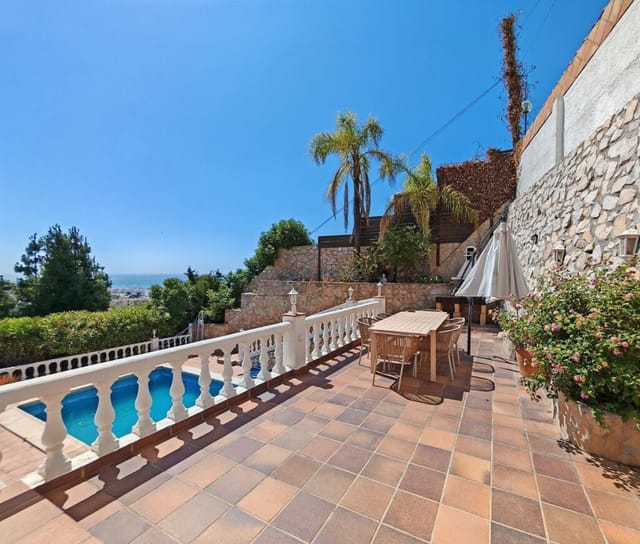
Front view of Hubesheide 1, Bree

Stand on the roof terrace of this Quillan villa on a clear October morning and the Pyrenean ridgeline fills the horizon — the kind of view that stops you mid-coffee. Below, the garden is still dewy, the pool catching the first light off the mountains, and somewhere down in the valley the old town is already stirring. This is the rhythm that waits for you here, and it's the kind of thing that makes people stop looking the moment they see it. Quillan sits in the Aude valley at the point where the Languedoc plains start crumpling into serious mountain country. It's not a tourist trap. The Saturday market on the Place de la République is genuinely local — farmers selling their own cheese, wild mushrooms in autumn, cherries in June. The boulangerie on Rue du Barry gets their sourdough out around seven, and the Café du Commerce across from the church has been pulling the same espresso for longer than anyone can remember. This is a town that just gets on with things, which makes it an unexpectedly grounded place to own a holiday home in southern France. The villa itself spans 227 square metres across twelve rooms, built in the solid, sensible style that this part of Aude has always favoured — thick walls that keep things cool when July temperatures climb toward the mid-thirties, double-glazed windows that seal out both the wind and the world when you want quiet. That thermal insulation isn't a minor detail. In a house you'll use across seasons — ski weekends in January, long lunches in August — it matters more than almost anything else. The living room fireplace handles the other end of that equation beautifully: light it on a November evening and the room changes entirely, becomes the kind of space where people stay talking ... click here to read more
Picture 1

Stand on the upstairs balcony in the early morning and you'll see it: Óbidos Castle rising above the treeline to the east, its white-washed ramparts catching the first light while the lagoon shimmers silver in the distance to the west. This is the view that stops people mid-coffee and makes them reach for their phone to call their partner. It's also the view you'd wake up to every single day owning this four-bedroom Portuguese villa in the village of Sobral da Lagoa. The house sits in a quiet residential pocket just minutes from the medieval walled town of Óbidos, fully furnished and move-in ready — no renovation project, no waiting around. At 132 square metres spread across two floors, it has real, usable space. Not the kind of square footage that sounds impressive on paper but leaves you tripping over furniture. Rooms breathe here. Come through the front door into a proper entrance hall — none of that walking straight into a living room business — and you immediately get a sense of the layout. The main living room is generous, arranged for both dining and unwinding, with an open fireplace that earns its keep from November through February when the Atlantic air turns sharp. Two sets of French doors push open onto the front porch, and on still evenings you can hear the church bells from the old town drifting across the valley. That sound, more than anything, is what makes this part of Portugal feel genuinely different from the Algarve's beach-resort hum. The kitchen is fitted and functional, with a covered rear terrace attached — a brick-built table, bench seating, and the kind of morning light that makes even instant coffee taste better. Step out from the kitchen and you're a few seconds from the pool. Heated, large ... click here to read more
Picture 1

Saturday morning. You wake up to the sound of absolute nothing — no traffic, no sirens, just birdsong drifting in through bedroom windows that face a south-oriented garden still glistening from overnight dew. By the time you've made coffee in the Miele-fitted kitchen, sunlight is already cutting across the parquet floors, freshly sanded and refinished in 2023, and the heated indoor pool is sitting at exactly the temperature you set it to last night from your phone. That's not a fantasy. That's just a regular morning at Jachtlaan 23. Balen doesn't get the press that Brussels or Bruges attract, and honestly, that's a feature rather than a flaw. This is the Kempen region — a quietly confident corner of northern Belgium where pine forests stretch for kilometres, the Beverlo Canal cuts a calm silver line through the landscape, and the De Most nature reserve sits close enough to reach on foot or bike before lunch. Locals cycle the Kempense Meren route, a 50-kilometre trail threading past heathland, sand dunes, and the glittering Mol lakes, and they do it on a Tuesday afternoon without elbowing through crowds. Life here moves at a pace that feels almost conspicuously sane. The villa itself sits on 2,536 square metres of fully landscaped grounds on Jachtlaan, one of Balen's most composed residential streets — wide, tree-lined, unhurried. Step through the front door and the entrance hall immediately communicates something: this is not a house that tries too hard. The proportions are generous without being theatrical. Natural light floods in through oversized windows that frame the garden like living paintings, and the Crestron home automation system hums quietly in the background, waiting for input via iPad or built-in screen. ... click here to read more
Photo 1 of Jachtlaan 23

Picture this: it's six in the morning, the Baltic light is already doing something extraordinary over the water, and you're standing on your own private dock with a coffee in hand, watching a seal slip off the rocks fifty meters away. No neighbors. No noise but the gulls and the occasional creak of a rope. This is Kalvholmen — your own island in the Roslagen archipelago, about two and a half hours north of Stockholm, and one of the most genuinely rare pieces of Swedish coastal real estate to come to market in years. The island itself covers just over 8,000 square meters. That's enough space to feel completely alone without being remote to the point of inconvenience. Two private docks and a boathouse sit at the water's edge, so you arrive by boat — from the Östersjö dock parking area on the mainland, it's a short crossing — and the moment you step ashore, the mainland feels a world away. That daily transition, from car to boat to island, is something owners either find completely liberating or not for them at all. If the idea of it makes you lean forward, keep reading. The main villa dates to 1946, which in Swedish island terms means solid timber bones and a connection to the old fishing and sailing culture of the outer archipelago. A thorough renovation in 2008 brought it fully into the modern era: proper insulation for year-round use, a contemporary bathroom with shower, washing machine and tumble dryer, and a kitchen laid out for real cooking rather than holiday approximations. The open-plan living and dining area is generous enough for a long table full of people, and the Roslagen fireplace with its insert is the kind of thing you find yourself planning trips around once you've spent a November evening beside it, th ... click here to read more
Main house and sea view

Stand at the kitchen window on a Saturday morning and the view stops you. Beyond the granite countertop, past the glass, the rear garden opens up into a sweep of green that dissolves into the wooded edge of the Hoge Kempen National Park. No neighbor's rooftop. No road noise. Just fruit trees heavy with plums, magnolias doing their thing in spring, and a silence that feels earned. This is what 3,295 square meters of prime residential land in Maasmechelen actually feels like from the inside. The villa at Geloeslaan 22 sits well back from the street — deliberately so. The landscaped front garden acts as a buffer between you and the world, and the long driveway reads less like a parking solution and more like an arrival ritual. The natural slate roof, rare in Belgian residential builds of this scale, gives the facade a gravitas that's hard to manufacture and impossible to fake. It doesn't shout. It simply stands there, confident. Inside, 391 square meters of living space is organized around a logic that makes sense the moment you walk through the door. The entrance hallway branches naturally: left toward the double garage, right toward the staircase with its open gallery landing, straight ahead into the main living area. A guest WC sits just off the hall, alongside a proper cloakroom — the kind of detail that separates a house designed for real life from one designed for a brochure shoot. The garage itself deserves mention: heated, fitted with two floor drains and a utility sink, it works as hard as the rest of the house. The living room is where the property really shows its scale. Open fireplace on one wall. Large windows wrapping two elevations to pull in both front and rear garden views. On a grey January afternoon, ... click here to read more
Front view of Geloeslaan 22

On a clear morning in Bad Bentheim, the mist sits low over the Münsterland plain while you stand on the upper terrace of Am Berghang 70 with a coffee in hand. The view stretches for miles — church steeples, farmland, forest — and not a single rooftop breaks the horizon below you. This is what you bought the hillside for. Built in 2009 on a generous 1,055 m² plot along the slopes of the Bentheimer Berge, this four-bedroom Bauhaus-inspired villa is one of those rare properties that makes you understand why architects fell in love with glass and steel and honest materials. The ebony timber framing against floor-to-ceiling glazing isn't a design flourish — it's the whole philosophy. Light comes in from every angle. The Münsterland countryside becomes part of the interior. In late afternoon, when the sun drops behind the Bentheimer Wald and throws long amber light across the oak floors, the living room feels almost cinematic. At 224 m² across three levels, the house is large without feeling excessive. The ground floor revolves around an open-plan living space anchored by a fireplace and a soaring gallery that connects visually to the floor above. Two terraces push the living space outward — one for morning coffee in the east-facing sun, one for long summer evenings facing west. A concealed pantry keeps the kitchen uncluttered. A ground-floor office with its own natural light makes remote working genuinely possible, not just technically feasible. The guest toilet is tucked discreetly away. Everything has been thought through. The staircase — solid wood with a frameless glass balustrade — is the kind of thing you notice every single day. It leads to a first floor where the gallery is bathed in shifting light throughout the s ... click here to read more
Photo 1 of Am Berghang 70

Step outside on a Saturday morning in Poppel and the world slows right down. The garden is still dewy, a pair of herons are working the edges of your pond, and somewhere behind the treeline the village church bell marks the hour. This is what 370 square metres of architect-designed villa on Beekseweg 23 actually feels like to live in — not a postcard, just a quietly exceptional ordinary day. Poppel sits right on the Belgian-Dutch border, tucked between Turnhout to the south and Tilburg just across the frontier. It's the kind of village that locals fiercely protect from overexposure. The surrounding landscape — heathlands, pine forests, and river valleys — falls within the Gorp en Roovert and Rovertse Ley nature reserves, two of Brabant's most rewarding spots for long cycling routes and trail walks that most tourists never find. In autumn the heather turns the heathland purple-pink for a few brief weeks, and the village cycling paths that fan out in every direction become genuinely addictive. Come winter, the lanes empty out entirely, and the whole area takes on a quiet drama that suits a wood fire and a glass of Trappist ale from the nearby Westmalle route perfectly. The villa itself was conceived by an architect who clearly understood that a house and its garden should read as one continuous space. From the kitchen — properly equipped, not a showroom — large glass doors fold back onto the main terrace so that summer dinners simply migrate outdoors without ceremony. The pond sits just beyond, catching the late afternoon light. It's the kind of view that stops conversations mid-sentence. A second terrace wraps around another corner of the garden, framed by fruit trees that produce enough in a good year to make jams and ... click here to read more
Front view of Beekseweg 23

On a quiet Sunday morning, you crack the kitchen window above the breakfast nook and the smell of cut grass drifts in from the garden. The pond catches the early light. Beyond the fence line, the tree canopy of the adjacent forest is doing that slow, golden thing it does in late September. The coffee is on. The kids are still upstairs. This — right here — is what 297 square metres of well-built Belgian villa feels like from the inside. Hogeschootlaan 5 sits in one of Kapellen's most sought-after villa streets, a leafy residential lane where houses are set well back from the road and plots are generous enough that you actually feel the space between you and your neighbours. The address sits in the southwest corner of Kapellen's outer ring, meaning you get the quiet without the isolation. The Kapellen Markt — with its Friday market stalls selling Flemish strawberries and artisan bread — is a short cycle away. The N11 toward Antwerp is less than five minutes by car, and from there the E19 north puts you at the Dutch border in under half an hour. The villa itself follows the Long Island architectural tradition: wide, low-slung proportions, generous overhangs, and a visual language that leans into horizontal lines and natural materials. It reads quietly confident from the street. The gated driveway opens onto a broad forecourt with parking for several cars — practical when the family descends or when you're hosting neighbours for a summer terrace dinner. The integrated double garage, with its automatic door, handles the everyday. Inside, the entrance hall sets the tone immediately. High ceilings. A lot of light. The kind of proportions that make people stop and say something before they've even looked around properly. To t ... click here to read more
Front view of Hogeschootlaan 5