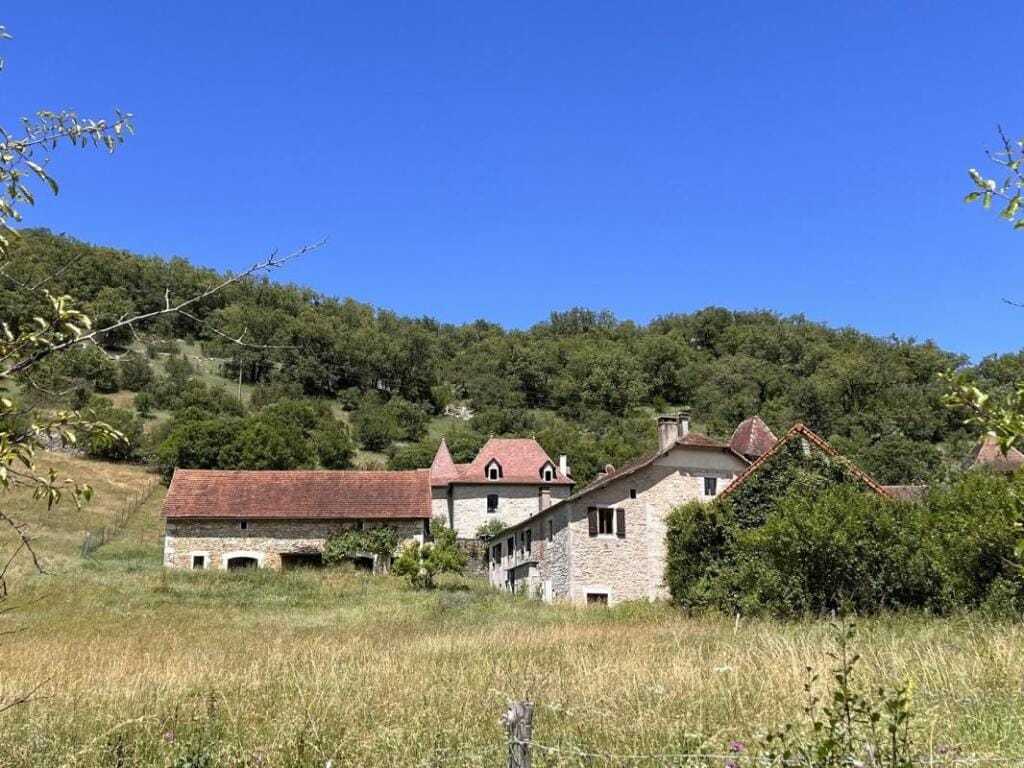
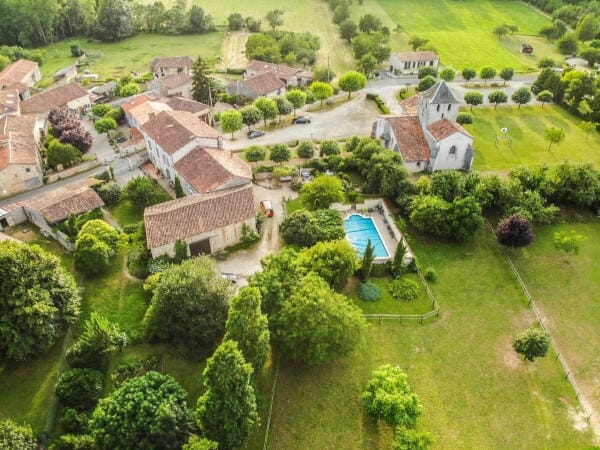
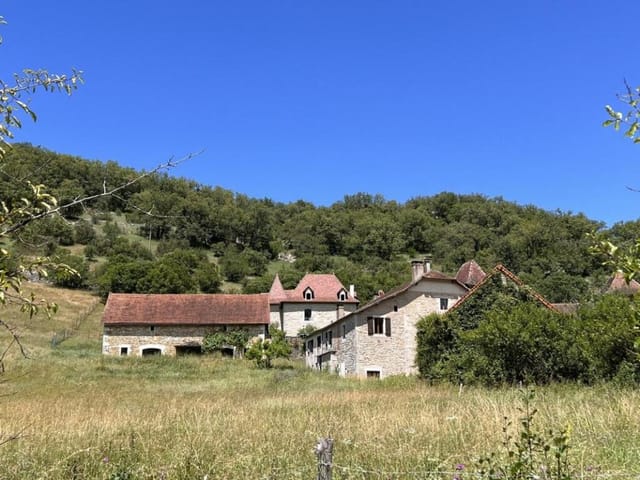
Stand at the edge of the limestone plateau on a clear October morning and you can hear absolutely nothing. No traffic, no machinery, no neighbors. Just a kestrel working the thermals above the Causses and the faint whisper of wind through the oak scrub. That kind of silence is not incidental here — it's the whole point. This is Marcilhac-sur-Célé, a village in the Lot department of southwestern France where the river carves through pale cliffs and the pace of life hasn't changed much in a century. And this property — a complete rural estate comprising the majority of an ancient hamlet, two substantial stone houses, two large farm buildings, and 92 unbroken hectares of land — is about as rare as the silence itself.
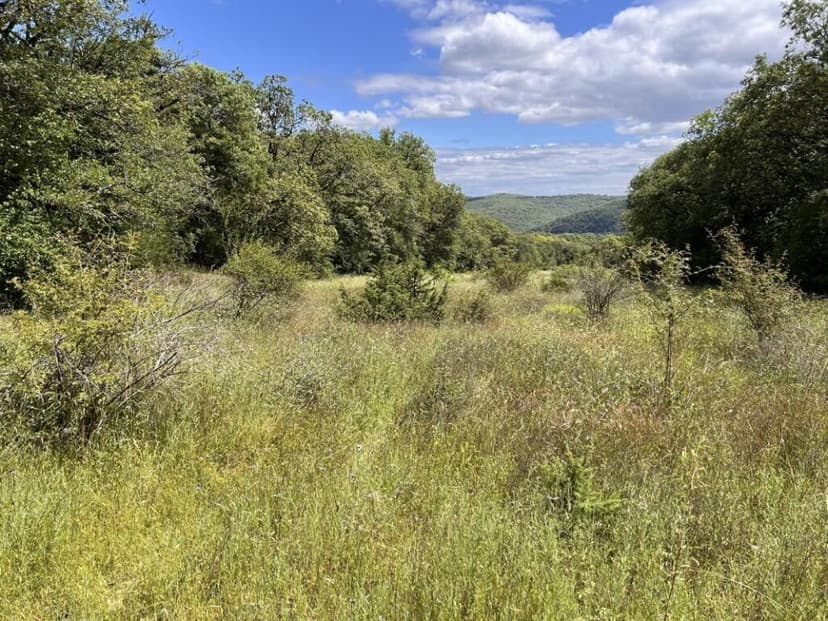
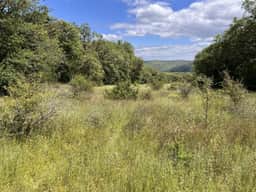
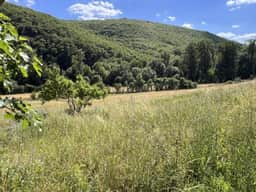
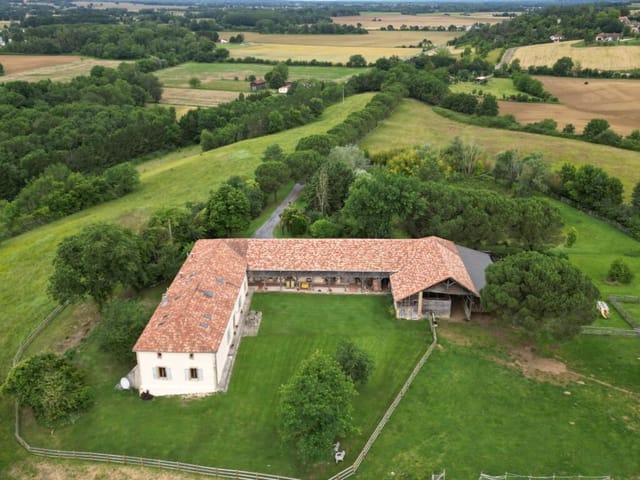
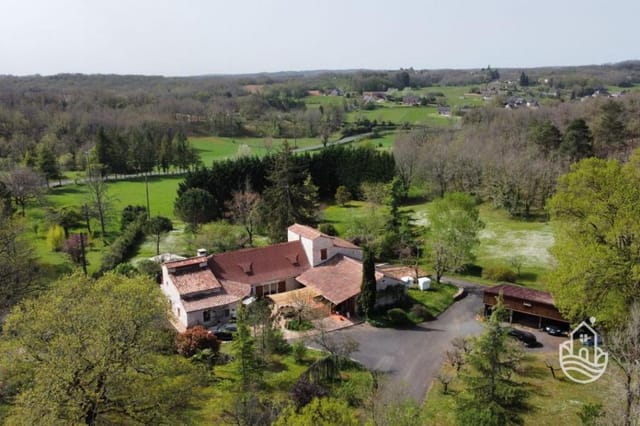
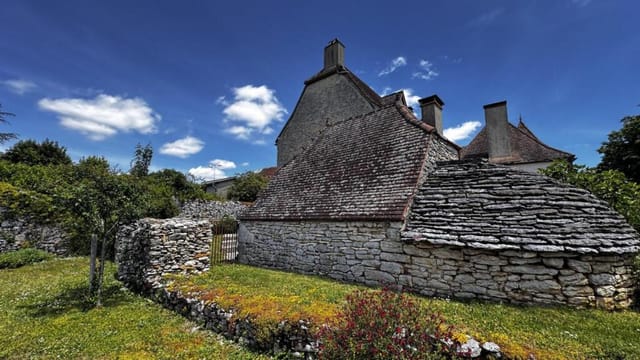
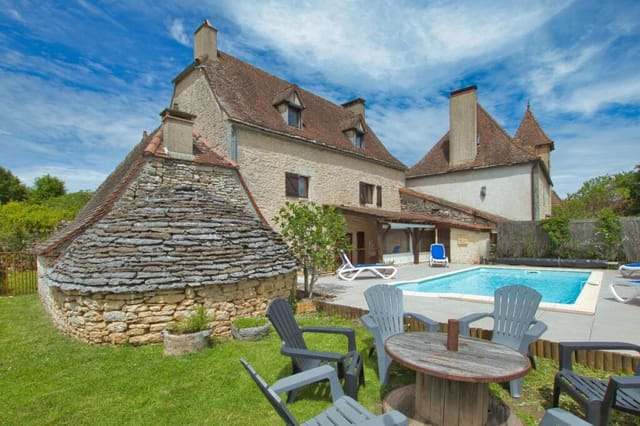
Let's start with the land, because it's what makes everything else possible. The 92 hectares come in one piece, which matters enormously. No fragmented parcels, no tenant farmers, no complicated lease agreements to unpick. Seventeen hectares are meadows and mixed woodland down in the valley; the remaining 75-plus are fully fenced limestone plateau — the wild, scrubby Causses terrain that defines the character of this entire region. Walk it for an afternoon and you'll find old stone cazelles, those dry-stone shepherd's huts that dot the plateau like punctuation marks from another era, plus a small barn still waiting for someone with a vision. The fencing is already in place, which is a significant practical detail: under France's 2023 loi clôture, that enclosure can be maintained for agricultural activities, horse breeding, or hunting dog training grounds, among other permitted uses. The land supports animals, market gardening, rural tourism, or simply the luxury of having a private wilderness on your doorstep.
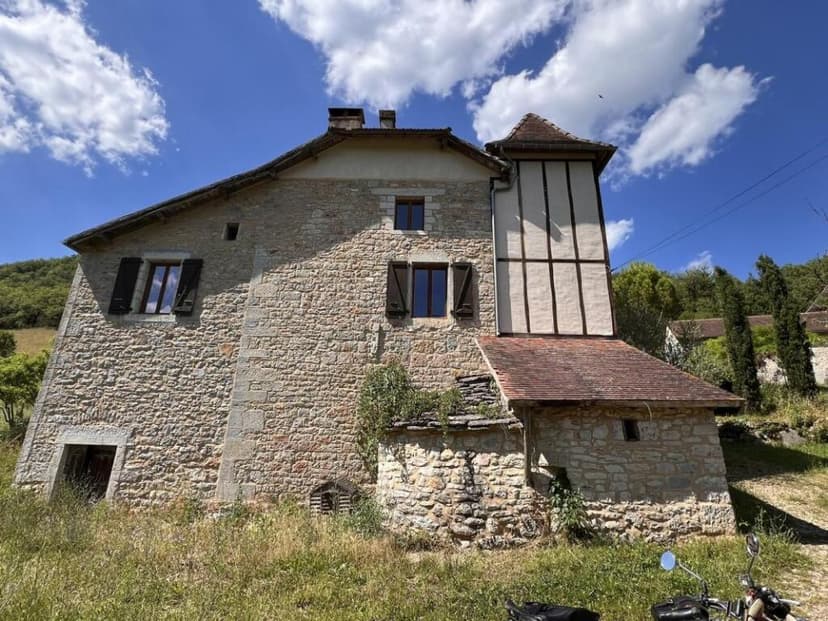
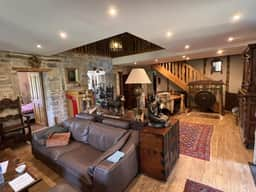
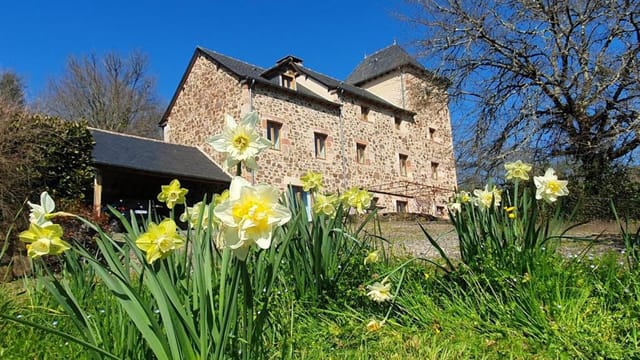
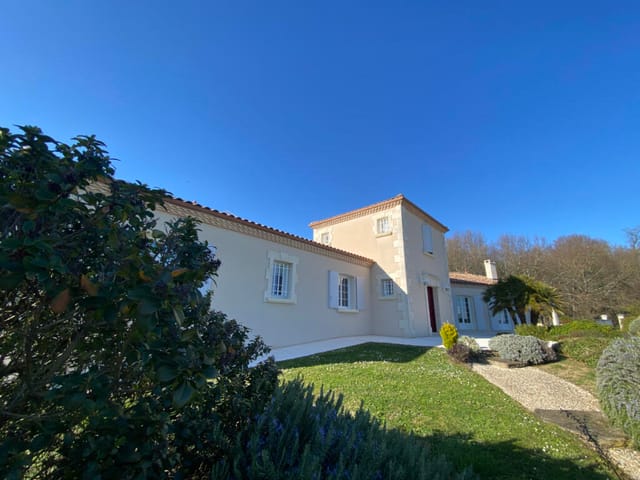
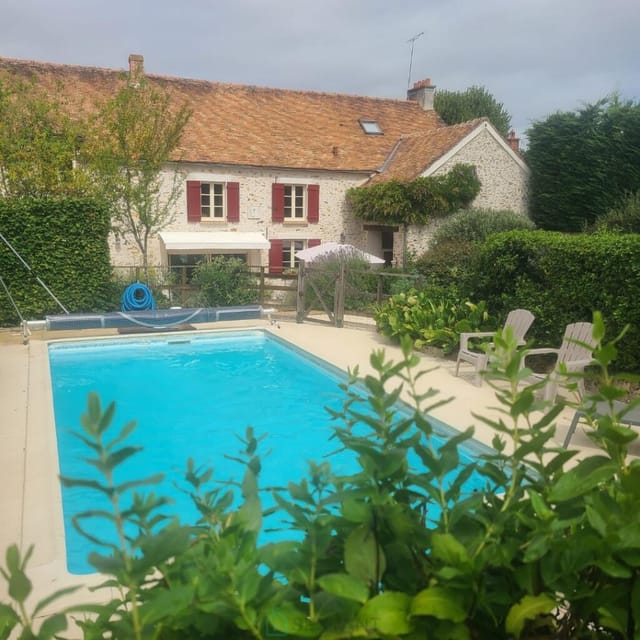
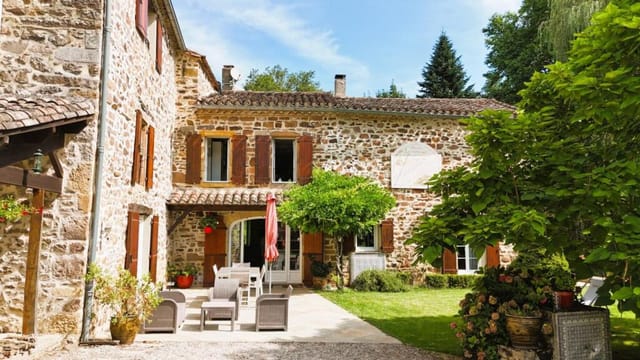
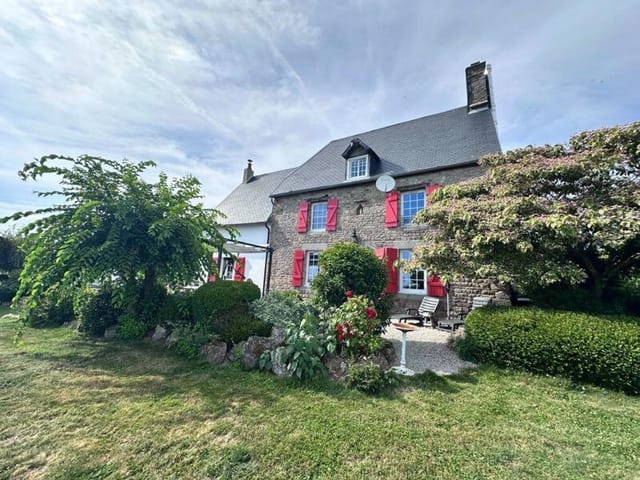
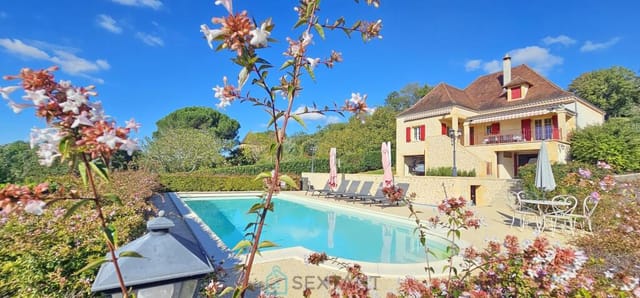
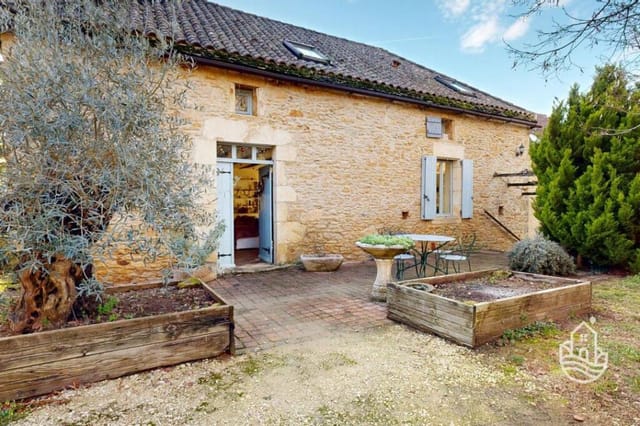
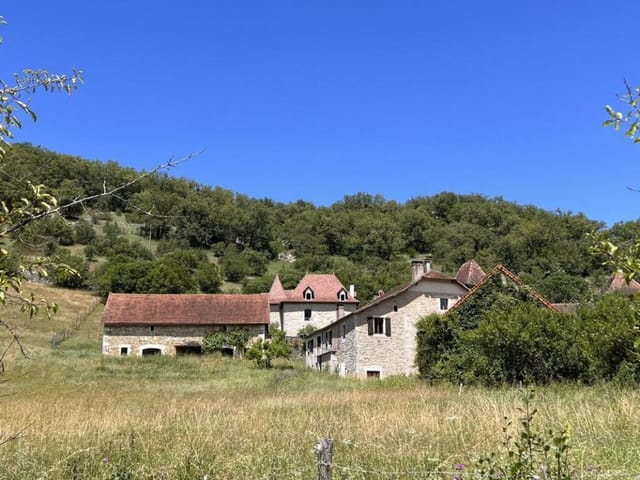
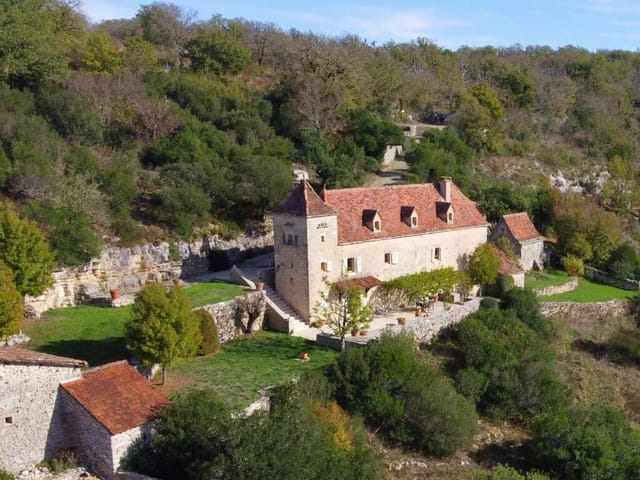
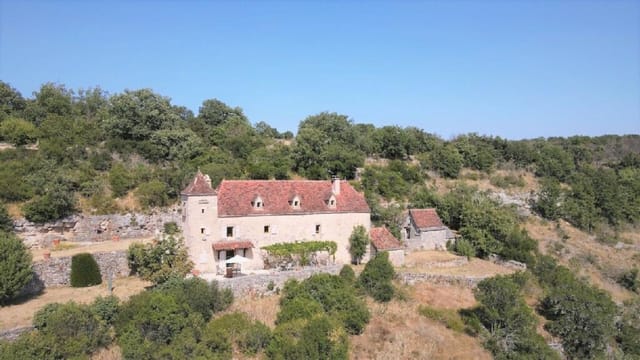
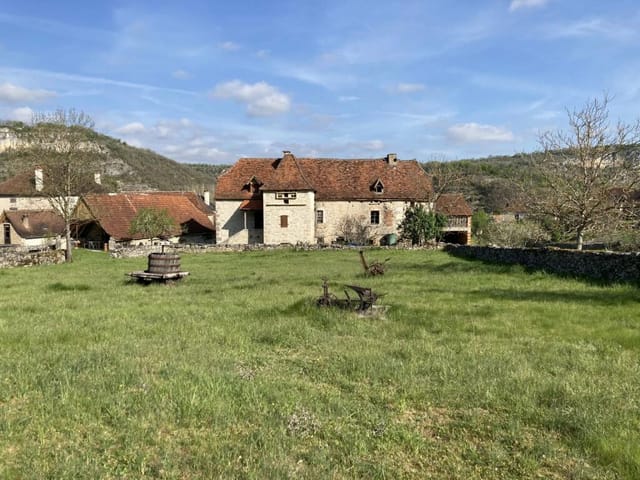
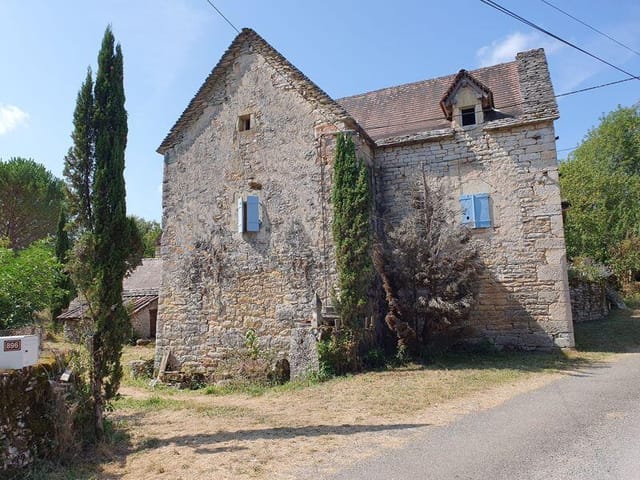
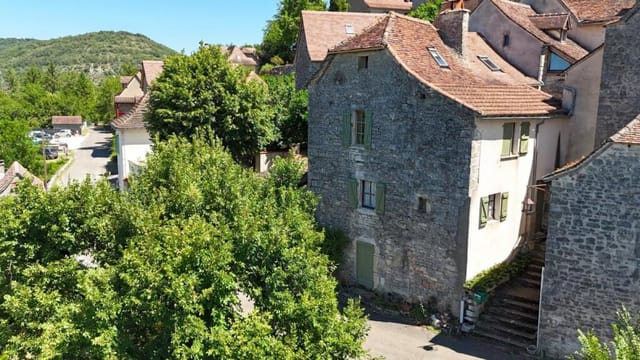
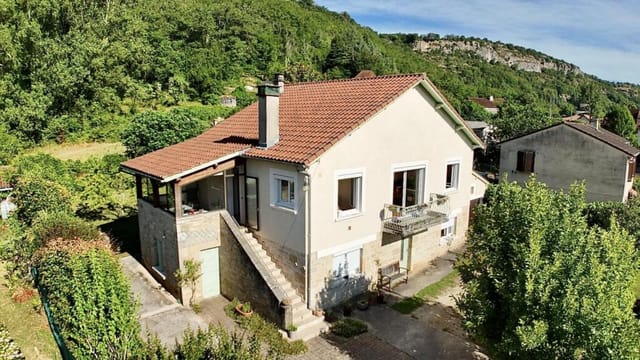
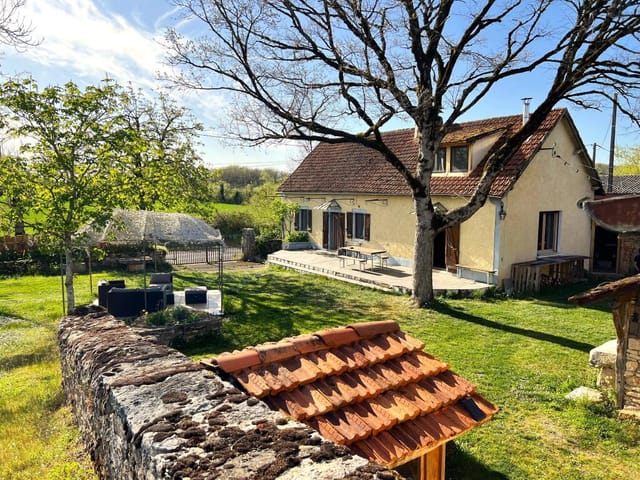
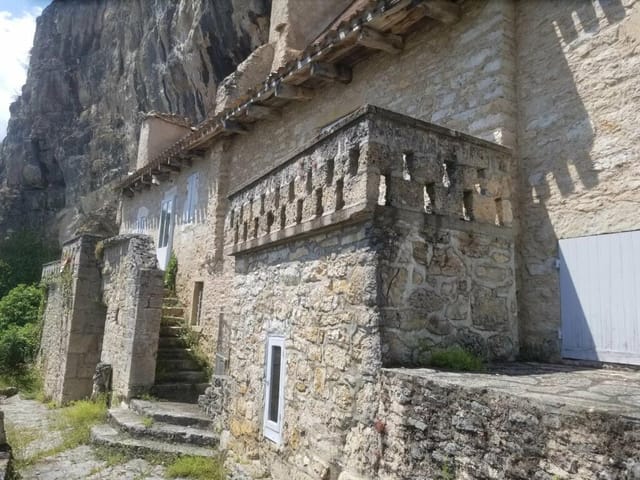
The hamlet itself is something you don't stumble across every day. Of the five buildings that make up this tiny cluster, four belong to this estate. The main house is a two-story stone structure with cellars, running to around 230 square metres of living space. There's a generous living room of roughly 50 square metres, five bedrooms, and the kind of thick walls and high ceilings that keep rooms cool through the July heat without any need for air conditioning. The house has already been cleared of its previous contents and is in good condition — move in, set up a kitchen table, open the shutters, and you're home.
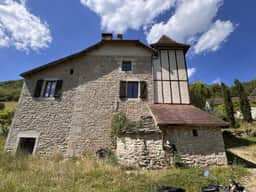
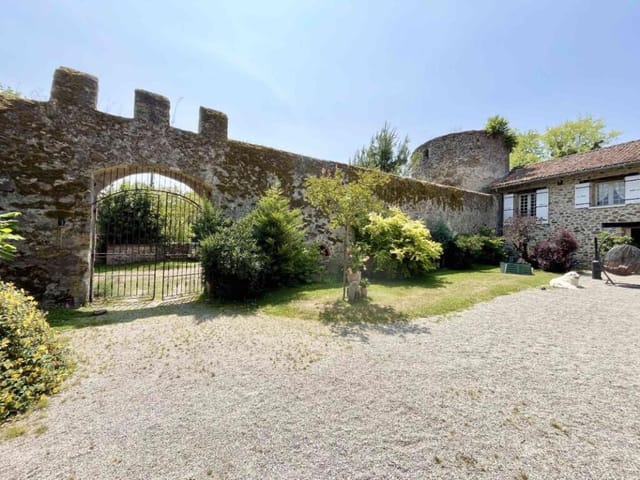
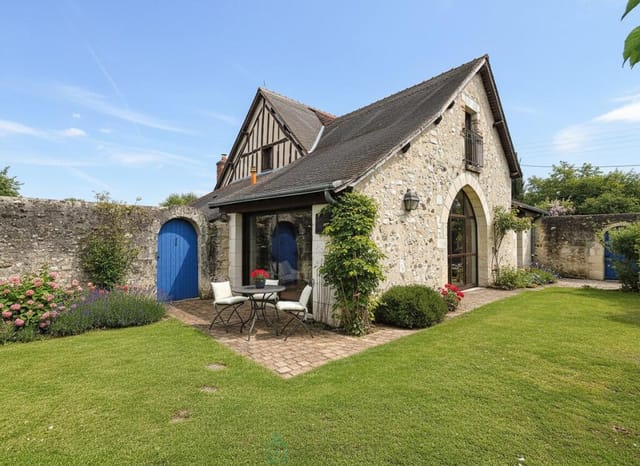
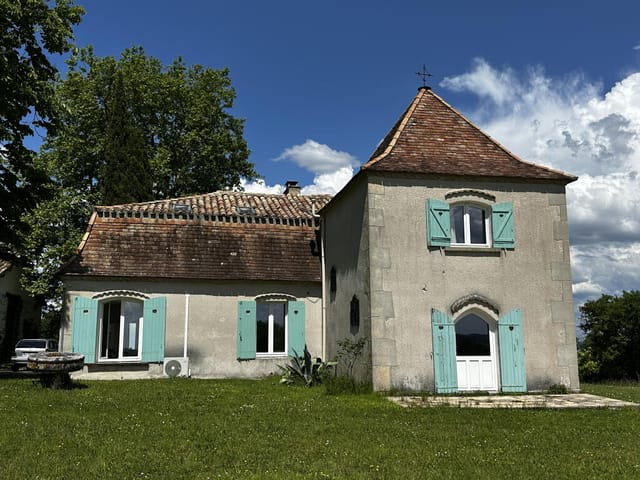
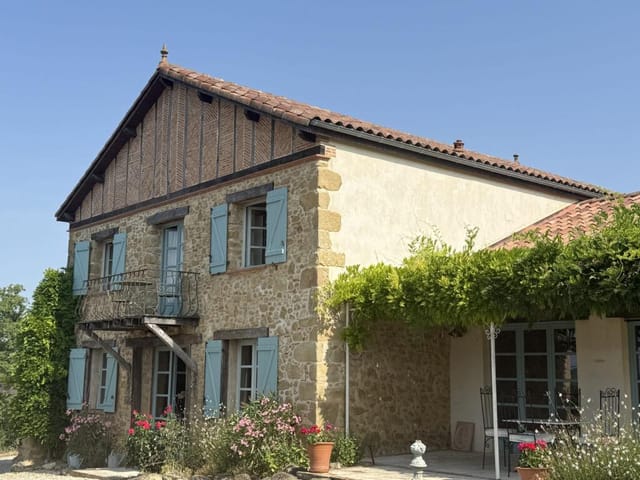
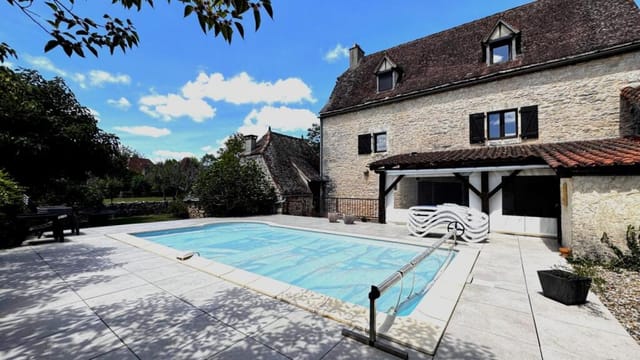
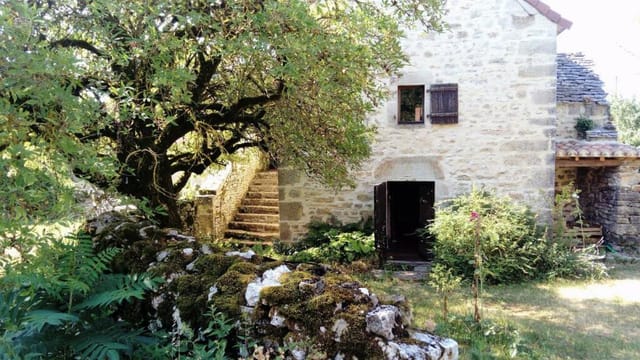
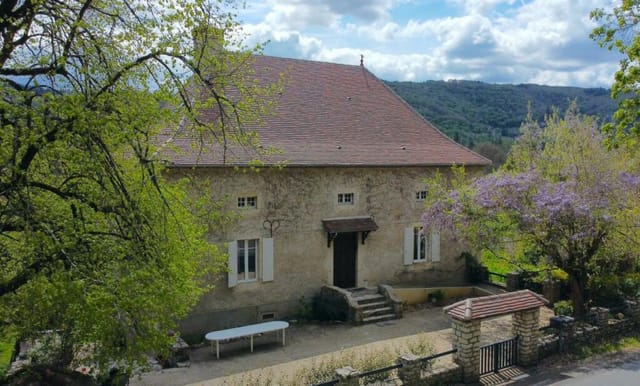
The second house is the one that stops people mid-sentence when they first see it. It's listed as a cultural heritage building — a designation that reflects its architectural distinction and its history as a pilgrimage refuge on the Chemin de Saint-Jacques, the French section of the Camino de Santiago. The roof has been completely redone to traditional specifications. Inside, there's potential for around 150 square metres of living space once restored. Think gîte, think chambres d'hôtes, think private guest quarters for visiting family — the possibilities are real and the bones are exceptional.
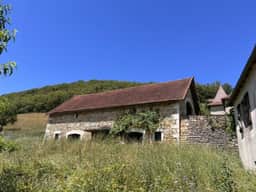
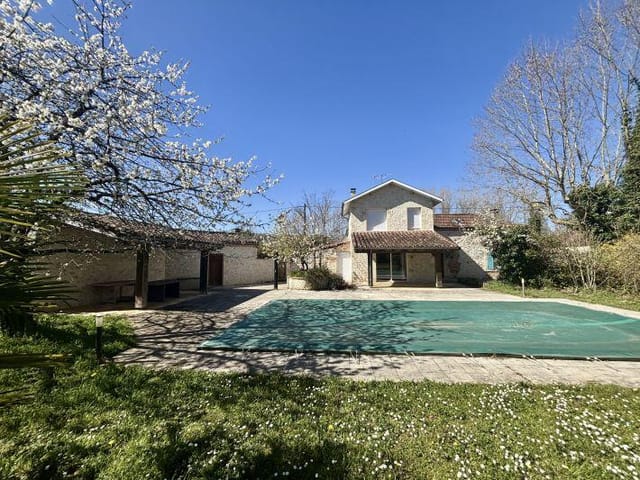
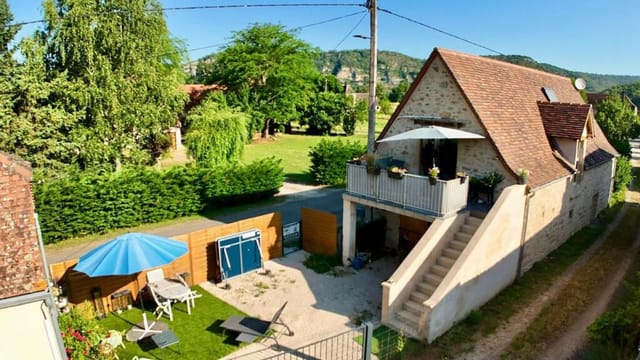
Completing the hamlet: a small stone barn converted for use as a garage and a two-story hay barn with over 100 square metres on each level, the kind of space that makes architects and woodworkers go quiet with concentration when they walk through it. There is also a fifth building in the hamlet — a renovated barn that belongs to a different owner — but it sits to the side rather than directly opposite, and the current owner has indicated it could be acquired separately. Owning the entire hamlet is genuinely on the table.
Marcilhac-sur-Célé sits in the Célé Valley, one of those places that the French themselves holiday in, which tells you something. The village has a ruined Benedictine abbey from the 12th century right on the riverside and a Saturday morning market in summer where you'll find walnut oil pressed locally, raw-milk Rocamadour cheese, and ripe figs by the kilo. The Célé river is popular for kayaking — the route from Figeac down to Conduché, where it joins the Lot, is a classic multi-day paddle through increasingly dramatic scenery. Swim in the river on a hot August afternoon and you'll understand why French families return year after year.
Figeac is around 30 kilometres away and offers everything a town of 10,000 needs to: a weekly market, good restaurants, a supermarket, and the fascinating Musée Champollion — Figeac is where Jean-François Champollion, the man who decoded the Rosetta Stone, was born, and the museum built around that legacy is genuinely worth an afternoon. Cahors, the departmental capital and home to the famous Malbec-based Cahors wine appellation, is about 55 kilometres to the southwest. Toulouse-Blagnac airport is roughly 150 kilometres, under two hours by car; Rodez airport is closer still and handles connections to Paris and London Stansted.
Spring in the Lot arrives gently. The valley fills with wild orchids in April, and by May the plateau above is a riot of thyme and lavender, the air heavy with it. Summer is warm and dry, rarely brutal at this altitude. Autumn is perhaps the finest season — walnuts everywhere, truffle season beginning in November, the oak forests turning copper and bronze, and the tourist crowds long gone. Winters are quiet and mild by northern European standards, with occasional frosts but almost no snow at valley level.
For international buyers, France remains one of Europe's most accessible property markets. EU citizens face no restrictions on ownership. Non-EU buyers including British, American, and Australian purchasers can also buy freehold property in France without restriction. Notarial fees (frais de notaire) run to approximately 7-8% of the purchase price for older properties and are paid by the buyer — standard across the country. The size and configuration of this estate makes it well suited to a range of ownership structures, and a French notaire will guide the process from offer to completion in a transparent, legally rigorous way.
From a rental and investment perspective, the Célé Valley is increasingly sought after. Rural tourism in the Lot has grown steadily over the past decade, and properties with character, land, and proximity to the GR651 walking trail (which runs directly through this part of the valley) attract a premium during the summer and early autumn season. A fully operational gîte complex here could realistically generate meaningful rental income while still leaving large areas of the estate entirely private. The heritage listing on the second house may unlock access to French restoration grants through the Fondation du Patrimoine — worth investigating with a specialist.
Key features at a glance:
- Complete rural estate totalling 92 hectares in one parcel, free of any lease
- Main stone house of approximately 230 m² with 5 bedrooms and cellars, in good condition
- Second heritage-listed house (former pilgrim refuge on the Way of St. James) with potential for 150 m² of living space, roof fully redone
- Large two-story hay barn (100+ m² per level) and garage barn
- Four of five hamlet buildings included; fifth building potentially available separately
- 75+ hectares of fully fenced limestone plateau (Causses) with traditional cazelles
- 17 hectares of meadow and mixed woodland
- Fencing maintained under France's 2023 agricultural enclosure law
- Situated in the Célé Valley, Lot, a protected natural area of exceptional quality
- 30 km from Figeac, 55 km from Cahors, under 2 hours from Toulouse airport
- Strong rural tourism demand; significant gîte and chambres d'hôtes potential
- No agricultural lease obligations on the land
- Rare opportunity to acquire a private hamlet with significant historic character
Properties like this one — a whole hamlet, nearly a hundred hectares of wild terrain, two substantial houses including one with genuine heritage status — come to market perhaps once a decade in the Lot. The Célé Valley has a devoted following among people who know rural France well, and they know it precisely because it hasn't been discovered by the crowds. The road that runs through Marcilhac is quiet. The river is clear. The plateau above is yours.
To arrange a private viewing or request the full documentation pack including land registry maps and the heritage listing details, get in touch with the Homestra team today. This is the kind of property that rewards those who move quickly and patiently at the same time.