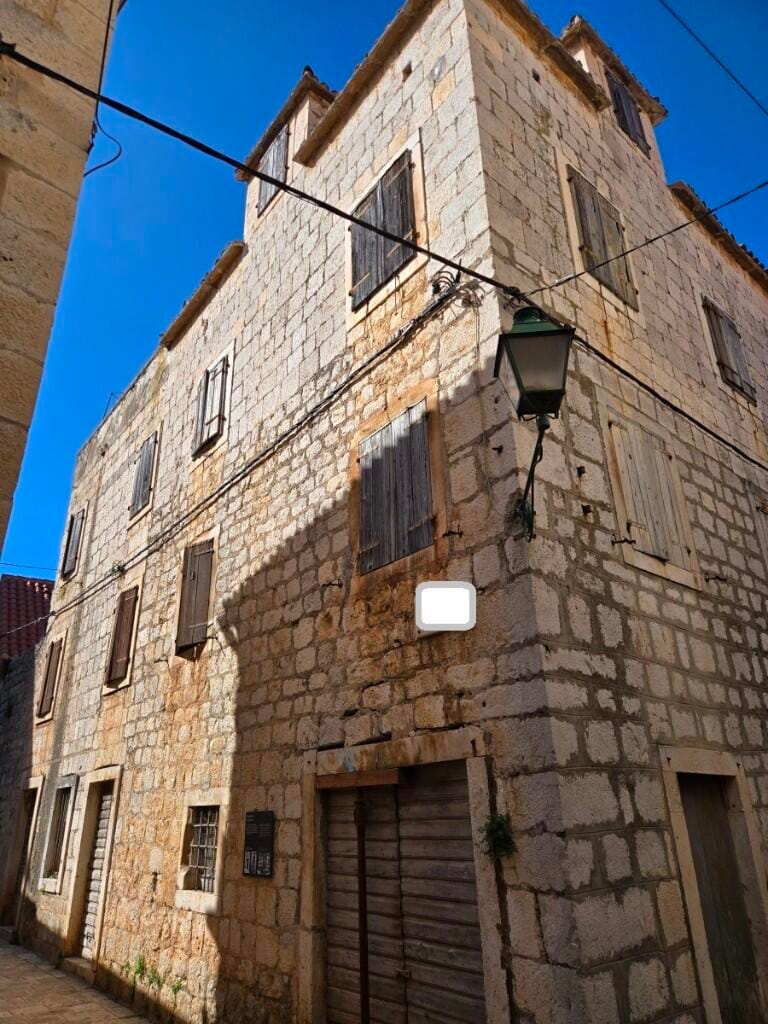
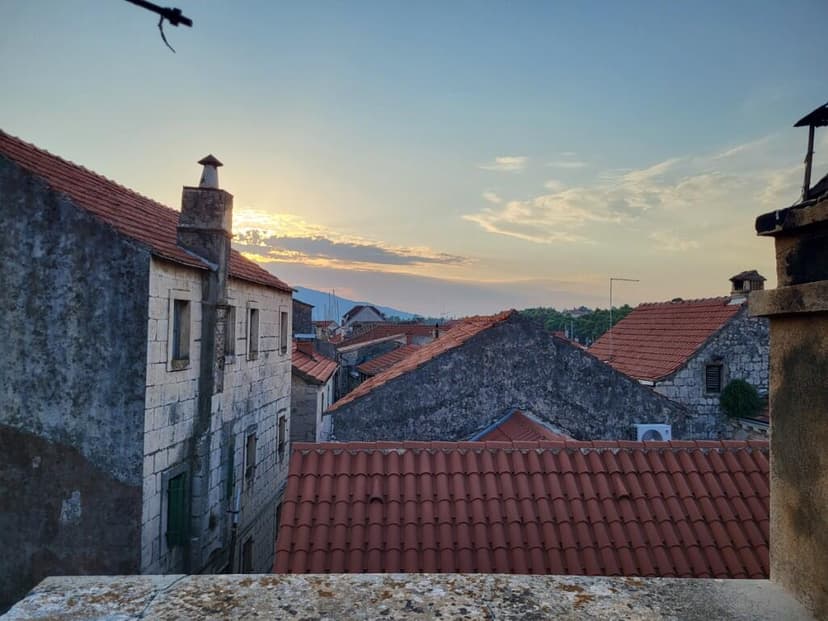
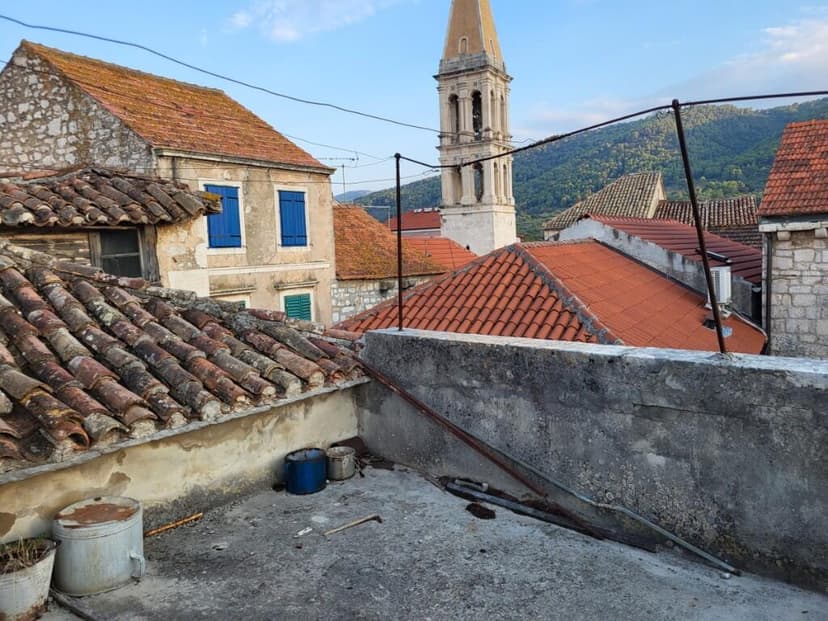
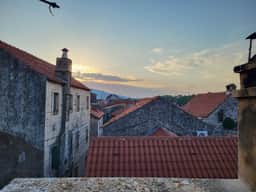
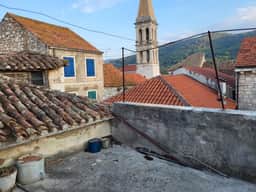
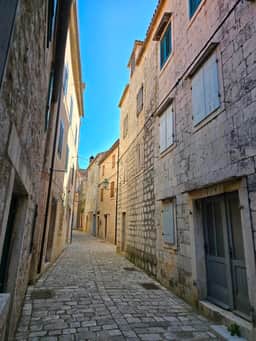
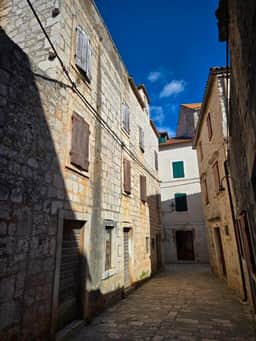
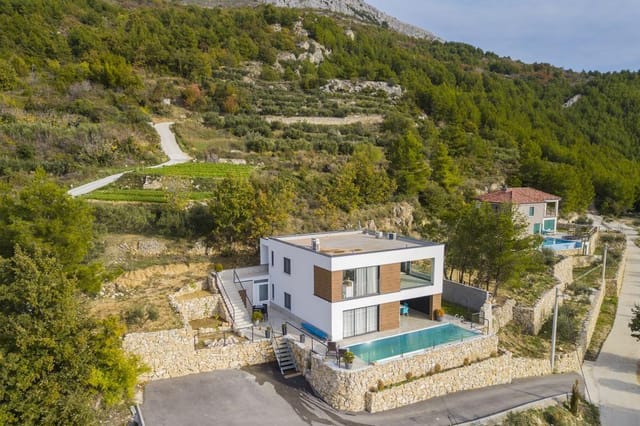
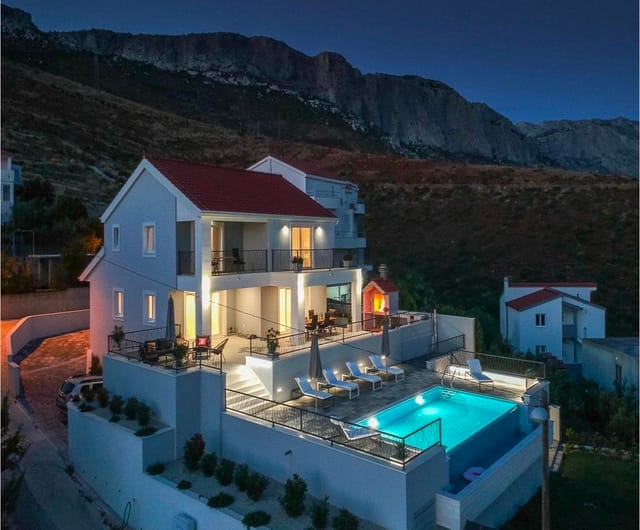
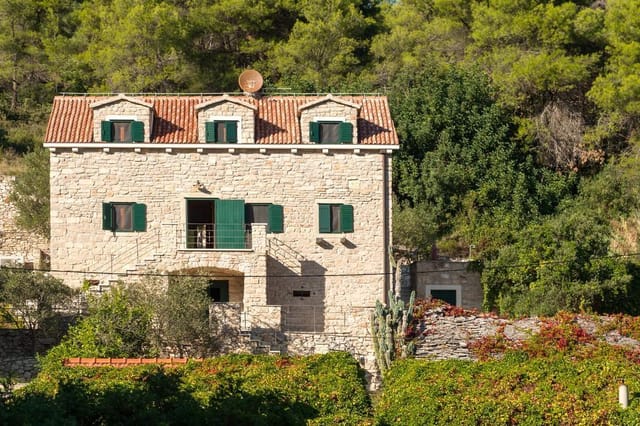
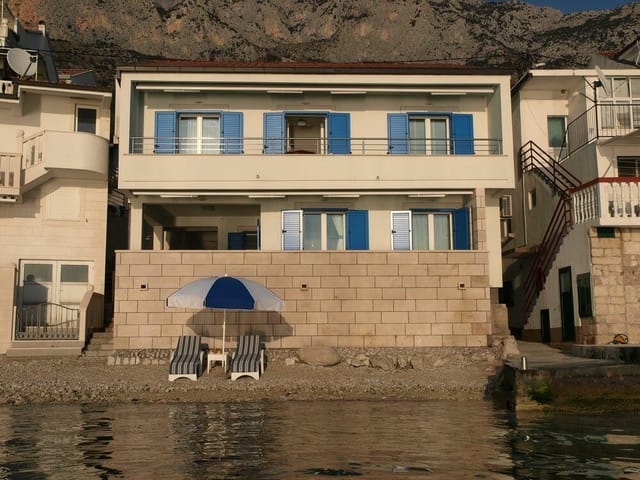
Stand on the attic terrace on a warm June evening and the view hits you all at once — terracotta rooftops tumbling toward the sea, the bell tower of the Dominican monastery catching the last of the light, swallows cutting arcs through air that smells faintly of rosemary and brine. This is Stari Grad, on the island of Hvar, and it has been looking more or less like this for over 2,400 years. That's not a marketing line. It's a geographic fact. Founded by ancient Greeks in 384 BC, Stari Grad is one of the oldest continuously inhabited towns in all of Europe, and this four-bedroom stone house sits right inside its historic core.
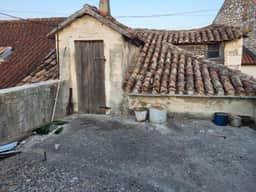
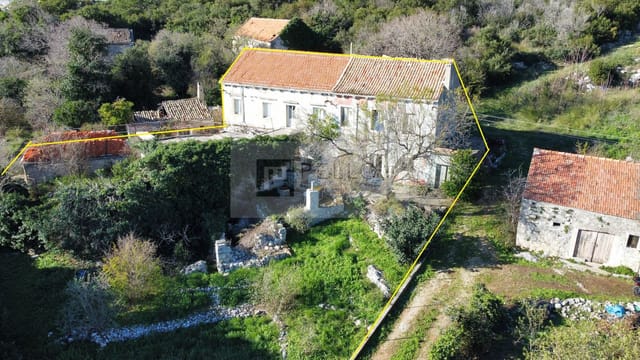
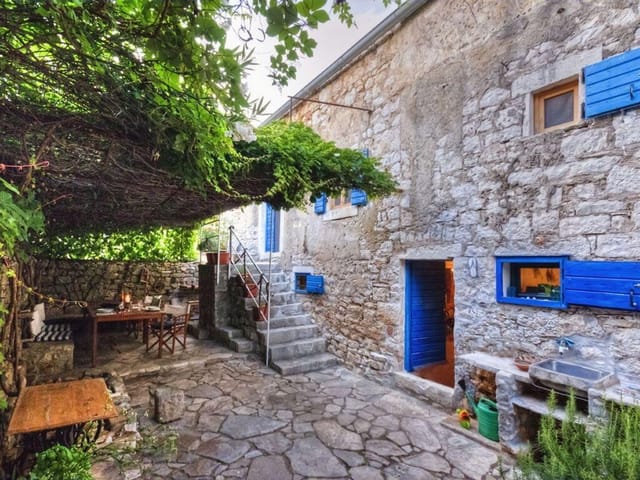
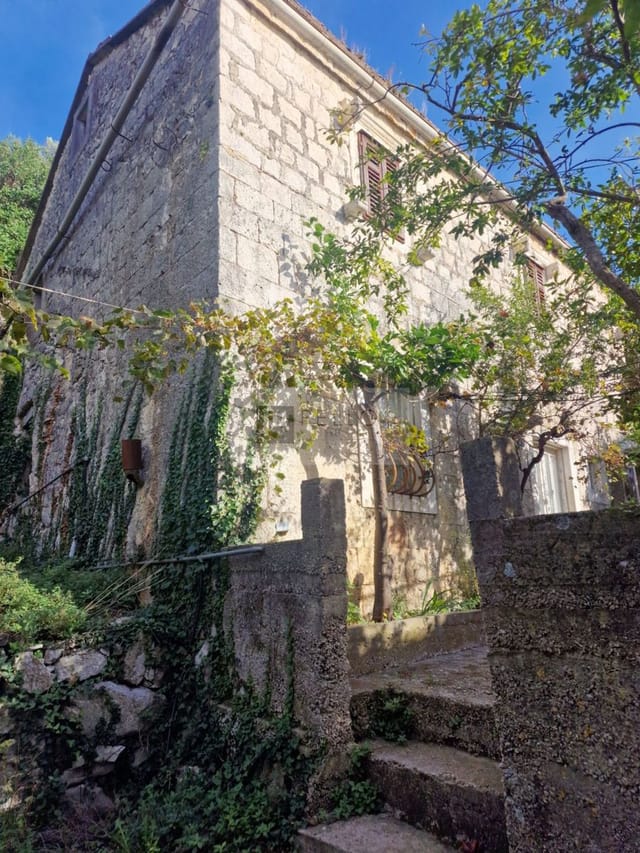
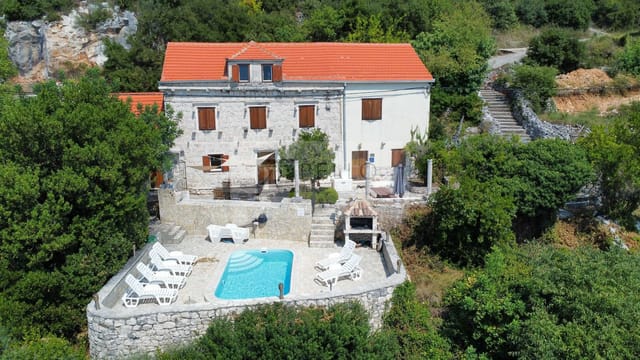
The house itself spreads across four levels — ground floor, two upper floors, and an attic — covering 180 square metres in total. The bones are there: thick stone walls that keep rooms cool even in August when the mercury climbs past 35 degrees, original architectural proportions that no modern build can replicate, and that rooftop terrace with a view you'd pay good money just to look at for an hour. The property is being sold ready for full renovation, which means the next owner gets to make every decision — the kitchen layout, the bathroom finishes, the way the attic opens up to the sky. It's a blank stone canvas in a UNESCO World Heritage protected zone.
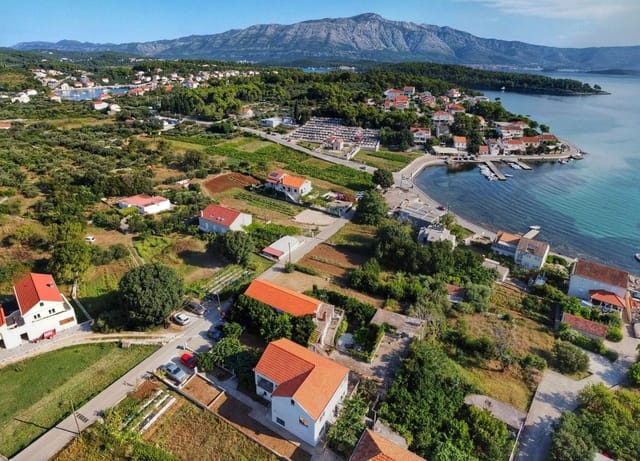
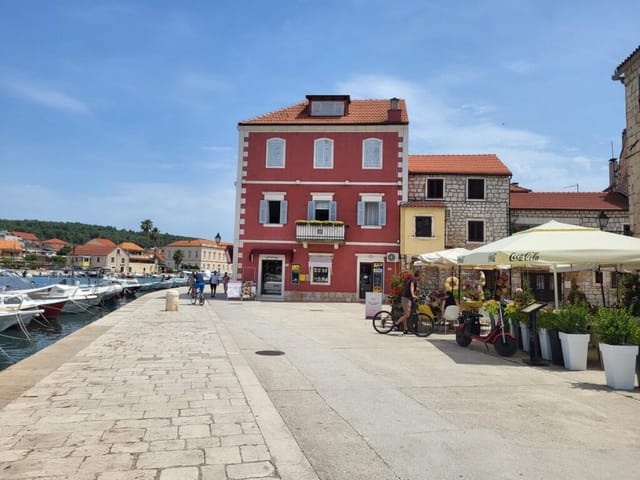
Stari Grad sits on the north side of Hvar island, sheltered by a long bay that curves like a half-moon. It's quieter than Hvar Town — deliberately, stubbornly quieter. The people who end up here tend to prefer it that way. There are no nightclubs on the waterfront. What there is: a harbour lined with wooden fishing boats, a morning market where local women sell lavender bundles and homemade sheep's cheese, and a main square that fills up after 7pm with families walking their evening kor zo. In July and August, the Stari Grad Plain — a network of ancient Greek field divisions still visible from the air and protected by UNESCO alongside the town itself — turns gold with olive groves and vineyards. Walk twenty minutes out of the centre and you're surrounded by vines that have been tended on this same land since antiquity.
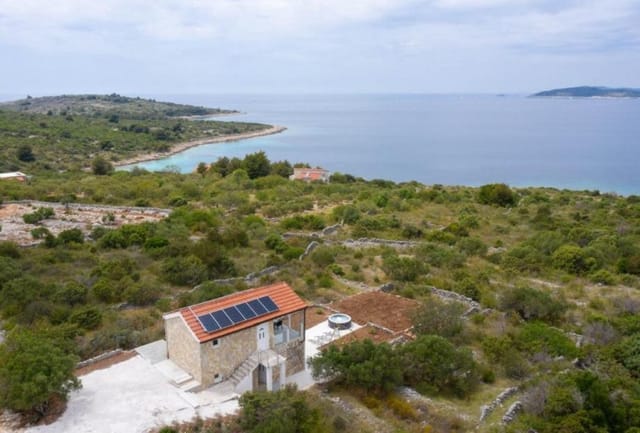
The island of Hvar gets more than 2,700 hours of sunshine per year, making it one of the sunniest places in all of Europe. Winters here are mild — genuinely mild, not the kind of mild that turns out to mean rainy and cold. Locals keep their café terraces open well into November. Almond trees flower in February. Spring arrives early and lingers. If you're thinking about a second home in Croatia that you can actually use across multiple seasons, Hvar makes a strong argument.
Getting here is straightforward. Split Airport is roughly 80 kilometres away on the mainland, with direct catamaran and ferry connections running daily from Split harbour to Stari Grad's port — the ferry terminal is within walking distance of the house. In summer, direct catamaran routes from Ancona and other Italian ports make this accessible from Western Europe without a single domestic flight. Low-cost carriers serve Split from London, Amsterdam, Vienna, and Frankfurt year-round, with frequencies ramping up significantly from April through October.
Day-to-day life in Stari Grad revolves around the water and the table. The restaurant Antika on the harbour is the kind of place that quietly wins awards without making a fuss about it — grilled dentex, black risotto, locally caught squid cooked simply in olive oil and garlic. The wine you drink with it will likely come from Plavac Mali grapes grown on Hvar's south-facing slopes. The island also produces some of Croatia's finest olive oil; you can buy it directly from growers in the villages east of town. On summer evenings, the Foretic winery hosts tastings on their terrace above the plain. It's the sort of place you find by asking a local, not by googling.
For outdoor activity, the island delivers across the board. Hiking trails cut through the pine-covered hills above Stari Grad, with the path to Velo Grablje — a semi-abandoned lavender village in the island's interior — taking you through landscapes that feel genuinely remote despite being 40 minutes on foot from a ferry terminal. Sea kayaking along the north coast is exceptional in May and September when the water is calm and the summer crowds haven't arrived or have already left. The Pakleni Islands, accessible by water taxi from Hvar Town (about 25 minutes by car or bus from Stari Grad), offer some of the clearest water in the Adriatic for snorkelling and swimming.
As a vacation home investment, this property sits at an interesting intersection. The UNESCO protection of Stari Grad's historic core limits new construction significantly, which supports long-term values for existing stone houses within the zone. Croatia joined the Eurozone in January 2023, simplifying transactions for EU buyers considerably. Non-EU buyers can purchase property in Croatia under reciprocity agreements, though working with a local notary and legal counsel is standard practice and strongly recommended. The renovation itself will require Heritage Ministry approval for any exterior changes — a process that involves paperwork but also protects your investment from the kind of neighbourhood changes that can erode property values elsewhere.
Rental demand in Stari Grad has grown consistently over the past decade as travellers increasingly look for alternatives to the busier party atmosphere of Hvar Town. A renovated four-bedroom stone house with a rooftop terrace in the historic centre, positioned well on platforms like Airbnb or managed through one of the island's growing number of local rental agencies, would sit firmly in the premium holiday rental category. Peak weeks in July and August command strong nightly rates; a well-managed property could generate meaningful income across a 20-22 week season.
Key features at a glance:
Four bedrooms across 180 square metres of floor space
Four-level layout: ground floor, two upper floors, and attic
Attic terrace with views over Stari Grad's historic rooftops
Located in the UNESCO World Heritage protected historic centre
Traditional stone construction with full renovation potential
One bathroom (scope to add more during renovation)
Walking distance to Stari Grad harbour and ferry terminal
25 minutes to Hvar Town by car or local bus
80 kilometres from Split Airport with daily ferry and catamaran links
One of the oldest continuously inhabited towns in Europe, founded 384 BC
In a zone with strict limits on new construction — strong scarcity value
Croatia Eurozone member since January 2023
High seasonal rental demand with growing premium market
2,700+ annual sunshine hours — one of Europe's sunniest islands
Priced at 280,000 EUR for a rare historic centre stone house
If you've been looking for a vacation home in Croatia that offers something genuinely different — not a new-build apartment in a marina complex, but a piece of living history that you can shape entirely to your vision — this is a rare find. Properties inside Stari Grad's protected historic core rarely come to market, and four-bedroom stone houses with this kind of footprint and vertical space are rarer still.
Reach out through Homestra today to request the full property details, arrange a site visit, or speak with our Croatia specialist who can walk you through the renovation process, legal requirements for international buyers, and the realistic potential of this investment. The ferry from Split takes about an hour. It's worth the trip.