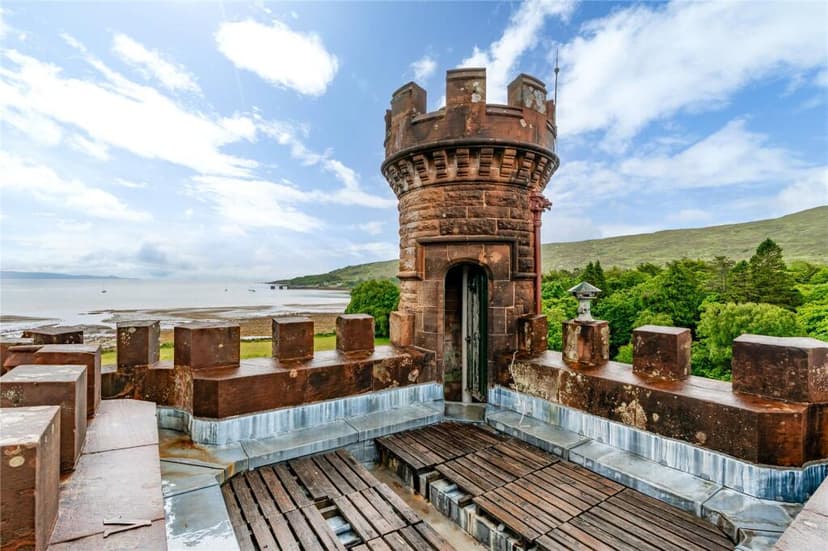
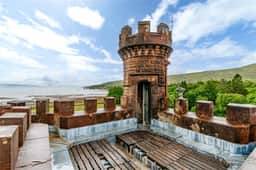
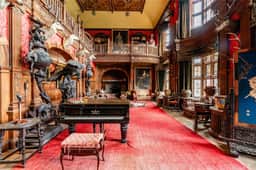
Stand in the galleried grand hall of Kinloch Castle on a still October morning, and you'll hear almost nothing — just the faint knock of a red deer against the treeline, and the distant slap of Loch Scresort against the pier stones. That silence is not emptiness. It's the sound of one of the most remote and historically charged addresses in the British Isles doing exactly what it was built to do: making the rest of the world feel very far away.
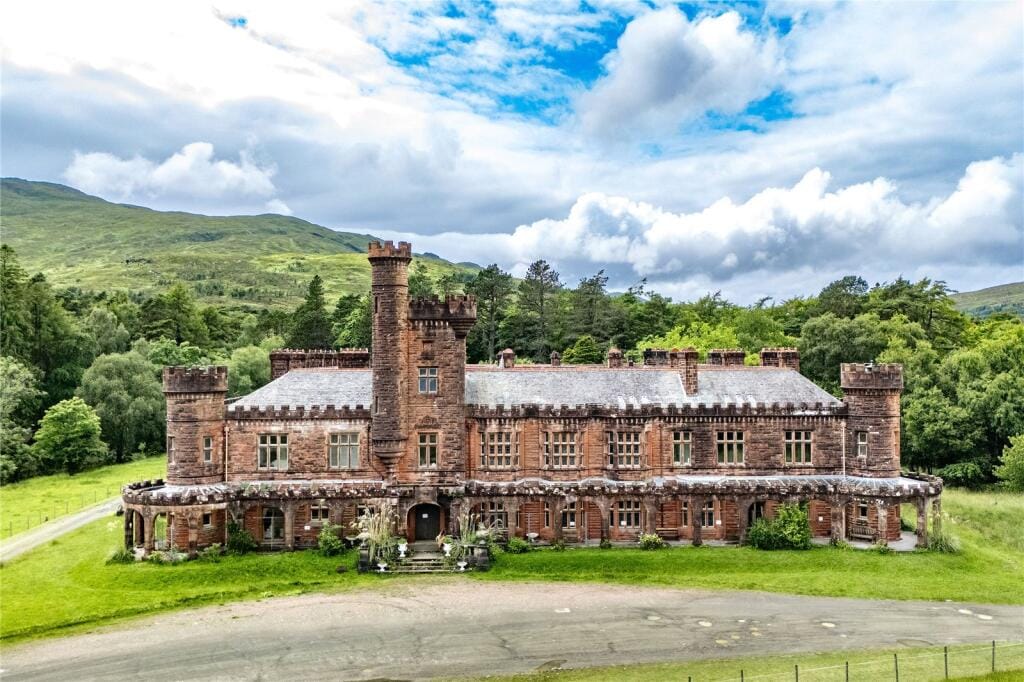
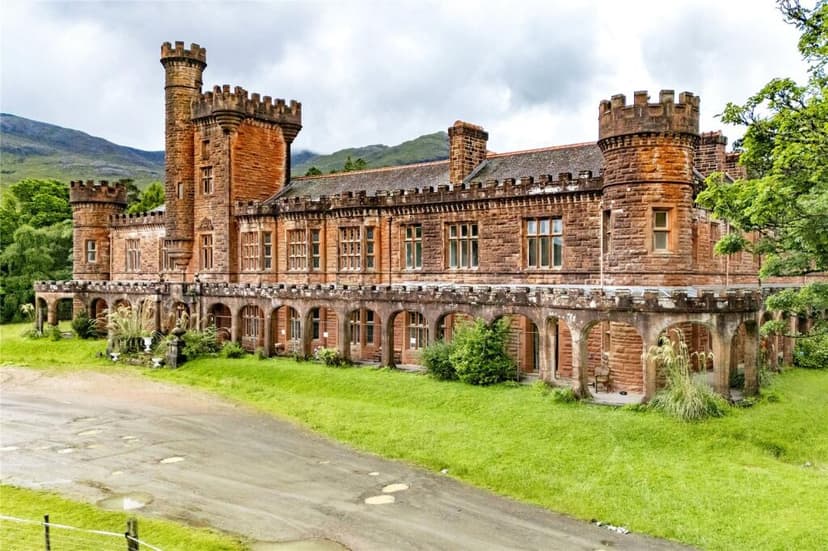
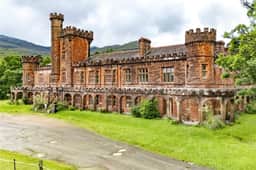
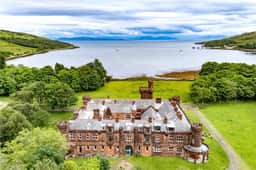
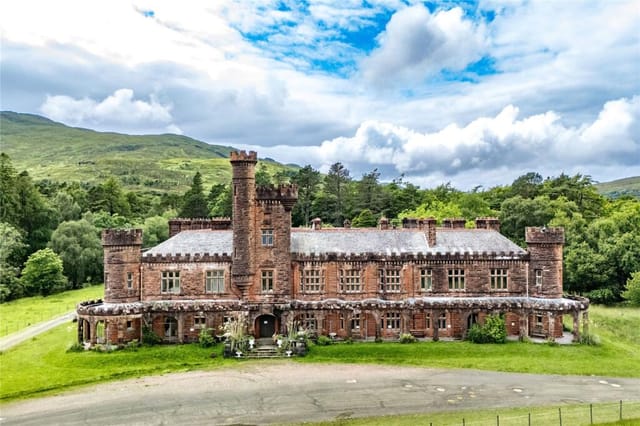
Kinloch Castle sits on the eastern shore of the Isle of Rum, the largest of the Small Isles scattered across the Inner Hebrides off Scotland's west coast. Built between 1897 and 1900 for Sir George Bullough — a Lancashire industrialist with seemingly bottomless pockets and a taste for the theatrical — this Category A listed sandstone castle is not a ruin dressed up in heritage language. It is a fully intact Edwardian time capsule, with its original contents still in place: the 1900 Steinway grand piano still in the ballroom, the Japanese lacquer cabinets still catching the afternoon light in Lady Monica's drawing room, the mechanical orchestrion still housed inside the Jacobean staircase. That orchestrion, incidentally, is one of only three ever built by Imhoff and Mukle of Germany. The other two are in museums. This one comes with the castle.
The scale of the place takes a moment to absorb. Twenty bedrooms, nine bathrooms, and a ground floor that reads like an architectural fever dream of Edwardian ambition: a galleried grand hall with mullioned bay windows big enough to fill with winter light, a mahogany-panelled dining room with crystal candelabras still on the table, a billiard and smoking room that smells faintly of old leather and woodsmoke, a ballroom with a sprung floor and a minstrels' gallery hidden behind silk wall hangings, and a library that George Bullough used as his business room and stocked with leatherbound travel journals and horse racing memorabilia. Lady Monica's suite on the upper floors has its own dressing room, en-suite, and uninterrupted views across Loch Scresort to the water beyond. The Victorian bathrooms are a curiosity unto themselves — the Shanks of Barrhead shower cabinets offer seven separate settings, and have been described, accurately, as upright Jacuzzis.
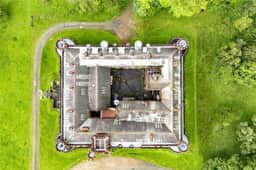
The 2,878 square metre footprint spreads across multiple floors, with former staff quarters at the top and useful cellars and storage rooms in the basement. The entire property sits within approximately 18 acres of formal gardens, parkland, and woodland — all of it listed on the Inventory of Gardens and Designed Landscapes in Scotland. The walled garden, once productive enough to supply the entire estate, had its own glasshouses and a palm house. Over 250,000 tons of topsoil were imported to the island just to create the planting beds and lawns. That's the level of intent that built this place, and it shapes every corner of the grounds: formal terraces stepping down toward the loch, ornamental urns and statuary tucked between mature plantings, the ghost of a Japanese garden, a bowling green, even the remains of a small golf course and a squash court. The woodland provides genuine shelter from the Hebridean wind, which matters more than any estate agent will tell you.
Let's be direct about what this property requires. Kinloch Castle is in good structural condition given its age and context, but a full return to residential or hospitality use will demand serious investment — restoration and refurbishment costs run to an estimated £10 million or more, depending on scope and intended use. This is not a weekend project. It is a generational one. For the right buyer — a private individual with a preservation mandate, a hospitality group with the patience to do it properly, a foundation with cultural ambitions — the return on that investment is measured not just in financial terms but in legacy. You would be the steward of one of Scotland's most significant Edwardian interiors, in a setting that has no real equivalent anywhere in Europe.
And the setting matters enormously. Rum is a National Nature Reserve, managed by NatureScot, and most of the island operates with genuine environmental care. Red deer move freely across the hillsides. Golden eagles hunt above the Rum Cuillin — that jagged ridge of mountains that rises behind the castle and turns extraordinary shades of rust and purple in the autumn light. The island hosts one of the largest and most globally significant breeding colonies of Manx shearwaters in the world; on summer evenings they return from sea in the thousands, filling the air with an unearthly sound that visitors remember for decades. The island's resident population sits around 40 people, small enough to feel like a genuine community, with a visitor centre, post office, and seasonal accommodation at Kinloch village just a short walk from the castle gates.
Access is by CalMac ferry from Mallaig — a 90-minute crossing that is, in itself, part of the experience. Mallaig sits at the end of the Road to the Isles, served by the West Highland Line train from Glasgow, one of the most celebrated railway journeys in Europe. The Jacobite steam train, which runs the Fort William to Mallaig route in summer and crosses the Glenfinnan Viaduct, passes through. Inverness Airport is roughly two and a half hours from Mallaig by road. Rum is car-free on the island itself, which concentrates life on foot and by bike — the trail network covers the full breadth of the island, from the Atlantic-facing cliffs at Harris to the summit ridges of Askival and Hallival, the two highest points, at 812 and 723 metres respectively.
Seasons here are distinct in the way they rarely are further south. Spring brings extraordinary wildflower growth and the return of migratory seabirds. Summer days are long — genuinely long, with light still in the sky past ten o'clock and a quality of evening sunshine on the loch that photographers make special trips to capture. Autumn turns the hillsides amber and bronze, and the stag rut fills the glen with sound. Winter on Rum is elemental and not for everyone, but from inside the grand hall with a fire going and storm light on the water, it has a drama that no amount of money can manufacture elsewhere.
For international buyers considering Scotland as a location for a significant second home or heritage acquisition, Kinloch Castle occupies a category entirely its own. There is no comparable property available anywhere in the Hebrides, and few in Scotland at any price. The current asking price of £877,500 reflects the investment required to realise its full potential — a realistic entry point for a building that, fully restored, would command multiples of that figure as a private island castle or boutique hospitality destination. Buyers from outside the UK should note that Scotland has its own Land and Buildings Transaction Tax (LBTT) rather than Stamp Duty, and that Category A listed status brings both restrictions and significant grant funding opportunities through Historic Environment Scotland. Legal and financial advice from Scottish solicitors familiar with rural and listed property is strongly recommended before proceeding.
Key features at a glance:
— 20 bedrooms and 9 bathrooms across a 2,878 sq m Edwardian sandstone castle
— Category A listed building — Scotland's highest heritage designation
— Original contents included: Steinway grand piano, Imhoff & Mukle orchestrion, Japanese lacquer cabinets, crystal candelabras, Chippendale-style dining chairs, and much more
— Galleried grand hall, ballroom with sprung floor and minstrels' gallery, mahogany-panelled dining room, library, billiard room, drawing rooms, and ballroom
— Rare Shanks of Barrhead seven-setting Victorian shower cabinets
— Approximately 18 acres of grounds listed on Scotland's Inventory of Gardens and Designed Landscapes
— Walled garden with restoration potential; remains of Japanese garden, bowling green, golf course, and squash court
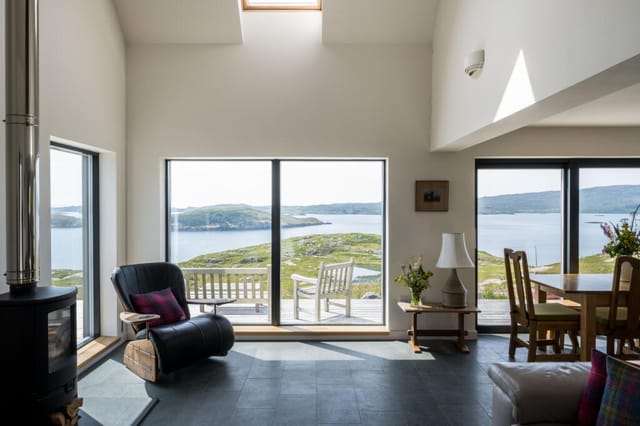
— Direct views over Loch Scresort with Rum Cuillin mountain backdrop
— Set within a National Nature Reserve — red deer, golden eagles, and Manx shearwaters on the doorstep
— Car-free island accessible by CalMac ferry from Mallaig (90 minutes)
— West Highland Line rail connection to Glasgow via Mallaig
— Restoration estimate approximately £10 million; significant grant funding potential through Historic Environment Scotland
— Realistic conversion potential as private residence, boutique hotel, or cultural and events venue (subject to consents)
— One of fewer than a handful of intact Edwardian castle interiors remaining in Scotland
Kinloch Castle is the kind of property that makes experienced buyers stop and stare at the details — not because they're expected to, but because there is genuinely so much to look at. The Napoleonic engravings in the Empire Room. The hidden drinks pantry off the ballroom. The way the mullioned windows frame the loch in the morning. If you've been searching for a second home in Scotland with real historical weight and genuine rarity, this is the one that makes every other option feel like a compromise. Contact Homestra today to arrange a viewing or request the full restoration survey and contents inventory. A property like this surfaces once. Not once a decade. Once.