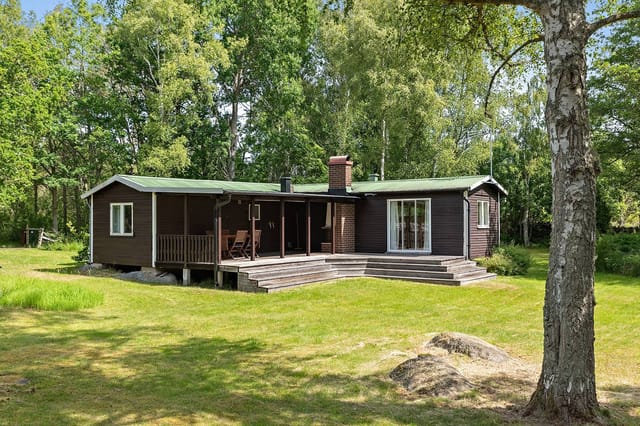
Early morning on Tjurkö, the Baltic air carries a faint smell of salt and pine resin through the bedroom window, and the only sound is a pair of oystercatchers working the shoreline 500 meters down the path. That's your morning. No traffic, no neighbors in sight, just the particular quiet that belongs to the Swedish archipelago in the hours before breakfast.
Kyskens väg 8 sits at the end of a winding gravel-and-grass track on one of Blekinge's most unhurried islands, set back in a small glade with a single neighbor and a 2,650-square-meter plot that's framed on three sides by old stone walls. The kind of walls that took generations to build, stone by stone, pulled from the same granite bedrock that shapes this coastline. The land is level and open—big enough for a game of kubb at dusk, a proper kitchen garden, or a hammock strung between two old trees with a book and a thermos of coffee.
The house itself was built in 1967 and still carries the honest bones of a classic Swedish sommarstuga. Original wooden floors, a functional iron stove, a kitchen that has fed a lot of families over a lot of summers. It doesn't try to be something it isn't. The 52 square meters are arranged with the kind of practical logic that Scandinavian builders understood instinctively—kitchen and dining together at around 21 square meters, generous enough for a crowded table on a rainy August afternoon, two bedrooms of 9 and 11 square meters respectively, and a bathroom with shower. Four separate exits mean kids can circuit the house without ever coming back through the kitchen, which anyone who's spent a week at a Swedish summer cottage will know is quietly essential.
Out the back, a covered terrace extends the living space into something close ... click here to read more