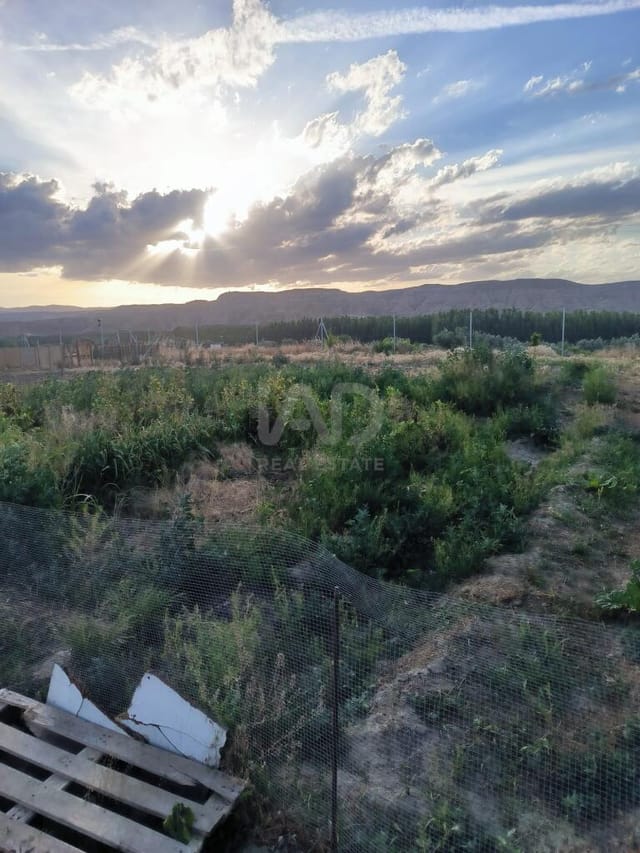
Stand here on a clear January morning and you can see the Sierra Nevada's snow-capped ridgeline from across the valley. The air smells of rosemary and damp earth. Sixty young olive trees — barely two years old, their silver-green leaves catching the low winter sun — stretch out in neat rows across 4,769 square metres of Andalusian countryside. This is Cortes de Baza territory, a part of Granada province that most international buyers haven't discovered yet. That, honestly, is the point.
This agricultural plot sits between two working rural villages in the Granada interior, visible from the A-92N motorway but tucked far enough away that you hear nothing but wind and birdsong. The access road is fully asphalted all the way to the water house — no rutted tracks, no seasonal mud problems. You drive straight in, park, get to work. It sounds like a small thing. Anyone who has dealt with rural land in Spain knows it isn't.
The water situation here is sorted, which matters enormously. The property has a fully legal potable water supply — documented, registered, above board. In rural Andalusia, where water rights can be murky and disputes long-running, having clean legal title to your supply is genuinely rare at this price point. There's also a legalised 15 m² utility building already on the land, so you have covered storage from day one.
The olive trees are young, yes. Two years in. But that's actually an advantage if you're thinking long-term — you're not inheriting someone else's neglected orchard. These trees have been planted recently, they're healthy, and in a few years they'll be producing. Alongside the olives, there are various established fruit trees on the plot. Figs, almonds, the odd pomegranate — the kind of mixed ... click here to read more