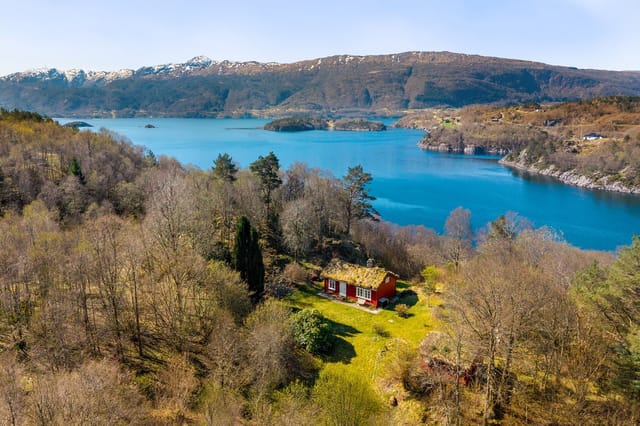
Step off the gravel path, push open the heavy timber door, and you're standing inside a cabin that was built before Norway was even a unified country. The year was 1835. Outside, the sea glitters toward the mountains of Stord and Fitjar — the same view whoever lived here first would have woken up to every morning. That sense of continuity, of being anchored to something genuinely old and real, is rare. And at Flatråkervegen 280 on the island of Tysnes, it costs less than most city parking spaces in Oslo.
Tysnes sits in Vestland county, tucked between the Hardangerfjord and the Bjørnafjorden, and locals here will tell you it's one of those places that doesn't need to announce itself. There's no ski resort branding or tourist infrastructure. What there is instead: quiet coves, black trumpet mushrooms pushing up through the forest floor in autumn, golden chanterelles in summer, and a community that shows up for Tysnesfest each year with the kind of energy you can't manufacture. The festival draws thousands to this small island — live music, outdoor stages, a genuine celebration rather than a curated event. Outside of festival season, life here moves at a pace that most people have to travel a long way to find.
The cabin itself is compact — 36 square metres of usable space — but it doesn't feel small. Exposed timber walls and visible ceiling beams give it a solidity that modern builds rarely achieve. Natural light comes in through windows that frame the hillside and the water beyond. The living room fits a sofa, a dining table, and still leaves room to breathe. There's a working fireplace, and on a wet October evening with the wind coming off the water, you'll be glad it's there.
The kitchen is more functional than it mig ... click here to read more