Houses For Sale In France With A Swimming Pool (page 3)

Houses for sale in france - homestra offers the largest amount of european real estate with over 200,000+ properties, find any type of property within your budget from villas to country homes. buy or rent your perfect home in europe. (page 3)

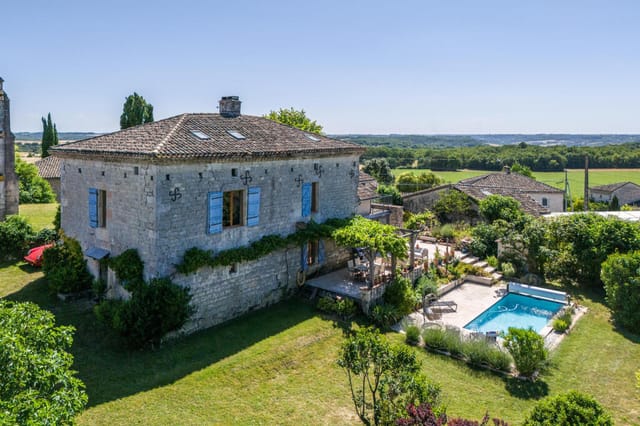
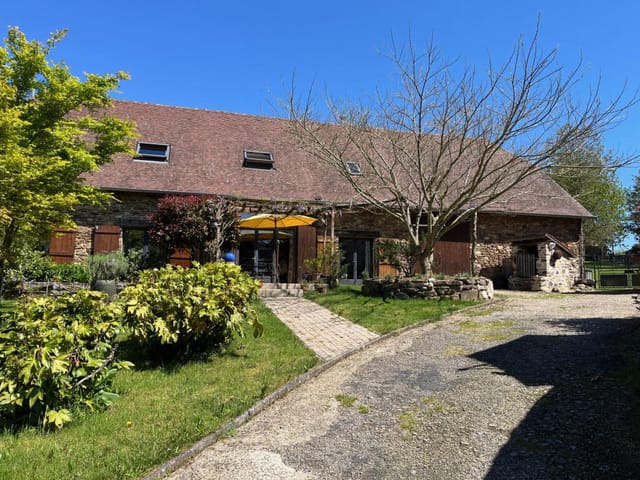
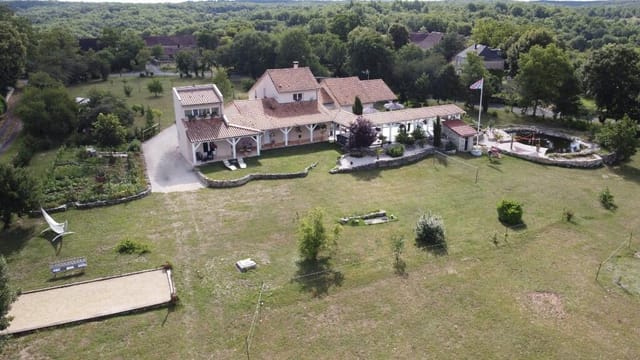
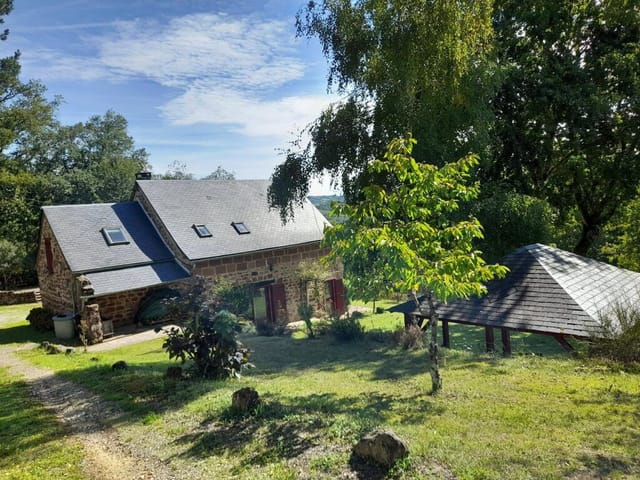
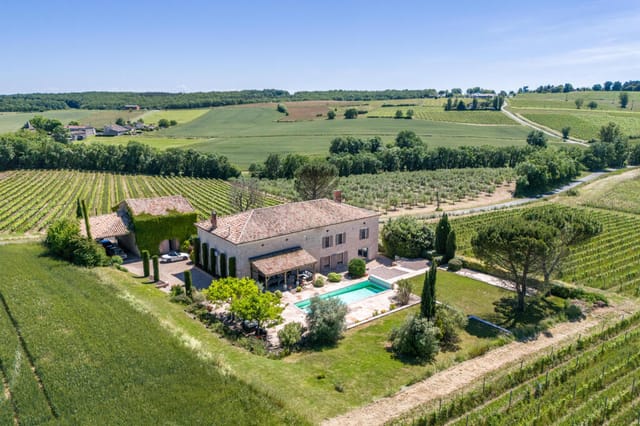
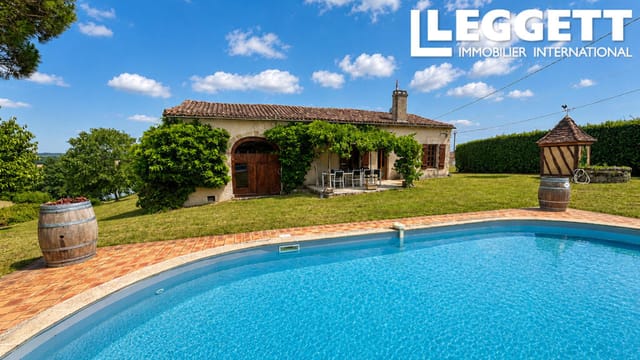
Saturday morning in Lauzerte: the weekly market on the Place des Cornières is already buzzing by nine, the smell of warm chestnut bread drifting from the boulangerie on the corner. You walk down through the village — one of France's designated Plus Beaux Villages — pick up a wedge of Tomme de brebis from the sheep farmer who's been coming here every week for thirty years, and you're back at the house with coffee on the terrace before the church bell strikes ten. That's the kind of morning this property was built for. Set just outside the medieval hilltop village of Lauzerte in the rolling Tarn-et-Garonne department of the Midi-Pyrénées, this six-bedroom, two-house estate sits on around 1.2 hectares of mature gardens with views that remind you, daily, why people have been choosing this corner of southwestern France for centuries. The Quercy Blanc — named for its pale limestone plateaus and dry stone walls — is quieter than the Dordogne, less trafficked than Lot, and all the better for it. The property is actually two fully restored stone country houses side by side, and this distinction matters enormously. The main house is the heart of the estate: thick walls that keep it cool through July's 30-degree afternoons, original oak beams running the length of the ceilings, exposed stonework that took decades of weather to look this good, and original fireplaces that make January here feel like a privilege rather than a hardship. Travertine floors run through the ground floor — warm underfoot in summer, and the kind of surface that ages gracefully rather than showing every scuff. The kitchen deserves its own paragraph. It's centered around a Smeg gas range and built for real cooking — a generous worktop, ample cupboard space ... click here to read more

Picture 1

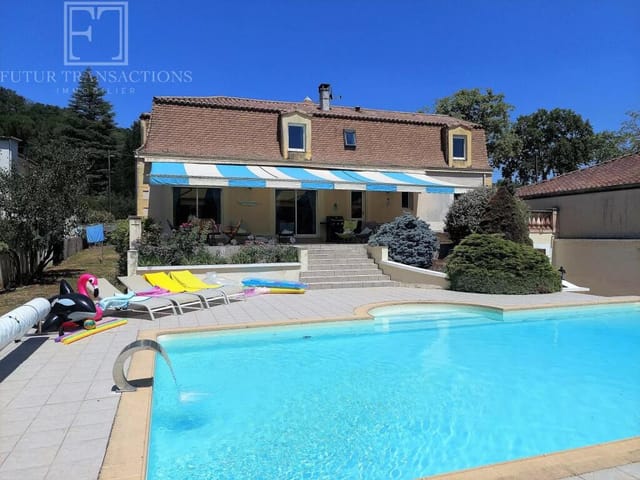
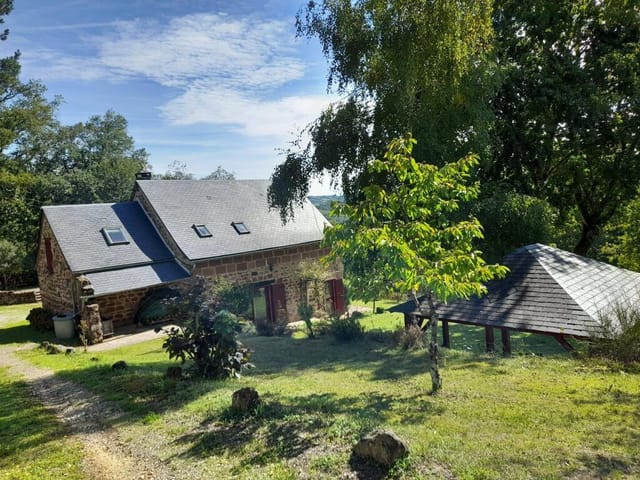
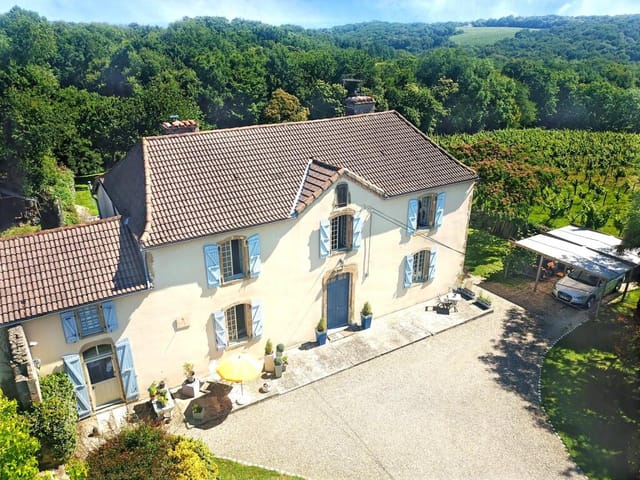
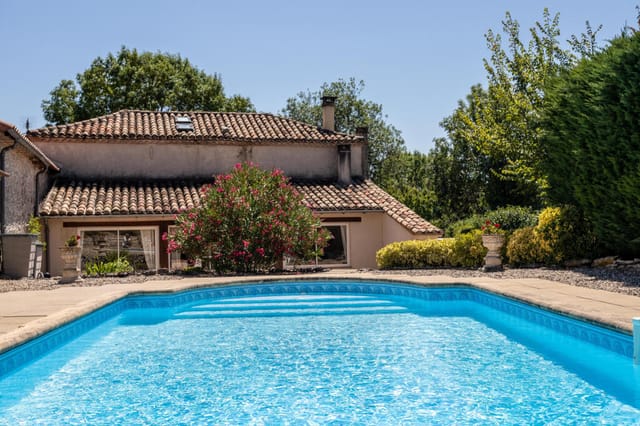
On a still Tuesday morning in late June, you open the kitchen's ancient wooden shutters and the first thing you hear is nothing. Not the compressed silence of earplugs—actual, honest quiet, broken only by a wood pigeon somewhere in the oak trees and the faint clank of a tractor working a field two valleys over. The smell drifting in is warm stone and cut grass. That's it. That's the whole morning's agenda if you want it to be. This four-bedroom, three-bathroom country house in the hamlet just outside Roquecor sits on the kind of land that reminds you why people first started building in southwest France. The Tarn-et-Garonne countryside rolls in every direction—soft green ridges, sunflower fields gone gold by July, the occasional red-roofed farmstead catching the afternoon light. From the sun terrace beside the saltwater pool, you can see for miles. No rooftops crowding the view. No road noise. Just the particular stillness that this corner of Midi-Pyrénées does better than almost anywhere in Europe. Roquecor itself is five minutes by car or a genuinely pleasant forty-minute walk through the fields—the kind of walk that makes you feel you've earned the pastis waiting at the café. The village has a proper restaurant that locals actually eat at (not the tourist-facing kind), a reliable café, and enough daily life happening around the square to feel connected without ever feeling crowded. The Wednesday morning market in Lauzerte, twelve kilometres northeast, is the one to pencil in first. Lauzerte is a bastide village on the Pilgrimage of Saint-Jacques-de-Compostelle route, and the market spills down the medieval lanes with regional producers selling duck confit, aged Caussade walnuts, raw-milk Tomme, and the kind of straw ... click here to read more

Picture 1

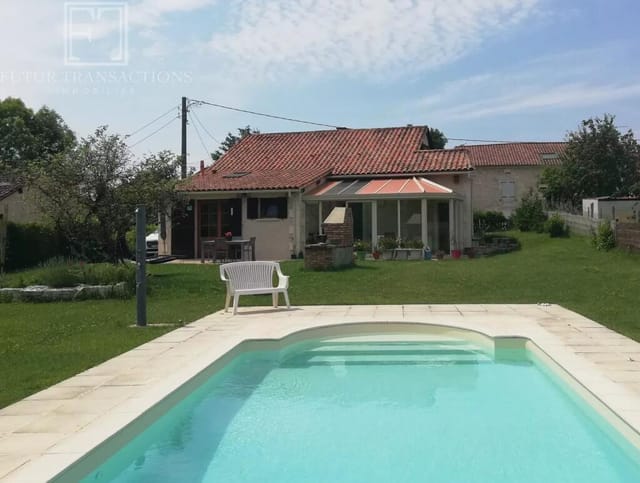
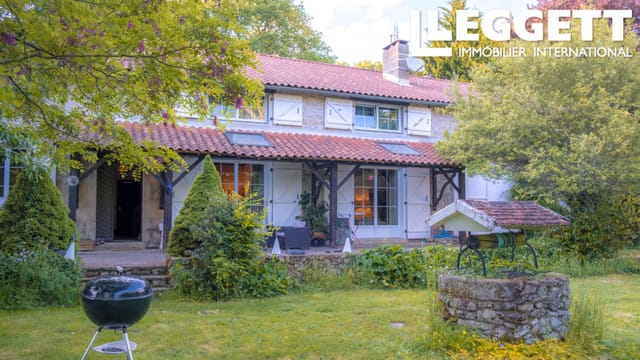
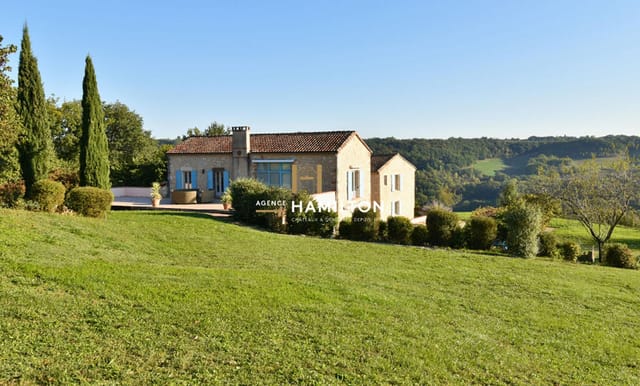
Sunday morning in Beauville starts with the smell of bread. The boulangerie on the main square fires up early, and if your bedroom window is open—which it will be, because the air here in July is warm but never stifling—the scent reaches you before your alarm does. That's not a selling point you'll find in any brochure. It's just what life is like in this particular corner of Lot-et-Garonne, and it's the kind of thing that turns a holiday home purchase into one of the best decisions you ever made. This four-bedroom village house sits right in the heart of Beauville, one of the most intact bastide villages in Aquitaine. Built to a medieval grid plan in the 13th century, Beauville has the kind of architectural coherence that planners in other towns spend millions trying to recreate. The covered arcades around the central square, the honey-coloured stone, the church tower that chimes the quarter-hours—it's all still here, and this house is part of it. From the front door, the market square is a two-minute walk. From the top-floor living space, you can watch the whole village go about its business. The house covers around 190 square metres across three floors, and what strikes you first is how much space there actually is. Village properties in the Lot-et-Garonne often look compact from the street and reveal themselves slowly. This one does exactly that. The ground floor has a bedroom that works perfectly for guests who don't want stairs, or for owners who eventually want single-level living as a practical option. The first floor holds three more well-proportioned bedrooms and two bathrooms. And then there's the top floor—converted, bright, sitting under the original roof timbers—currently used as a family room and home of ... click here to read more

Picture 1

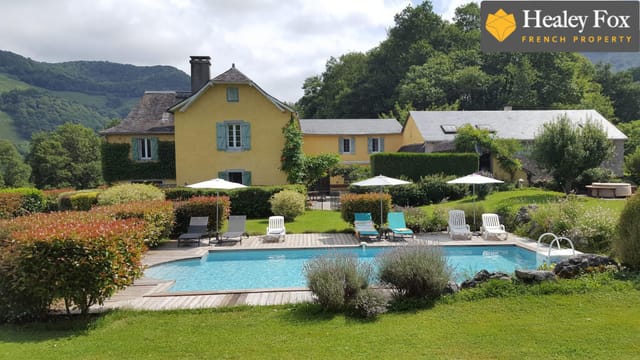
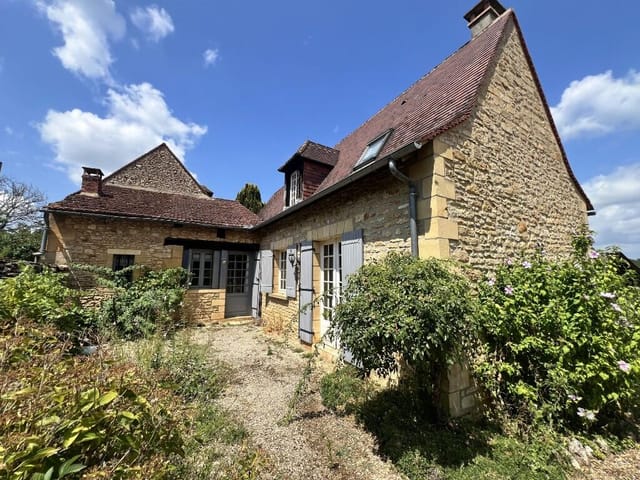
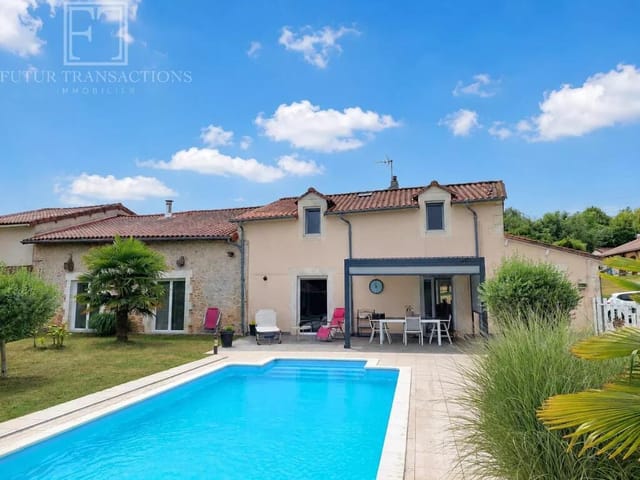
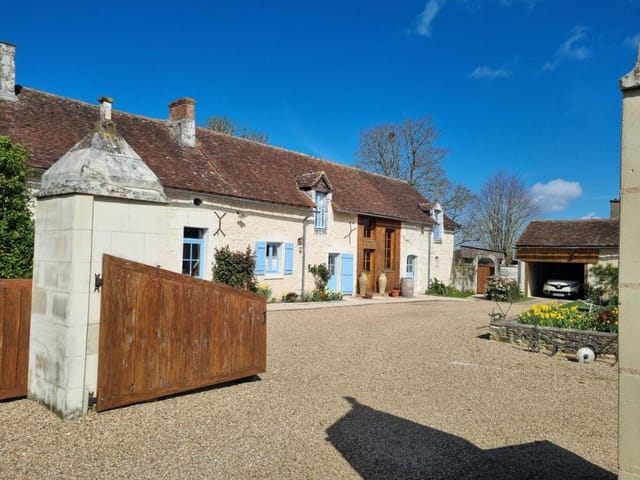
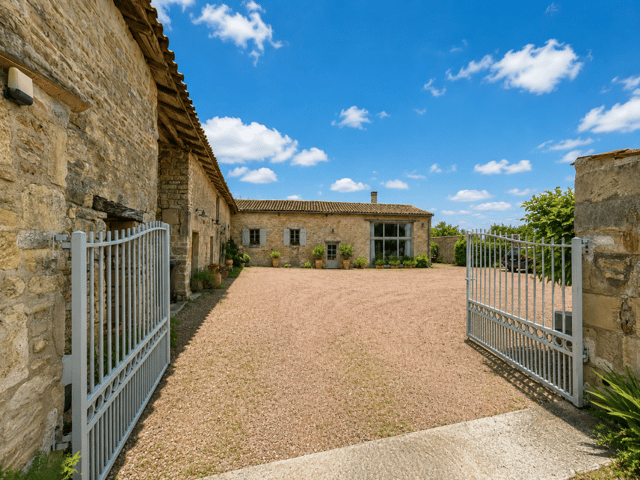
Step outside on a Saturday morning in October and the air already carries that particular Pyrenean sharpness—wood smoke from somewhere down the lane, dew still on the stone courtyard, the peaks catching the first light above the Vallée de Barétous. This is Issor. And this 1801 farmhouse complex is the kind of property that doesn't come up twice in a lifetime. At 437 square metres spread across a beautifully restored Béarnaise farmhouse, a guest house converted from a former sheepfold, and a massive traditional stone-and-pebble barn, the estate sits on roughly 1.8 hectares—gardens, mature plantings, a swimming pool, a jacuzzi, and over a hectare of adjoining pasture that rolls toward the foothills. The whole thing is arranged around a central courtyard, exactly as Béarnaise farmsteads have been built for centuries. That courtyard changes everything about how you inhabit the place. Morning coffee out there, in the shadow of stone walls that have stood since Napoleon was still a general. It's grounding in a way that no new-build terrace ever quite manages. The main house runs to 237 square metres across two floors. Downstairs, the living room opens onto views that stretch uninterrupted across the garden and out to the Pyrenean ridgeline—no road, no pylons, just countryside. The kitchen is the heart of things, anchored by an original fireplace fitted with a wood-burning stove and large enough to actually cook in rather than perform in. A separate sitting room pushes directly onto the terrace, which is where you'll find yourself most evenings from May through September. On cold December nights, that wood-burner in the living room earns its keep fast. Upstairs, four bedrooms all face the mountains, one with its own en-suite ... click here to read more

Picture 1

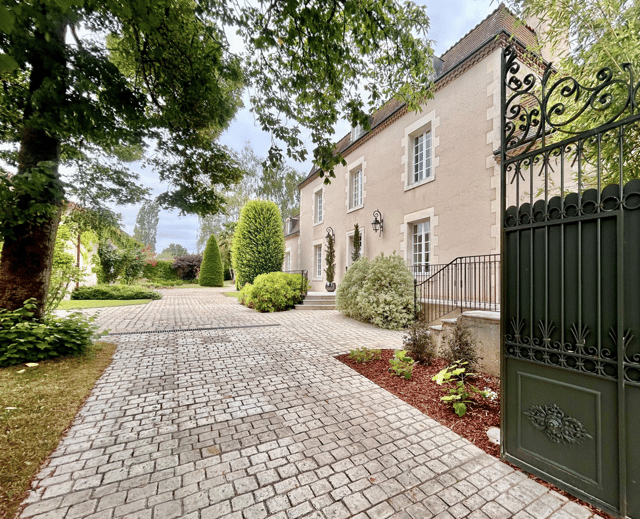
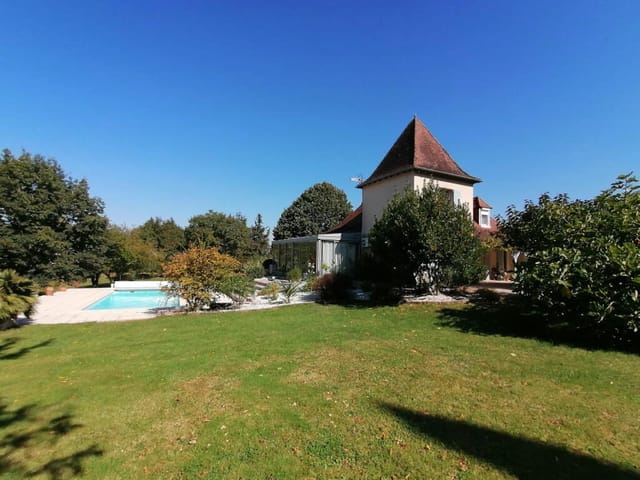
On a Sunday morning in Adriers, the bells of the Church of Saint-Hilaire carry across the courtyard before you've even had your first coffee. That church has been standing since the 11th century. This former presbytery, built in 1832, has been watching it the whole time. You step out through the kitchen onto the garden, the grass still damp, and it hits you — this is not a house that tries to impress you. It simply does. At 524 square metres spread across a meticulously restored ensemble of buildings, this chateau-scale residence in the Vienne department of Poitou-Charentes is one of those properties you genuinely don't forget. The main house alone runs to nearly 340 square metres of living space, and the first thing that stops you in the entrance hall is the Moorish-style vaulted staircase — a sweeping architectural statement that belongs in a different century entirely, yet feels completely at home here. Whoever commissioned that staircase had opinions, and you're glad they did. The reception rooms are lit the way old stone rooms always are in the Charente summer: long and golden in the afternoon, cool in the morning, with proportions that make modern houses feel like shoe boxes. The kitchen pulls everything together the way a good kitchen should — it's generous, sociable, and opens directly onto the garden so that the line between inside and out more or less disappears when you want it to. Overhead, a glass-roofed office surveys the grounds in quiet authority, a space where the 19th century and a very considered 21st-century architectural intervention coexist without a hint of friction. Upstairs, the principal suite runs to approximately 50 square metres on its own — a full bedroom world with room to breathe. Three ... click here to read more

Picture 1

Step out of the garage in the early morning and the first thing you notice is the silence — not the hollow kind, but the full, layered quiet of deep rural France, where the only sounds are wood pigeons in the oaks and the faint trickle of water from the pool filter kicking on. This is Troche, a hamlet in the folds of Corrèze, and life here runs at a pace most people only experience on holiday. Which is exactly the point. Built in 2022 and sitting on nearly 3,000 square metres of open countryside, this three-bedroom house punches well above its modest footprint. At 94 square metres, every centimetre has been thought through. The living room opens directly into a fitted kitchen — no awkward corridor, no closed-off cooking — so whoever's at the stove is still part of the conversation. French doors from this space lead straight to the heated swimming pool. That detail matters more than it sounds. On a July afternoon in the Limousin, when temperatures climb into the low thirties and the air smells faintly of warm cut grass, being three steps from the water is everything. The three bedrooms are calm, well-proportioned spaces. Two come with built-in wardrobes, practical for families who actually want to live here rather than just visit twice a year. The bathroom has both a bathtub and a walk-in shower — again, small choices that reflect considered design. There's also a dedicated storeroom, which international buyers often overlook until they're trying to figure out where to keep pool equipment, bikes, and the extra firewood they didn't expect to use. Then there's the technical spec, and this is where the property genuinely stands out in its price bracket. An air-to-water heat pump handles heating and cooling. A thermodynami ... click here to read more

Picture 1

Step out of the veranda on a June morning and all you can hear is the low hum of bees working through the meadow grass. The Corrèze countryside rolls away in every direction — soft hills, oak stands, not a rooftop in sight. This is what 2.82 hectares of your own land feels like. The house itself is a proper Limousin stone farmhouse, the kind built to last centuries and the kind that actually has. Slate roof, thick walls that keep the interior cool through August without any air conditioning running. It was renovated in 2003, which means the bones were kept honest while the living spaces were updated enough to move straight into without a renovation project hanging over you. At 131 square metres across two floors, it's genuinely liveable for a family — not so sprawling it becomes a burden to maintain, not so compact you're bumping into each other. The ground floor has a flow that makes sense. You come in through an entrance hall, move into a fitted kitchen that opens directly to the dining and living room — a fireplace at one end, a wood-burning stove doing the heavy lifting in the winter months when the Corrèze hills get properly cold and the idea of curling up with a book and a local Brive-la-Gaillarde walnut cake sounds genuinely appealing. A bedroom and shower room sit on this level too, which means the whole house can function single-storey if needed. But the real surprise is the veranda — large, full of afternoon light, opening straight onto the grounds and the swimming pool. That pool was built in 2025, a traditional 7m x 3.5m format, so it's fresh, clean, and ready for the first summer. Upstairs, three more bedrooms with sloped ceilings give the house that classic French farmhouse character, accompanied by a sho ... click here to read more

Picture 1

Step outside on a July morning and the first thing you notice is the silence. Not the absence of sound exactly, but a particular quality of it — birdsong carrying across open fields, the faint rustle of vines along the terrace, the distant church bell from the village of Le Temple-sur-Lot marking eight o'clock. You're standing in front of a centuries-old Lebanese cedar so vast its canopy throws shade across half the garden. This is the kind of moment that makes people stop wondering whether they made the right decision. They already know. This 410-square-metre country estate in the Lot-et-Garonne sits on its own private grounds with open views sweeping in every direction — and no neighbors close enough to matter. It comprises three distinct stone buildings: a 19th-century farmhouse, a superbly converted six-bedroom guest barn, and a self-contained one-bedroom cottage called Le Grenier. Ten bedrooms, seven bathrooms. Currently operating as a profitable guesthouse, it works equally well as a multi-generational family retreat, a boutique hotel project, a yoga or wellness retreat, or simply a very generous private home for people who want room to breathe in rural southwest France. The original farmhouse is where the estate's soul lives. Stone walls that have absorbed two centuries of Gascon summers keep the interior cool without a fuss. A large, light-filled living room centers on a wood-burning stove — irreplaceable on those mid-December evenings when the Lot-et-Garonne fog sits low over the valley and you've just come back from the Villeneuve-sur-Lot market with a wheel of Ossau-Iraty and a bottle from a Duras cooperative. The kitchen runs on gas, which serious cooks will appreciate, and a long hallway connects the back ... click here to read more

Picture 1

You wake up to no particular sound except a wood pigeon in the pear tree and the faint clang of a bell from the village down the lane. The kitchen smells of last night's fig jam still cooling on the counter. Through the window, the farmland rolls out golden in every direction, and by the time your coffee's done, you've already decided you're not going anywhere today. That is exactly the pace of life this three-bedroom stone house in Dolmayrac delivers — and once you've had a taste of it, ordinary weekends will never quite measure up again. Dolmayrac sits in the Lot-et-Garonne département, one of those quietly extraordinary corners of southwest France that doesn't appear on postcards but absolutely should. The Lot Valley cuts through the landscape a short drive away, and the market town of Villeneuve-sur-Lot — with its Saturday farmers' market spilling across Place Lafayette — is close enough to be genuinely useful without intruding on the rural quiet. This is Aquitaine without the tourist crowds, without the inflated prices of the Dordogne, and without any sense that you're following a well-worn expat trail. It feels discovered rather than packaged. The house itself is built in the stone that defines this region — thick walls that keep the interior cool through July and August without air conditioning, and which hold the warmth of a log fire well into November. Inside, exposed beams run the length of the generous living and dining room, where two wood-burning stoves sit at either end like old friends. The stonework throughout is honest and unhurried, the kind you simply couldn't replicate today without serious money and serious patience. Three bedrooms and two bathrooms across the main house give you room to host prope ... click here to read more

Picture 1

Step into the kitchen of the converted barn on a Saturday morning in October, French doors flung open, the smell of woodsmoke drifting in from the garden, and you'll understand immediately why someone spent years restoring this 1778 farmstead with such patience. The Limousin countryside rolls out in every direction. Nothing but birdsong, the faint trickle of a natural spring feeding an old stone washing basin, and the knowledge that Paris is three hours north and you'd rather stay exactly here. This is a property with real bones and a real story. Built in 1778 and sitting on just over 10,000 square metres of mature gardens, terraces, and lawns in a quiet rural hamlet near Coussac-Bonneval in Haute-Vienne, the estate comprises three separate living spaces — a 173 m² converted barn serving as the main residence, a 124 m² original farmhouse restored as a two-bedroom gîte, and a 29 m² studio apartment currently generating income on short-term rental platforms. That's 325 square metres of habitable space across the full property, plus a workshop, the old pigsty (ripe for conversion), an above-ground pool, and a working well. For a second home that pays for itself, or for two families who want to share a slice of rural France without actually sharing a kitchen, this configuration is genuinely rare. The barn conversion is where the architectural confidence shows most clearly. Downstairs, a 30 m² kitchen anchors the space — big enough to actually cook in, with French doors that open onto two separate terraces so you can chase the shade or the sun depending on the season. A 54 m² living room with fireplace. A laundry room, a WC, and a ground-floor bedroom with en-suite shower, useful when knees or houseguests become a considera ... click here to read more

Picture 1

Sunday mornings here have a particular rhythm. You wake up to birdsong — actual birdsong, not the muffled city kind — push open the shutters, and the 1.13-hectare garden sprawls out in the early light, dew still sitting on the fruit trees, the pool catching the first gold of the day. By ten o'clock you're at the Valence d'Agen market, picking up a wedge of Ossau-Iraty and a bottle of Côtes du Marmandais, and by noon you're back under the covered terrace with a long lunch that somehow stretches into a slow, unhurried afternoon. That's the daily tempo this property sets. Situated in peaceful countryside just five minutes from the prosperous market town of Valence d'Agen, this 19th-century stone house — 160 square metres of it, plus a separate guest cottage — is the kind of place that feels lived-in and genuinely loved. Not a renovation project dressed up as a lifestyle choice. It's in good, move-in condition, furnished with care, and ready to be someone's second home in southwest France from essentially the first weekend. The stone exterior has that unmistakable Gascon solidity: thick walls that keep the interior cool through July and August when temperatures climb into the mid-thirties, and cosy through winter when the oil-fired central heating takes the edge off. Step inside through the entrance hall and the original 19th-century staircase stops you immediately. It's not a decorative feature — it's a structural statement, the kind of craftsmanship that simply doesn't exist in new builds. Exposed beams run across the living room ceiling, the open fireplace sits at the room's heart, and fitted cupboards line the walls in a way that suggests this house was always meant to be used hard and enjoyed properly. The kitchen is ... click here to read more

Picture 1

Stand on the terrace on a Tuesday morning in late June and you'll understand exactly why people keep coming back to this corner of the Dordogne. The medieval bastide of Domme rises above the river valley to the northwest, its golden limestone walls catching the first proper heat of the day. Swallows cut arcs over the gardens below. Somewhere between the lavender and the old walnut tree, a pool pump hums quietly to life. This is not a fantasy. This is what owning this three-property gîte complex in La Roque-Gageac actually looks like on a weekday. The property sits on roughly three-quarters of an acre, a well-planted, private plot that took two decades to reach the kind of maturity most garden designers can only sketch on paper. Three independent houses, each around 50 square metres, each with its own pool, its own entrance, its own self-contained rhythm. Combined, they offer six bedrooms and three bathrooms across approximately 150 square metres of living space. The layout was conceived from the start with rental income in mind, and it has delivered exactly that for the current owners across nearly twenty years of operation. Each house follows a sensible, practical floor plan: an open living and kitchen space of around 24 square metres, a shower room, a WC, and sleeping arranged partly in mansard-style upper rooms that children tend to adore. Reverse-cycle air source heat pumps handle both heating and cooling, which matters more than people expect — Périgord summers can push past 35°C, and October evenings carry a definite chill. These are not draughty stone barns waiting for a renovation budget. They are ready to work, move-in ready, and have been maintained by owners who clearly understood the guest experience. From ... click here to read more

Picture 1

On a still Tuesday morning in July, the only sound you'll hear from the covered terrace is birdsong and, if the wind's right, the faint ring of the bells from Saint-Sacerdos cathedral drifting up from Sarlat's medieval core just a kilometer down the road. The pool is already warm by nine — it's heated, and the roller shutter traps every degree overnight — and the coffee is strong. This is what owning a second home in the Dordogne actually feels like. Not a fantasy. A Tuesday. The property sits in a genuinely peaceful setting on the edge of one of the most visited and best-preserved medieval towns in France, yet it manages to feel entirely private. A third of an acre of enclosed garden wraps around the house, giving you that rare combination: you can walk to a boulangerie and still eat breakfast without seeing another soul. The 1,500 m² of grounds include good open views across the countryside — not just a strip of sky between rooftops, but actual Périgord Noir landscape rolling away beyond the hedgerows. Built in 1980 and maintained in good condition, the main house delivers 171 m² of living space across two floors, with a separate self-contained apartment on the garden level adding a further 43 m². Six bedrooms and three bathrooms total. That's the kind of footprint that makes large family gatherings work — really work, where nobody is sleeping on a sofa or sharing a bathroom with four other people. The apartment in particular changes the dynamic entirely. Grandparents get their own entrance. Adult children get independence. Friends on a long summer visit don't have to navigate the rhythms of your household. Step into the ground-floor sitting room and the beams immediately tell you where you are. Exposed, original, t ... click here to read more

Photo 1

Stand at the end of the private driveway on a still Tuesday morning and what hits you first isn't the view — it's the quiet. Not the dead quiet of an empty house, but the alive kind: birdsong over the orchard, the soft sound of water from a natural spring somewhere in the meadow, a breeze moving through the old oak at the edge of the woodland. This is Cazals country, deep in the Périgord Noir, and this eight-bedroom farmhouse estate is the kind of property that makes people stop scrolling. Nearly 4.7 hectares of meadow, orchard, and woodland wrap around a collection of eight stone buildings that have been part of this valley for generations. The roofs have been recently overhauled — no small investment on a compound this size — and the main house has been fully renovated without losing the bones that make it worth preserving. Wide-plank floors. Fireplaces that actually get used. A reading room on the upper floor with large corner bay windows that frame the surrounding parkland like a painting you never get tired of looking at. On grey November afternoons, that room becomes the entire reason you bought the place. The main house runs to approximately 260 square metres across three levels. The garden floor opens with a proper entrance hall — the kind that sets a tone before anyone's seen a single room — leading through to a living room with fireplace, a separate kitchen, and a dining room with its own fireplace. Two bedrooms and a study sit at this level too, along with a bathroom. Upstairs, three guest suites each have their own shower room and WC, so visiting families aren't negotiating bathroom schedules at 8am. A fourth bedroom and that extraordinary reading room complete the first floor. Above it all, the attic spans ... click here to read more

Picture 1

On a quiet Sunday morning in Tocane-Saint-Apre, you wake to birdsong and the faint smell of woodsmoke drifting from a neighbouring farmhouse. You pad downstairs, throw open the kitchen window, and the garden just sits there — unhurried, green, completely yours. That's the rhythm this house has kept for three decades, and it's one you can step straight into. This four-bedroom house in the heart of the Dordogne has been the summer anchor for the same family since the early 1990s. That kind of loyalty tells you something. The property sits in Tocane-Saint-Apre, a genuinely lived-in village rather than a tourist set piece, about 20 minutes northeast of Périgueux along the D939. Local life here revolves around the weekly market in Brantôme — the so-called Venice of the Périgord — just 14 kilometres up the road, where you'll find duck rillettes, walnut oil pressed from trees grown a field away, and strawberries from the farms around Vergt that are, frankly, absurd in their sweetness. The house itself is symmetrical in plan, which gives it an unusually calm, balanced feel the moment you step inside. The entrance hall acts as a natural spine: to one side, a dual-aspect living and dining room with a wood-burning stove that throws out serious heat on autumn evenings; to the other, the kitchen and a shower room with WC, plus a separate guest WC — practical for a family who's actually using the place, not just looking at it. Upstairs, four proper double bedrooms, all generously proportioned in that unhurried way older French houses tend to be. Above that, a full attic accessible by stairs. Storage now, potentially a fifth bedroom or studio space later, subject to the usual planning considerations. Outside is where summer really h ... click here to read more

Picture 1

Step out onto the terrace on a Saturday morning and the first thing you notice is the silence — not the dead kind, but the alive kind. Birds in the walnut trees, a faint breeze off the Dordogne valley, and the faint scent of woodsmoke from a neighbouring farm. That's Saint-Avit. And once you've stood here with a coffee in hand, watching the mist lift off the rolling Lot-et-Garonne hills, it's very hard to imagine being anywhere else. This three-bedroom stone house sits in one of the quieter, greener corners of Aquitaine — a region most people think they know from Bordeaux wine routes and the Périgord truffle markets, but which holds far more than that in its folds. Lot-et-Garonne is sometimes called the "garden of France," and it earns the name. Orchards line the roadsides in spring. The weekly markets in Villeneuve-sur-Lot and Monflanquin spill over with strawberries from the Garronne plain, foie gras from local farms, and cheeses you won't find behind supermarket glass. Life here runs at a pace that feels deliberate rather than slow. The house itself has the bones of something built to last centuries — because it was. Terracotta floor tiles throughout the ground floor, thick exposed stone walls, and chestnut ceiling beams that have absorbed decades of firelight from the wood burner in the main living and kitchen space. That open-plan room clocks in at nearly 28 square metres, big enough for a long Sunday lunch with family but intimate enough to feel genuinely cosy on a January evening when the burner is doing its job. The dining room opens directly onto the terrace through double doors — the kind of detail that becomes central to daily life from May through October, when you'll eat outside more often than not. The g ... click here to read more

Picture 1

On a Sunday morning in early October, you step out through the veranda doors into cool Dordogne air and the countryside rolls out in front of you — gold, amber, russet — all the way to the tree line. Not another rooftop in sight. No road noise. Just the faint cluck of distant farmland and the particular stillness that this corner of southwest France does better than almost anywhere in Europe. That's the daily reality of owning this five-bedroom Perigourdine house on its 1.2-hectare private plot just outside Bergerac. This is a proper French country house — the kind that has real architectural bones. The thick stone walls, the pitched roof with dormer windows punching through the upper floor, the way the building sits low and confident in its landscape like it's been there for centuries. It has. But inside, a thoughtful renovation carried out in 2017 means you get all of that character without any of the headaches. The plumbing works. The kitchen is genuinely modern. You're not buying a renovation project — you're buying a house that's already done. The ground floor is more generous than most. A 78-square-metre open-plan living space anchors the home — kitchen flowing into a dining area flowing into a sitting room, with a glazed veranda tacked on the end that catches the afternoon light. In the cooler months, that veranda becomes the best room in the house: warm, bright, watching the mist lift off the fields while you drink your second coffee. There are two bedrooms on this level as well, along with a shower room and WC, making the ground floor entirely self-sufficient if you want to host guests or eventually manage your mobility differently. A laundry room keeps the mess out of the main living spaces. Upstairs, three ... click here to read more

Picture 1

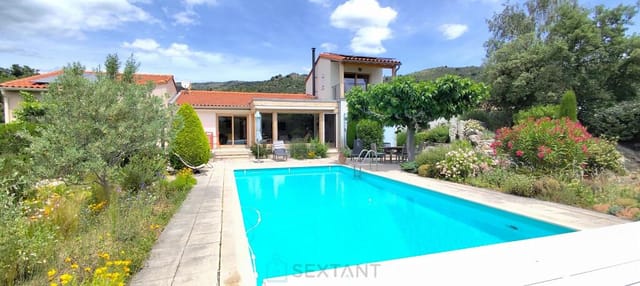
Wake up to the smell of wild thyme drifting through an open window, the Canigou massif turning pink in the early light, and absolute silence apart from birdsong. That's a Tuesday morning at this architect-renovated villa in Tarerach, a quiet hilltop village a few kilometers from Prades in the Pyrénées-Orientales. It's the kind of morning that makes you wonder why you waited so long. This isn't a polished-up weekend retreat that looks good in photos and disappoints on arrival. The 210 m² house has real substance — thick stone walls, a Finnish log burner in the living room, an air-to-water heat pump with full central heating, and an energy rating of A, which in a region where summer temperatures regularly top 35°C and winter nights in the mountains get properly cold, actually matters. Someone thought hard about this renovation. The result is a home that works just as well in February as it does in August. The layout is unusually clever for a property this size. Beyond the main residence — four bedrooms, two bathrooms, generous open living spaces — there's a self-contained one-bedroom guest cottage that sits separately on the 1,837 m² landscaped plot. And then there's an independent guest room set up as a bed and breakfast unit, complete with its own entrance. That configuration gives you real options. Host family over summer, generate rental income from the cottage and B&B room when you're back in London or Amsterdam, or eventually run the whole thing as a small hospitality business. The region's year-round tourist draw makes that last option more realistic than it sounds. About that tourist draw: Prades itself is a proper Catalan market town, not a tourist simulacrum. The Saturday market on the Place de la République h ... click here to read more

Picture 1

On a still Tuesday morning in Issac, the only sounds you'll hear are wood pigeons calling from the old stone pigeonnier and the faint creak of the bread oven door as it cools from last night's pizza. The meadow is already gold in the early light, and the pond catches a slice of sky between the fruit trees. This is not a fantasy — it's an ordinary morning at this centuries-old farmhouse in the Dordogne, and it could be yours. Set on nearly seven acres of southwest French countryside, this is a compound more than a single property: two substantial stone houses, a massive two-level barn, a pigeonnier, a functioning bread and pizza oven, a walled courtyard, a pond, an orchard, and a pool area enclosed behind stone walls. Parts of the main structure date to the sixteenth century, and the history shows in every beam — not as a burden, but as texture. The kind of texture that takes three hundred years to make and cannot be bought new. The main house sits on a single level, which makes it genuinely liveable for all ages and every season. Walk into the dining room and the scale of it stops you: an enormous original fireplace dominates one end, the kind you could stand inside, with stone flooring underfoot that's been worn smooth by generations. The original beams overhead are dark with age and solid as the day they were cut. Two double bedrooms anchor the ground floor, and up above, an attic with proper head height waits — the bones are already there for additional accommodation, subject to the usual permissions, should you want to grow into the space over time. The second house is a different personality entirely. Where the main house is anchored and weighty, the second is open and airy — three separate entries lead out to th ... click here to read more

Picture 1

Sunday morning in Elne moves at its own pace. The market on the Place de la République is already alive by nine — vendors stacking fat Roussillon peaches, wheels of aged sheep's cheese from the Pyrenean foothills, bottles of Banyuls and Maury that catch the light like dark garnets. You walk back up the hill with a baguette tucked under one arm, push open the gate, and drop everything beside the pool. The water is that particular shade of blue you only ever get under a southern French sky. This is what owning a house in Elne actually feels like. Set in one of the most historically layered towns in the Pyrénées-Orientales, this three-bedroom house spans 130 square metres on a 463-square-metre plot — enough garden and terrace space to feel genuinely private without becoming a weekend maintenance project. The property is in good condition and move-in ready, which matters enormously if you're buying from abroad and can't oversee a renovation from another country. The ground floor revolves around a single, generous living space of around 50 square metres. Open-plan kitchens tend to sound better on paper than they live in practice, but this one earns its footprint — the dining and lounge areas flow naturally into each other, and when you throw the doors open in July the distinction between inside and outside more or less disappears. There's also a separate WC on this level and a 22-square-metre garage that international buyers often find more useful than expected: storage for bikes, a surfboard for trips down to the coast, garden furniture through winter. Upstairs, three proper bedrooms — not the shrunken secondary rooms that often get dressed up with that description — sit alongside a dedicated office that works equally wel ... click here to read more

Picture 1

Stand on the upper terrace on a Tuesday morning in late June, coffee in hand, and the Estérel massif turns the color of raw copper in the early light. Below, through a corridor of umbrella pines, you catch a silver flash of the Mediterranean. The infinity pool seems to spill right into it. This is not a postcard — this is what the week looks like when you own a home in Les Issambres. Roquebrune-sur-Argens sits in that rare pocket of the Var where the coast hasn't been completely swallowed by development. Les Issambres is its seaside quarter — a low-key, genuinely residential stretch between Saint-Aygulf and Sainte-Maxime that regular Côte d'Azur visitors tend to guard like a secret. The coves here, particularly Calanque des Anglais and the rocky inlets flanking the Corniche d'Or, are reachable on foot. Not "a short drive" on foot. Actually on foot, through fragrant maquis scrub that smells of wild thyme and warm rock. The villa itself is built in the Provençal Mas tradition — thick walls, tiled rooflines, terracotta details — but the interior has been fully brought into the contemporary era. At 289 square metres of living space, it breathes. The main salon runs to 70 square metres, which means a large family or a group of friends genuinely spreads out rather than stacking on top of each other. Five bedrooms, each with its own private bathroom and private terrace. That last detail matters more than you'd think: summer mornings where every guest can take their espresso outside without negotiating space are worth paying for. A dedicated office — large enough to function equally well as a games room or a teenager's retreat — gives the property a flexibility that pure holiday rentals rarely have. This works as a serious se ... click here to read more

Picture 1

Picture a Saturday morning in late September. You pull open the roller shutters and the light that floods the living room is that particular gold you only get this far south — thick, warm, almost edible. Outside, the vines on the Agly plain are turning amber. There's a market in Rivesaltes, twenty minutes on foot, where someone is grilling merguez next to a stall piled with Muscat grapes and local honey. This is not a fantasy. This is a regular weekend when you own this 233 m² villa on a quiet residential street in one of the most quietly compelling corners of the French Midi. Rivesaltes sits in the Pyrénées-Orientales department, tucked between Perpignan and the coast, flanked by vineyards that have been producing wine since the Romans passed through. The town's name is practically synonymous with the famous Muscat de Rivesaltes and the rich Rivesaltes Ambré, and the Cave de Rivesaltes cooperative — one of the largest in the region — welcomes visitors year-round for tastings that won't cost you a fortune. This is everyday life here, not a tourist attraction you visit once. The villa itself is a proper single-storey family home with a footprint that feels rare at this price point in southern France. At 233 m² of living space spread across one generous floor — plus a 16 m² upstairs office — the layout is genuinely practical rather than just spacious on paper. The main living room stretches to 38 m², and with the open-plan kitchen flowing into it, the whole social heart of the house breathes. Five bedrooms, two full bathrooms plus en-suites, a separate laundry room — this is a home that can absorb a large family or a revolving cast of guests without anyone feeling crowded. The 22 m² garage keeps a car out of the Roussill ... click here to read more

Picture 1

Step outside on a Tuesday morning in late September, coffee in hand, and the only sounds are the dry rustle of olive branches in the Tramontane wind and the distant bells of Corneilla-del-Vercol's Romanesque church drifting across the vines. The Mediterranean is twenty minutes away by car. Perpignan's covered market at Les Halles, stacked with Roussillon cheeses, anchovies from Collioure, and fat peaches from the Conflent valley, is closer still. This is not a lifestyle you have to imagine—it is one you can step into. This five-bedroom stone Mas sits on nearly 2.8 hectares of working farmland just outside the village of Corneilla-del-Vercol, a few kilometers south of Perpignan in the Pyrénées-Orientales. It is the kind of property that rarely surfaces: a genuine Catalan farmhouse with serious square footage—214 m² across the main house alone—authentic stone construction, and enough land to feel genuinely rural, yet close enough to a major city that you are never more than five minutes from a motorway, a train station, or an international airport. The olive trees planted across the property are not decorative. They fruit. Come November, that harvest ritual—the nets spread under silver-grey canopy, the mechanical combs, the press at a nearby cooperative—becomes part of the rhythm of owning this place. The Pyrénées-Orientales is France's sunniest department, averaging over 320 days of sunshine a year, and that light sits differently on old stone than it does anywhere else. By midday in July the walls hold warmth; by evening they cool the air inside without effort. The main house is arranged around three generous suites, one of which occupies part of the ground floor for easy, single-level living. The standout suite on th ... click here to read more

Picture 1

Picture a Sunday morning in high summer: you open the kitchen door and the smell of warm stone hits you first, then cut grass, then something faintly floral drifting in from the garden. The pool is already glinting in the early light. Nobody else is awake yet. This is what 215 square metres of well-built French country life actually feels like, and it's waiting for you in the Charente. Civray sits in the Vienne department of the Nouvelle-Aquitaine region, a part of rural France that still rewards people who choose to slow down. This isn't the Dordogne with its tourist caravans and inflated prices. Civray is real, working, lived-in France — a market town with a proper Saturday market on the Place du Marché, a Wednesday morning brocante that turns up the occasional serious find, and a Romanesque church facade on the Saint-Nicolas that art historians make detours to see. You walk to the boulangerie before 8am and you're back with a still-warm baguette before the household stirs. That's the rhythm here. The house itself is substantial. At 215 square metres of habitable space, it's built to the kind of standard that was common in this part of France in the late twentieth century — solid concrete and stone construction, thick walls that keep things cool through July and August without air conditioning fighting the heat. The layout is practical rather than fussy. On the ground floor, a 46-square-metre open-plan dining and living room is anchored by a fireplace that earns its keep from November through March. French doors push open onto the terrace and, from there, directly to the pool. The kitchen — 18 square metres, fully equipped — sits adjacent, so meals move naturally from prep to table to outdoors. The ground-floor bedr ... click here to read more

Picture 1

On a Sunday morning in the Périgord Vert, the church bell from Saint-Pierre de Brantôme carries across the valley before the rest of the world has stirred. You're standing at the veranda doors, coffee in hand, watching the light move across the pool. The figs on the old tree in the garden are almost ripe. This is what you bought it for. Just five minutes from the historic heart of Brantôme — the town they call the Venice of Périgord, carved around a loop in the River Dronne — this 120 m² stone house sits on a generous 1,863 m² garden plot and has been well maintained throughout. It's move-in ready, properly liveable from day one, and the kind of property that rewards you the longer you sit with it. The house itself tells you where it comes from. Original exposed stonework lines the living room walls, rough-cut beams cross the ceiling, and a working fireplace anchors the room when the evenings cool in October. That 30 m² living space is genuinely large enough for a family to spread out without getting on each other's nerves after a long drive from Bordeaux-Mérignac. The fitted kitchen runs practically — well-positioned, light, and leading directly into the veranda, which is where you'll end up spending most of your time anyway. The veranda looks out over the 10x4 swimming pool and the wider garden, and once you've had lunch out there under the afternoon sun with a cold glass of Bergerac Sec, going back to a city apartment feels like a genuine hardship. Three bedrooms across the house, one of them conveniently on the ground floor — a real advantage if you're hosting older family members or anyone who'd rather not deal with stairs. Two shower rooms keep the morning routine running smoothly when the house is full. The who ... click here to read more

Picture 1

On a still morning in the Périgord Noir, the only sounds you'll hear from this hamlet courtyard are birdsong, the faint echo of a church bell drifting over from Castels, and the soft splash of water in a 12-by-6-metre saltwater pool that looks straight out over a valley that hasn't changed much in centuries. That's not a selling point — that's Tuesday. This is a rare opportunity to acquire not one but two authentic Dordogne stone houses sitting side by side on roughly 8,000 square metres of grounds in the commune of Castels et Bézenac. A shared cobbled driveway and a gated private courtyard connect them, and together they form a property that functions equally well as a large family holiday compound, a multi-generational retreat, or a live-in renovation project with serious long-term upside. The asking price of €294,000 for the entire ensemble — pool, dovecote, garage, outbuildings, courtyard and all — is the kind of number that makes people do a double-take when they check it against what comparable Dordogne properties have been selling for. The larger of the two houses is the one that stops you at the door. Ground floor: a proper country kitchen with an adjoining shower room and WC, and a living-dining room anchored by a character stone fireplace and a pellet stove — the kind of room you want to be in when November rain is hitting the terrace outside and a cassoulet is on the hob. French doors open both toward the front courtyard and the rear garden, so the space breathes in summer and feels sealed and warm come autumn. Upstairs, two bedrooms and a small bathroom with WC. It's not complicated. It's exactly what a Dordogne farmhouse should be. The second house, slightly more compact, has its own kitchen, a living roo ... click here to read more

Picture 1

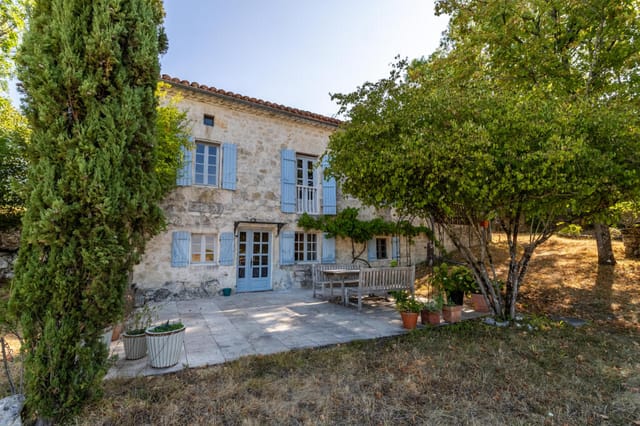
Step outside on a July morning, coffee in hand, and the Périgord countryside rolls away from your terrace in every direction — golden fields, oak woodland, not another rooftop in sight. The heated saltwater pool catches the early light. Somewhere in the studio behind you, the kids are still sleeping. This is what a summer in Brouchaud actually feels like. Brouchaud sits quietly in the northern Dordogne, the kind of village that doesn't show up on tourist maps but sits within easy reach of everything that makes this corner of France worth coming back to year after year. Périgueux, the ancient capital of the Périgord with its Roman amphitheatre ruins and the extraordinary Byzantine domes of the Cathédrale Saint-Front, is about twenty-five minutes by car. Brantôme — nicknamed the Venice of the Périgord for its abbey and riverside setting along the Dronne — is even closer. Markets happen several times a week in towns like Thiviers and Excideuil, and if you arrive early enough on a Saturday morning in Périgueux, you'll find the covered Clautre market overflowing with black truffles in winter, fat strawberries in spring, and Périgord walnuts come October. The rhythm here is slow and deliberate, which is exactly the point. The Dordogne has long attracted buyers from across northern Europe — British, Dutch, Belgian, Scandinavian — drawn by the food, the pace, and frankly the value compared to Provence or the Côte d'Azur. This part of Aquitaine gives you all the pastoral beauty without the summer gridlock. Bergerac Airport, which handles direct flights from London, Birmingham, Bristol, Edinburgh, and several other UK and European cities, is roughly forty minutes south. Bordeaux-Mérignac, with its much wider international connec ... click here to read more

Picture 1

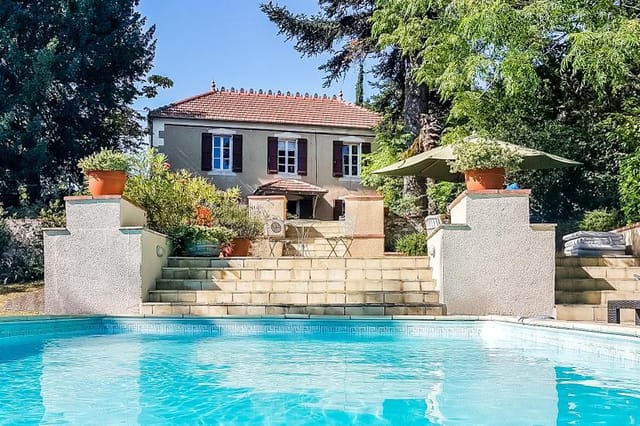
On a Sunday morning in Louignac, the only thing that wakes you is birdsong. Not traffic, not neighbours, not the hum of a city that never quite switches off. Just the breeze moving through the oak trees at the edge of your garden, and the faint smell of damp grass catching the early light. That's what life feels like in this four-bedroom stone house in the Corrèze — and once you've felt it, it's hard to unfeel. This is rural France as it actually exists, not as it's romanticised on a postcard. Louignac sits in the rolling green Limousin countryside, a place where the land hasn't been manicured for tourists. The fields are real working fields. The stone walls lining the roads are a few centuries old. The weekly market at Objat — just twenty minutes away — sells duck confit, walnuts, and cheeses from farms you could cycle to. This is the kind of France that people spend years searching for, and rarely find still available at a price that makes sense. The house itself is solid and full of character. Stone construction throughout, which means thick walls that keep rooms cool in July and hold the warmth of the pellet stove through January without breaking a sweat. The ground floor is anchored by a generous kitchen-dining room — genuinely fitted and equipped, not the vague claim you see on listings where the "equipped kitchen" turns out to be a single plug socket. This room opens directly into the living room, so the whole social heart of the house flows together as one connected space. In winter, the pellet stove becomes the gravitational centre of every evening. In summer, the doors open and the room breathes out into the garden. Behind the kitchen, there's a laundry room that has a second life waiting for it. The proport ... click here to read more
Picture 1

Picture this: a warm July evening in the Haute-Vienne, the last of the sun dropping behind the tree line, and twenty guests seated on a wide stone terrace eating pizza fresh from a professional kitchen. You cooked it. You poured the wine. And technically, this is just Tuesday. That's the kind of life this 340 m² farmhouse-and-campsite package in Marval makes possible — and it's already up and running. Sitting on a generous 52,000 m² of land right on the boundary between Haute-Vienne and the Dordogne, this 1850s stone farmhouse has been thoughtfully modernised without losing any of the grit that makes rural Limousin properties so appealing to buyers looking for something real. The thick walls keep the interior cool in August when the sunflower fields outside are at their most golden. In February, the wood-burning stove in the sitting room becomes the centre of everything. The farmhouse itself spans 260 m² across two floors. You walk in through a generous entrance hall — proper width, not the poky corridor you find in so many renovated rurales — and immediately the layout makes sense. To the left, a well-fitted kitchen for private family use. To the right, a large living and dining room with actual space for both functions, not a compromise between them. At the rear of the house sits a second, fully-equipped professional kitchen, purpose-built for the table d'hôte dinners, pizza nights, and weekend breakfast service the current owners run. Meals go out through the back and onto the terrace, where guests eat with views across the site. It's a proper hospitality setup, not a hobby. Upstairs, three double bedrooms and one smaller but still well-proportioned room share the first floor. The master has an adjoining space — cu ... click here to read more
Picture 1

Picture a Sunday morning in the Périgord Vert. The kitchen window is open, a coffee is brewing, and the only sound reaching you from outside is birdsong and the faint rustle of the walnut trees at the edge of your enclosed garden. No traffic. No crowds. Just 1,560 square metres of private land, a covered pool glinting under its dome, and a pace of life that feels like it belongs to another century — the good kind. This fully renovated three-bedroom house sits in a quiet hamlet just ten minutes from Nontron, a town that punches well above its weight for a place of its size. Nontron is the capital of the Périgord Vert, the green and deeply underrated northern pocket of the Dordogne département, and it wears that title with quiet confidence. The old knife-making tradition still lives here — the Nontron knife, with its boxwood handle and distinct silhouette, has been crafted in the same spot since the 15th century, and you can visit the workshop on Rue Carnot and watch blades being finished by hand. It's the kind of place that reminds you France hasn't been entirely swallowed by modernity. The house itself spans 185 square metres across two levels and has been renovated to a standard that means you genuinely can walk in, unpack, and spend the first evening by the pool rather than drawing up a list of contractors. That matters enormously for buyers coming from the UK, Ireland, or northern Europe who want a second home without a five-year renovation saga attached to it. Good condition here means good condition — solid roof, clean interiors, functional systems. Downstairs, the scale of the living spaces is the first thing that catches you. A single-story living room of 58 square metres flows openly into a 28-square-metre din ... click here to read more
Picture 1

On a clear morning in Louignac, before the rest of the world has quite caught up, the view from the pool terrace is the kind that stops you mid-coffee. Rolling green hills, not another rooftop in sight, just the odd buzzard circling over the tree line and the faint mechanical hum of a tractor somewhere far off in the Corrèze countryside. This is rural France doing what it does best — unhurried, unfiltered, and quietly extraordinary. This four-bedroom stone house sits at the heart of one of the Limousin's most genuinely peaceful corners. The region doesn't shout about itself the way Provence or the Dordogne do, and that's precisely the point. Property prices here still reflect reality rather than hype, the markets are full of locals rather than tourists, and the land rolls on in every direction without apology. For buyers chasing authentic French country life — not a postcard version of it — Louignac delivers. Step inside and the kitchen-dining room sets the tone immediately. It's a proper working kitchen, fitted and equipped, with enough space that Sunday lunch becomes an event rather than a logistics challenge. This room opens directly into the living area, where a pellet stove anchors the space — genuinely efficient, low-maintenance, and exactly what you want when October mist rolls in off the hills. The view through the back windows is the kind interior designers try to replicate with wallpaper. You won't need to. Behind the kitchen, a laundry room gives you the practical backbone every country house requires. But it's also a flexible space — with the right desk and a decent internet connection (fibre has arrived in much of rural Corrèze), it converts into a quiet home office without much effort. Remote workers and ... click here to read more
Picture 1

On a still Sunday morning in Madiran, the only sounds are birdsong and the faint clinking of bottles from the cooperative down the lane. You push open the kitchen's stable door, coffee in hand, and step into the front garden where the dew is still burning off the lawn. The wrought-iron gates at the end of the gravel drive frame a view of organic vineyard rows stretching toward the foothills. This is your house. It has been for two hours, and already it feels like it's been yours for twenty years. That sense of instant belonging is hard to manufacture — it comes from a place that has been genuinely lived in, loved, and brought carefully into the present without losing what made it worth loving in the first place. This five-bedroom Maison de Maître dates to the 18th century, and the current owners acquired it as a second home before it quietly became something they couldn't leave. After years of thoughtful restoration, they've handed over a property that's fully move-in ready: no compromise projects, no skeleton-in-the-wall surprises, just a grand French country house that works as well as it looks. The proportions alone would stop you in your tracks. An entrance hall at 18 square metres sets the tone — black oak staircase rising ahead of you, original tiled floors underfoot, beamed ceiling overhead. To the right, what the owners use as a study is actually a generous 25.5-square-metre room with a wood burner and double-aspect windows; put a bed back in it and you have a ground-floor guest suite in seconds. The lounge at the same square footage flows naturally into a 23.5-square-metre kitchen with fitted units, an island, plumbing for a dishwasher and washing machine, and that stable door that you'll leave open from April ... click here to read more
Picture 1

Late afternoon in July, the kitchen terrace goes golden. The vine curling overhead filters the light into something soft, and you can smell the lavender baking on the hillside slopes below. A glass of Gaillac white — picked up that morning from the Domaine de Labarthe cooperative just down the D922 — sits on the stone table. The pool, fourteen metres of saltwater shimmering in the western sun, catches the last heat of the day. This isn't a fantasy. This is an ordinary Tuesday at this quietly extraordinary property in Virac, Tarn. Virac sits in one of the most quietly coveted corners of the Midi-Pyrénées, tucked between the medieval hilltop village of Cordes-sur-Ciel — just ten minutes up the road — and the UNESCO-listed cathedral city of Albi, about fifteen minutes southeast. The French tend to keep places like this to themselves. Rolling countryside of vines, sunflowers, and walnut groves; almost no through traffic; the kind of silence at night where you can hear owls. This is Tarn at its most elemental. The property itself is a considered composition of two distinct living spaces set on roughly 1.5 hectares of mixed grounds — wooded pockets giving way to open lawns, the land folding gently around the house on a west-facing hillside. A private driveway leads you in, and that sense of arrival — of crossing a threshold into your own world — never quite gets old. The main house runs to 205 square metres, having been rethought by an architect in 2002. The result is a home that works as a home should: a generous 54-square-metre living room anchors the ground floor, with a wood-burning fireplace that earns its keep every winter and an open-plan kitchen that makes cooking feel like part of the entertainment rather than a re ... click here to read more
Picture 1

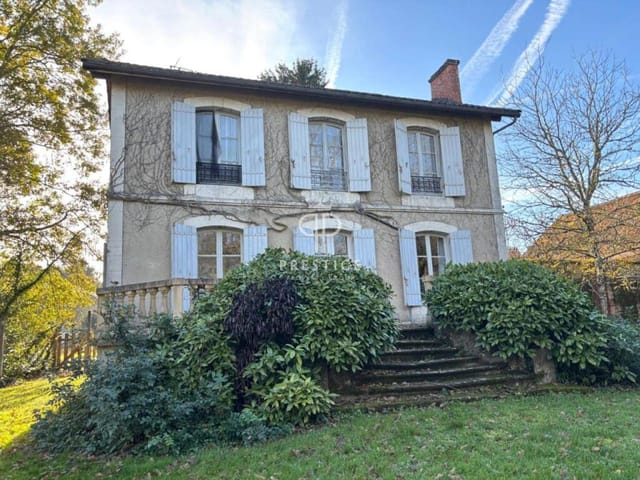
Sunday morning in Richelieu sounds like gravel crunching under slow feet, a boulangerie two streets over doing brisk business, and nothing else. Pull open the kitchen shutters of this old Tourangelle farmhouse and the courtyard is already catching the light — the avenue of trees casting long shadows across the flagstones, the heated pool glinting just beyond the gate, a miniature horse named Étoile doing her rounds near the vegetable patch. This is not a property that needs to be explained. It announces itself. Set in the "Sud-Touraine" — the sunnier, gentler pocket south of Tours in the Indre-et-Loire — this 453m² ensemble of main house and independent gîte occupies a flat 2.5-acre grounds that manages to feel both deeply rural and completely practical. The A10 and A85 motorways are close enough that you could be in Bordeaux by early afternoon or in Paris by the time the evening news starts. Tours itself, with its TGV connection to Montparnasse (less than an hour), sits roughly 50km north. This is genuinely one of the most connected corners of rural France. The main farmhouse runs to around 245m² across two floors, and it rewards slow exploration. The heart of it is a 73m² living room that stops visitors mid-sentence — a vaulted ceiling climbing to 5.7 metres, a working stone fireplace large enough to park a bicycle inside, and the particular quality of silence that comes with walls this thick. From there, a dining room of 31m² with original quarry-tiled floors flows toward the kitchen: recently modernised, double-aspect, 20m² with a central island and exposed beams overhead. Morning coffee here, with light coming in from two sides and the courtyard just through the glass, is the kind of domestic moment people move co ... click here to read more
Picture 1

You wake to the low hum of summer insects and the faint creak of shutters stirring in the breeze. Through the panoramic study window, the Tarn countryside unrolls in long, unhurried waves — vine rows, pale limestone ridges, and sky. The coffee hasn't brewed yet, but you're already standing there, mug in hand, wondering how you ever lived without this view. That's the daily reality of owning this five-bedroom country house between Gaillac and Cordes-sur-Ciel, one of southern France's most quietly compelling addresses. Set along a peaceful country lane — the kind where you slow down not because you have to, but because you want to — the property sits surrounded by working vineyards at an elevation that catches every breeze and amplifies the silence in the best possible way. This is serious wine country. Gaillac is one of France's oldest appellations, predating Bordeaux by several centuries, and the growers here are fiercely proud of it. On Saturday mornings, the Place de la Libération market fills with bottles of Duras and Braucol alongside wheels of Roquefort, purple figs, and jars of duck confit that smell like Sunday lunch before you've even opened them. Living here means all of that becomes routine — and routine has never felt so good. The house itself has been thoughtfully renovated, respecting the bones of an old Tarn farmhouse while making daily life genuinely comfortable. Stone walls that have absorbed two centuries of southern sun keep the interior cool through July and August without any help from air conditioning. The living room is generous and unhurried — a room designed for long afternoons and late evenings — while the kitchen is the kind of space where guests instinctively gather, leaning against the count ... click here to read more
Picture 1

Picture this: it's a Tuesday morning in July, and the only sound reaching you through the open kitchen window is birdsong and the faint rustle of wind through the oak trees bordering your garden. No road noise. No neighbors. Just 140 square meters of 1800s Quercy stone, your swimming pool catching the early light, and absolutely nowhere you need to be. That's the daily reality at this four-bedroom farmhouse on the elevated plateau above Montaigu-de-Quercy — and once you've spent a morning here, the idea of going back to city life gets harder to justify. The house itself has been through a careful restoration that didn't sand away its soul. The original stone staircase is still there, worn smooth by two centuries of footsteps. Exposed oak beams cross the ceilings the way they were intended to — not as a design affectation, but because they're structural, honest, and genuinely beautiful in the way that only old things can be. The stone walls, thick enough to keep the interior cool through August without air conditioning, bear the marks of the craftsmen who laid them. This is a building with a geological patience to it. On the first floor, two generous double bedrooms look out across open countryside toward the rolling Tarn-et-Garonne patchwork of sunflower fields and walnut orchards — the view changes colour almost month by month. Downstairs, the country kitchen with its traditional terracotta-tiled floor is the kind of room that makes you want to cook slowly. A built-in wood-burning stove anchors the living room — and from November through March, when the Quercy plateau gets cold and clear and the stars over the garden are ridiculous, that stove becomes the centre of everything. The practical side has been handled pro ... click here to read more
Picture 1

Stand at the edge of the private lake on a July morning and the only sounds are a wood pigeon somewhere in the oak canopy and the soft lap of water against the bank. No road noise. No neighbors. Just 14 hectares of meadow, woodland, and sky — and a stone estate that has been quietly watching over all of it for generations. This is Genouillé, a commune in the Vienne department of Poitou-Charentes, and this property is the kind of find that makes serious buyers stop scrolling and pick up the phone. The estate is anchored by a substantial main house — proper stone walls, exposed timber beams that have darkened beautifully over the decades, and reception rooms large enough that a gathering of twenty people still feels unhurried. Four bedrooms, each with its own private shower room, mean that a multigenerational family or a group of close friends can arrive for two weeks in August and never queue for a bathroom. The private in-ground pool sits within the grounds of the main house, giving the primary residence its own self-contained world. Completely separate and fully independent, the gîte adds another four to five bedrooms and a second pool. This is where the property starts to reveal its financial logic. Poitou-Charentes draws steady summer traffic — cyclists riding the Vélodyssée, families heading to the Marais Poitevin, history enthusiasts making their way between Romanesque churches — and good-quality rural gîtes in the Vienne book up fast from June through September. The infrastructure here is already in place. You're not building from scratch; you're stepping into a ready-made hospitality setup with genuine income potential. The third structure on the property is a cottage: sitting room, dining space, one bedroom, b ... click here to read more
Picture 1

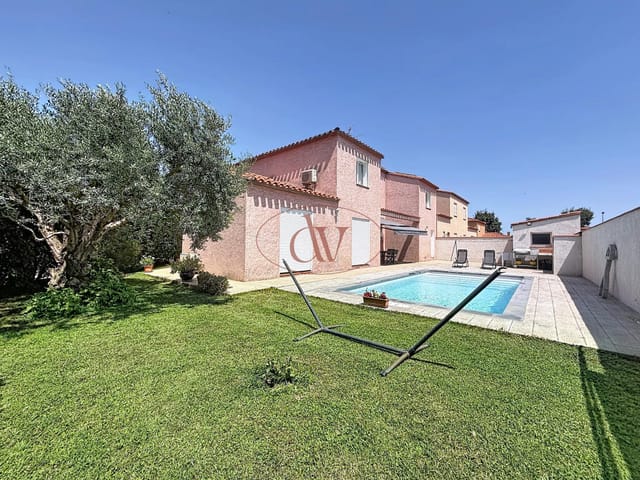
On a Sunday morning in the Charente, you wake up to nothing. No traffic, no sirens — just the faint ticking of cooling stone walls as the sun climbs over the cypress trees lining the garden, and the smell of coffee drifting up from a kitchen that was clearly built for living rather than showing off. This is Paizay-Naudouin-Embourie. Small, unhurried, and quietly extraordinary. This four-bedroom stone farmhouse sits in a village that most people drive past on their way to somewhere louder. That's exactly the point. Set within the rolling Charente countryside of Poitou-Charentes, the property spans 201 square metres of thoughtfully renovated living space arranged around a generous gravel courtyard, with a heated pool, a private tennis court, and the kind of silence you actually have to travel to find. At €375,000, it's the sort of property that makes buyers wonder why they waited so long. Pull up through the wrought-iron electric gate and the first thing you notice is the scale of it. The main house commands the courtyard with the quiet confidence of a building that has stood through several centuries — original stonework, weathered and golden, contrasting with the crisp glazed facade that was added during renovation. Step inside and the 78-square-metre open-plan living space genuinely stops you in your tracks. Soaring ceilings, exposed timber beams, stone walls that stay cool even in August, and a wood-burning stove at the heart of it all. The room flows from lounge to dining area to kitchen without feeling like a floor plan exercise — it feels like someone actually thought about how a family moves through a space. A mezzanine overlooks it all from above, useful as a reading perch, a home office, or a sixth sleeping spo ... click here to read more
Picture 1

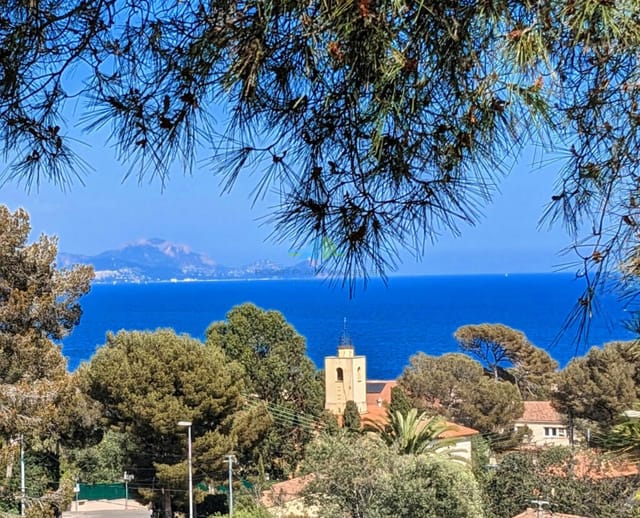
Some mornings you wake up to the distant sound of boots on gravel. Pilgrims passing through Bach on the Way of St. James, heading southwest toward Cahors before the long push to Spain. You pour a coffee, step out onto the south-facing terrace, and the Lot countryside does what it always does — sits there quietly, certain of itself, needing nothing from you. That's the rhythm of this place. Unhurried. Real. This is not one house. It's a small private hamlet: three independent dwellings sitting on nearly 9,000 square meters of flat, wooded land just 500 meters from the village center of Bach. At 210 square meters of combined living space, seven bedrooms, and six bathrooms spread across the buildings, the property works equally well as a multi-generational family retreat, a gîte operation, a bed-and-breakfast, or a combination of all three. Very few properties along the Lot offer this kind of structural flexibility at this price point. The heart of everything is the main house. Walk into the living room and you feel the scale immediately — generous ceiling height, thick stone walls that keep things cool through July and August, a fully equipped kitchen designed for actual cooking rather than show. Three bedrooms upstairs each have their own private shower room and toilet, which matters enormously if you're hosting guests who don't know each other well, or family members who do know each other too well. The covered south-facing terrace on the ground floor catches the afternoon light and becomes, without any effort, where everyone ends up after dinner. Then there's the dovecote. Not a decorative one — a real, working piece of Quercy architectural history, built from the pale limestone that defines this corner of France. Th ... click here to read more
Picture 1

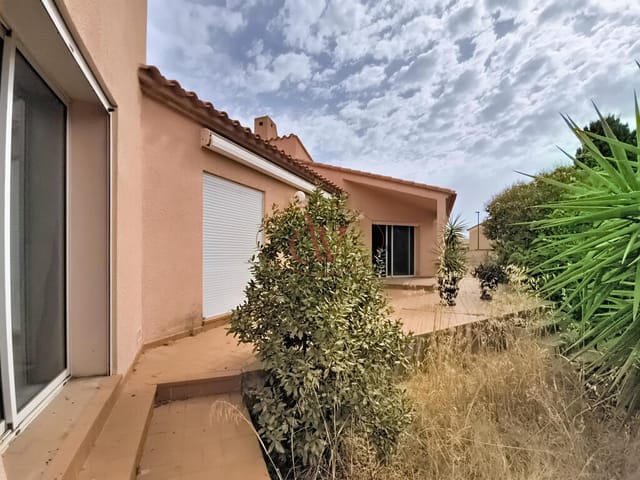
Step outside on a Tuesday morning in late June and the air already carries the faint sweetness of lavender baking in the sun. The pool is still, the awning is half-drawn over the terrace, and somewhere down the lane a neighbour is heading out with a baguette tucked under their arm. This is the daily texture of life in a quiet village on the edge of Carcassonne — unhurried, real, and surprisingly easy to make your own. This single-storey house sits at the end of a no-through road, which means the only traffic you'll hear is the occasional bicycle. The plot runs to 1,092 square metres, and the previous owners have clearly put years of thought into it. The Mediterranean garden is planted with drought-resistant species — rosemary, agapanthus, ornamental grasses — that look full and lush without demanding constant attention. Perfect for an international buyer who wants the garden to look after itself between visits. Three double bedrooms give the house real flexibility. There's also a study that functions easily as a fourth sleeping space — useful if you have visiting family or if you ever want to test the short-term rental market on platforms popular with travellers making the heritage circuit between Toulouse and the coast. The single shower room features an Italian walk-in shower, and there's a separate WC, which makes morning routines considerably more civilised when the house is at capacity. The open-plan kitchen and living area is the social engine of the home. On cooler evenings in October, when Carcassonne's famous Festival de la Cité has long finished but the Aude valley is still warm enough for a glass of Corbières on the terrace, this space pulls everything together. Air conditioning keeps July and August manage ... click here to read more
Picture 1