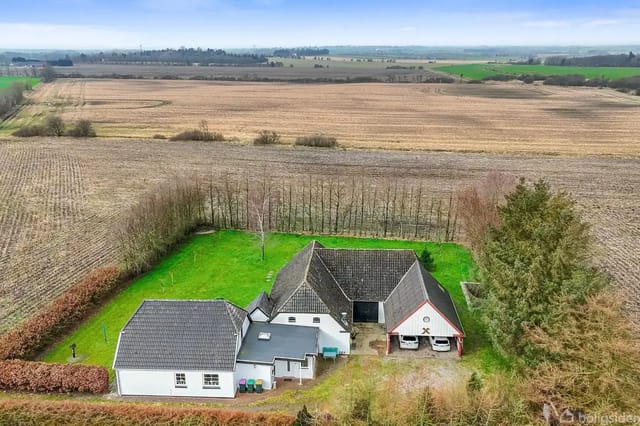
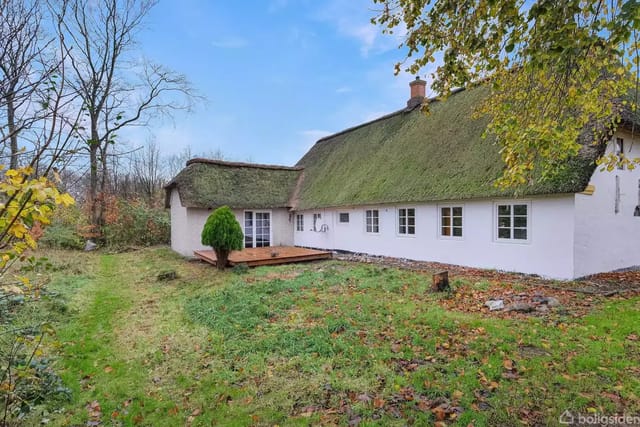
Step outside on a quiet Tuesday morning in October and the only sounds you'll catch are the wind moving through the old oak trees and, faintly, the call of migrating birds crossing the flat South Jutland sky on their way to the Wadden Sea. That's your view from Horskjærvej 1. Not a neighbour's fence, not a busy road — just open countryside rolling toward one of Europe's great UNESCO landscapes, and a house behind you that's been standing since 1920 and has every reason to keep standing for another hundred years.
This is rural Denmark the way it actually feels from the inside. Øster Gasse sits just east of the market town of Skærbæk, which means you get the silence of the countryside without the disconnectedness that sometimes comes with it. A ten-minute drive gets you to the shops, the school, the bakery on Storegade where locals pick up freshly baked rundstykker on Saturday mornings. The Wadden Sea National Park, Denmark's only UNESCO World Heritage site, is close enough to visit on a whim — an evening cycle down the flat bike paths, binoculars around your neck, timing your arrival with the late-afternoon tide. This is the kind of life people move to South Jutland to find.
The house itself tells a story of practical care rather than quick flips. Originally built in 1920, it's been extended and renovated thoughtfully over the decades, and today it sits at 284 square meters of living space spread across two sections and two floors. That division is one of its most interesting features. The main section — 167 square meters — holds the core of daily life: a well-fitted kitchen with a dishwasher, an open dining area, a comfortable living room, and a master bedroom with built-in wardrobes. The bathroom here has underfloor h ... click here to read more