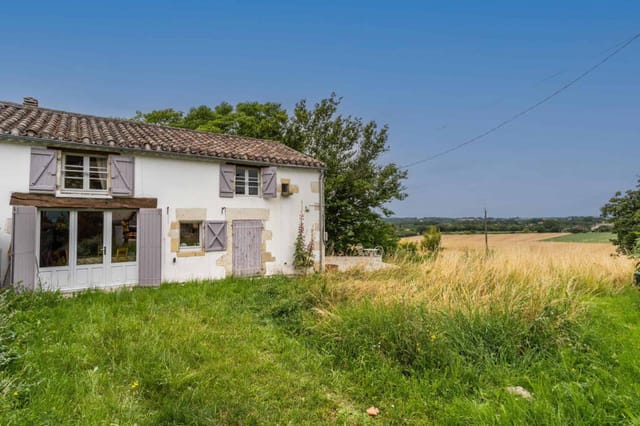
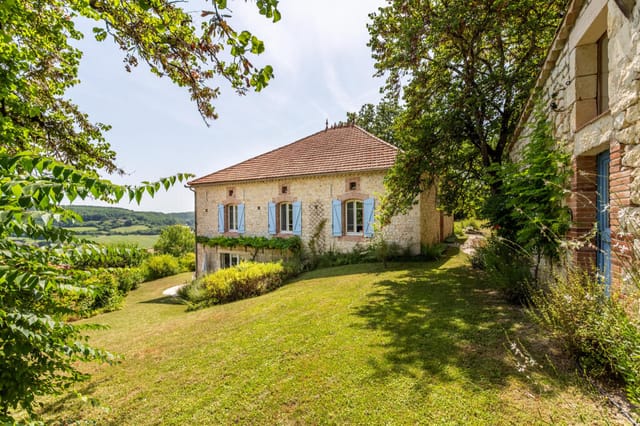
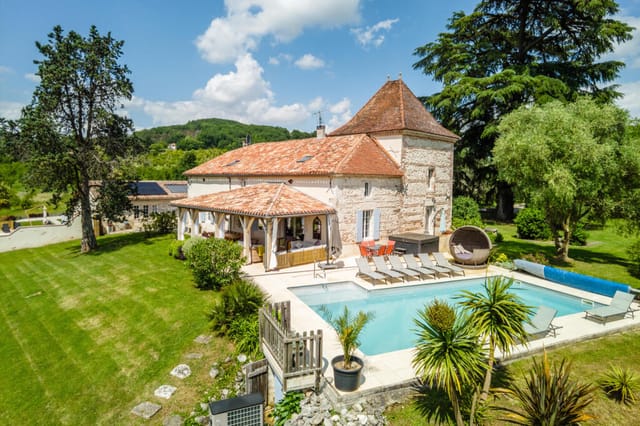
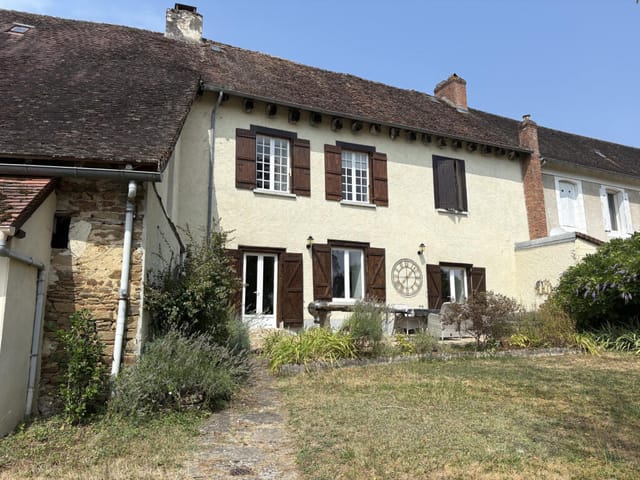
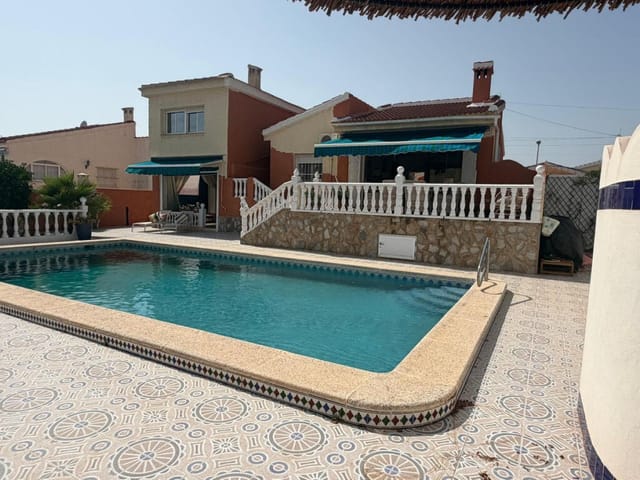
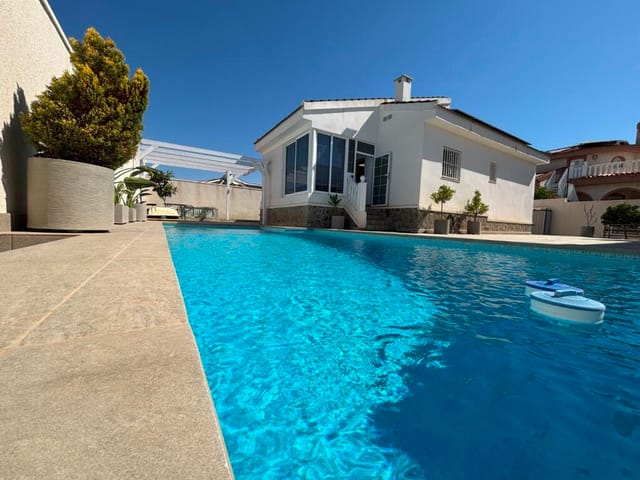
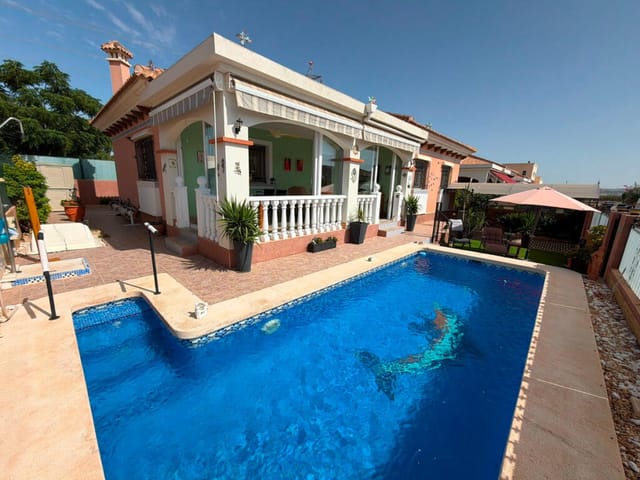
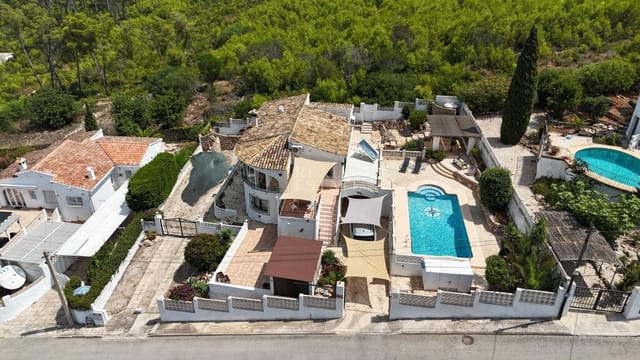
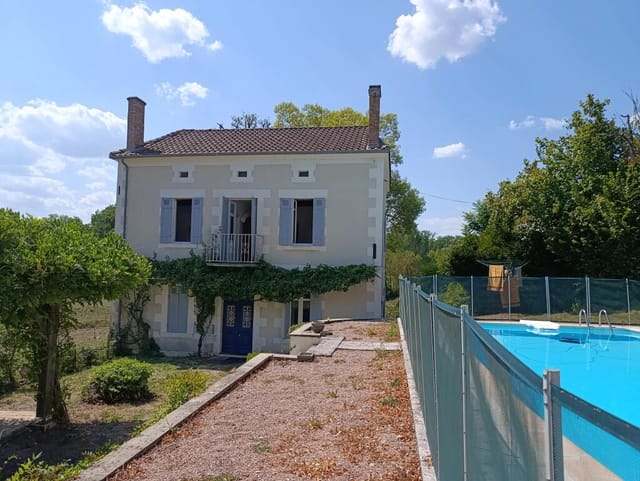
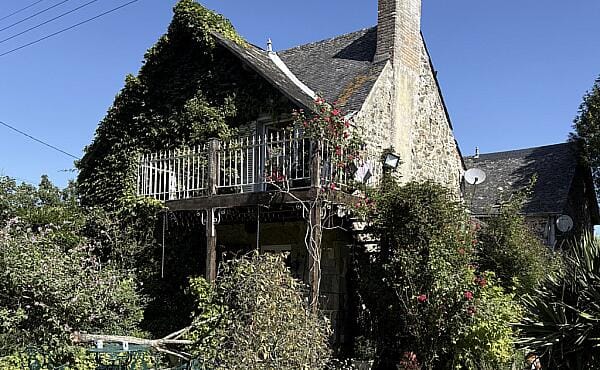
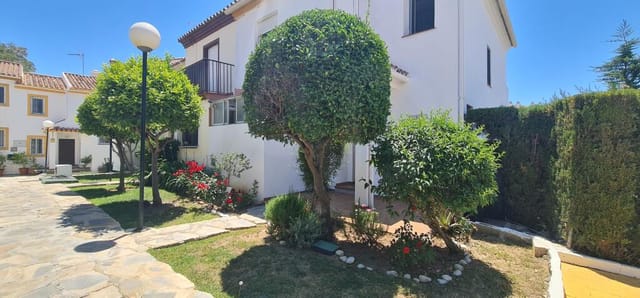
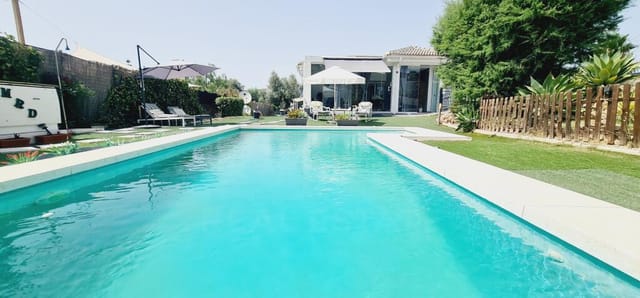
Houses For Sale In Europe (page 2)

Houses for sale in europe - homestra offers the largest amount of european real estate with over 200,000+ properties, find any type of property within your budget from villas to country homes. buy or rent your perfect home in europe. (page 2)

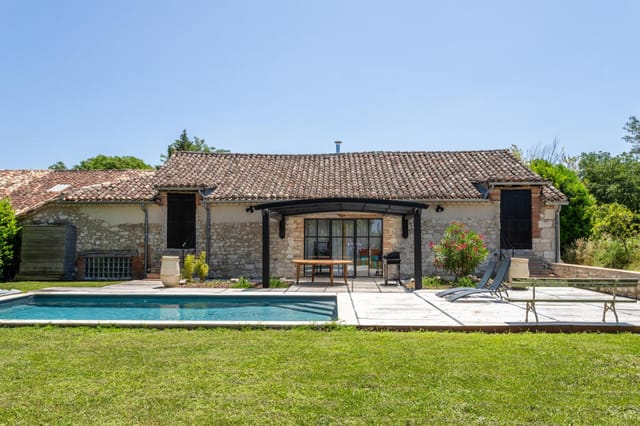
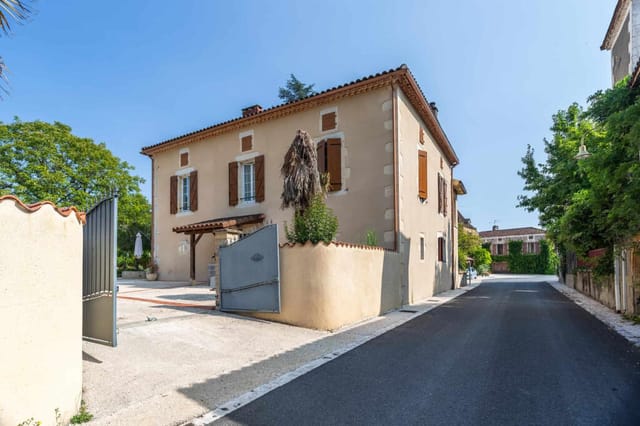
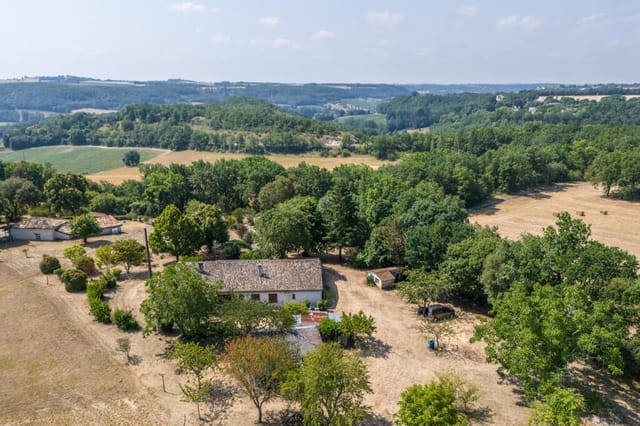
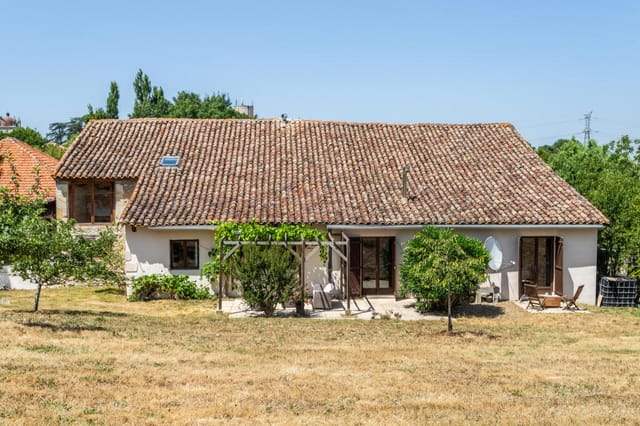
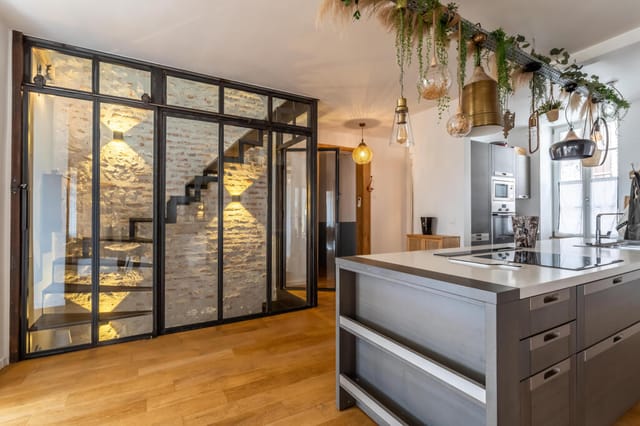
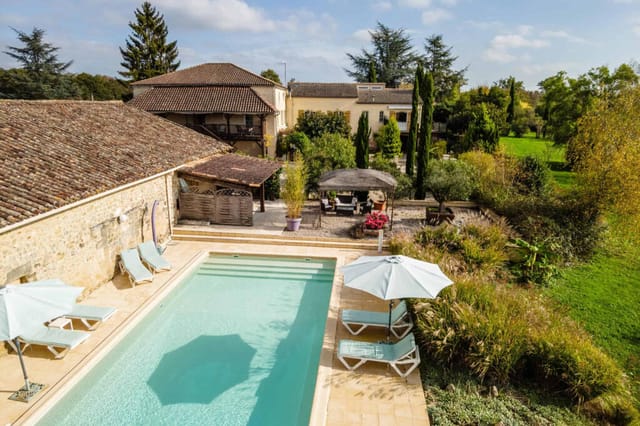
Picture this: it's nine in the morning, the kitchen smells of strong coffee and toast, and through the full-height windows the hills of Quercy Blanc roll out in front of you, pale limestone and dark cypress under an already-warm July sky. You're not on holiday in some anonymous resort. You're in your own place — a converted barn in a hamlet outside Lauzerte, one of France's classified "Plus Beaux Villages", and the day is entirely yours. This is what 226 square metres of seriously well-considered living space feels like when someone with a genuine eye has put it together. The previous owner was an antique dealer, and it shows — not in a cluttered, fussy way, but in the confidence of someone who knows what works. Exposed stone walls meet polished concrete floors. Original oak beams run across ceilings that climb to full height. A Canadian 20kW log-burning stove anchors the sitting room, the kind of stove that makes winter weekends here feel like a gift rather than a compromise. The interplay of raw and refined — reclaimed architectural salvage alongside clean, contemporary lines — gives the interior a quality that photographs well but feels even better in person. The kitchen is properly equipped. Integrated appliances, modern fittings, no compromises for the sake of aesthetics. Three bathrooms across the four bedrooms mean no queuing, no negotiating over schedules, no friction — exactly what you need when you've got a family or a group of friends under one roof. Built-in storage throughout and double glazing on every window mean this isn't just a summer house. You can use it in February and be comfortable. Step outside and the 1,100 square metres of private garden immediately make sense. The 8x4 metre pool is the obvio ... click here to read more

Picture 1

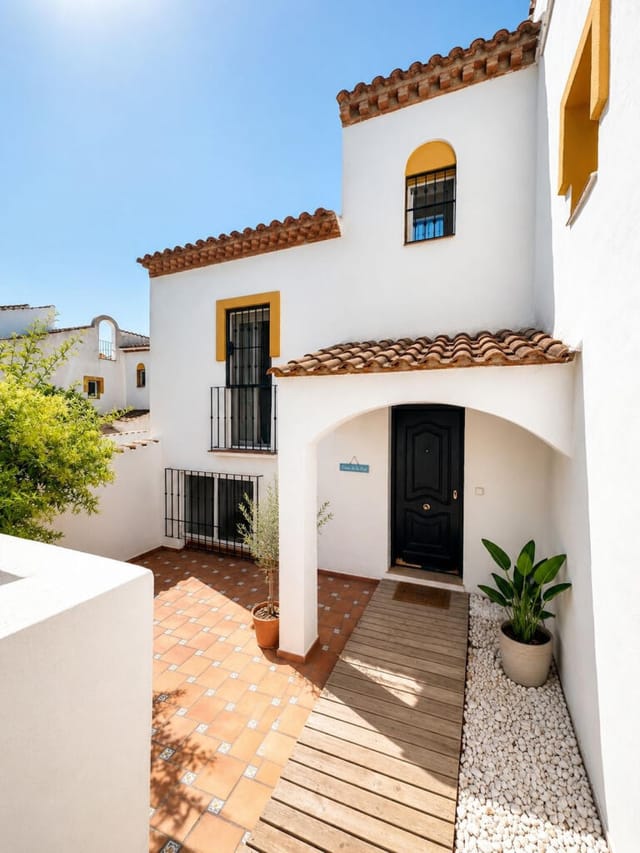
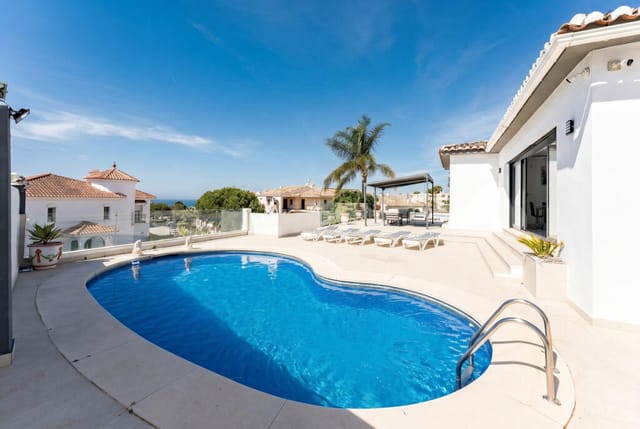
The first thing you notice, stepping out onto the rooftop solarium in the early morning, is the light. Not just any light — that particular Andalusian gold that hits the Mediterranean at 8am and makes everything look like it belongs in a painting. The sea is right there, just a two-minute walk down the road. You can smell it from the terrace. This corner townhouse sits in Costabella, a stretch of Marbella East that locals genuinely prefer over the glitzier sections closer to Puerto Banús. Quieter, more residential, more real. The beach at Costabella is 200 metres from the front door — not 200 metres as estate agents sometimes count it, but actually 200 metres. You could walk it barefoot in the dark and not get lost. The house itself covers 122 square metres across three well-proportioned bedrooms, each with its own bathroom. Three bathrooms for three bedrooms is a detail that matters enormously when you're sharing the place with friends or family in high summer. No queuing, no negotiations, no early-morning friction. The corner position in the gated community means more windows, more light, more angles of privacy than a mid-terrace unit would give you — and several distinct outdoor spaces that open up depending on the time of day and where the sun happens to be. That rooftop solarium is the standout feature, and it earns its reputation. Partial sea views stretch toward the horizon from up there, and on clear winter days — and there are many of them, Marbella averages over 320 days of sunshine annually — you can see far enough to feel properly at altitude despite being minutes from the shore. It's the kind of space that turns a house into a lifestyle. Breakfast up here in October, sundowners in April, late dinners unde ... click here to read more

Picture 1

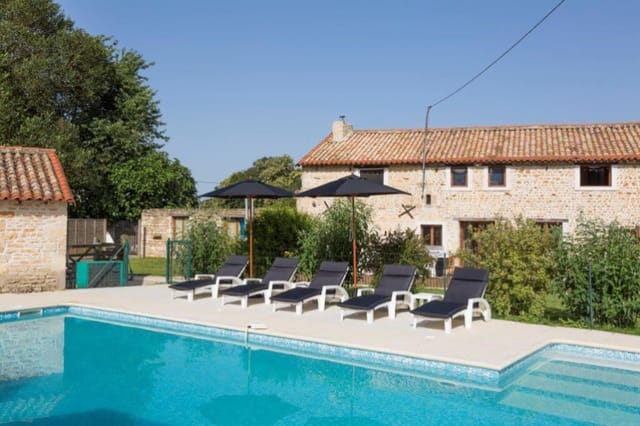
Sunday morning in Loubigné, and the only sounds reaching the upstairs master suite are birdsong, the faint creak of old timber beams settling in the warmth, and somewhere below, the soft clatter of someone starting coffee in the kitchen. That's what 338 square metres of stone-built French country house feels like when it's yours. Not a hotel. Not a rental. Yours. This seven-bedroom property in the Deux-Sèvres department of Poitou-Charentes is one of those houses that genuinely surprises you. The gravelled courtyard you pull into, shaded by established trees and framed by stone outbuildings, gives you a sense of arrival — real arrival, the kind where you exhale and your shoulders drop. Three separate entrances. Two garages. A 70 m² cluster of stone outbuildings that could become a workshop, a studio, a games barn, or simply the best storage you've ever had. And behind it all, a large heated swimming pool surrounded by terrace, with an outdoor shower, a pergola for shade, and a pétanque court set into the lawn. This is the French countryside as it's actually meant to be lived. Inside, the house has genuine scale. The main reception rooms include a large living room anchored by a stone fireplace with a wood-burning stove — the kind of fireplace that becomes the social centre of the house from October through March. There's a separate dining space, a sizeable games room, and a utility room that keeps the practical business of a large household from bleeding into the living spaces. The ground floor has been thoughtfully arranged so that one double bedroom, complete with its own bathroom (both bath and walk-in shower), sits alongside a separate reception room with its own fireplace and independent exterior access. For a visi ... click here to read more

Picture 1

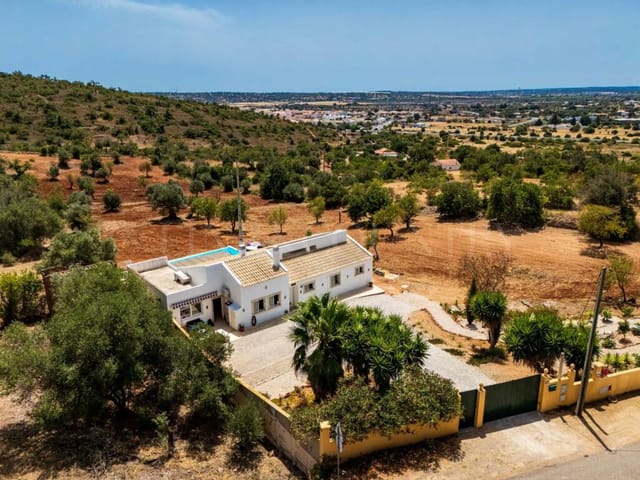
Sunday morning in Tunes sounds like this: a distant church bell somewhere toward Silves, the faint rustle of citrus leaves in the breeze, and absolute nothing else. You're standing on the covered terrace with a coffee, watching the light shift gold across the pool as the countryside opens up beyond the garden wall. This is a different Algarve from the one most visitors ever find. Tunes sits in the quiet interior of the Algarve, about midway between Silves and Albufeira, and it has the kind of unhurried pace that the coastal towns traded away years ago. The village itself is small and unpretentious — a train station, a café, a weekly market where people actually know each other — and yet you're no more than 20 minutes from some of the best beaches in southern Portugal. Praia de Galé, Praia da Falesia, the long sands at Armação de Pêra. You get the quiet and the coast, which is not an easy combination to find at this price point anywhere in the Algarve. This is a traditional single-storey quinta, the kind of rural estate that defined life in this region long before golf resorts arrived. Set on 8,440 square metres of land, the property carries real weight — fruit trees, open sky, and that particular sense of scale you simply cannot manufacture. The 120-square-metre living area is arranged across one level, which makes it genuinely easy to use. No stairs. No awkward split-level compromises. Everything flows naturally from one space to the next. Walk through the electric gates — which open onto generous private parking for multiple vehicles — and the house greets you through a proper entrance hall. Three bedrooms share a well-appointed family bathroom, and the principal bedroom has its own en-suite. It's not overdesigned, ... click here to read more

Picture 1

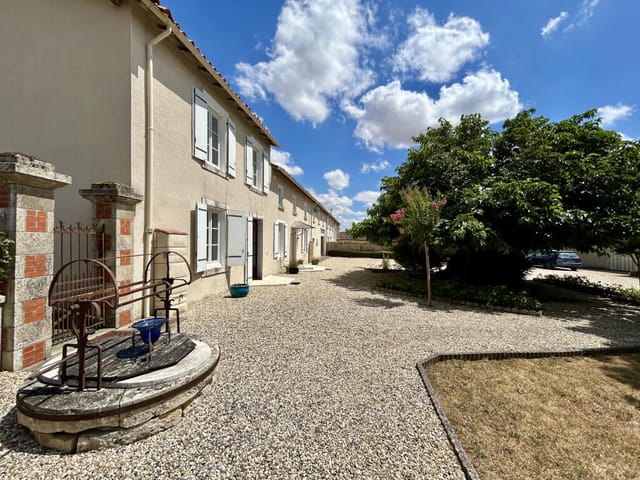
On a still weekday morning in Bourg-de-Visa, the smell of fresh bread drifts from the boulangerie four minutes' walk up the lane before you've even thought about making coffee. That's the pace of life here — unhurried, rooted, real. This 1850s stone barn, once a working forge, has been carefully converted into a two-bedroom house that sits quietly behind a stone wall on the village edge, its garden opening up to rolling Tarn-et-Garonne countryside that stretches further than you'd think possible for somewhere so easy to reach. Midi-Pyrénées is one of those parts of France that doesn't announce itself loudly. No famous coastline, no ski resort posters plastered at Charles de Gaulle. What it has instead is the kind of slow, unselfconscious rural beauty that people spend years searching for and rarely find — and Bourg-de-Visa sits right in the heart of it. The village has genuine life to it. A weekly market, a café where the same retired farmers have been occupying the same chairs since the 1980s, and those summer night markets that run through July and August: outdoor tables, local wine, grilled meats, children chasing each other between the stalls until well past dark. It's the France visitors imagine and tourists rarely stumble across. The house itself carries its history well. The original stone walls are thick enough to keep rooms cool through the heat of a Quercy summer — and this corner of France runs hot from June through September, with long golden evenings that make the tiled terrace off the kitchen feel like an extension of the living room. Step through the gated entrance off the lane, and the first thing you notice is the well at the centre of the lawn, flanked by established trees that throw proper shade. The ... click here to read more

Picture 1

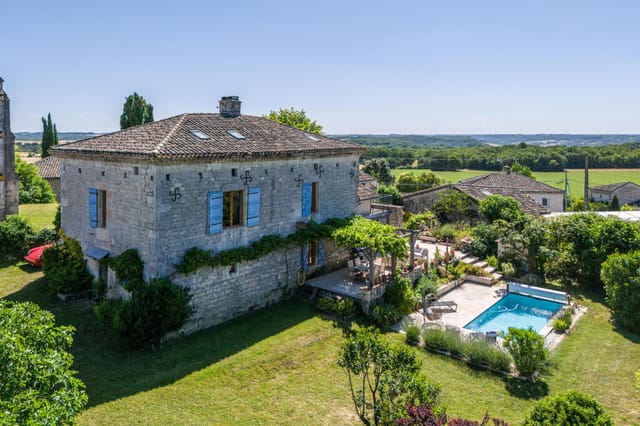
On a clear morning in high summer, you can stand on the balcony of this farmhouse with a coffee going cold in your hand and watch the mist burn off the Quercy Blanc valley below. The fields turn from silver to gold. A church bell somewhere in the direction of Lauzerte counts out eight strokes. Nothing else moves. That's the daily opening act here — and it never gets old. This is a proper stone farmhouse complex in the Tarn-et-Garonne, the kind of property that took generations to build and a great deal of luck to find in this condition. Set in a quiet hamlet just minutes from two of the region's most characterful bastide towns, the estate spans a generous 349 square metres of living space across a main farmhouse, two guest cottages, a stone-vaulted cellar, a substantial barn, a separate study with shower room, and a secluded swimming pool surrounded by mature gardens. Five bedrooms, three bathrooms, move-in ready, and priced at €480,000. The maths are compelling. The lifestyle is better. The farmhouse itself does what good old stone buildings do — it keeps you cool in July and warm in January without much effort. Walls half a metre thick have their advantages. Inside, original terracotta floors run through the ground floor, overhead beams show their age in the best possible way, and the wood-burning stove in the living room is not decorative — it earns its keep from November through March. The kitchen has been updated for real use: long lunches, big pots of cassoulet, Sunday afternoons that stretch until the light goes. French doors open onto the balcony, which faces due south across the valley. That view is the property's most persuasive argument for ownership. The practical bones of the place have been thoroughly ad ... click here to read more

Picture 1

Step outside on a Tuesday morning and there's a 400-year-old Lebanese cedar throwing dappled shade across the lawn. The church bell in Dolmayrac has just struck eight. The smell of coffee drifts from the kitchen through the open French doors, and somewhere across the valley, someone is already cutting hay. This is not a fantasy version of southwest France — this is what Tuesday actually looks like from this estate. Set in the Lot-et-Garonne, one of the quietly underrated departments of Aquitaine, this grand stone manor house sits within its own immaculate park and comprises three independent residential structures: a six-bedroom main house, a three-bedroom gîte with private pool, and a one-bedroom cottage with its own swim-jet pool. Ten bedrooms and eight bathrooms across 530 square metres of living space, all in genuinely good condition and fully operational as an income-generating retreat business. The numbers, by any measure, are serious. The manor itself has the kind of bones you can't fabricate. Original stone staircases. Beamed ceilings that have absorbed three centuries of wood smoke. Exposed stone walls that stay cool even when the Gascon summer pushes past 35 degrees in July. But the previous owners weren't romantics living in the past — underfloor heating runs throughout, powered by a modern heat pump, and the kitchen has been fitted with granite worktops and fully integrated appliances. The living room's wood-burning stove is there because you want it, not because there's no alternative. A 10m x 5m heated saltwater pool sits beyond the covered terrace, the kind of pool where long lunches drift into early evening without anyone noticing or caring. The three-bedroom gîte operates entirely independently. Priva ... click here to read more

Picture 1

On a still morning in Coussac-Bonneval, the only sound you'll hear from the kitchen window is birdsong and the faint clang of the village church bell marking the hour. That's not a selling point — that's just Tuesday. This is a corner of rural France that hasn't been polished for tourists, and that's exactly what makes it worth your attention. This three-bedroom stone village house sits in the heart of Coussac-Bonneval, a quietly compelling commune in the Haute-Vienne department of Limousin, and it has been fully renovated without losing the bones that make it genuinely special. The original parquet floors are still there, worn smooth in the best possible way. The exposed timber beams cross the ceilings upstairs with the kind of presence you simply can't recreate. Two fireplaces anchor the interior, and a wood-burning stove in the living and dining room turns a rainy October evening into something you'd want to repeat every year. At 153 square metres spread across two levels, the house has real breathing room. The ground floor opens with an entrance hall that leads into a generous 39-square-metre living and dining space — French doors push open to a south-facing terrace, and in summer you'll barely bother eating indoors. The kitchen is fully fitted and functional, with a ground-floor WC keeping the layout practical. Upstairs, three bedrooms share two bathrooms, each with its own WC, plus a further separate WC — sensible for families or groups of friends who all need to be somewhere at the same time on a Saturday morning. Outside is where this property really opens up. The walled garden runs to 1,101 square metres, giving you genuine privacy without feeling like you're managing an estate. There's a paved terrace for lo ... click here to read more

Picture 1

Sunday morning in Puy-l'Évêque sounds like this: church bells rolling down from the medieval tower, the distant clatter of the weekly market on the square, and the faint smell of woodsmoke drifting across stone rooftops that have been standing since the 13th century. You're in the kitchen of a house built in 1887, coffee in hand, sunlight cutting through the original glazed vestibule and landing in stripes across the flagstone floor. This is the kind of morning people drive thousands of miles — or book a flight to Cahors — to find. Puy-l'Évêque sits high on a limestone cliff above the Lot River, one of those Quercy villages that somehow stayed real. It didn't get polished into a tourism showpiece. The boulangerie on Rue du Dr Malbet still sells the same walnut bread it always has. The Tuesday market brings farmers from the surrounding causse with duck confit, aged Rocamadour cheese, and Malbec from the Cahors appellation — vineyards that start just minutes outside the village limits. The Lot Valley is serious wine country, and if you're here in October during harvest, you'll understand why locals don't leave. This five-bedroom stone house sits at the center of that village, not on the periphery. You walk out the front door and you're already in it — the rhythm of Puy-l'Évêque life, the café terraces, the medieval lanes, the river views from the promontory a few minutes on foot. But step back inside and shut the electric gate and the outside world drops away entirely. The house itself is the result of a careful, expensive renovation carried out by owners who clearly lived here rather than just owning it. They kept the stone staircase — a genuinely handsome piece of 19th-century craftsmanship that anchors the entrance h ... click here to read more

Picture 1

Step outside on a Tuesday morning and you can hear the market vendors setting up in Montaigu-de-Quercy — the clatter of trestles, the smell of roasting garlic and fresh-cut lavender drifting up the hill — and you're only five minutes away by car. That particular detail matters more than you might think. This is the Quercy countryside at its most liveable: genuinely rural, genuinely quiet, but never cut off from the rhythm of a functioning French village life. The property itself is a converted stone barn, originally built in 1867, and it carries that age well. The walls are thick — proper thick, the kind that keep the ground floor cool through a July afternoon without air conditioning. About 45 years ago it was turned into a family home, and it's been lived in and loved since. Today it sits in good condition with some cosmetic updating still ahead of it, which is honestly where the opportunity lies. The bones are exceptional. The scale of the rooms, the exposed timber beams, the traditional tomette floor tiles in the living area — these are things you'd pay a premium for in a newly built property and still not quite get right. Here they're original. At 152 square metres across four bedrooms and two bathrooms, there's genuine room to breathe. The kitchen has the kind of proportions that make sense for a long Sunday lunch — enough counter space, a connection to the covered terrace through a door that you'll probably leave open from May through October. That terrace faces out over the garden and the view beyond it: a broad sweep of Quercy countryside rolling toward the Lot valley, with Roquecor's medieval silhouette visible on a clear day. The living room has a wood-burning stove set into the wall, flanked by exposed ston ... click here to read more

Picture 1

Sunday morning in Lorigné moves slowly. The kind of slowly you forget exists until you're standing barefoot on warm stone tiles, coffee in hand, watching mist lift off the fields while the pool thermometer already reads 28°C. By nine o'clock, the gîte guests are starting to drift toward the communal terrace, kids are splashing, and the scent of someone's croissants browning in an oven cuts clean through the morning air. This is the rhythm this property runs on — unhurried, productive in its own way, and deeply, genuinely French. Set in the commune of Alloinay in Deux-Sèvres, this 460-square-metre estate sits in the green heart of Poitou-Charentes, a region that doesn't shout. It earns attention quietly — through its cognac-country cousins to the southwest, the Marais Poitevin wetlands just forty minutes east (nicknamed the Green Venice of France for good reason), and a pace of rural life that has attracted a steady stream of northern European second-home buyers for the better part of three decades. The property itself is a compound in the truest sense: a fully renovated main residence with its own private heated pool, and a separate five-gîte complex operating as a going concern, sleeping up to 27 guests at peak capacity. Walk into the main house and the renovation speaks for itself without needing to brag. The ground floor opens into a wide kitchen and living space that handles a crowd comfortably — the kind of room where a dinner party for twelve doesn't feel squeezed. A separate lounge gives you somewhere to escape when you want it quieter. Underfloor heating runs throughout the ground floor, backed up by two log burners that turn January evenings into something you actually look forward to, and an air-source heat p ... click here to read more

Picture 1

On a still morning in Lot-et-Garonne, you wake to the sound of absolutely nothing — no traffic, no sirens, just the occasional wood pigeon in the oak trees and the faint creak of old stone settling in the warmth of a rising sun. Step through the kitchen doors onto the raised deck with your coffee, and the land rolls away before you in every direction: sunflower fields, vine rows, a patchwork of green that shifts colour through the seasons. This is what 3.87 hectares of southwest French countryside looks like when it's yours. And it's considerably more than most people dare to imagine they could own. This 19th-century stone farmhouse complex in Montastruc — a quiet village tucked into the hills of Lot-et-Garonne, just south of the Dordogne border — is one of those rare properties that has genuinely been lived in and loved. Not flipped, not staged. The current owners have run a successful gîte business here for years and simply decided it was time to slow down. That means everything is already working. The guests have been coming. The infrastructure is in place. You're not starting from scratch. The principal house is where the story begins. Three bedrooms, contemporary interiors that don't try too hard — oak flooring in the main suite, built-in wardrobes you'll actually use, air conditioning for the deep heat of August, and an en suite bathroom that feels finished rather than rushed. The sitting room has a log-burning insert stove for January evenings when you want nothing more than a bottle of Côtes du Marmandais and a slow dinner. The kitchen is properly equipped: range stove, Belfast sink, wood worktops, modern fittings. There's a large covered terrace for long lunches that drift into the late afternoon, and a second ... click here to read more

Picture 1

There's a particular kind of quiet you only find in the deep Poitevin countryside — the sort that isn't silence so much as a conversation between wind, birdsong, and the occasional church bell rolling over from the village. Standing on the elevated terrace of this former railway gatekeeper's house in the hamlet of Logerie, that quiet settles over you fast. And then you start wondering why you ever lived anywhere else. This is a genuinely rare find. The house was originally built to serve the old railway crossing that once ran through this corner of the Vienne department. The line closed decades ago, and in its place grew a green corridor — a long, tree-lined walking and cycling track that now stretches peacefully past the garden boundary. The history didn't disappear; it just got quieter. On mornings when the light comes in low and gold through the kitchen window, you can almost imagine the old gateman stepping out to wave down a steam locomotive. The property itself sits in good condition throughout, updated thoughtfully without gutting the period character that makes it worth caring about. The kitchen is the obvious centrepiece — a proper farmhouse-style space fitted with shaker-style units, deep work surfaces, and enough room to actually pull a chair up and eat in there without anyone feeling cramped. It looks out over the enclosed garden, which means you catch the changing light across the grounds while you're making coffee. That matters more than you'd think. Original wooden floorboards run through the living room, worn in just the right places. A wood-burning stove sits in the corner, which gets genuinely useful in December when the Vienne valley gets a proper chill, and a discreet air conditioning unit handles ... click here to read more

Picture 1

Sometime around mid-morning, when the market stalls on the Place de la Truffière are still busy and the smell of fresh bread from the boulangerie on the main street drifts up through the valley, you step out of those iron gates onto one of Puy-l'Évêque's ancient limestone lanes. Coffee in hand. Nowhere urgent to be. That's the daily rhythm this place offers — and it's hard to put a price on that, though someone has, and it's €699,500. Built in 1769 and standing with the quiet confidence of something that has outlasted a lot of history, this maison bourgeoise sits right in the beating heart of one of the Lot Valley's most photogenic villages. Ten bedrooms. Seven bathrooms. A proper working courtyard. An adjoining mill with original machinery still intact. A pigeon tower. A heated pool. And a walled garden where lunch has a habit of becoming dinner without anyone particularly minding. Let's start with the main house, because it earns the attention. The stone staircase alone — worn smooth by centuries of use — sets the tone. Vaulted ceilings arch overhead in the ground-floor rooms, original fireplaces anchor the principal spaces, and the panelled doors and beamed ceilings give the whole place a warmth that no amount of interior design budget can manufacture from scratch. The kitchen manages the old-and-new balance well: modern fitted units and integrated appliances sit alongside an 18th-century built-in cupboard and a log-burning range cooker. It's practical and full of character in equal measure. The kind of kitchen where someone actually cooks, rather than just poses in. The two separate annexes are where things get genuinely interesting for buyers thinking about rental income or multigenerational living. The pigeon to ... click here to read more

Picture 1

Step outside on a Tuesday morning in Svoronata and you'll hear roosters before car engines. Walk 670 meters downhill through olive groves and you're standing on the rust-red sand of Ai Helis beach, watching the Ionian Sea go through its first color change of the day — deep violet shifting to that impossible electric blue that Cephalonia somehow pulls off by 9am. This is the kind of place people mean when they say they want to "escape," but then actually stay. Permanently. This six-bedroom house on a 3,826 square meter plot in the Livathos region of Cephalonia is one of those rare finds that works on multiple levels at once — literally and figuratively. The upper floor functions as a generous private residence: three bedrooms, a full living room, and a kitchen, all oriented toward the sea with unobstructed views that stretch across the Ionian toward the Peloponnese on clear days. Sit at the kitchen table with a Greek coffee and watch the ferries move in and out of the distance. No effort required. The view simply arrives. Below that, on the ground floor, are three independent apartments — each 38 square meters — fully renovated in 2020 and ready to rent from day one. These aren't afterthoughts or cramped add-ons. They're proper, self-contained units that have already attracted seasonal guests in the years since their renovation. The math here is simple and compelling: three apartments in a high-demand area within walking distance of a beach, minutes from the airport, means your investment works while you sleep. Or while you're back home between visits. Greece's short-term rental market, particularly on the Ionian Islands, runs hot from May through October, with Cephalonia consistently pulling international visitors draw ... click here to read more

Picture 1

On a still morning in Sistels, the only sounds you'll hear are birdsong and the faint creak of an old wooden shutter catching the breeze. Step out through the French doors and the Tarn-et-Garonne countryside stretches in every direction — rolling fields, fruit trees heavy with plums, and a sky so wide and unhurried it makes you wonder why you ever thought city life was enough. This is the kind of place that recalibrates you. This 18th-century stone and brick barn conversion sits at the edge of a genuinely quiet village in Midi-Pyrénées — not the manicured quiet of a tourist brochure, but the real kind, where neighbours wave and life moves at a pace that feels almost radical by modern standards. Set within two hectares of established grounds, the property has been through a serious, full-scale renovation by its current owners. New roof, rewired, replumbed — the bones are centuries old, but the infrastructure is thoroughly contemporary. It's move-in ready, and it shows. The main house holds four bedrooms. Downstairs, the open-plan living space is the kind of room that makes guests go quiet when they walk in. Full-height ceilings with exposed timber beams, original tiled floors running through the entire ground floor, and a log-burning stove with a back boiler heating system that makes even January evenings feel like something worth staying in for. The fitted kitchen comes with integral appliances and opens directly onto a private courtyard with a covered terrace — shaded at noon, golden at six in the evening, and practically made for long, unhurried dinners. There's also a 53-square-metre room on the ground floor that the current owners use for storage, but frankly it deserves more imagination. Electrics, water, and dou ... click here to read more

Picture 1

Pull up a chair on the covered terrace as the last of the afternoon light turns the Lot valley amber, a glass of Buzet rouge in hand, the smell of woodsmoke drifting up from the kitchen below. That's Tuesday in Penne-d'Agenais. Not a special occasion — just an ordinary evening in an extraordinary place. This 15th-century stone townhouse sits right in the beating heart of one of the Lot-et-Garonne's most captivating medieval hilltop villages, and it has been renovated with the kind of care and intelligence that makes you forget all the cautionary tales you've heard about old French houses. Let's start with the bones. The walls are thick golden stone, the beams are original and massive, and the architectural soul of the place has been left entirely intact. What's changed is everything else — in the best possible way. Whoever tackled this renovation understood that a house like this doesn't need to be rescued from itself. It just needs the right conversation partner. The result is interiors that feel sharp and considered: a sophisticated kitchen and dining room anchored by a wood-burning stove, an industrial-style steel staircase that threads the floors together with an almost gallery-like confidence, and a living room that manages to feel both historic and genuinely stylish. Four bedrooms upstairs, including a master suite with a walk-in wardrobe — the kind of detail that tells you the renovation was done by people who actually intended to live here, not just flip. Downstairs is where things get genuinely interesting. A stone-lined games and bar room occupies the lower level — vaulted, atmospheric, and the sort of space that earns its name the moment you walk in. Aperitivo hour here is not optional. Then step outside and ... click here to read more

Picture 1

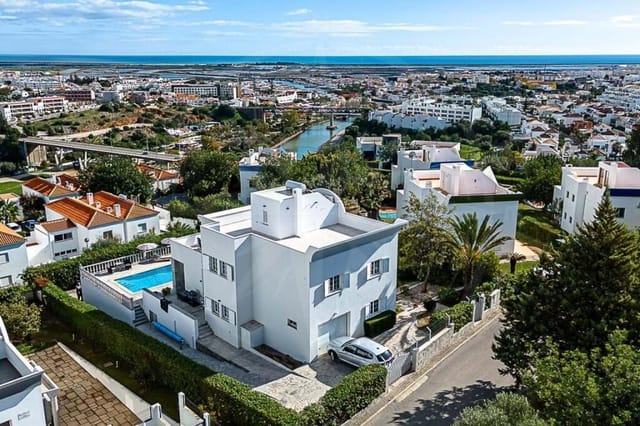
Stand on the upper terrace at dusk and you'll understand immediately why people come to Tavira and never quite manage to leave. The Atlantic sits on the horizon, shifting from silver to deep copper as the sun drops behind the town's rooftops. Below, the white bell towers of a handful of Tavira's famous 37 churches catch the last light. The air carries something faintly saline, faintly floral. That view is yours every single evening from this four-bedroom villa in Quinta do Perogil, one of the most coveted residential pockets in the eastern Algarve. Quinta do Perogil sits above the town on a quiet, tree-lined road where the neighbors tend their gardens and mornings are genuinely silent apart from birdsong. The address puts you roughly ten minutes on foot from the cobblestoned Praça da República and the riverfront Mercado da Ribeira, where local fishermen sell their catch before most people have finished their first coffee. That balance — a perch above the town's commotion with everything within easy reach — is exactly what makes properties here so hard to come by. The villa itself sits on a 929 m² landscaped plot, and the outdoor space is where you'll spend most of your time from April through October. The heated swimming pool is generous, wrapped on three sides by a wide sun terrace in pale stone that stays warm underfoot well into the evening. There's a dedicated entertaining terrace for al fresco dinners — the kind where guests linger long past midnight because nobody wants to go inside. A private garage and additional on-plot parking mean arriving with a full carload of family or friends is never a logistics puzzle. Inside, the villa runs to 246 m² of living space across the main floors, finished to a high standard ... click here to read more

Picture 1

Step out onto the south-facing terrace on a January morning and you'll understand why people who visit Ciudad Quesada rarely leave. The air is already warm by ten. The salt lakes shimmer in the distance, shifting between pale rose and deep silver depending on the light. Somewhere down the hill, the café on Avenida de la Libertad is pulling its first espressos of the day. This is what 155 square metres of well-kept apartment life looks like on the Costa Blanca—and it's available right now. Ciudad Quesada sits in the municipality of Rojales, roughly 40 minutes south of Alicante on the N-332, and it has a completely different energy from the tourist-heavy resorts further up the coast. This is a residential community that has grown organically over decades, attracting a mix of Spanish families, northern European retirees, and a younger wave of remote workers who've figured out that the combination of reliable sunshine, low cost of living, and genuine local infrastructure is hard to beat anywhere in Europe. There's a real high street here. Actual supermarkets. A medical centre. Schools. The kind of daily convenience that makes a second home genuinely liveable rather than just somewhere to visit in August. The apartment itself is in good condition—not a renovation project, not a blank-slate opportunity, but a property you could walk into with a suitcase and immediately start enjoying. Three proper double bedrooms means this works as a family holiday home, a couple's base with guest space, or a rental property that commands serious occupancy. The master bedroom comes with fitted wardrobes and an en-suite shower room, which anyone who has shared a single bathroom with teenagers on holiday will deeply appreciate. The second bat ... click here to read more

Picture 1

The smell hits you first — jasmine and warm stone, carried on a breeze that drifts in from the Guardamar coast just twelve kilometres away. You push open the terrace doors after breakfast, coffee in hand, and the morning sun is already doing its work on the tiles. This is a Tuesday in October. Somehow it feels like a Saturday in July. That's the thing about Ciudad Quesada that doesn't fully translate until you're standing inside it. This three-bedroom, two-bathroom detached villa in one of southern Costa Blanca's most established residential areas sits on a plot that gives you genuine outdoor living — not a token patch of gravel, but a private garden with room to breathe, a sun terrace built for long afternoons, and a covered area where the BBQ earns its keep all through the cooler months. The pool glitters. The neighbours are friendly but not intrusive. And the whole thing sits quietly away from road noise, the way a home in this part of Alicante should. Inside, the layout is sensible in the best possible way. Three bedrooms with fitted wardrobes, the principal with its own en-suite, and a main bathroom that serves guests without anyone queuing in the corridor. The living and dining area opens directly to the garden through wide glass doors, so the boundary between inside and outside practically dissolves when the weather is good — which, in Rojales, is most of the year. Around 320 days of sunshine annually. This is not marketing copy. It's meteorology. The kitchen is fully fitted and practical: proper workspace, ample storage, nothing that needs replacing before you start using it. Large windows keep natural light moving through the house across the day, and the orientation — south or south-west facing options — mea ... click here to read more

Picture 1

On a still Tuesday morning in late June, you open the kitchen's ancient wooden shutters and the first thing you hear is nothing. Not the compressed silence of earplugs—actual, honest quiet, broken only by a wood pigeon somewhere in the oak trees and the faint clank of a tractor working a field two valleys over. The smell drifting in is warm stone and cut grass. That's it. That's the whole morning's agenda if you want it to be. This four-bedroom, three-bathroom country house in the hamlet just outside Roquecor sits on the kind of land that reminds you why people first started building in southwest France. The Tarn-et-Garonne countryside rolls in every direction—soft green ridges, sunflower fields gone gold by July, the occasional red-roofed farmstead catching the afternoon light. From the sun terrace beside the saltwater pool, you can see for miles. No rooftops crowding the view. No road noise. Just the particular stillness that this corner of Midi-Pyrénées does better than almost anywhere in Europe. Roquecor itself is five minutes by car or a genuinely pleasant forty-minute walk through the fields—the kind of walk that makes you feel you've earned the pastis waiting at the café. The village has a proper restaurant that locals actually eat at (not the tourist-facing kind), a reliable café, and enough daily life happening around the square to feel connected without ever feeling crowded. The Wednesday morning market in Lauzerte, twelve kilometres northeast, is the one to pencil in first. Lauzerte is a bastide village on the Pilgrimage of Saint-Jacques-de-Compostelle route, and the market spills down the medieval lanes with regional producers selling duck confit, aged Caussade walnuts, raw-milk Tomme, and the kind of straw ... click here to read more

Picture 1

Picture this: Sunday morning, the kitchen window is open, the smell of coffee drifting through the room, and beyond the wooden pergola, the pool catches the early Algarve light. That's not a holiday fantasy — that's just a regular weekend when you own this three-bedroom villa in São Brás de Alportel, one of the most quietly compelling towns in the whole of southern Portugal. São Brás sits inland, away from the coastal circus, tucked at the edge of the Serra do Caldeirão hills. The town is refreshingly flat — genuinely flat, which is rare in the Algarve — which means locals actually walk everywhere. To the padaria for a pastel de nata in the morning, to the Municipal Market on a busy Tuesday, to the esplanada for a late lunch of cataplana or grilled sea bream. Life moves at a pace that feels earned rather than forced. The villa itself sits on a quiet cul-de-sac. When you pull up, you immediately notice how the walled stone grounds create a sense of arrival — this is a private compound, not just a house with a fence. The electric gate opens onto the garage, which doubles as a proper laundry room and storage space for bikes, beach gear, and the general accumulation of an active life in the south. A couple of cars fit easily outside on the cobbled drive, traditional Portuguese cobblestone that wraps all the way around the building. Step inside and the architectural choices become immediately apparent. Solid white wood ceilings — not painted MDF, actual solid wood — run overhead. Terracotta red ceramic floors anchor the rooms in warmth. The walls in several spaces are lined with brick, giving texture and personality that you simply don't find in modern builds. Stone bathrooms complete the picture. This is a house built wit ... click here to read more

Picture 1

Picture this: it's a Tuesday morning in October. You open the heavy wooden shutters of your bedroom, and the smell that comes in isn't sea salt or pine — it's something warmer, drier, more ancient. Fig trees. Sun-baked limestone. A faint thread of woodsmoke from a neighbour's chimney somewhere beyond the fenced boundary of your five-thousand-square-metre plot. That's the Eastern Algarve countryside, and once it gets under your skin, nowhere else quite measures up. This three-bedroom quinta sits in the soft hills between Moncarapacho and Santa Catarina da Fonte do Bispo, in a part of Portugal that moves at its own pace. Not the frantic beach-town rhythm of Albufeira or Vilamoura — something calmer, more grounded. The Barrocal landscape rolls out around you: almond trees in February bloom, pomegranate trees turning scarlet in autumn, and fig trees that drop their fruit by the kilo in August. You'll have more than you could ever eat. Your neighbours will take the rest. The house itself was completely overhauled in 2023, and whoever did the renovation had the good sense not to strip it of its character. The original exposed beam ceilings survived — thick, darkened timber that gives every room a weight and honesty that no interior designer could manufacture. Paired with modern bathrooms, underfloor heating powered by a heat pump, and split-system air conditioning throughout, it hits that rare balance of genuinely comfortable without feeling like a hotel. Solar panels cover hot water. A pellet burner takes the edge off the cooler months — and yes, Eastern Algarve winters do have edge, which is precisely what makes the place feel like somewhere real rather than a seasonal backdrop. The layout is one of the cleverest features ... click here to read more

Picture 1

By nine in the morning, the Andalusian sun has already warmed the terracotta tiles around the pool. You're on the terrace with a coffee, the Riviera hills rolling behind you, the faint shimmer of the Mediterranean visible through the pines just a few kilometers south. The only sound is birdsong and, occasionally, the distant church bells drifting from the white hilltop village of Mijas Pueblo. This is not a resort. This is your home. This four-bedroom, four-bathroom villa sits in the Riviera district of Mijas-Costa, one of the most sought-after addresses on the Costa del Sol — and for good reason. At 249 square meters, the property was fully renovated in 2024 and the quality shows in every detail: the clean lines of the interior joinery, the seamless flow between indoor and outdoor living spaces, and the private swimming pool that anchors the garden like it was always meant to be there. It's ready to move into, or rent out, the moment you sign. Step inside and the light hits you first. Southwest-facing, the villa catches the afternoon sun in a way that fills the main living room with the kind of warm, honeyed glow you only really get this far south. The layout is genuinely sociable — a main lounge, a fully equipped separate kitchen, and a secondary living-dining area that naturally becomes the hub of family evenings or long lunches with friends who've traveled down from Seville or Málaga for the weekend. Built-in wardrobes throughout mean storage is never an afterthought, and the hot-cold air conditioning system keeps things comfortable whether you're there in August heat or a cool February weekend. The master suite has its own en-suite bathroom with a walk-in shower — a proper one, not a converted alcove. The three a ... click here to read more

Picture 1

Step outside on a Saturday morning in October and the air already carries that particular Pyrenean sharpness—wood smoke from somewhere down the lane, dew still on the stone courtyard, the peaks catching the first light above the Vallée de Barétous. This is Issor. And this 1801 farmhouse complex is the kind of property that doesn't come up twice in a lifetime. At 437 square metres spread across a beautifully restored Béarnaise farmhouse, a guest house converted from a former sheepfold, and a massive traditional stone-and-pebble barn, the estate sits on roughly 1.8 hectares—gardens, mature plantings, a swimming pool, a jacuzzi, and over a hectare of adjoining pasture that rolls toward the foothills. The whole thing is arranged around a central courtyard, exactly as Béarnaise farmsteads have been built for centuries. That courtyard changes everything about how you inhabit the place. Morning coffee out there, in the shadow of stone walls that have stood since Napoleon was still a general. It's grounding in a way that no new-build terrace ever quite manages. The main house runs to 237 square metres across two floors. Downstairs, the living room opens onto views that stretch uninterrupted across the garden and out to the Pyrenean ridgeline—no road, no pylons, just countryside. The kitchen is the heart of things, anchored by an original fireplace fitted with a wood-burning stove and large enough to actually cook in rather than perform in. A separate sitting room pushes directly onto the terrace, which is where you'll find yourself most evenings from May through September. On cold December nights, that wood-burner in the living room earns its keep fast. Upstairs, four bedrooms all face the mountains, one with its own en-suite ... click here to read more

Picture 1

Picture this: it's nine in the morning, the air already warm but not yet fierce, and you're having coffee on the terrace with a view across the shimmering lake and the low hills beyond Rojales. No traffic noise. Just birdsong, the faint splash from your own pool, and the knowledge that the beach at Guardamar del Segura is twenty minutes down the road. That's not a fantasy — that's an ordinary Tuesday when you own this four-bedroom, four-bathroom villa in Ciudad Quesada. The location matters more than people realise when they first start looking on the Costa Blanca. Quesada sits on a ridge above the Vega Baja plain, catching the breeze even in July when the coast can feel airless. The urbanisation itself is genuinely liveable — proper pavements, a golf course (the La Marquesa course is less than ten minutes on foot), supermarkets, pharmacies, good tapas bars on Avenida de las Naciones. You won't feel marooned here between visits the way you sometimes do in more remote developments. And because it draws a mix of Spanish and northern European residents, there's real year-round life, not the shuttered-up ghost-town feel of some purely seasonal spots. This villa sits at the end of a quiet cul-de-sac — one of those small details that only becomes obvious once you're here, when you notice there's zero through traffic and the kids can actually kick a ball in the street. The plot is generous for the area, with a properly maintained garden that wraps around the pool and gives you multiple spots depending on where the sun is and how sociable you're feeling. The barbecue terrace at the back catches the afternoon shade; the front terrace gets the morning light and the lake views. Inside, the 160 square metres of living space is ha ... click here to read more

Picture 1

Some mornings you wake up in Lo Pepín and the first thing you hear is nothing. Not silence exactly—more like the kind of deep quiet that only exists when a place has been built for living rather than passing through. The pool catches the early light at an angle that turns the water a pale copper. By eight o'clock you've made coffee on the glazed terrace, and you're already wondering why you don't live here full time. This is a 4-bedroom detached villa in Ciudad Quesada's Lo Pepín residential area, set on a 500 m² plot with a fully independent guest house, a 10 x 5 metre private swimming pool, and views that stretch across the famous Torrevieja salt lakes toward the Mediterranean. At €470,000, fully furnished and move-in ready, it's the kind of property that doesn't stay on the market long—and for good reason. Let's talk about the layout, because the way this estate is arranged changes everything. The main villa holds two generous bedrooms and two bathrooms, with an open-plan living area that flows naturally into a contemporary kitchen. The glazed terrace off the main living space is the real daily anchor—it's where breakfast happens, where cards get played after dinner, where you sit with a glass of local Vinalopó wine and watch the sky go from orange to ink. That terrace essentially adds a full season of usable living space to the home. Spanish winters in this part of the Costa Blanca are mild enough that you're outside in a light jacket come January—average winter temperatures in Rojales hover around 17°C during the day, and the region logs over 300 days of sunshine per year. The guest house is where this property separates itself from the standard villa. Completely self-contained with two bedrooms, a private bathro ... click here to read more

Picture 1

By eight in the morning, the sun is already cutting across the rooftop solarium, the air smells of warm stone and something blooming in the garden below, and the only sound is the low hum of the pool filter doing its quiet work. That's what a Tuesday looks like here. Imagine what a Saturday feels like. This three-bedroom detached villa in Ciudad Quesada — part of the Rojales municipality on the southern Costa Blanca — sits on a private 324m² plot and delivers exactly the kind of unhurried, sun-drenched life that people spend years planning for. At 110m² of interior living space, it's the right size: generous enough for a family or a group of friends, tight enough that it never feels like a hotel corridor. The east-facing orientation means the mornings inside are lit up naturally, which matters more than you'd think. Sunlight through the living room windows at breakfast changes the entire feel of the day. That living room is the heart of the house — wide enough to breathe in, with a real fireplace tucked into one corner for the short but genuinely cool winters that roll in off the Vega Baja plain in January and February. Costa Blanca winters are mild by northern European standards, but they're real. The fireplace earns its place. The kitchen has been fully reformed and sits independently from the main living space, which makes a practical difference when you're cooking for guests. There's room to actually be in there without choreographing around each other. Kitchen appliances are included, so the house works from day one. Three bedrooms, two renovated bathrooms — both modernised, both functional. The bathrooms don't make you wince, which is more than can be said for a lot of resale properties at this price point in t ... click here to read more

Picture 1

Sunday morning in Jávea has its own particular rhythm. The air carries a faint trace of pine and sea salt from the Montgó massif, church bells drift down from the old town's Sant Bartomeu church just a few kilometres away, and somewhere on the terrace below the pool, a coffee is going cold while someone watches the light shift across the Bètic mountains. That's the kind of slow, unhurried life this four-bedroom villa on one of the Costa Blanca's most established residential urbanisations makes entirely possible. Set on a generous private plot just a short drive from Jávea's Arenal beach and the marina along Avenida del Mediterráneo, the villa occupies a quietly confident position between town and countryside. It's the sort of location that rewards the people who've done their research — close enough to the fish market at the port, the Wednesday market at the Paseo de la Explanada, and the terraces of Restaurante El Clot or the tapas bars along Carrer Major in the old town, yet far enough away that weekends here feel genuinely peaceful. The property itself was built in 1988 and covers 171 square metres of interior space across two levels, sitting on a plot that gives the gardens real room to breathe. Two wide driveways run along the front — there's space for several cars, a boat, even a motorhome, which tells you something about the people who've owned this place. Outdoor living was clearly the priority from the start. Head down to the lower garden level and you find a covered barbecue area that gets used in January as readily as in August. That's one of the genuine pleasures of the Costa Blanca — 300 days of sunshine annually means the outdoor kitchen isn't just a summer feature. A pedestrian bridge, slightly theatric ... click here to read more

Picture 1

Sunday morning in Moraira moves at its own pace. The market on Calle Marqués de Campo fills with locals pulling trolleys loaded with blood oranges and fresh anchovies from the fish stalls, the smell of churros drifting from the café on the corner where the fishermen have already been sitting for an hour. Walk five minutes back up the hill and you're home — through the gate, past the bougainvillea, onto the shaded naya with a coffee and nowhere particular to be. That's not a fantasy. That's a Tuesday in this villa. Set on a generous corner plot in one of Teulada-Moraira's quieter residential pockets, this single-storey detached villa sits in exactly the kind of spot that makes the Costa Blanca so fiercely coveted by buyers from across northern Europe. Not perched above the sea in some vertiginous clifftop position, and not buried in a sprawling urbanisation miles from anything — just right. Local shops, a handful of good restaurants, and everyday essentials are all within an easy ten-minute walk. You won't need the car every time you want a bottle of wine or a newspaper. The driveway is gated, with space for two cars behind it. Privacy arrives before you even step through the front door. The gardens have had years to establish themselves and it shows — there's a maturity to the planting, the kind you can't buy new, with different corners of the plot offering different moods throughout the day. Shade when you want it, full sun when you need it. The covered naya faces out over the garden and becomes, inevitably, the room you actually live in from April through to October. Lunch stretches into the afternoon here. Dinner starts late and ends later. The private swimming pool sits within the sun terrace and catches the light ... click here to read more

Picture 1

Wake up to the sound of Adriatic waves. Not as a metaphor — literally. From the bedrooms of this single-story house in Mudri Dolac, the sea is fifty meters away, close enough that you catch the salt air through an open window before you've even had your first coffee. That's the daily reality this property delivers, tucked into a quiet dead-end lane on Hvar Island where the only traffic is the occasional neighbour walking their dog toward the shore. Mudri Dolac sits on the southern coast of Hvar, away from the summer crowds that pack Hvar Town's Pjaca square in July. It's a small coastal settlement — the kind of place where locals still fish off the rocks in the morning and the water is clear enough to see the bottom at three metres depth. The nearest beach is a short barefoot walk from the front gate. For buyers who've spent years dreaming about a second home in Croatia, this corner of Split-Dalmatia is the real thing, not a polished resort product. The house itself was built in the early 1970s, and it shows its character without apology. Over the decades it's been steadily renovated and maintained — this isn't a project that needs a year of work before you can enjoy it. It's in good condition right now, currently operating as a successful tourist rental, which means it's already guest-ready and generating income. Two completely separate residential units sit under one roof, and that configuration is genuinely useful whether you're thinking about this as a family holiday home, a pure investment, or some combination of both. The larger unit is a three-bedroom apartment with its own private terrace, a defined yard space, and a dedicated secure parking spot. In high season on Hvar, parking is worth its weight in gold — t ... click here to read more

Picture 1

On a still Tuesday morning in July, the only sound you'll hear from the covered terrace is birdsong and, if the wind's right, the faint ring of the bells from Saint-Sacerdos cathedral drifting up from Sarlat's medieval core just a kilometer down the road. The pool is already warm by nine — it's heated, and the roller shutter traps every degree overnight — and the coffee is strong. This is what owning a second home in the Dordogne actually feels like. Not a fantasy. A Tuesday. The property sits in a genuinely peaceful setting on the edge of one of the most visited and best-preserved medieval towns in France, yet it manages to feel entirely private. A third of an acre of enclosed garden wraps around the house, giving you that rare combination: you can walk to a boulangerie and still eat breakfast without seeing another soul. The 1,500 m² of grounds include good open views across the countryside — not just a strip of sky between rooftops, but actual Périgord Noir landscape rolling away beyond the hedgerows. Built in 1980 and maintained in good condition, the main house delivers 171 m² of living space across two floors, with a separate self-contained apartment on the garden level adding a further 43 m². Six bedrooms and three bathrooms total. That's the kind of footprint that makes large family gatherings work — really work, where nobody is sleeping on a sofa or sharing a bathroom with four other people. The apartment in particular changes the dynamic entirely. Grandparents get their own entrance. Adult children get independence. Friends on a long summer visit don't have to navigate the rhythms of your household. Step into the ground-floor sitting room and the beams immediately tell you where you are. Exposed, original, t ... click here to read more

Photo 1

Step out of the front door on a Tuesday morning and within sixty seconds you're on the sand. No car, no shuttle, no planning — just the smell of salt air and the sound of the Mediterranean lapping at the Costa del Sol. That's the daily reality of owning this renovated two-bedroom townhouse in Sitio de Calahonda, one of the most quietly coveted pockets of Mijas Costa, sitting less than 100 meters from the shoreline and the scenic Mijas Coastal Path. Calahonda is the kind of place people discover by accident and then spend years trying to get back to. Tucked between the glitz of Marbella to the west and the laid-back surf culture of La Cala de Mijas to the east, it has its own low-key rhythm. The promenade fills with joggers and dog walkers at dawn. By mid-morning, the beach bars are pulling espressos and cutting into tortilla. Come sunset, the terrace tables at places like Restaurante El Oceano fill up fast with people who've learned that the best view of the Costa del Sol doesn't require a reservation at somewhere famous — it just requires showing up. This townhouse, spread across two floors plus a private solarium terrace, was fully renovated roughly two years ago. The work was done thoughtfully. Mediterranean-inspired finishes, yes, but also practical upgrades that international owners actually care about: thermal and acoustic insulation on all new windows, air conditioning throughout, and solar panels that meaningfully cut running costs. The east-west orientation means the ground floor living room catches the morning light while the solarium terrace glows in the evening — which, if you've ever watched the Costa del Sol sky go orange and pink over the water from a rooftop, you'll understand why that matters. Downsta ... click here to read more

Picture 1

Step outside on a Tuesday morning in late October and the air smells of damp earth and wild rosemary. The only sound is the fountain in the courtyard doing its thing, and maybe a distant dog bark from somewhere over the next ridge. That's the daily reality of this three-bedroom country estate just outside Almogía — a village that most people blow past on the way to the coast, which is exactly why the land around it still feels this untouched. The estate sits on just over five hectares of private Andalusian countryside, and the closest neighbour is far enough away that you genuinely forget they exist. From the upper bedroom windows and the covered terrace, you can pick out Málaga's skyline on a clear day, and beyond it, a thin silver strip of the Mediterranean. The views aren't the main event, though — they're just the backdrop to a property that's been quietly doing something rather extraordinary for years. The house itself is 102 square metres of warm, well-kept living space. It has that particular quality of a home that's been genuinely lived in and genuinely loved — nothing feels staged. The wood-burning stove in the sitting room is the kind you light in November and don't want to leave until March. The kitchen has been upgraded with Bosch appliances and flows easily into a flexible side room that works equally well as a home office, a reading room, or a guest space depending on what you need that week. One bedroom sits cleverly above the property's underground water reservoir, which keeps the room noticeably cooler through July and August without a single air conditioning unit running. The principal bedroom is upstairs, fitted wardrobes lining one wall, windows on two sides pulling the landscape inside. Outside is ... click here to read more

Almogia-Malaga-Garde

On a quiet Sunday morning in Tocane-Saint-Apre, you wake to birdsong and the faint smell of woodsmoke drifting from a neighbouring farmhouse. You pad downstairs, throw open the kitchen window, and the garden just sits there — unhurried, green, completely yours. That's the rhythm this house has kept for three decades, and it's one you can step straight into. This four-bedroom house in the heart of the Dordogne has been the summer anchor for the same family since the early 1990s. That kind of loyalty tells you something. The property sits in Tocane-Saint-Apre, a genuinely lived-in village rather than a tourist set piece, about 20 minutes northeast of Périgueux along the D939. Local life here revolves around the weekly market in Brantôme — the so-called Venice of the Périgord — just 14 kilometres up the road, where you'll find duck rillettes, walnut oil pressed from trees grown a field away, and strawberries from the farms around Vergt that are, frankly, absurd in their sweetness. The house itself is symmetrical in plan, which gives it an unusually calm, balanced feel the moment you step inside. The entrance hall acts as a natural spine: to one side, a dual-aspect living and dining room with a wood-burning stove that throws out serious heat on autumn evenings; to the other, the kitchen and a shower room with WC, plus a separate guest WC — practical for a family who's actually using the place, not just looking at it. Upstairs, four proper double bedrooms, all generously proportioned in that unhurried way older French houses tend to be. Above that, a full attic accessible by stairs. Storage now, potentially a fifth bedroom or studio space later, subject to the usual planning considerations. Outside is where summer really h ... click here to read more

Picture 1

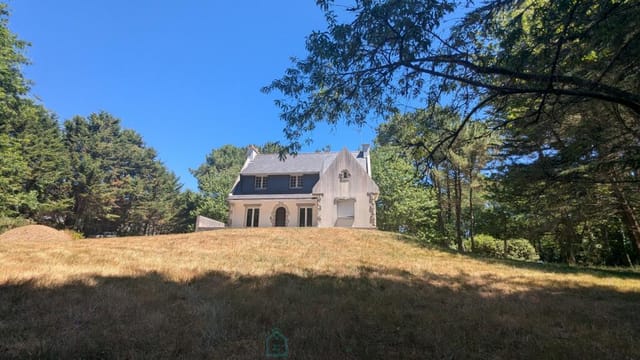
Step off the gravel drive on a September morning and you can hear absolutely nothing except the wind moving through the oaks and the occasional plop of a frog jumping into one of the ponds. No traffic. No neighbors. Just 2.27 hectares of Mayenne countryside wrapping around a stone house that has been standing since 1685. That quiet — real, total quiet — is rarer than people admit, and here it comes standard. This is a four-bedroom, 240 square metre residence in Livet, a rural commune in the Pays-de-la-Loire that most French people from Paris have never heard of, let alone British or Dutch buyers scrolling through listings on a Sunday afternoon. That obscurity is precisely the point. Prices in Mayenne remain well below what you'd pay for comparable stone properties in Brittany or Normandy, and the landscape — rolling farmland, dense forest corridors, hidden valleys — is every bit as compelling. The house itself was built during the reign of Louis XIV, and while the walls are three centuries old and counting, the property is in good condition and ready to move into or rent out immediately. Wood-burning stoves, stone floors, exposed beams overhead: the bones of this place are the kind architects try to recreate and rarely quite manage. The ground floor kitchen runs to nearly 27 square metres and is anchored by a wood-burning stove that connects directly to the heating system — so on a cold February evening, one fire heats the whole downstairs, the smell of woodsmoke threading through the dining room and into the two reception rooms beyond. The dining room itself is almost 20 square metres, big enough for the kind of extended family dinners that French country houses seem to demand. Two separate living rooms give you optio ... click here to read more
Picture 1

Sunday morning in Estepona moves at its own pace. The fish market on Calle Ramos wraps up early, the smell of fresh-caught dorada still hanging in the air as locals carry their paper-wrapped parcels home through whitewashed alleyways lined with terracotta pots and bougainvillea so red it almost looks painted. Picture walking back from that market to your own front door — four bedrooms, a private garden, a terrace built for the kind of long lunches that stretch into the evening. That's the life this townhouse on the Costa del Sol actually offers. Estepona gets overlooked. Marbella takes the headlines, Puerto Banús gets the glamour pieces, but longtime Spain watchers know that Estepona has quietly become one of the most liveable towns on the entire southern coast. The old quarter is genuinely old — narrow streets, flower-filled balconies, a 15th-century castle ruin at the edge of the Plaza de las Flores. The beach promenade, Paseo Marítimo, stretches for kilometres without ever feeling like a tourist trap. You get the Mediterranean at your feet and a real Andalusian town at your back. This four-bedroom townhouse sits in that sweet spot. At 150 square metres of living space across a well-considered layout, it's big enough for a family, flexible enough to suit a couple who want guest rooms or a home office, and positioned well for both the beach and the town centre. The property is in good condition and ready to move into, though it also holds real scope for a personal renovation — the kind that lets you choose your own tiles, open up a wall, refit the kitchen to how you actually cook rather than inheriting someone else's choices. That potential is part of the appeal, not a caveat. The living and dining room is the heart ... click here to read more
Picture 1

Picture this: it's a Tuesday morning in November, and you're eating an orange you picked twenty minutes ago from a tree in your own garden. The sun is already warm enough to sit outside. Málaga is thirty minutes away, the airport a little less. Back home, it's grey and cold. Here, the pool catches the light and the lemons on the tree are so heavy the branches dip toward the lawn. This is what owning a vacation home in Alhaurín de la Torre actually looks like — not a postcard, just a Tuesday. Set in the residential quarter of Pinos de Alhaurín, this four-bedroom detached house sits on a generous 1,186-square-metre plot in the lower, flat section of the urbanisation — the part locals quietly prefer, because the streets are walkable, the gradient is forgiving, and the supermarket, pharmacy and school are all within a ten-minute stroll. The house was built roughly a decade ago with solid construction standards and has been consistently and carefully maintained. It shows. Nothing here needs emergency attention; this is a home you can walk into, switch on the air conditioning, and immediately start living. The main floor runs across approximately 119 square metres and is laid out with real logic: a wide living and dining room, a separate kitchen that doesn't feel like an afterthought, two bedrooms, and two full bathrooms. There's a glazed porch off the back — the kind of space that becomes your favourite room by February, when the weather oscillates between warm sun and the occasional Atlantic shower — plus a front terrace for morning coffee and a rear terrace for evening meals. South-facing orientation means light floods in for most of the day, and the orientation also means the pool area catches afternoon sun well into aut ... click here to read more
Picture 1

Step out onto the terrace on a Saturday morning in Riantec and you'll hear it before you see it — the low hum of fishing boats heading out across the Rade de Lorient, the calls of gulls cutting through salt-sharp air, and somewhere down the street, the mechanical clatter of a boulangerie shutter rolling up. This is not a postcard version of Brittany. It's the real thing. A working coastal town where the rhythm of the tides still shapes daily life, and where a five-bedroom house with this much space and this much potential doesn't stay on the market long. Built in the 1970s in a style typical of solid Breton residential construction, this 147-square-metre house sits in Riantec with a full basement, an attached garage, a proper garden, and a terrace that asks you to sit down and stay a while. The bones are good. The layout is generous. And the renovation opportunity here is exactly what buyers who know this part of Morbihan have been waiting for. The garden level does something rare — it allows genuinely comfortable single-floor living if you want it. An entrance hall opens into a bright living and dining room, there's a functional kitchen, two bedrooms, a family bathroom, and a separate WC. Come summer, with the terrace doors thrown open and the garden spilling light through the windows, this floor alone becomes a complete holiday retreat. Upstairs, a landing leads to three more bedrooms, two of which come with dressing areas — a detail that matters enormously when you're hosting family for an extended August stay. The second bathroom has both a bath and a separate shower, which anyone who's coordinated a full house of guests will appreciate immediately. The full basement is the kind of space that gets people thinking. ... click here to read more
Picture 1

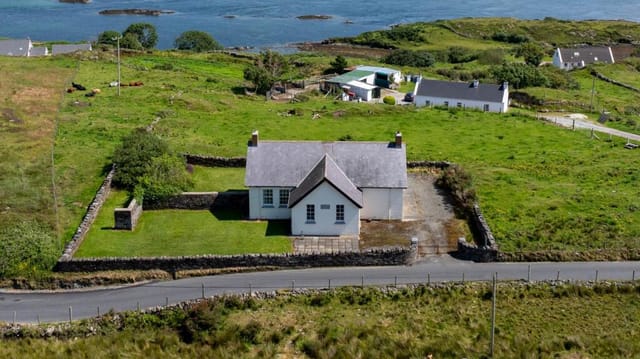
Stand in the living room on a clear October morning and the light does something extraordinary. It comes in low off Mulroy Bay, catches the original timber windows, and throws long gold rectangles across the carpet while the open fireplace crackles with the last of the night's turf. That's the thing about a building that has stood since 1923—it knows how to hold a moment. Meevagh Schoolhouse in Raplagh, on the Rosguill Peninsula of northwest Donegal, is one of those rare Irish properties that stops people mid-sentence when they first see it. Three bedrooms, 110 square metres of genuine character, granite steps worn smooth by a century of feet, and views that keep pulling your eye back toward the water. At €369,000, it's an honest price for something that simply cannot be replicated. The building was constructed as the local national school, and it shows—in the best possible way. Ceilings that feel almost cathedral-high by the standards of typical Irish residential architecture. Double-aspect rooms that catch light from two directions simultaneously. The kind of thick stone walls that keep rooms cool in July and hold heat in December. Somewhere along the way the schoolhouse was converted into a family home, and while it would benefit from a round of thoughtful modernisation—a new kitchen, updated bathroom fittings, fresh flooring in places—the bones are exceptional. The granite surround on the living room fireplace is original. The tongue-and-groove panelling on the ceilings has that particular warmth you simply cannot fake with modern materials. Bedroom 1 has ceilings so high that a seven-foot Christmas tree would barely graze them. Bedroom 3, up the carpeted staircase on the first floor, has triangular feature windows— ... click here to read more
Picture 1